This was a good day to have an easier day. While my Garmin recorded more steps than the previous two days at 20k, the walking was eassentially flat on pavement, so there was no rock hopping! We didn’t even use hiking poles. The day climaxed with a path we’d walked on going underwater!
The post’s title, using the day’s beginning and end points, masks some cool highlights from the day, and the local pronunciations of MOWZULL and Mara-ZIon.
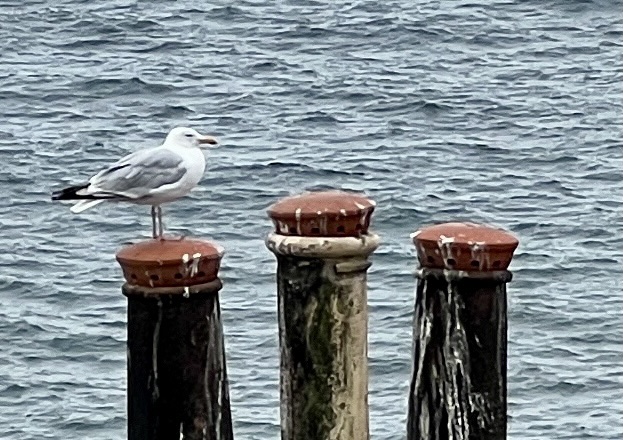
I did not have the most restful sleep. Through the night, the wind picked up and hard rain fell. By 5am, it was calm until Scuttle decided it was time to squawk right outside our window. I expect he does it every morning…
Scuttle resting between loud squawks!
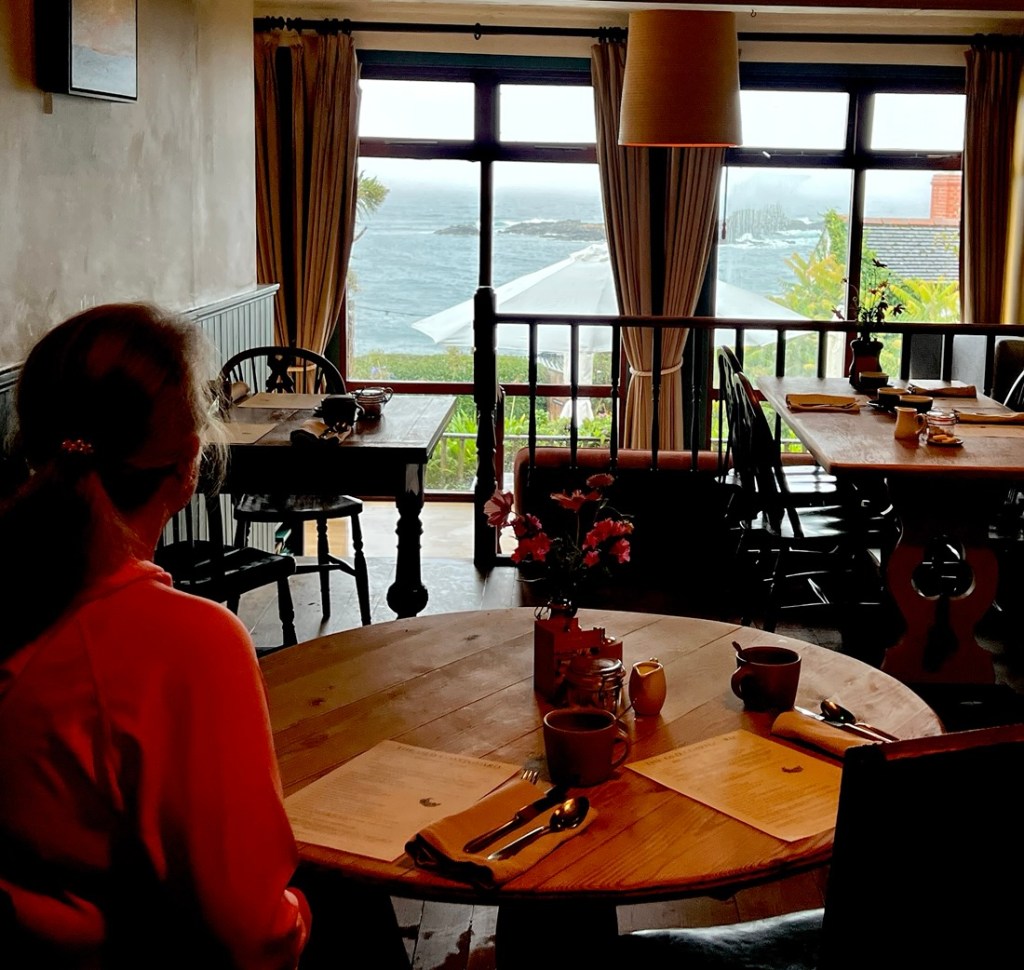
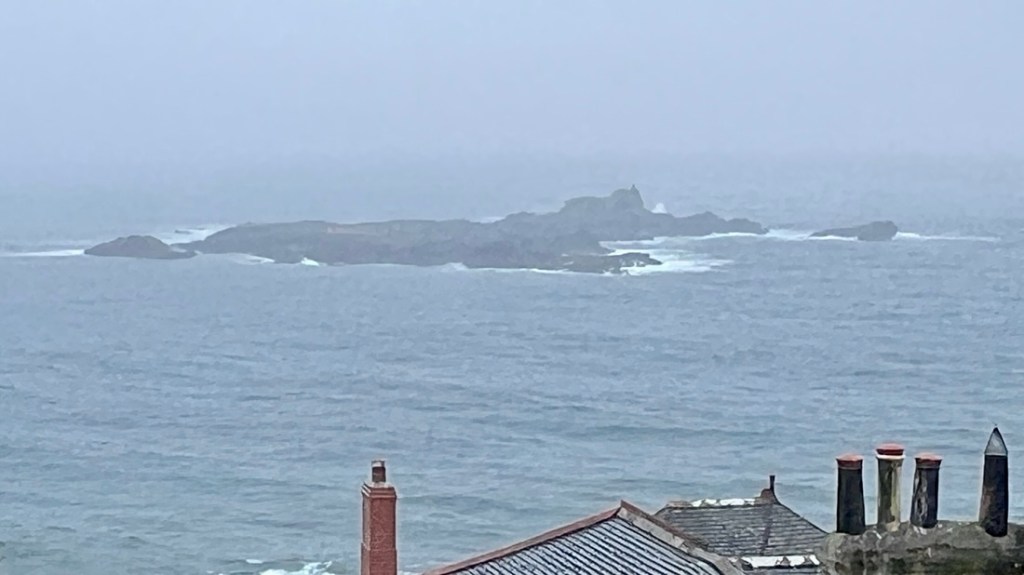
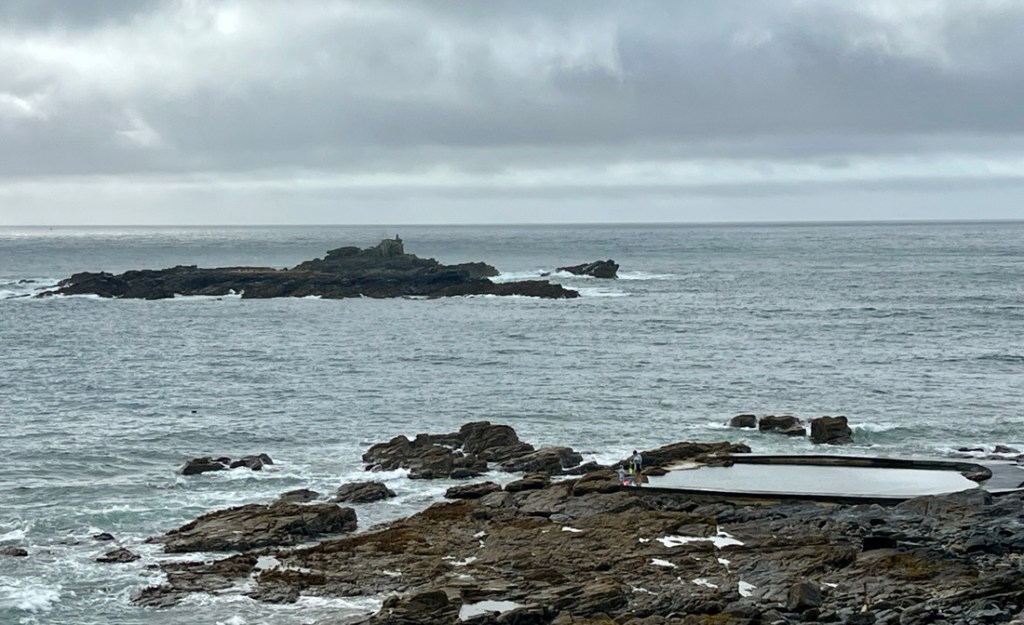
As this was a short day, we enjoyed a slow start, and a long breakfast admiring St Clement’s Isle, just off Mousehole.
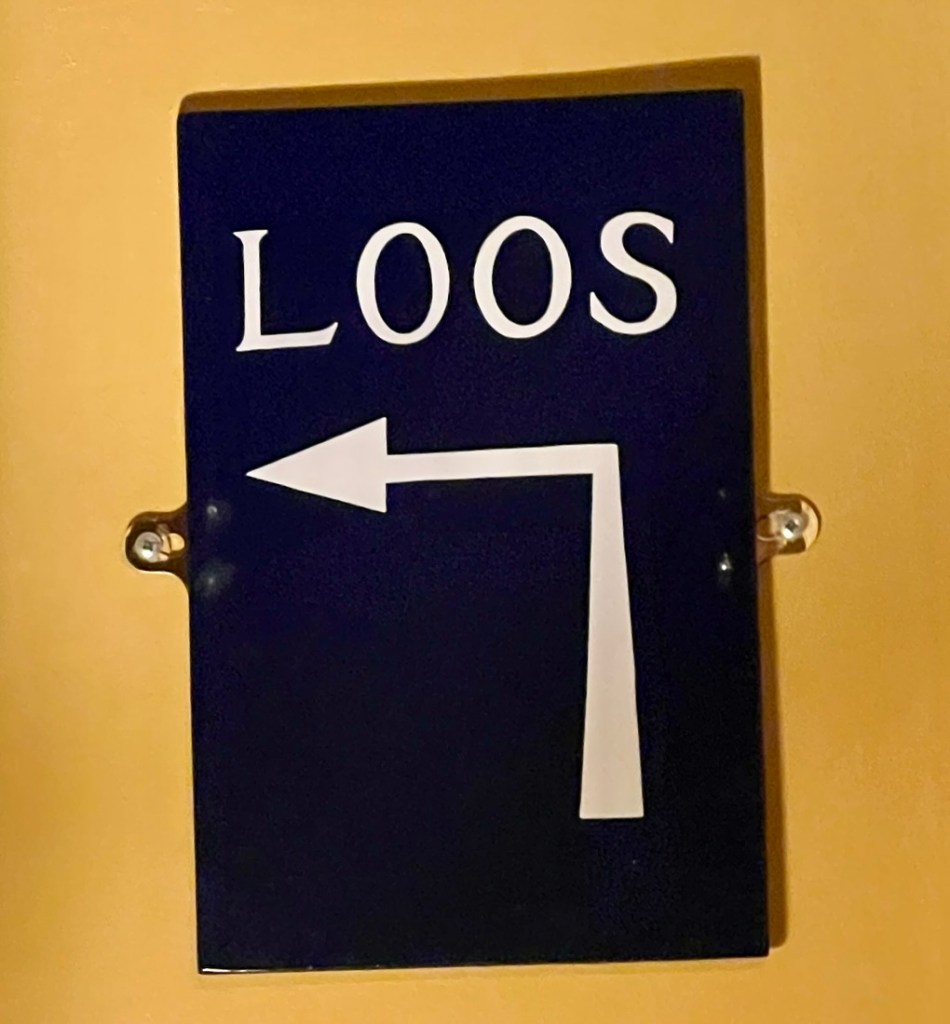
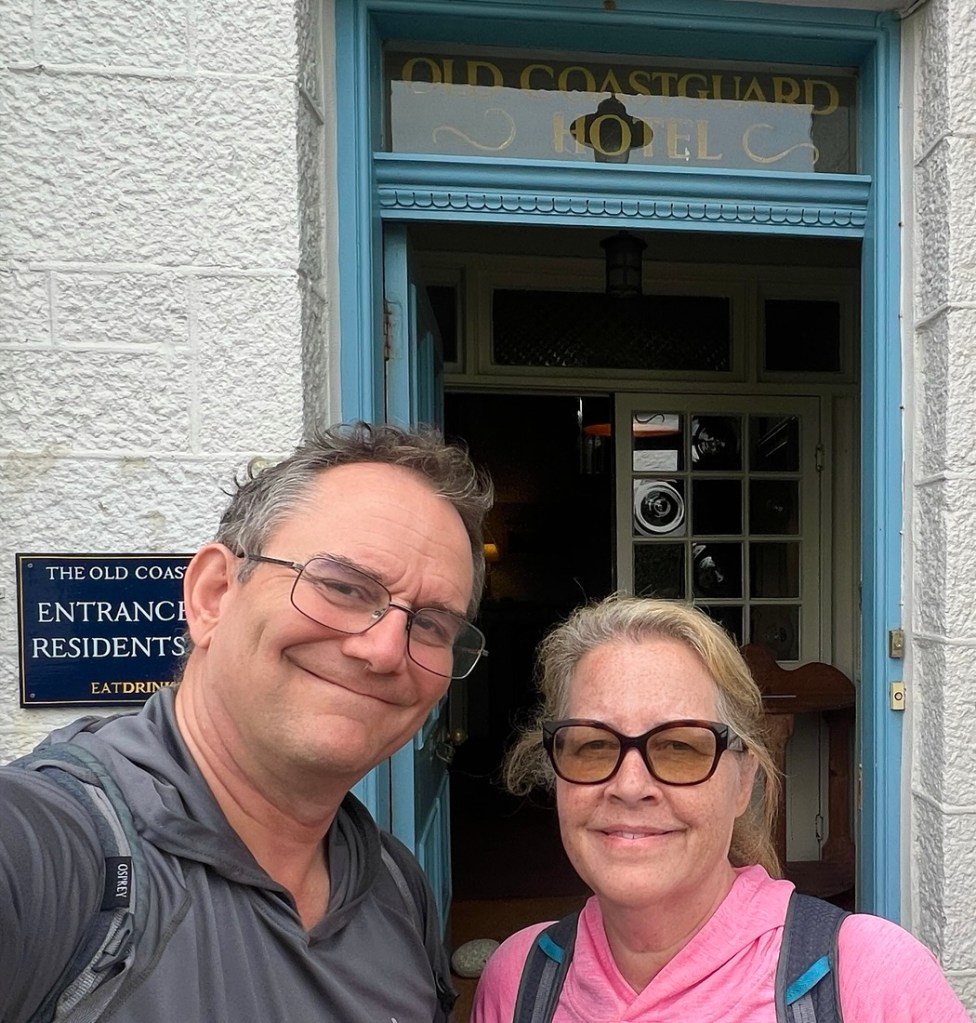
We enjoyed this great view of St Clement’s Isle for breakfast, at the same table that we had enjoyed dinner.We also appreciated the hotel’s clear signage!
The weather forecast for the morning had been a bit grim, so we were incentivized to be slow. We packed our bags, made them ready for their 9am pickup, and returned to our room to chill while we listened and watched the rain come through.
The views weren’t great when it was raining
By 10am, we were ready to head out as the rain had passed, saying farewell to our hotel and our little island.
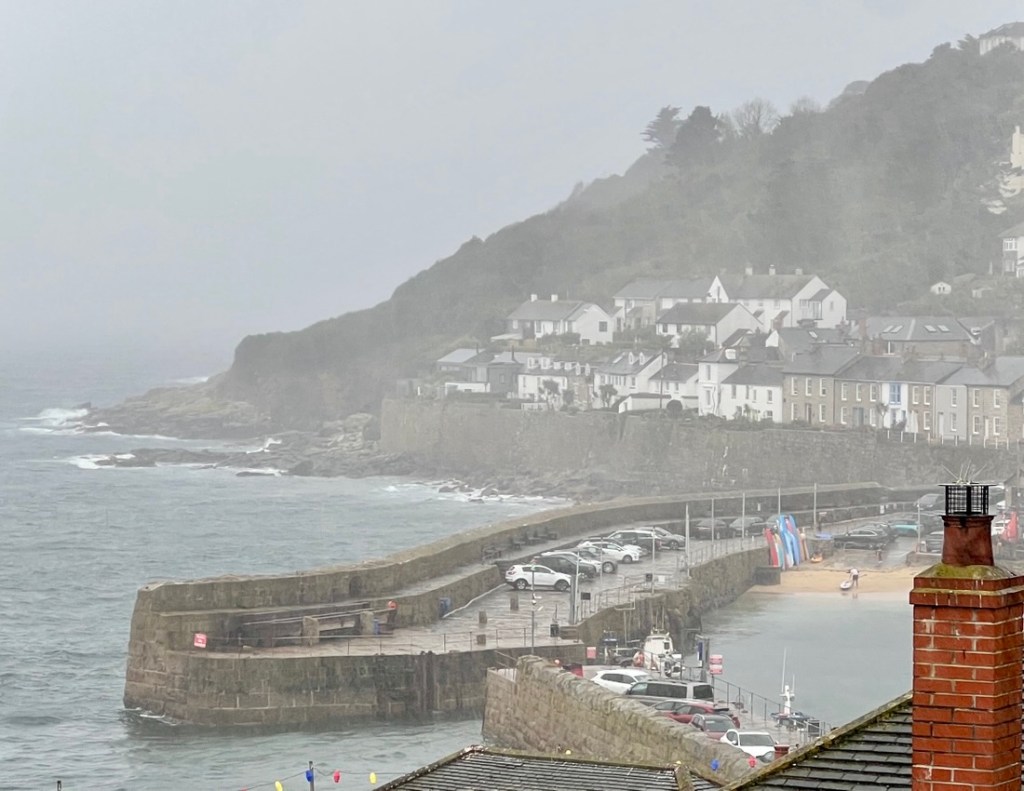
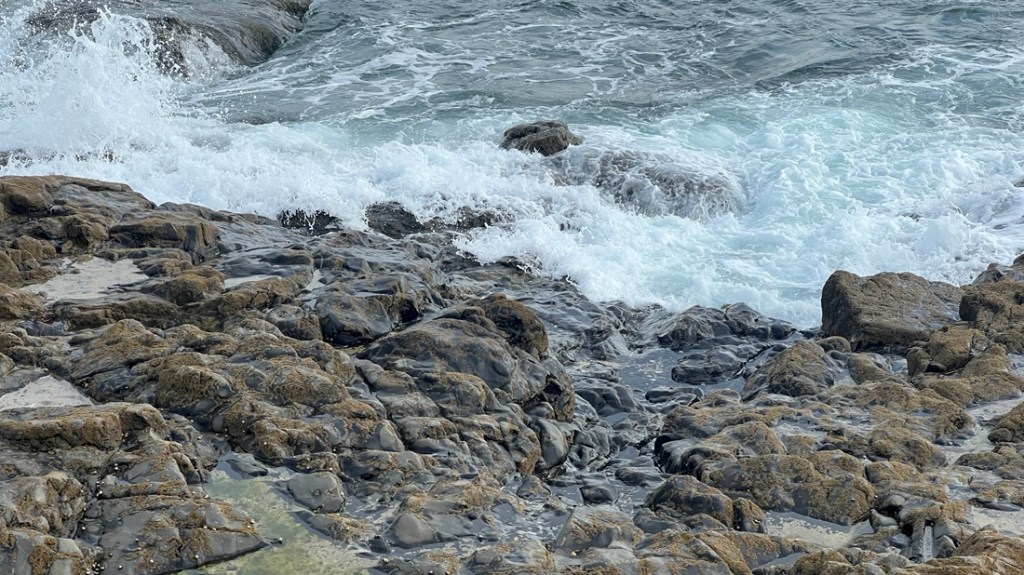
We loved the easy road walking compared to the previous couple of days, but there was no lack of stimulus. First, there was the rocky coastline. We were closer than previous days which allowed us to see and hear the crashing waves close up.
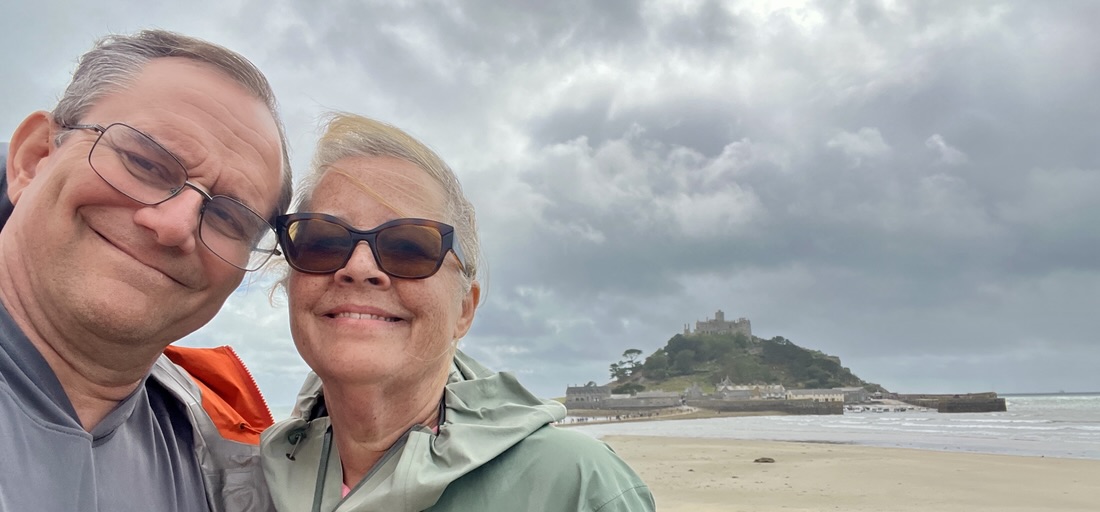
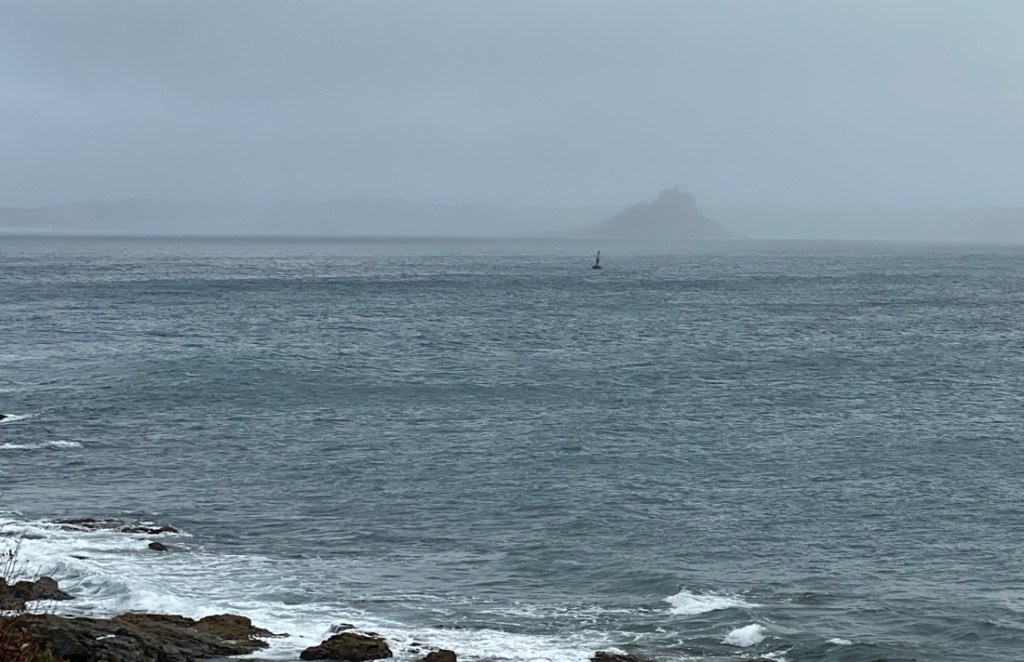
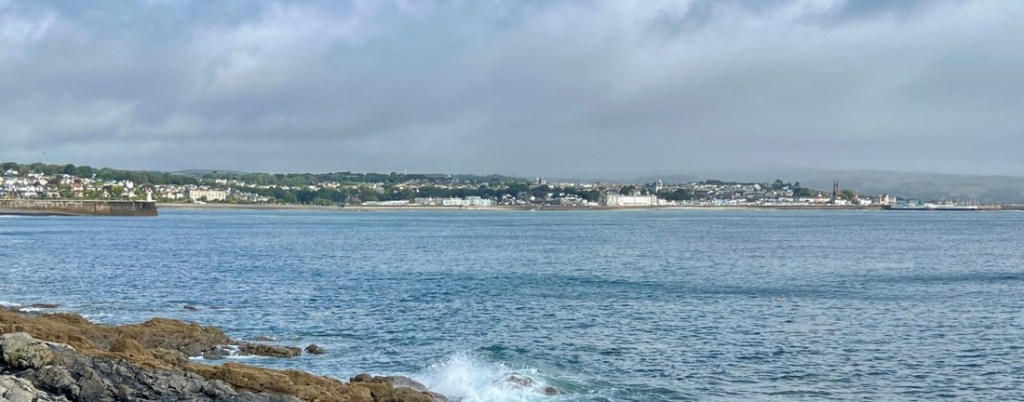
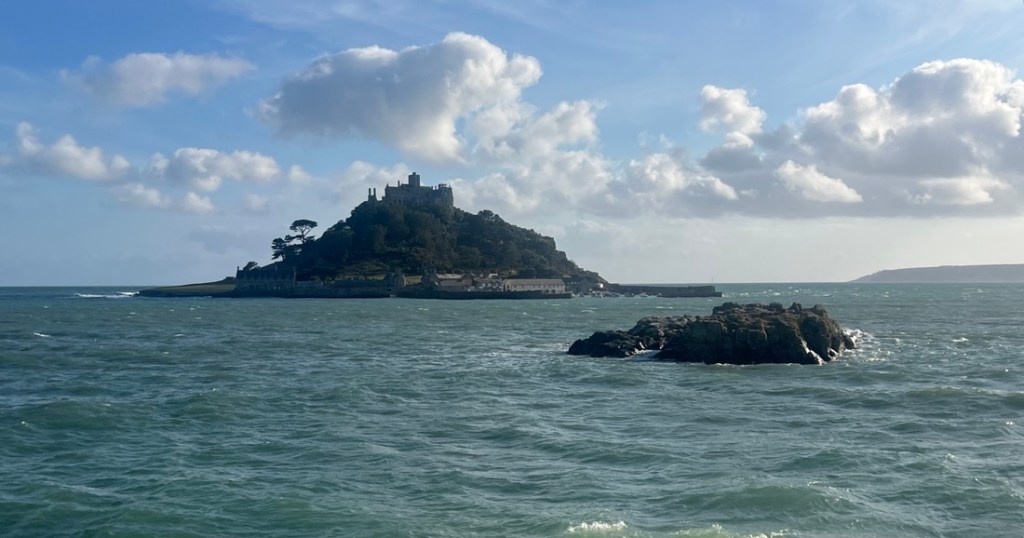
Our island, with the Mousehole rock pool in the foreground. We spotted St. Michael’s Mount in the distance through the mist. It was on the other side of the bay and close to the day’s destination.The simplicity of waves breaking on rocks made it all the more alluring.Periodically, the mist cleared and we could see Newlyn and Penzance around the bay.
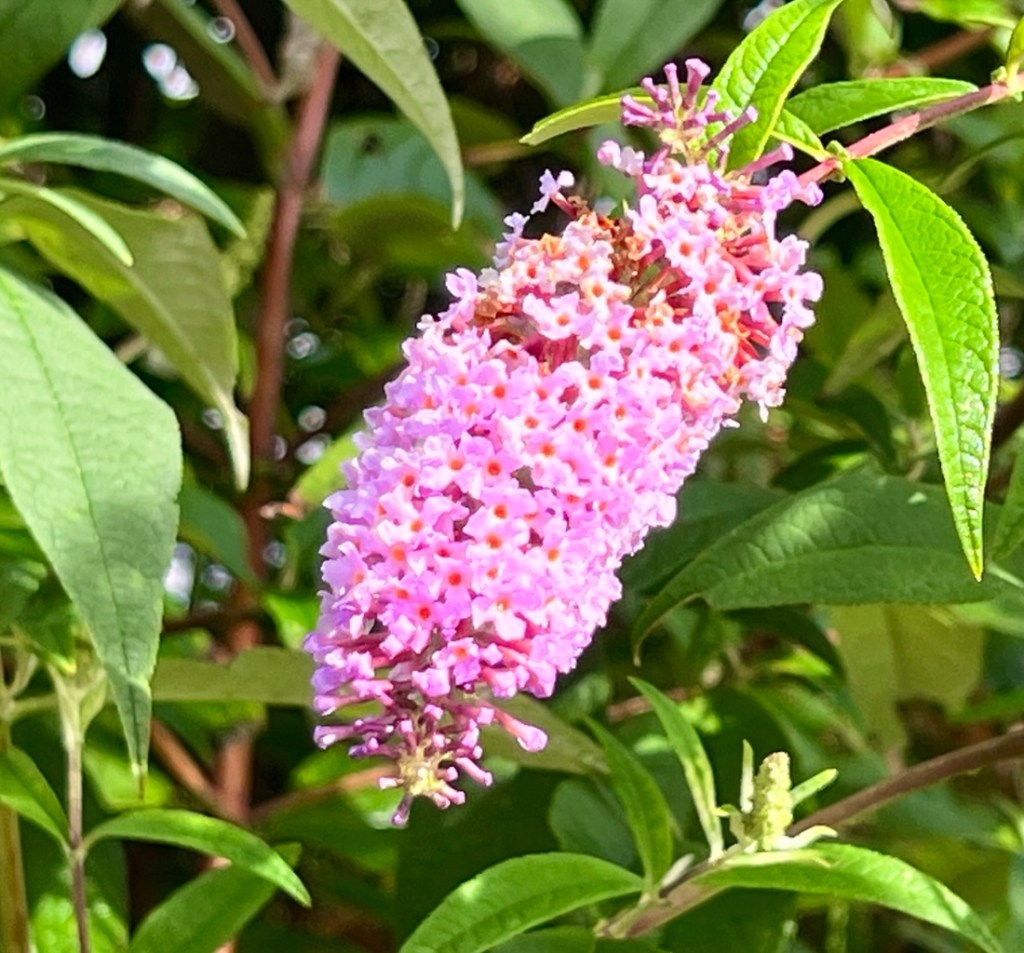
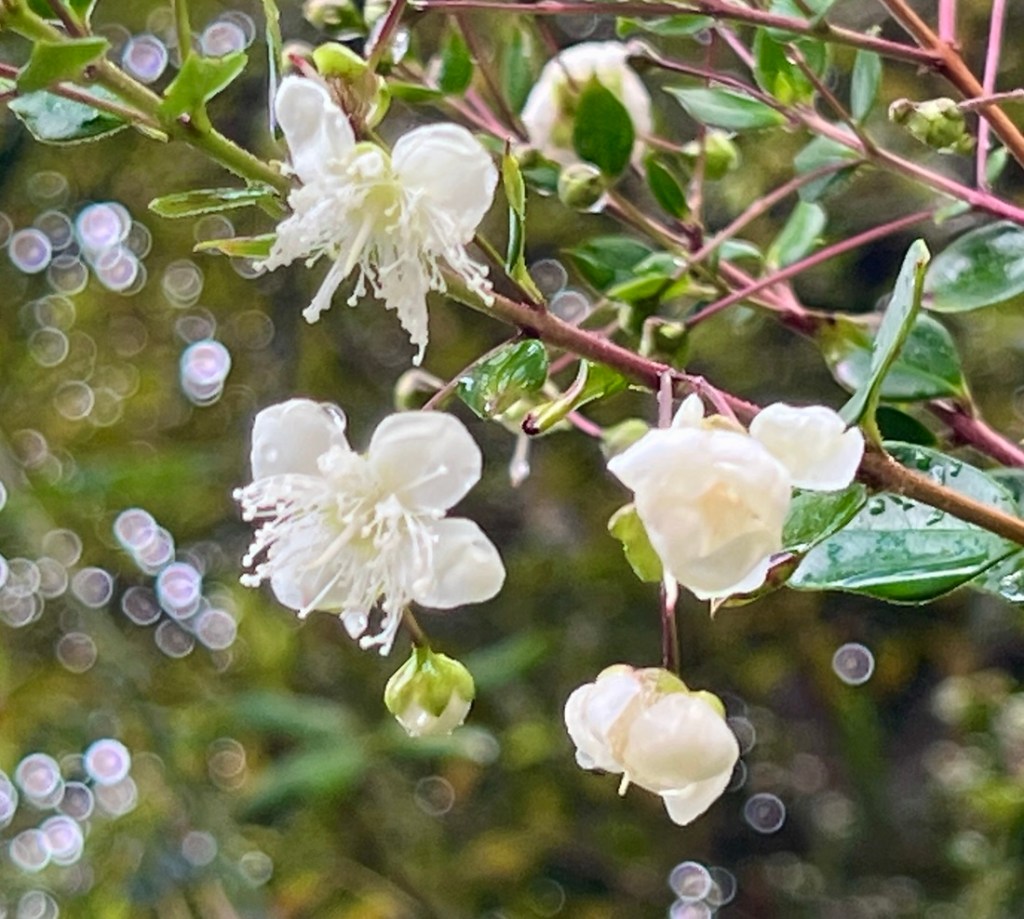
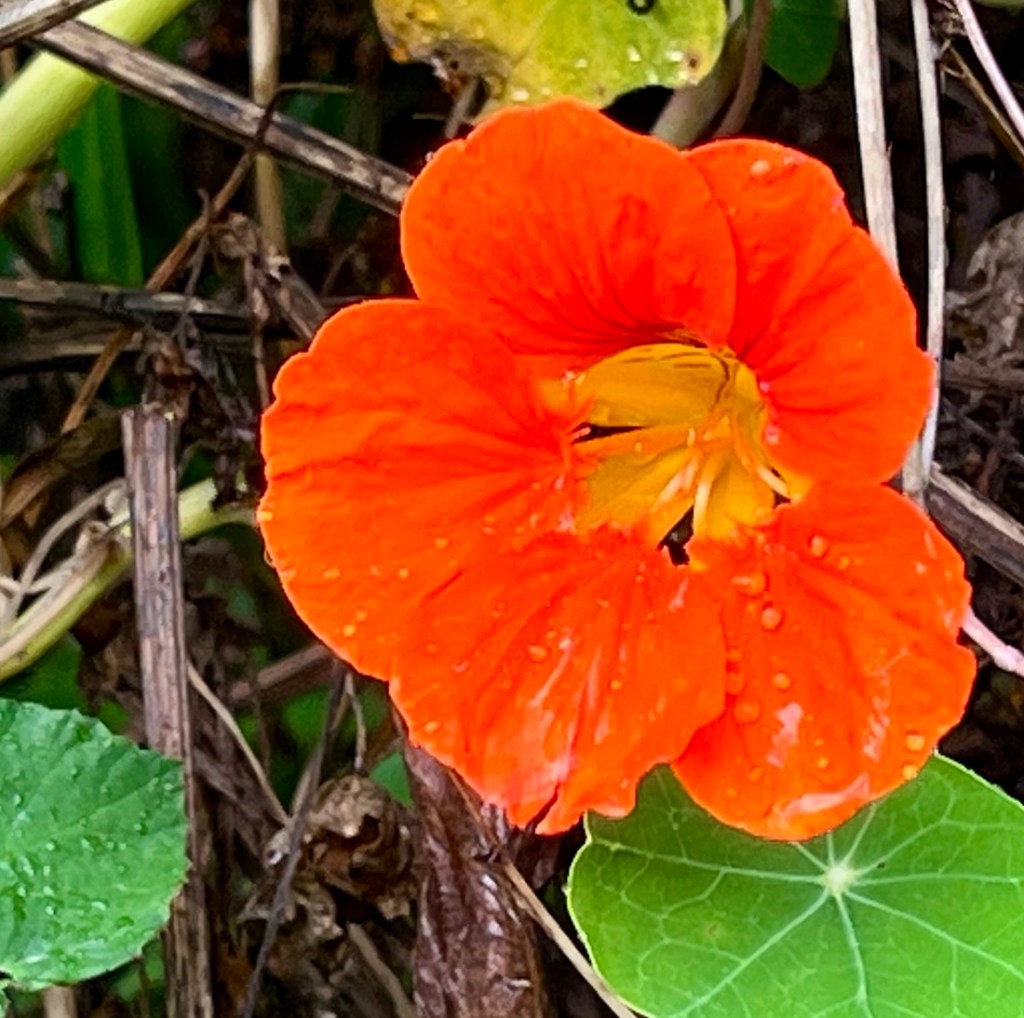
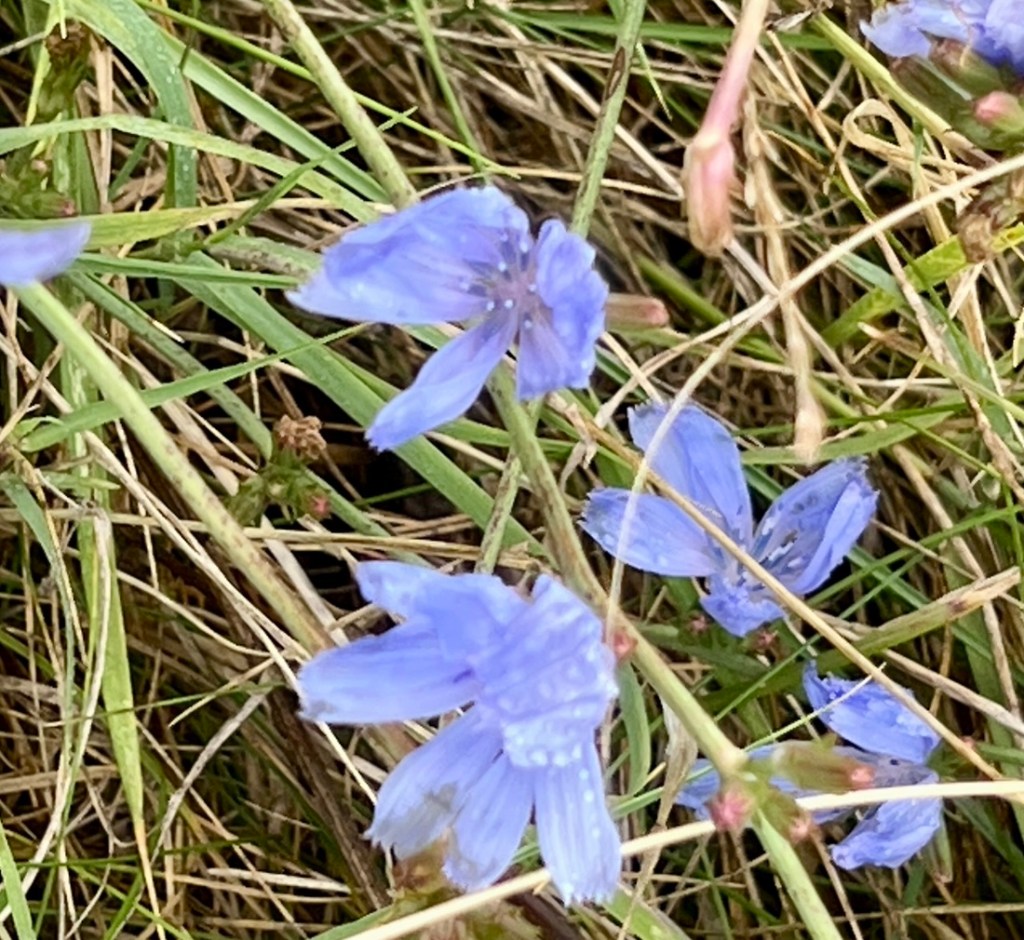
A second stimulus were the wildflowers. The climate in this part of Britain is kind with milder temperatures, as long as they can handle the wind!
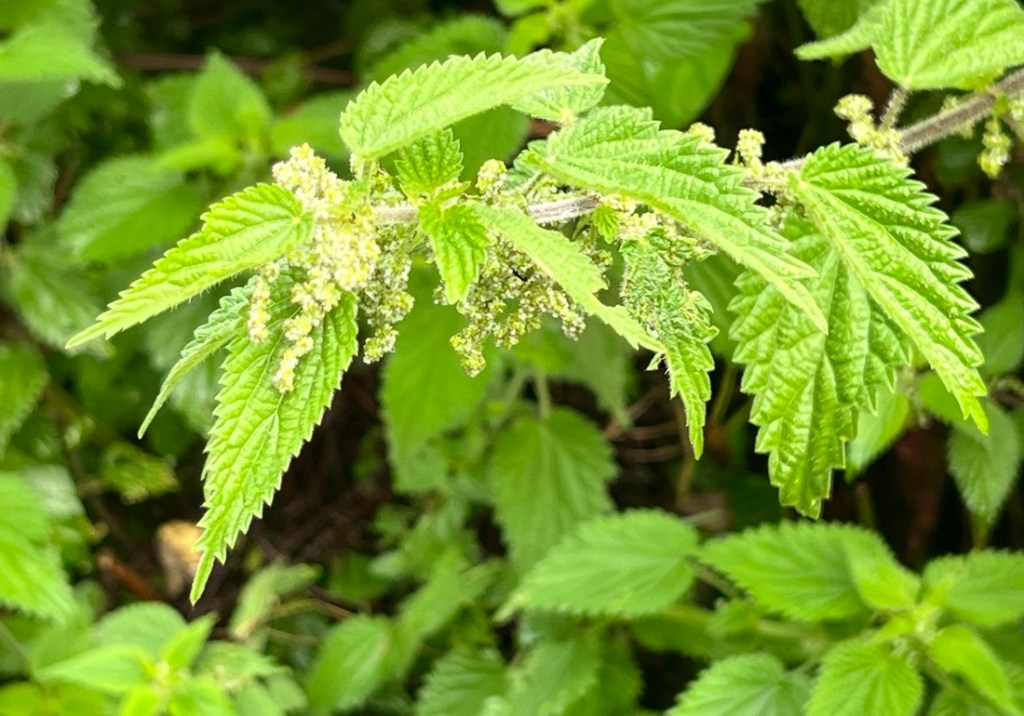
A buddleja, a popular but invasive plant. The bumble bees liked it to but were camera shy, or perhaps I was bee-shy?Some white Myrtles. Monks Cress covered some open land.Some chicory flowers.We had enjoyed the days without our nemesis, the Stinging Nettle, but could easily avoid them today.
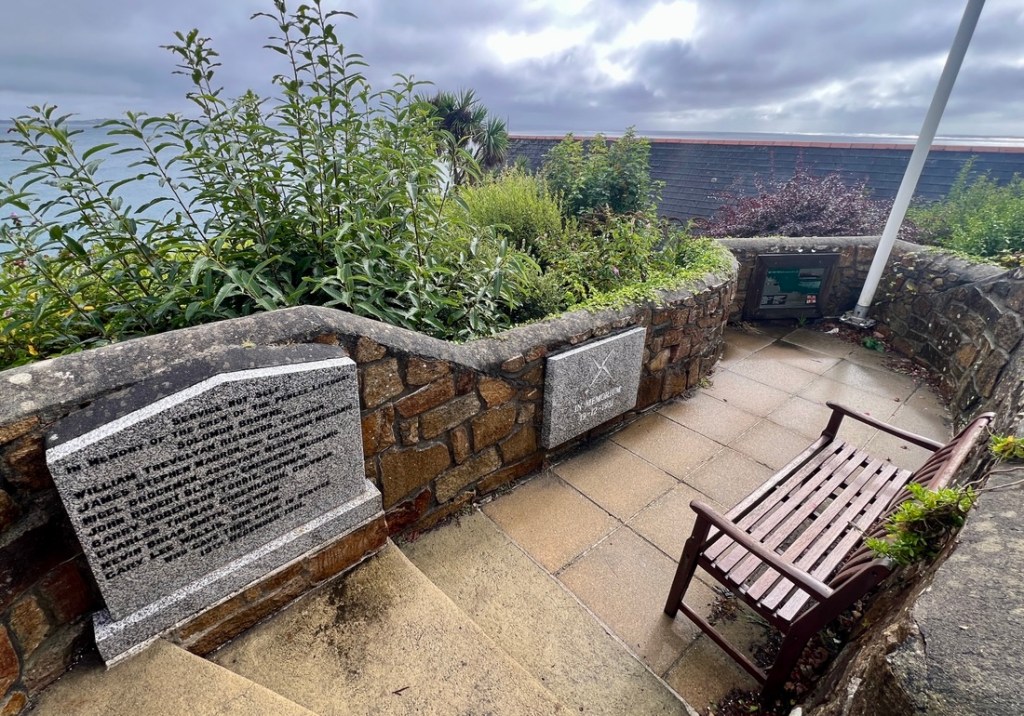
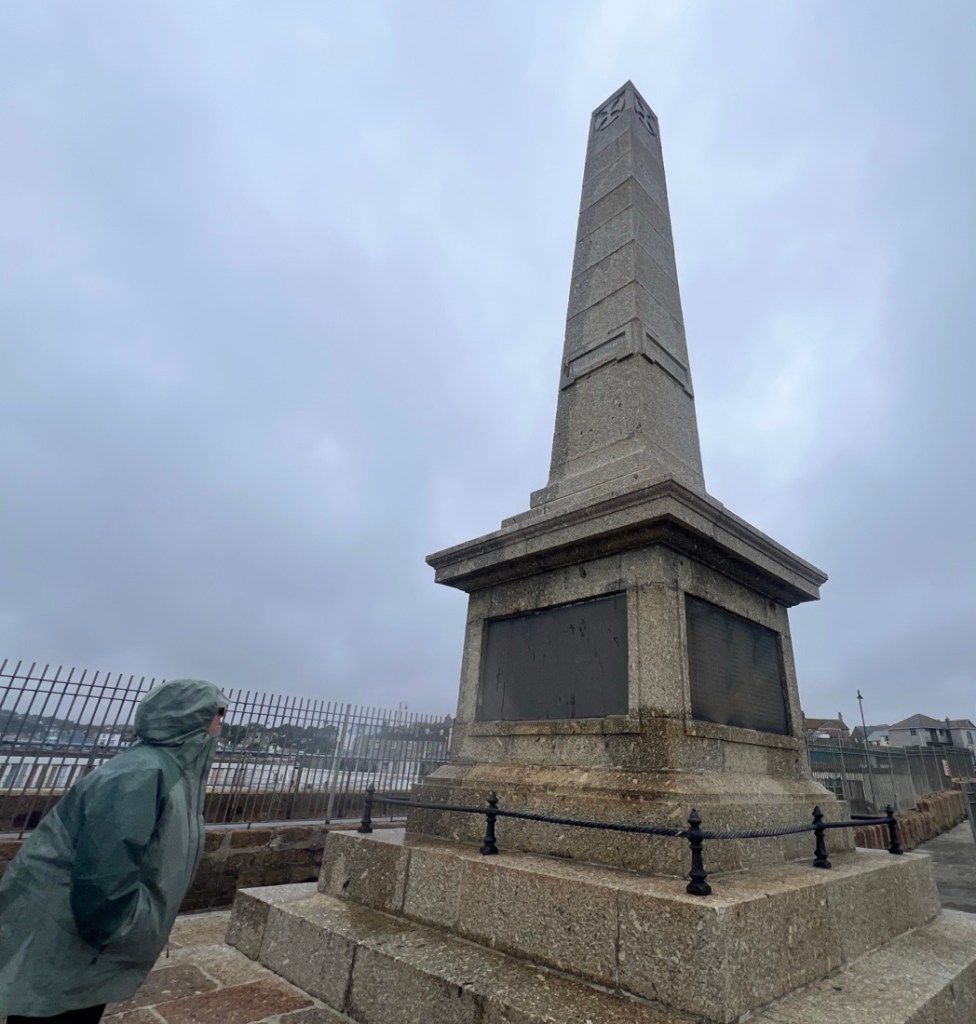
On leaving Mousehole, we passed the memorial to the Penlee Lifeboat disaster. On 19 December 1981, a lifeboat with eight volunteers sank with all hands while attempting to rescue the crew of a stricken tanker. This is the most recent disaster when a whole lifeboats’s crew was lost.
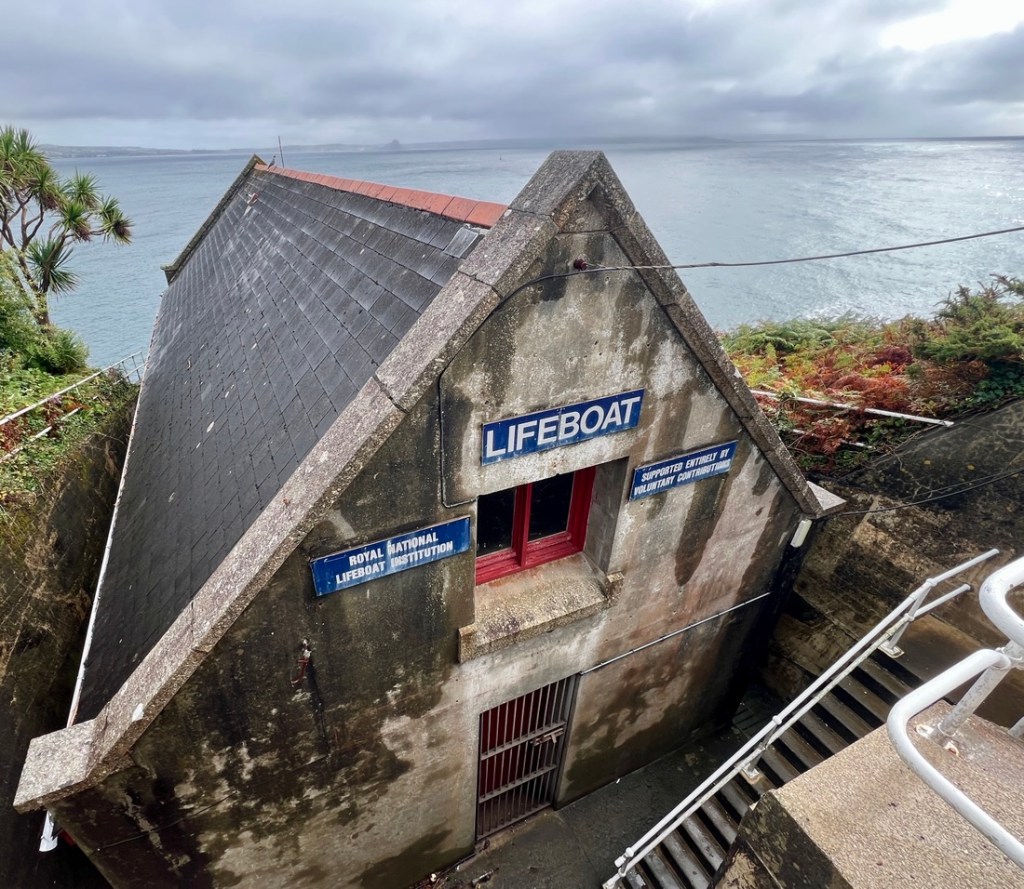
The memorial.The old lifeboat station, while no longer used, is maintained.
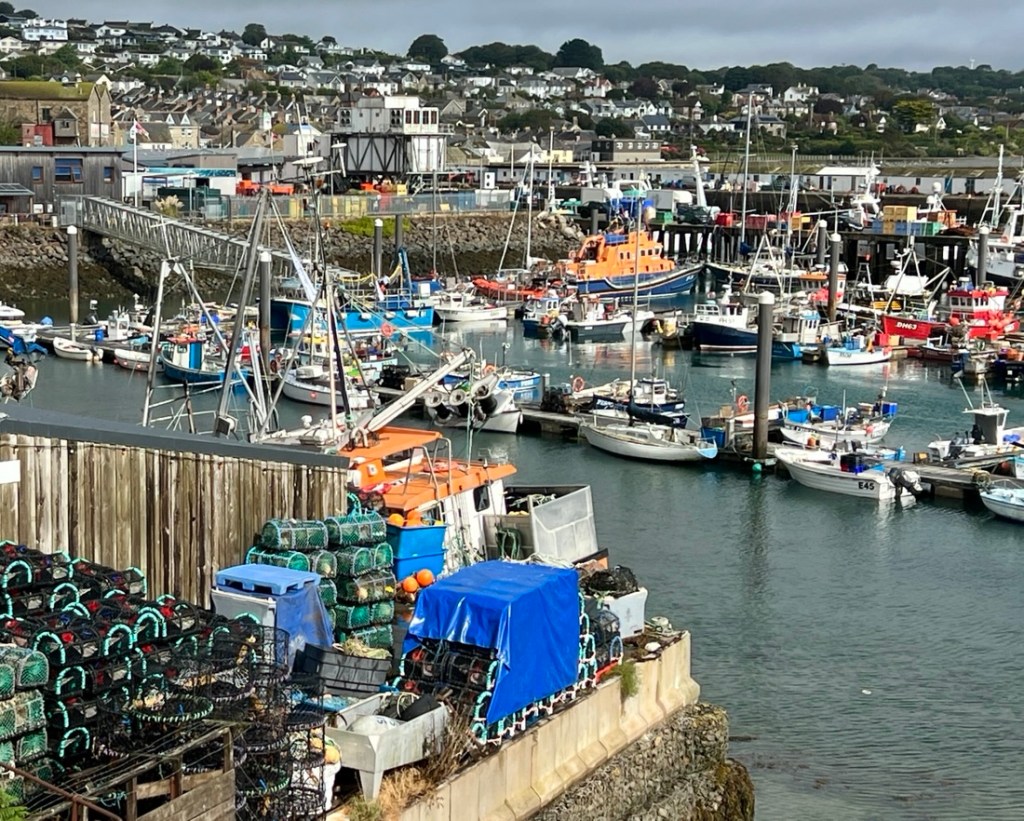
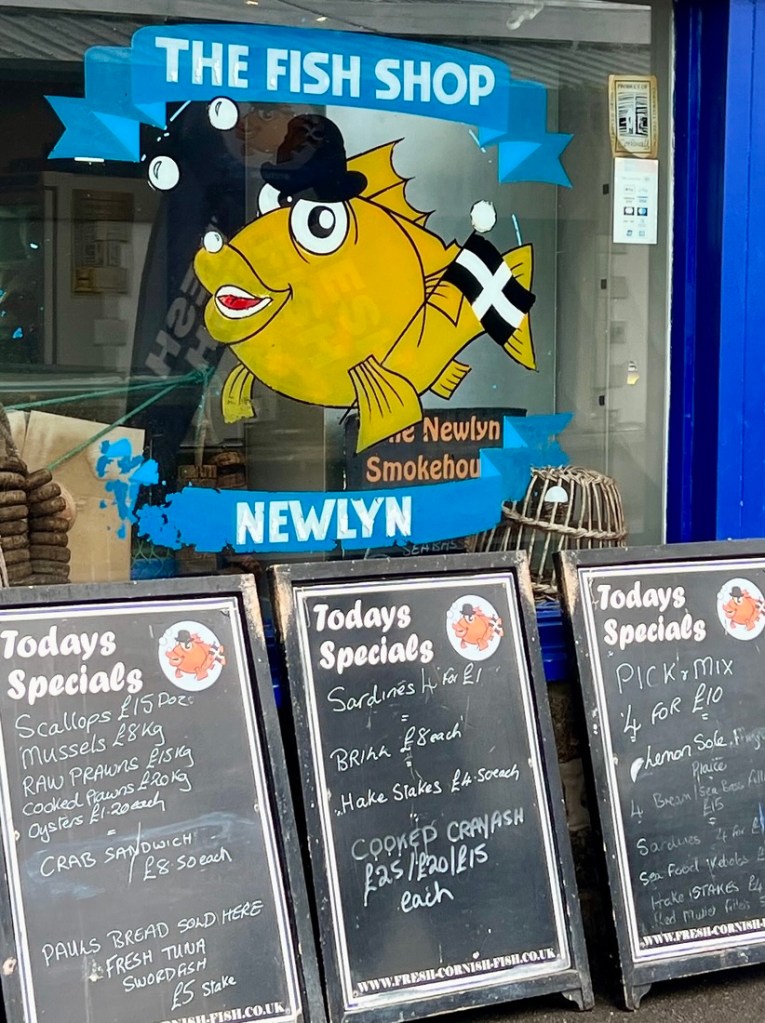
We entered Newlyn where the tensions between local people’s livelihoods and tourism has shaped the town. It has resisted touristication and houses the country’s third largest fishing fleet. You can tell that making a living off the sea is very hard work. Like farming, but with the sea’s wild unpredictableness to make it even tougher.
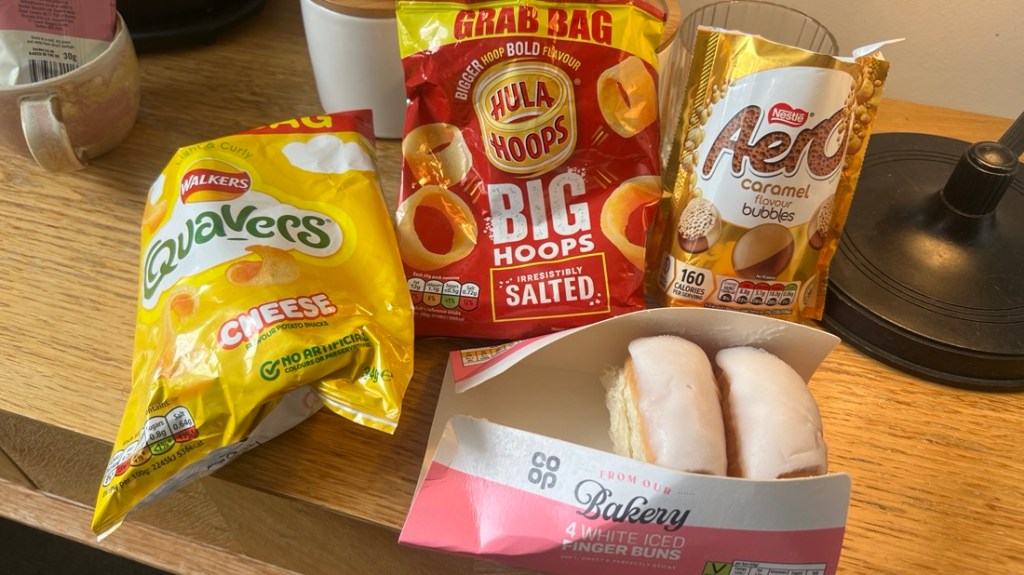
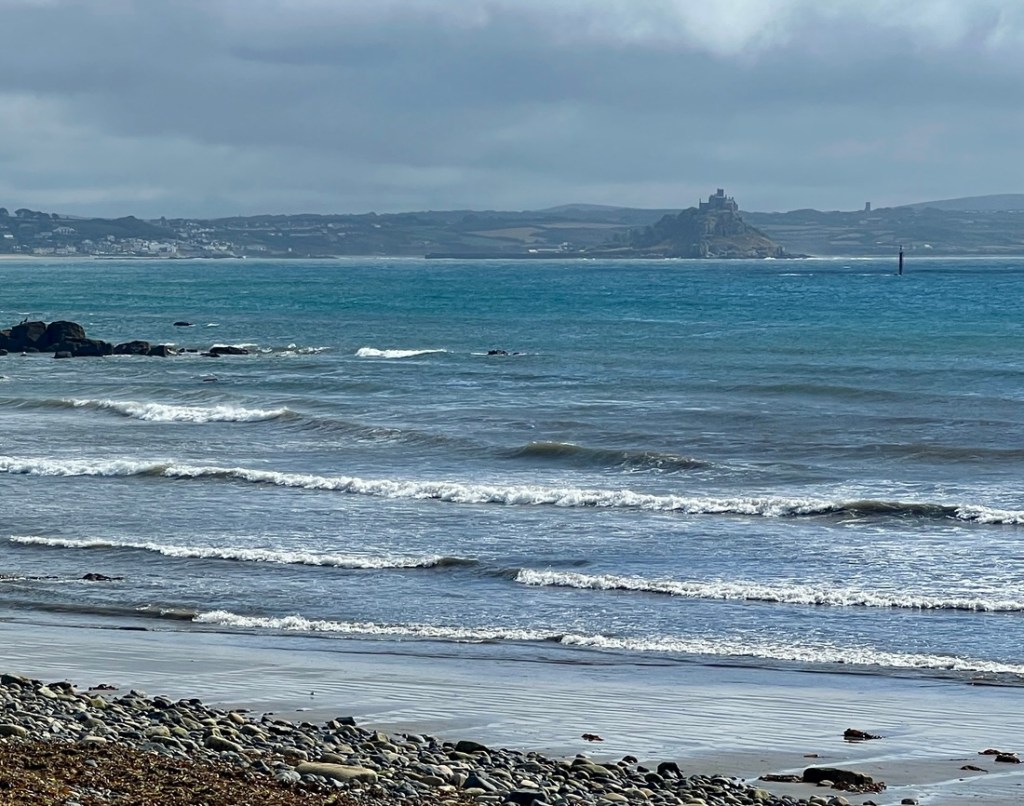
Newlyn Harbour, which was the last British port of call before the Mayflower sailed across the Atlantic in 1620. Note all of the lobster and crab pots in the picture’s foreground.The Main Street included several traditional fish shops.Newlyn’s Co-op provided some of our favourite UK goodies!On leaving Newlyn, the rocky coastline changed to pebbles, and the weather was still clear, allowing a fine view of St Michael’s Mount.
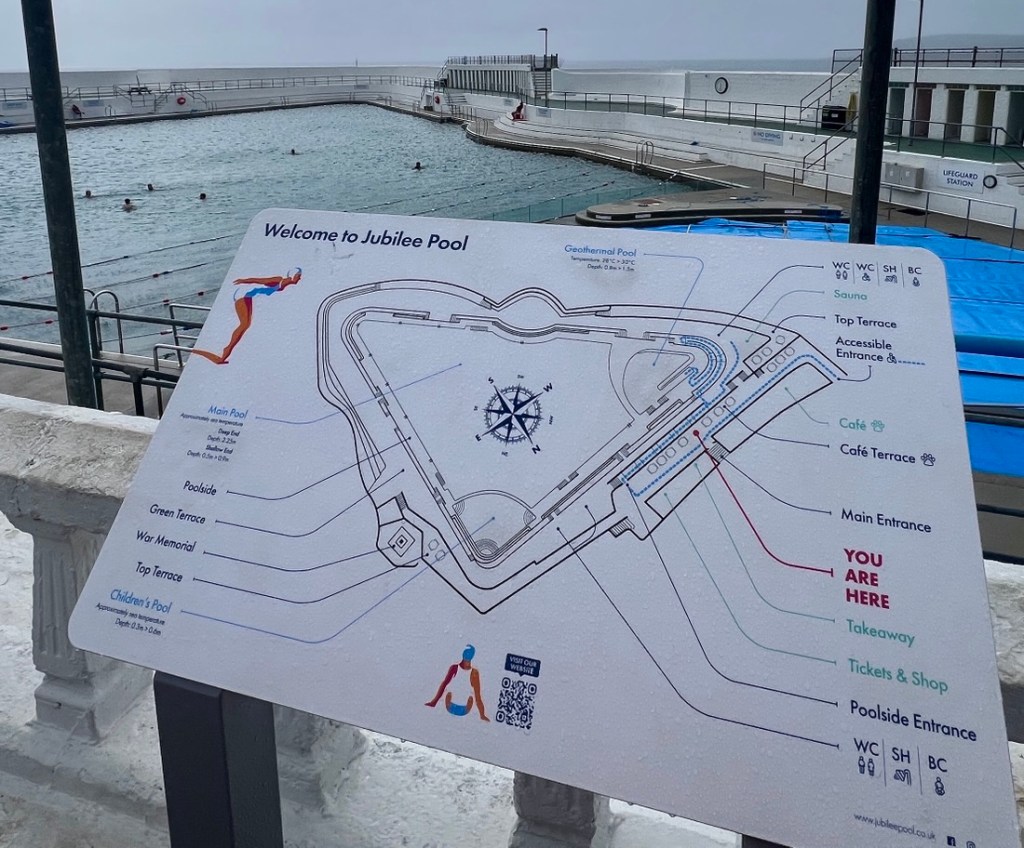
Soon we entered Penzance, though our path kept us on the coast so we did not enter. We passed an impressive Jubilee Pool which started in 1935, and now includes a geothermal heated pool. England’s weather was performing as expected with strong winds and rain, but the swimmers were disappointed that the geothermal pool was closed!
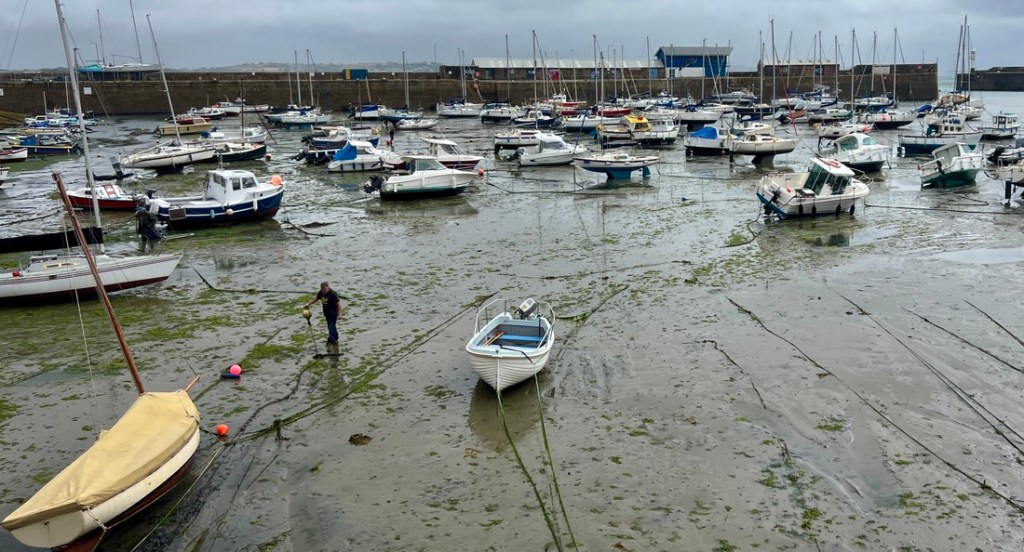
The Jubilee Pool’s main pool and covered geothermal-heated pool.Overlooking the pool was this WW1 memorial. A local boatman was sorting out his mooring at low tide in Penzance Harbour.
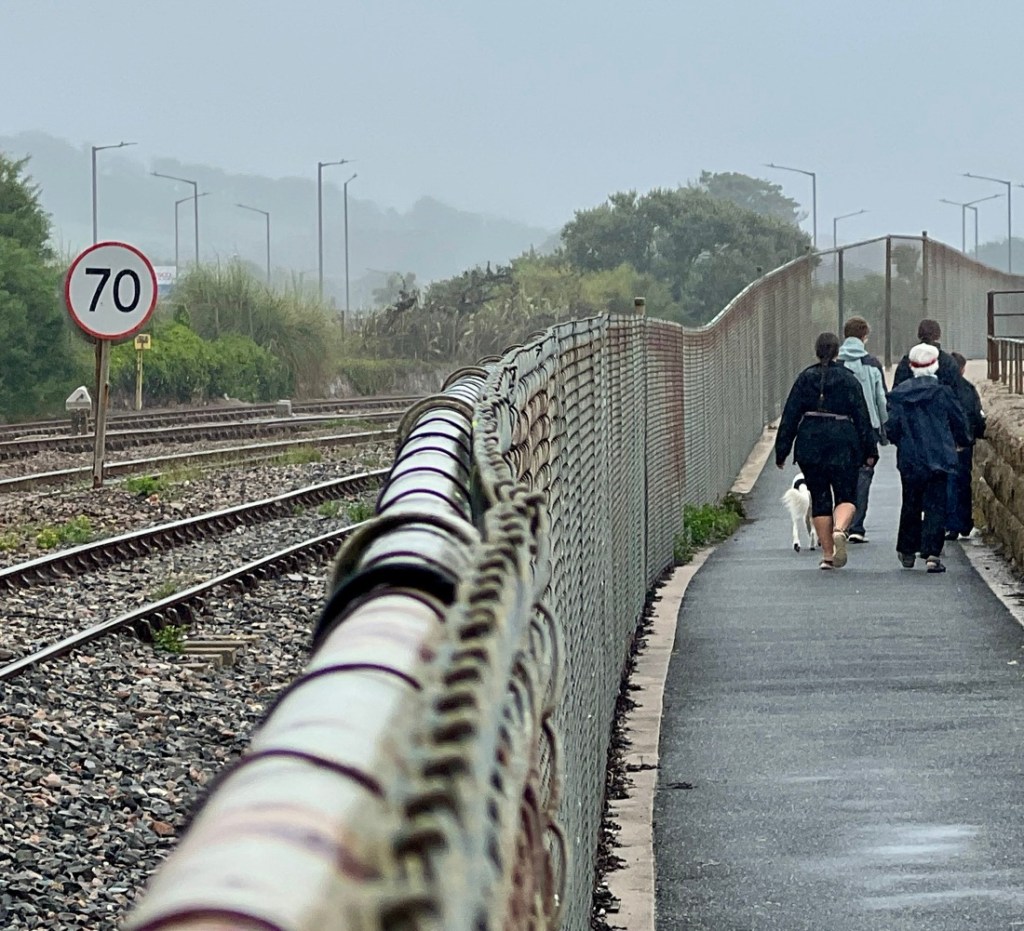
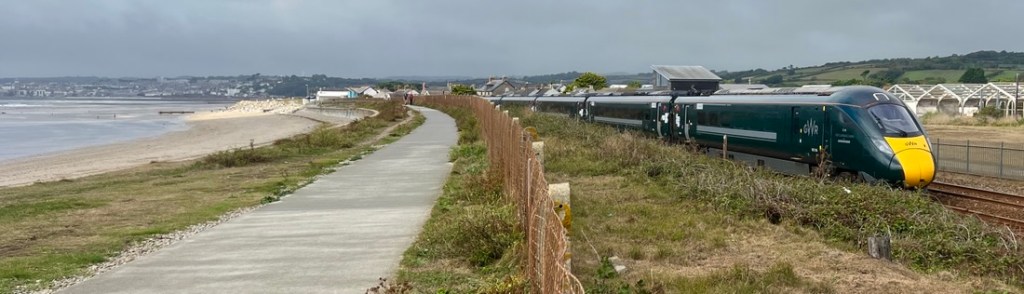
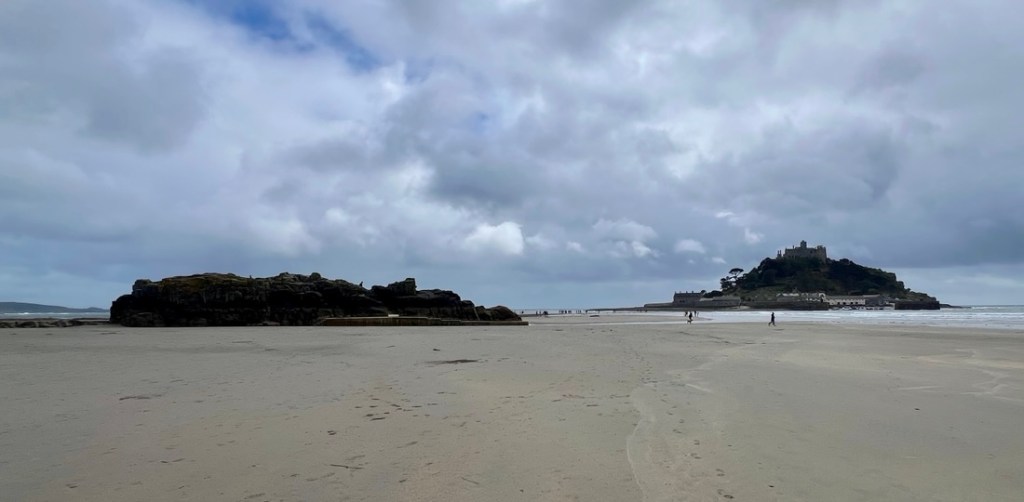
As we passed through Penzance, our path took us on the seaward side of the railway that had brought us here just four days earlier. The path took us along a long beach for three miles.
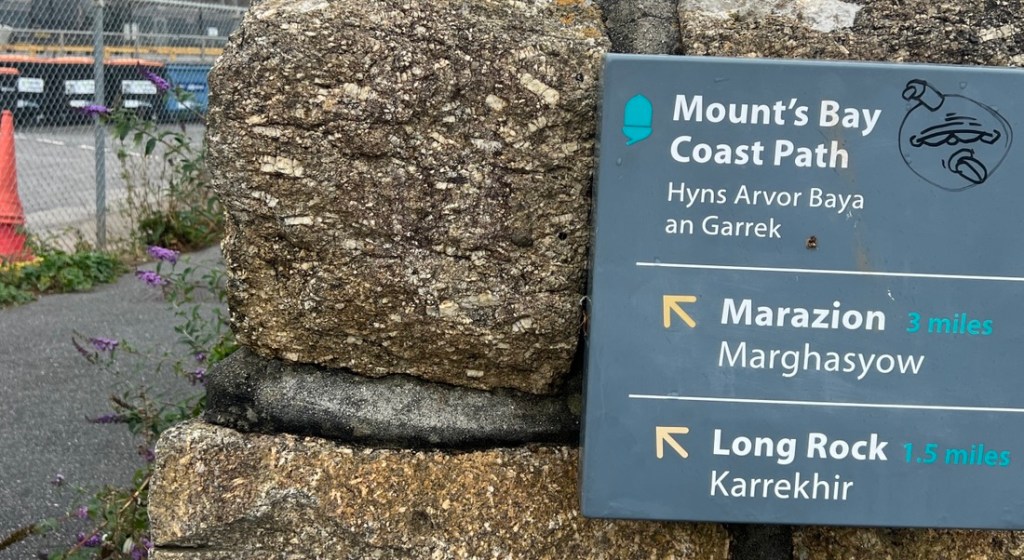
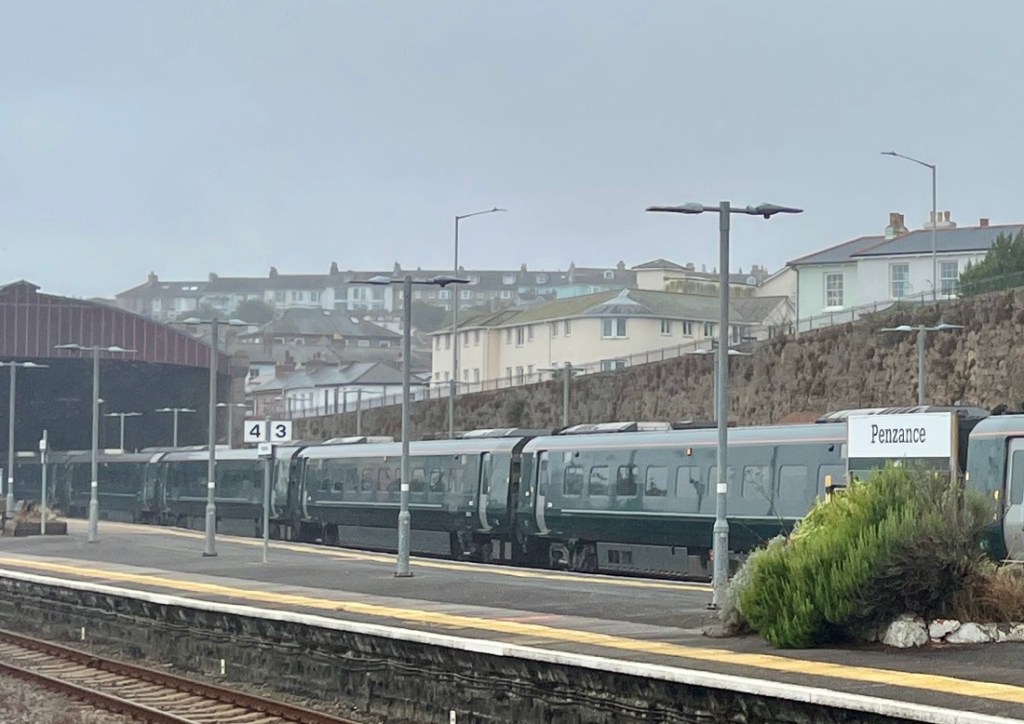
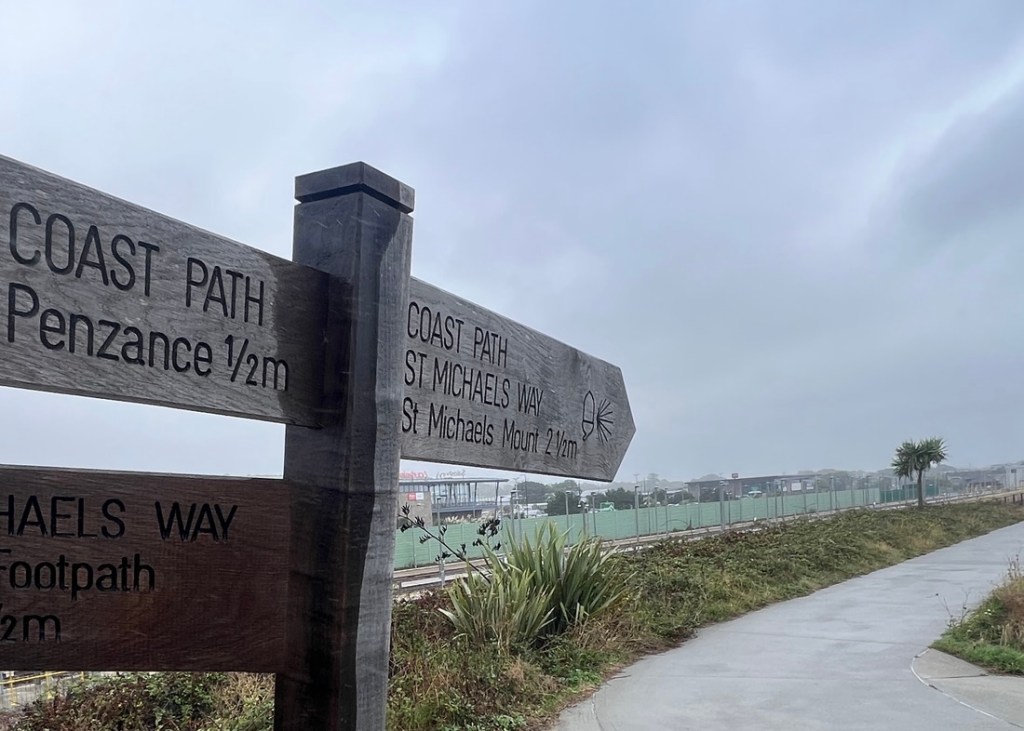
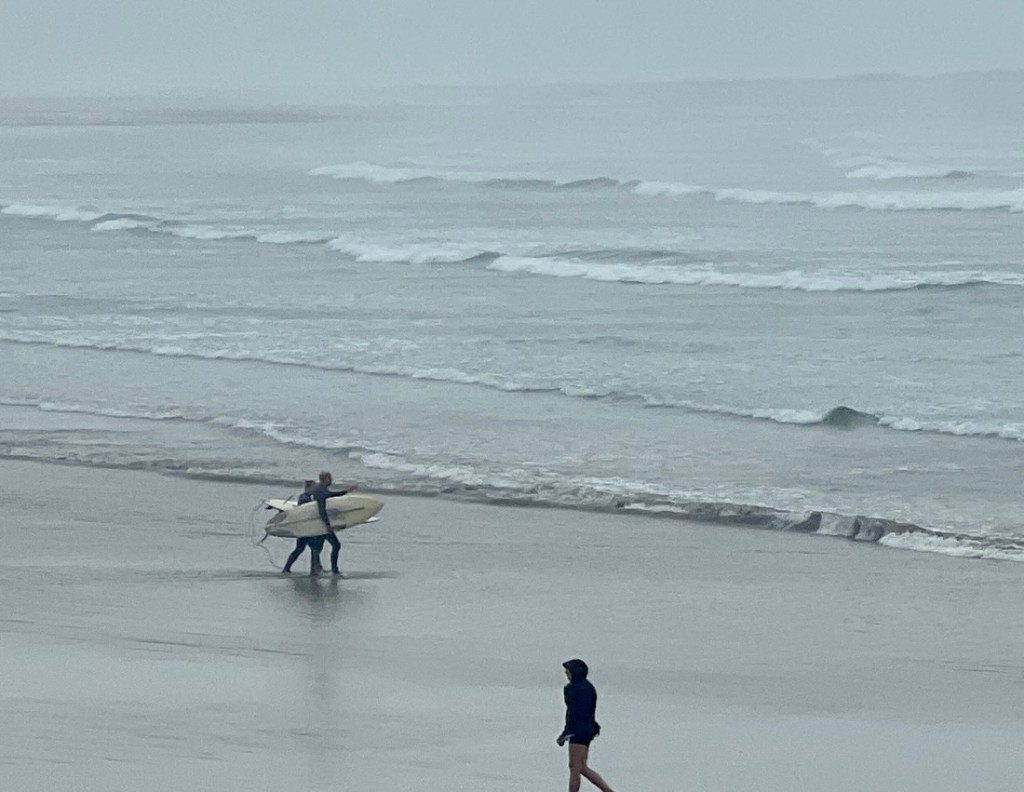
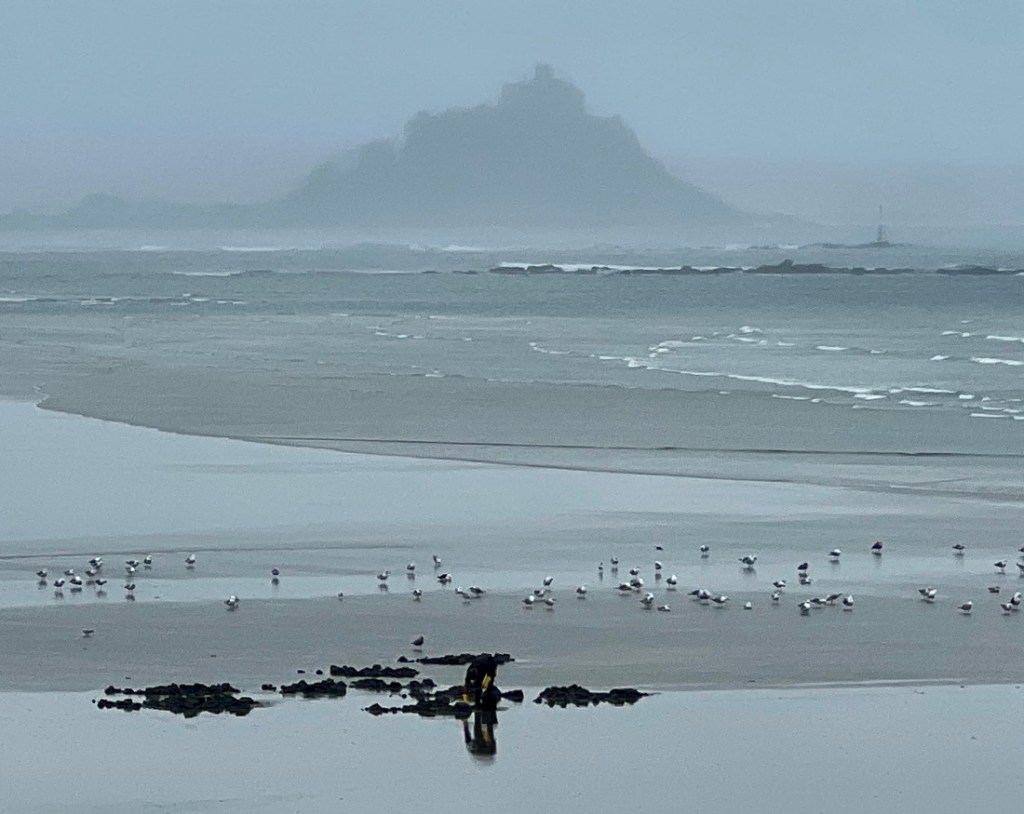
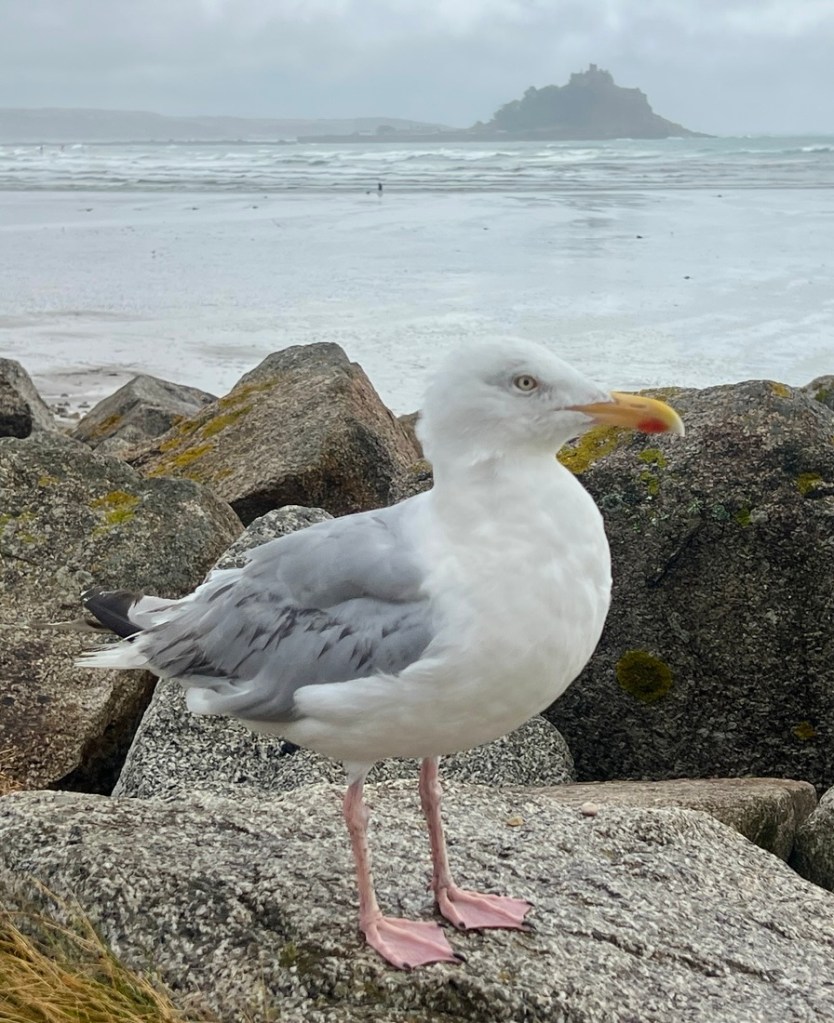
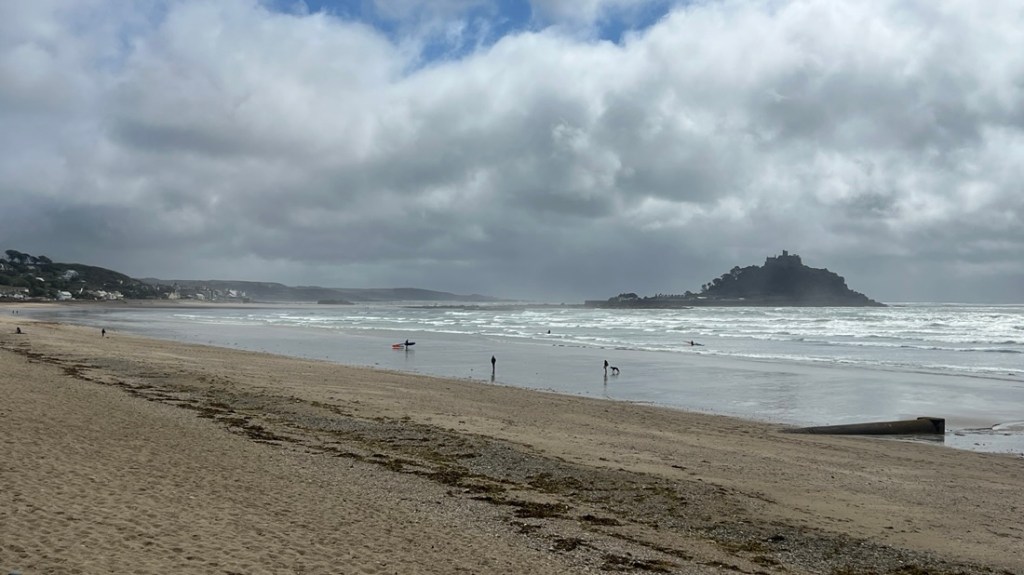
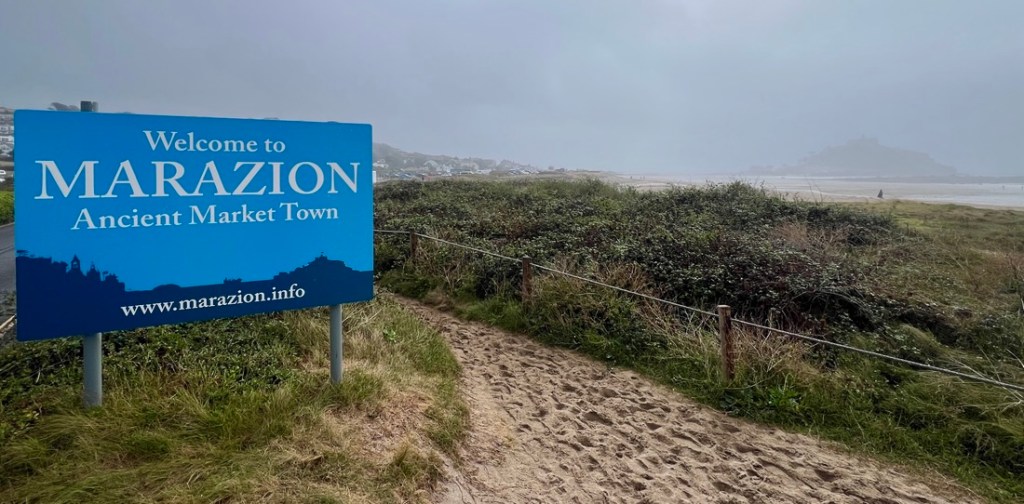
That way! The placenames included their Cornish equivalent.Our path ran right next to the railway and was easy walking.Penzance Train StationThe train from London arrived.We had a couple of miles to go to reach Marazion, the mainland end of a causeway that connects with St Michael’s Mount.Surfers attempted to ride the waves.A local fisherman dug for lugworms.Scuttle was determined to show he was more important than that island, but I think he was mostly interested in stealing some food.The mist cleared for a fine view.But the mist returned as we entered Marazion.
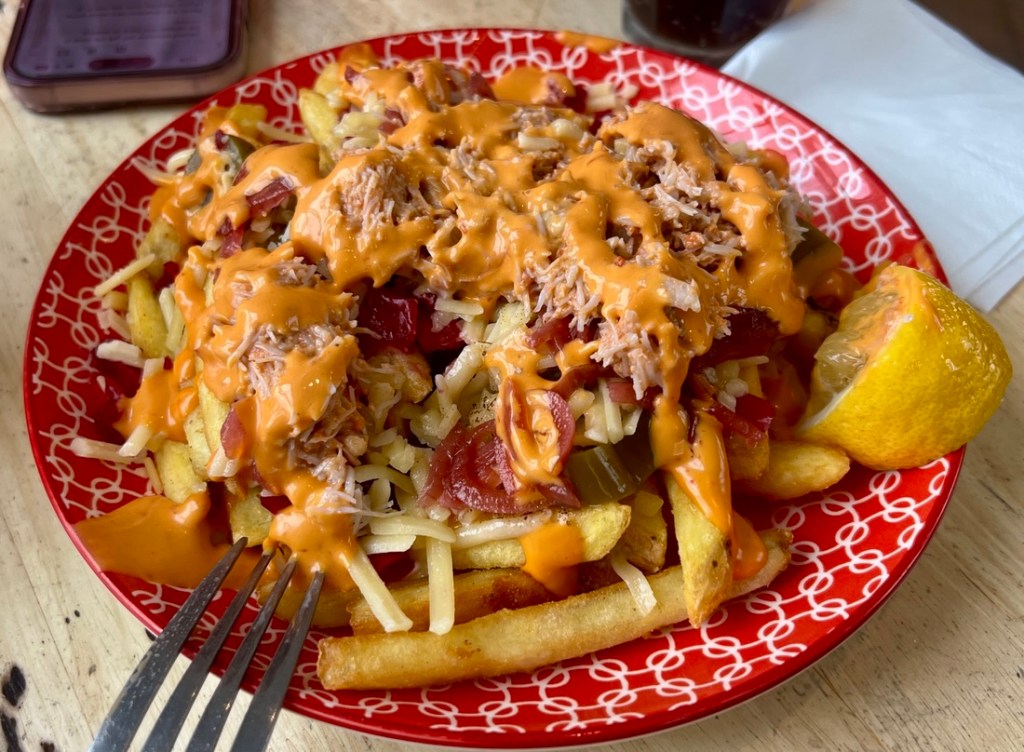
We arrived in town in time for lunch. A cafe offered crab-loaded chips with spicy mayo, and we could not resist this indulgence.
The crab-loaded chips did not disappoint!
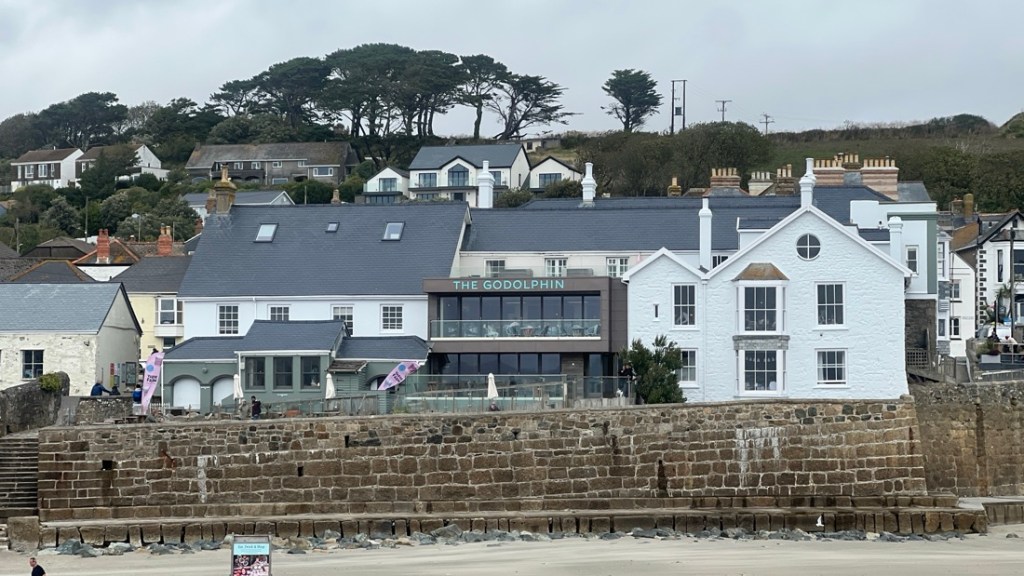
We were able to check into our hotel early. The Godolphin was right opposite the island so was perfectly located.
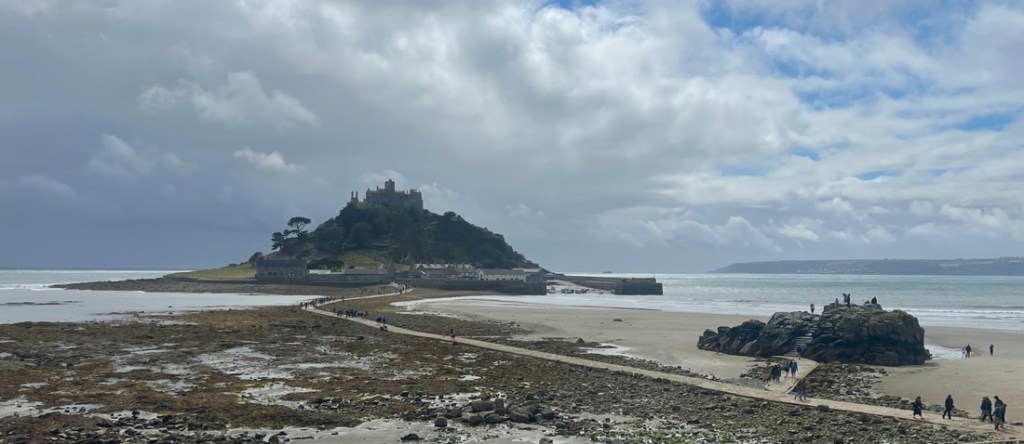
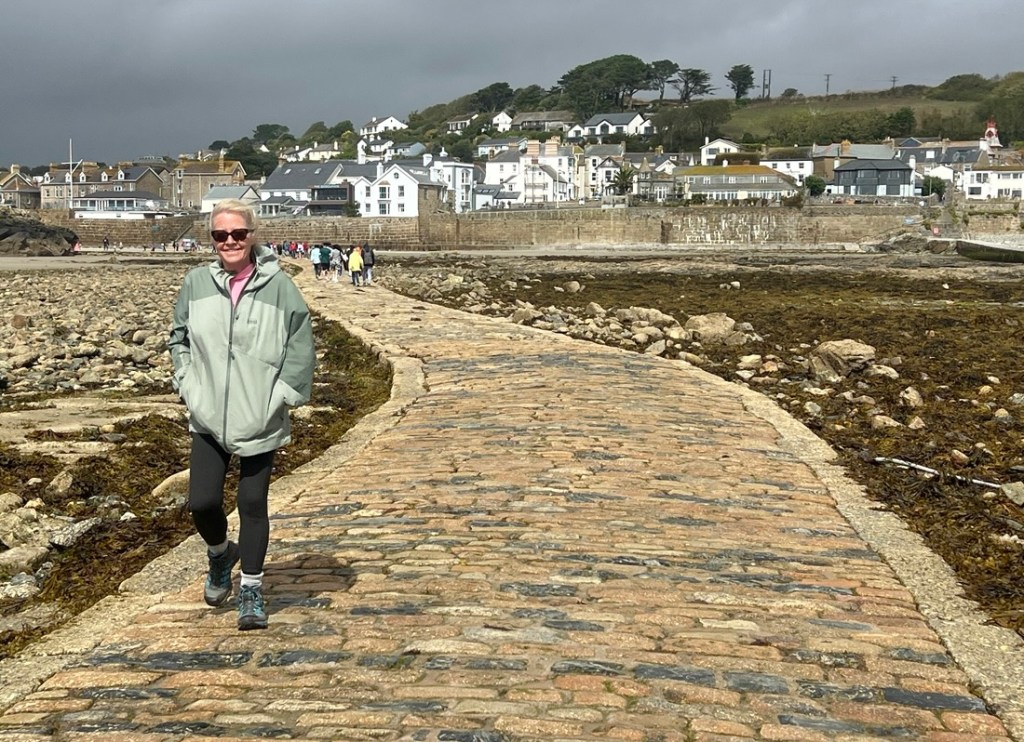
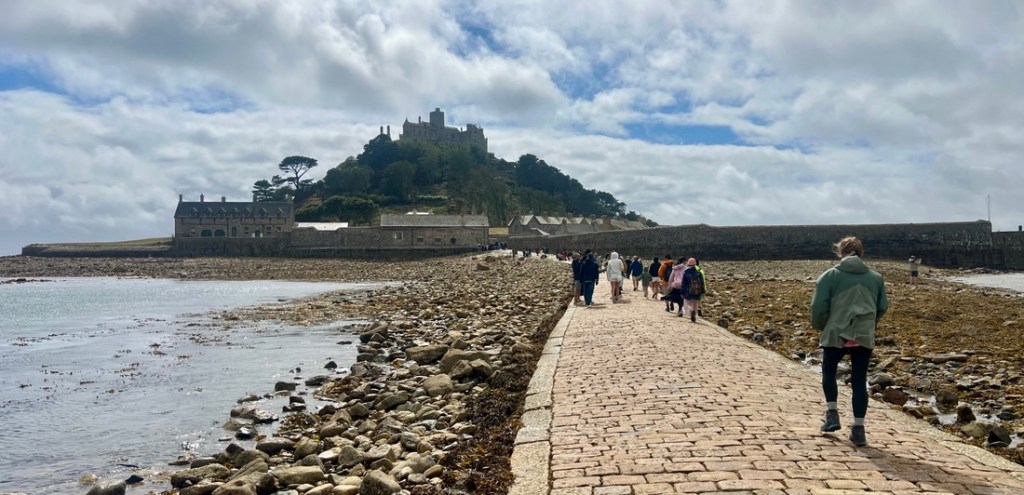
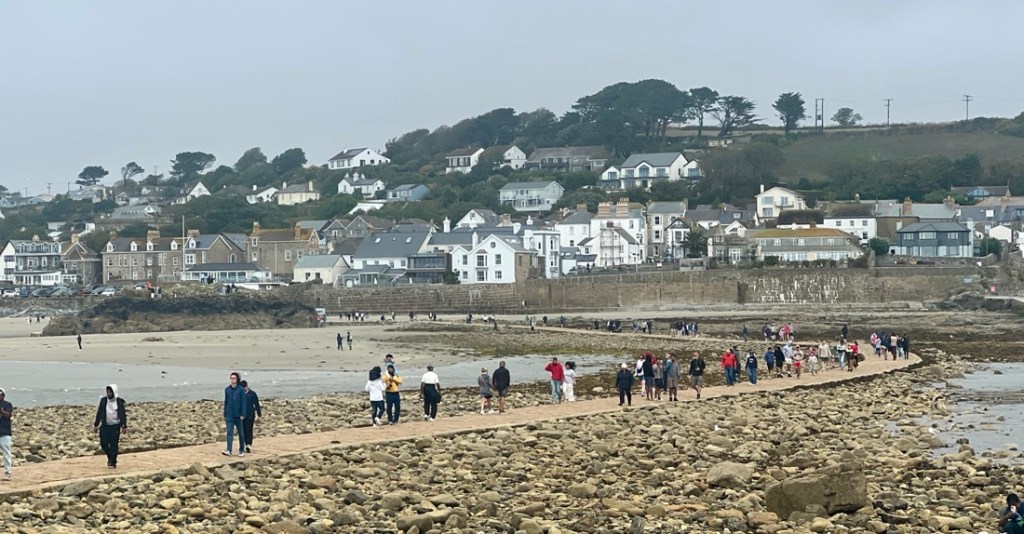
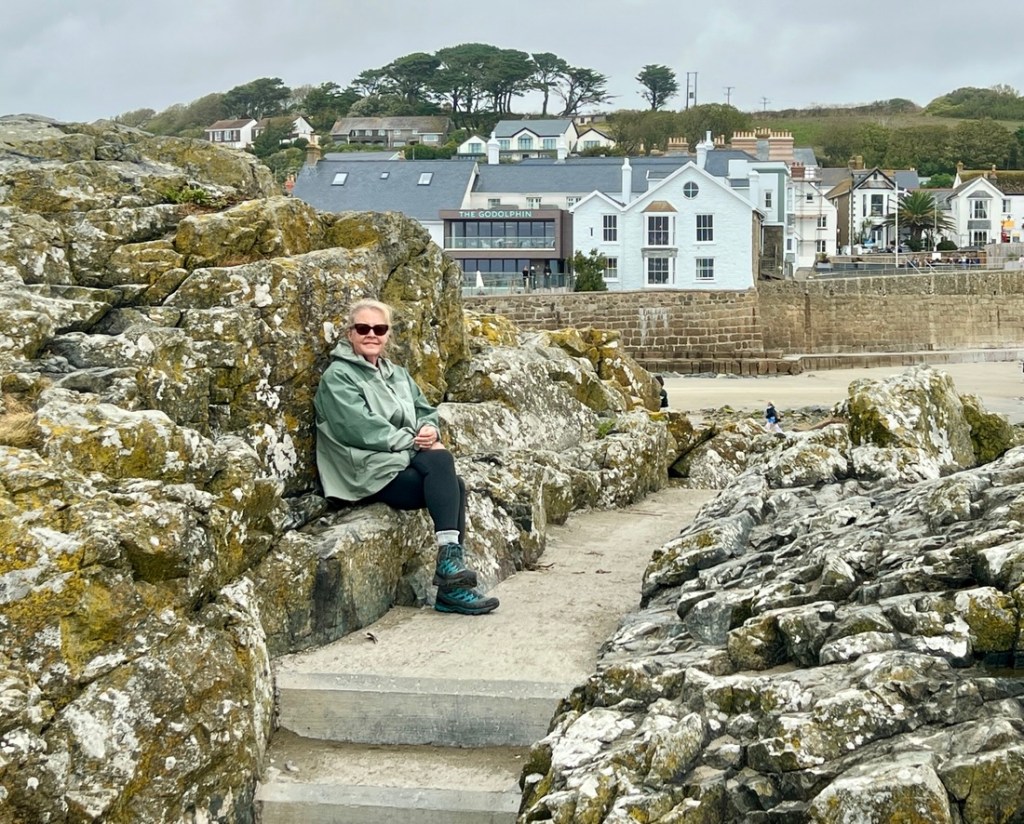
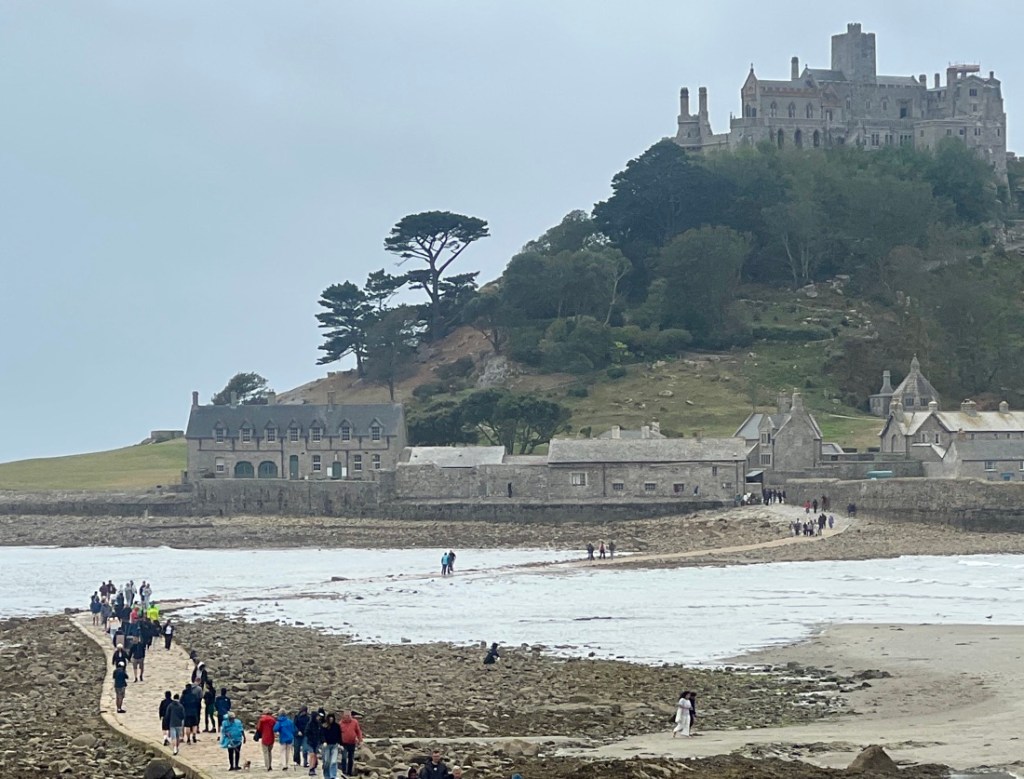
At about an hour past low tide, the causeway was dry so we could make the crossing.The cobblestones on the causeway were not easy to walk on.On the island is an impressive castle and gardens. It was closed on Saturdays, but we were happy just to walk across.Many in the crowds walking over were surprised and disappointed that it was closed on Saturdays. 30 people live on the island, and Saturdays are their day off!Chapel rock, which houses a little Chapel until 1645, enabled great views. I scrambled around the rock to see our bedroom’s window – just to the right of a chimney.Janet was happy to have found a seat out of the wind!I wanted another shot from a different angle.The next time I looked, some of the causeway was underwater.By dinner time, the path and beach were completely underwater! High tide was more than 15 ft higher than low tide.Pictures side by side from low and high tide.
I had thought about recording a timelapse video, but thought it would be easier and quicker to find one on YouTube. Watch it to the end – it is only 49 seconds!
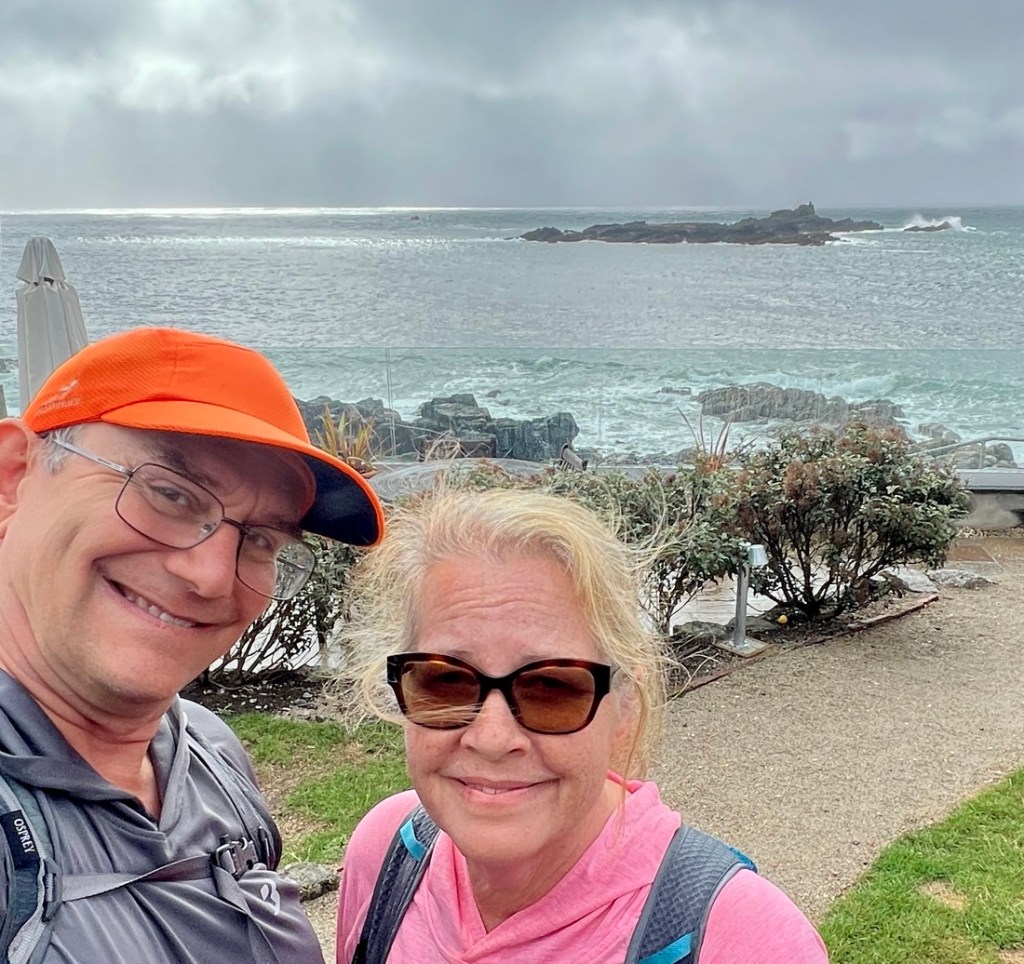
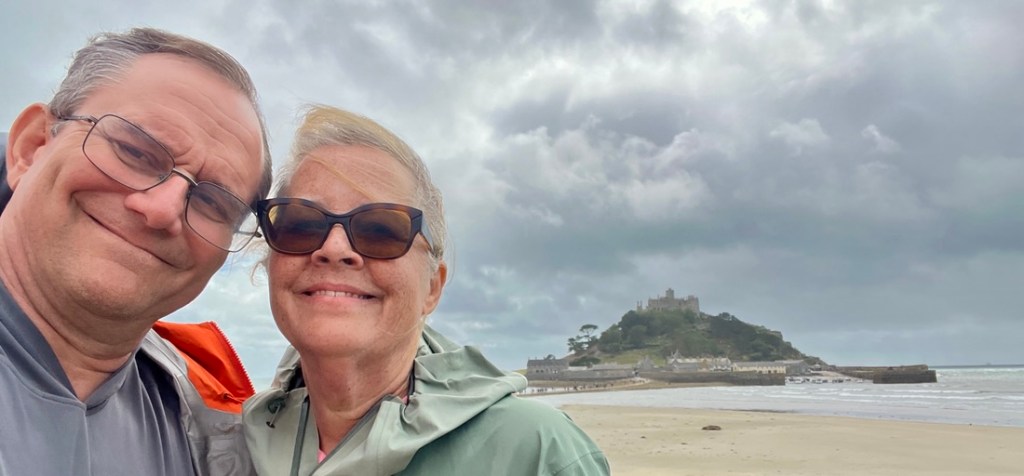
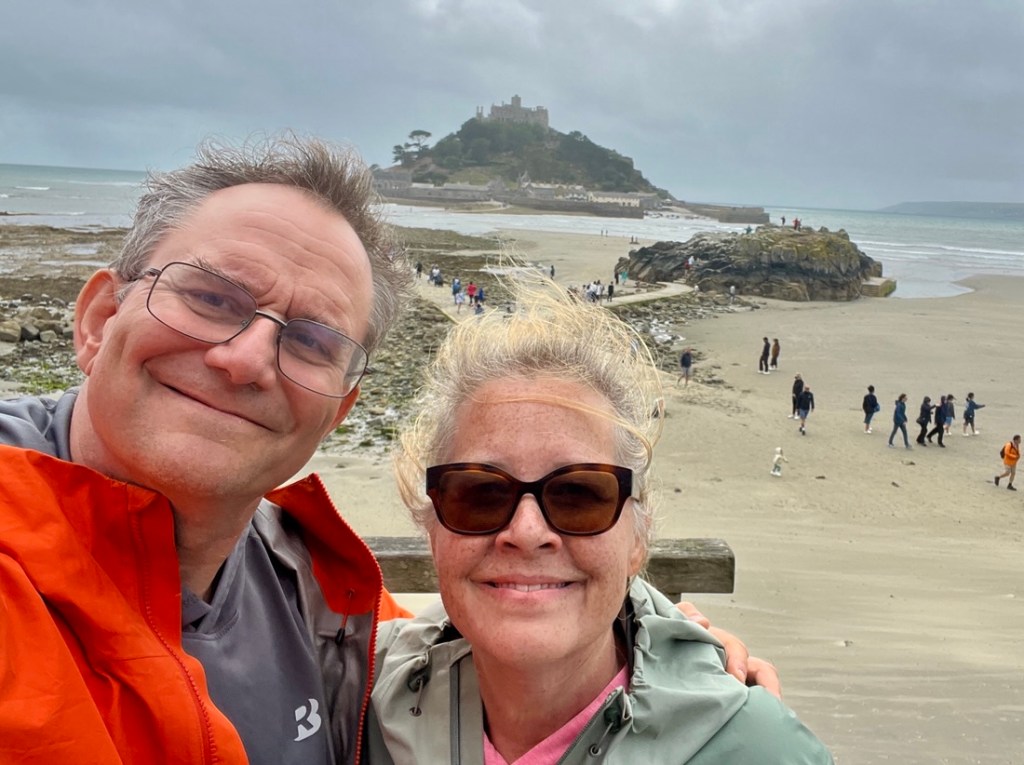
Another great selfie opportunity!
After a strenuous day, back in the hotel room…
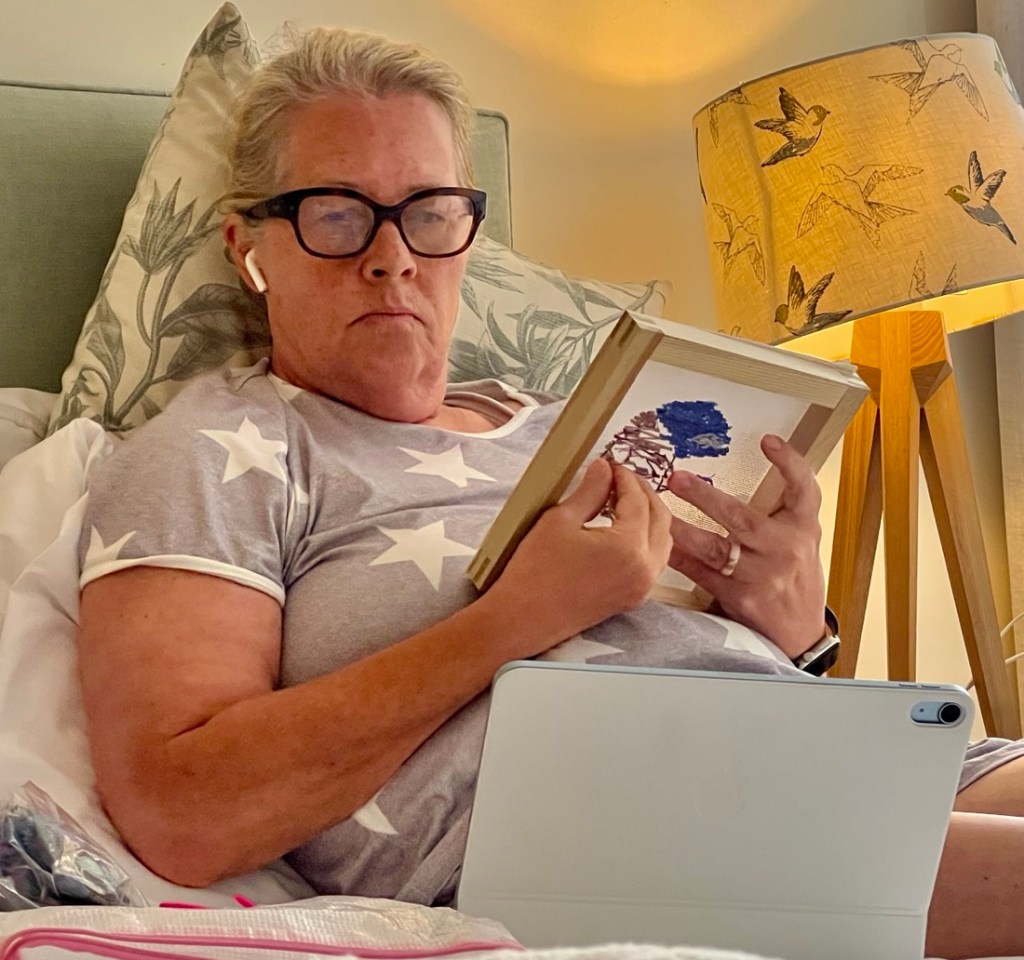
Janet enjoyed her needlepoint while I sort out my photos and blog!
"Cajunlimeys" combines Lousiana (Janet) and Britain (Peter). British sailors in the 19th century were nicknamed "limeys" as they drank lime juice to prevent scurvy. However, while Janet is a fine cook, she has no Cajun blood, but the name fit.
We love adventures and use blogging to write a photo diary to preserve our memories. Some crazy friends enjoy following us, and my notes might help others plan.
View more posts