
Odometer: 1,453 miles. Today: 104 miles.
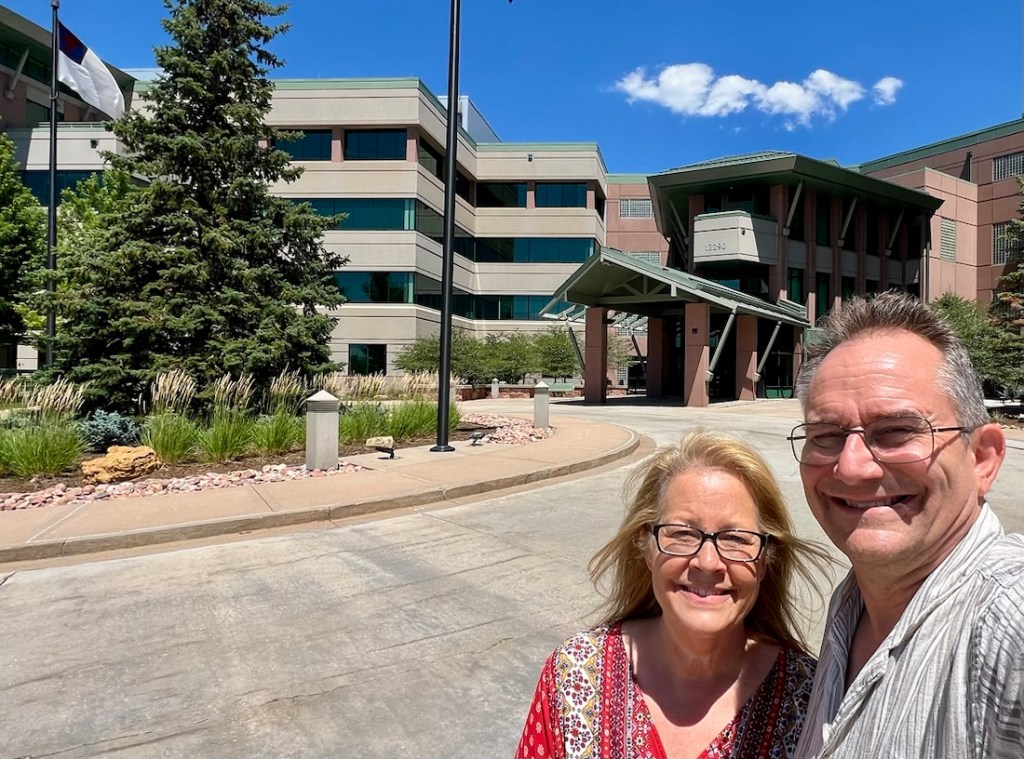
Today’s objective was a tour of Compassion International’s HQ, known as the Global Ministry Center.
In summary, if you are in Colorado Springs, spend an hour and visit them! You need to prearrange the visit.
After a short drive from Golden and having dropped Saydee off (thanks Nora!!), we headed to Compassion’s Global Ministry Center, checked in, and met Kay, our tour guide.
First Impressions
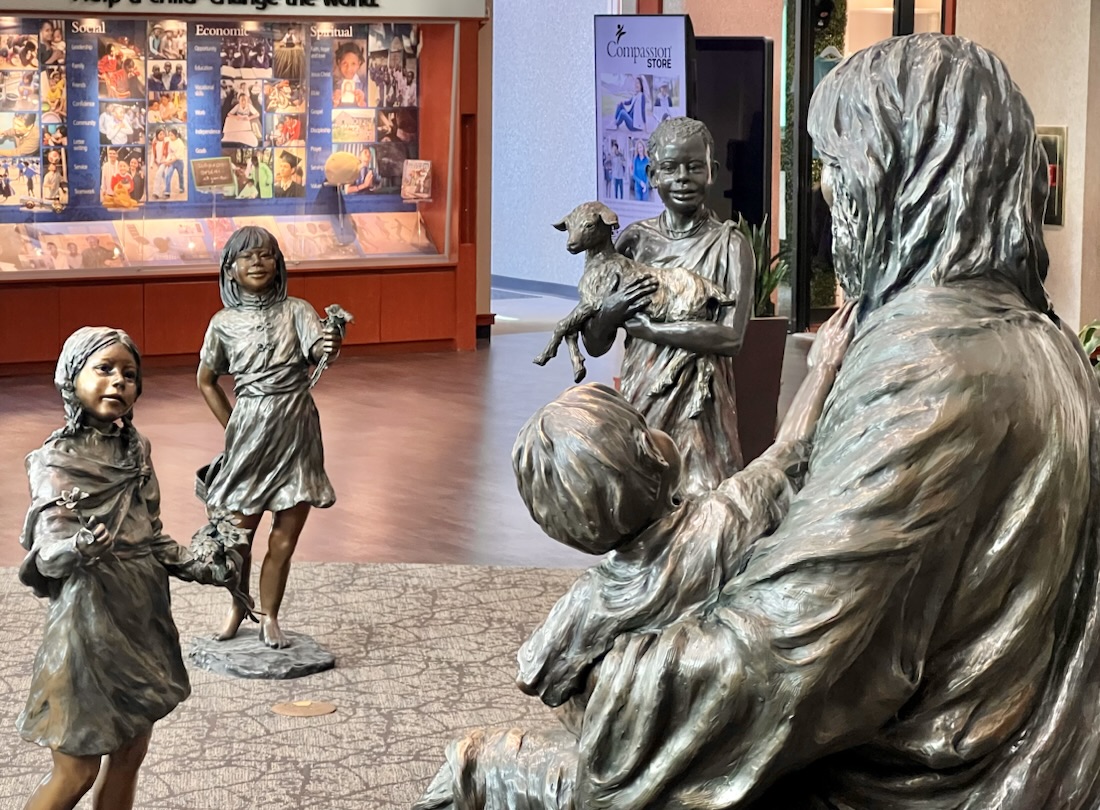
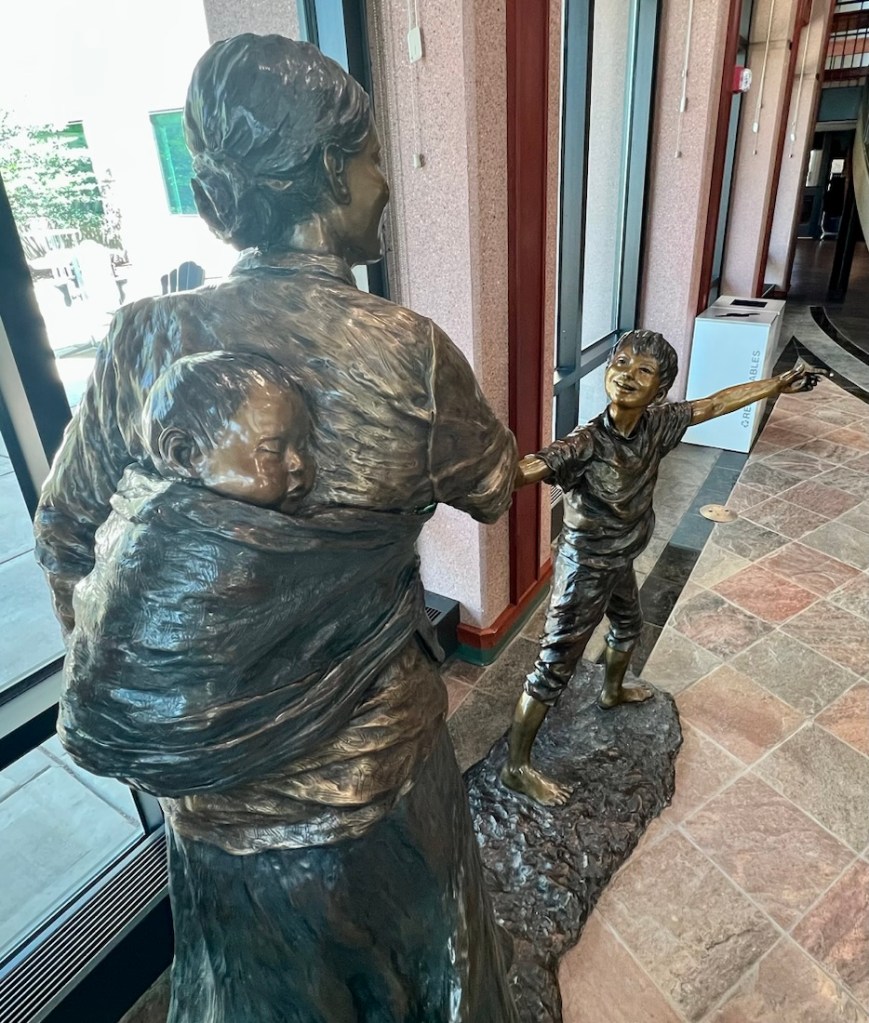
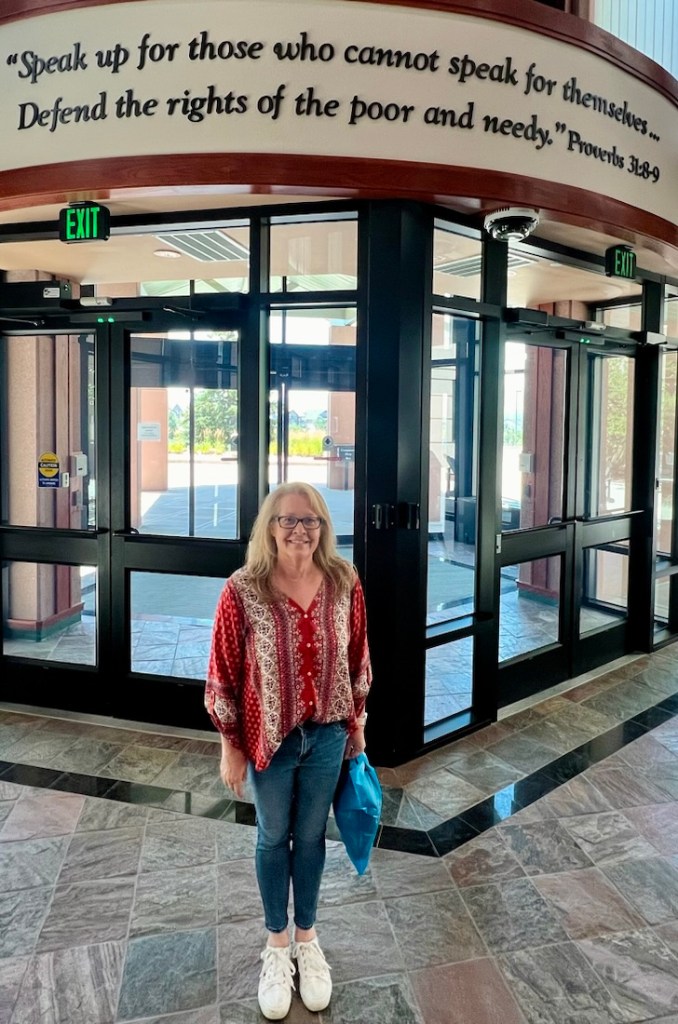
We had two first impressions. The first, unsurprisingly, was that the organization is all about children and Jesus. The donated bronze statues at the entrance, with relevant Bible verses on the wall, make this clear!
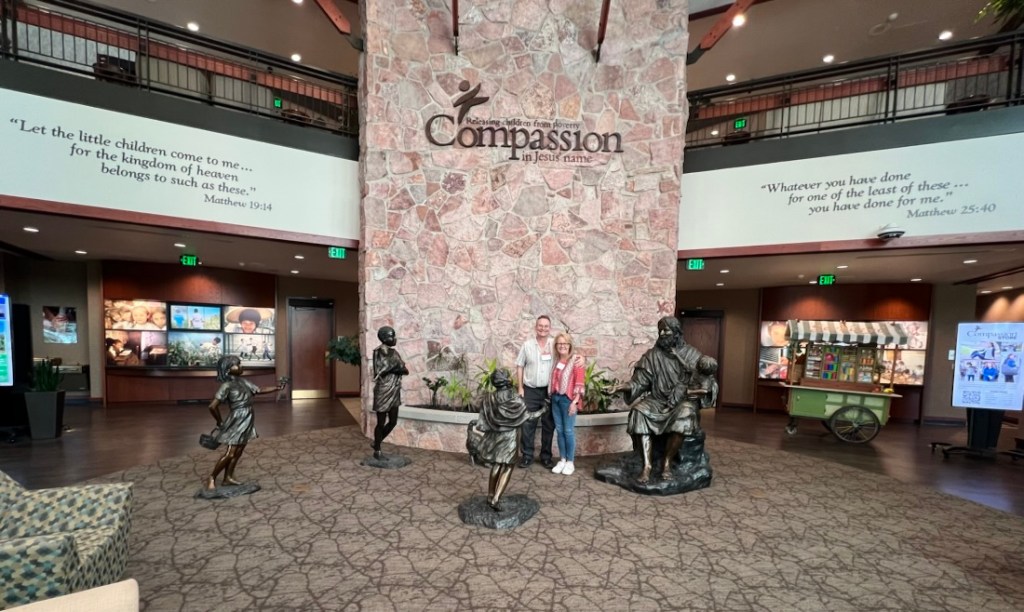
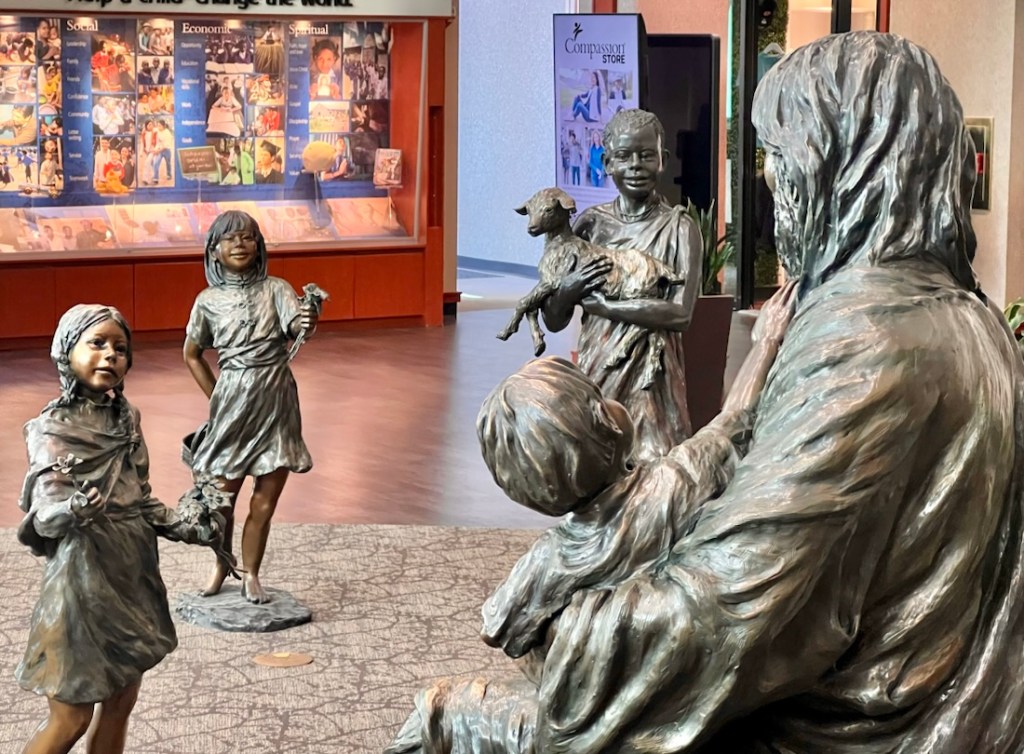
Immediately, memories of our trip to Peru with Compassion the previous month, returned, along with many of the emotions.
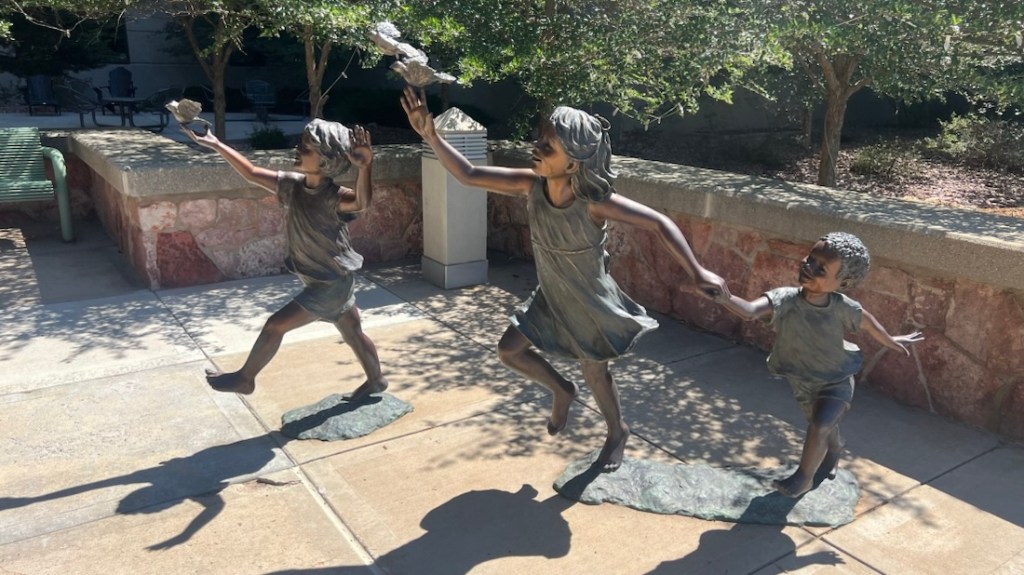
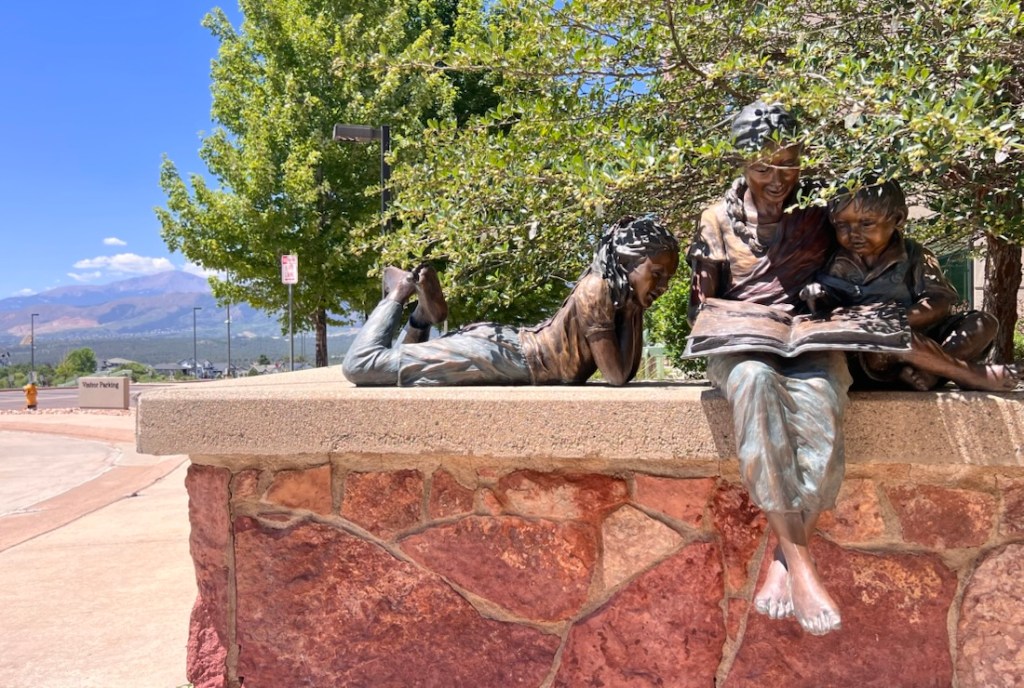
The second first impression was how quiet it was. Some of this was because it was lunch time and in the summer. However, a lot of things changed with COVID. The office used to house 1000 employees and many volunteers. COVID encouraged remote working and a remote workforce, avoiding the need to relocate and broadening who can apply for jobs. Indeed, all of the three Compassion employees that I have met work remotely. This mirrors the decentralized approach we saw in Peru, where the primary activity was with the frontline church partners.
The Tour
The well-structured visit took us through the stages of bringing children out of poverty in Jesus’ name.
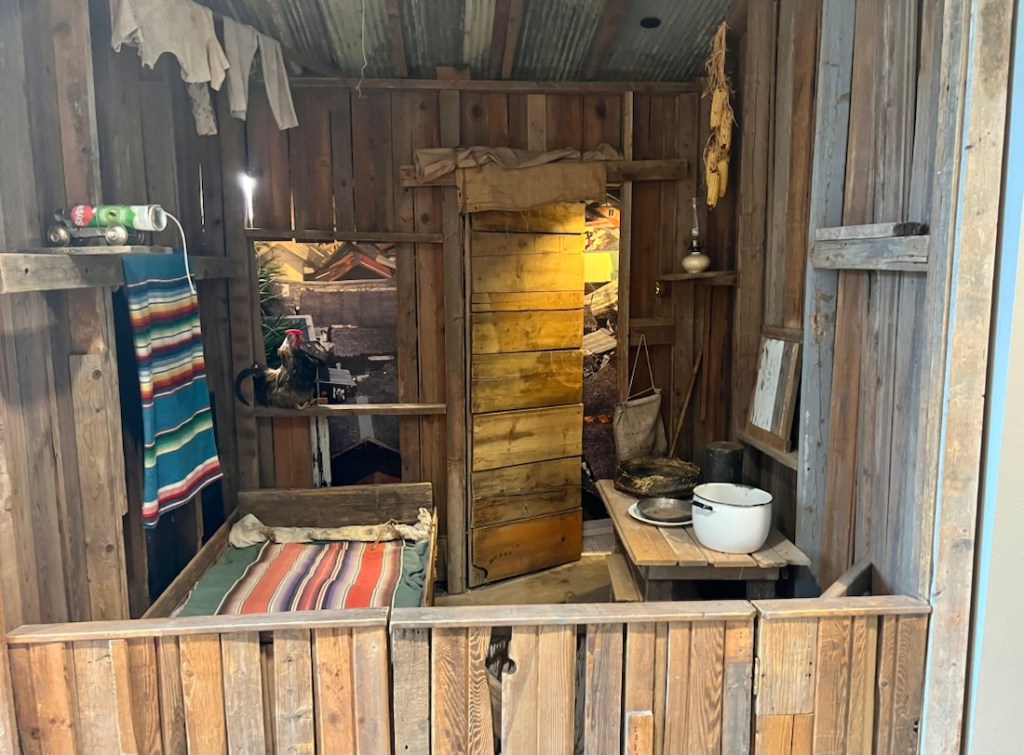
The first stop was a mockup of a typical home that a child living in poverty would grow up in. Basic walls surrounded a stone floor with a chicken and a makeshift toy built from trash. It was about the middle of the range of what we had seen in Peru – better than many, though a couple of homes we saw were better equipped. Poverty looks different in different places!
A storyboard on the adjacent wall explained how Everett Swanson started Compassion. In 1952, he went to Korea during the war to minister, and was horrified at seeing the bodies of dead children being taken away each day. He started by opening an orphanage and then developed the sponsorship model that remains the foundation of the organization’s efforts to connect donors with children.
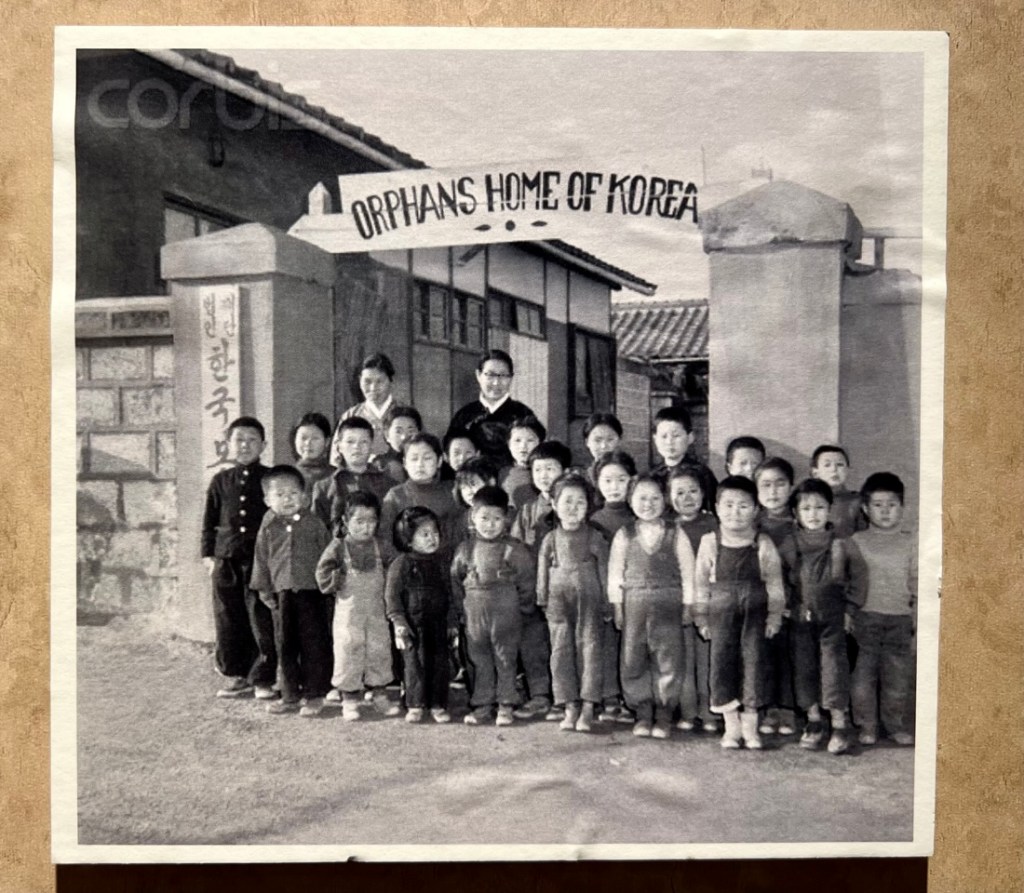
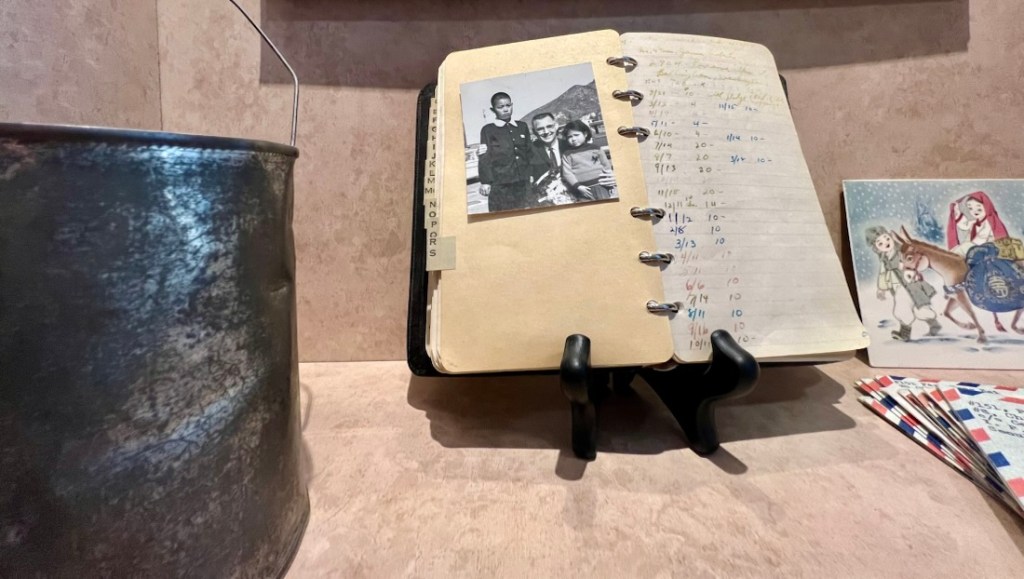
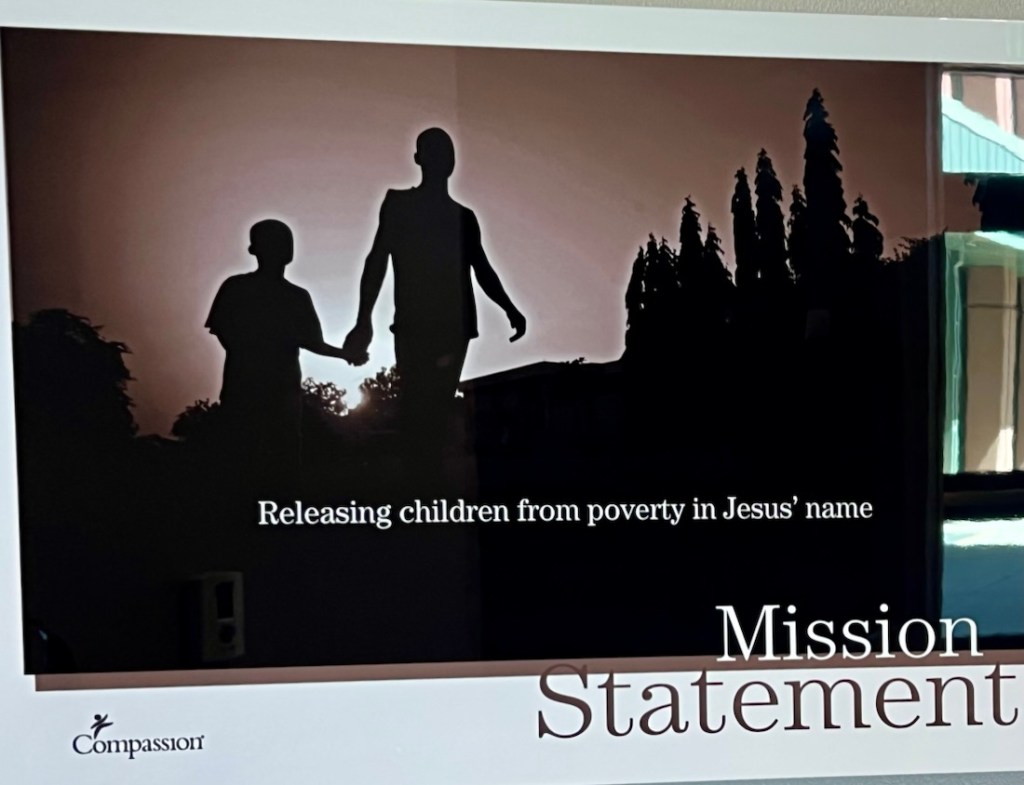
Since the beginning, the organization has visibly prioritized Jesus in their work to bring children out of poverty.
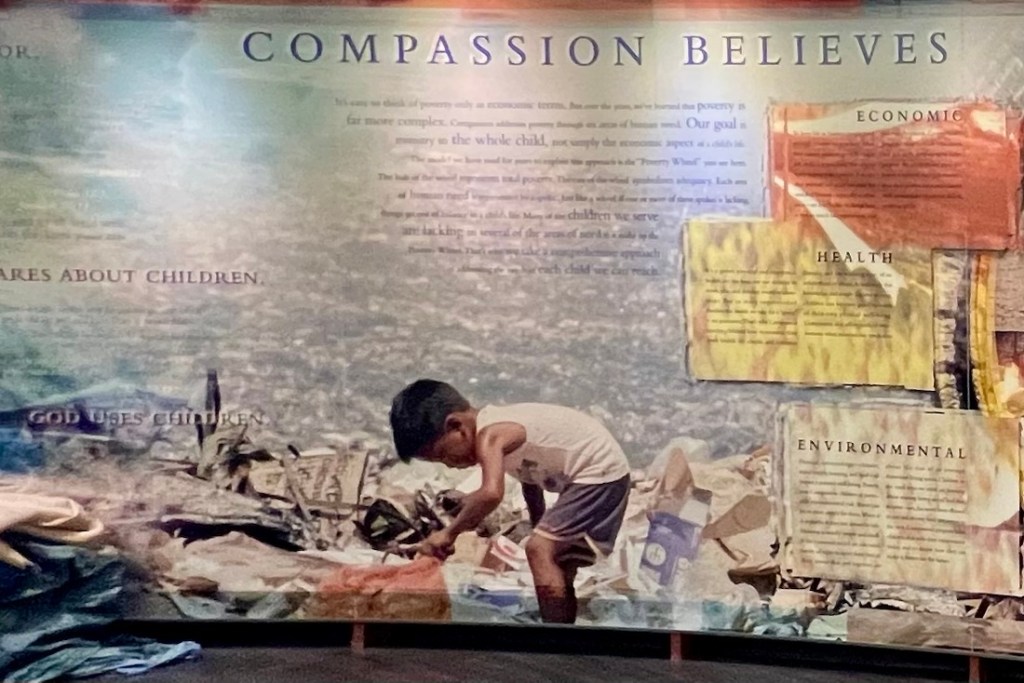
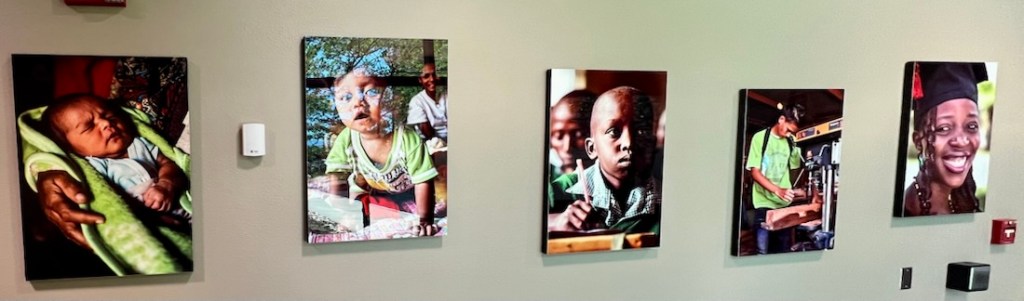
Next was a wall which summarized the approach. First was a striking picture of a child rummaging through a trash heap, looking for food or anything useful. We did not see this in Peru, though I know it is common in too many places.
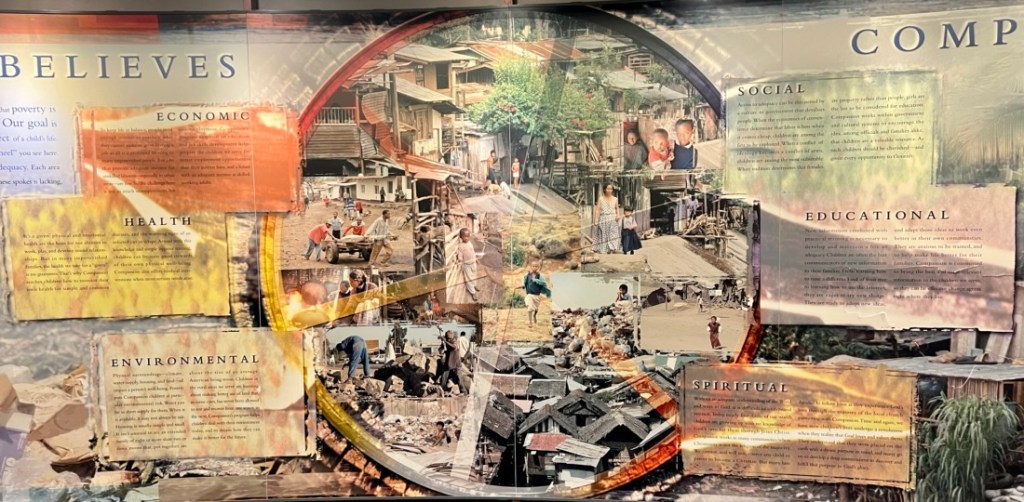
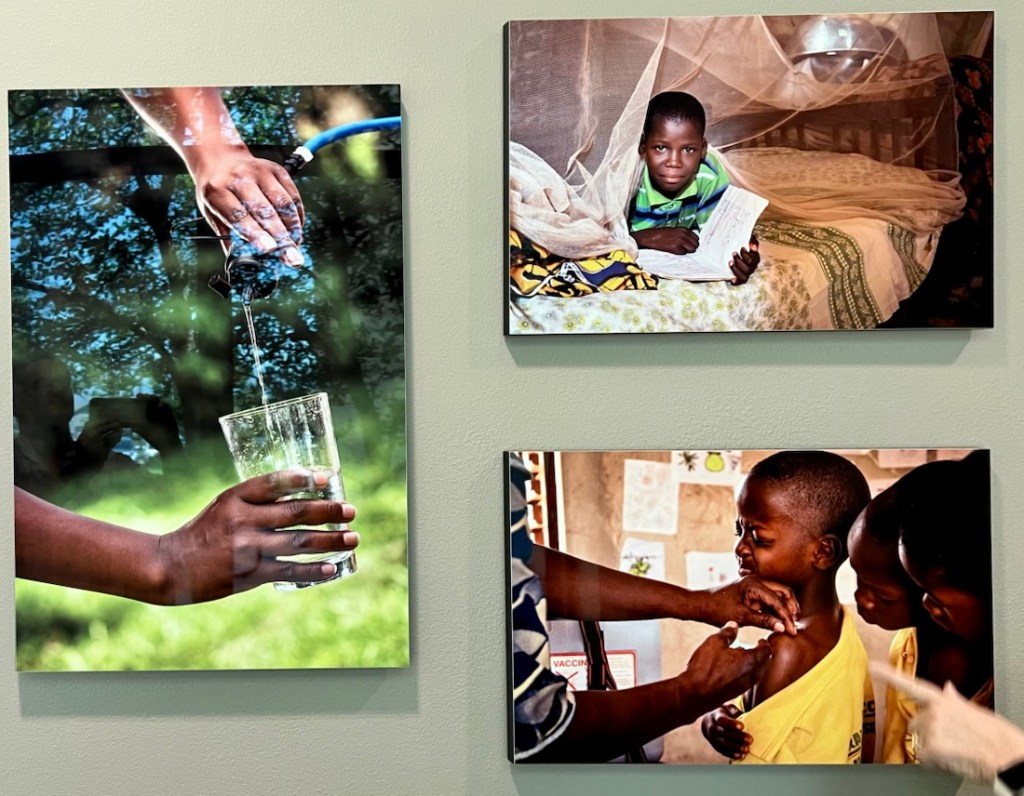
Compassion’s holistic approach addresses the economic, health, environmental, social, educational, and spiritual needs of the children. These needs vary tremendously in different situations, which is why Compassion’s partnership with frontline churches as their primary vehicle for interacting with children and their families is so important. This ensures appropriate solutions are prioritized and implemented in culturally-aligned ways.
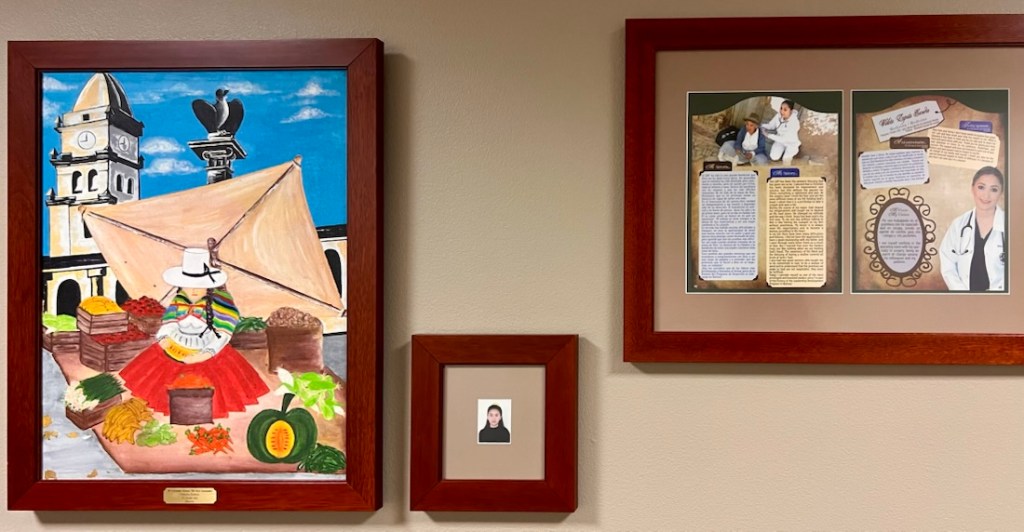
We discussed how the programs span all of childhood, from birth to early 20’s. Once the children become teenagers, a focus is what they are going to do with their lives. For some, this might be how they need to study very hard to become a doctor. For others, it might be developing the practical skills to pursue a trade like welding.
Next, we saw the “machinery” that connected sponsors to children. Compassion embrace new technology to increase their effectiveness and save cost. A large machine that automatically opened envelopes and sorted checks was now almost redundant with electronic payments. A large scanner electronically captured handwritten letters in color to speed the transmittal to the recipient’s country while preserving the personal touch. We saw the “receiving” side of this in Peru’s national office, where these scanned images were printed, translated, and despatched to the children.
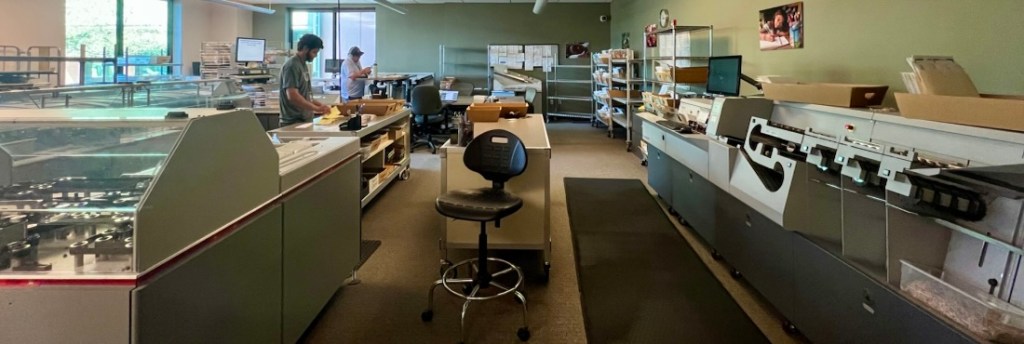
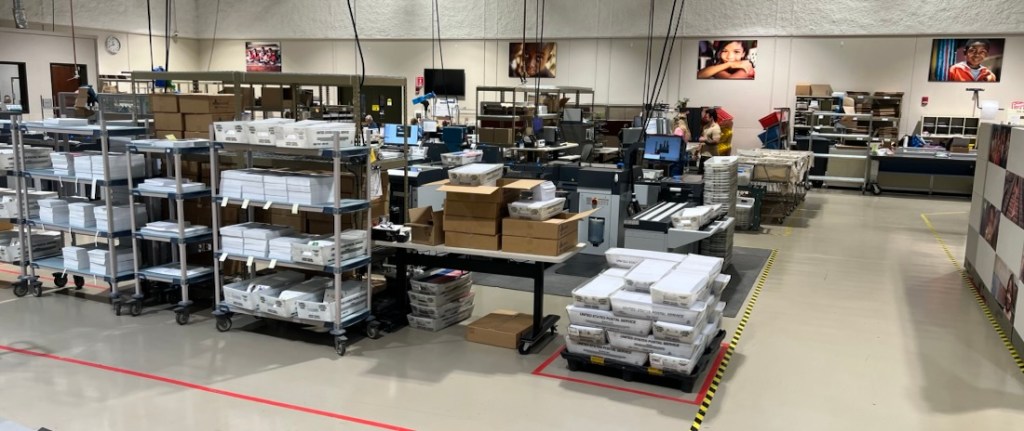
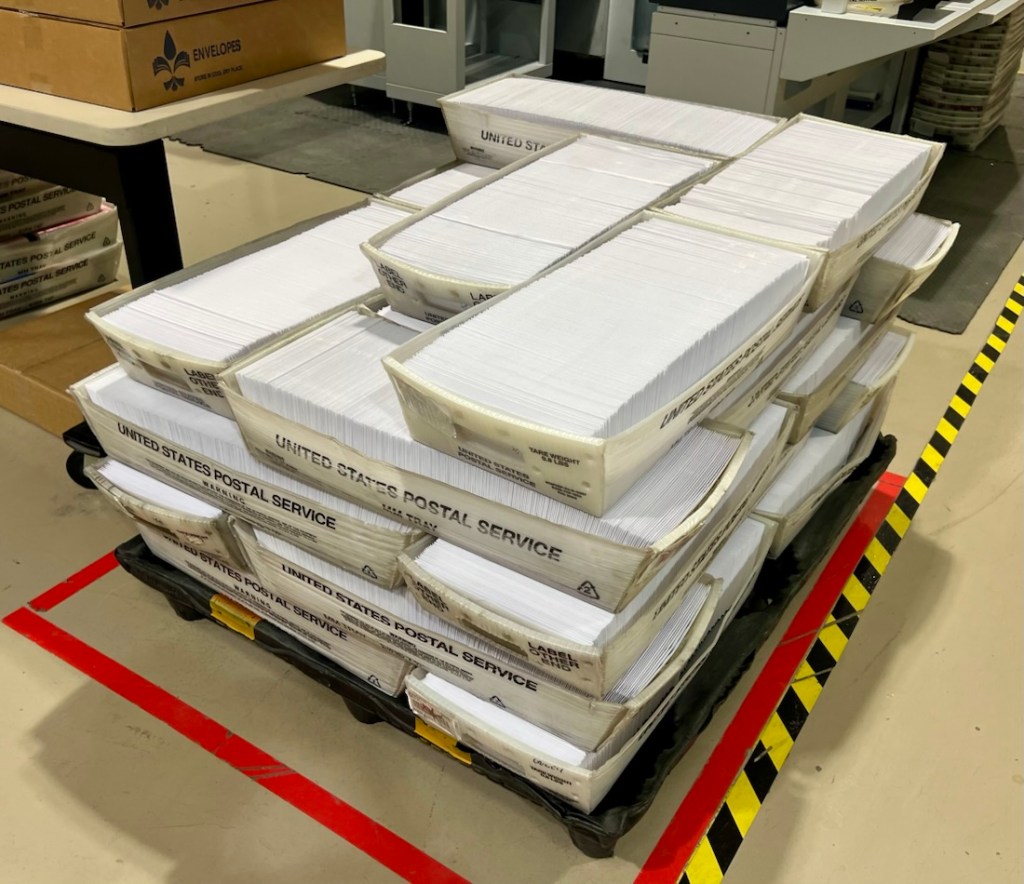
Compassion has brought all of their printing needs in house, giving them control while saving money for their large quantity of printed material, mostly associated with fundraising.
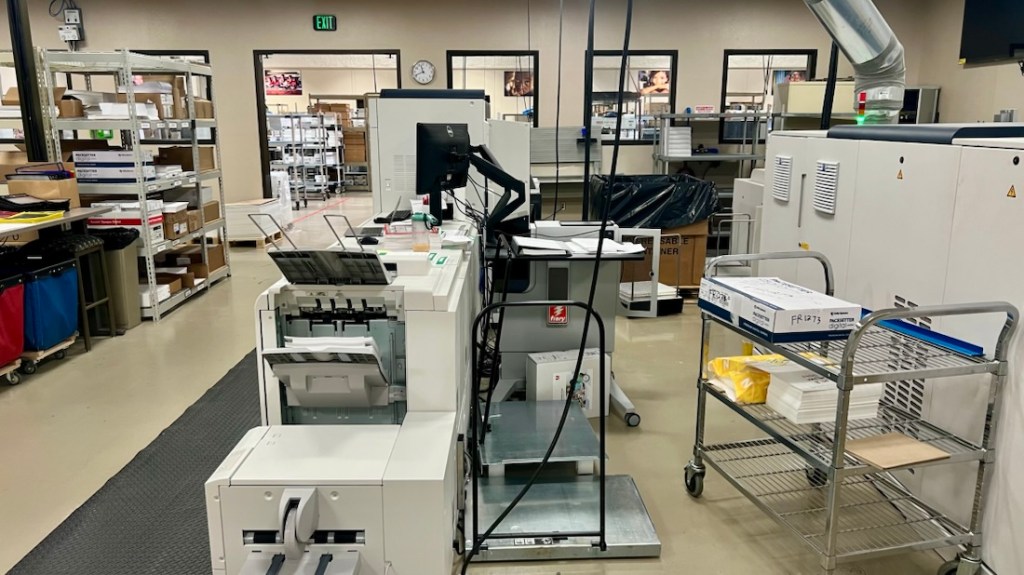
The large warehouse included many stations for preparing mailings.
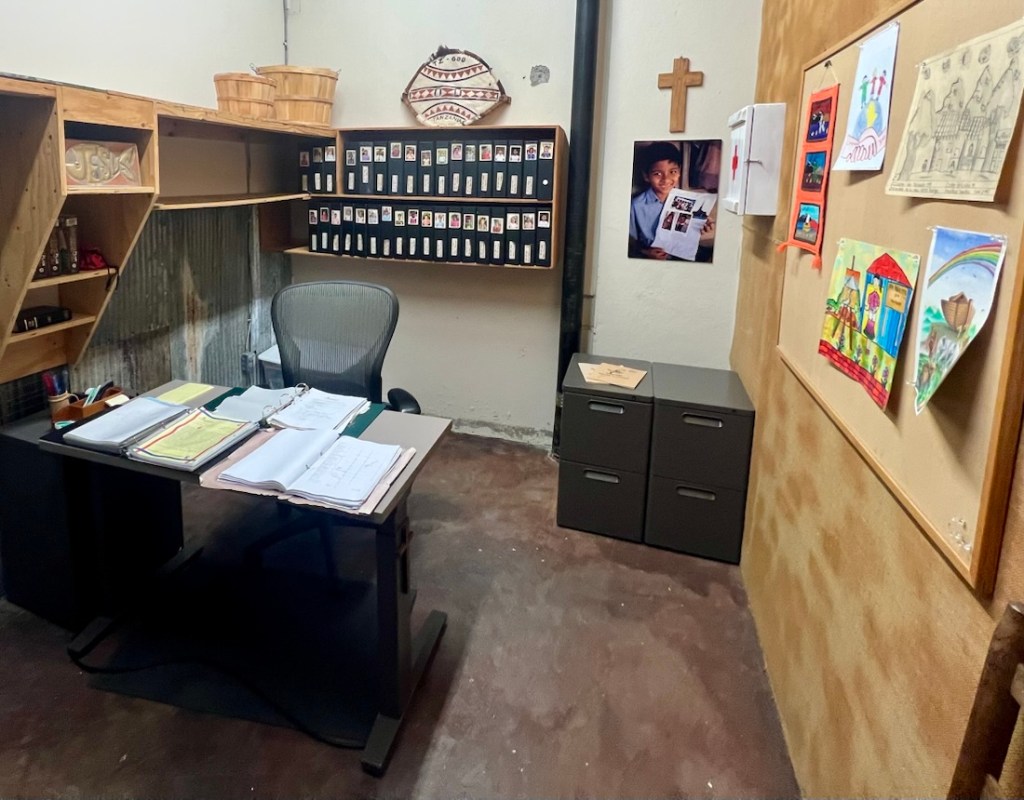
Next we went to mockups of what a child development center at a frontline church partner would look like. This was a good representation of what we had seen in Peru – where every one had been so different!
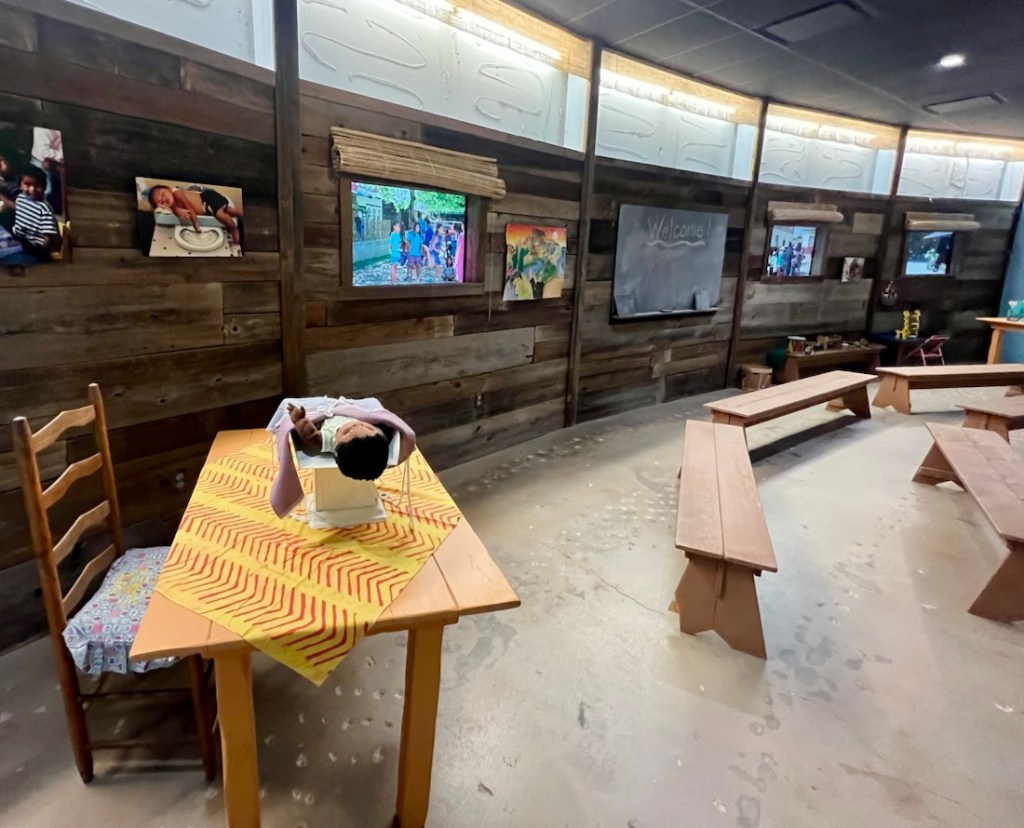
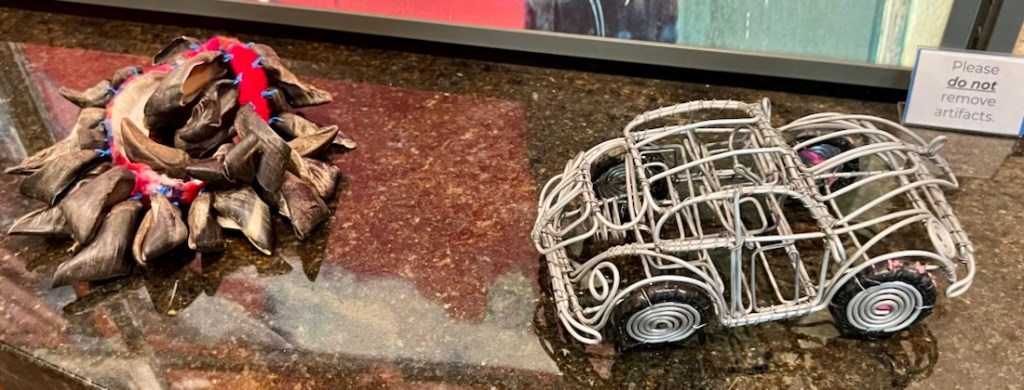
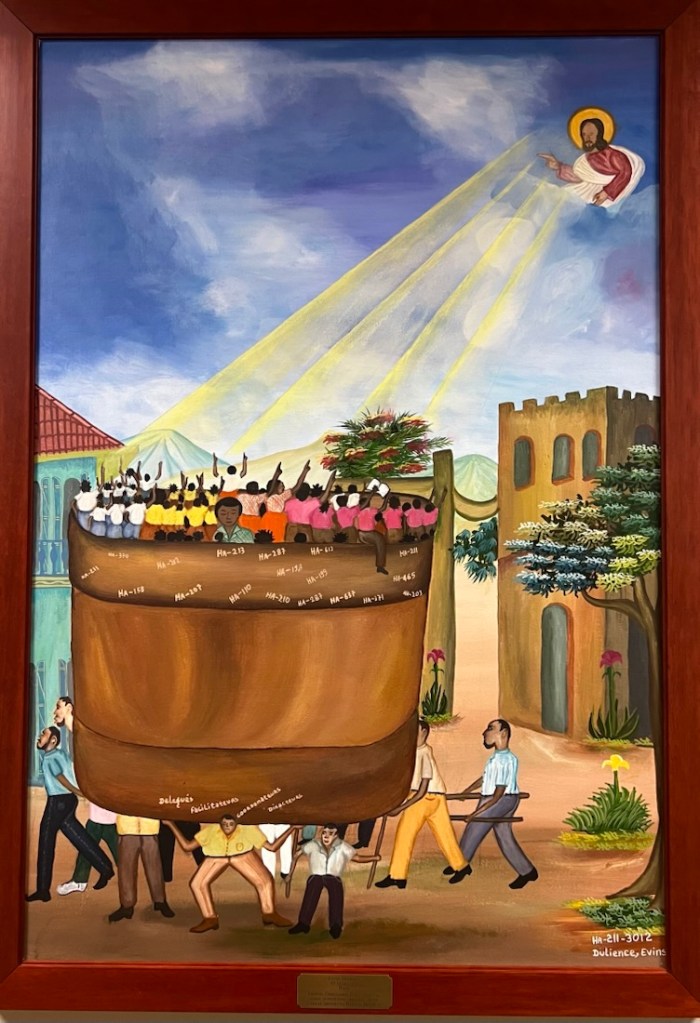
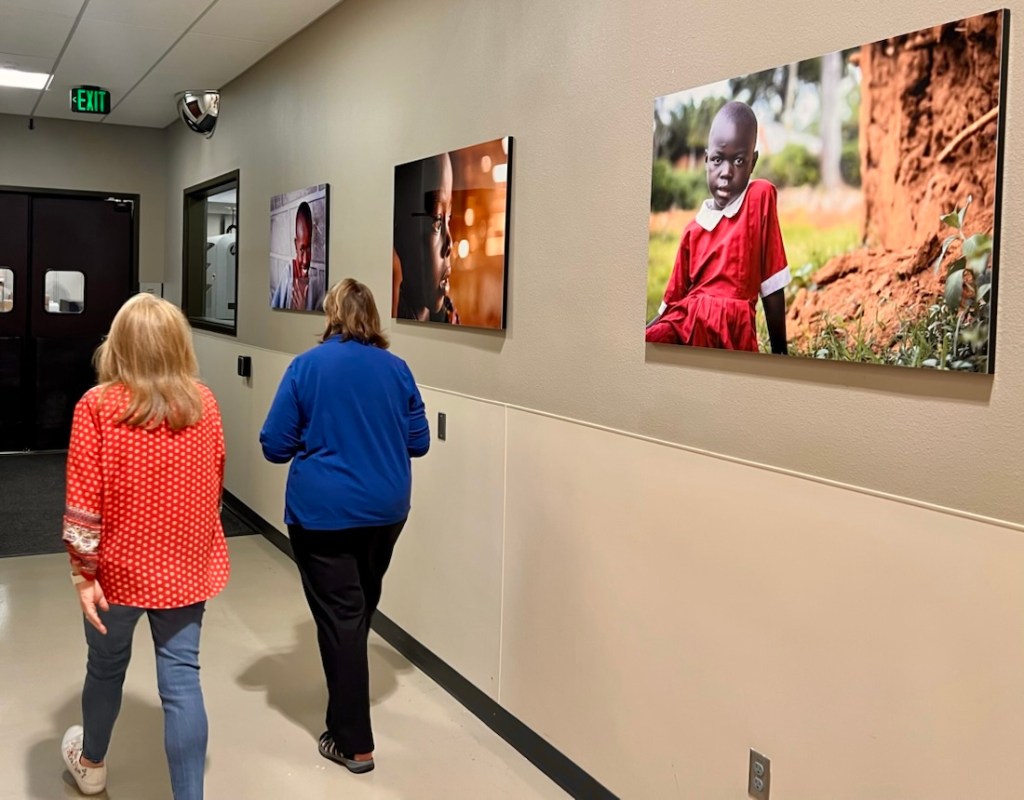
The visit brought back many of the emotions from Peru. We were glad we didn’t have much else planned for the day. We made it to our campsite in Cheyenne Mountain State Park, on the other side of Colorado Springs, and had a chill evening.
 The Adventures of the Cajunlimeys