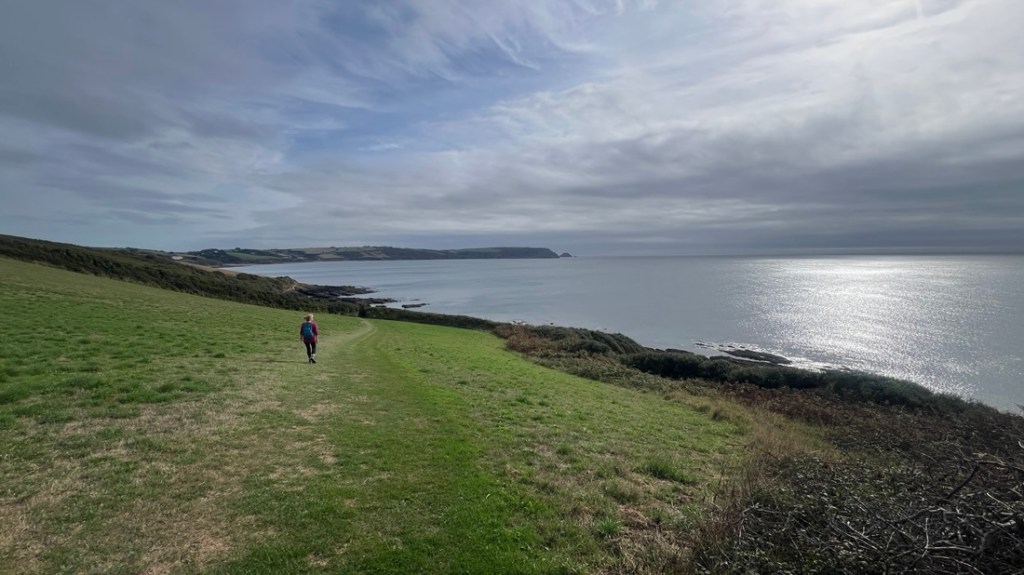
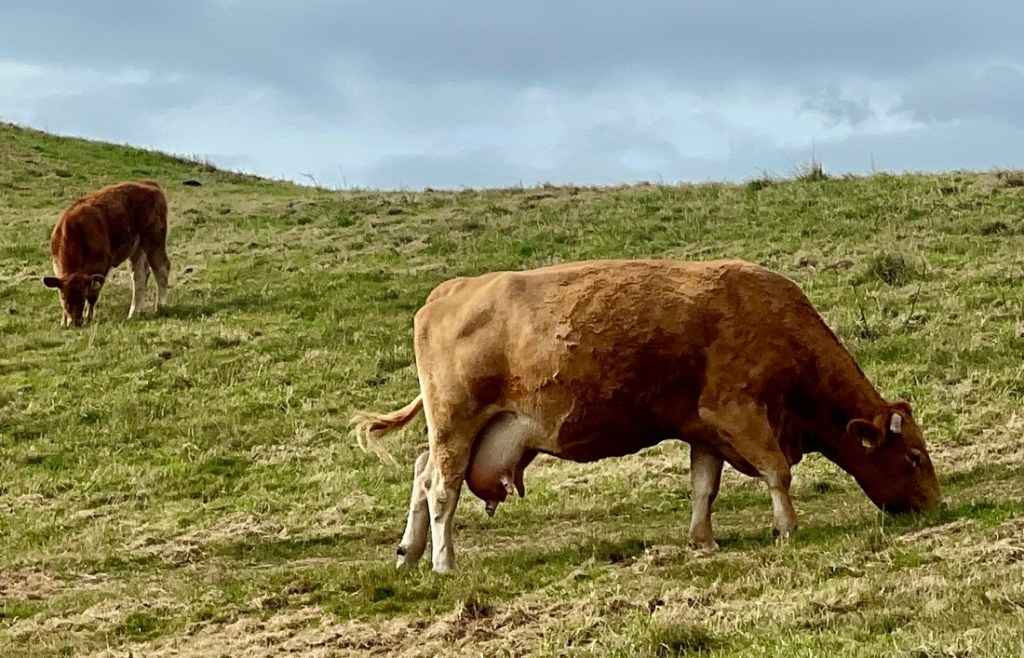
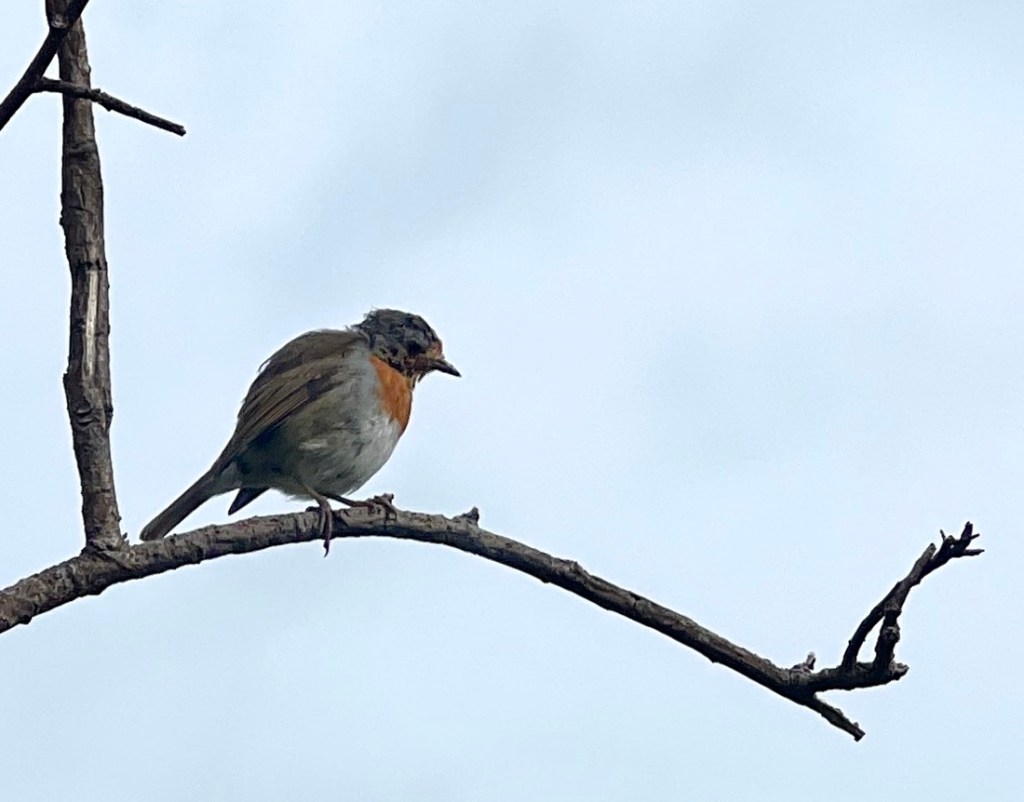
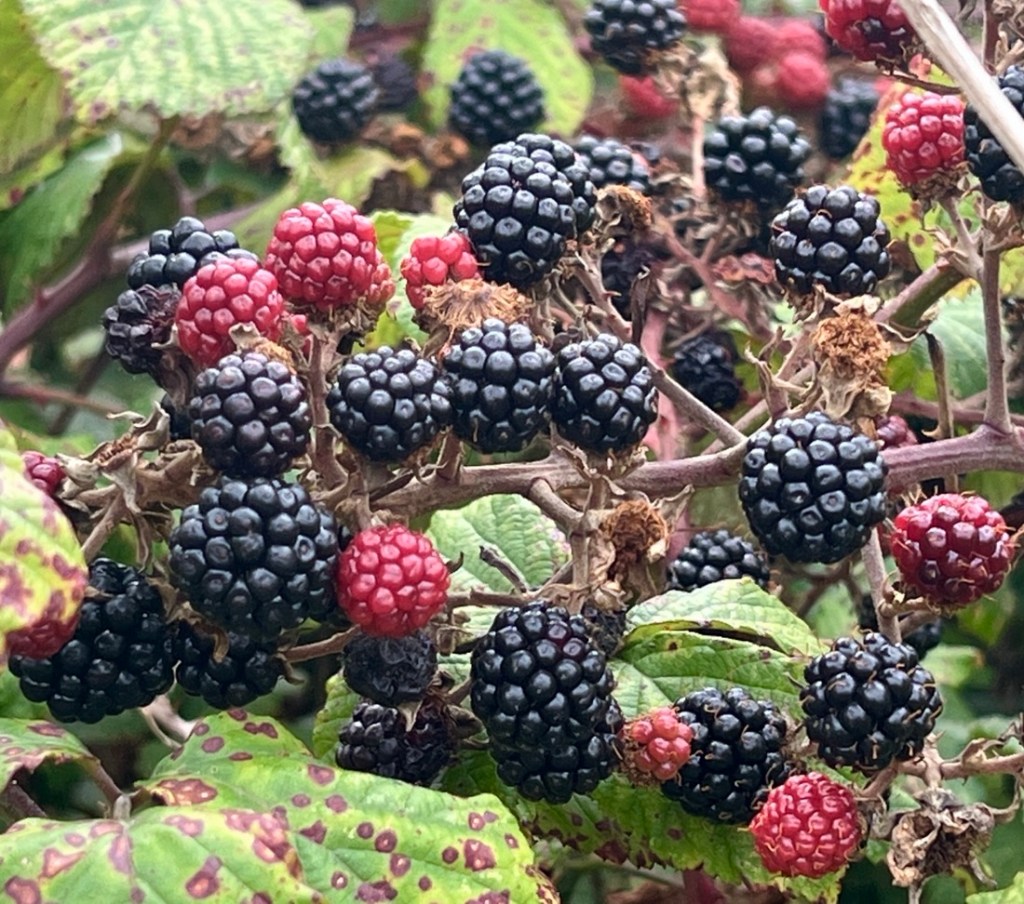
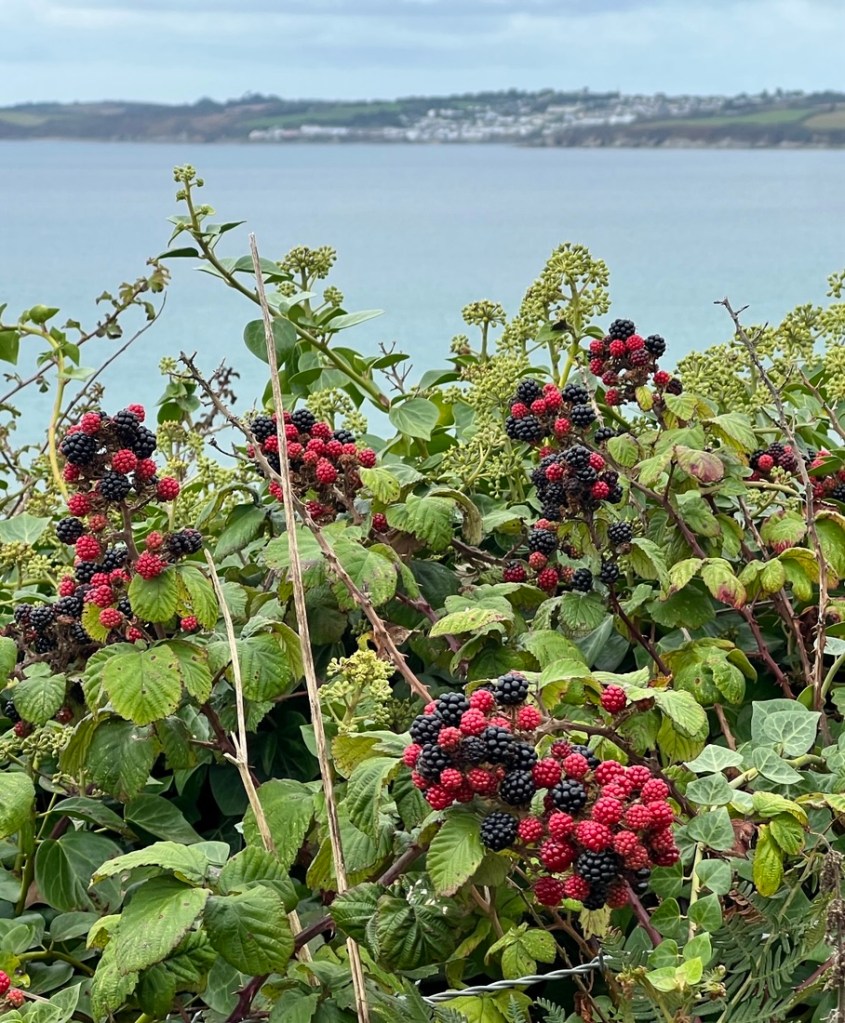
With the day’s walk a straightforward eight miles, we could really take it easy and absorb the views. However, even our most relaxed pace was over 2 mph! Nevertheless, we paused to enjoy cows, birds, and plenty of ripe blackberries. Seals remained elusive, but we maintain hope that we’ll see some in a few days.
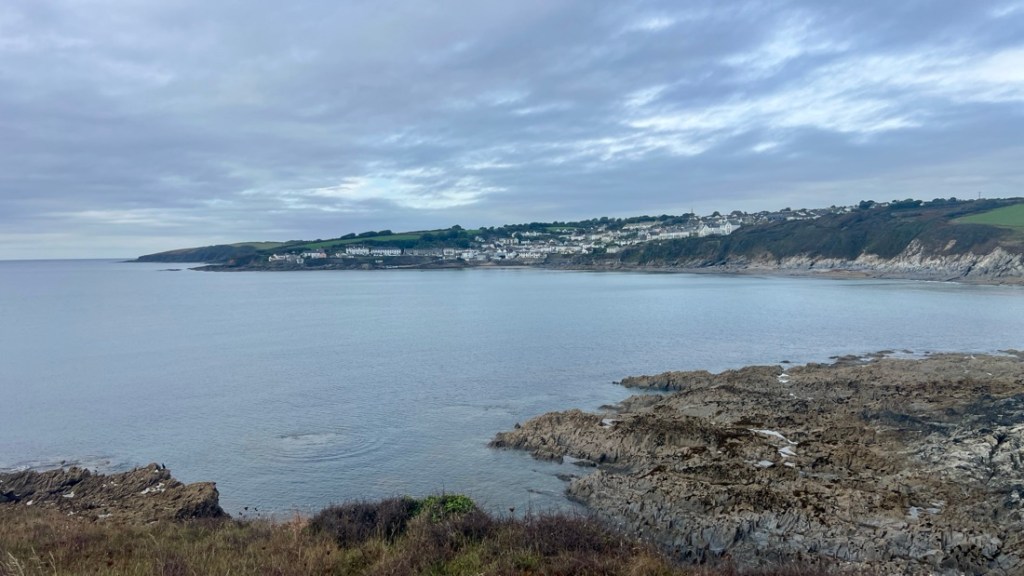
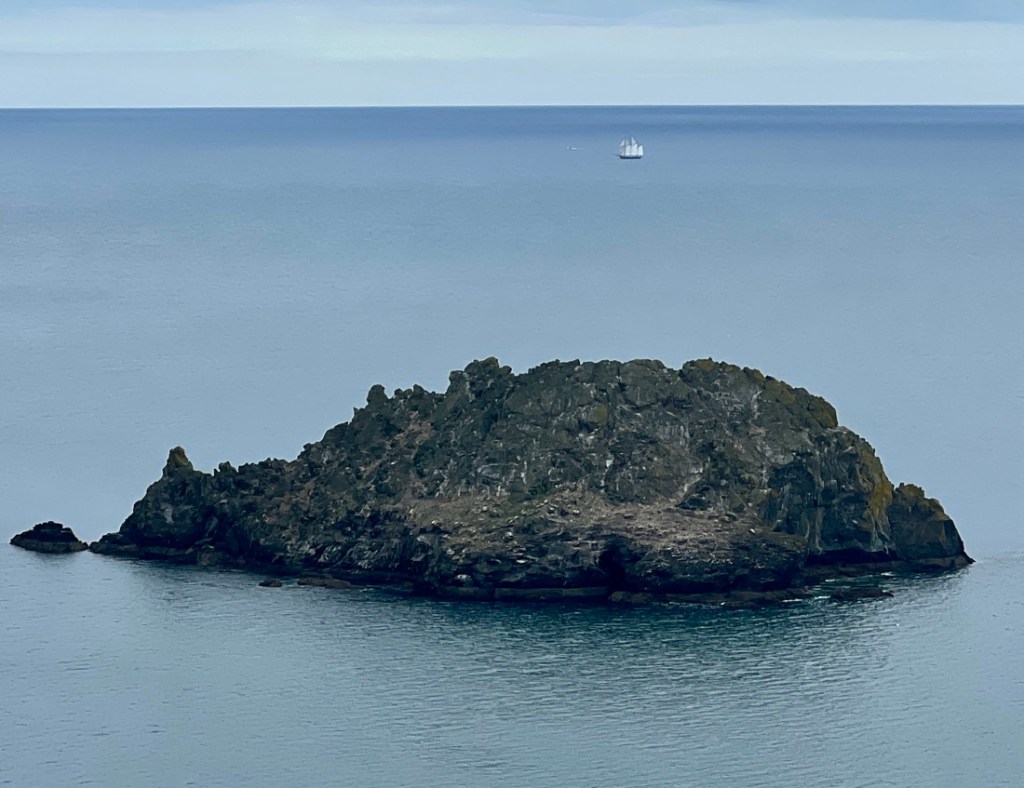
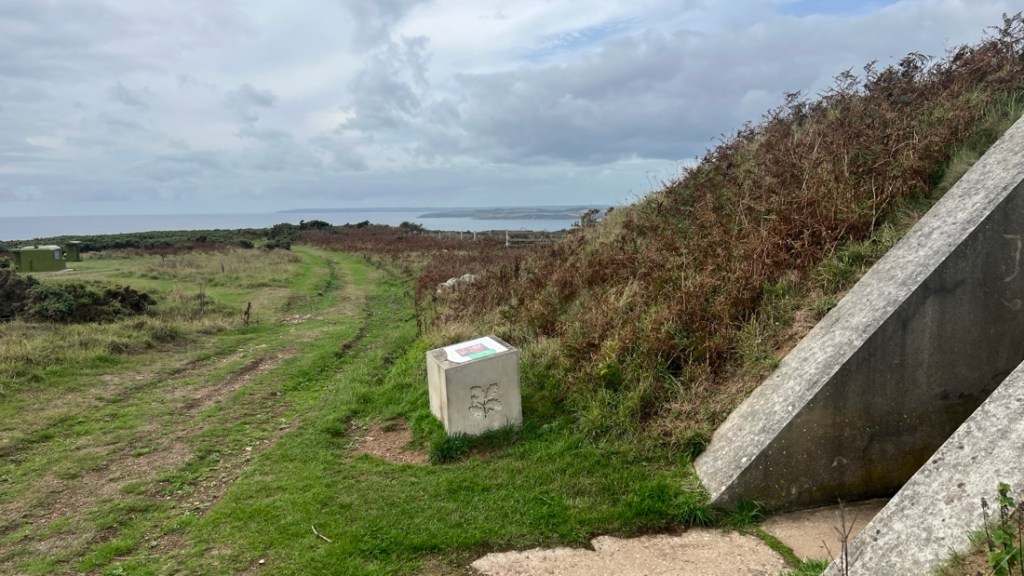
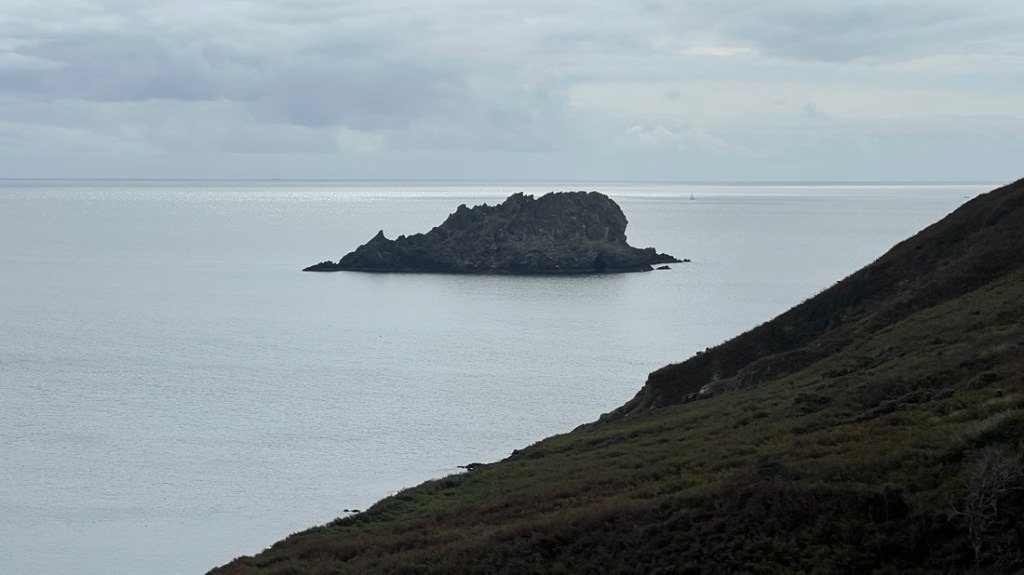
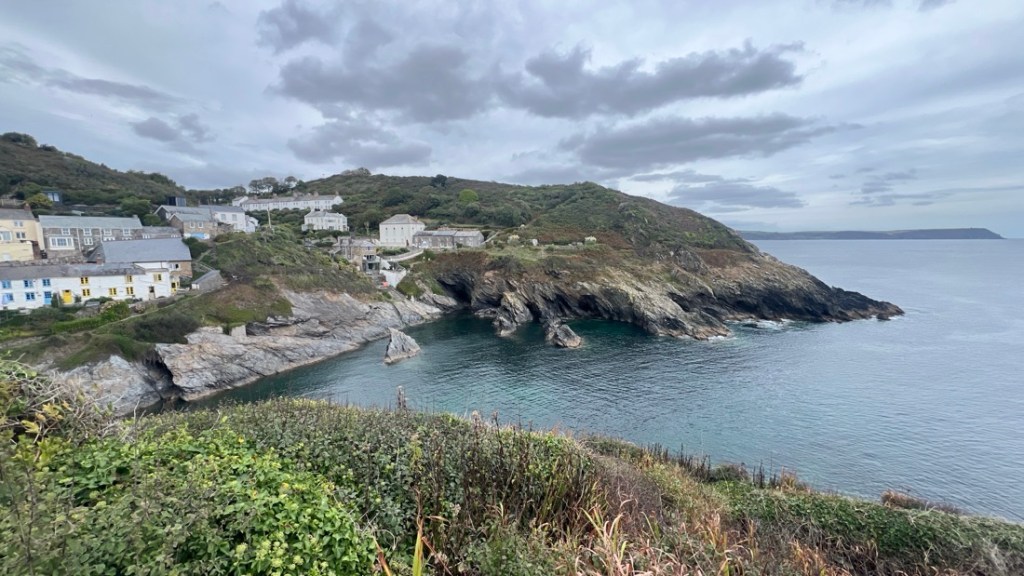
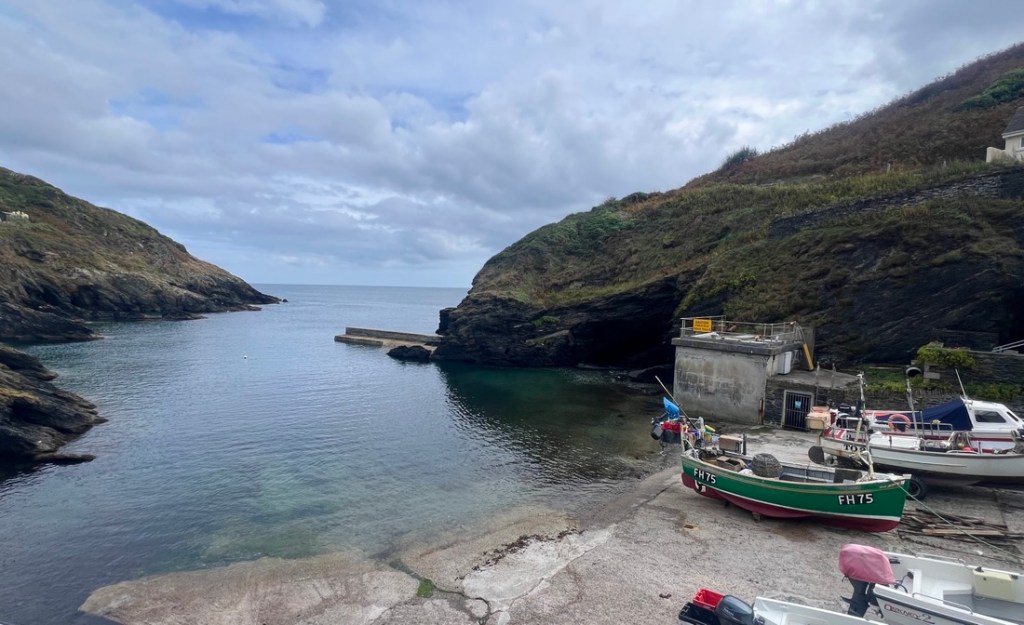
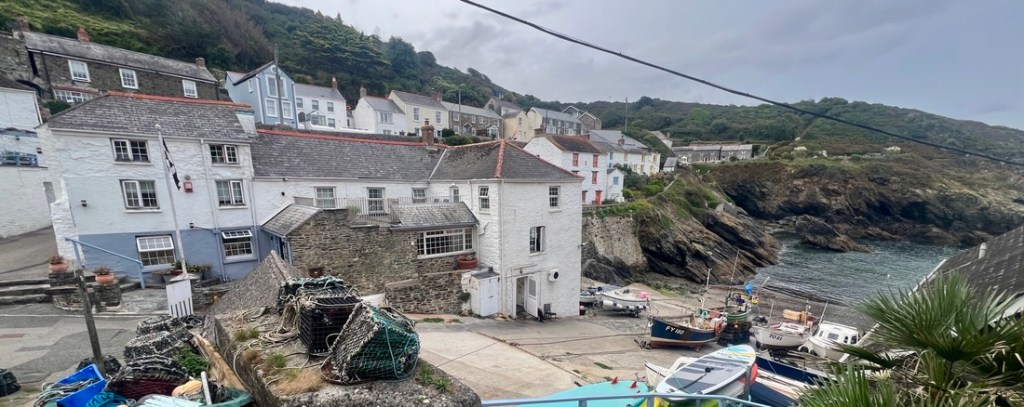
As the weekend was over and the schools had restarted, the trails had few other users. We hiked over Nare Head, which served as a decoy for German bombs in the war, saving Falmouth from them, and had a Cold War nuclear bunker. Gull Rock dominated the seaward view before we turned the day’s final corner and descended into Portloe, a tiny naturally-protected harbour. Seeing a few other swimmers convinced me that having a dip would be a good idea. Once I put my foot in the water, and before it went numb from cold, I realized that I could not turn back, and swam a few strokes. It made the warm shower even better!
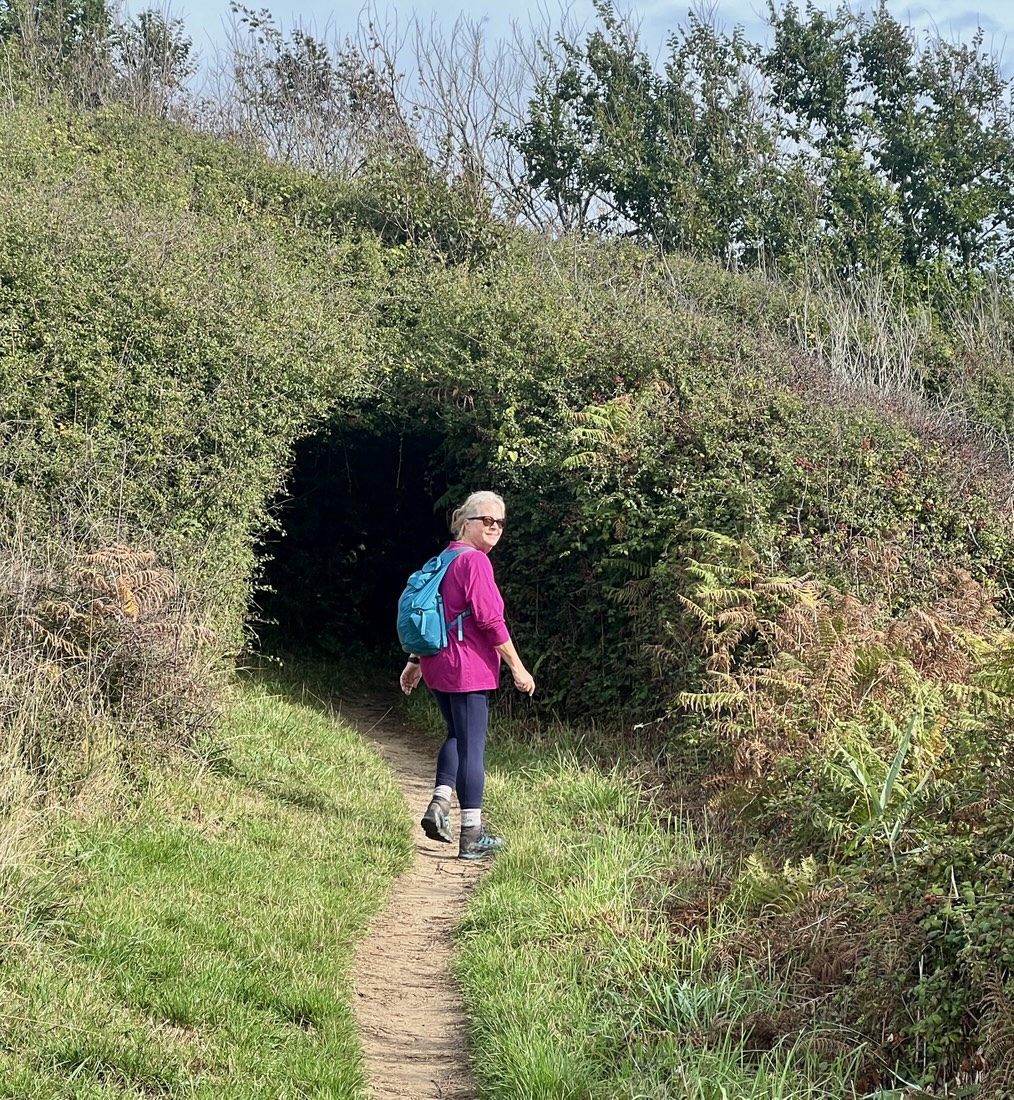
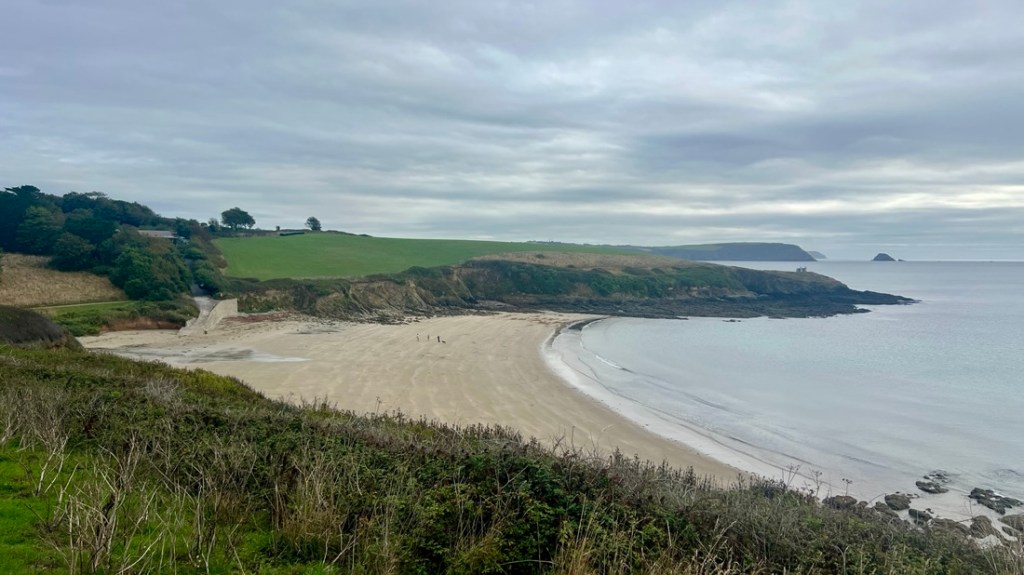
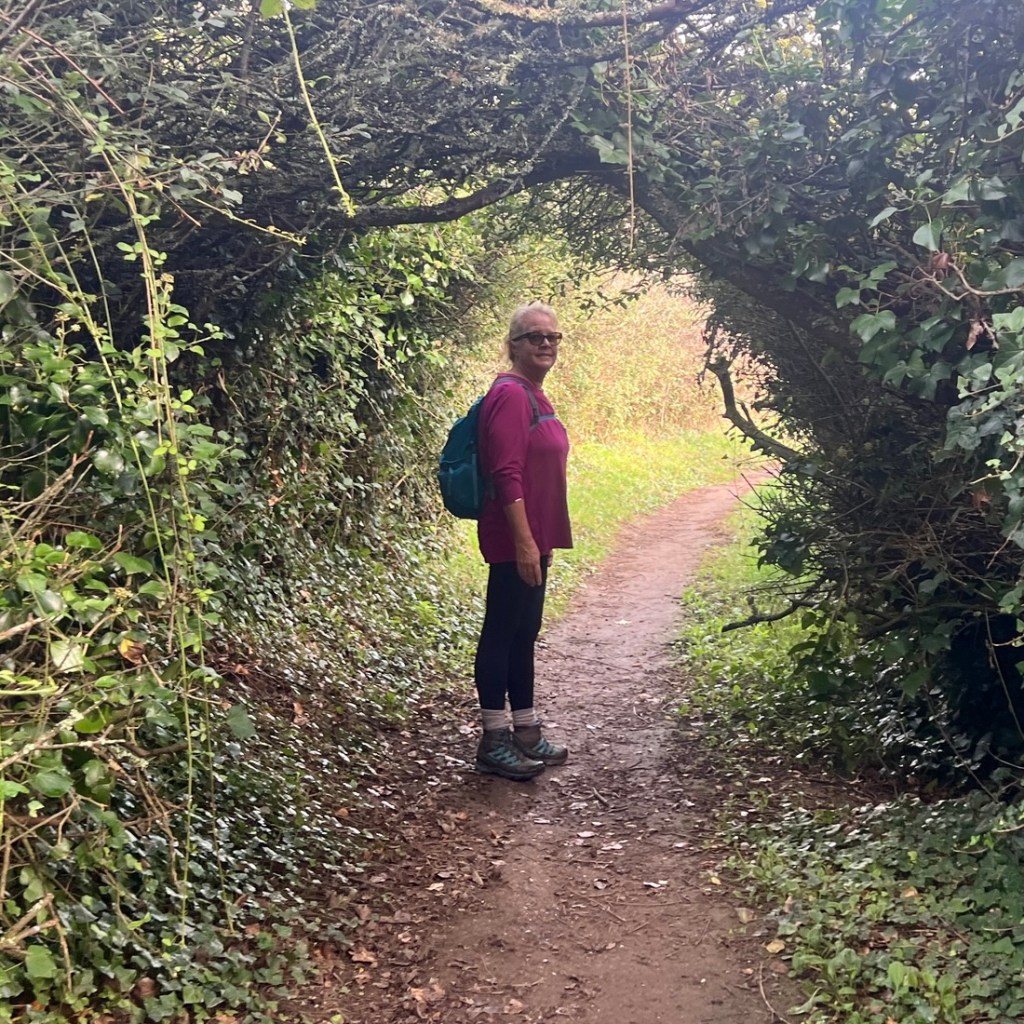
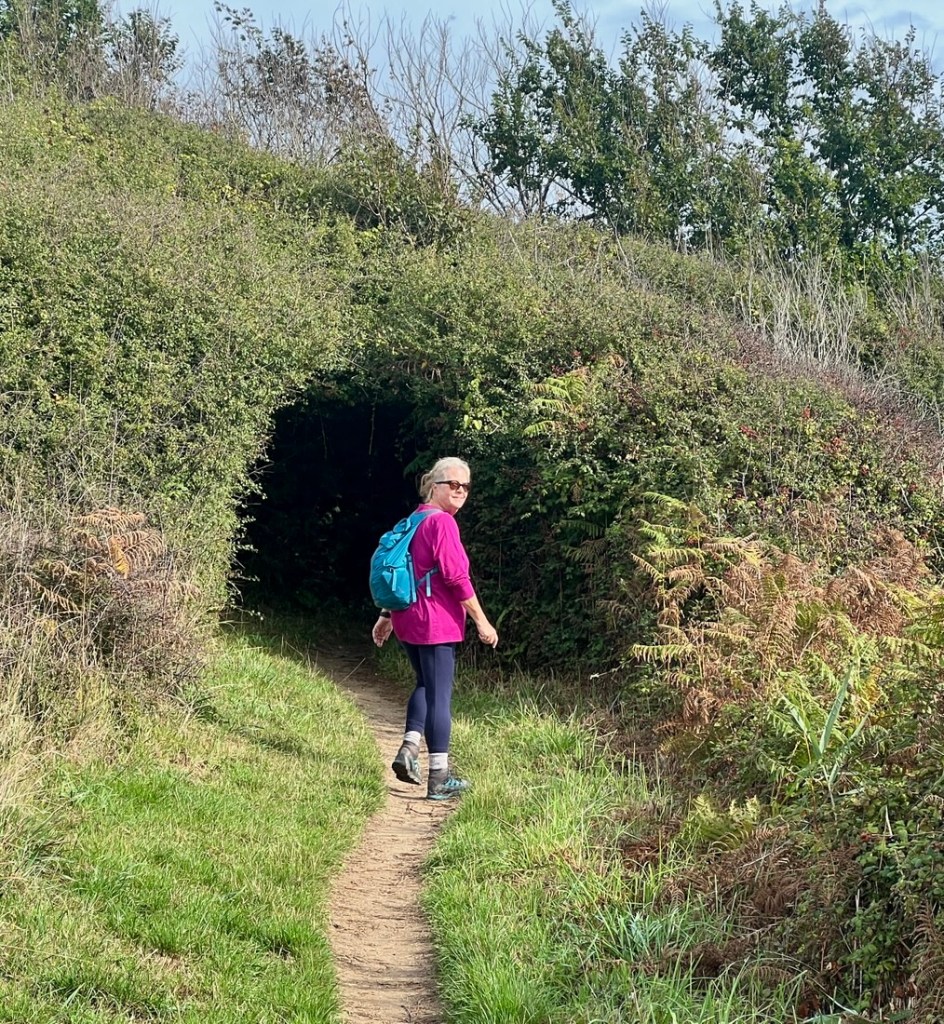
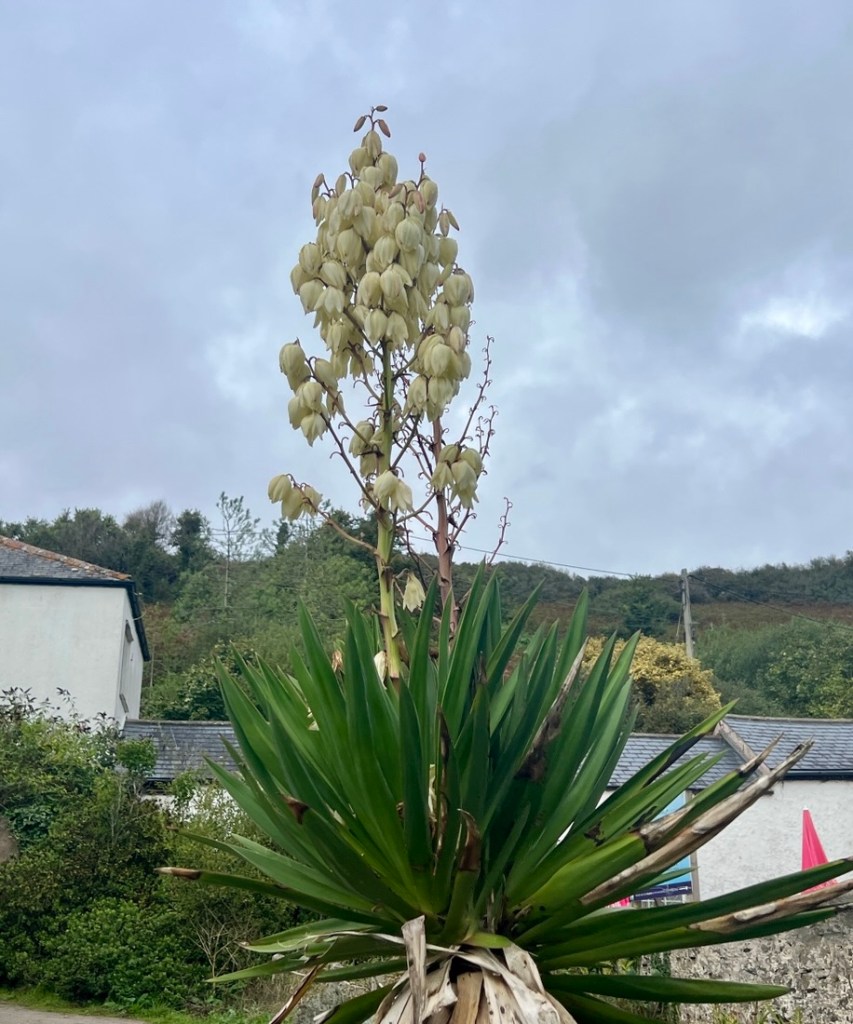
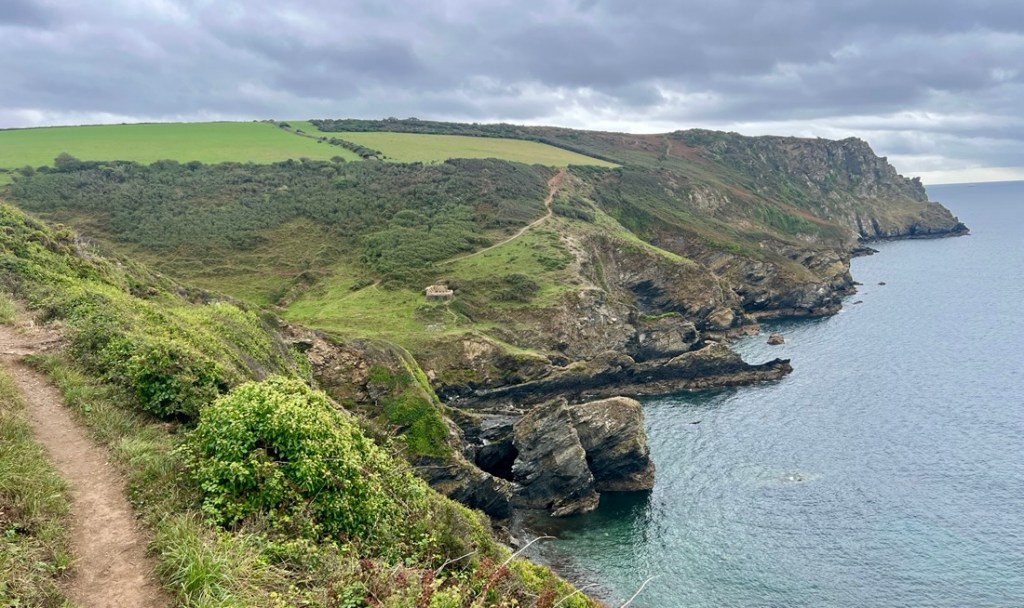
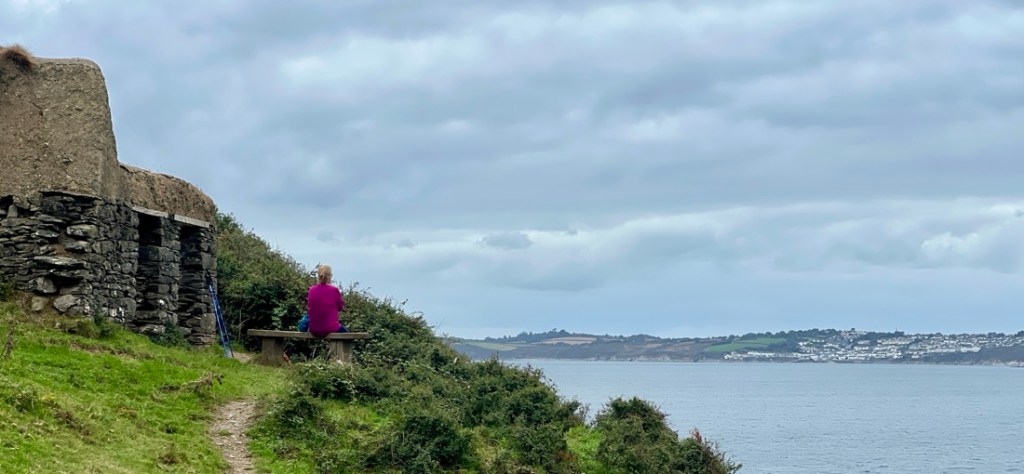
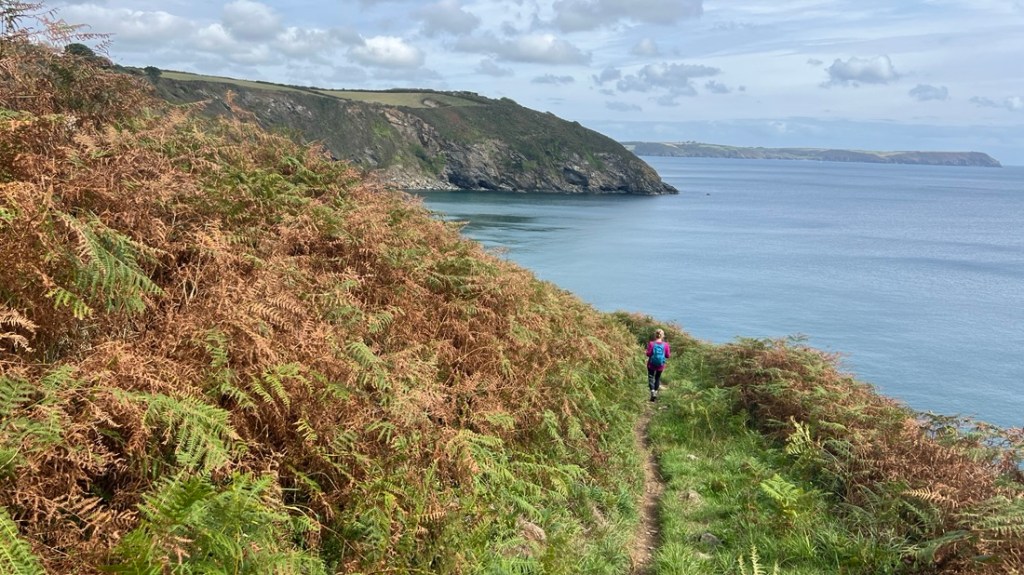
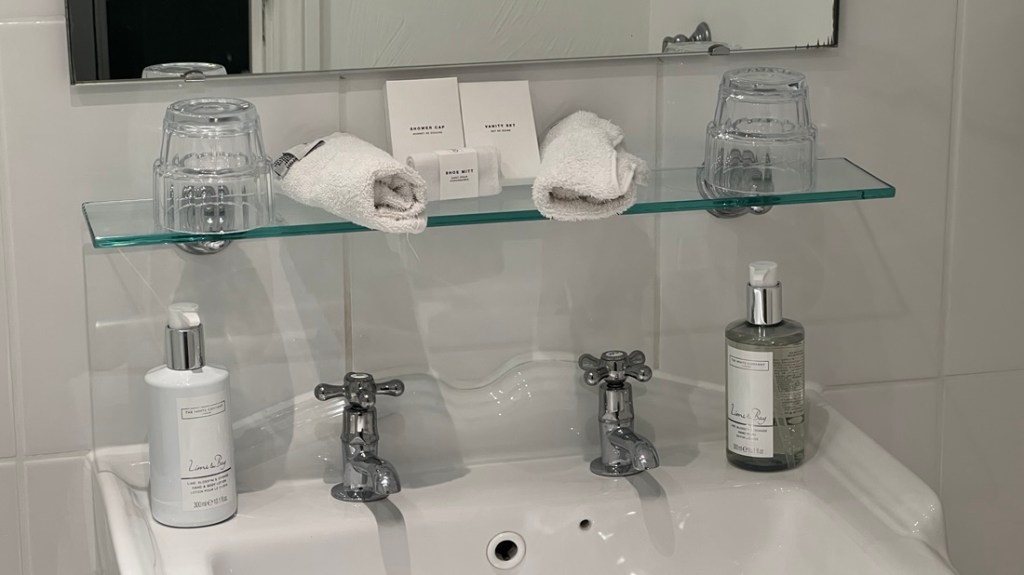
We left Portscatho behind. It was always fun to look back and see how far we’d walked.A near-deserted Porthcurnick beachThe path briefly took us onto the isolated Porthbean beach.The trail took us through some cool hedge tunnels.Great views and a great path. The overcast weather was perfect for hiking.This cow looked rather full! This tame little Robin was happy to hang out by the path.Great looking, and tasting, blackberries.I’d seen a similar yucca in Big Bend’s desert. The climate around here was confusing. We spotted a bench by an abandoned structure which looked perfect for a lunch stop.Lunch with a view.A three-masted tall ship sailed past Gull RockOn Nare Head, there was a bunker from WW2, from where lights, that created an elaborate fake Falmouth-at-night, attracted German bombs to save Falmouth. It was also the location of a Cold War era nuclear bunker. Echoing the sombreness of the bunkers on Nare Head, Gull Rock looked moody.The path continued down the coast.The entrance to Portloe’s naturally-protected harbour.Portloe’s tiny harbour. The clear water was inviting but numbingly cold!What in this picture is a rare find in English hotels and made Janet very happy? The wash cloths! Our hotel was the white building.
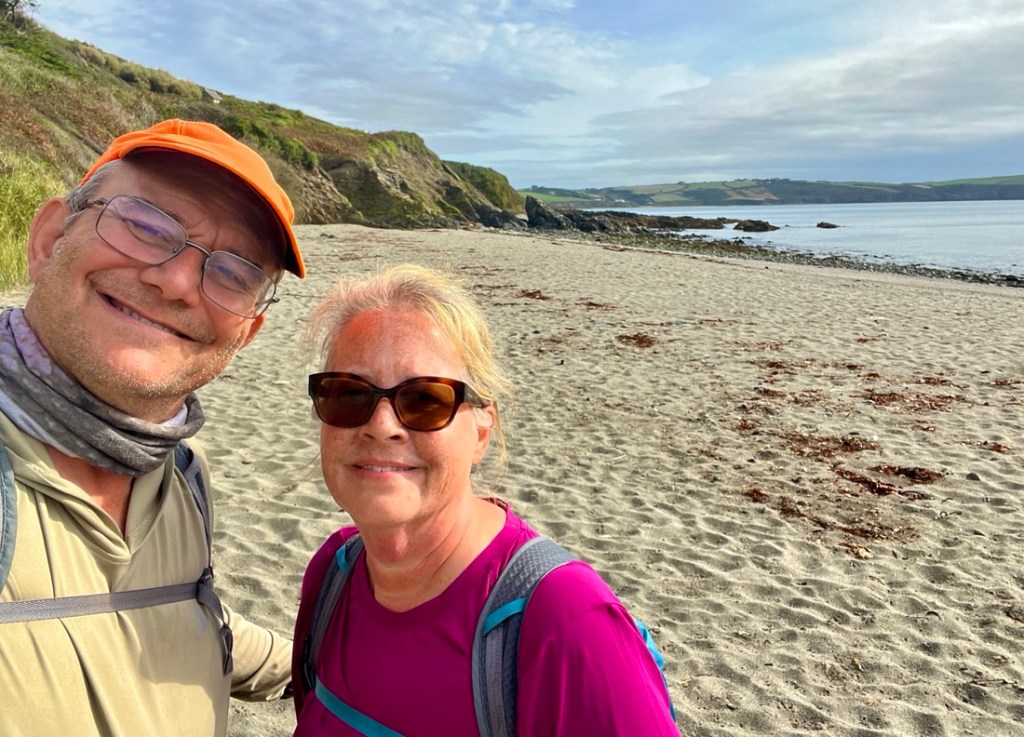
"Cajunlimeys" combines Lousiana (Janet) and Britain (Peter). British sailors in the 19th century were nicknamed "limeys" as they drank lime juice to prevent scurvy. However, while Janet is a fine cook, she has no Cajun blood, but the name fit.
We love adventures and use blogging to write a photo diary to preserve our memories. Some crazy friends enjoy following us, and my notes might help others plan.
View more posts