It was time for a change of pace. Less chasing sites and more chilling. Well, chilling our style, which included a five mile hike up a huge rock!
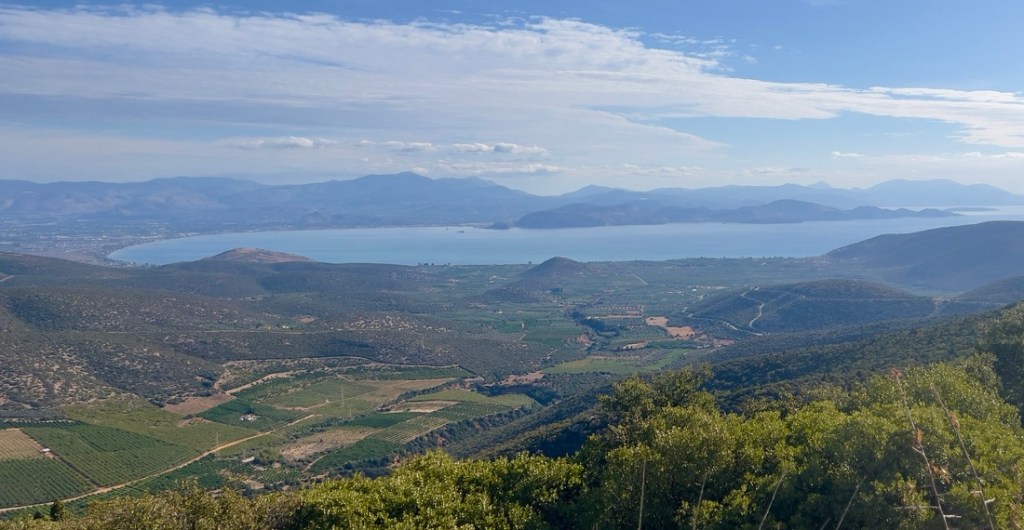
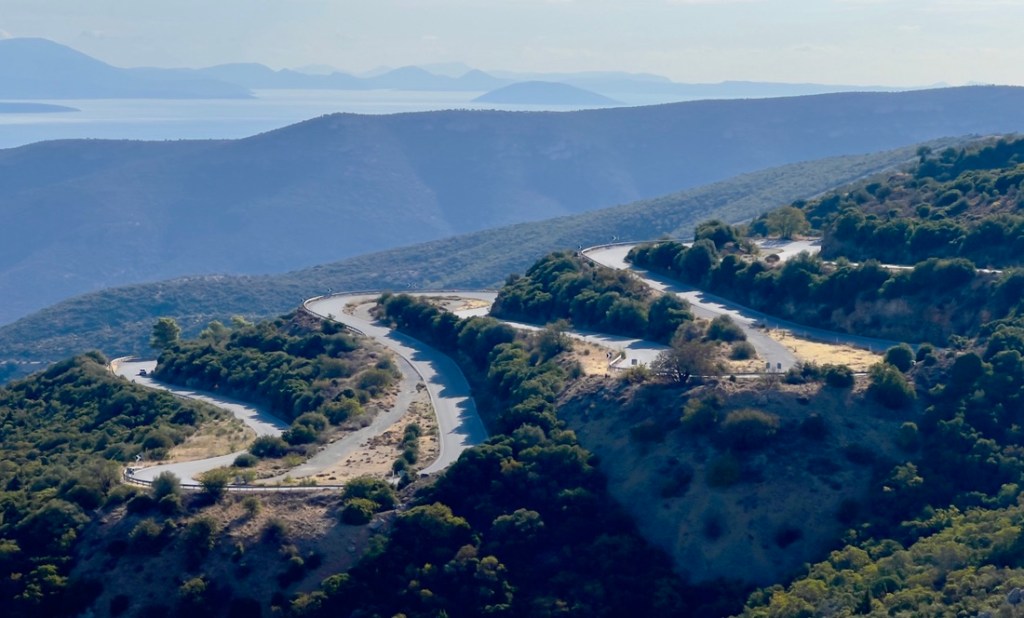
We identified a new game for Greece in the car – follow Google Maps. We set the destination as Sparta and chose the shorter, more direct route rather than the highway. It would use 21% less fuel! Unexpectedly, it took us over the mountains on the other side of Nafplio Bay along some interesting roads…
Pausing for a break as we look back down to Nafplio.The view. We were close to the wind turbines that we had been able to see from the town.The hairpin bends were a bit hairy. I wonder if that’s where “hairy” in this context comes from!
Our road meandered in and out of farming communities past groves of olives and oranges, and a few cows and sheep. I let the little traffic that we saw go past so we could be the grannies on an afternoon drive. We passed the odd farm vehicle. Simple life, but it felt so remote.
Sparta
It was the hometown of King Leonidas and his Spartans, where mothers sent their sons off to war with their shield and their encouragement, “come back with it or on it. Leonidas led his 300 troops against Xerxes’s Persian army in 480 BC to their death, but with sufficient gains that Xerxes lost the following year and returned to Susa (and married Esther, as in the Old Testament). You might be familiar with the phrase “molon lave” without realizing it. See below 😁. Very little is left from Leonidas’s time.
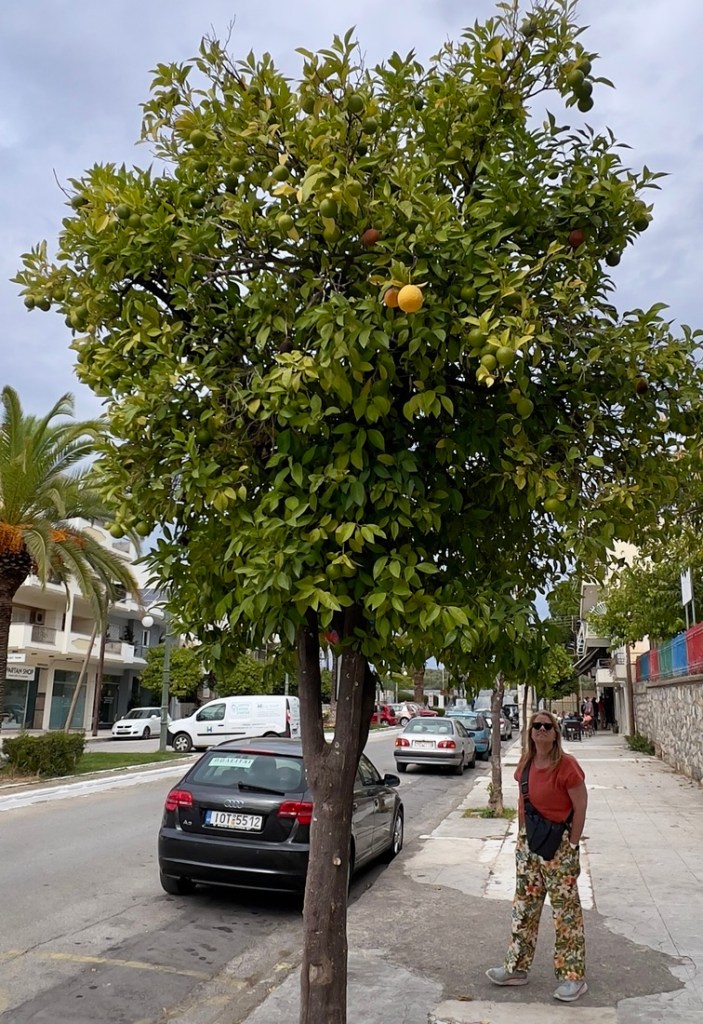
King Leonidas with his famous phrase, “molon lave.” It means, “come and take it,” which was his response when the Persians sought his surrender.Never Retreat, Never Surrender, Prepare for Glory. Lots of Spartan slogans!Our visit highlight was a fine coffee shop Blue Cup. The flat white and iced latte were the best of our trip, accompanied by a scrumptious yoghurt with pistachios, dark chocolate, and strawberries.The streets were lined with orange trees.
Monemvasia
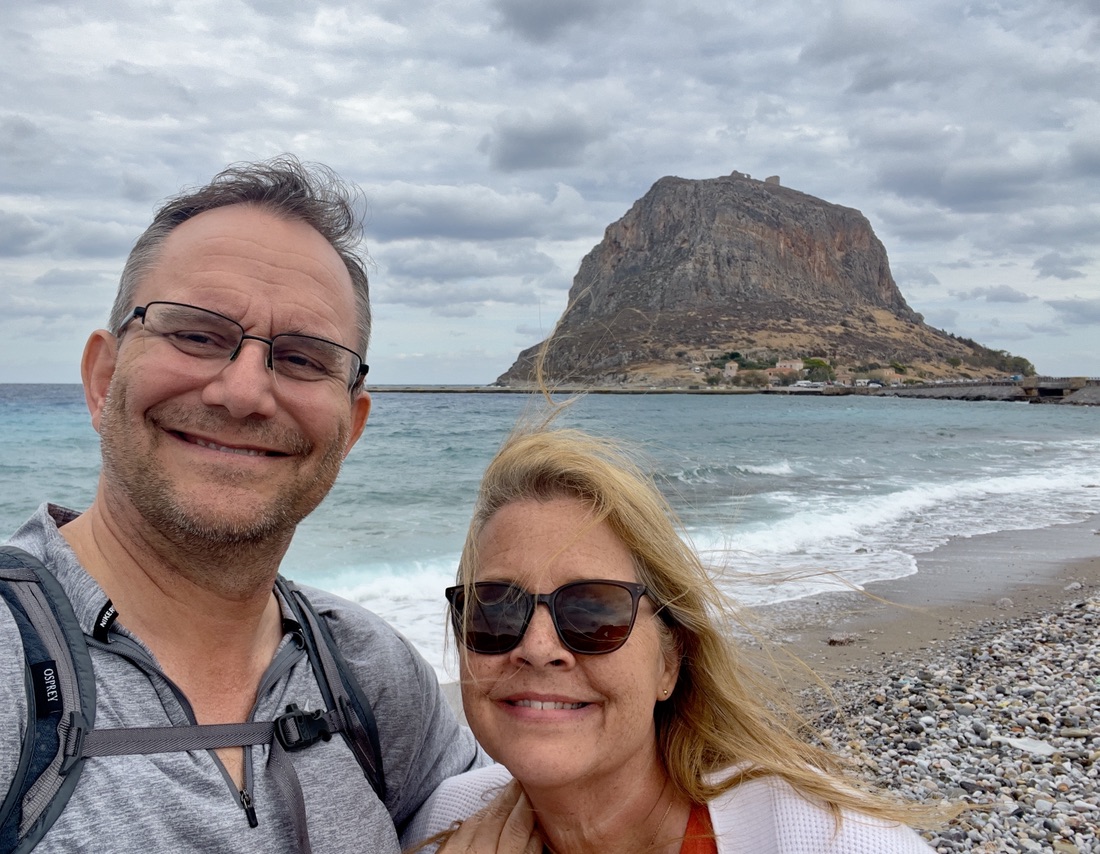
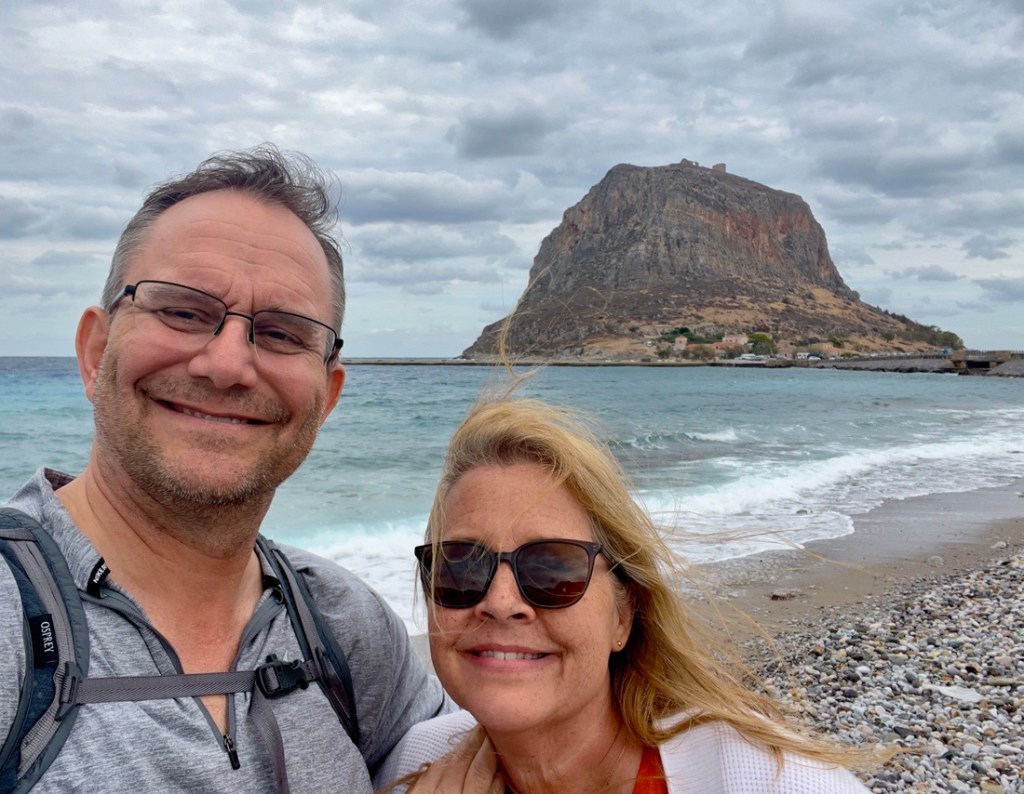
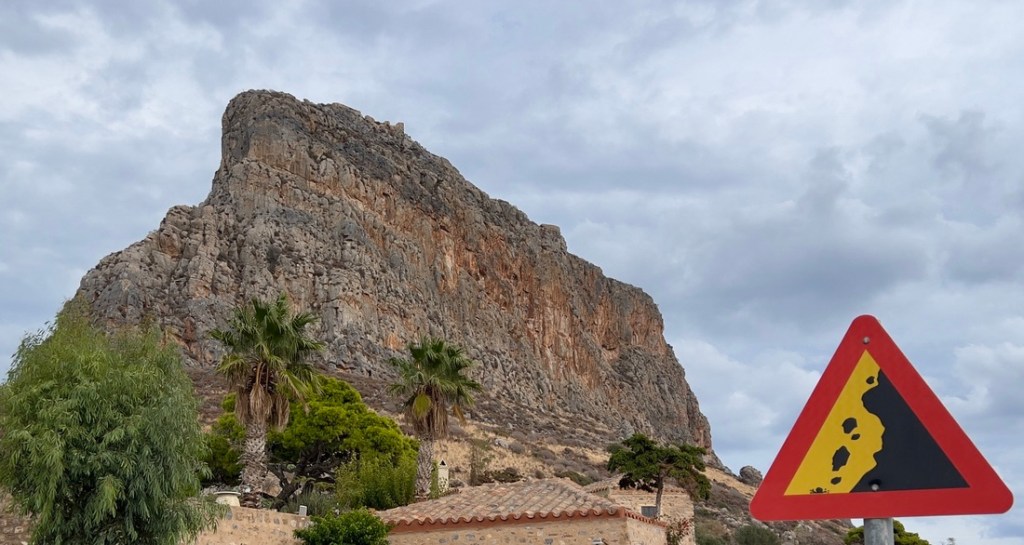
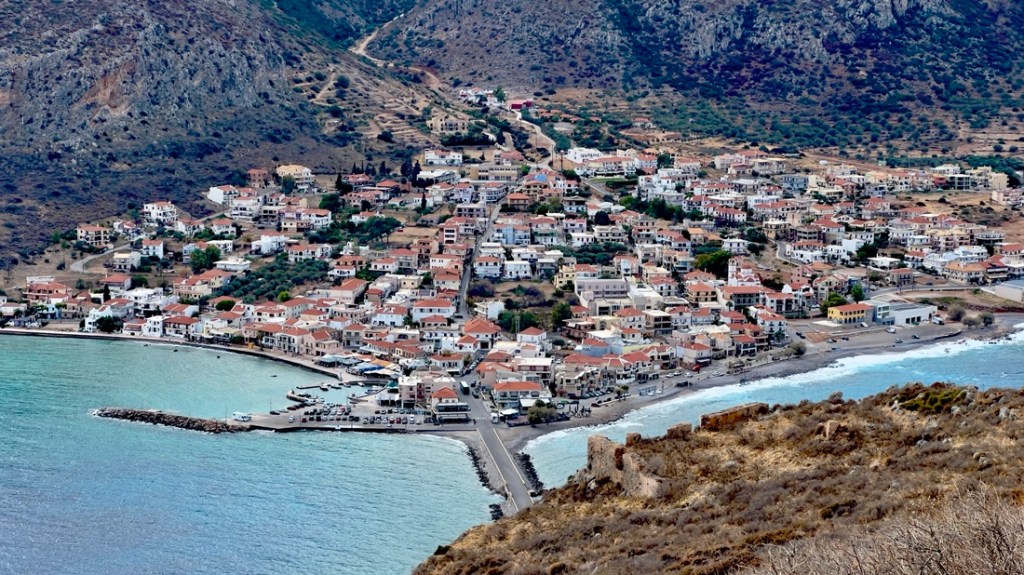
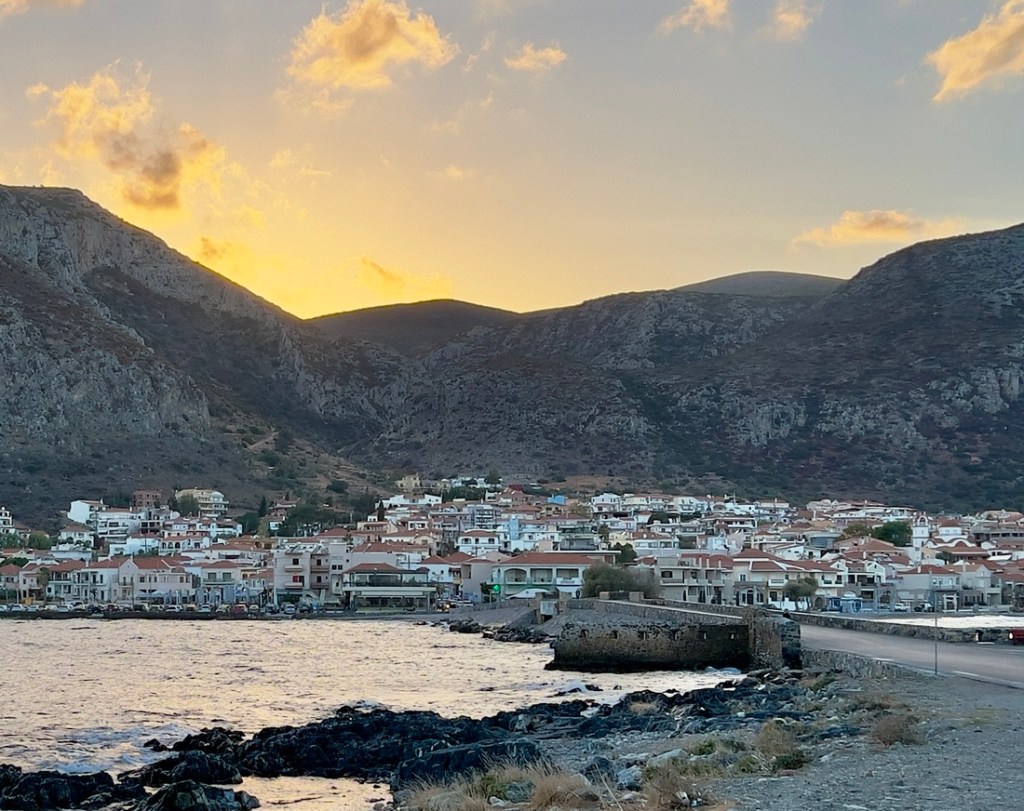
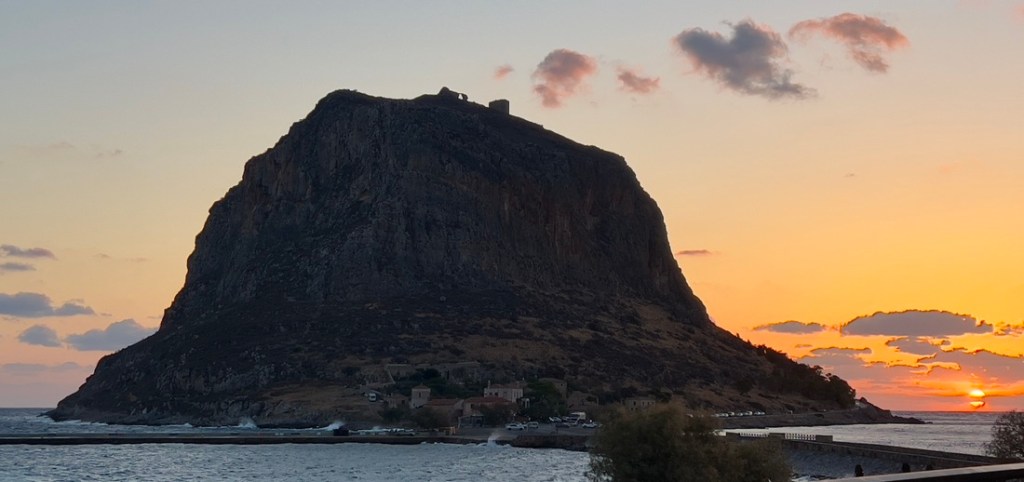
Next up was Monemvasia, one of a string of towns that we will visit over the next few days that I had not heard of until planning this trip. The name means “single entry” because there is a narrow causeway connecting the large lump of a rock! It was founded in the sixth century AD and changed hands between the Venetians and Turks. It was not defeated by force, only by siege and starvation. Its settlements declined in the 18th century but it has been rediscovered by tourists since the 1970s.
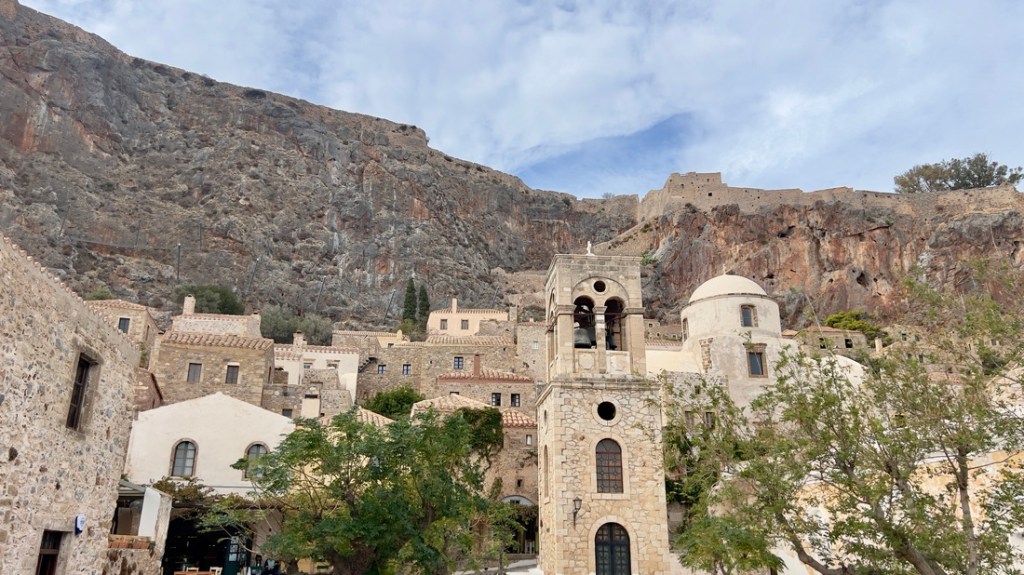
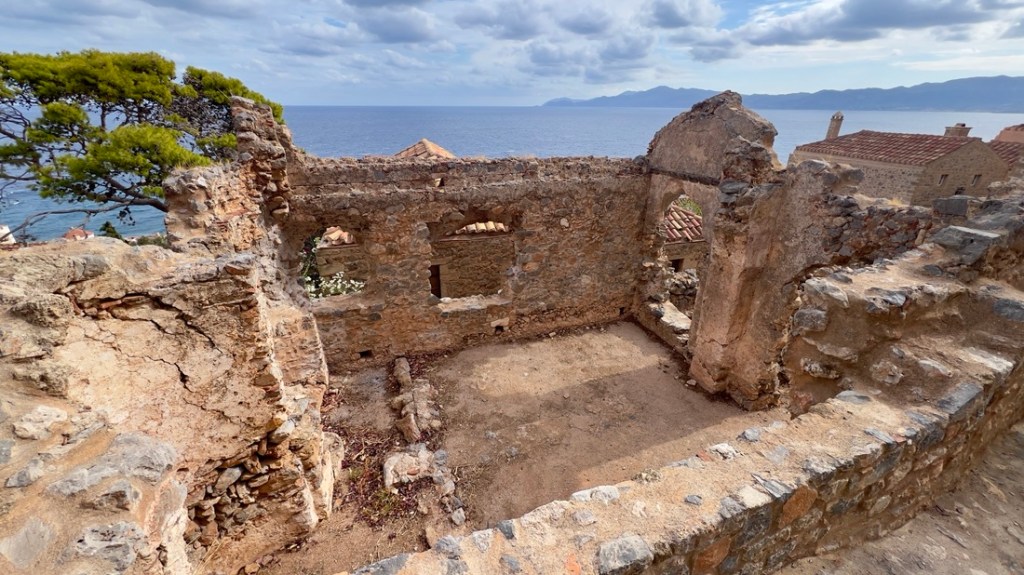
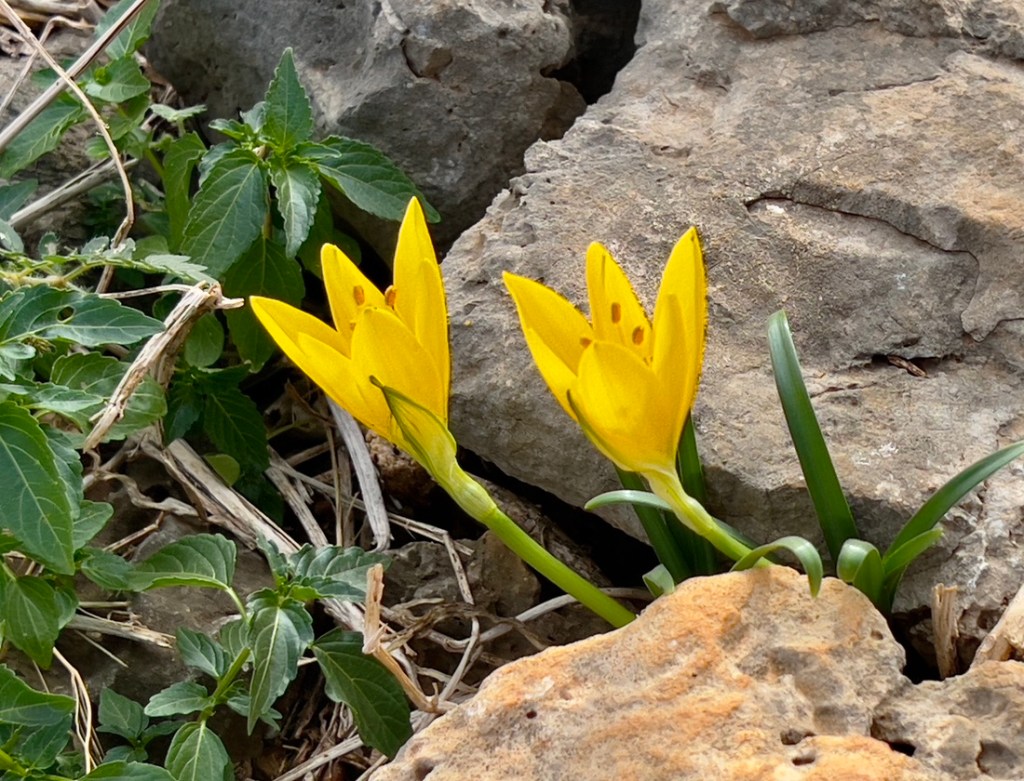
It was soothing to hear the waves crashing on the beach. It was cool and windy. Before arriving, I’d thought about taking a swim in the sea, but reconsidered that idea!No kidding 😁There was a lower town and an upper town. The lower town has been partially restored. There were a few hotels, but the main attractions were shops, restaurants, and churches. It was elegant, quiet, clean, and tidy. It was really nice not to look at graffiti!Some of the twenty four churches remained in ruins and were labeled “anonymous.”After climbing up a path toward the upper town, the view of the lower town opened below.The Church of Agia Sophia is the only building in the upper town that has been restored. There are ruins all over the top of the rock.Lots of cyclamen on top.
Flowers:
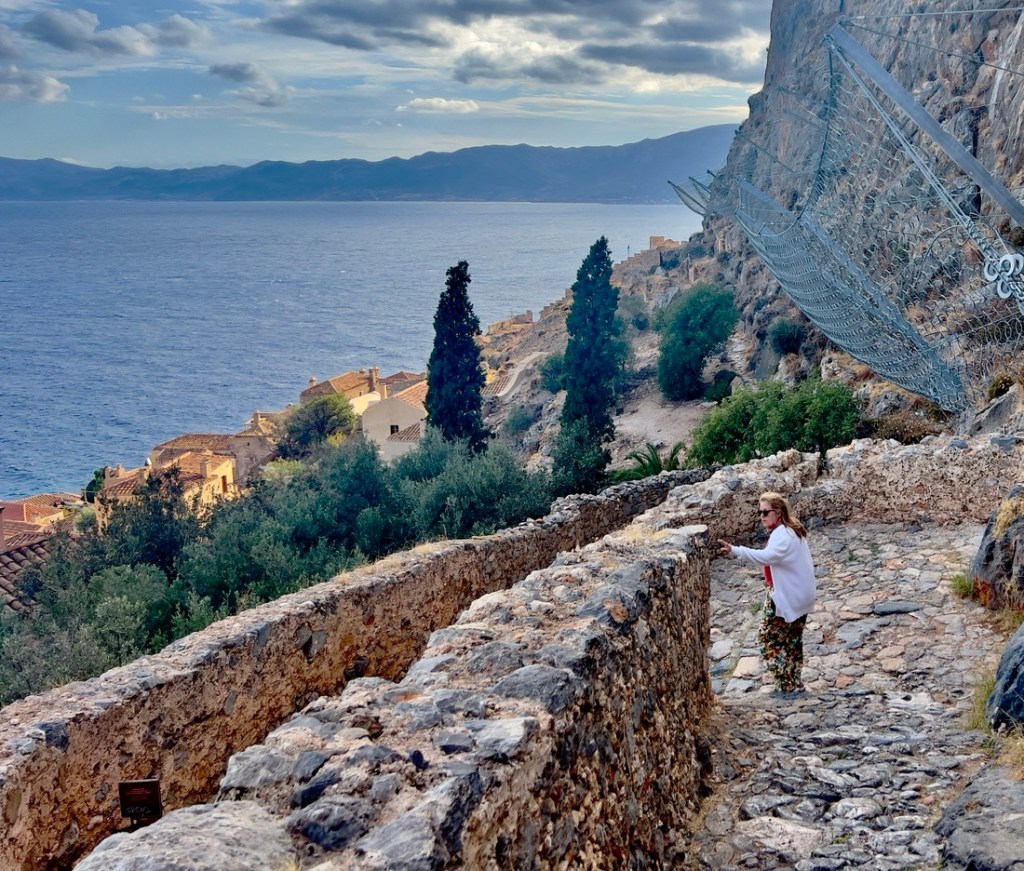
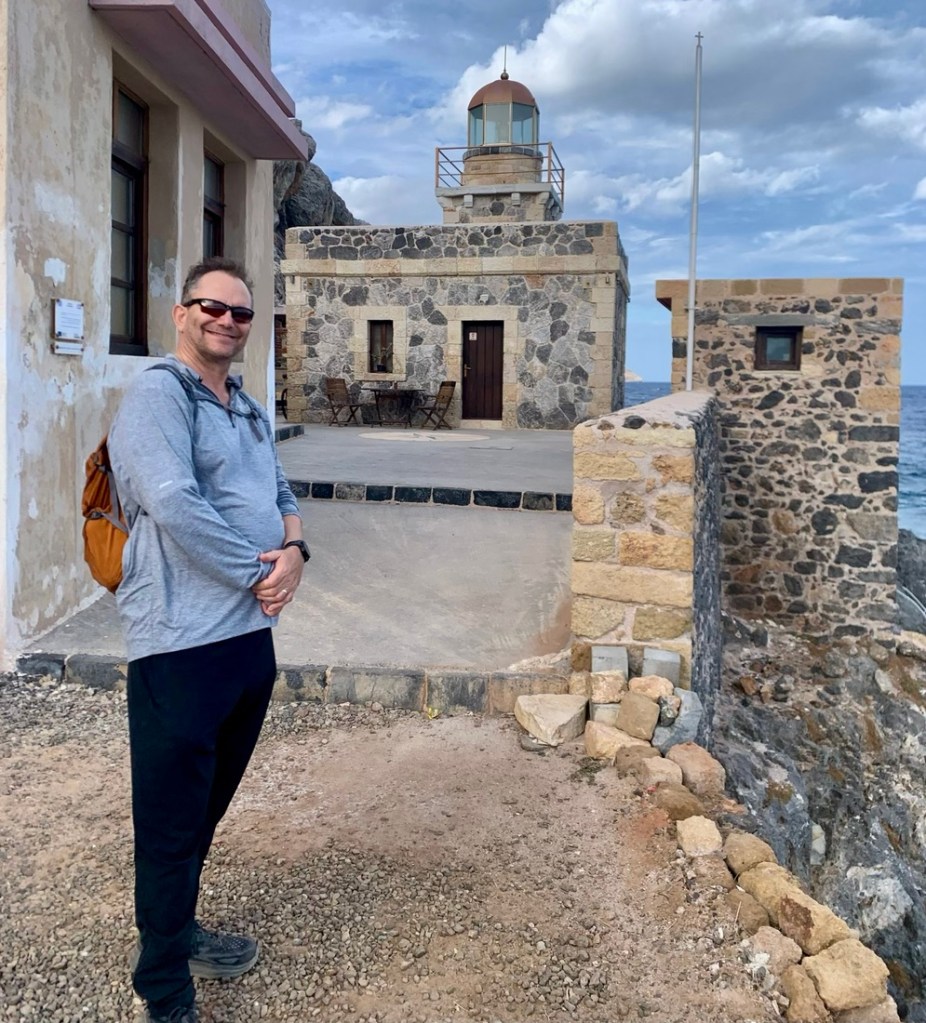
There were ruins of a citadel on the rock’s highest point, with this view of the mainland town, Gefyra. The causeway used to have a wooden drawbridge on it, being raised when unwelcome guests approached.Descending was much more difficult than ascending. Note the massive steel nets ready to catch falling rocks!After the climb, we enjoyed a leisurely stroll to the lighthouse on the island’s most seaward tip.
We headed back into town and enjoyed our best Greek dinner yet – a roast lamb and a pork in a wine and orange sauce. The roast potatoes were also amazing. It was early for dinner so it was peaceful.
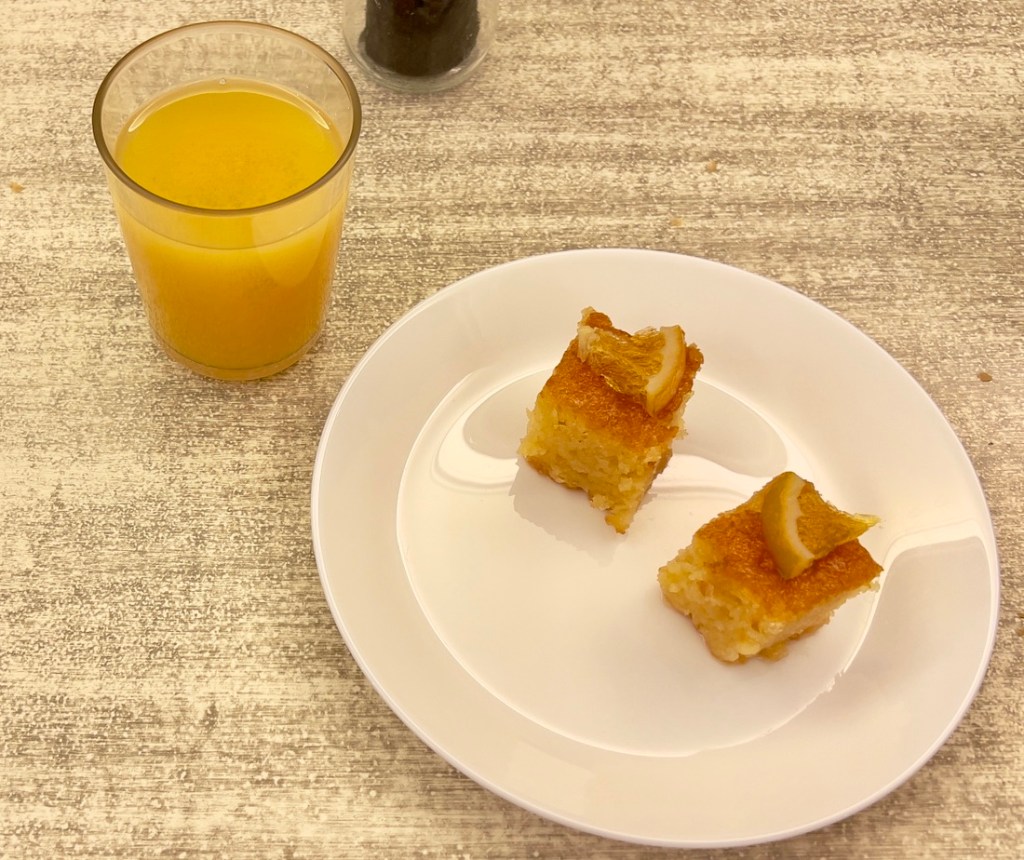
The mile walk back to our hotel on the mainland was a fine way to help our digestion, before enjoying a hot chocolate on our balcony looking at the rock, followed by a restful night.The view from our balcony as I start this blog. You can just make out the silhouette of the citadel ruins on the top.The sun is up! Time for today’s adventure.But first, an orange-themed breakfast. The orange cake, moistened with syrup, is a great way to start the day!
Find other posts from this trip on our Greece page.
Please follow us on this journey by subscribing below. We would love to read your thoughts: please leave comments at the bottom of the post.
"Cajunlimeys" combines Lousiana (Janet) and England (Peter). For "limeys," check out scurvy in the English navy.
We love adventures and use blogging to write a photo diary to preserve our memories. Some crazy friends enjoy following us and my notes might help others plan.
View more posts







 The Adventures of the Cajunlimeys
Fantastic. Beautiful pictures.
LikeLiked by 1 person