

Summary: We returned to Athens, and visited the ancient agora and Areopagus Hill, that Paul visited, and the Acropolis.
Paul in Athens
The current size and importance of Athens does not align with Paul’s Athens, and Acts 17:16-34 describes his visit. The Bible does not include any other mention of Athens. Its military losses had reduced its political power but Rome promoted it as an educational city of learning. This encouraged intelligent discussions, and Paul eagerly arrived in this environment. We visited the two sites that Paul visited in Luke’s account of his visit.
The marketplace or agora
English translations of Acts 17:17 describes Paul visiting a “marketplace.” The Greek word is agora and it was much more than a marketplace. It was a large area that included some shops in buildings called “stoas”, but it was also where people gathered for public and social events. The Athens agora was surrounded by pagan idols and lay in the shadow of the Acropolis with its large collection of pagan temples. It was also where people were happy to have insightful philosophical and intelligent discussions. The idol worship saddened Paul (Acts 17:16) and he shared his argument about Jesus in the synagogues and the agora. The Bible mentions Epicureans, who taught materialism and individualism, as life was about self. They believed that gods existed but that they did not bother with human affairs, and that there was no after life. Acts 17:18 also mentions Stoics, who saw reason and logic as the controlling principle of the universe and life’s purpose was for an individual to find rationality in their life while recognizing that all emotions were diseases of the soul to be purged.
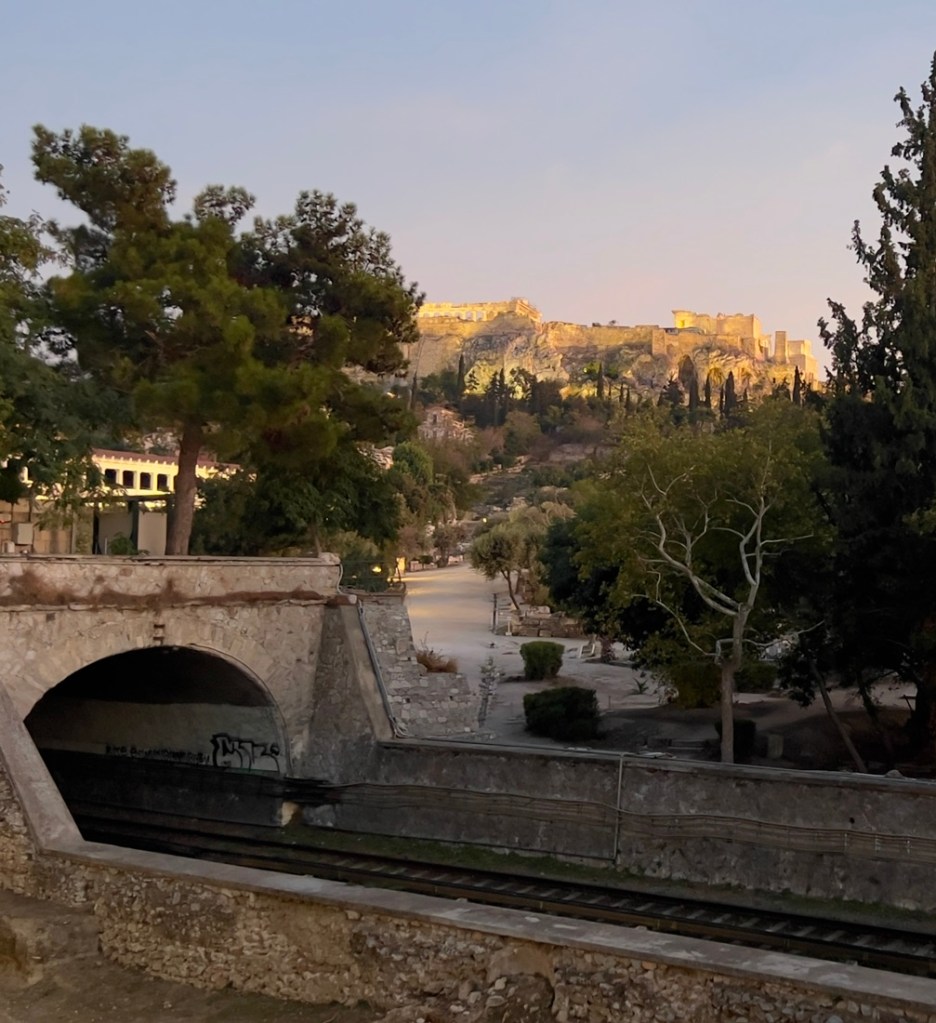
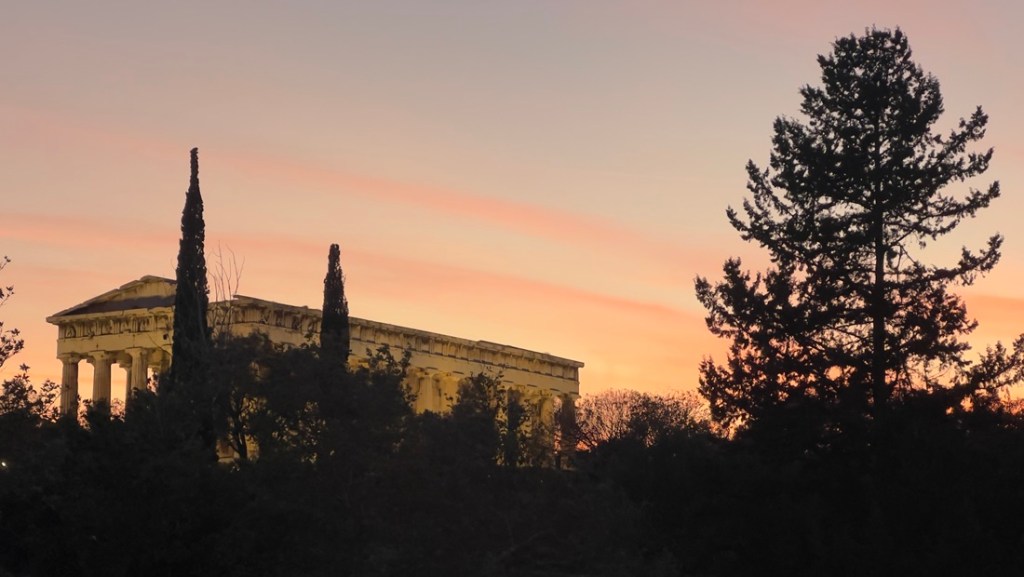

Unfortunately, on this visit to the agora, it was closed. Fortunately, we had visited the agora at the beginning of our trip, and I described our visit in this blog post with more details about the agora.


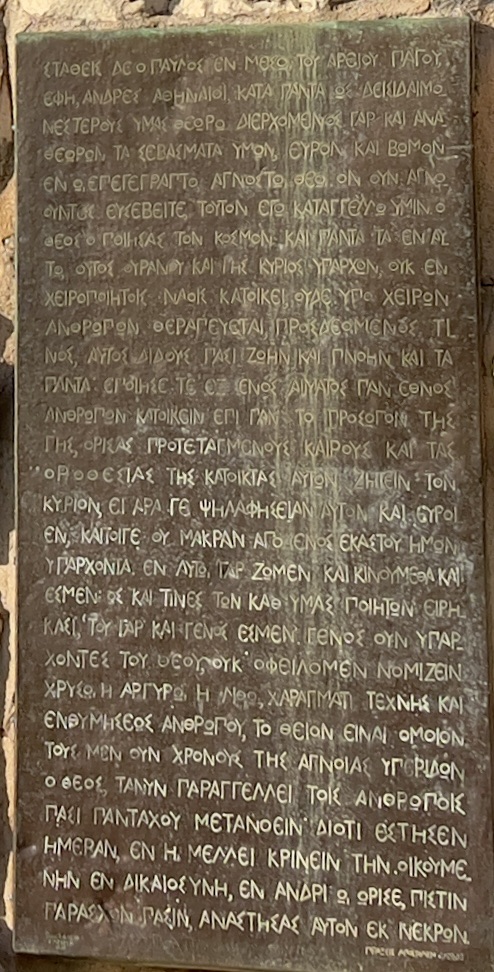
The Areopagus
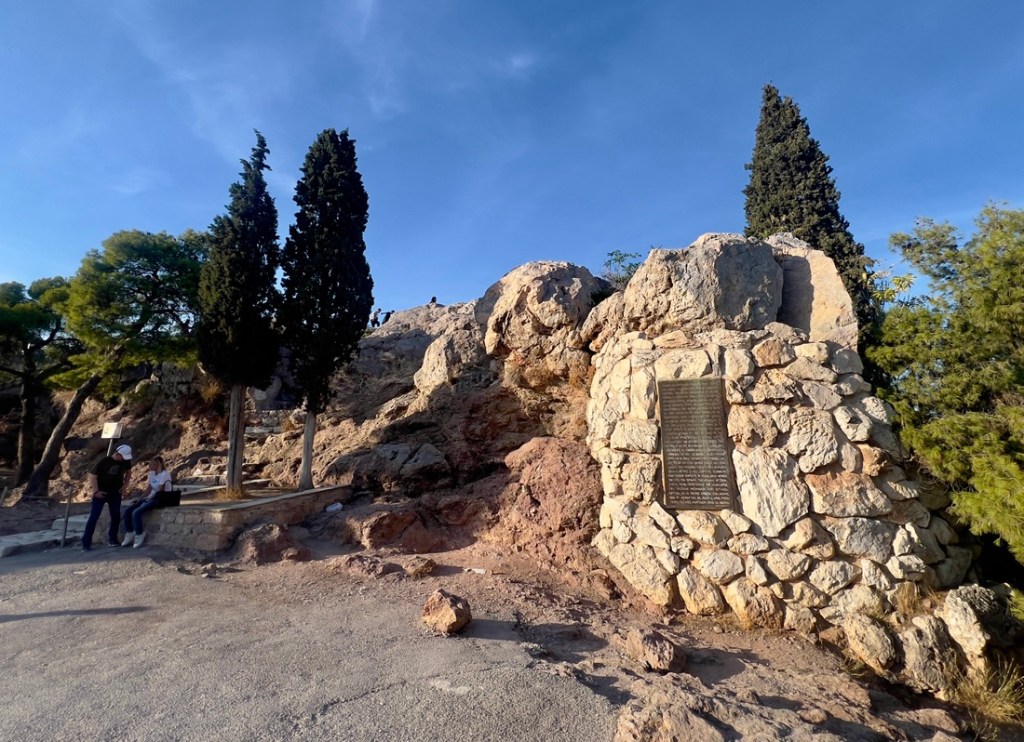
Acts 17:18 explains that the Epicureans and Stoics did not agree with Paul’s teachings. English translations say that they described him as a foolish babbler. The Greek literally means a seed-picker, referring to a bird like a pigeon that randomly pecks at seeds, as a babbler might gather or share information. Acts 17:19 says that they “took” Paul and “brought” him to the Areopagus, which might have been an invitation or by force. The Areopagus likely refers to an advisory council of Athens that met on or by Areopagus hill, called Mars in Latin. The hill is rugged and rocky, so it seems more likely that the council met at its base rather than on top. It is located between the agora and the Acropolis, overlooking the agora.



The Acropolis
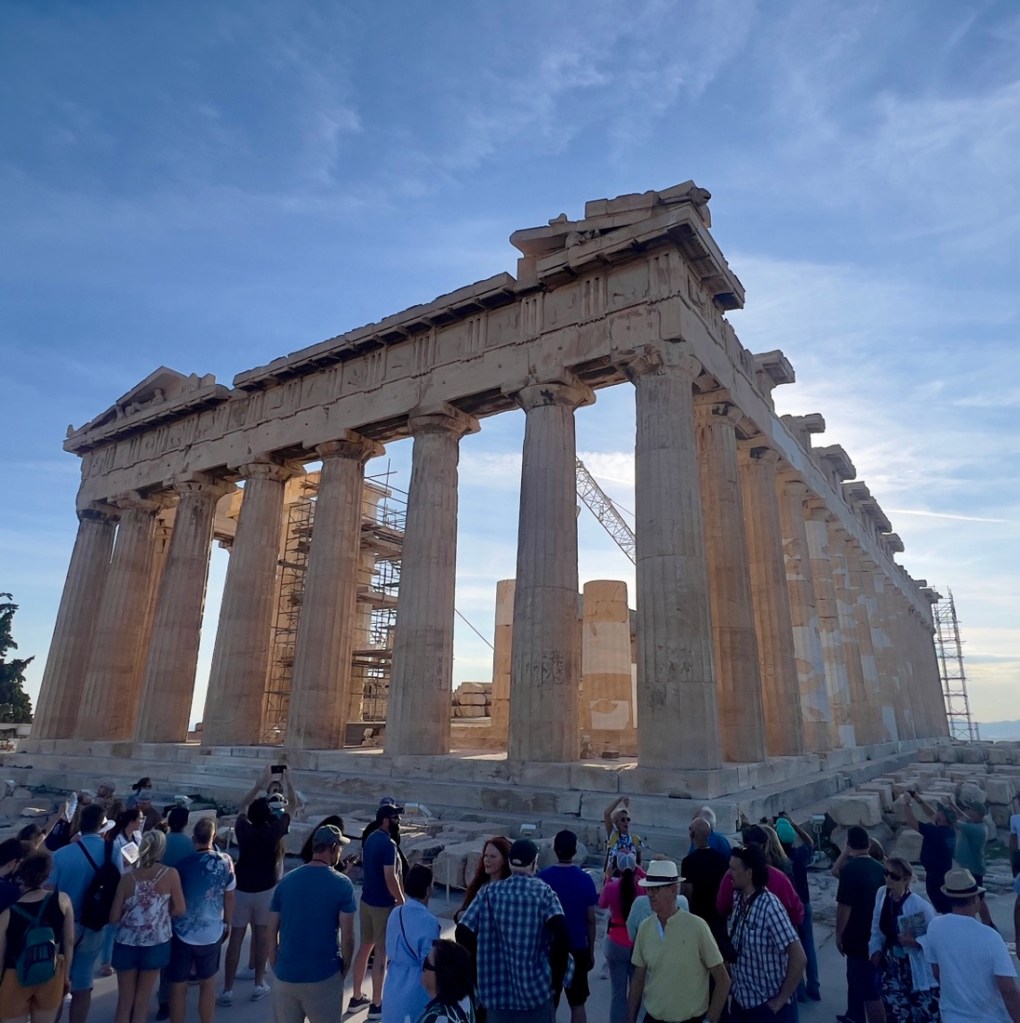
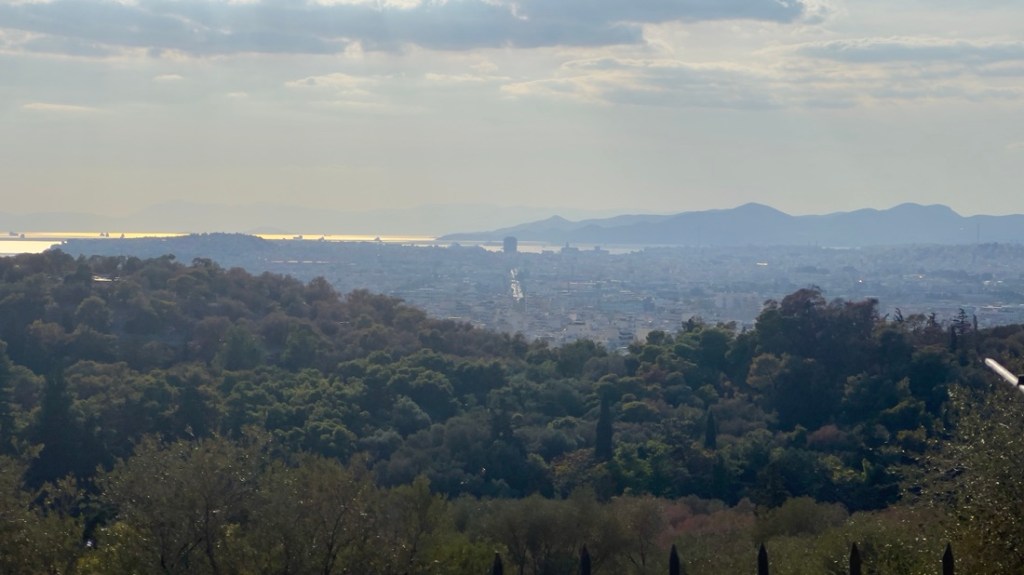
Our guided visit to Athens focused on the Acropolis. The word means high (acro) city (polis) and it refers to the area at the top of the rock, not any particular building. It is the primary site for visitors, though it is not mentioned in the Bible. It is part of the historical background of Athens, and provides great views! My guidebook identified twenty-one significant sites to visit and trying to visit all in depth would be quite an undertaking. I won’t try to do that here! There remains some impressive architecture, but there are a lot of rocks!
The largest temple is the Parthenon, commissioned by Pericles to celebrate the defeat of the Persians in 447 BC. It was part of a building campaign to show that Athens was the greatest city. It houses a grand statue of the goddess Athena. The temple survived quite well over the centuries of occupation until 1687, even though it was converted into a mosque in 1456. When the Turks were defending the city from a siege by the Venetian army, they stored their explosives in the Parthenon. A mortar hit the Parthenon, triggering a massive explosion, with the expected destruction. Since then, it has suffered from souvenir hunters of all types. One example is in 1801, when Lord Elgin got permission from the Ottomans to take some beautiful large statues back to London. The “Elgin Marbles” in the British Museum remains a delicate and sensitive subject between UK and Greece, with the latter striving to get their antiquities returned.



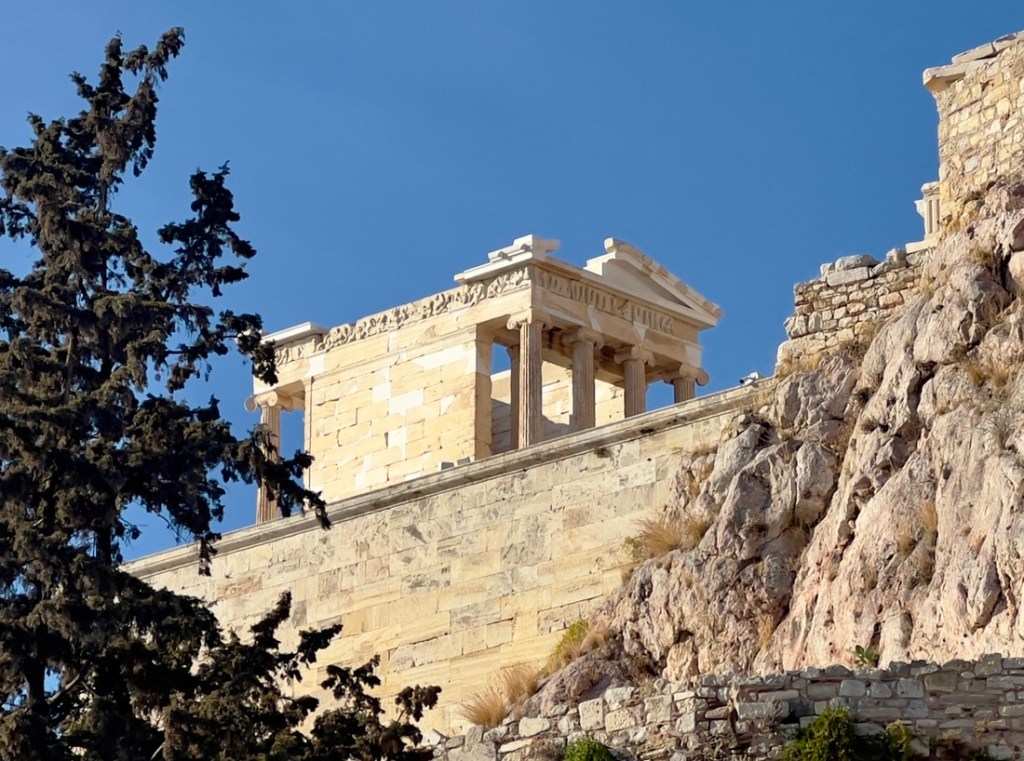
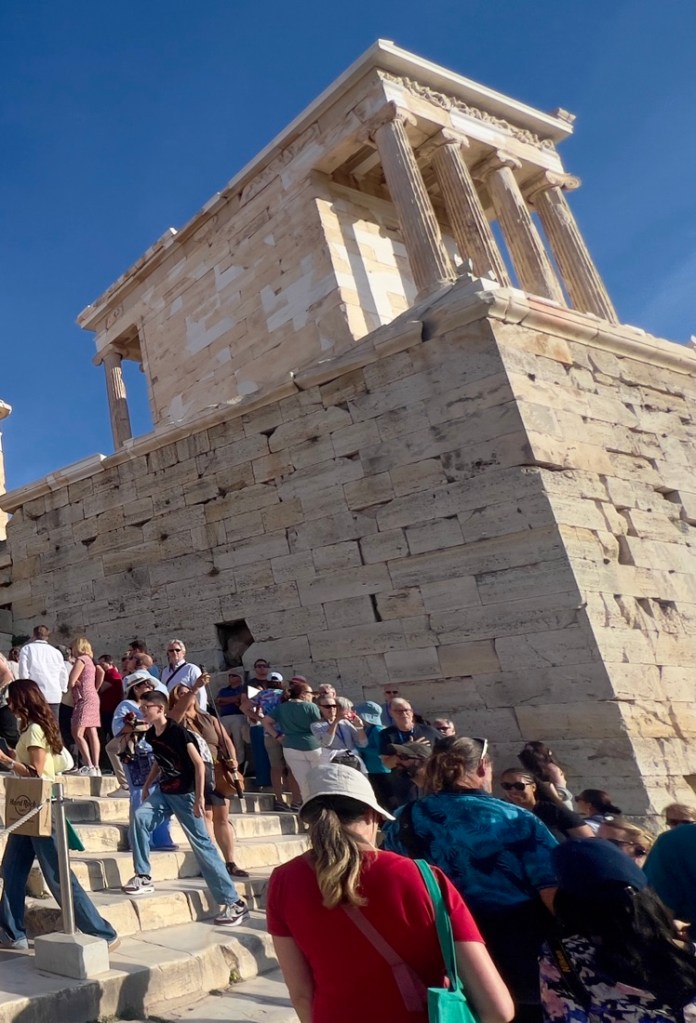
One of the other impressive temples that remain is the temple to Athena Nike. it is visible from many different angles.


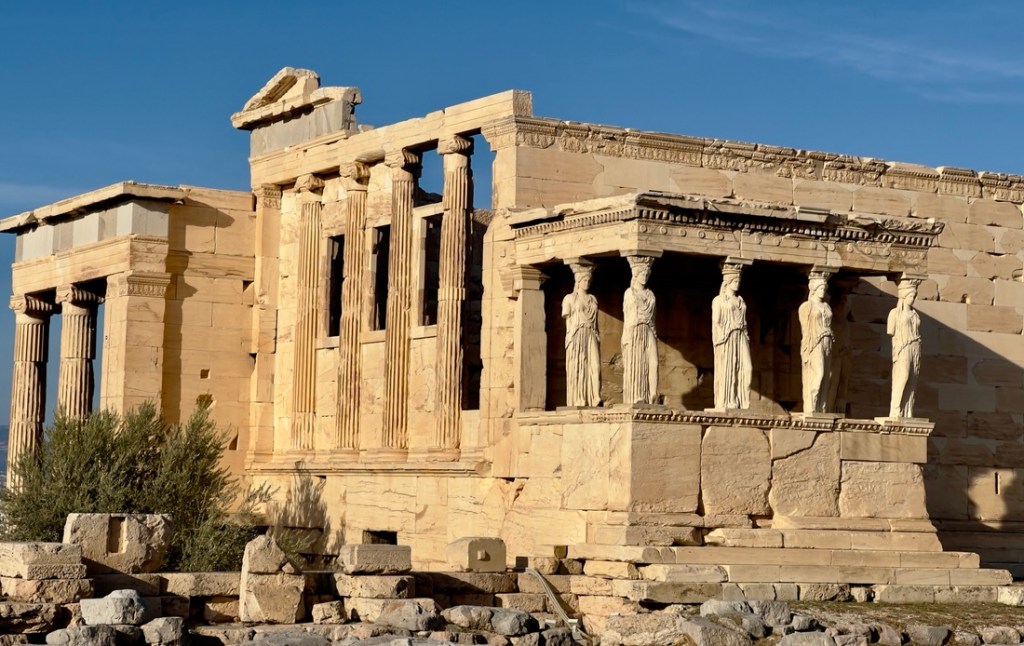
Another temple is Erechtheion:


There were also the remains of a theatre and an Odeon, which was a covered theatre and puts on performances today.
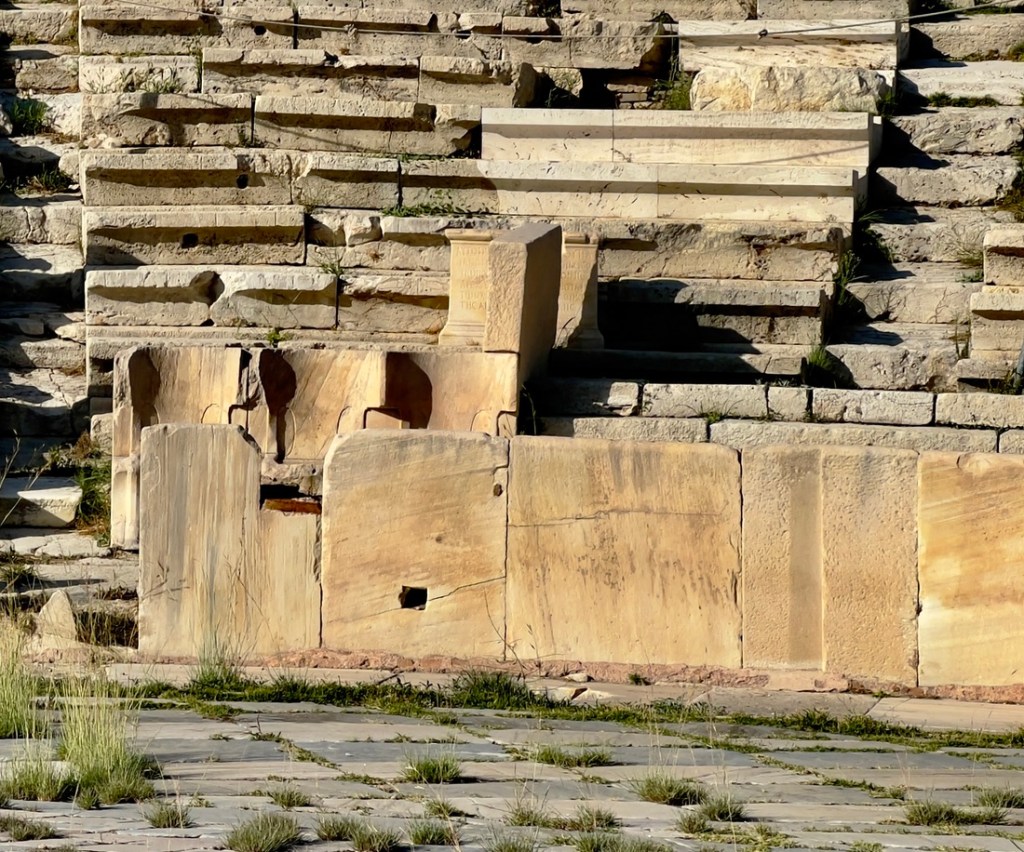
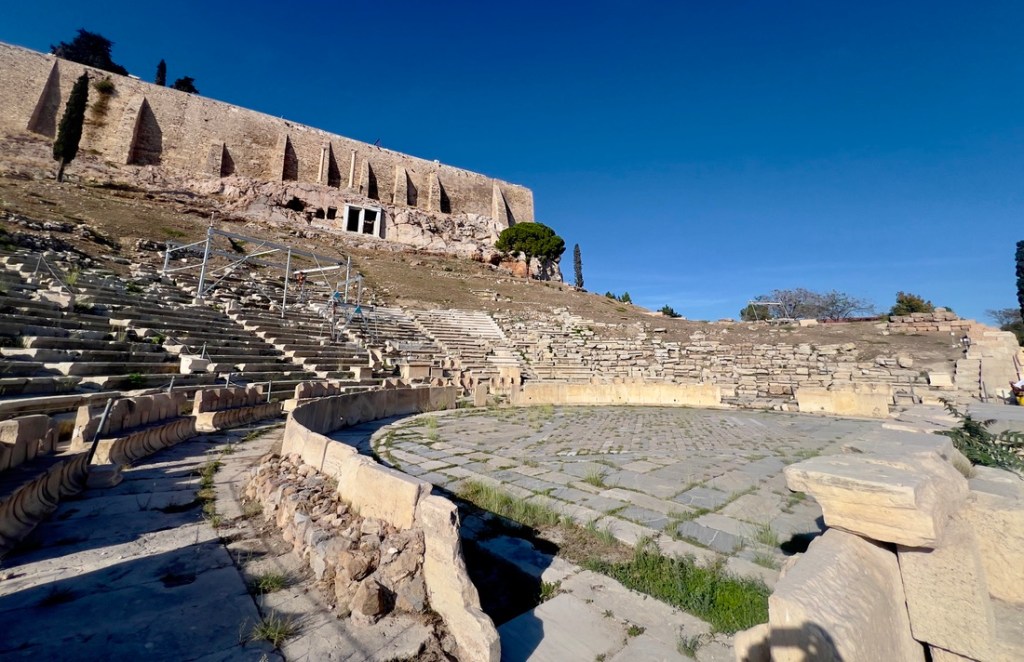


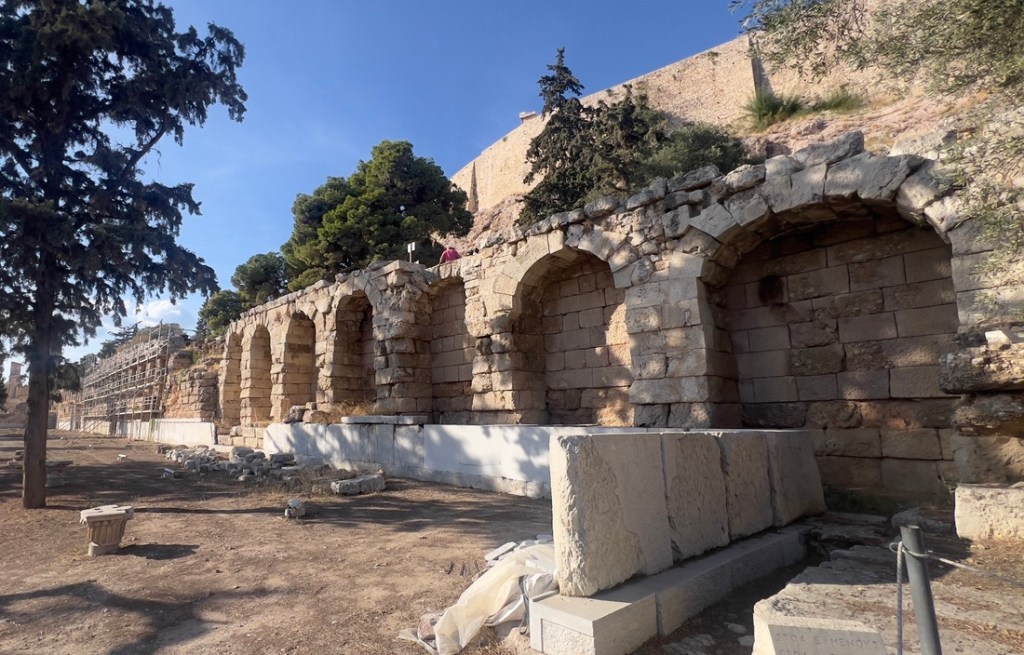



Part of the fun of visiting Athens was wandering along the backstreets as we walked around Athens. After dinner at the hotel, we had a short visit with a couple of representatives from a local ministry, One Collective.
Find other posts from this trip on our Greece page.
Please follow us on this journey by subscribing below. We would love to read your thoughts: please leave comments at the bottom of the post.
 The Adventures of the Cajunlimeys