TL;DR: We had a fantastic 19 hours in Athens as we transitioned from solo travel to joining our group. The combination of a fine self-guided walking tour, a comfortable hotel with a bird’s eye view of the Acropolis, and a scrumptious meal sitting on a bustling street in the shadow of an old church. We took our first steps in Paul’s steps as we walked around the ancient agora, described as the marketplace in Acts 17:17.
I was going to combine today’s visit to Athens with the blog of a subsequent visit planned later in the trip, but I realized I might forget things. This was confirmed when I checked some photos from when we visited Greece with the kids in 2009, and have no recollection of a couple of places that we revisited!
Rather than trying to group the photos into themes or similar, this is a simple photo diary. Much of the itinerary is thanks to Rick Steve’s’ Greece: Athens &The Peloponnese which includes some great self-guided walking tours of Athens.
On arrival in Piraeus, we grabbed an Uber to the Adonis Hotel on the northeastern edge of the Plaka, and close to Syntagma Square where we meet the group tomorrow. It looked great from the moment we arrived, but soon after checking in, we headed out to explore.
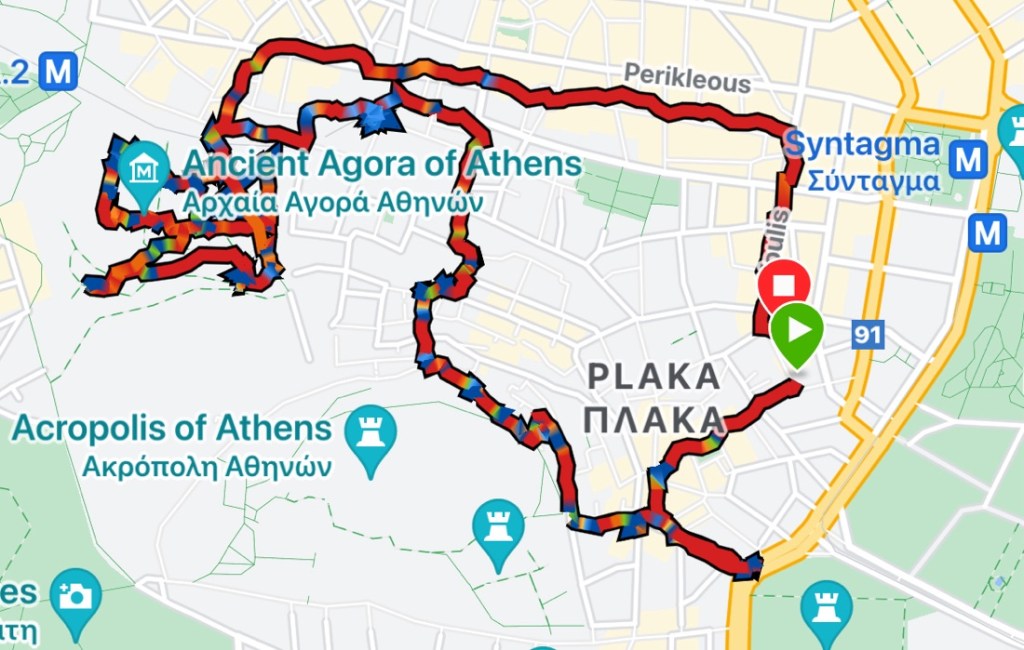
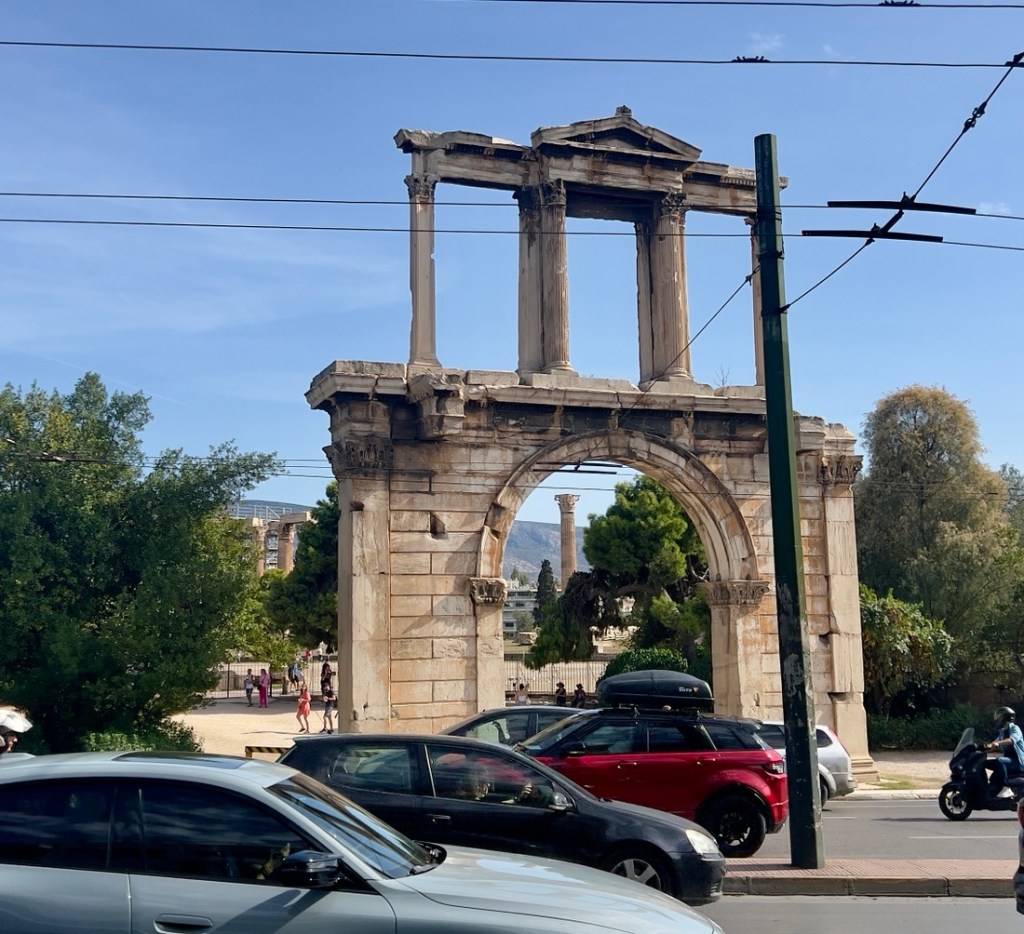
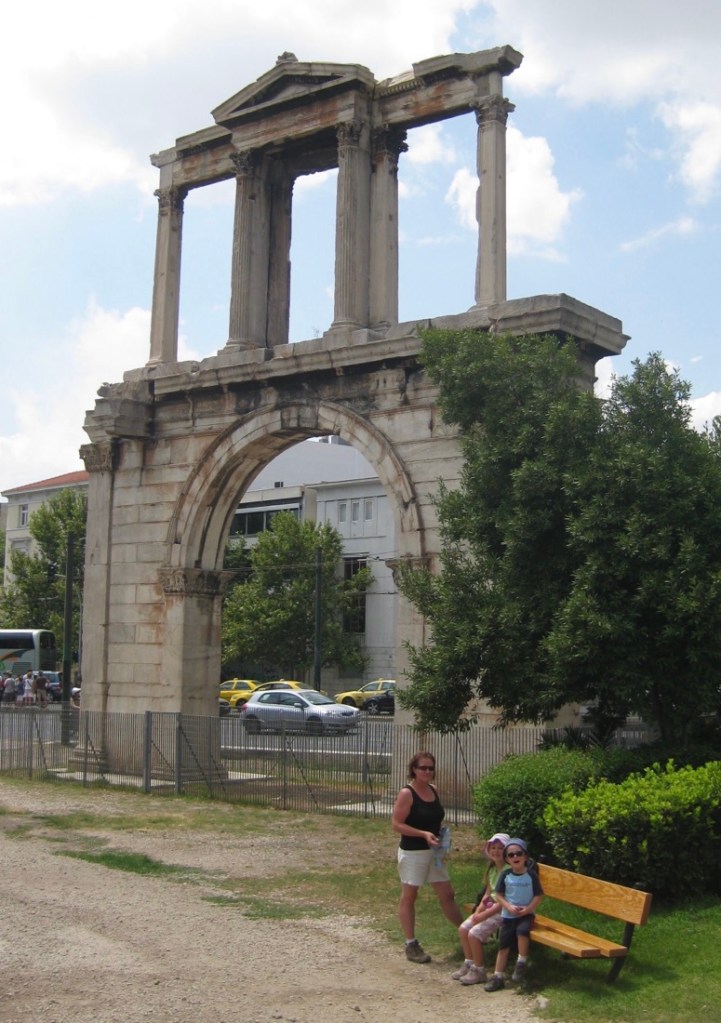
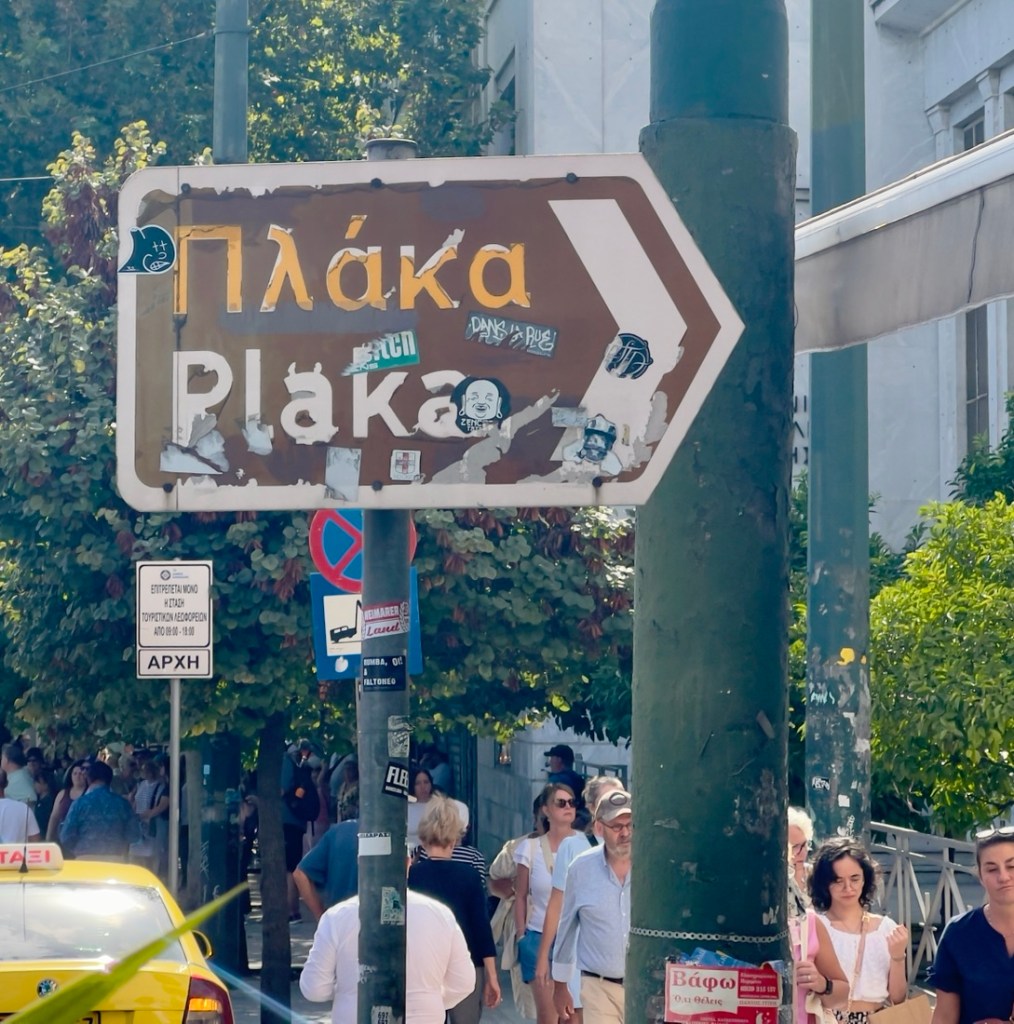
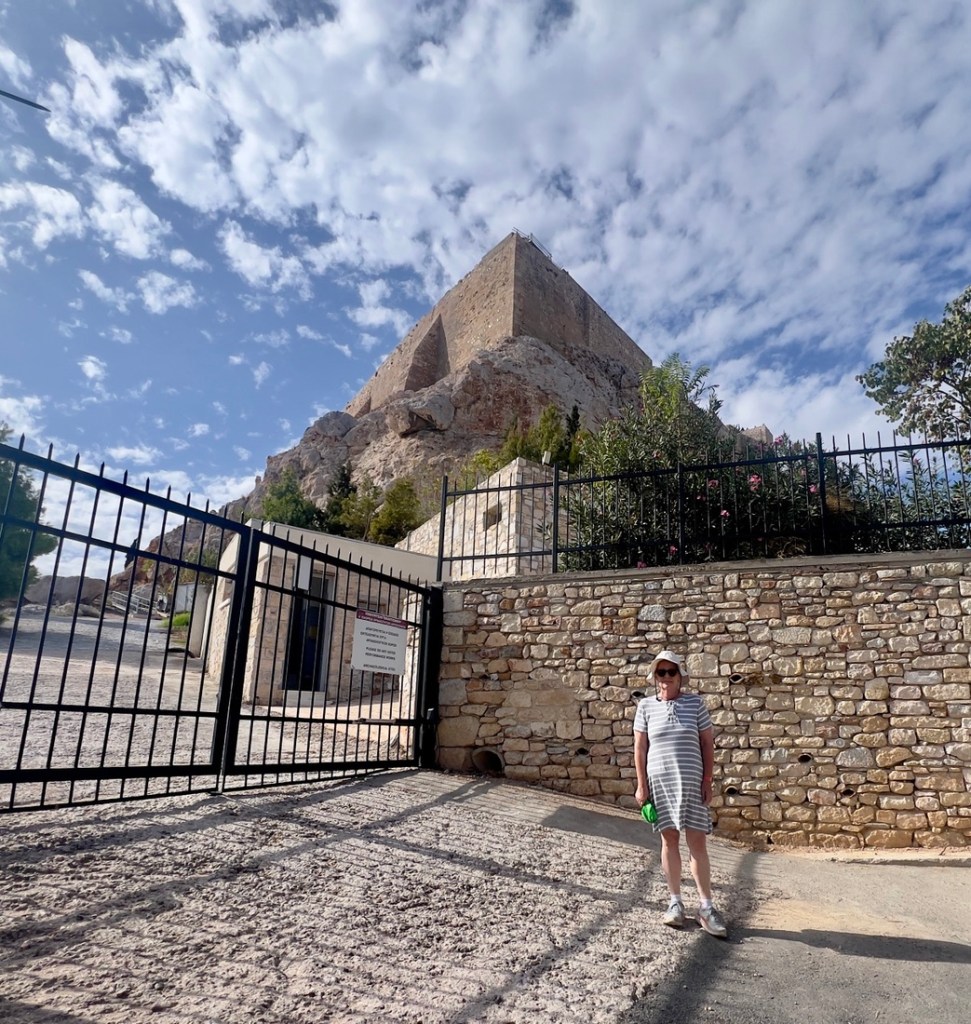
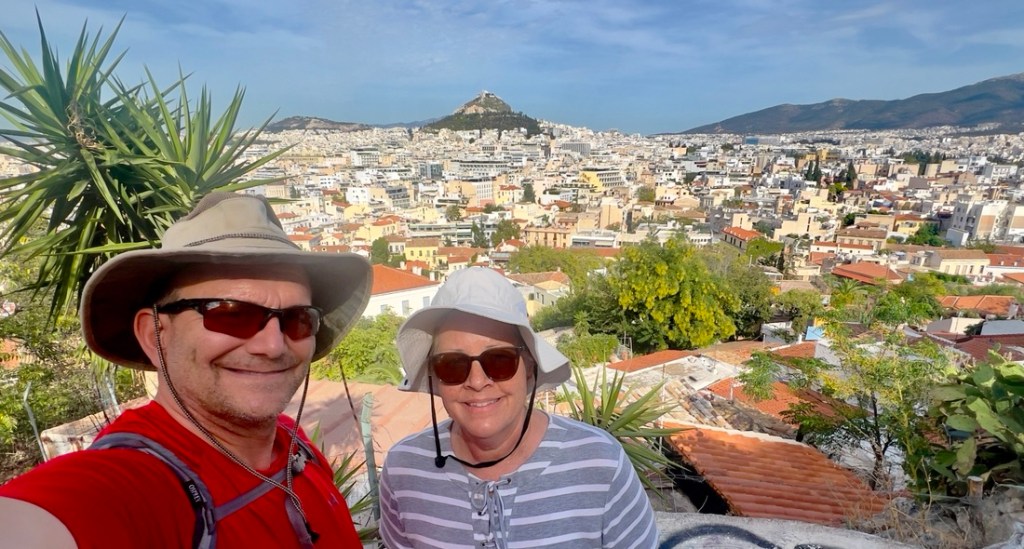
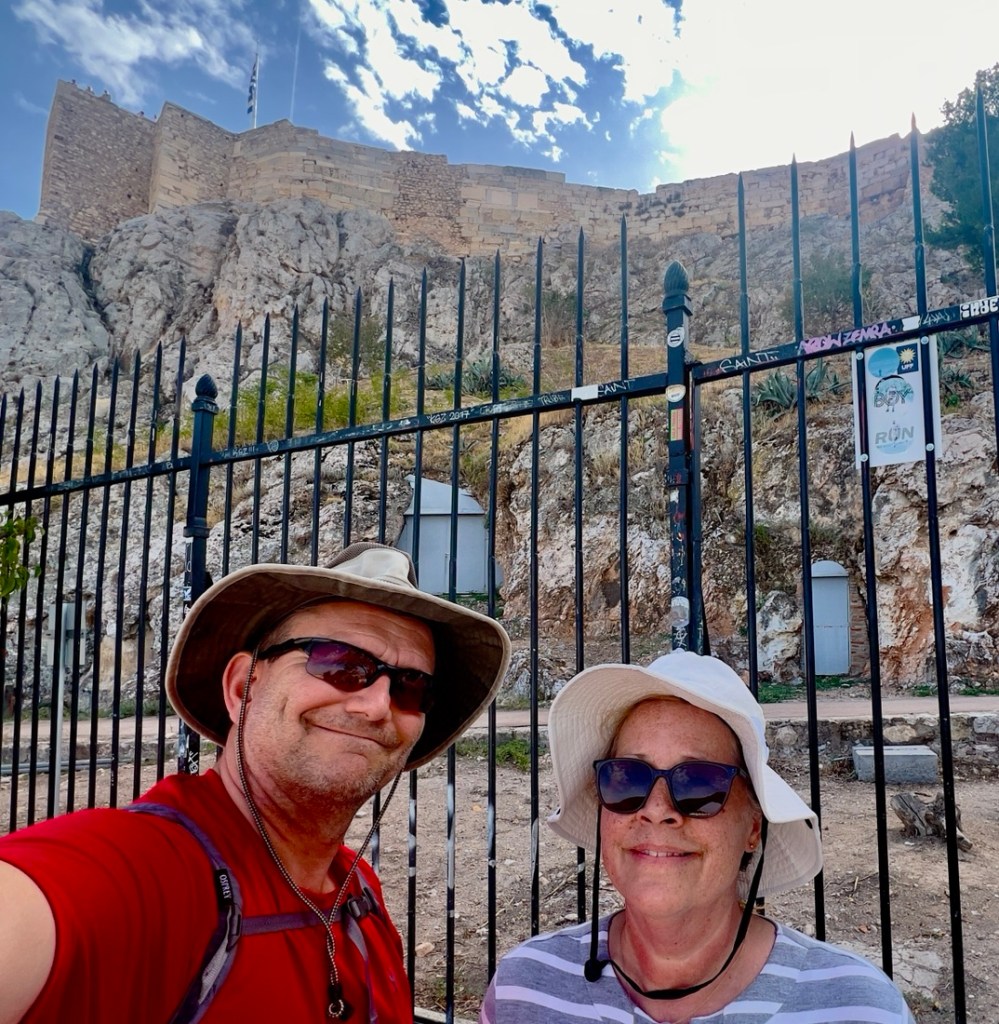
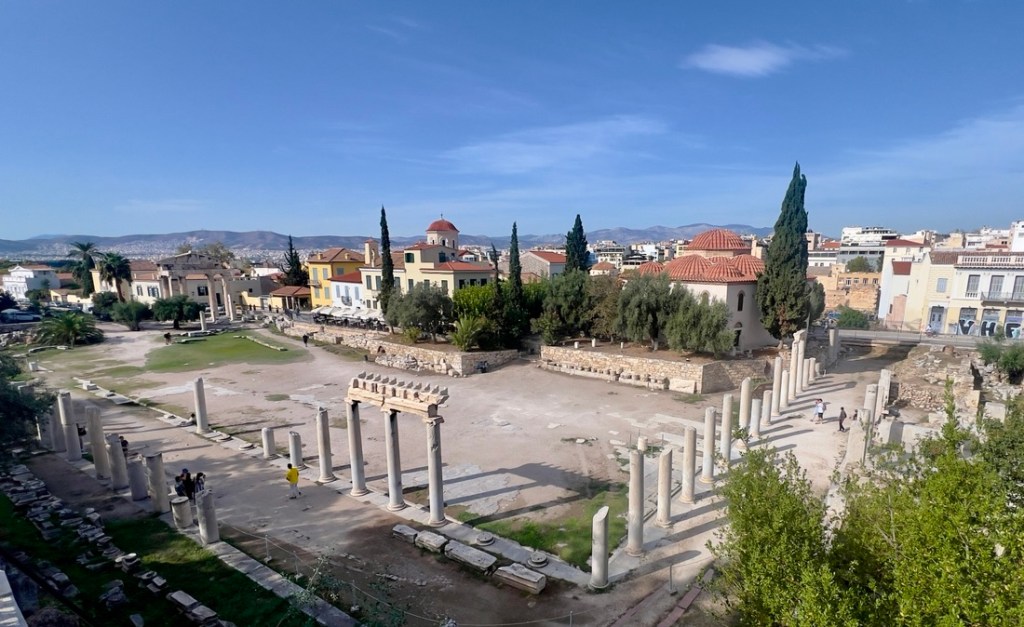
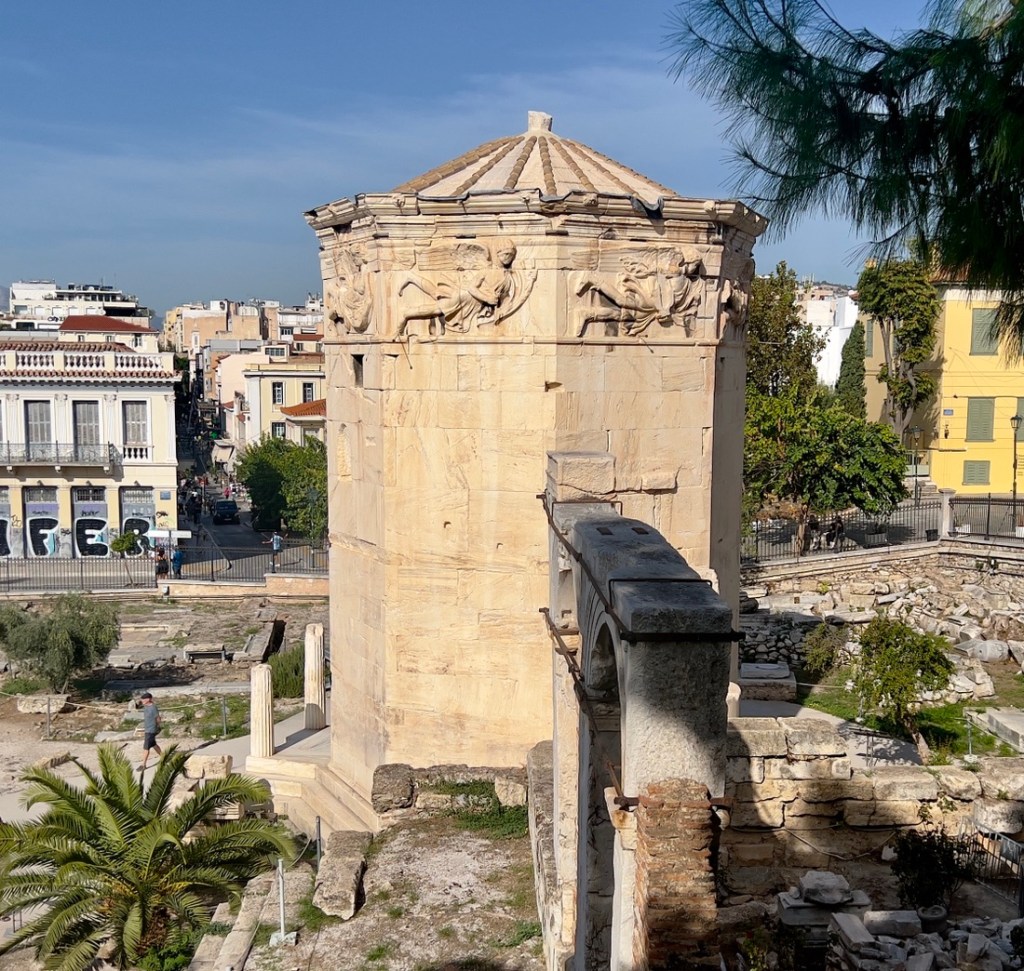
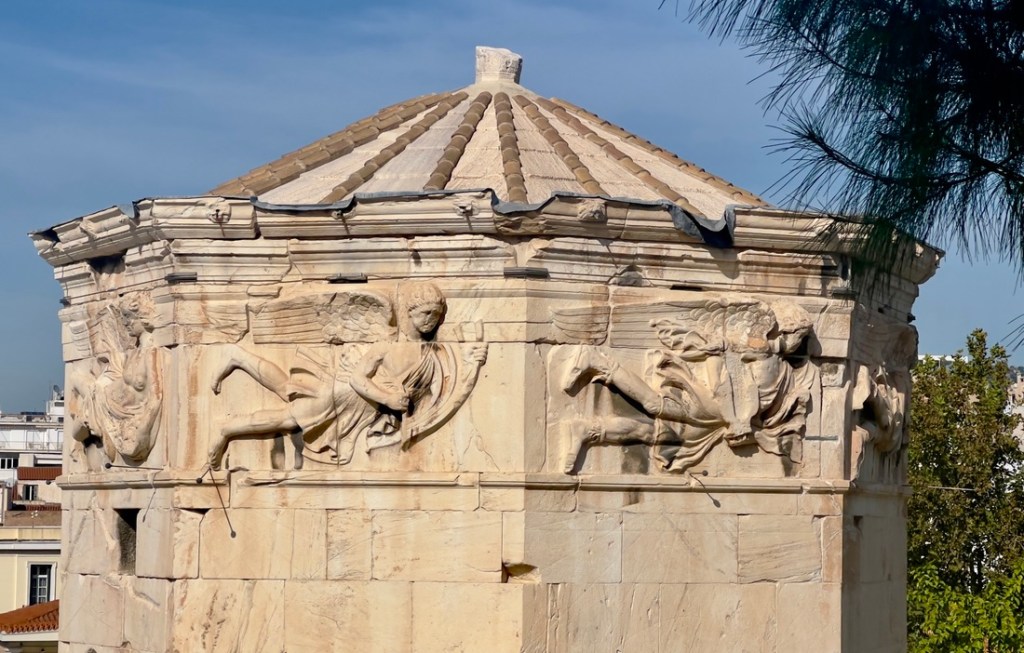
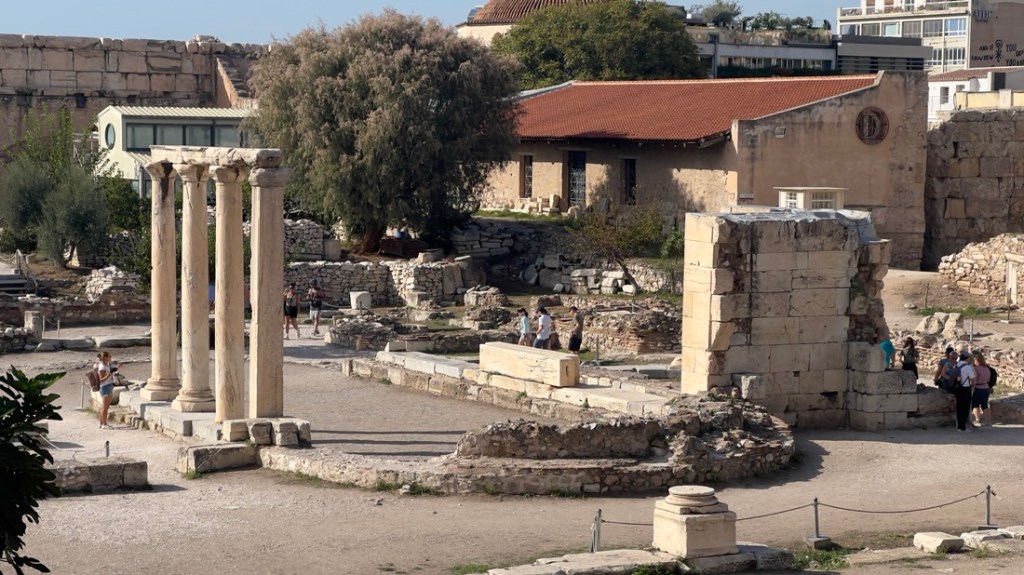
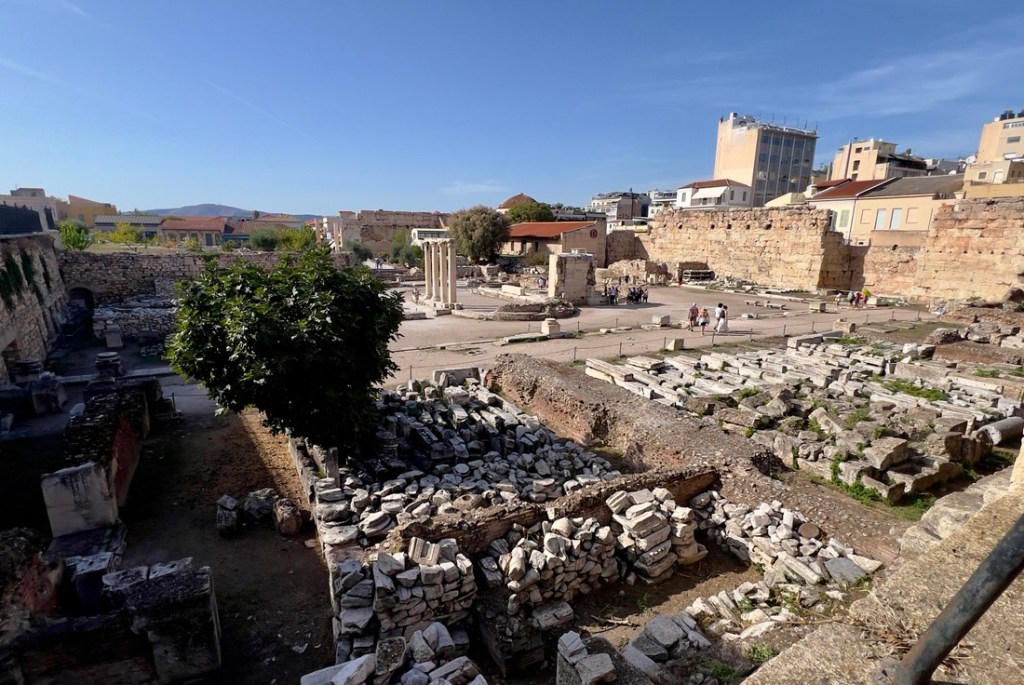
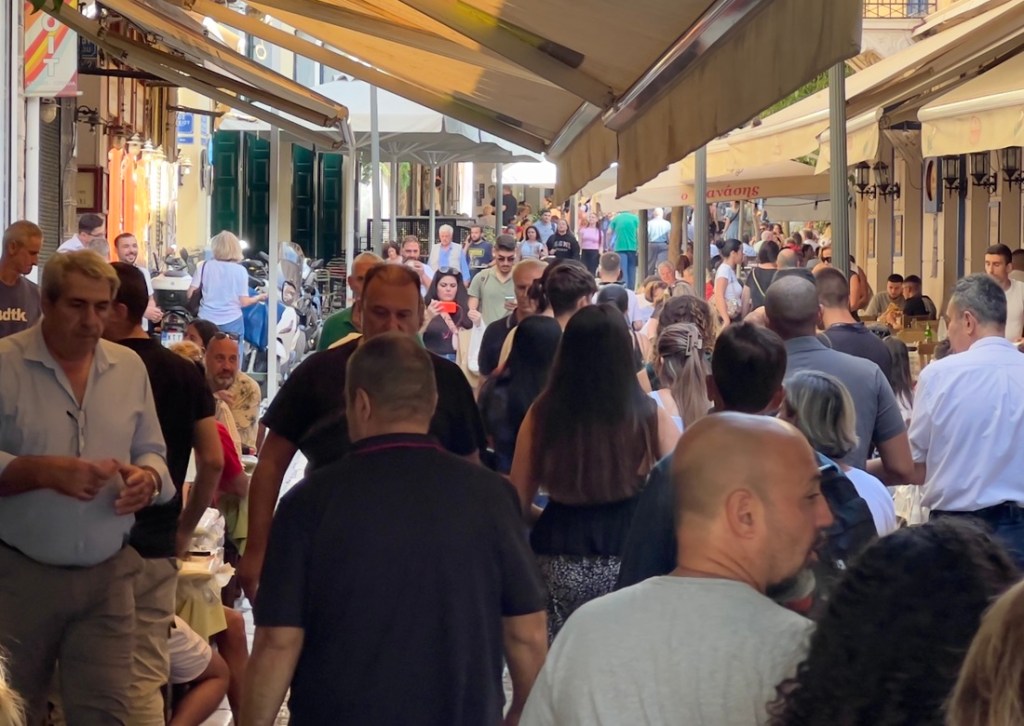
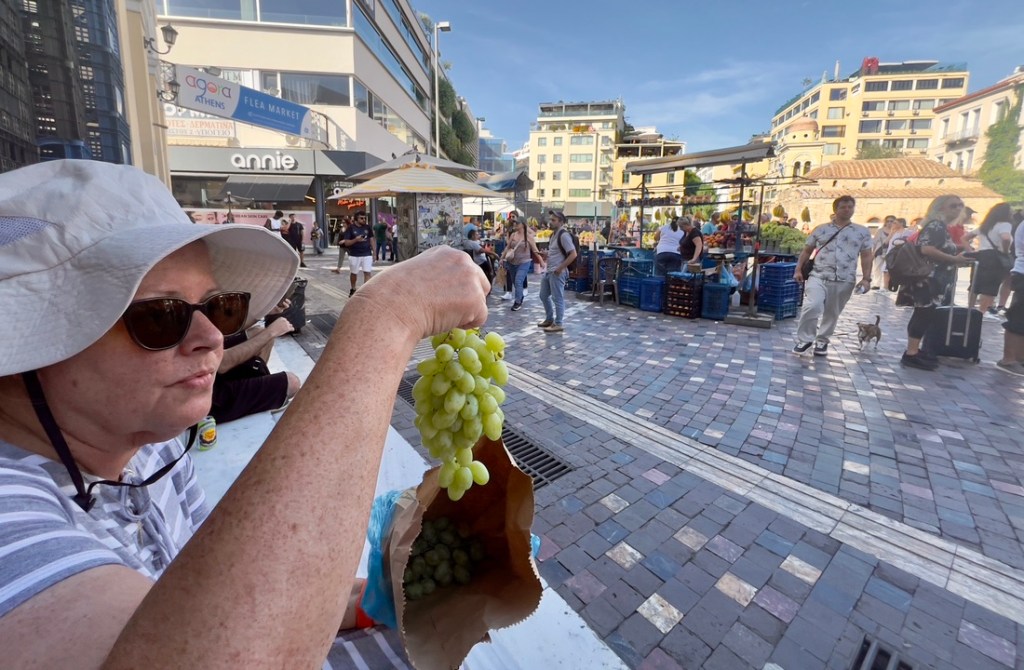
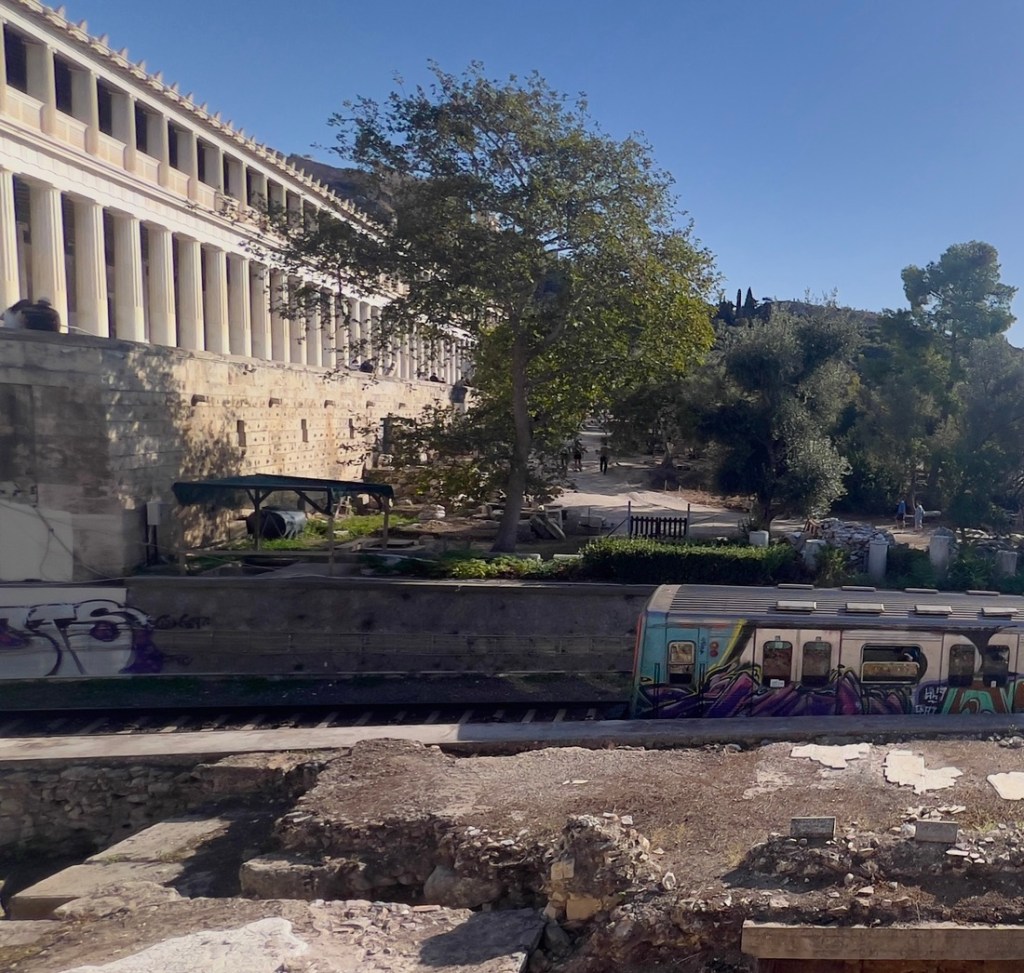
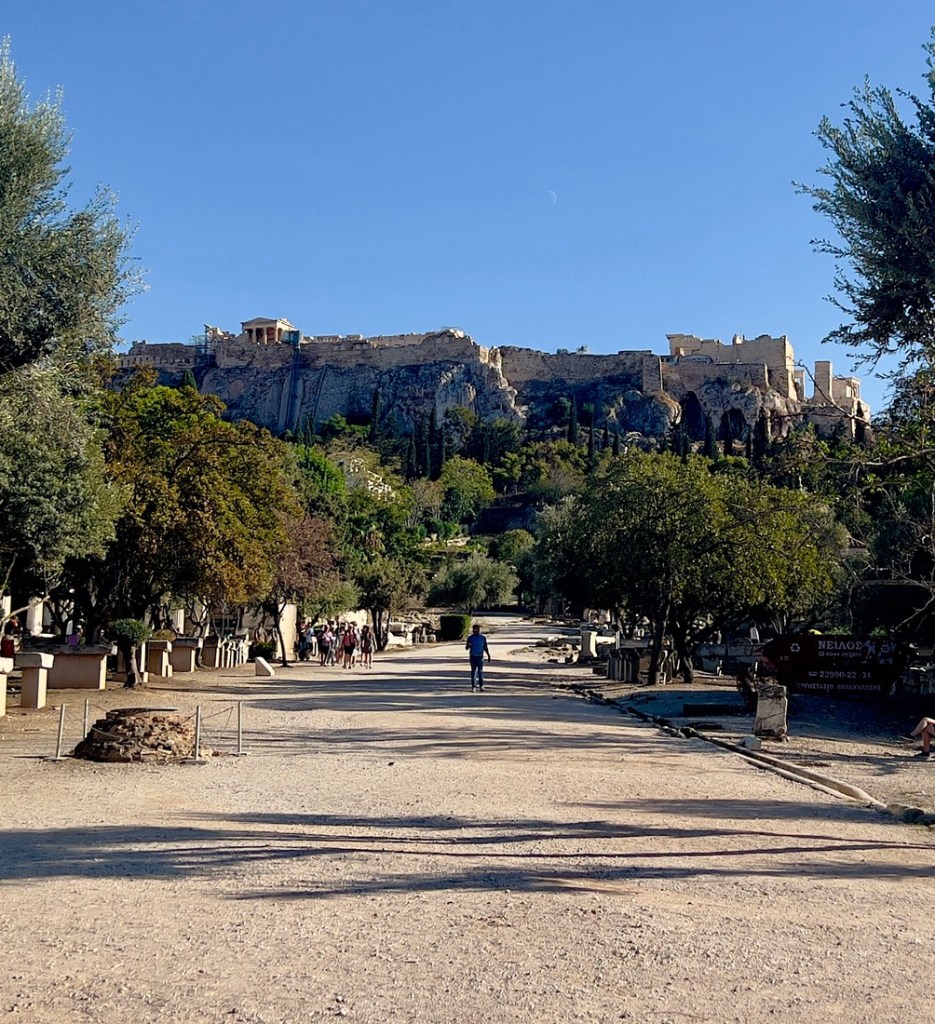
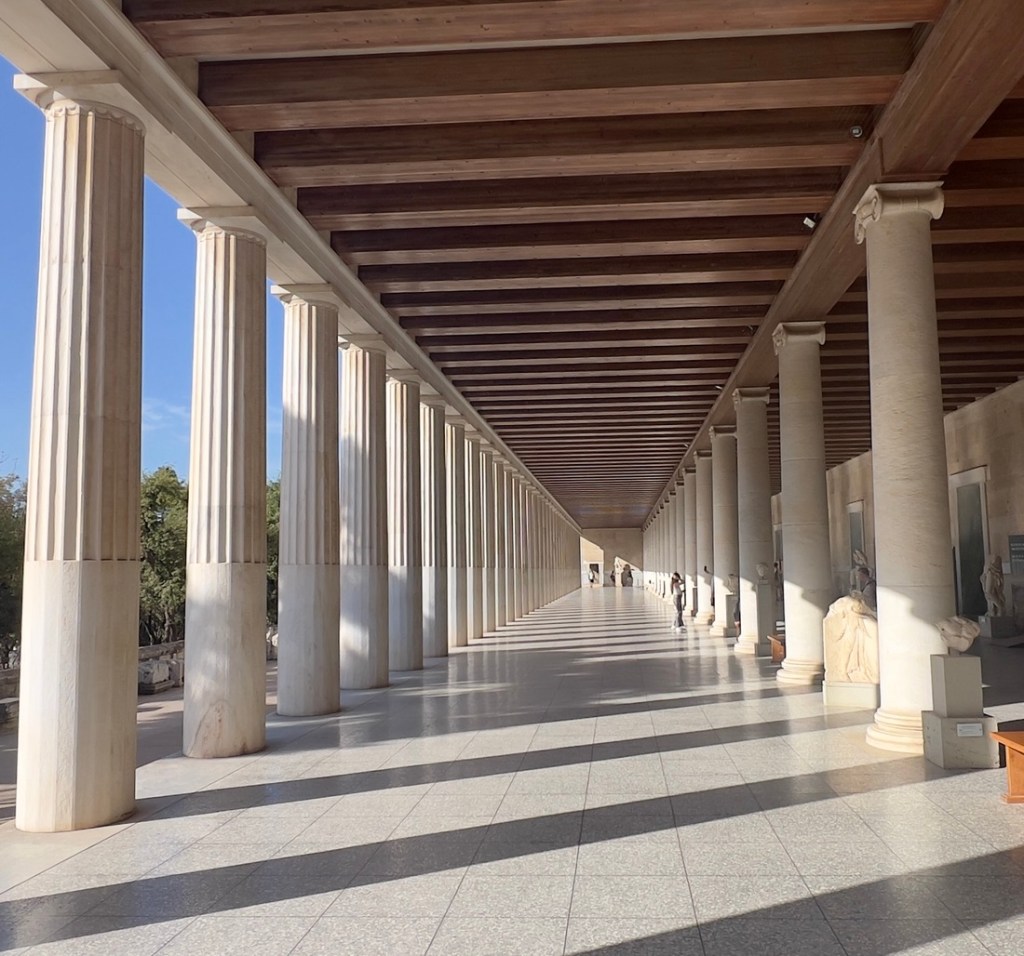
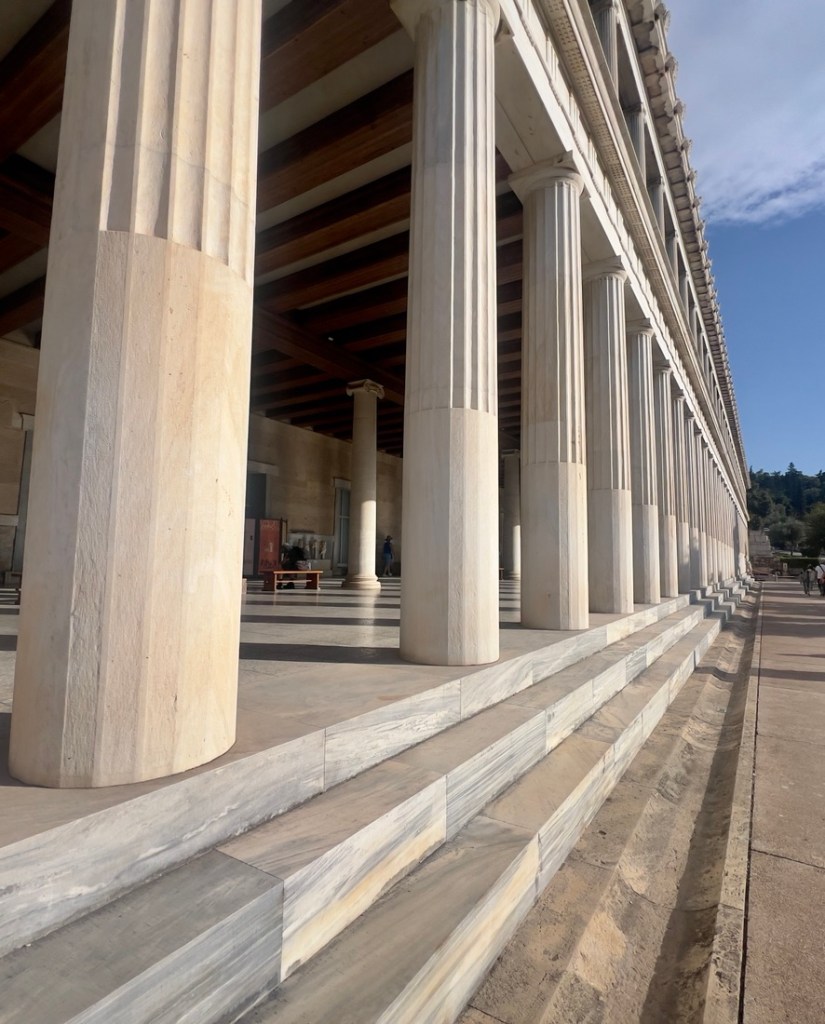
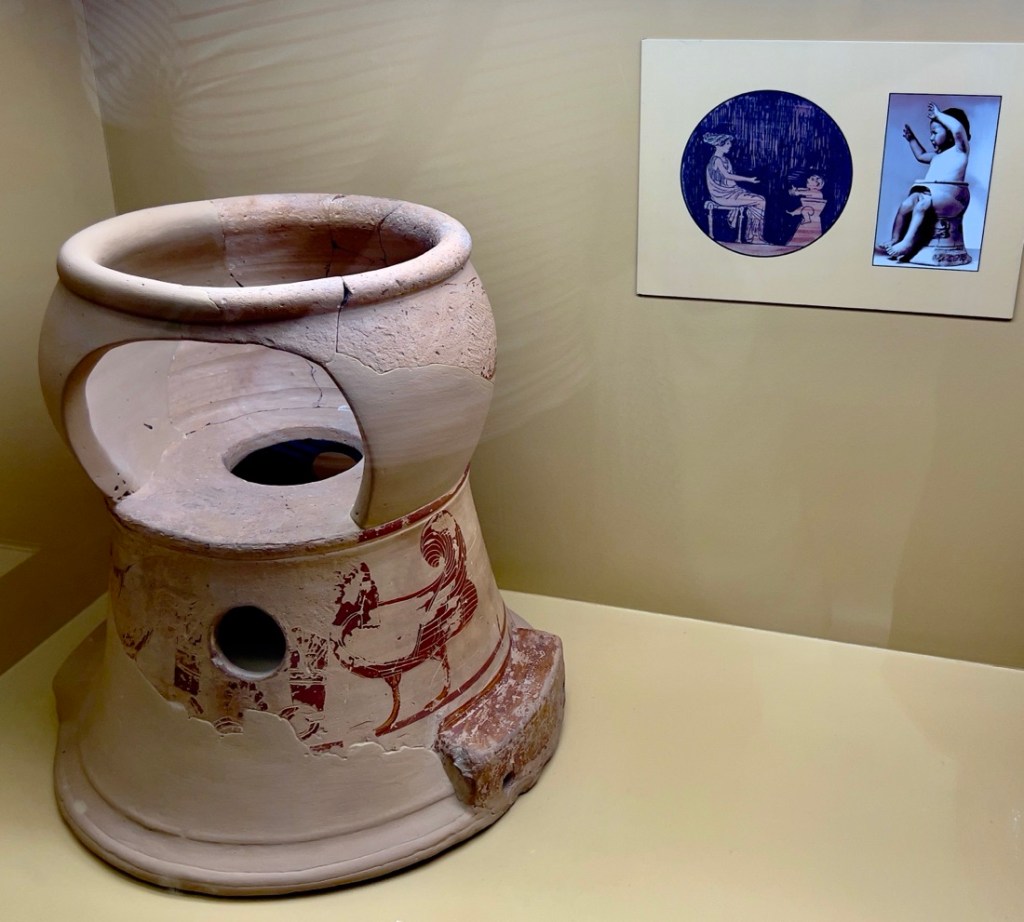
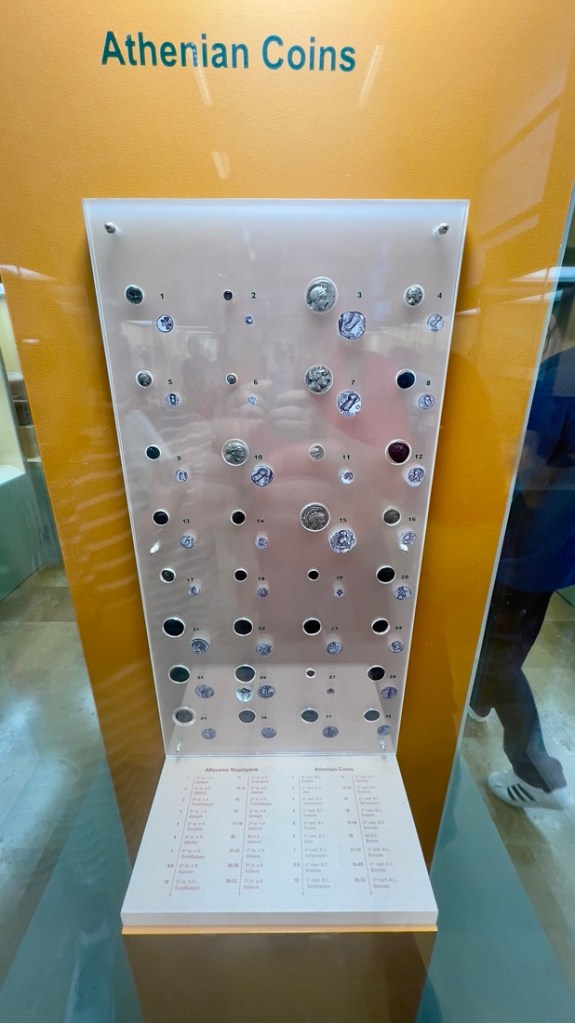
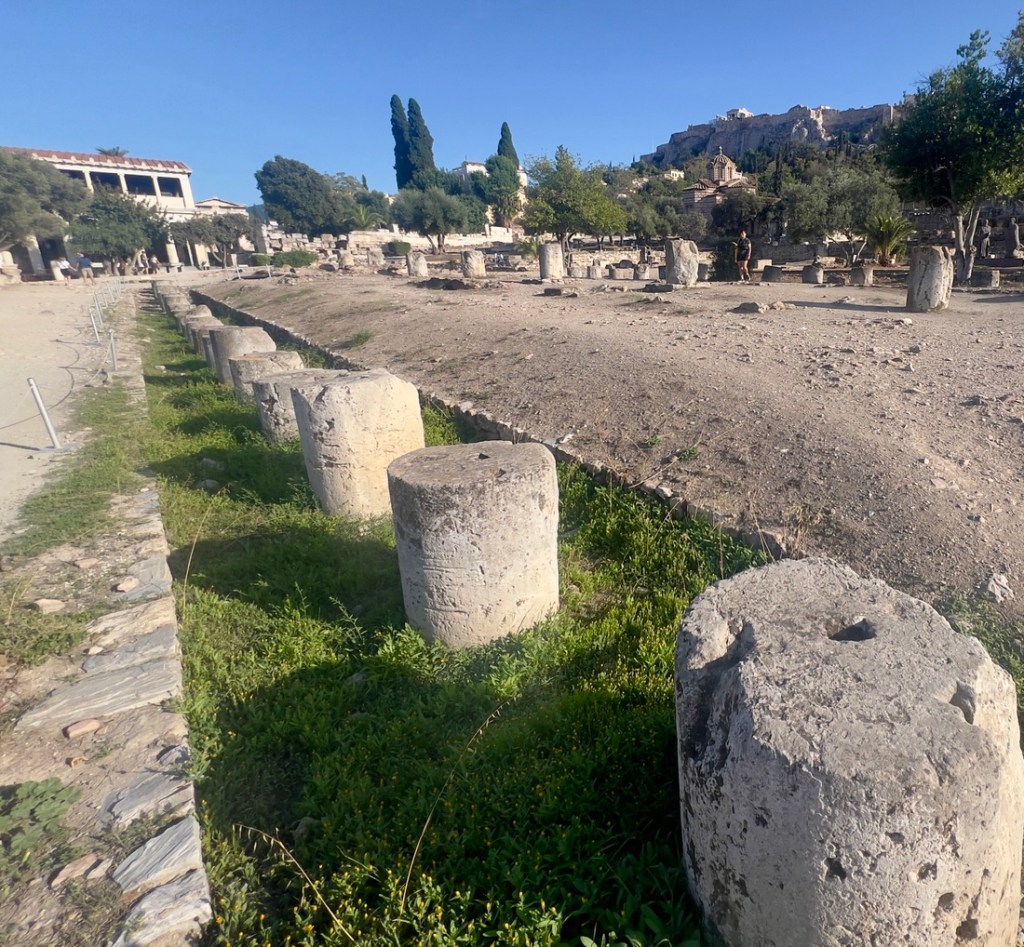
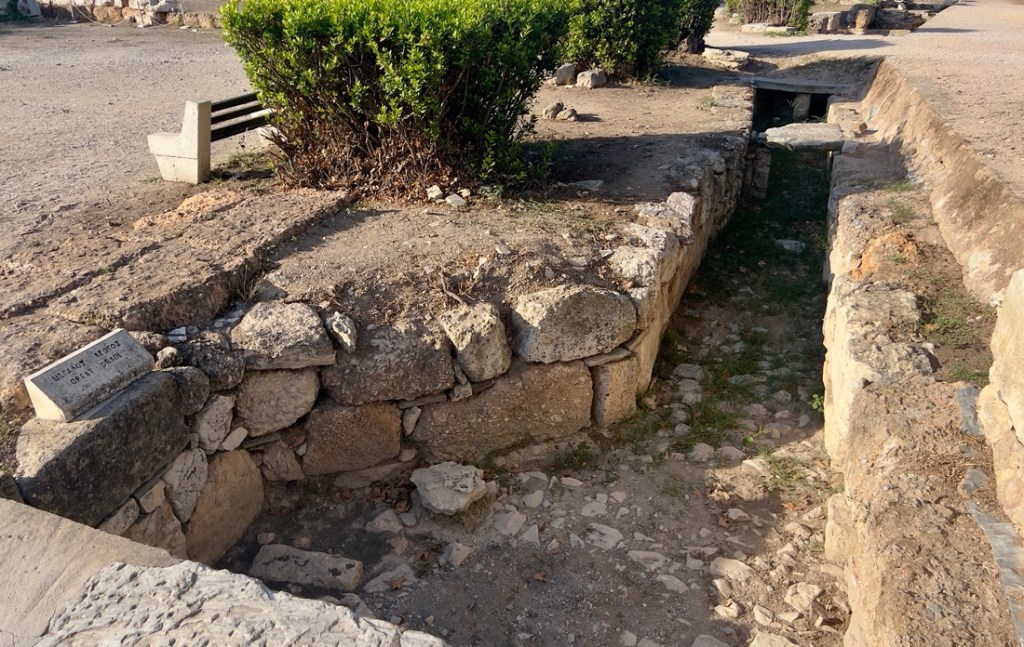
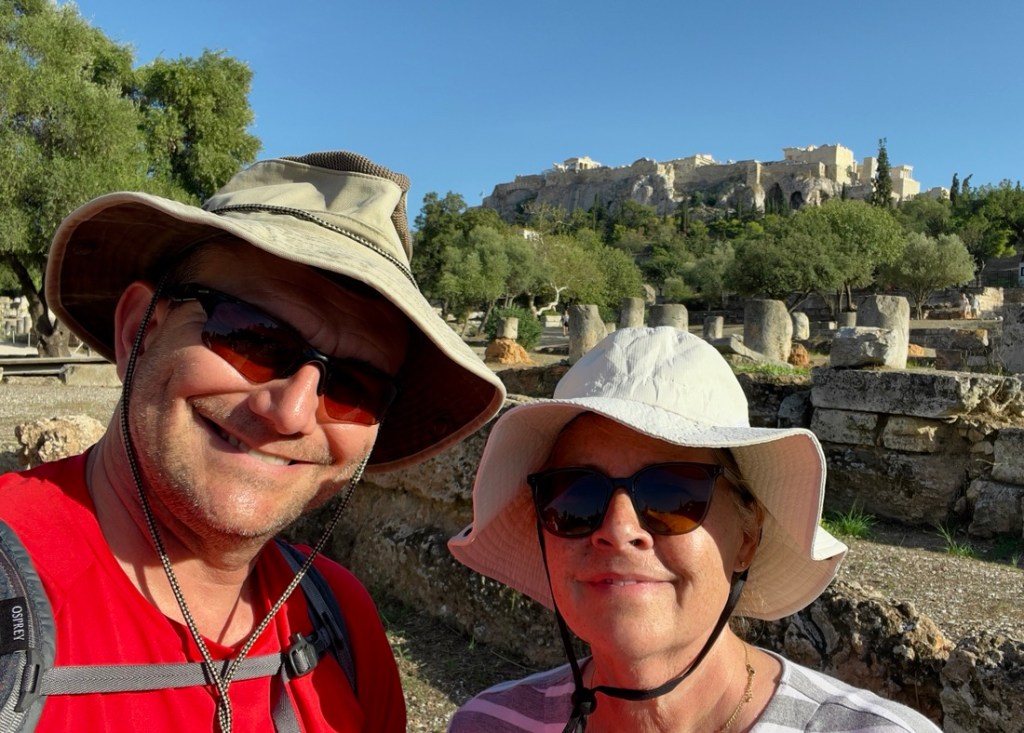
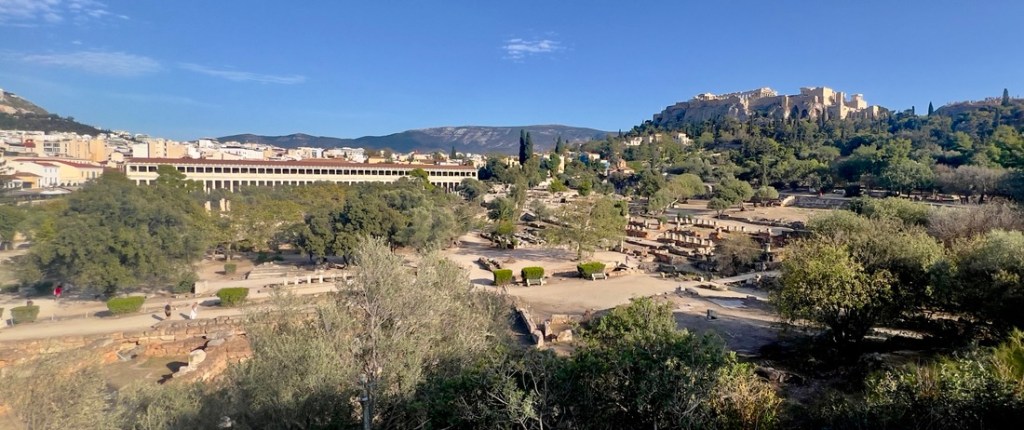
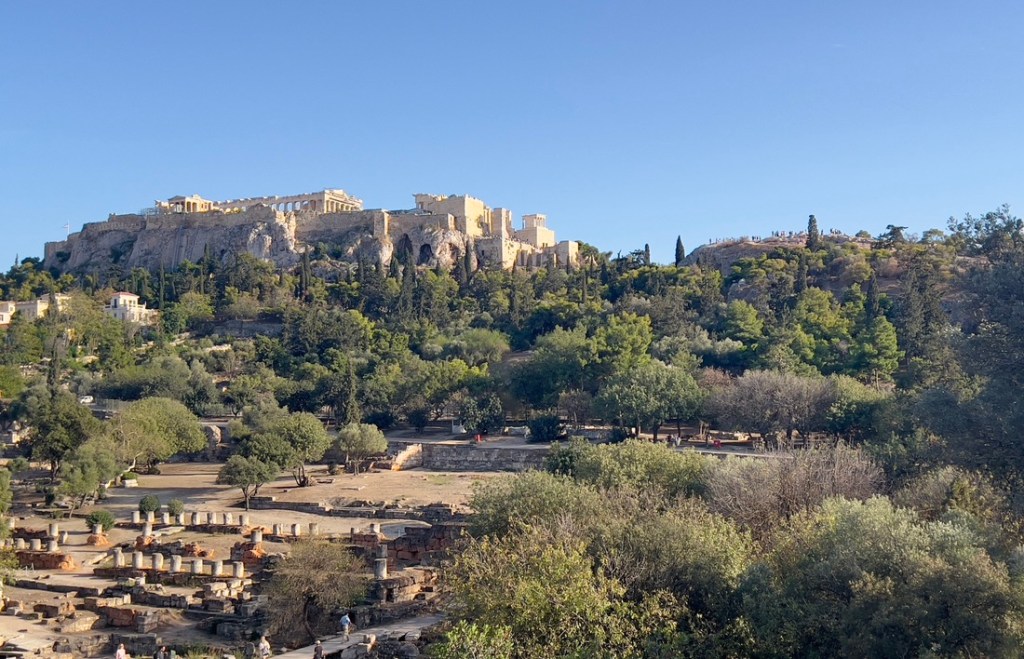
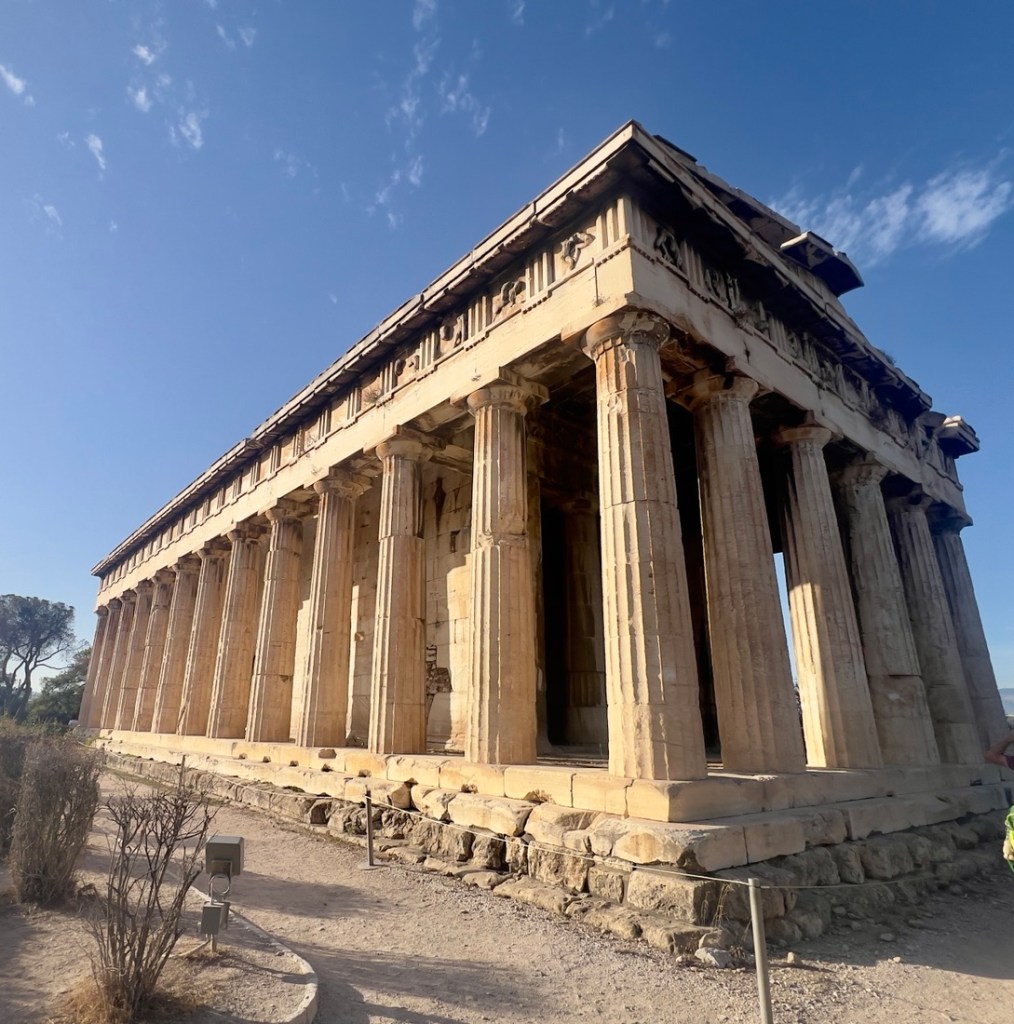
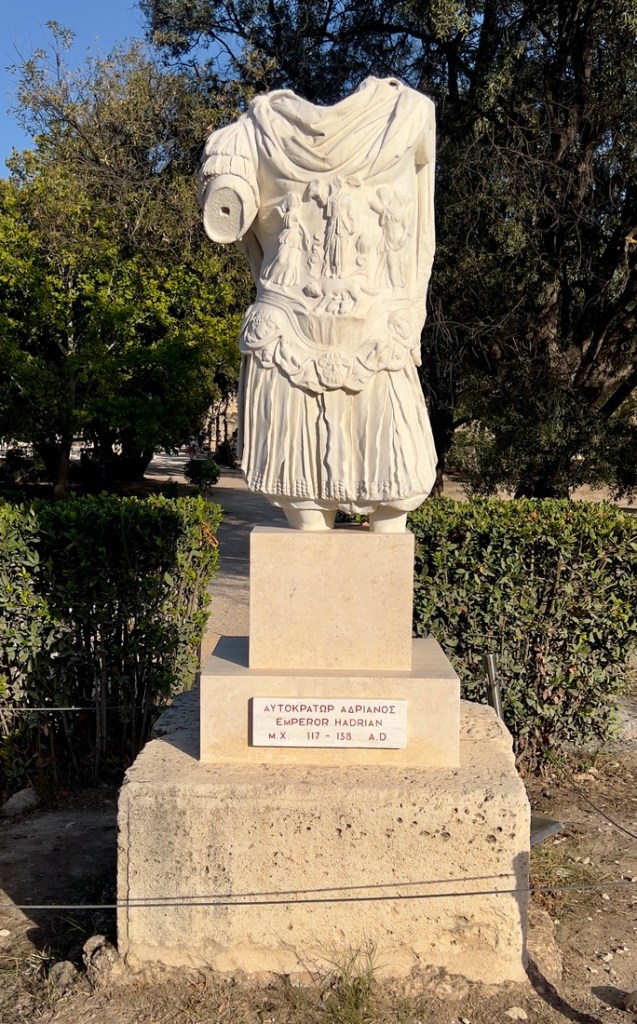
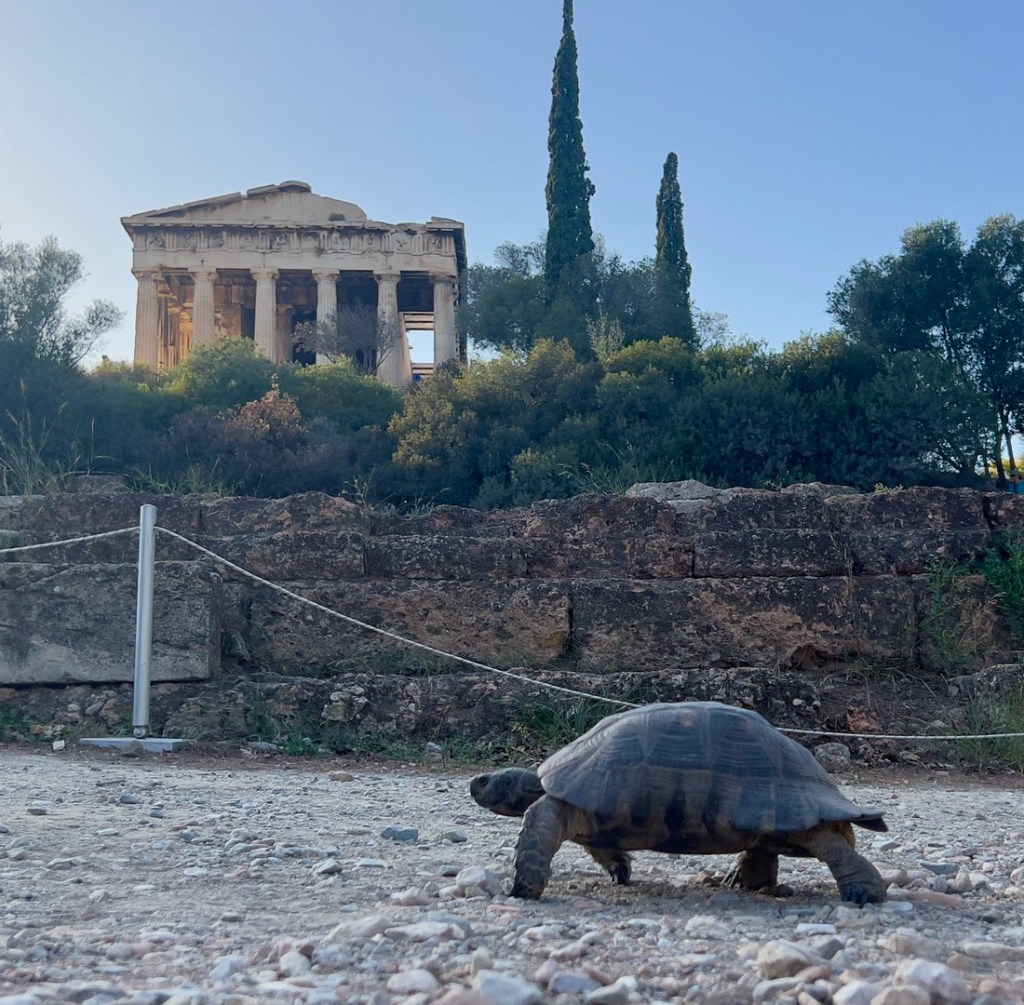
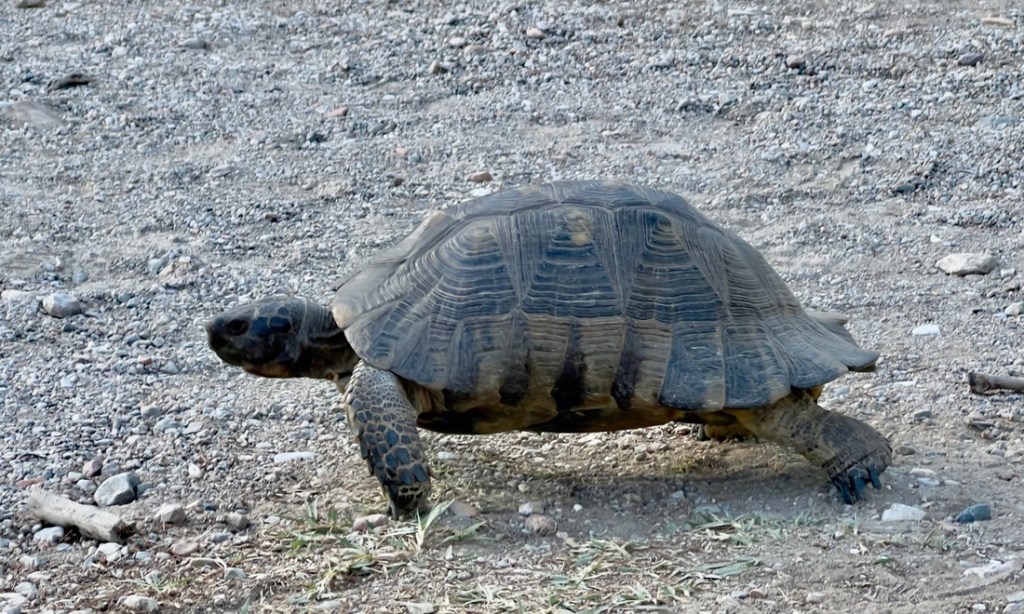
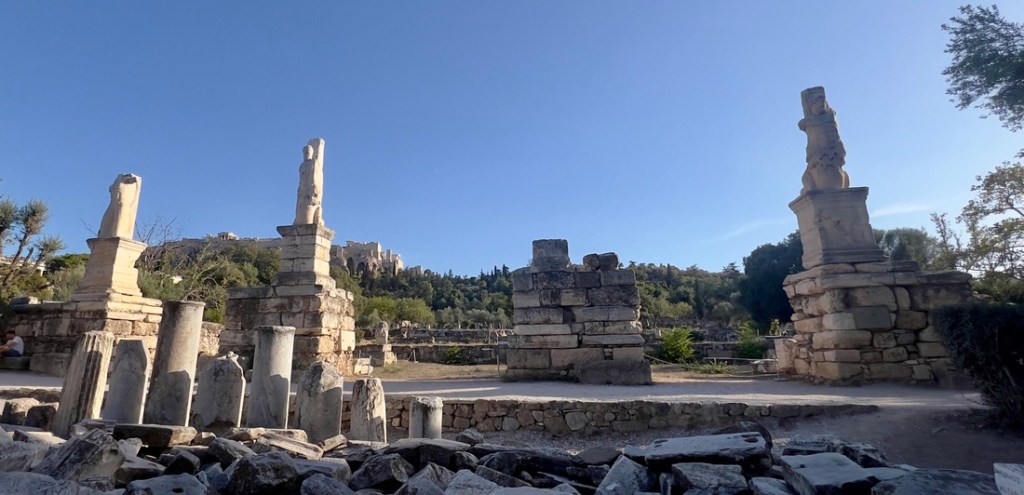
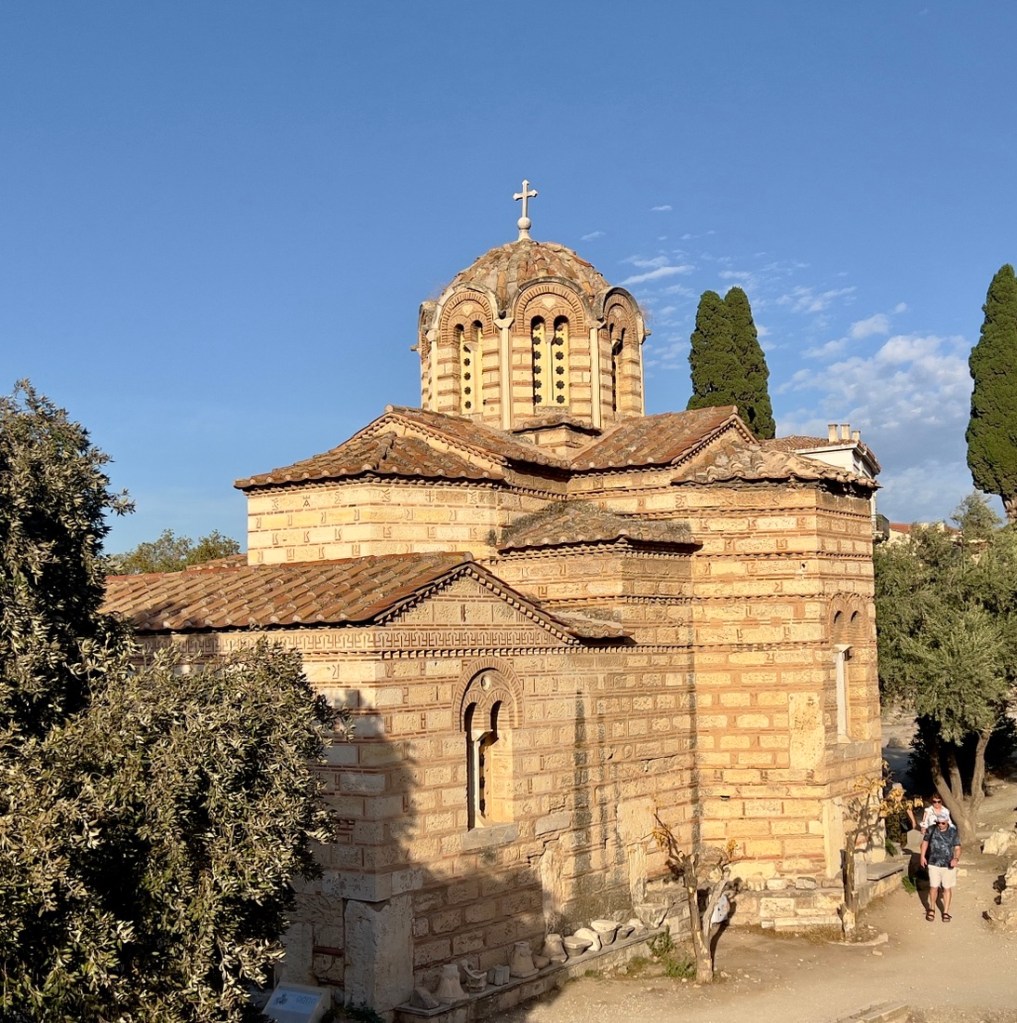
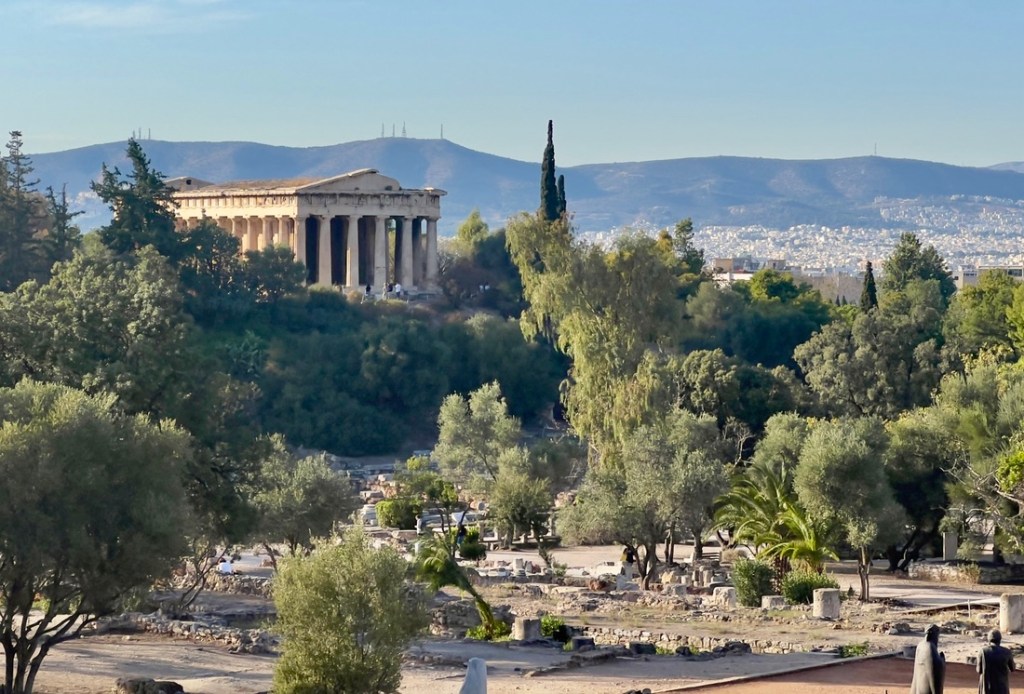
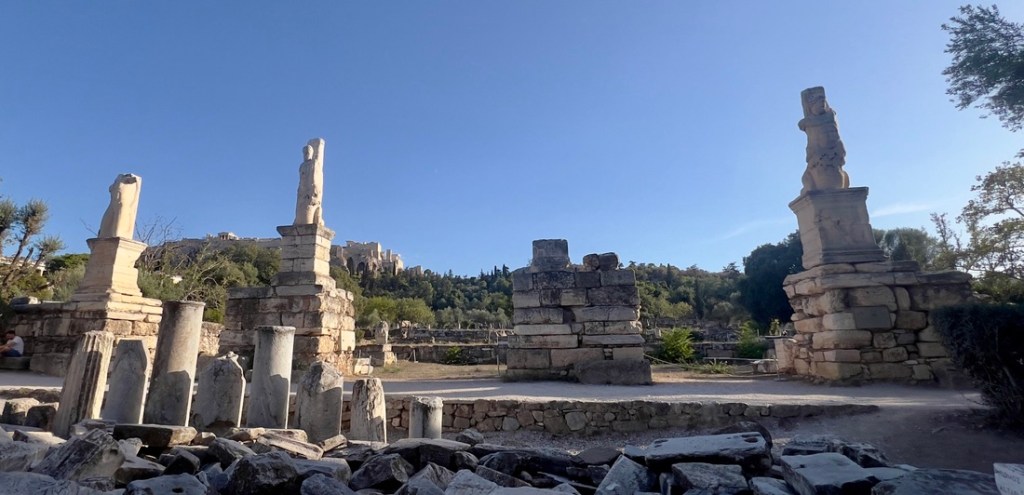
This was our route. About 4.5 miles in 3 hours checking out Athens Old Town and the Ancient AgoraFirst stop was Hadrian’s Arch from AD 132, with some huge columns behind, that are part of the Temple to the Olympian Zeus. The Roman emperor Hadrian played a big role in developing Athens when it was part of the Roman Empire, with one of the main drag Adrianou named after him. It was cool to make the connection having just walked Hadrian’s Wall.It is crazy that Janet and I have no recollection of visiting this spot in 2009. I only discovered this when searching our Google photo album for “Greece.”Next, we headed in Plaka which is the most touristy part of town with lots of narrow streets, with lots of warnings of pickpockets. The crowds and the crazy traffic was a strong contrast to Hydra.We skirted the edge of Plaka to walk up to the base of Acropolis Hill. I expect we will visit the top when we return with the group.We continued into an area called Anafiotika. The alleys were even narrower and steeper than on Hydra, but there were no crowds and it reminded us of the peacefulness of the islands with the Athenian backdrop.Photo from the same location as above but the opposite direction. The Greek flag that flies on the Acropolis above has special significance. The nine stripes of the flag represents the nine syllables of the words “freedom or death” in Greek. So when the Nazis ordered the Greek soldier to take it down in April 1941 when they invaded, the soldier calmly complied, and then wrapped himself in the flag and jumped to his death. A month later, two heroic teenagers swapped the Nazi flag for the Greek flag, and it continues to be an emblem of independence.From the base of the Acropolis, we headed down hill to the Roman Forum. Emperor Augustus built this as the commercial center between 19 and 11 BC.This Tower of the Winds was also built in the first century BC.One aspect of the Tower of the Winds was eight carvings depicting wind. The one on the left shows an angel holding the curved rudder of ship symbolizing good weather for sailing. The one on the right shows an angel spilling out rain from an urn.Next up was Hadrian’s library, also from AD 132.This is the site of Hadrian’s Library, but note the ordered piles of rocks. These are archaeological finds, waiting for funding to support reconstruction. It looks like it’s been a while!We wandered back into the Plaka, and the hoards of tourists.Our guidebook took us to the bustling Monastiraki Square. We found a convenient place to sit on while we enjoyed some very yummy grapes we’d bought from the fruit stand in front of us. Next stop was the Ancient Agora, the heart of central Athens from 600 BC to AD 300. The large building is a reconstruction (more on that below). Metro trains pass right next to these ruins.The main drag of the agora, called the Panathenaic Way, runs up to the Acropolis. This is probably the area that, in AD 49, Paul, being deeply distressed in seeing the city filled with idols, “reasoned … in the marketplace every day with those who happened to be there” which led to him being brought to the Areopagus (Acts 17:17-18). Paul likely went to all of the sites in the agora, that the following photos show.The Stoa of Attalos was originally built in 150 BC. It was like an ancient shopping mall. It was rebuilt in the 1950s by the American School of Classical Studies, who helped excavate the agora. A modern replica, rather than just ancient ruins, helps us understand what it was like when it was in its prime.Reconstructed columns and steps. Imagine Paul debating with Greek philosophers here.Inside the Stoa of Attalos is a museum of items they found at the site. Yep – this is a baby’s potty!This display showed some ancient Athenian coins, known as the Drachma. this was equivalent to a day’s wages and is mentioned in Jesus’s parable of the lost coin in Luke 15:8.This was the ruins of the Middle Stoa, built around 150 BC. It’s difficult to imagine what this was like without the reconstruction of the Stoa of Attalos, which it was probably quite similar to.The “Great Drain,” built in the fifth century BC to facilitate rainwater runoff and capture, continues to function today.A quick selfie with the Acropolis looking large behindWe climbed a hill to get this view of the whole agora.Looking over the agora toward the Acropolis, Mars Hill, or the Areopagus, is to the right, where Paul gave his speech referring to the Greek’s unknown god in Acts 17:22-34.The best preserved Greek temple is not the Parthenon, but this Temple of Hephaestus, taking 30 years to build and finished in 445 BC. Most people have never heard of, perhaps because people can’t pronounce the name?A fine statue of Hadrian that reminded us of Nearly Headless Nick in Harry Potter. Clearly Hadrian was so much more than a wall-builder!Close to Hadrian, we spotted this turtle. I know they live a long time, so how long has he been here?He seemed to be jumping in this picture, so perhaps he is young?Next up was the Odeon of Agrippa, with the first Odeon built here under Caesar Augustus in 15 BC, though these statues date to AD 150.This Churxh of the Holy Apostles from around AD 1000 was built in the agora and was closed so we could not enter.Another fine view of the Temple of Hephaestus across the agora.
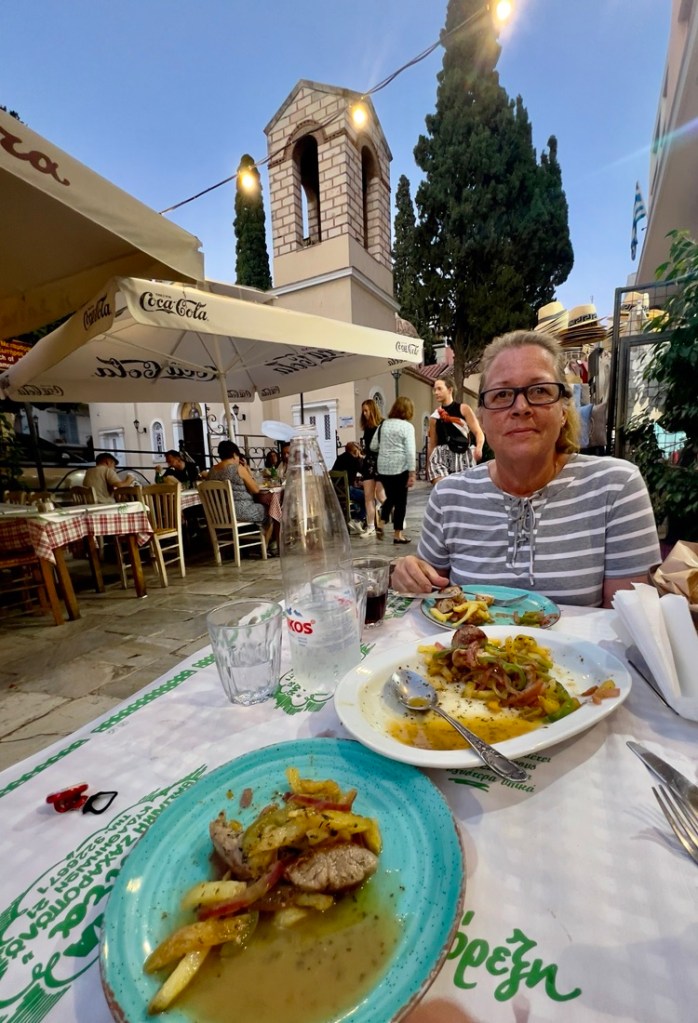
We headed back to our hotel for a quick turnaround as we were starving. Once again, the hotelier’s recommendation for dinner was perfect with a mighty fine Taverna Saita just a couple of hundred yards from our hotel, right next to the Holy Church of the Transfiguration of the Saviour, with a sign calling it “Metamorphosis.” We enjoyed another fresh tomato and cucumber salad, followed by fried pork for two which was served in a scrumptious sauce. It seems there are lots of less reputable establishments in the Plaka so we did very well with Taverna Saita.
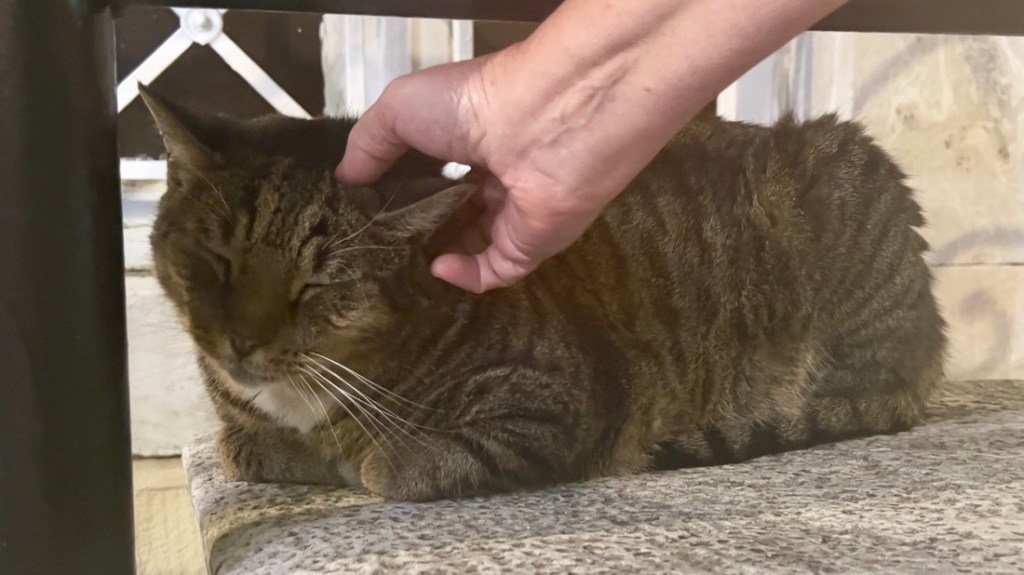
Dinner in the streets by a churchCats roam the streets, like in Hydra.
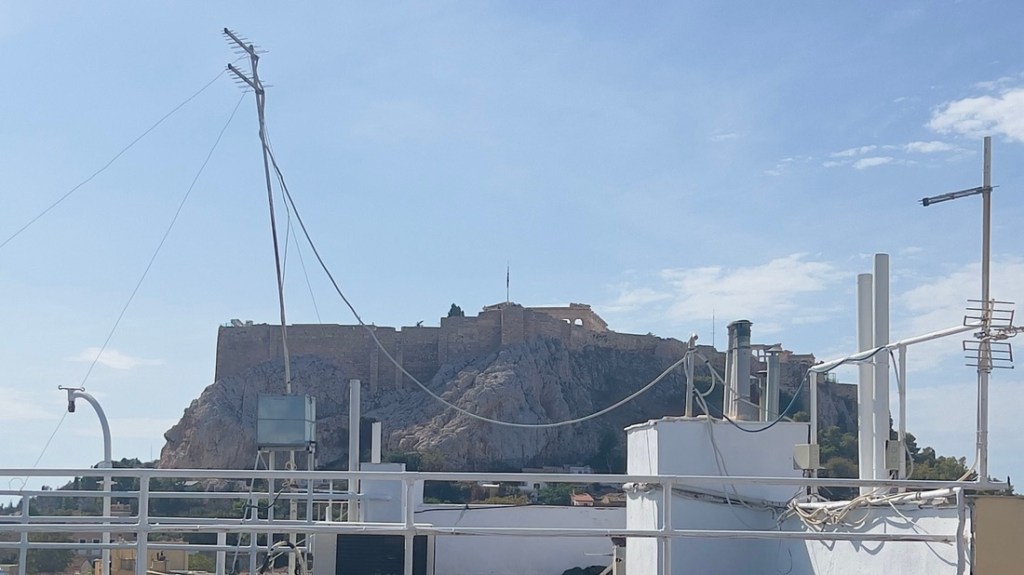
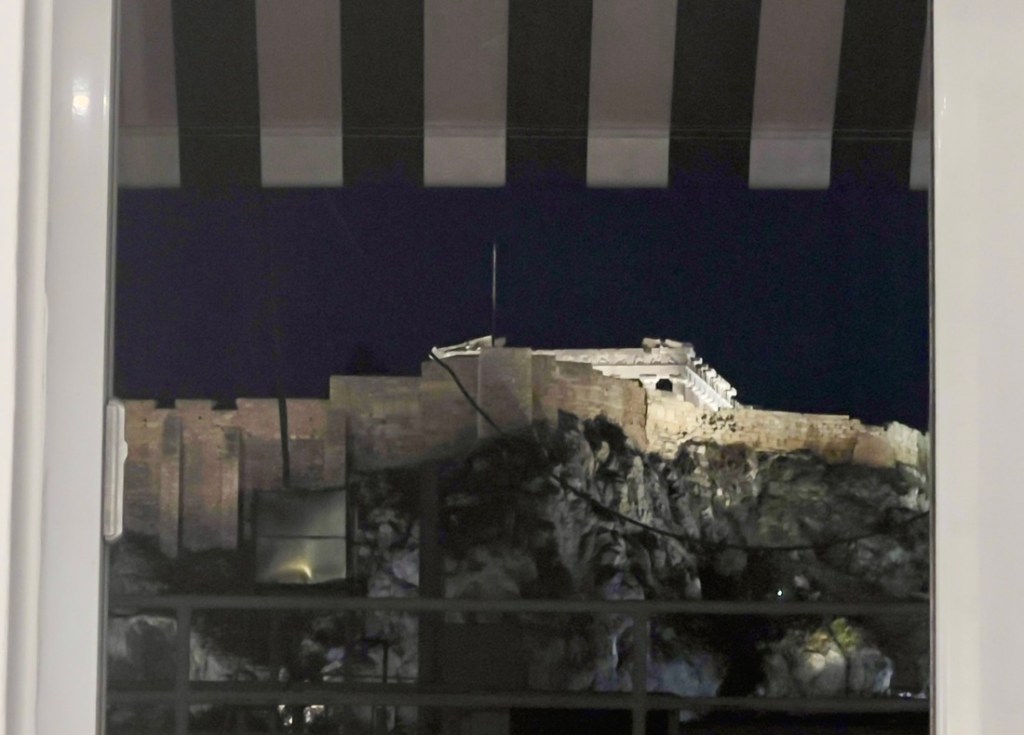
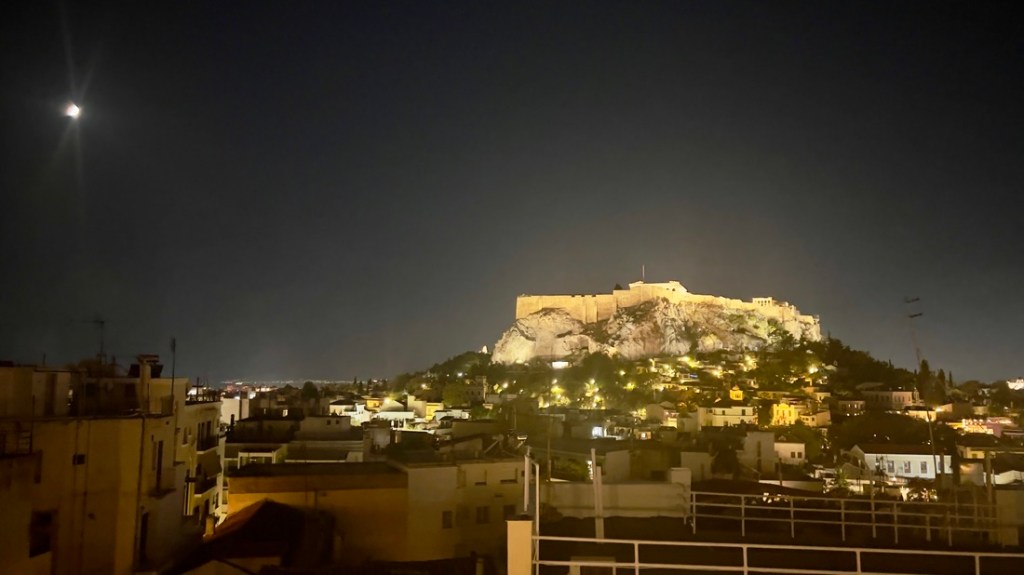
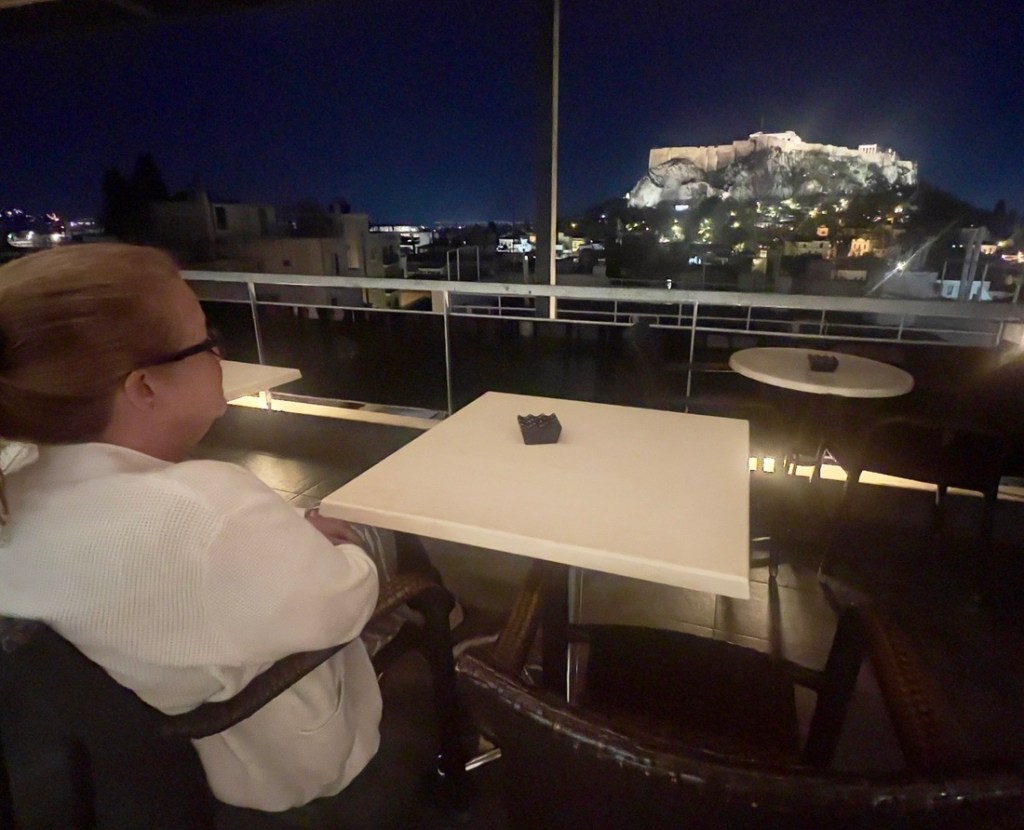
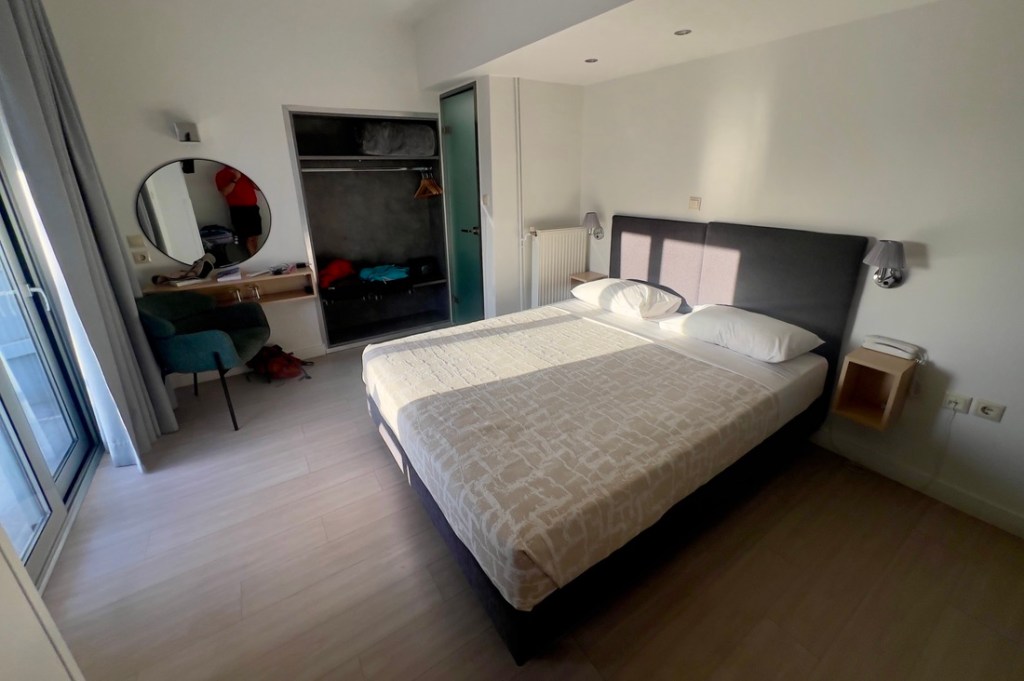
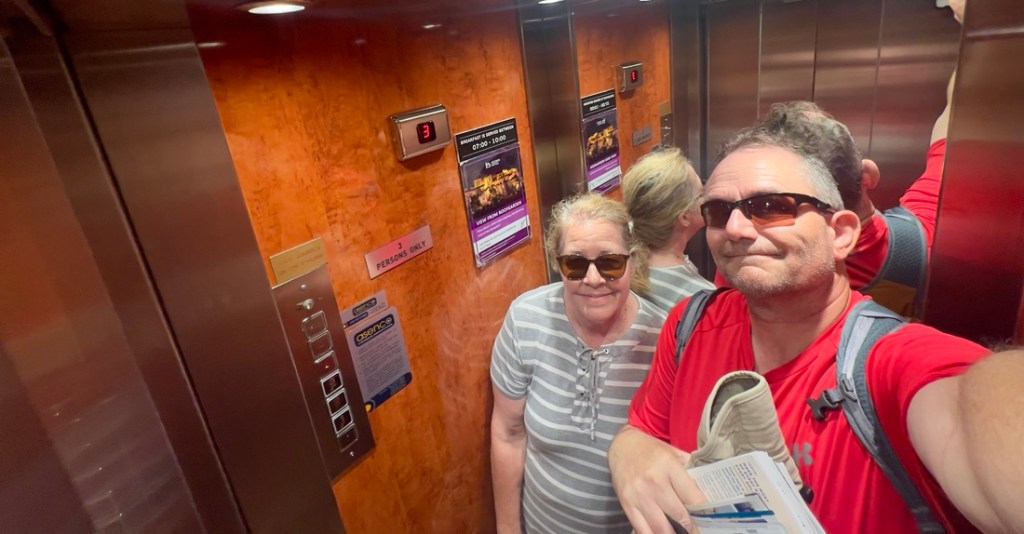
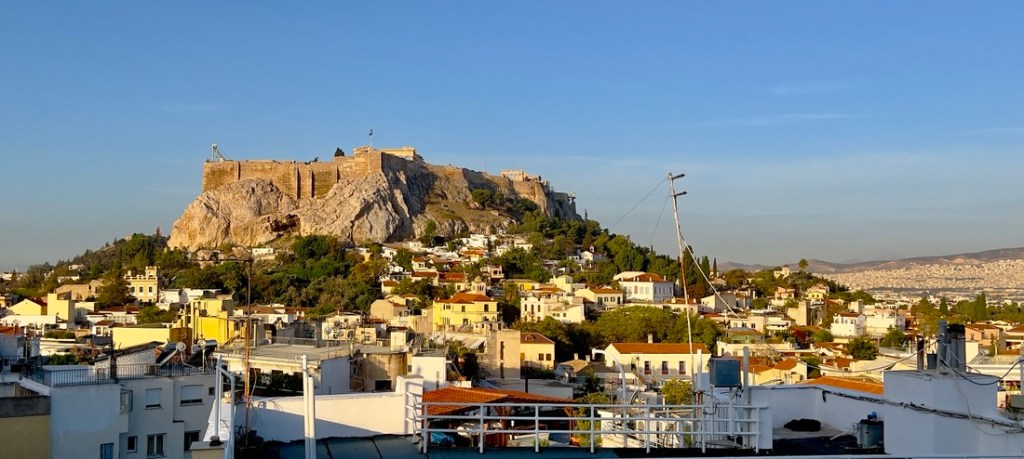
Back at the hotel, our room was a treat with a view of the Acropolis, and even better ones from the rooftop bar. While the room was pleasantly large, the lift was a tight squeeze, but we were just thankful to have a lift after two long walks today.
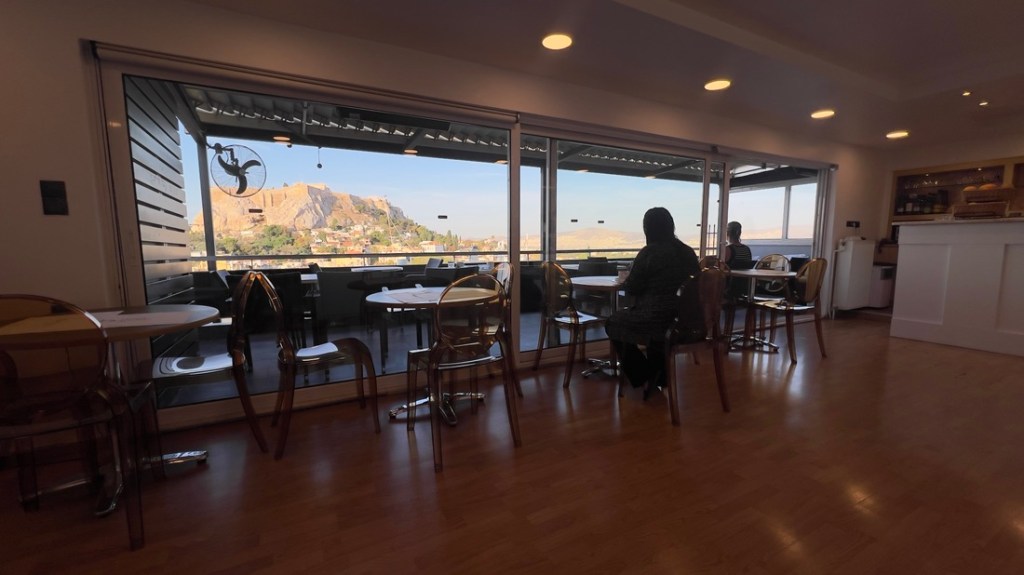
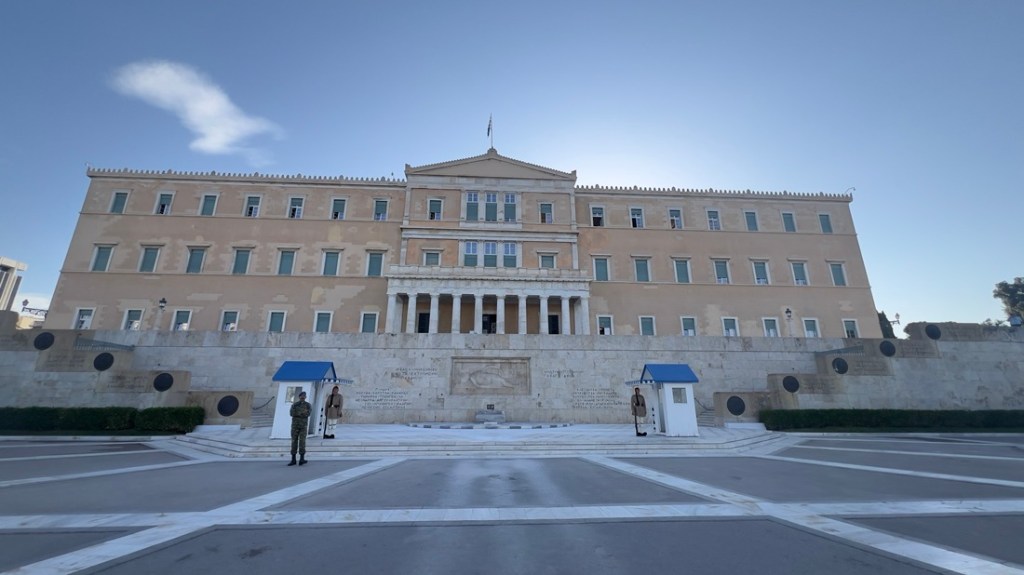
The view from our hotel room when we first arrived.The view in the evening, literally from my bed!The view from the top with the moon.Enjoying the view.A good sized room.A cozy lift!Our view for breakfast.The breakfast bar.Syntagma Square, with soldiers guarding the tomb of the unknown soldier. Syntagma means “constitution.” This is where we met up with our Liberty University group.
Find other posts from this trip on our Greece page.
Please follow us on this journey by subscribing below. We would love to read your thoughts: please leave comments at the bottom of the post.
"Cajunlimeys" combines Lousiana (Janet) and Britain (Peter). British sailors in the 19th century were nicknamed "limeys" as they drank lime juice to prevent scurvy. However, while Janet is a fine cook, she has no Cajun blood, but the name fit.
We love adventures and use blogging to write a photo diary to preserve our memories. Some crazy friends enjoy following us, and my notes might help others plan.
View more posts
One thought on “Greece: Athens Part 1”
What a day! How fun to connect all of the Hadrian dots from Rome to Greece to Britain!! Your adventure of Paul’s journeys has indeed begun!!


 The Adventures of the Cajunlimeys
What a day! How fun to connect all of the Hadrian dots from Rome to Greece to Britain!! Your adventure of Paul’s journeys has indeed begun!!
LikeLiked by 1 person