

TL;DR We spent our first two days in Greece staying on Hydra, sampling Greek food, wandering around an old car-free port, and hiking into its dry rugged interior for amazing views.
Hydra
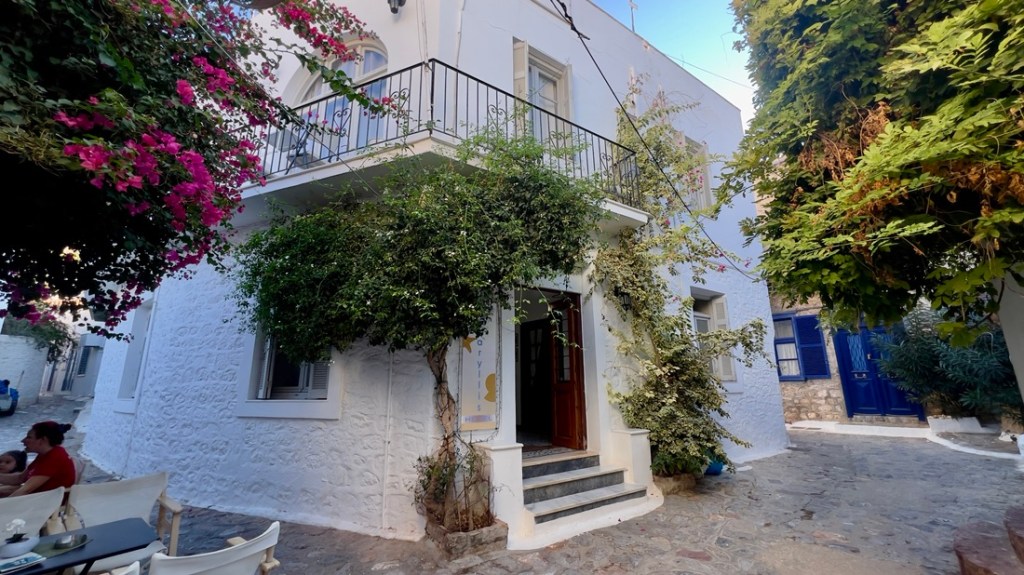
Hydra (pronounced EE-dra, with a silent “H”) is less than two hours by ferry from Athens’s port, Piraeus. We wanted to spend a couple of days experiencing Greece before joining our group following Paul’s journeys, and Hydra looked interesting. Motor vehicles and bicycles remain banned on the island that makes it peaceful, with the motors replaced by burros and complemented by cats and chickens. The adjective that most fits its vibe is “elegant” without being pretentious. The narrow cobbled streets that rise up from the harbor are a joy to get lost in! 13 miles long and about a mile wide, most of the island’s population live in the town that shares its name with the island, and the island boasts six monasteries and over 300 churches. It used to have lots of natural water, but the springs dried up along with the vegetation. Sophia Loren’s 1956 film The Boy and A Dolphin drew a lot of interest in the island.
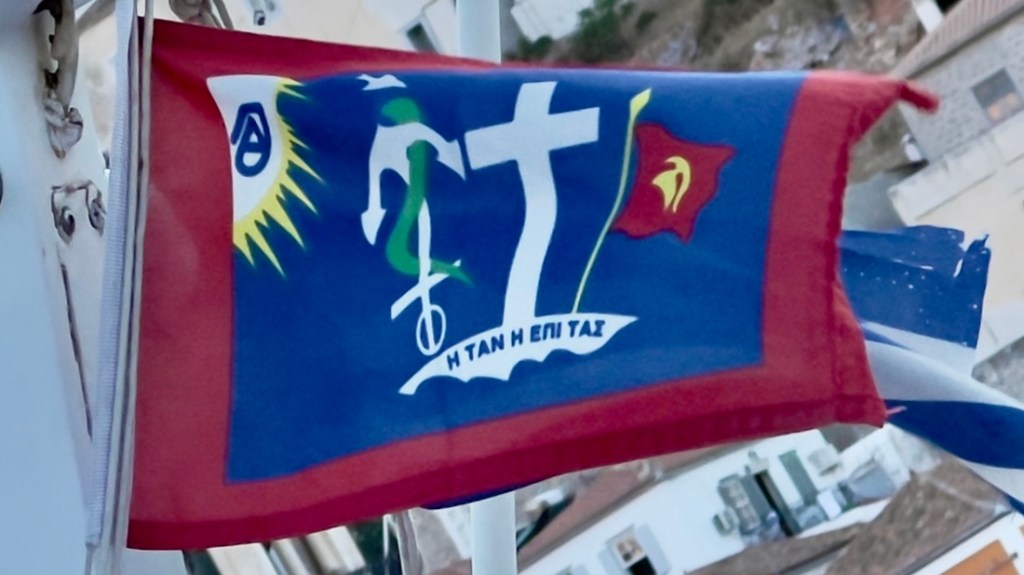
The islanders developed strong seafaring skills which helped Greece gain independence from the Turks in 1821, including their use of fireboats. The island’s flag reflects this, acknowledging its Christian rather than Muslim sovereignty, and adopting the ancient Spartan slogan “Η ΤΑΝ Η ΕΠΙ ΤΑΣ” which means “With it or on it.” It refers to a warrior’s precious shield, who was to either return from battle victoriously with it or be carried back on it, dead. The island’s history, geography, and location make it a unique Greek island experience.
We did two main activities: eating and hiking.
Eating
One comes to Greece for its food, and Hydra was our first stop. Our friendly hotelier recommended a few places so we spent our first evening walking around the town to check out his recommendations and to understand the port’s layout. The first evening was busier than our second because there was a cruise ship moored offshore and we heard mostly Northern European accents, but the town was still not crowded.
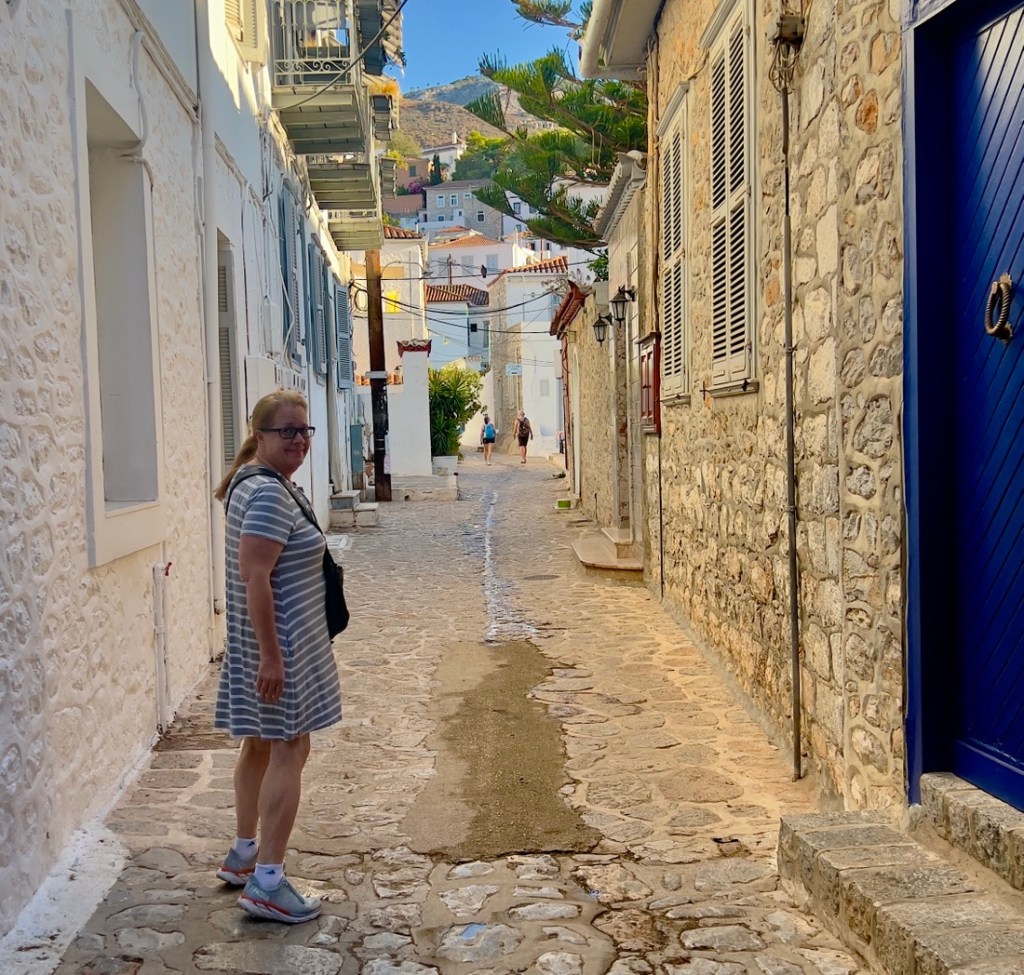
Typical narrow streets:

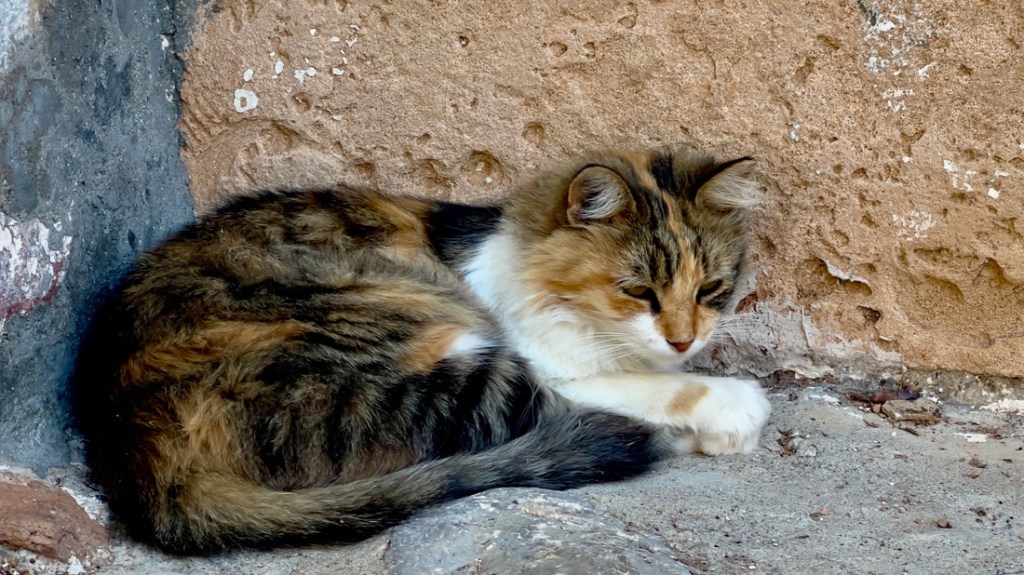
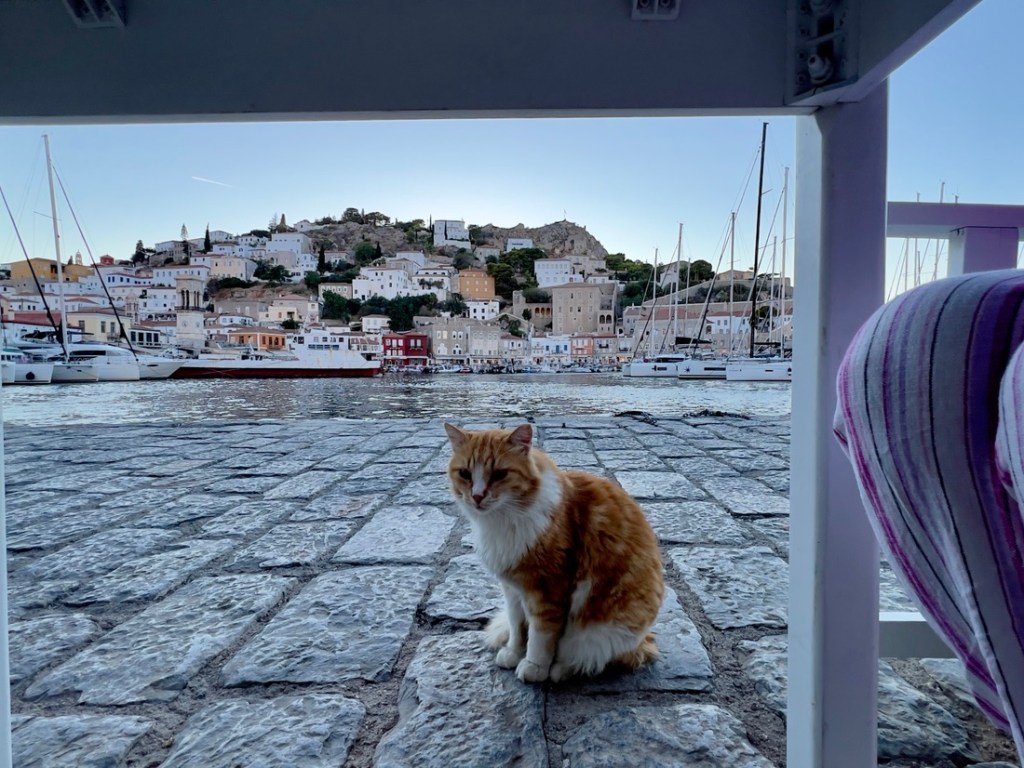
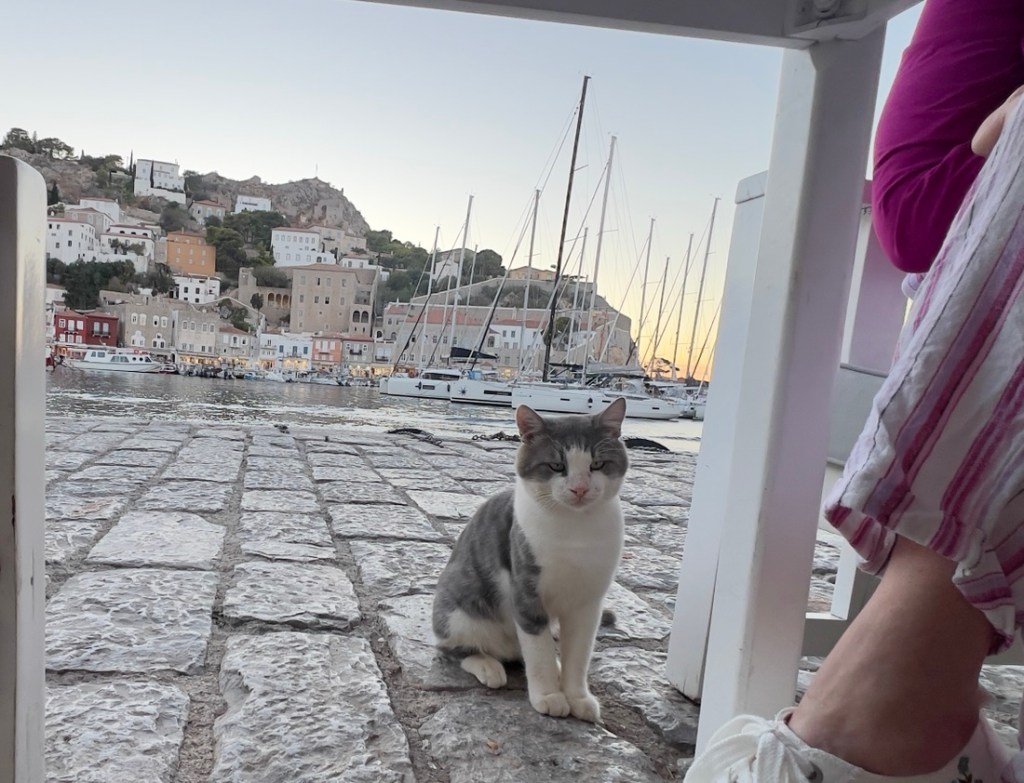
Friendly, healthy cats are everywhere:

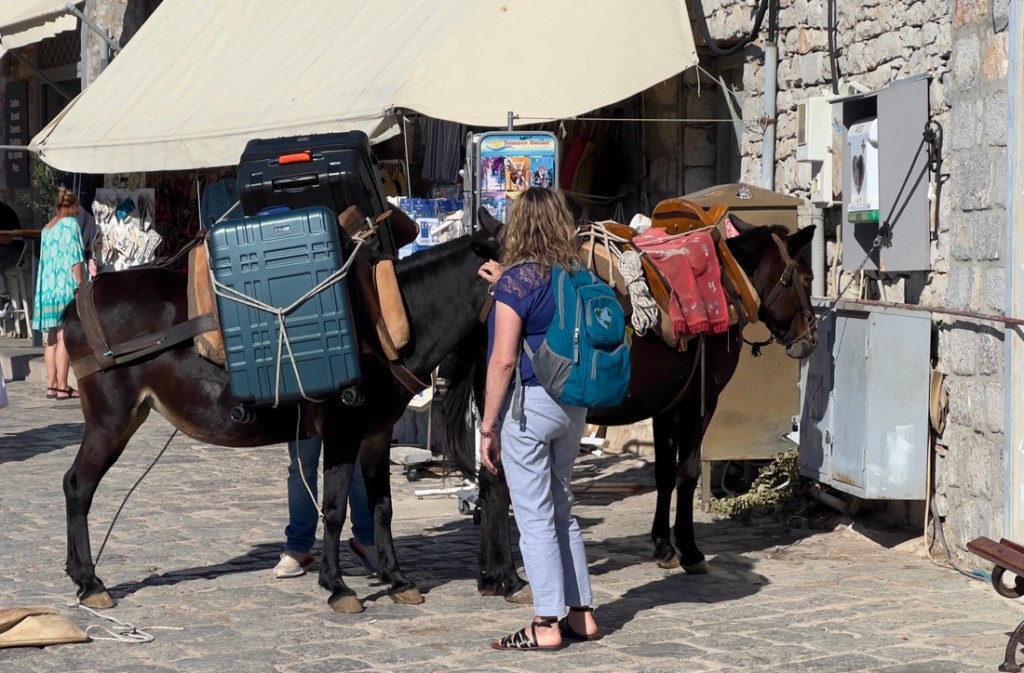
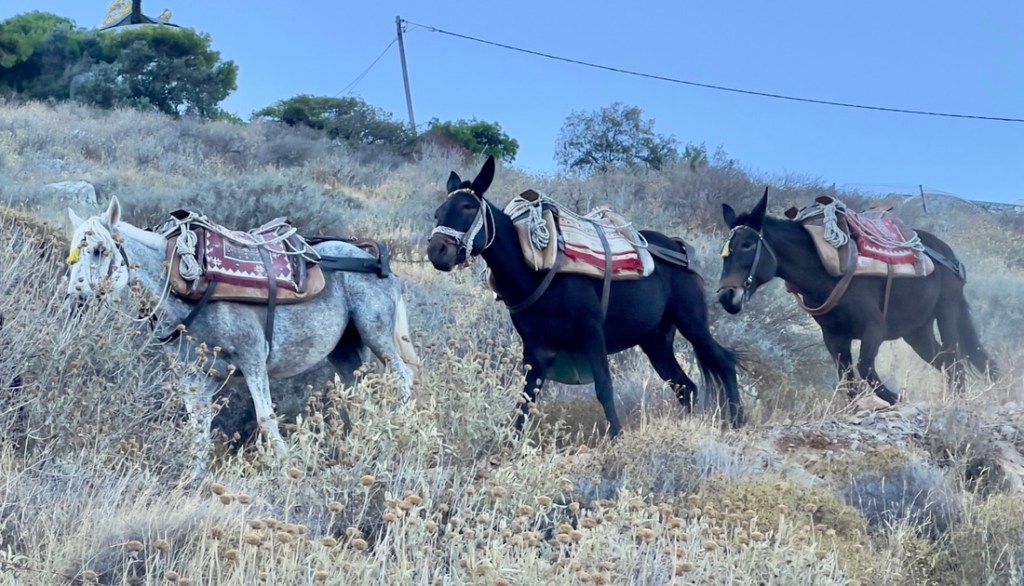
Burros replace cars and trucks:
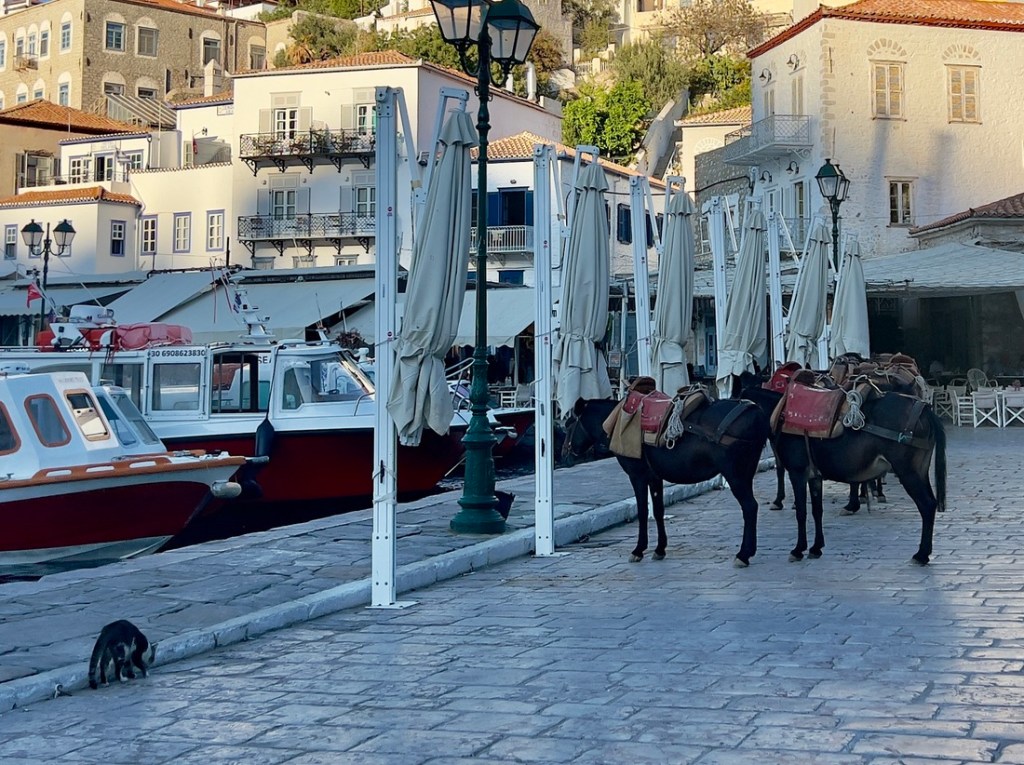
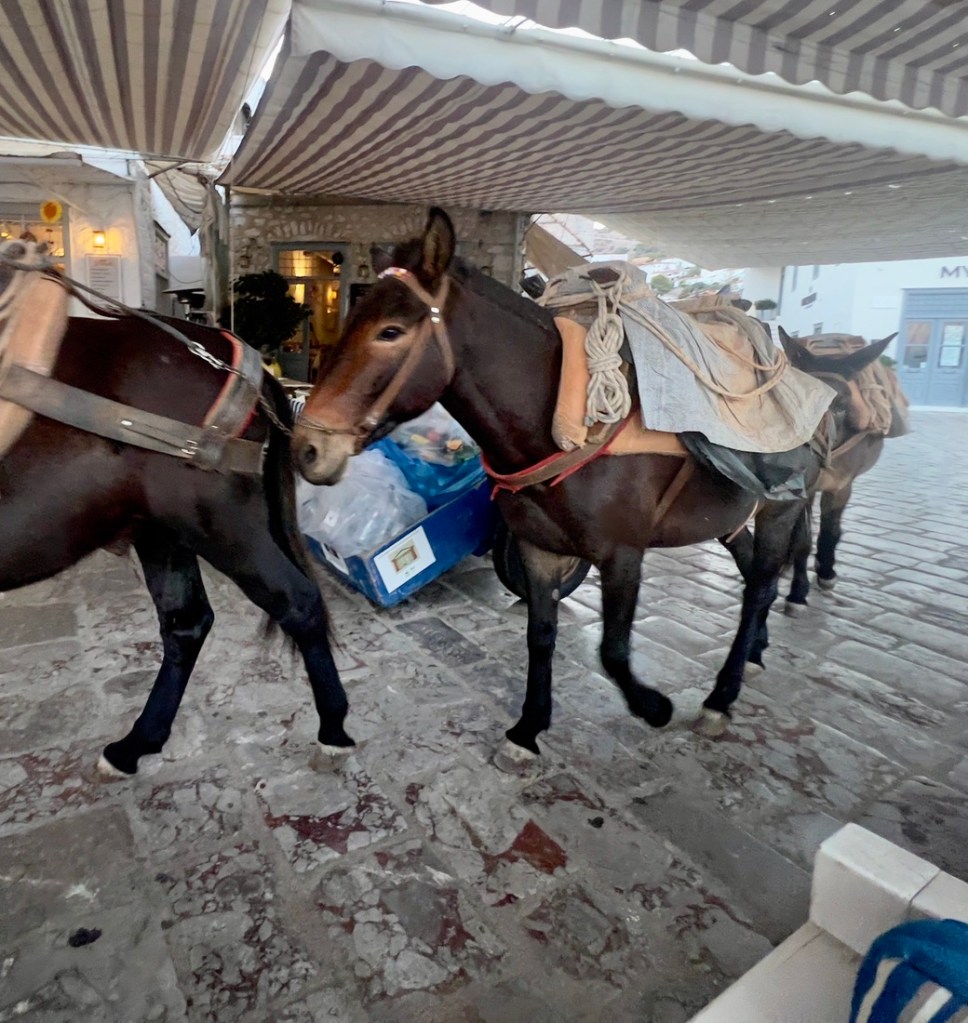
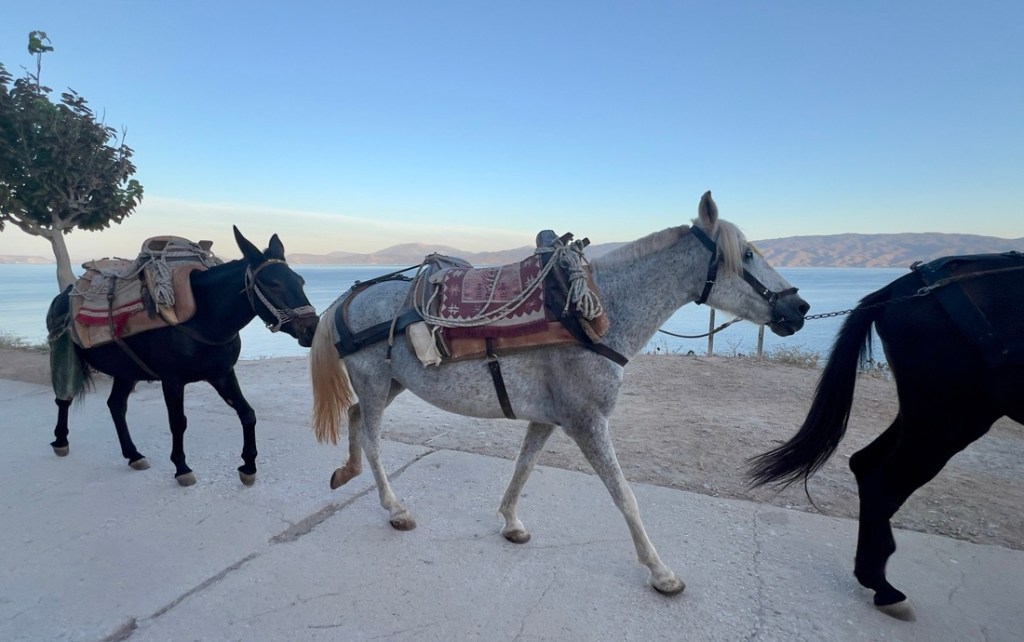
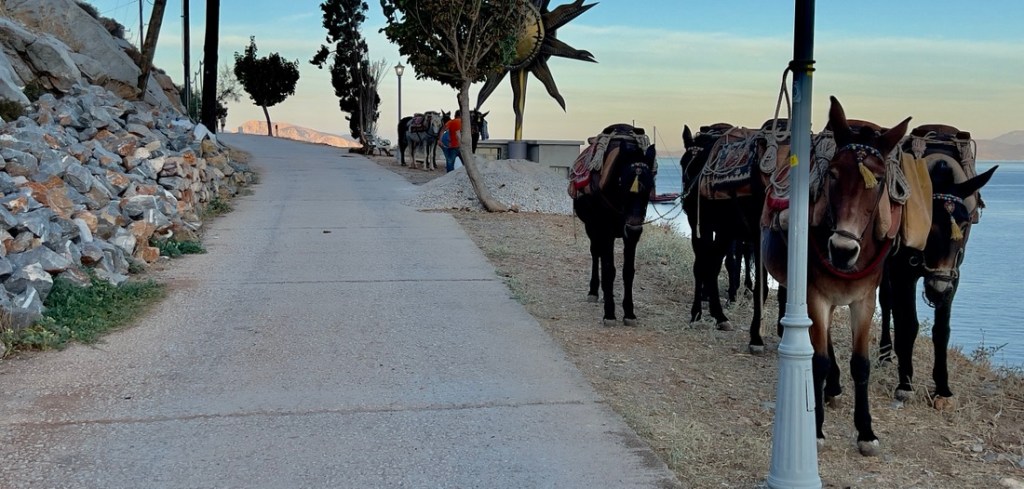
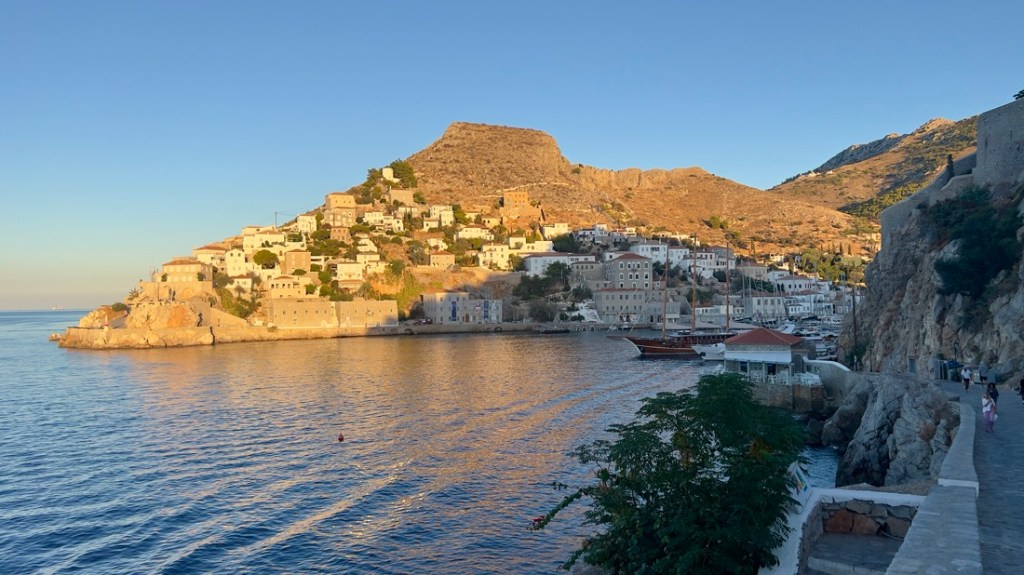
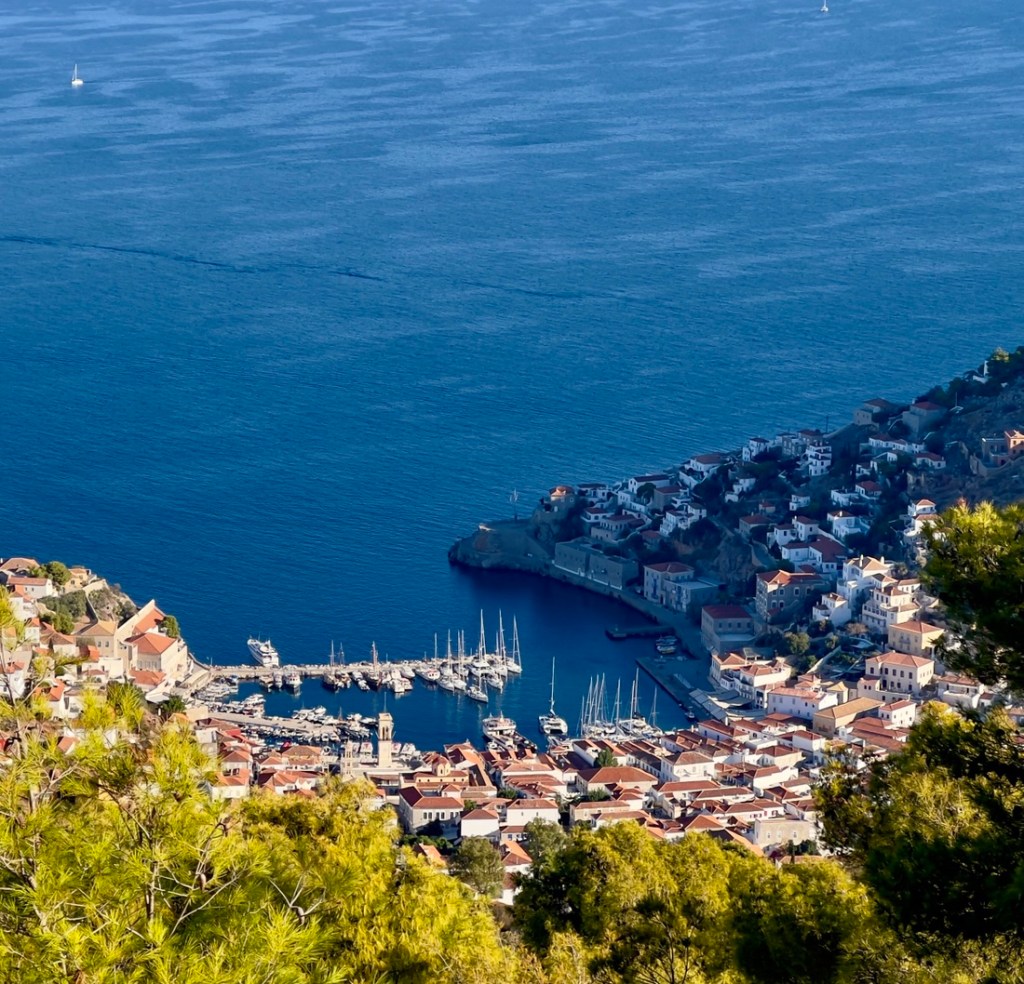
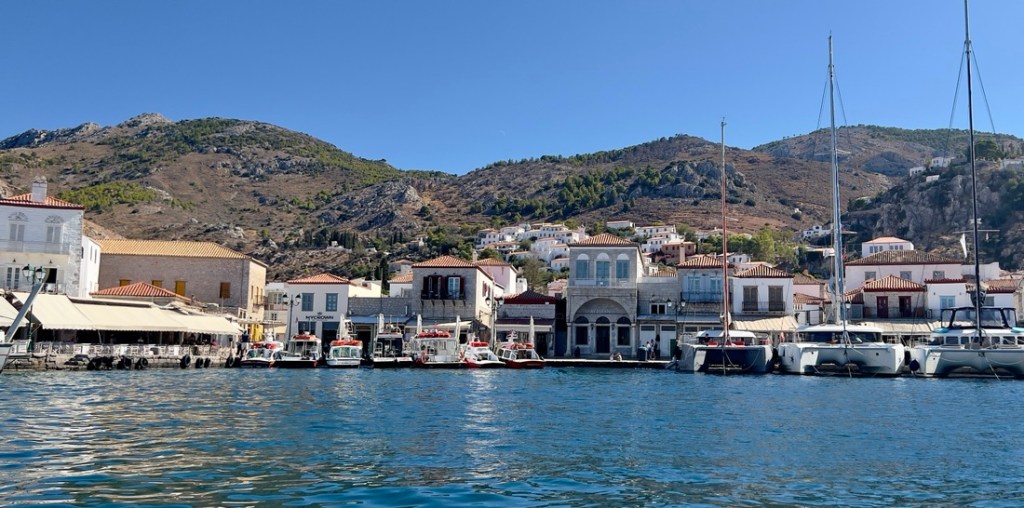
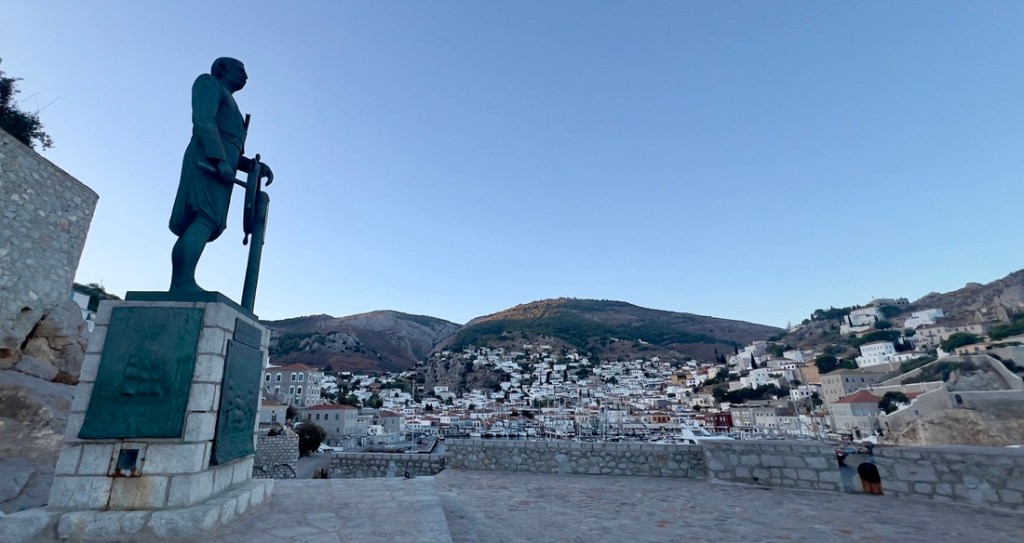
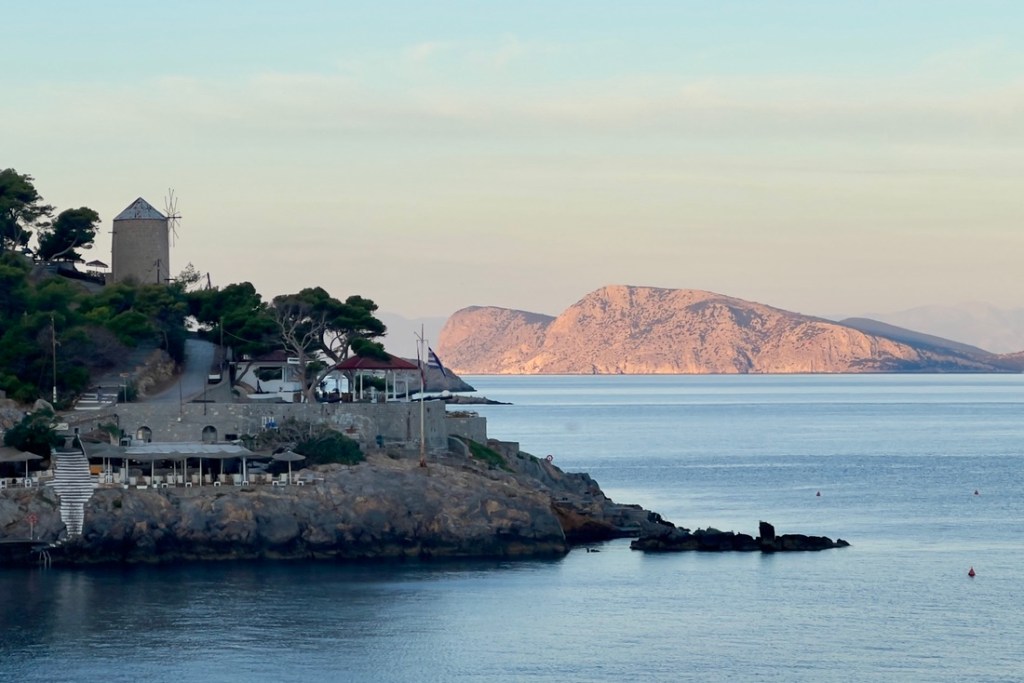
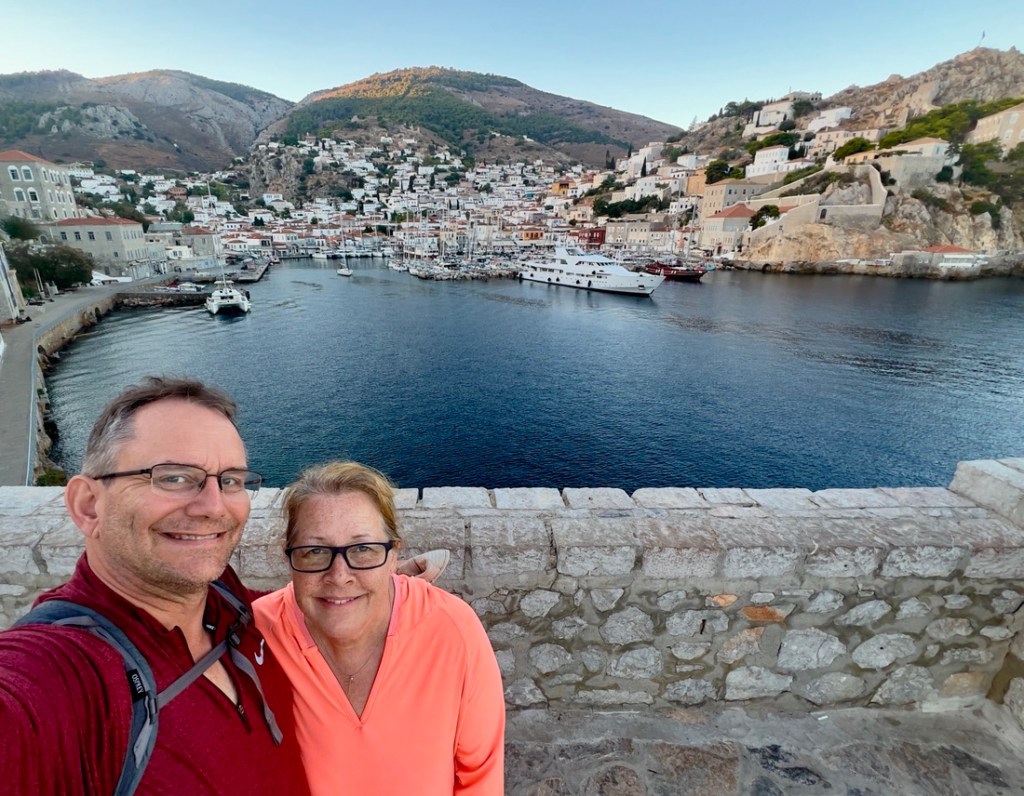
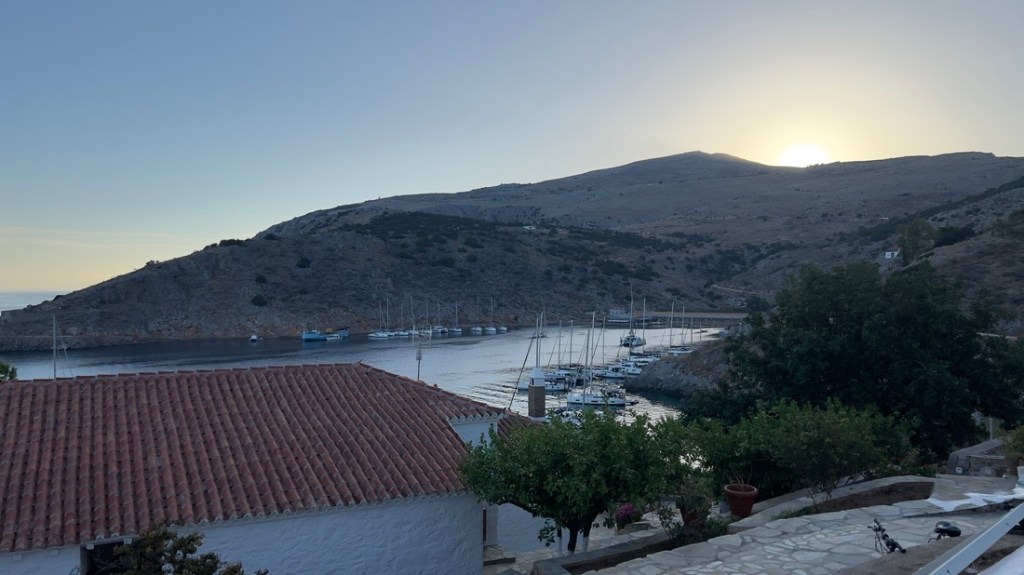
First views of the port and nearby promontory:
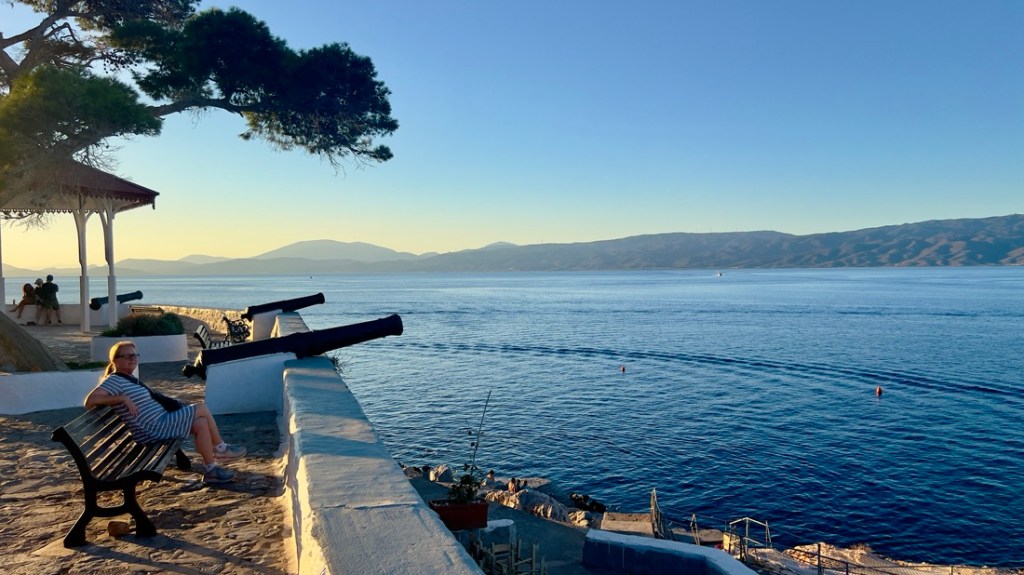
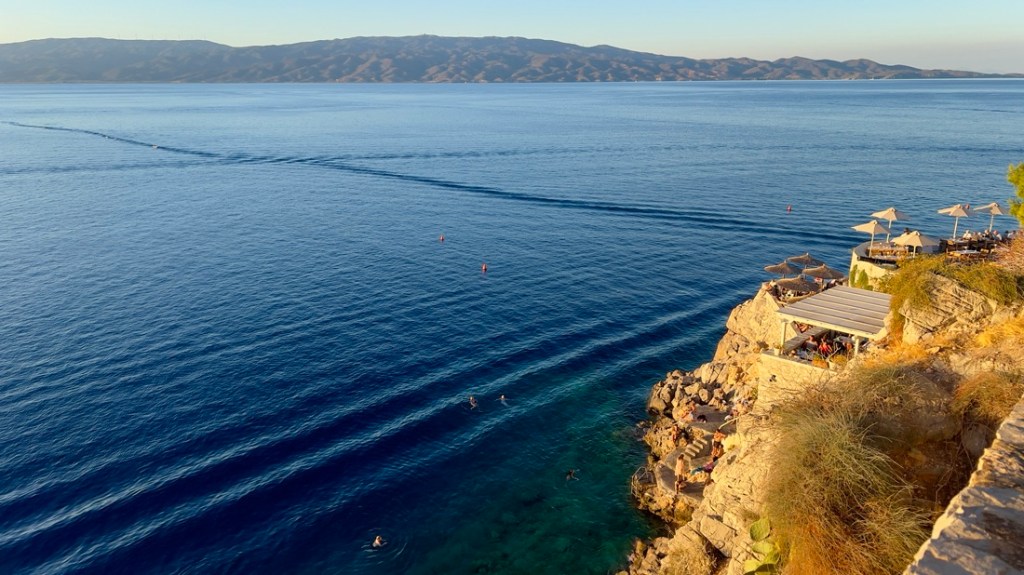
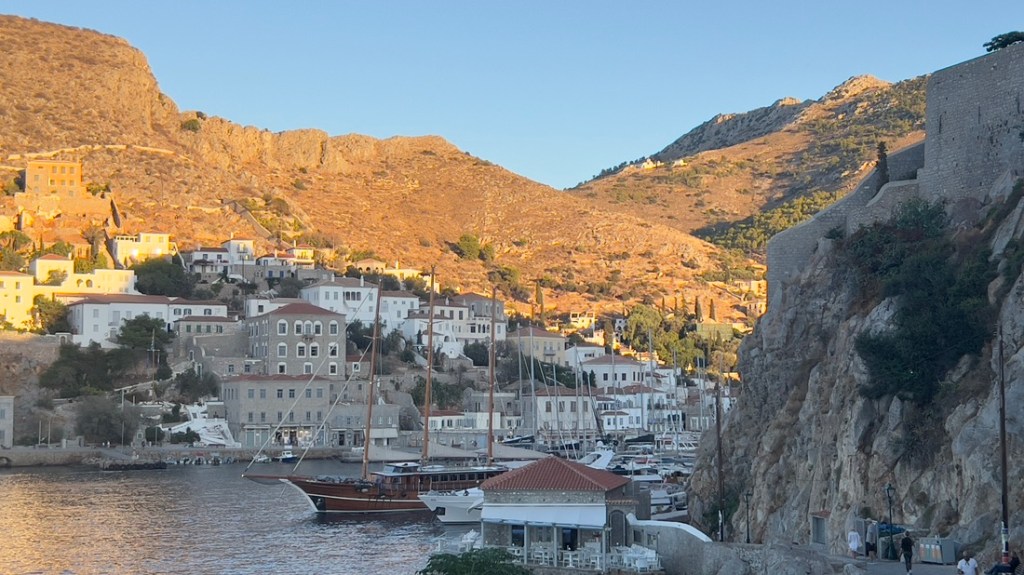
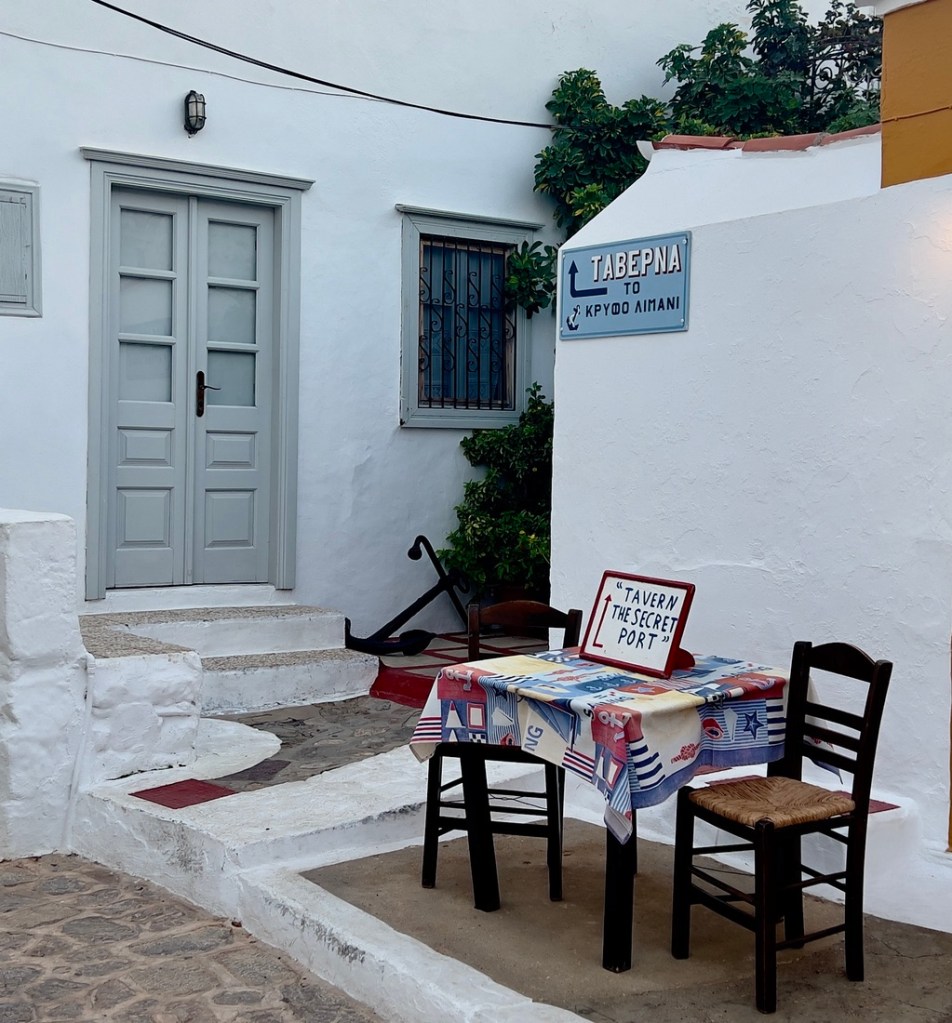
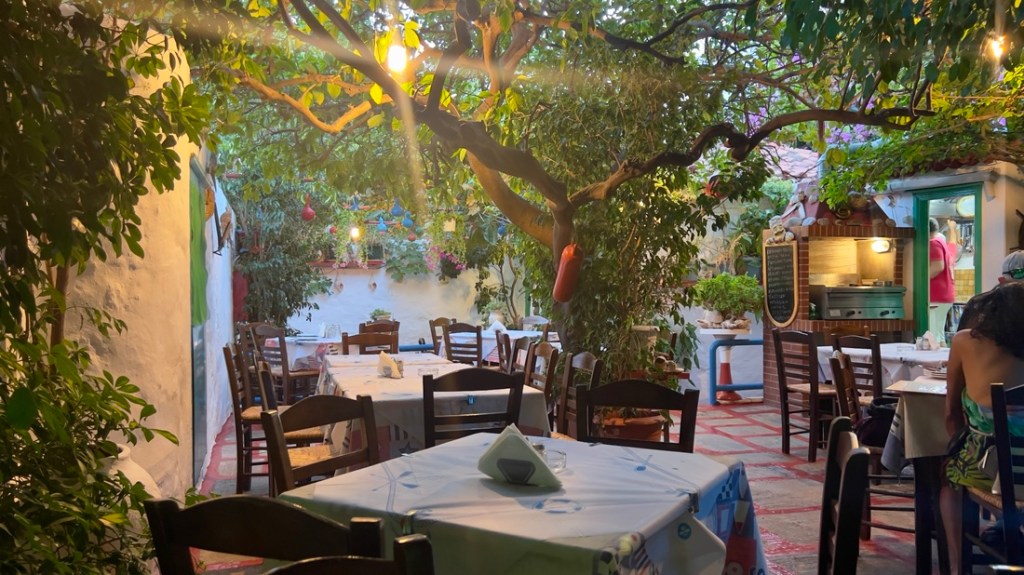
The Secret Port, or Kryfo Limani, was a small taverna hidden up a small back alley among the maze of twisting and narrow cobbled ways that make up Hydra Town. We sat outside in a small courtyard with about ten tables under trees, with the occasional leaf descending on our table and omnipresent cats wandering through their claimed territory. We could see into the kitchen as the three guys who ran the place prepared our tomato and cucumber salad, meatballs, and lemon chicken. They were very friendly and spoke enough English but not much, but the menu had an English translation.


Our first breakfast was at a the EU bakery at the entrance to the harbor. We grabbed some pastries and ate them at the water’s edge as the harbor woke up, getting ourselves ready for our long hike. One guy paddled across from his yacht to grab his breakfast, but it seems he took an unintended dip.

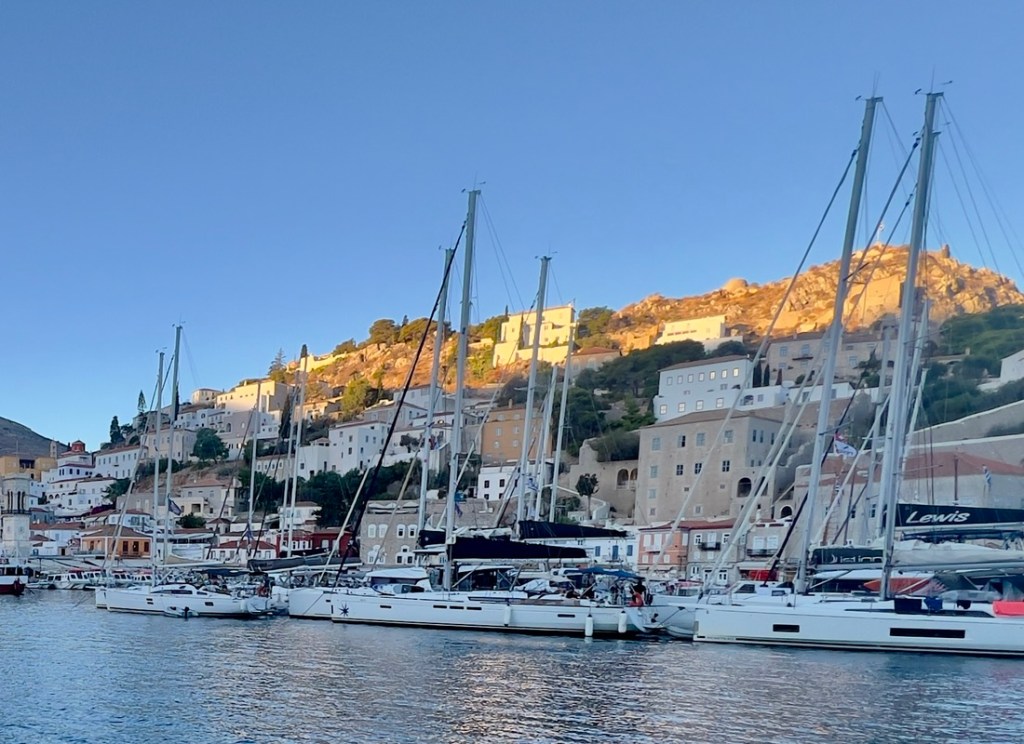
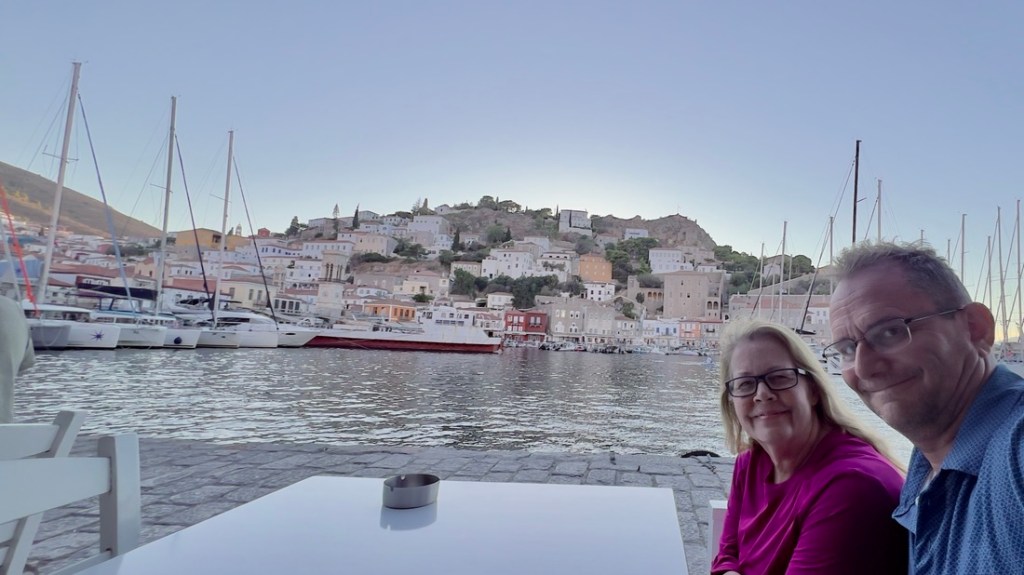
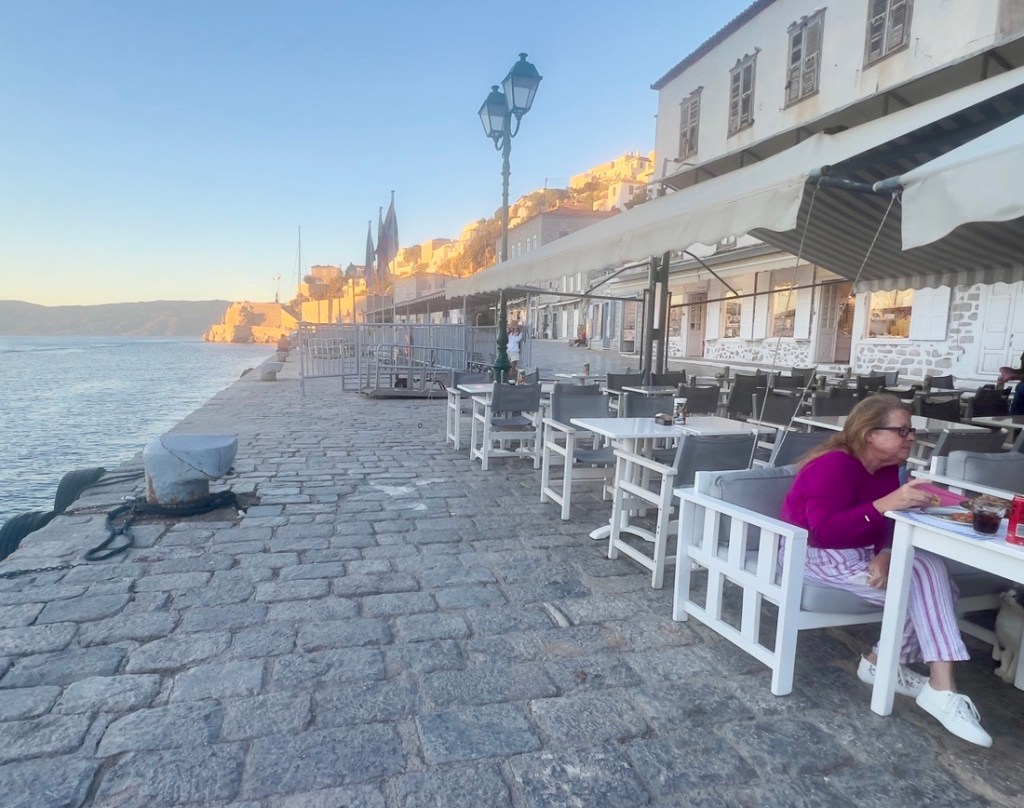
For our second dinner, we decided to do the tourist thing and eat at a restaurant on the front. Ya Mas had caught our eye, and we got a fine table right next to the water and very much enjoyed watching the evening’s comings and goings, while we were watched by the resident cats. Their tomato and cucumber salad and pork gyro plate were very tasty and surprisingly cheaper than our hidden taverna the previous evening. The town was quieter than the previous evening and we heard mostly English language spoken in various accents.

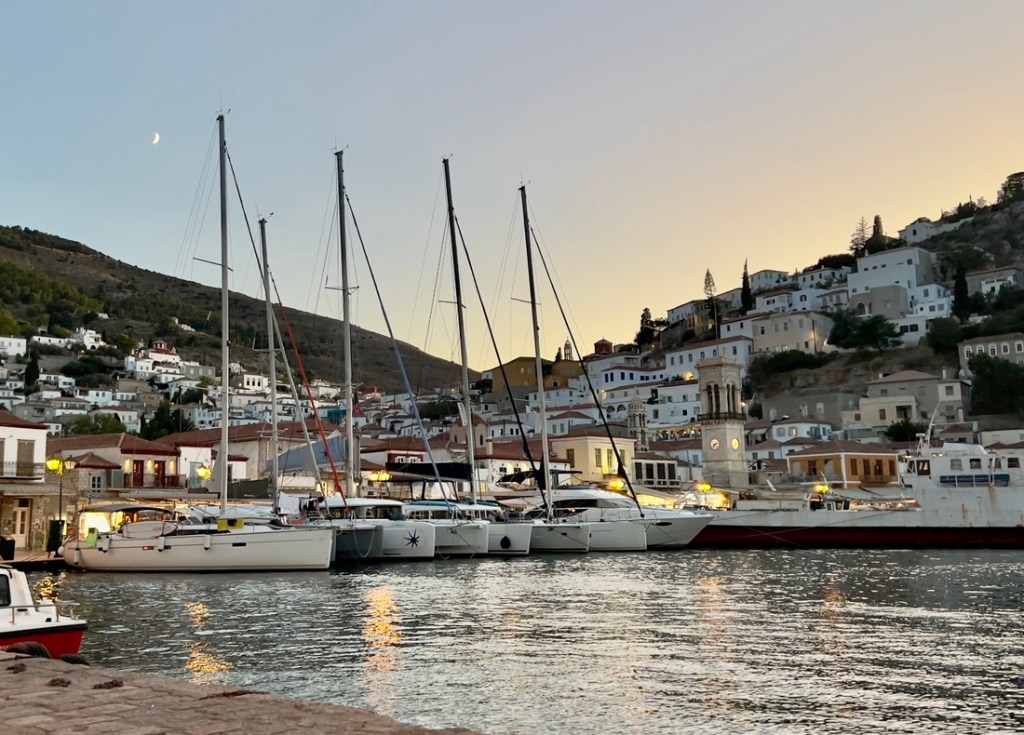
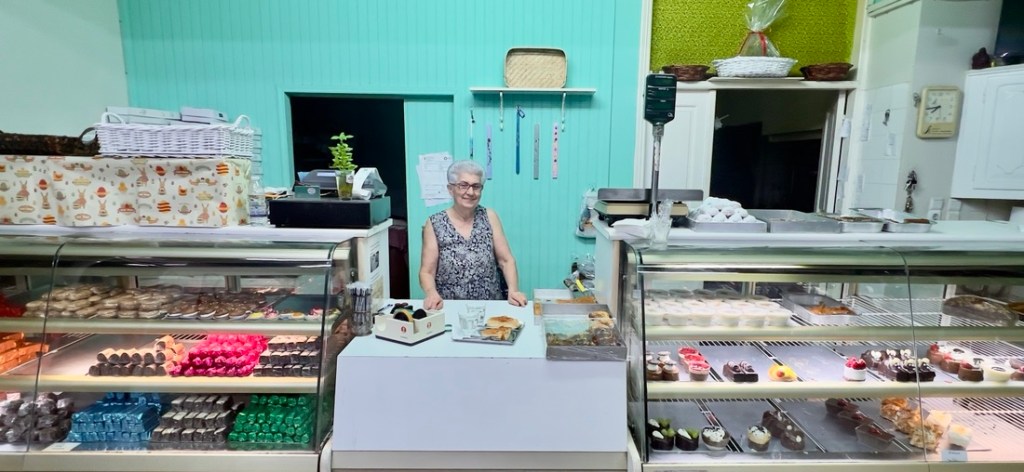
Following our guidebook’s recommendation, we then headed inland a bit to Flora’s Pastry Shop to enjoy a local favorite custard with pastry called galaktoboureko which was very yummy, and Janet quickly found a recipe for it on Pinterest!

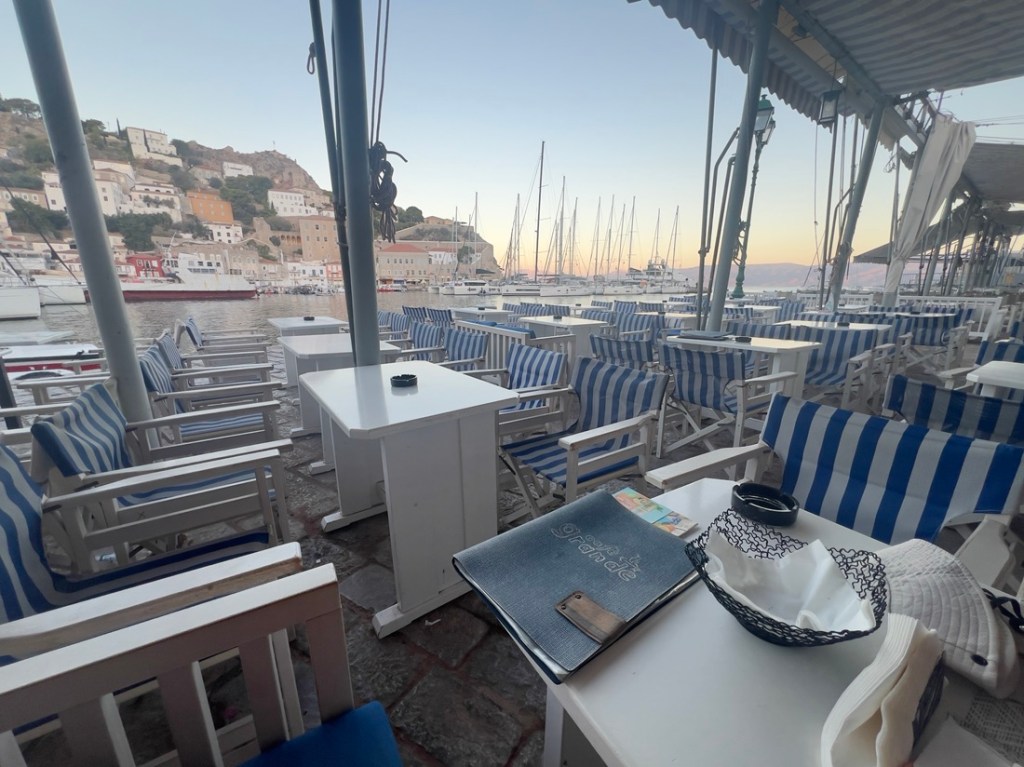
Our final breakfast was at another restaurant on the front, the Grande Cafe. We were there shortly after 7am, before the 7:45am sunrise, and there were a few other customers. We enjoyed an omelette and bacon and eggs before we hiked to Mandraki.

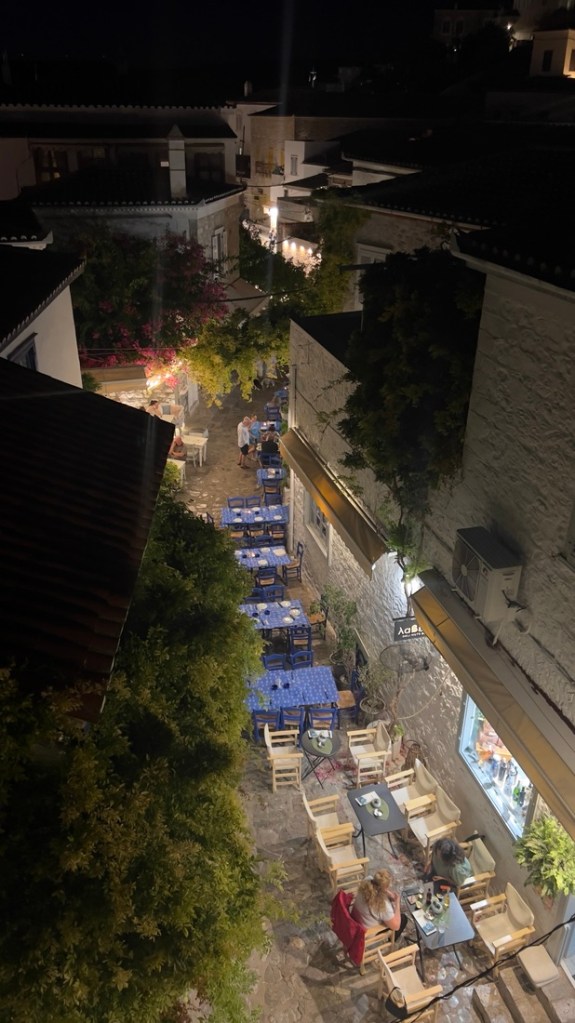
We saw many restaurants in Hydra and they all looked good. We appreciated that their waiters did not hound us for their business. There was one outside our bedroom window where people spoke loudly until midnight on our first night, but was peaceful on our second.
Hiking Hydra
We wanted to explore the island by walking and Hydra boasts walks throughout the island. I liked the idea of the ~8 mile East Hydra trail which goes from Hydra to the eastern-most point on the island, but it was too far for an out-and-back and I did not fancy organizing the logistics of a boat to take us out there early morning. In retrospect, it might have worked out better than the Western Hydra trail as it is shorter with less elevation change. The Western Hydra trail is a ~ 10 mile loop starting from Hydra town and climbs to the high middle on the island before looping back along the coast. There is at least 2,000 ft of climbing, with an optional side hike to the island’s highest peak, Mt Eros. The island also has ~ 4 mile loop from Hydra Town to Mandraki Bay, with the option to return via a high route.

The Western Hydra Trail
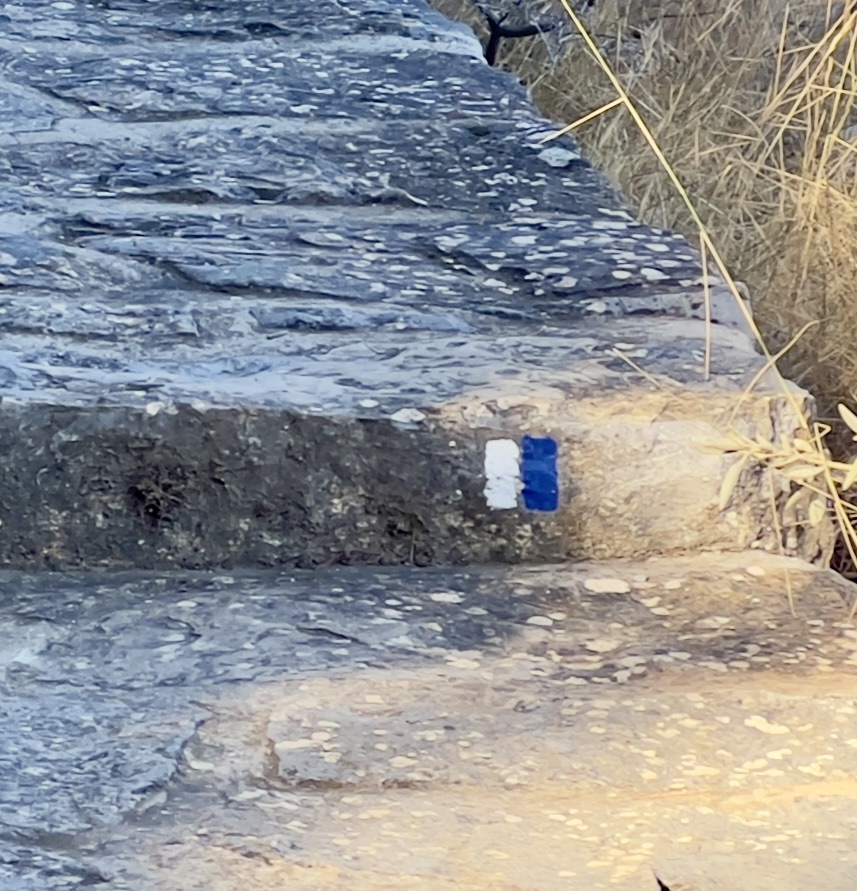
We did this hike on our first day. The first leg is to hike up to the Prophet Elias Monastery. Even though I had an AllTrails and a HydraTrails map, I followed Google Maps to get us up and out of Hydra Town, which took us along more backstreets. A better choice would have been to ask locals and to follow a trail from the town center marked by white and blue painted marks.

We started out at about 8am and appreciated the lower temperatures and the trees that provided shade. It was paved and very steep almost all of the way!


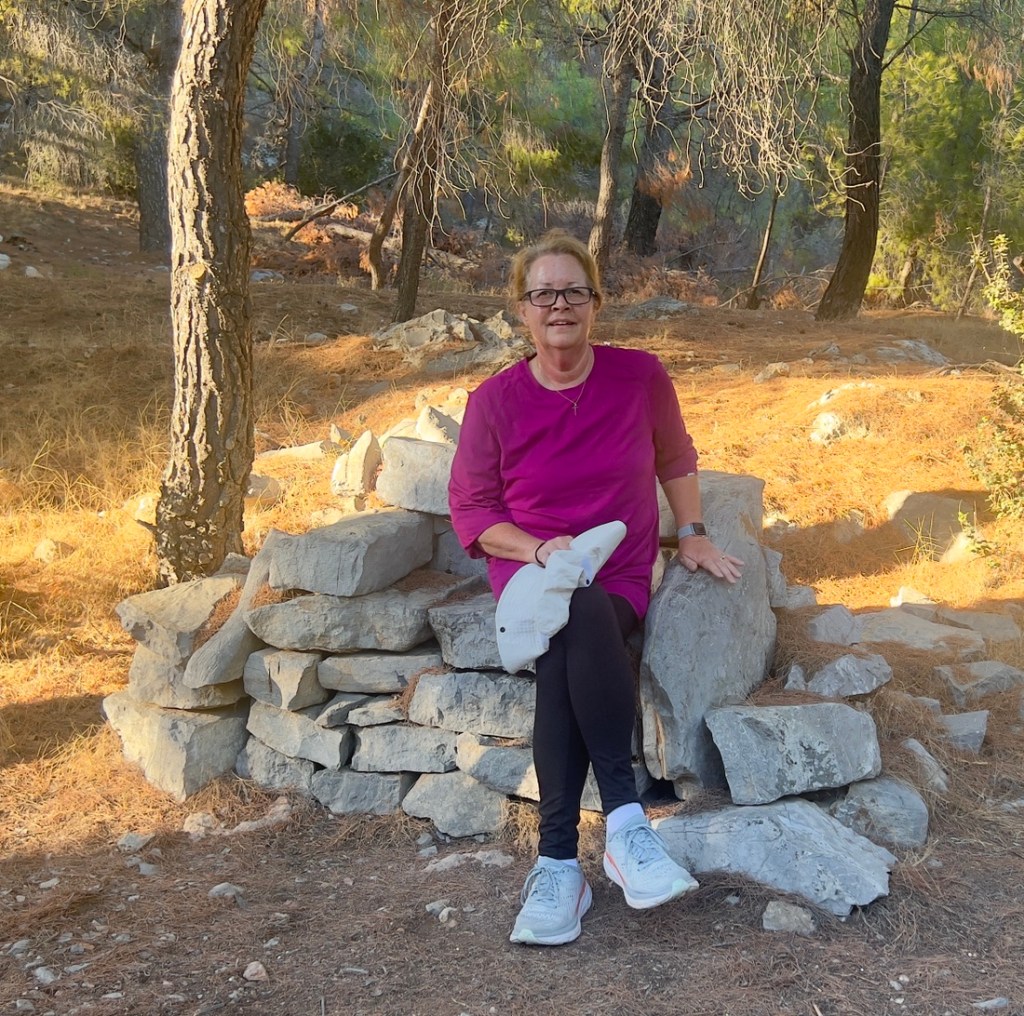



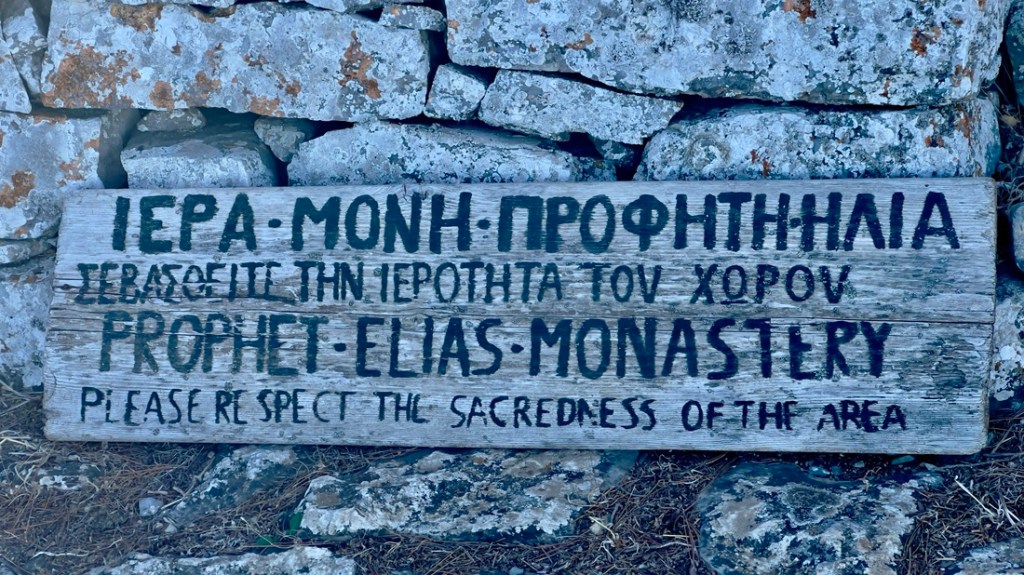
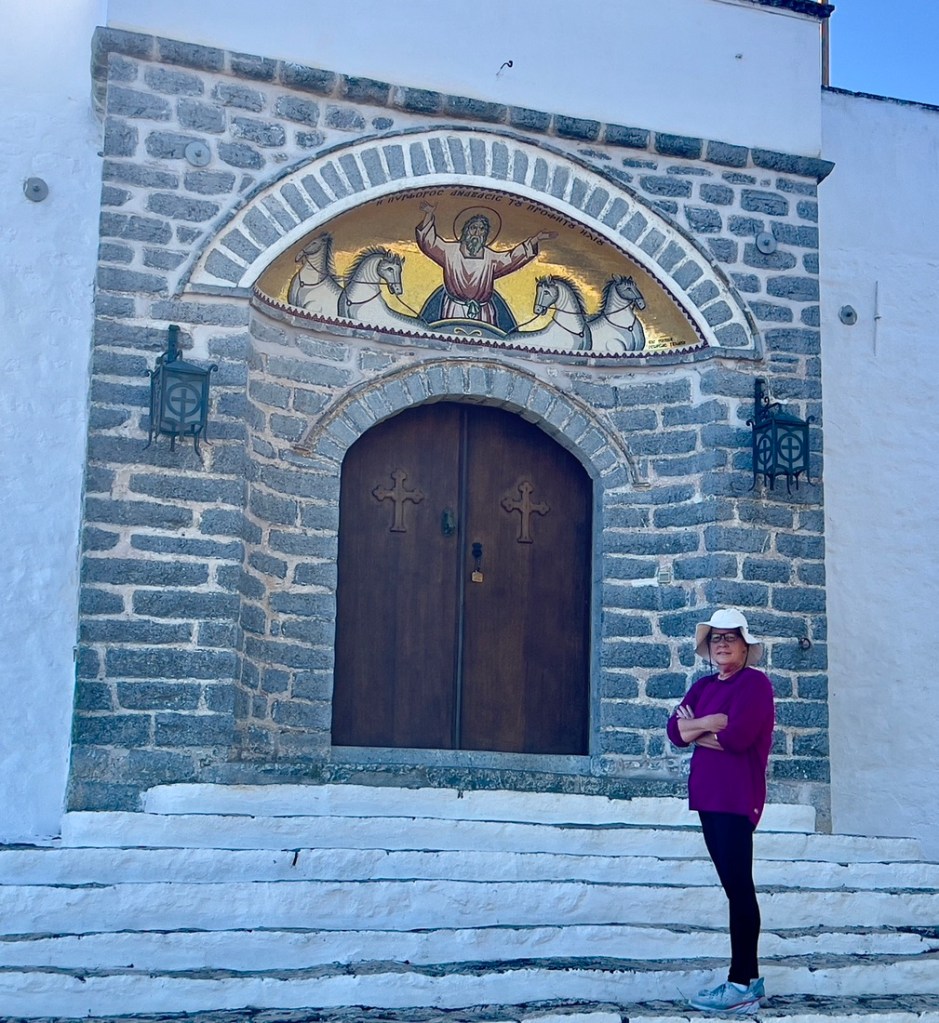
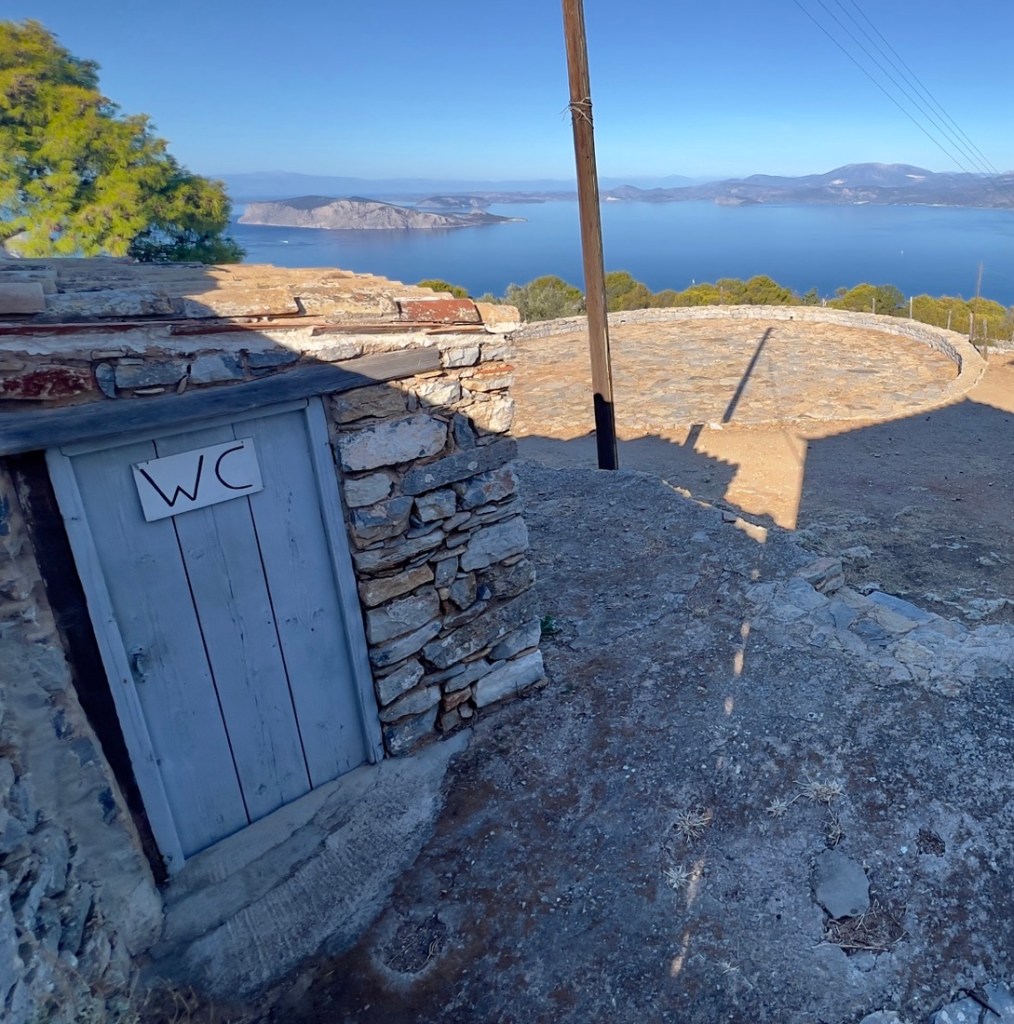
At the monastery, we looked around and saw about 10 other visitors, all of which appeared Anglo from England, Australia, Canada, and US. I wondered whether we shared a certain madness! We could go into the monastery but not the associated buildings. There was cultivated terracing and olive trees. It was nice to see, but the views were more impressive seeing the clear deep blue seas all around. We were very happy to find the WC sign on its western edge. There is also a Saint Euphraxia Holy Convent close by with reports of being closed to visitors so we skipped that. There is a side trail that goes up to Mount Eros, the island’s highest point, but we’d already climbed plenty and had lots more walking to do.

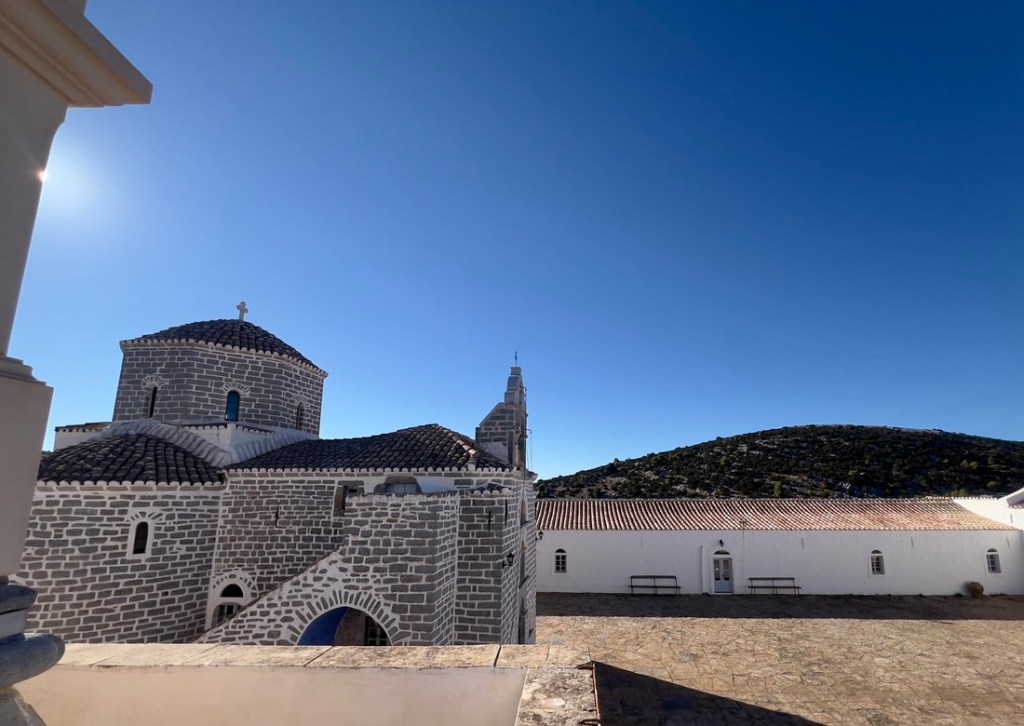
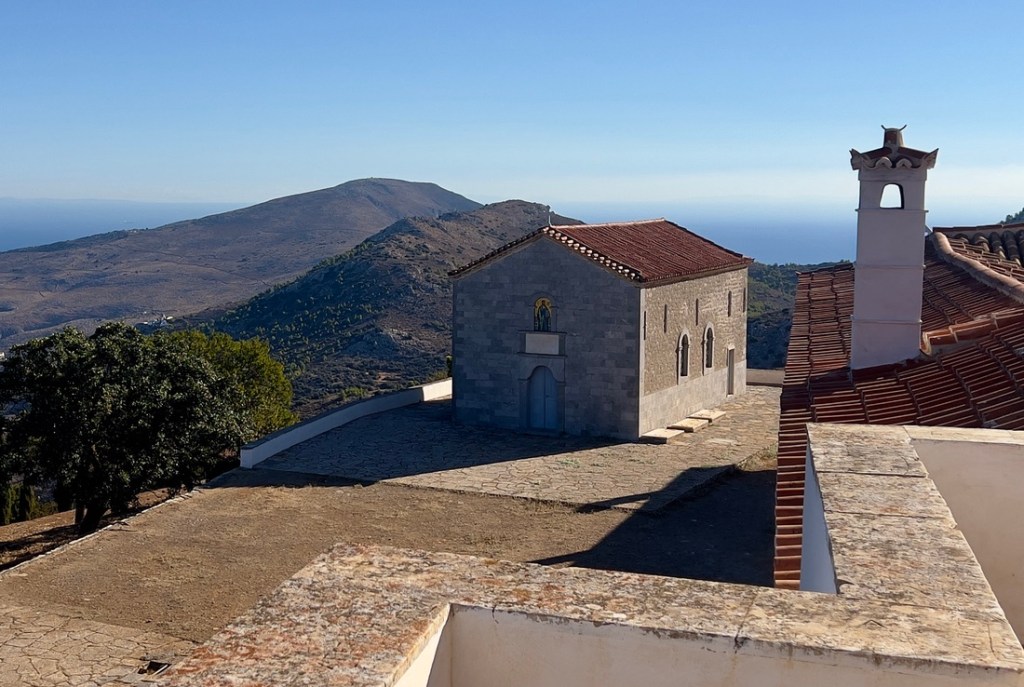

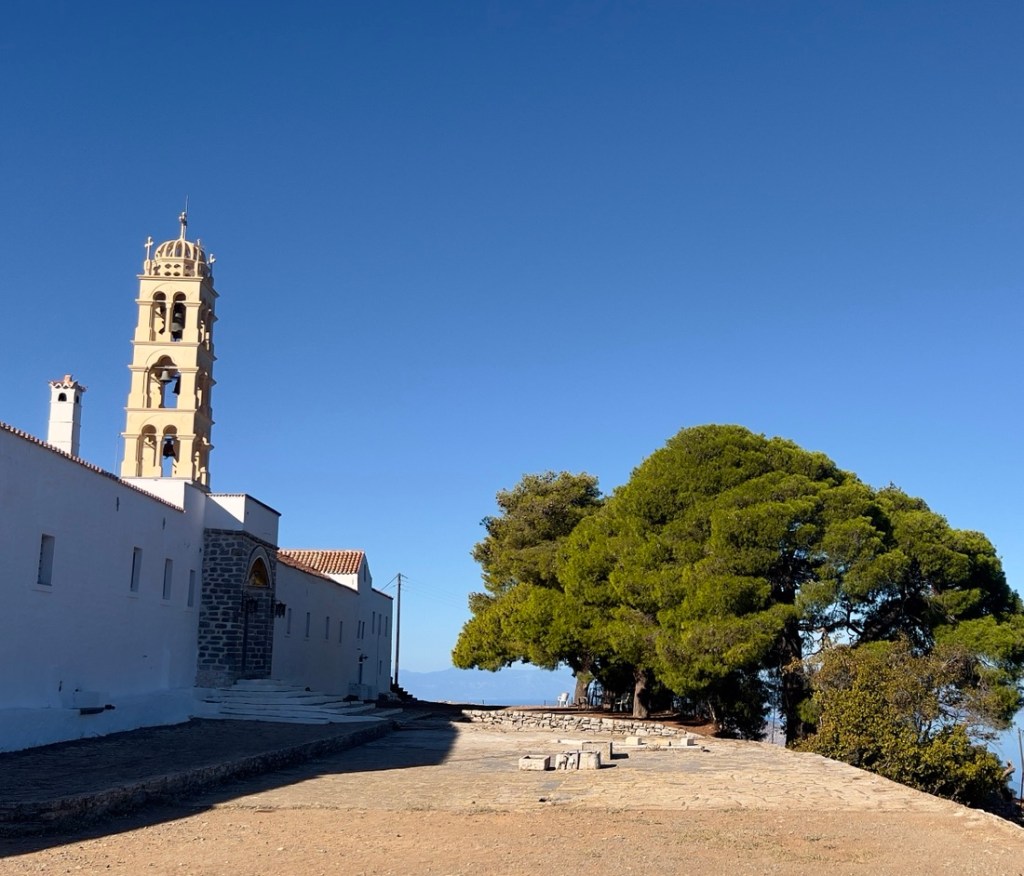

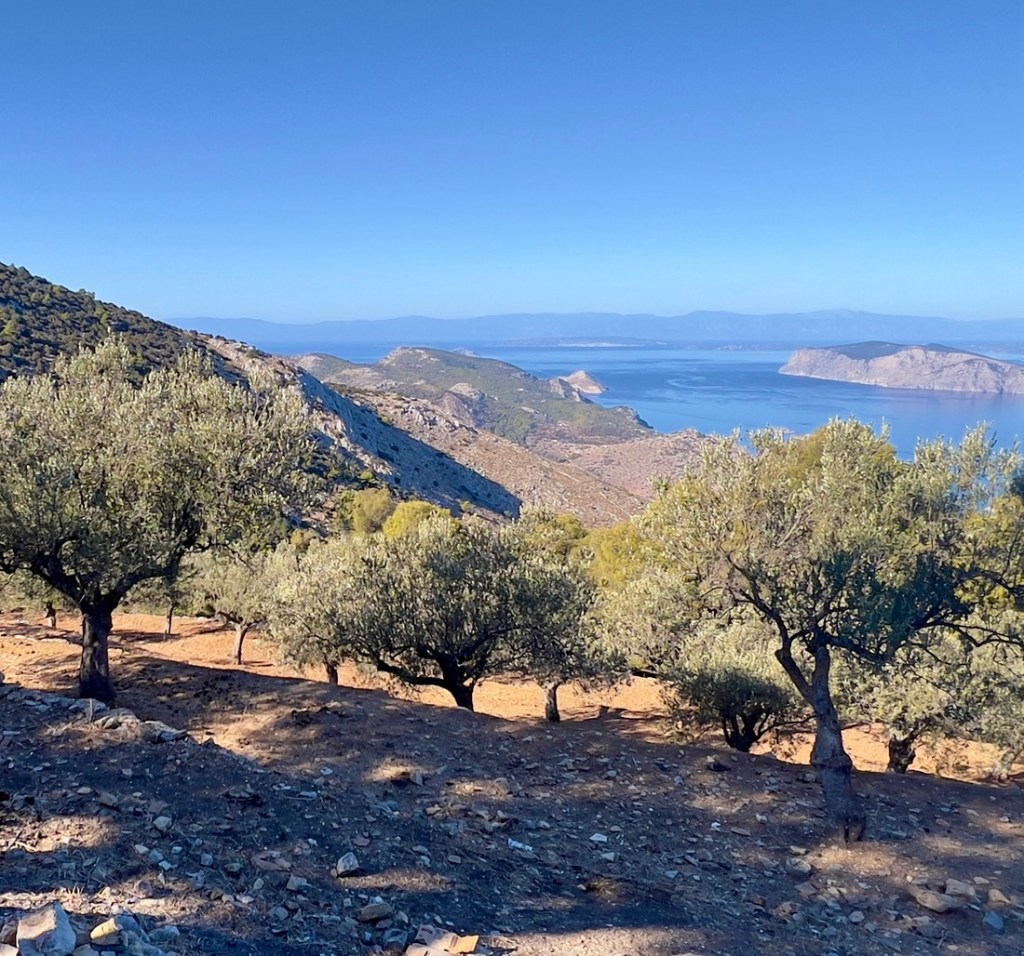

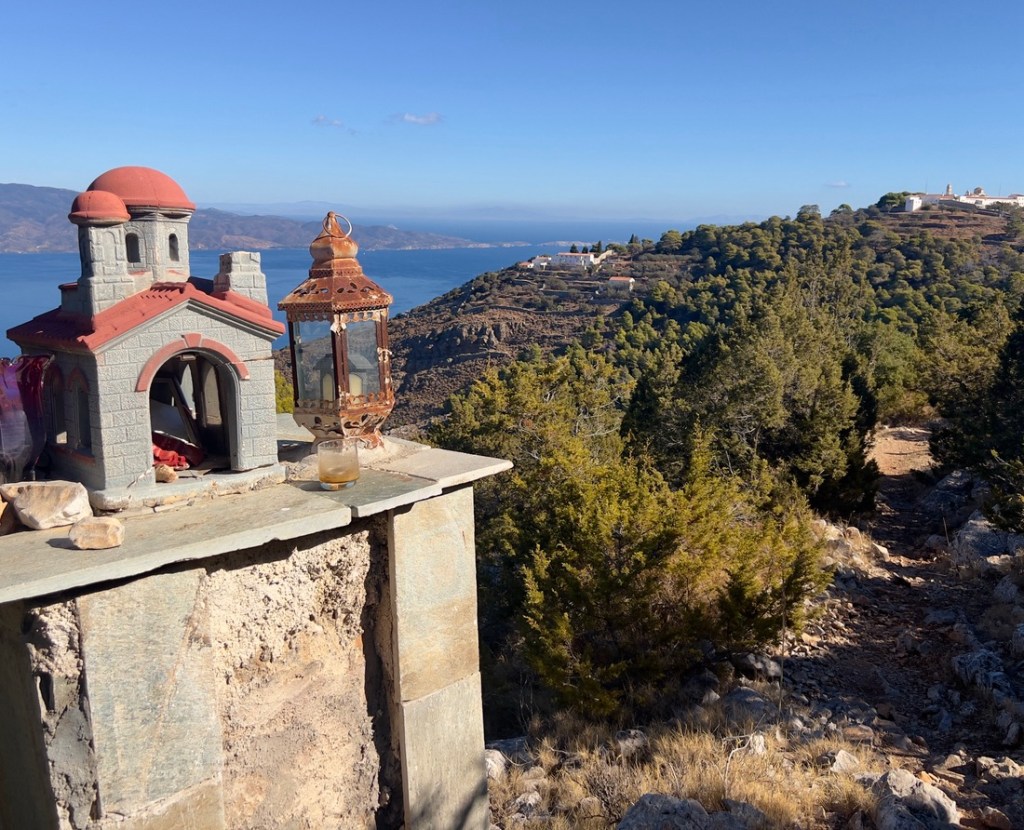
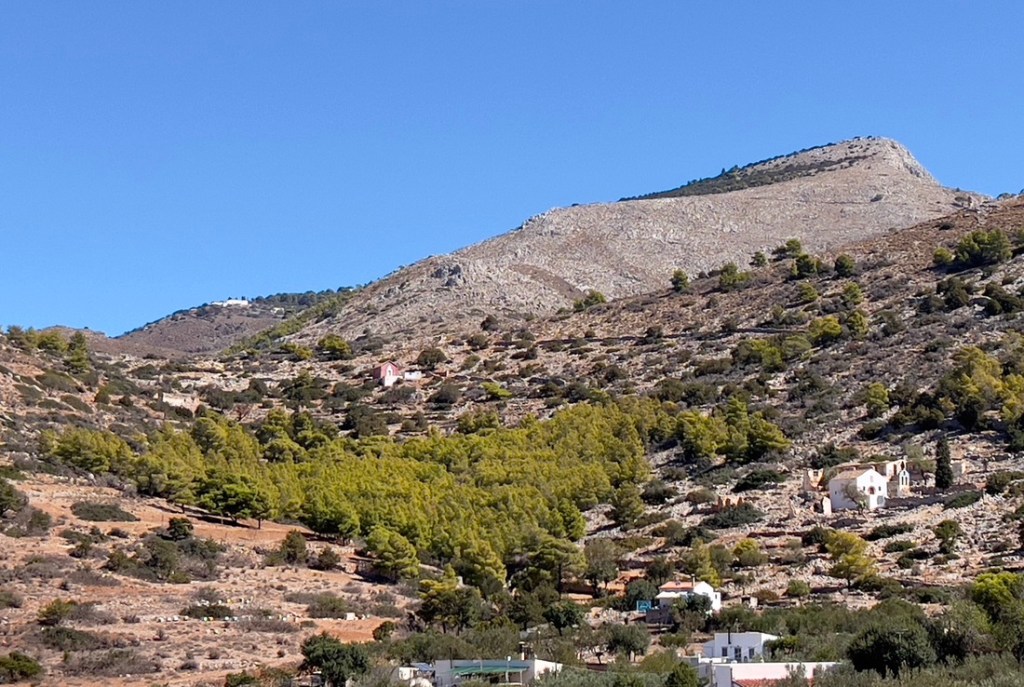
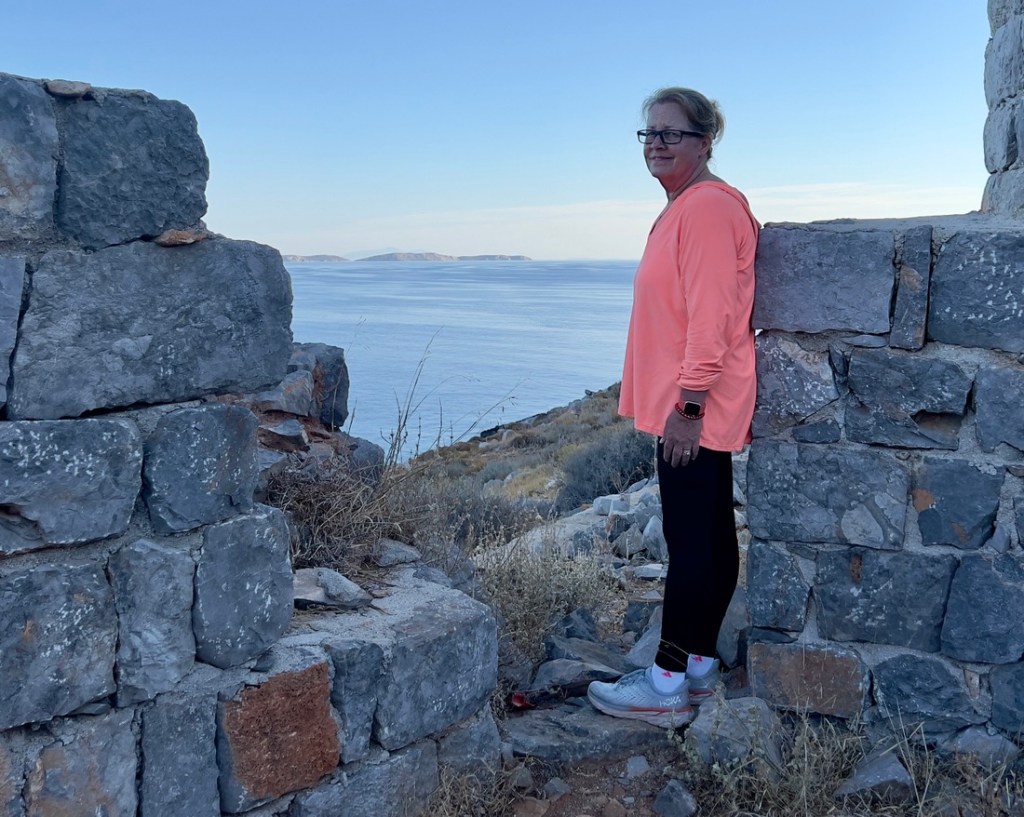
The steep paved trail to the monastery quickly changed to a rugged, rocky, and dusty one. While the three mile climb to the monastery got the heart pumping, the next four miles of rugged rocks forced strong concentration and several near stumbles, though thankfully no falls. It wasn’t so steep that it required scrambling, but some sections were loose under foot. As we left most of the shade trees behind, the ambient temperature in the 70s felt mich higher in the direct sun, even with hats and long sleeves. We drank our 4 bottles of water carefully. We stopped frequently to admire the newly-opened view, or to try to see the mountain goat whose neck bell we could hear. There were plenty of dry stone walls, and the newly painted markers helped us stay on the trail most of the time! We passed one local walking in the other direction, and she said those fateful words, “the path is easy to follow; you can’t get lost!” Fortunately, any unplanned off-trail excursions were short lived as we quickly noticed the lack of white and blue paint marks. The walk along the rugged ridge was broken up with a visit to the Chapel of Saint Mamas, the patron saint of shepherds. We were very happy when the rugged trail turned to a dirt trail at a collection of houses and farms called Episkopi.
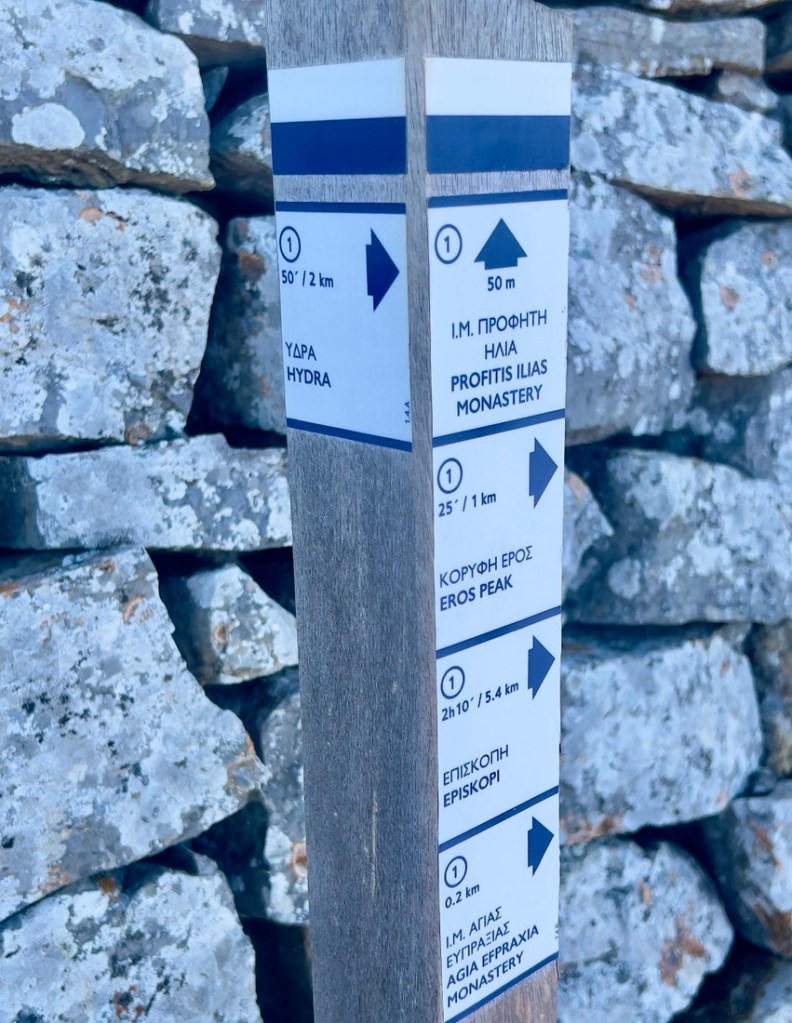
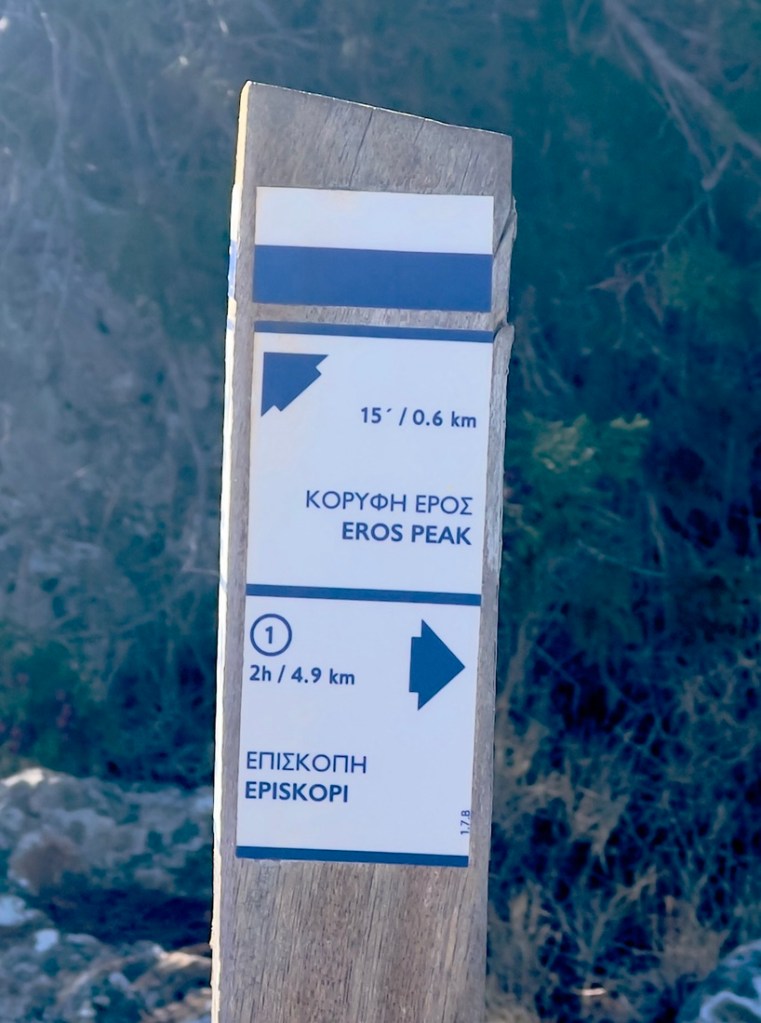
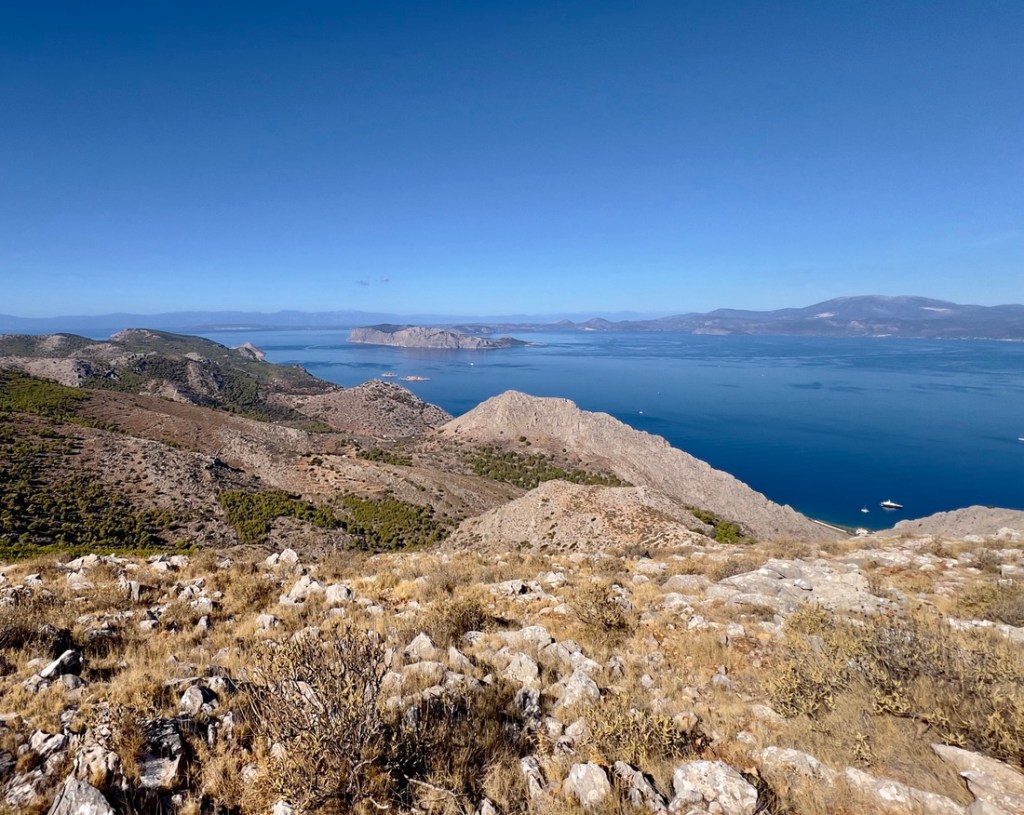
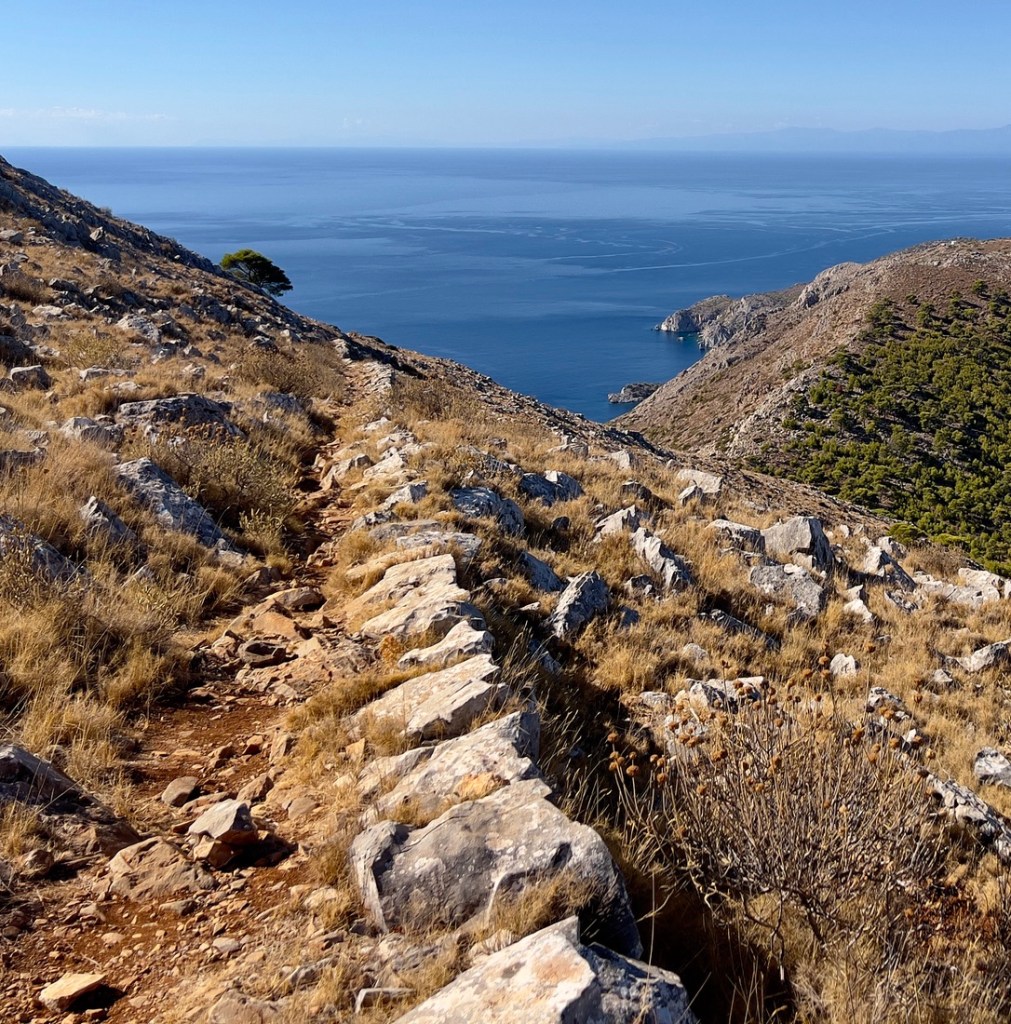


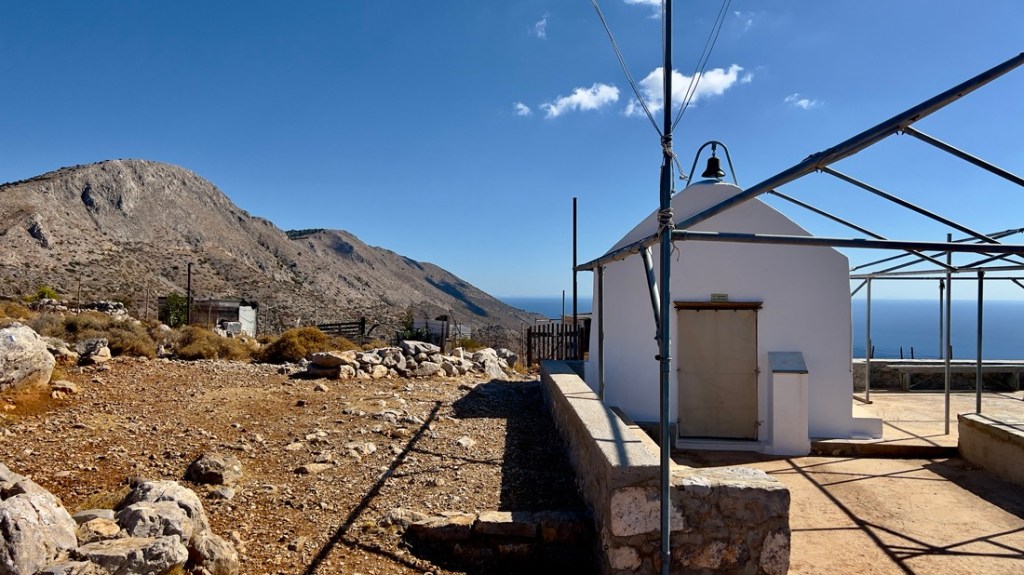
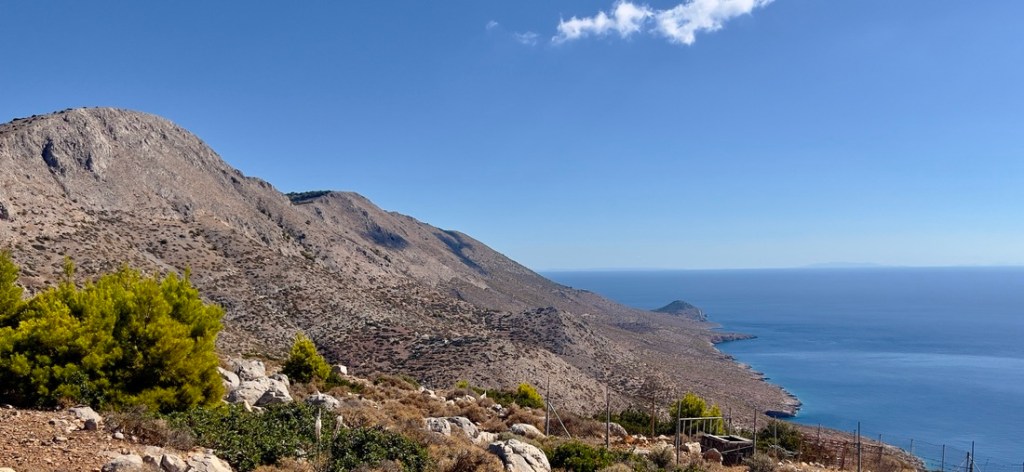
Happy to arrive at Episkopi:
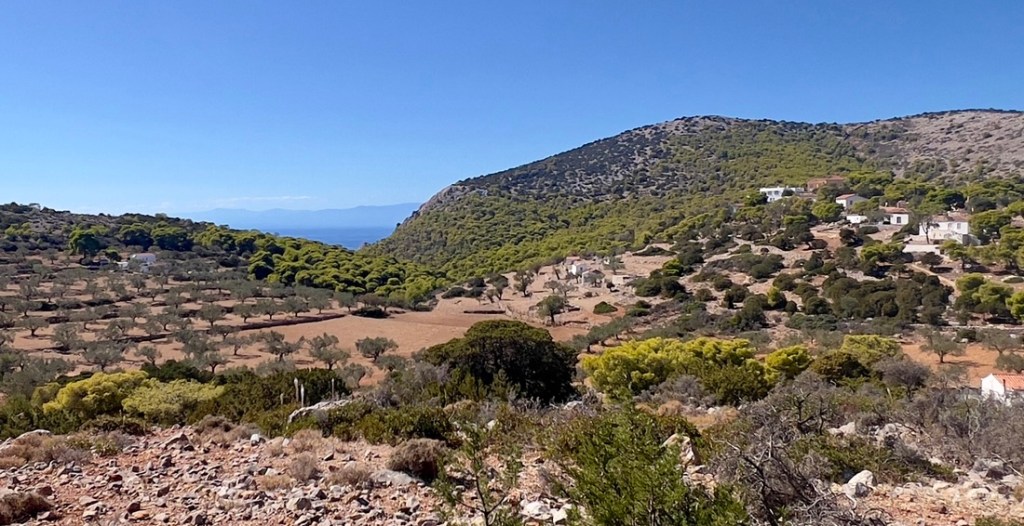
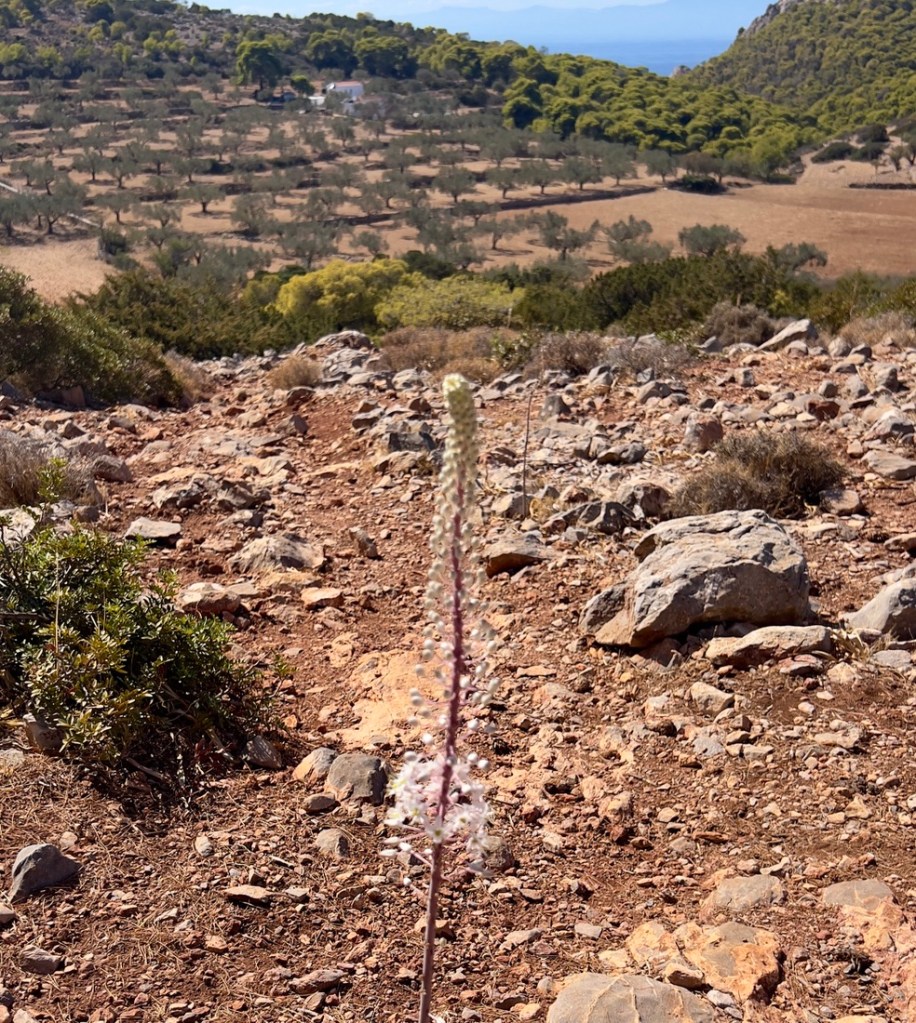
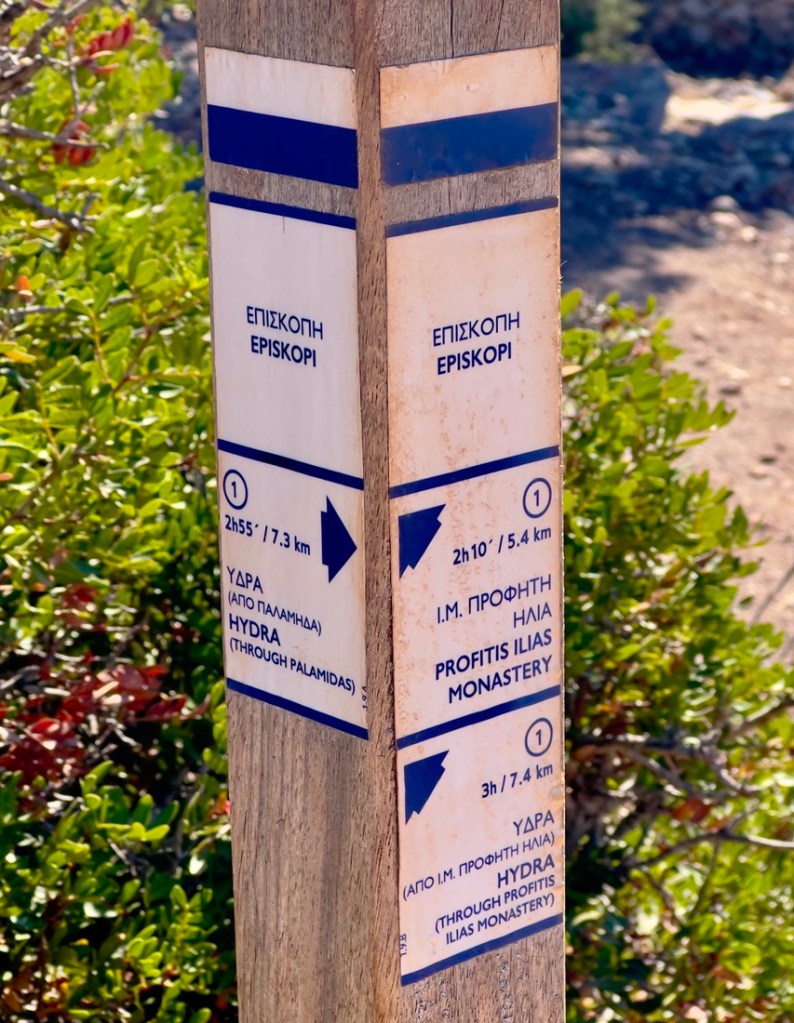

The dirt trail was easier and faster and took us to a shipyard at Palamidas on the coast.
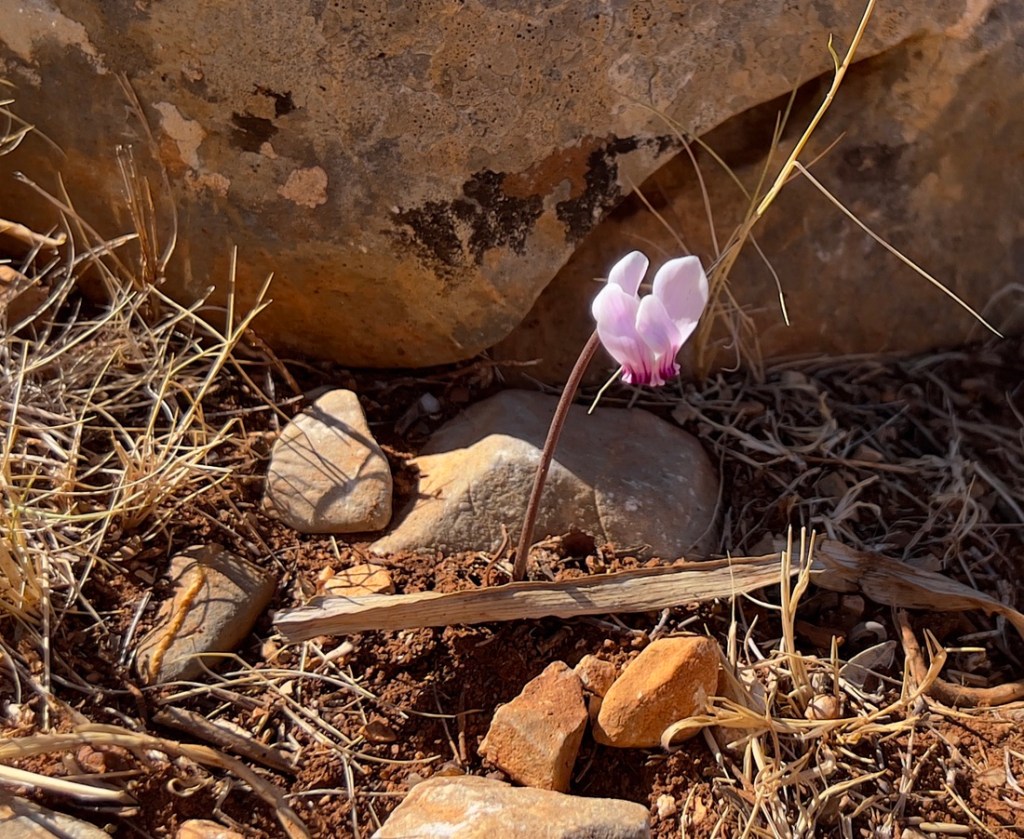


We followed the coast to Plakes beach where there is a resort with beach chairs, a restaurant, and a bar. We were very happy for some refreshment, but when we had ordered less than a full lunch, we were moved from the restaurant to the bar as they were getting full. This place was quite posh and we felt out of place in our hiking gear. After refreshment, we realized the sun had got to us more than we expected, and we happily took their boat shuttle back to the port, covering the two miles in ten minutes and giving us another perspective of the island. We were back at the hotel at 3pm, giving us enough time for a siesta!

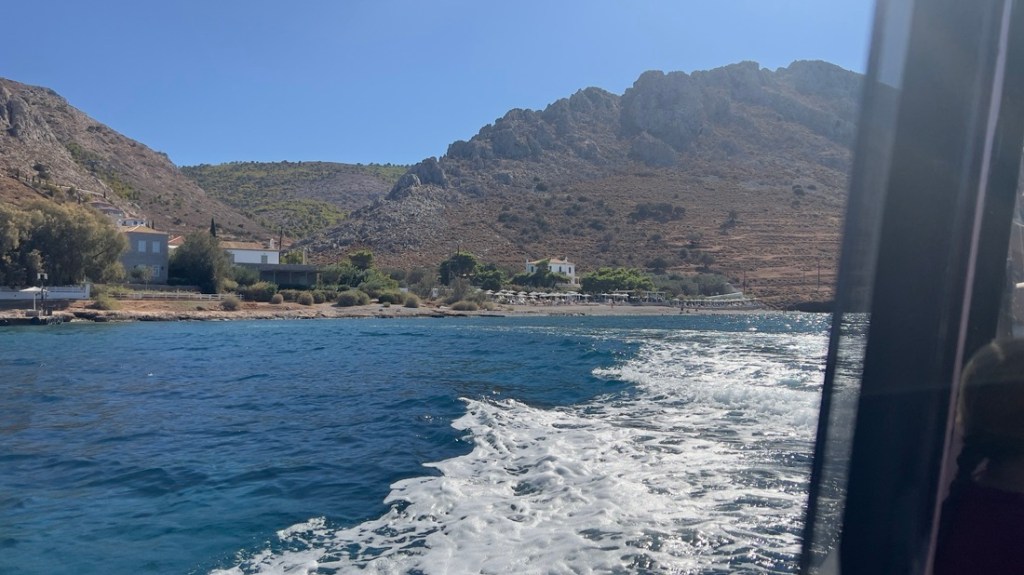

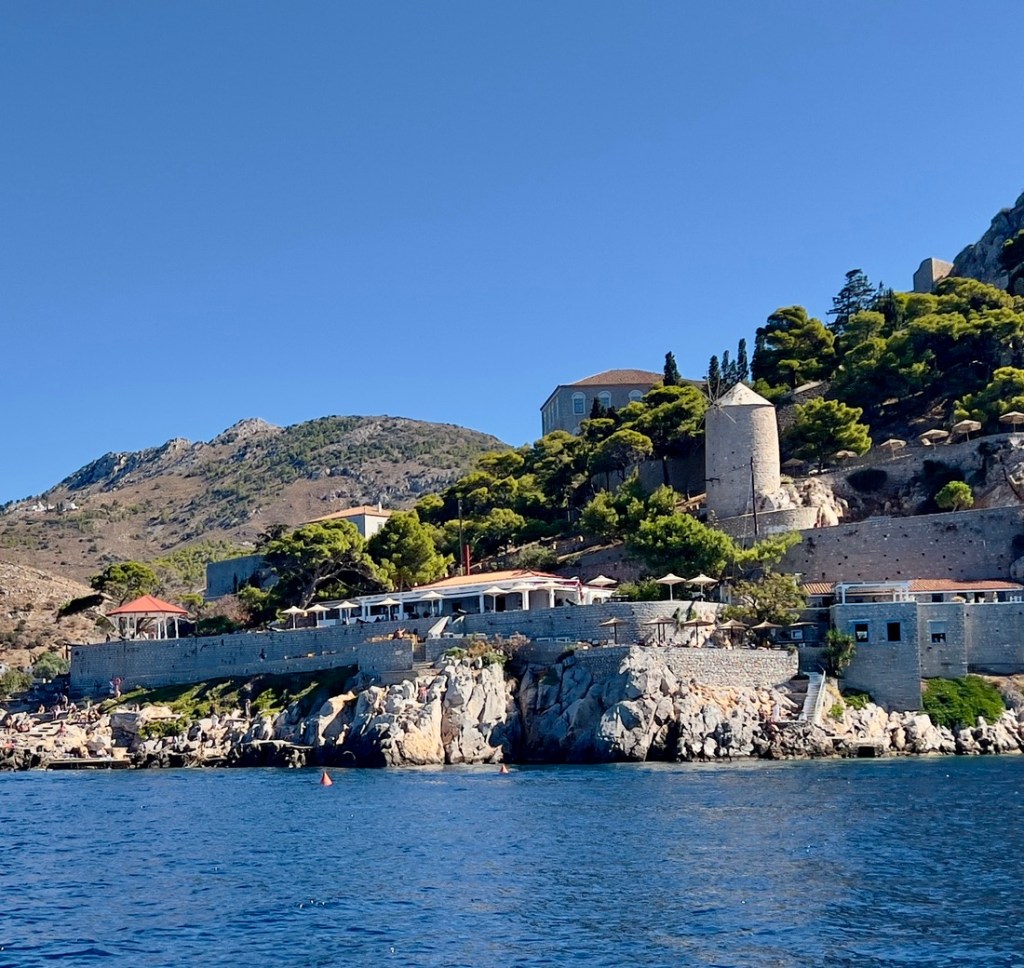
While this walk gave us the best views of the island, it was tough. It was a steep climb up to the monastery, and then tough walking on a rugged, rocky path. The remoteness was cool, with the landscape interrupted by a random dry stone wall, while listening to a mountain goat’s bell. Even though the air temperature did not get above 80 degF, the sun made it much hotter. We were likely dehydrated from the flight which also did not help. The 5.5 hour, 10 mile walk was more than enough!
Hiking Hydra to Mandraki
We had a few hours before our ferry on the second morning, and wanted an easy option after the previous day. Apps suggested a couple of loops from Hydra to Mandraki Bay along the coast and back over the mountain.

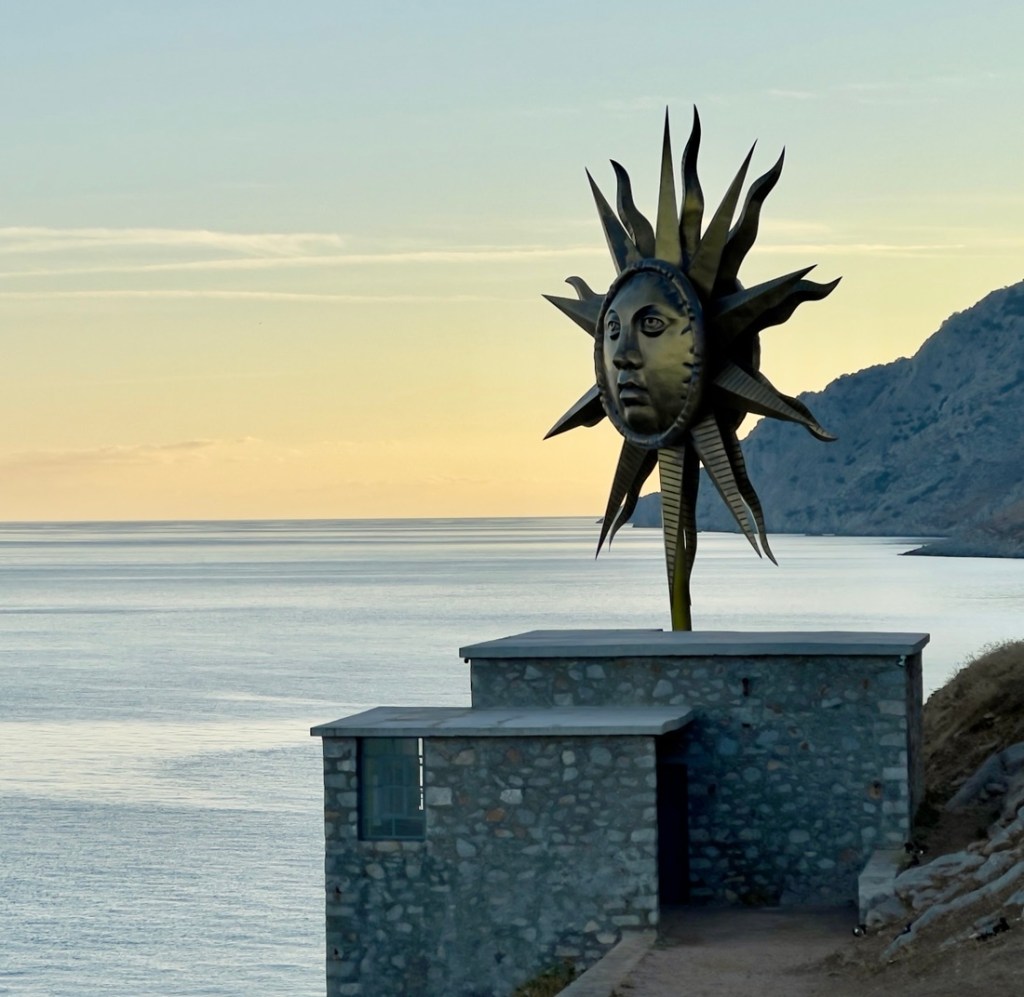
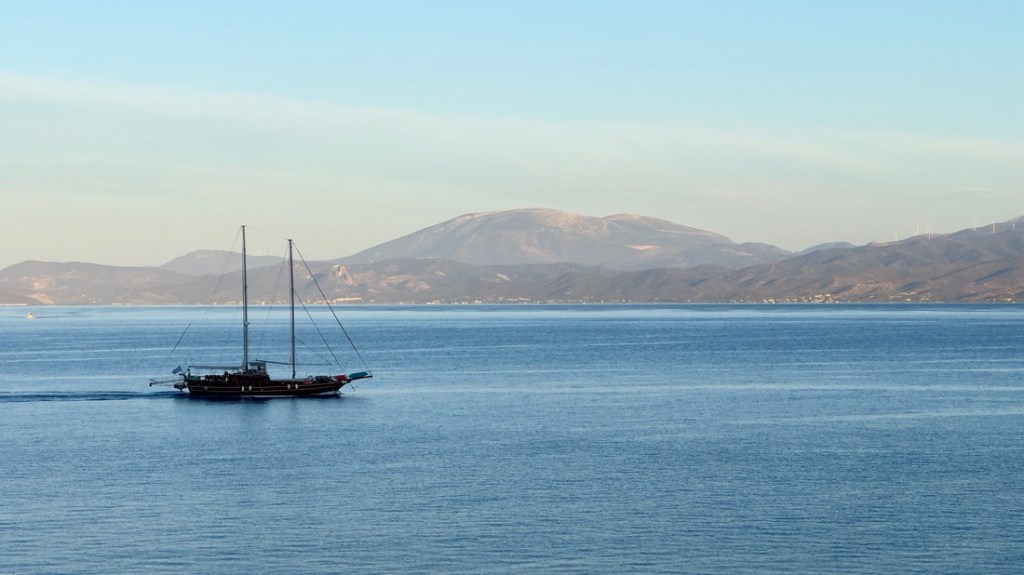
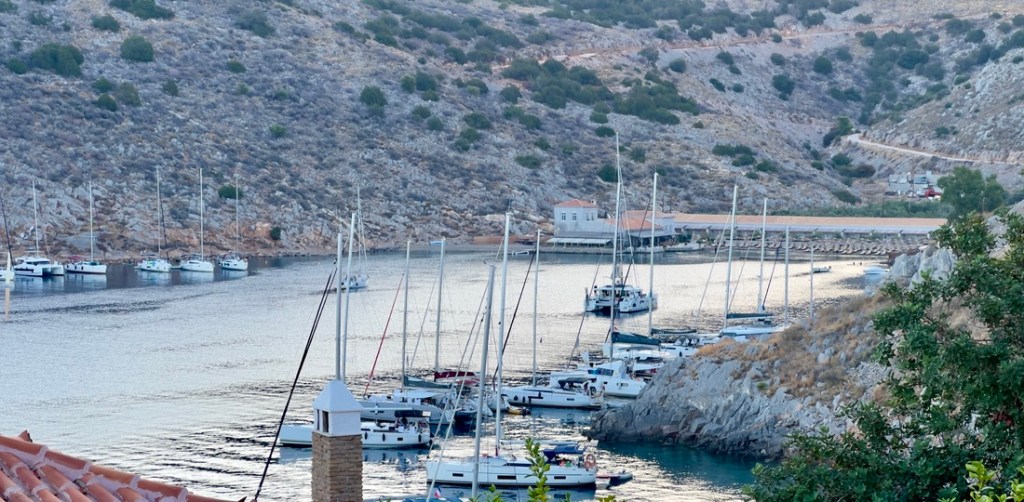
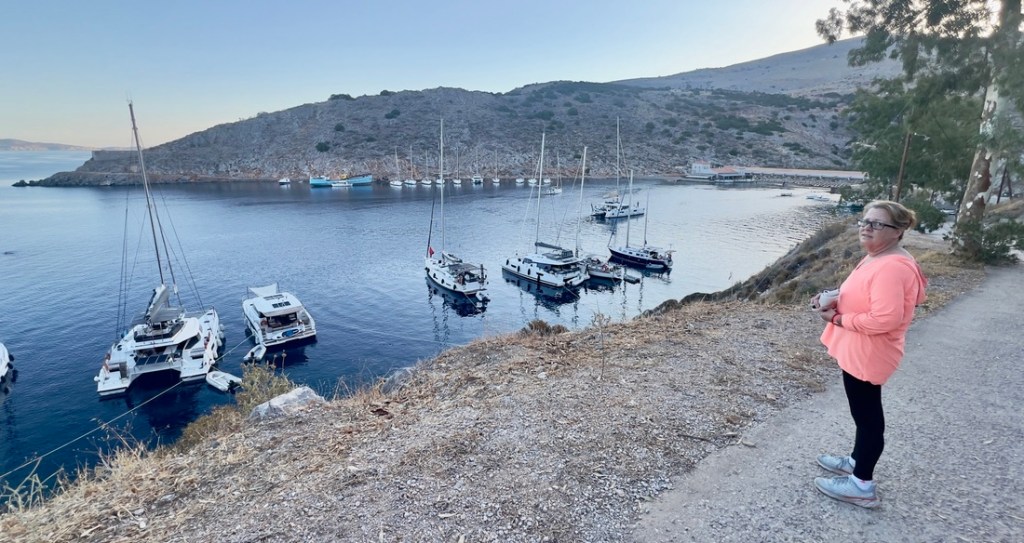
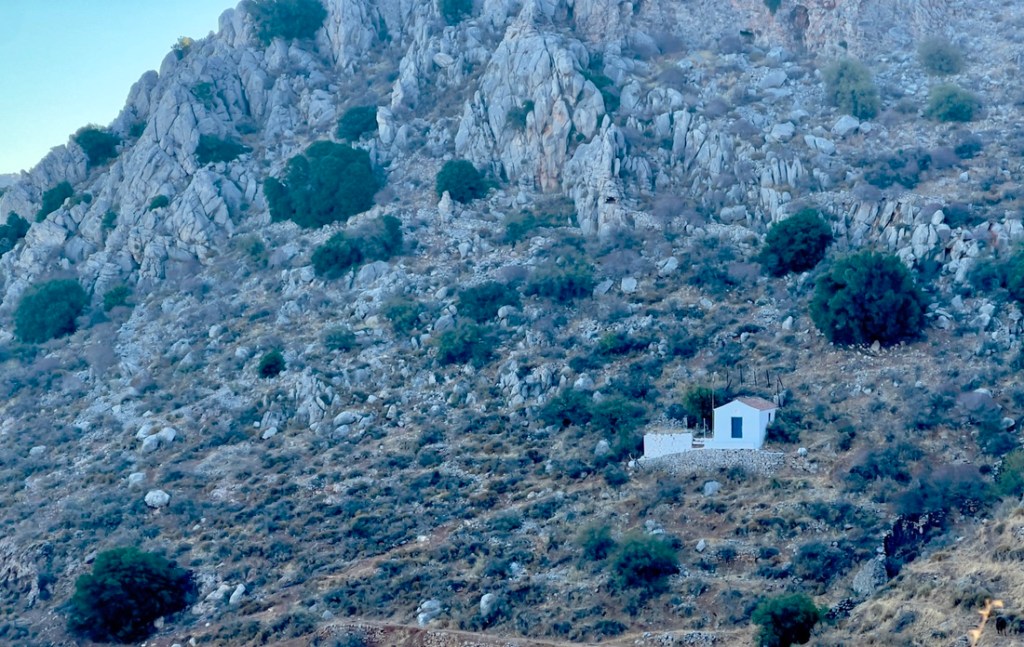
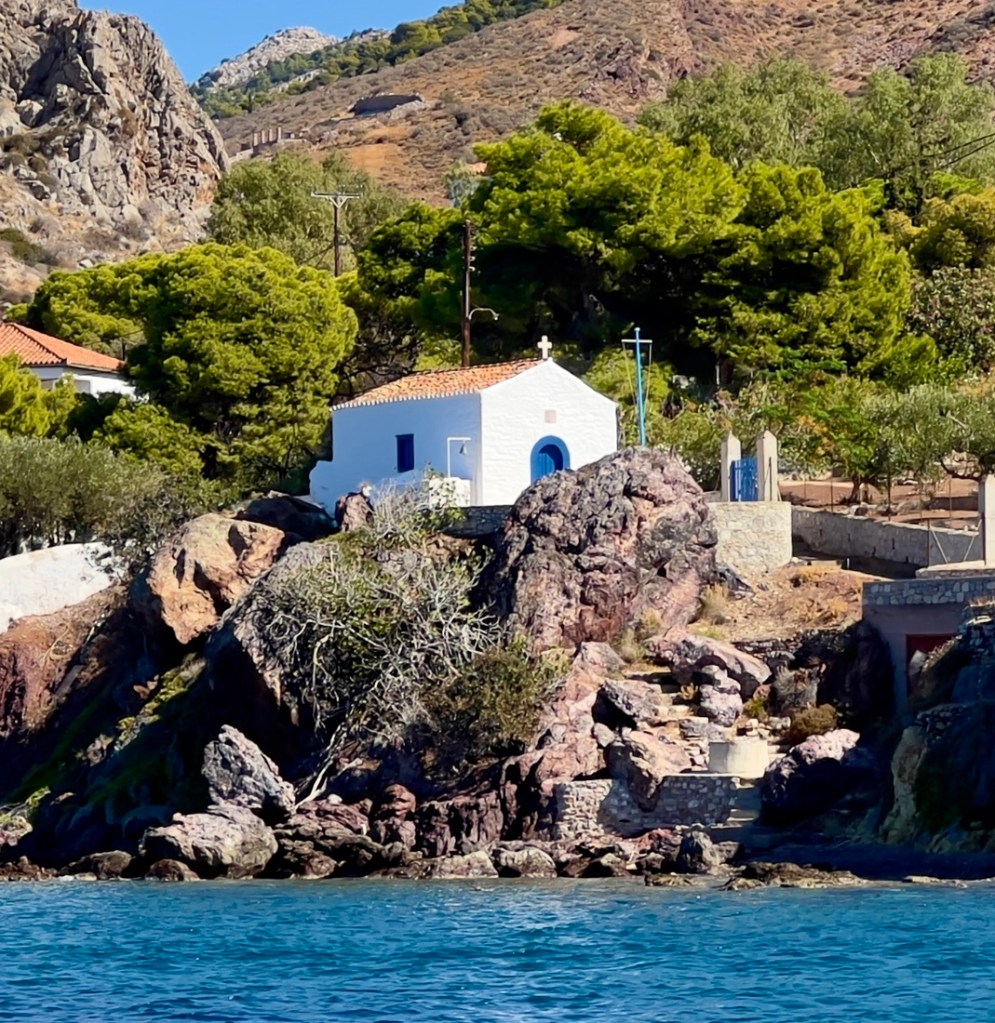
We liked the idea of walking along the coast and back again. It was a road all the way and it seemed the city dump was somewhere at the end of this road, which we did not see. This was also where rocks and building material were stored, and we saw burro trains being loaded to haul up the hill to building projects. Mandraki beach was lovely and peaceful with many yachts in the harbor and the two beaches looked pristine. Our path took us behind the resort and up to an old fort dating from the 1600s when this bay was a Venetian stronghold. However, that path was a bit junky and you could see the less pleasant impact of a resort and was something we had not seen in Hydra or the previous day’s hike. Several joggers passed us along this path and it seemed like a popular early morning walk, either from Hydra for the views, or from the yachts in Mandraki bay to buy provisions from Hydra. There was also an interesting array of churches, ranging from being perched high on the mountainside to adjacent to the beach and loungers.
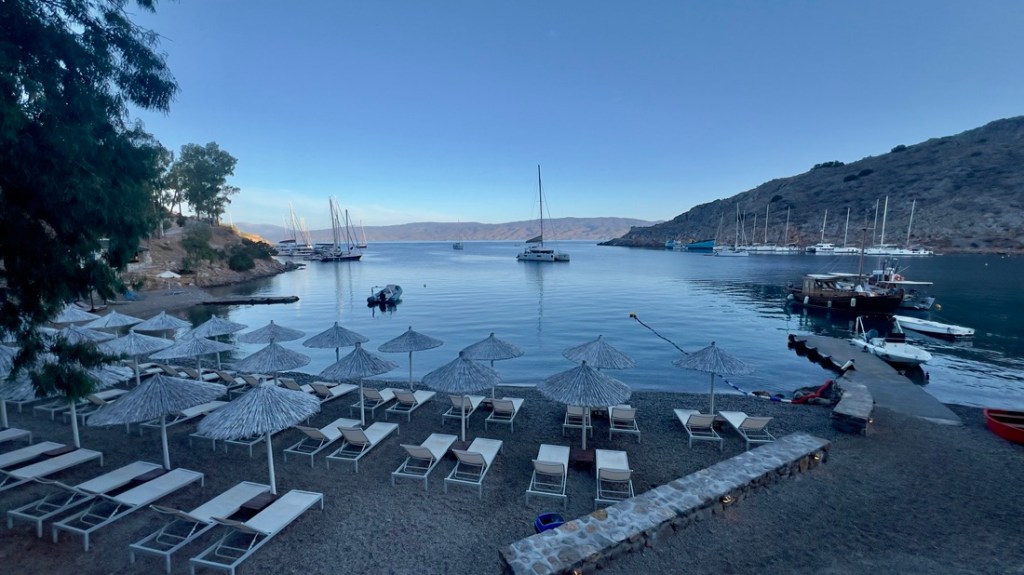

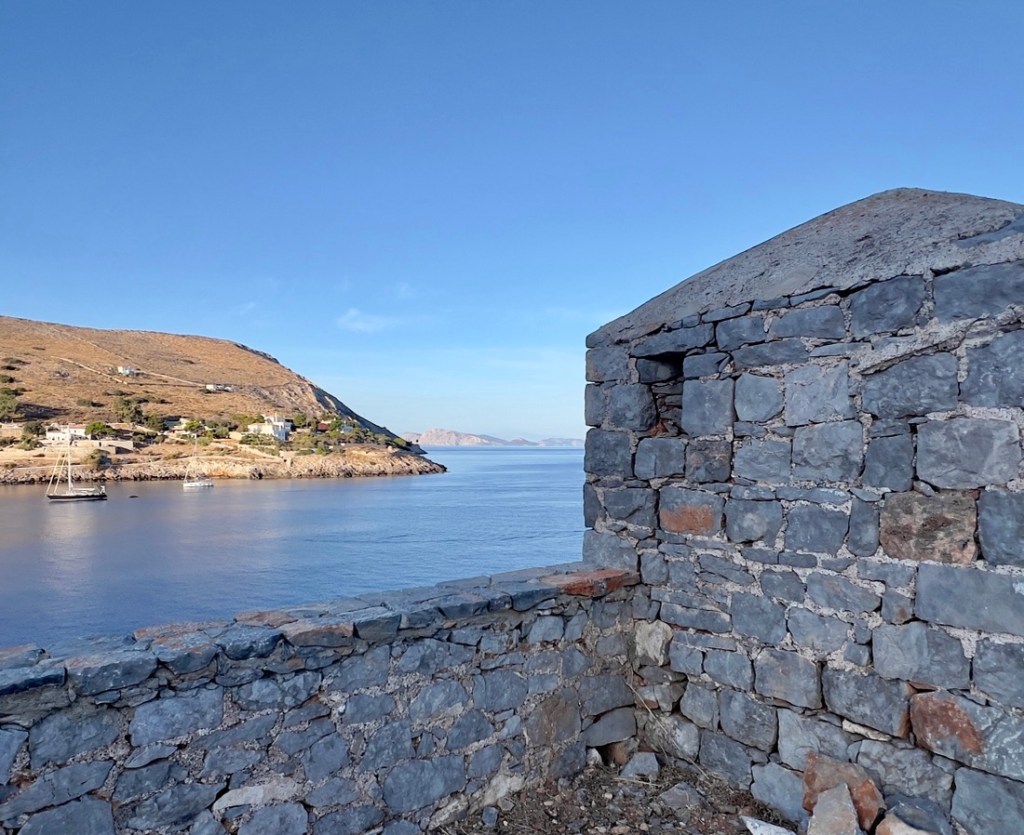
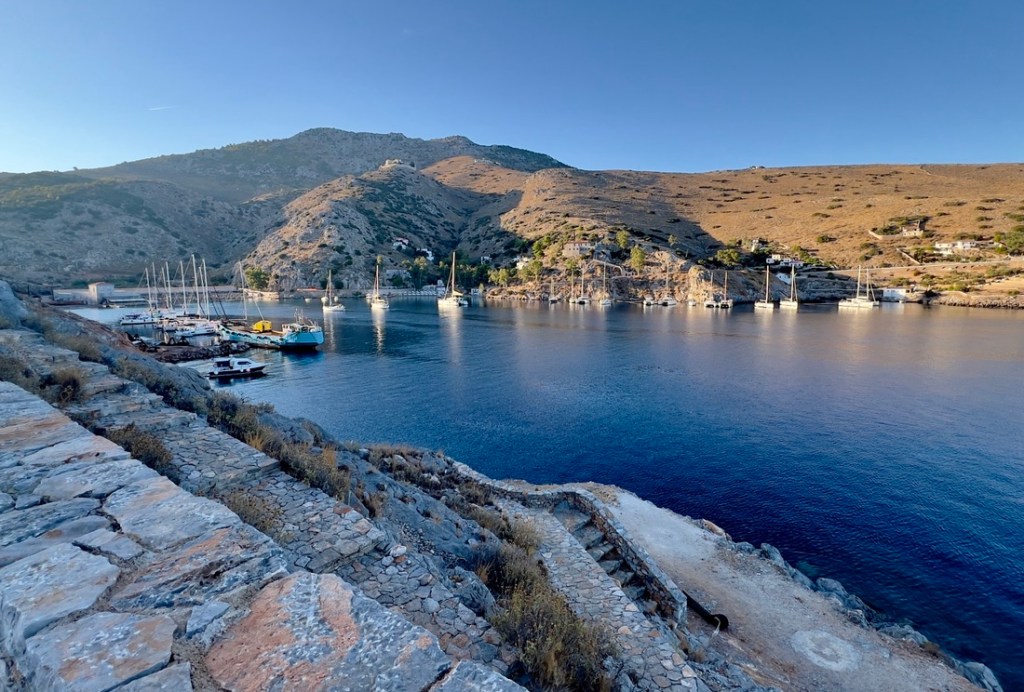
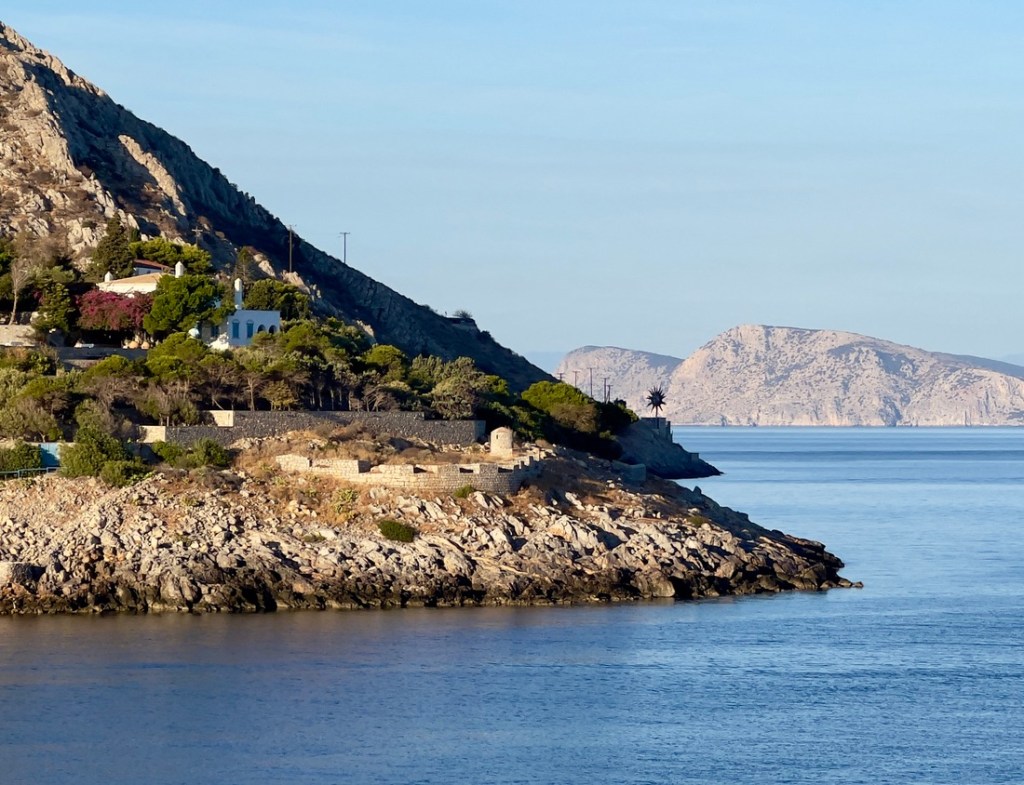
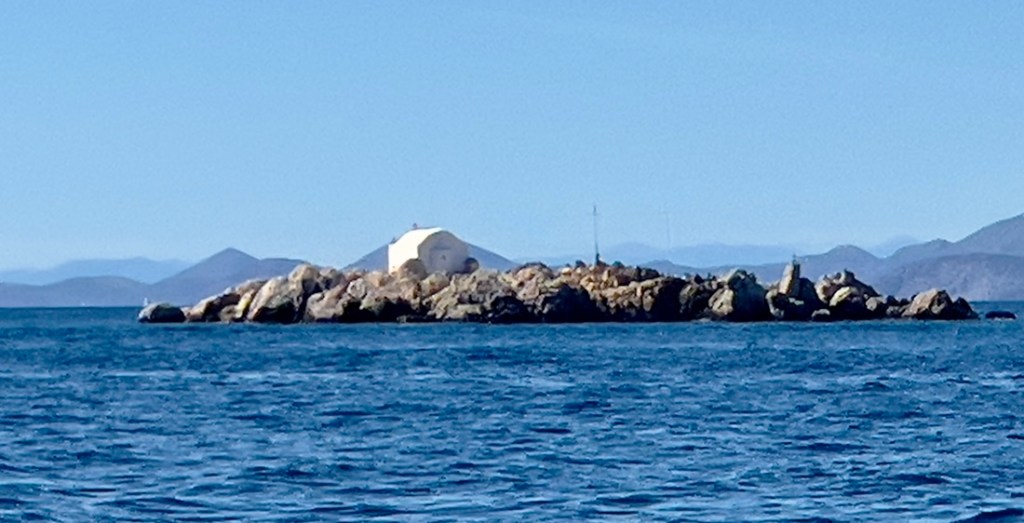
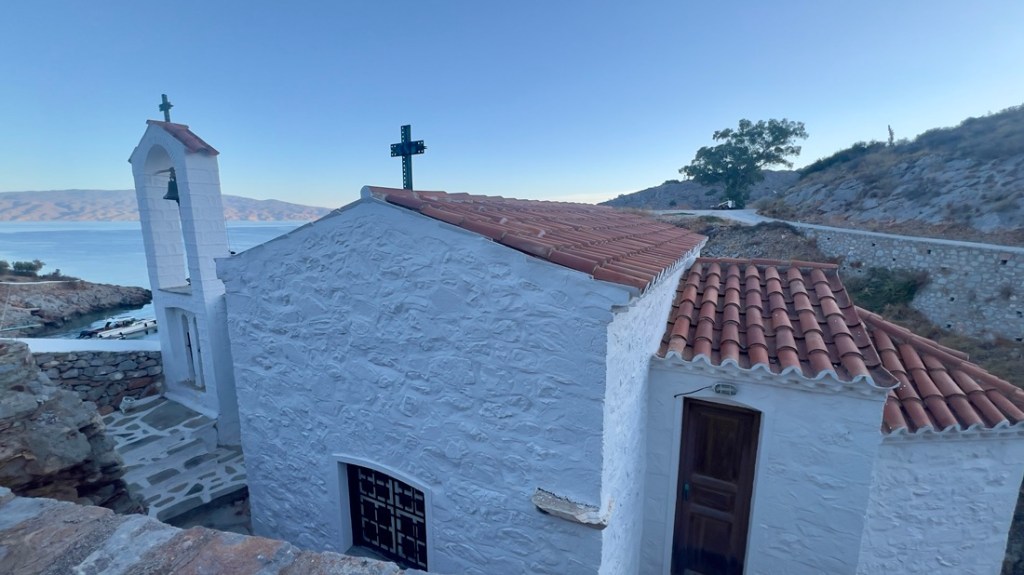
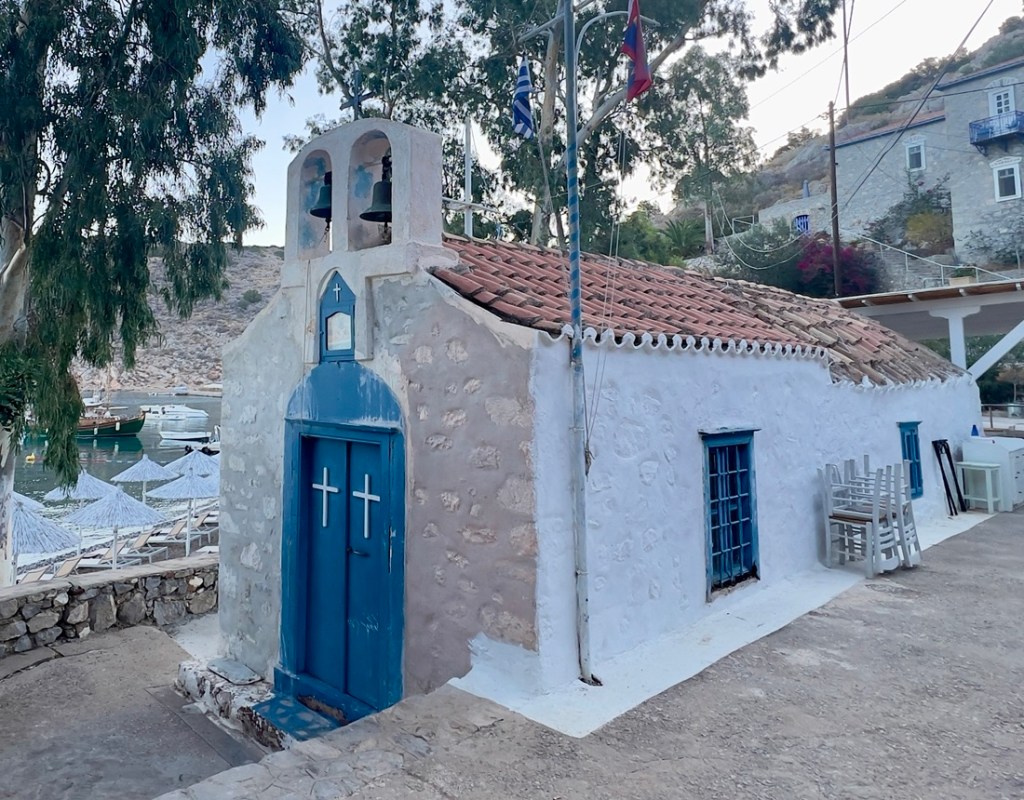
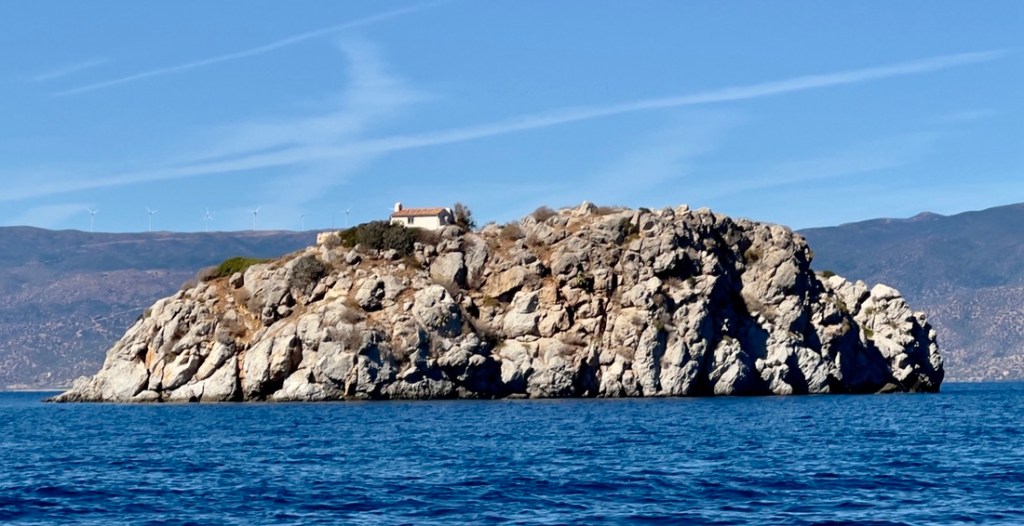
Churches
As there were so many and they were so varied, here is a gallery of the other ones we saw:





Logistics
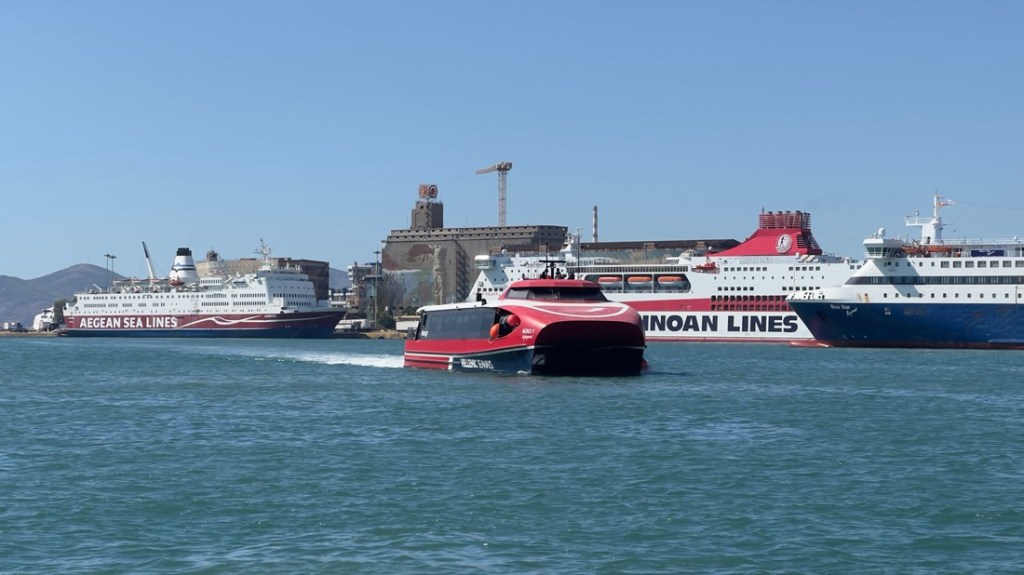
Greek immigration at the airport was pleasantly smooth and it was easy to call a taxi via Uber for Piraeus. Entering the address in the app avoids miscommunication and we arrived at the port with 2 hours to spare. Our journey had not taken us anywhere near to central Athens. Various people at the port were friendly and helpful and we hung out pleasantly in the shade for a couple of hours, watching the busy port’s bustling. The ferry to Hydra was a fast catamaran that took less than 2 hours, though you could not stand outside and the windows were very dirty and the seats were like bus seats. Our return with Magic was more comfortable with cleaner windows than our outbound with Aero Hellenic Highspeed. Simple and efficient.

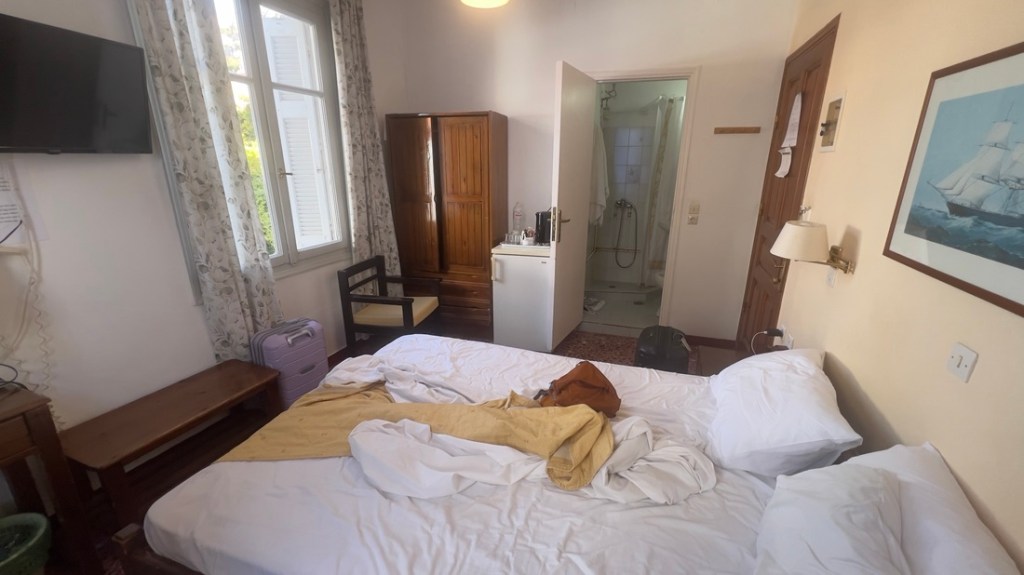
Our Hotel Amaryllis was a short walk from the port. It had some cool views from its terrace roof. The view of the street shows what turned a bit noisy the first night, so earplugs were useful! The rooms were small yet comfortable, but the bathroom was a bit small for Janet’s liking. While our wheeled luggage did not like the cobble stones, we appreciated not having bigger suitcases, though we could have rented a burro!
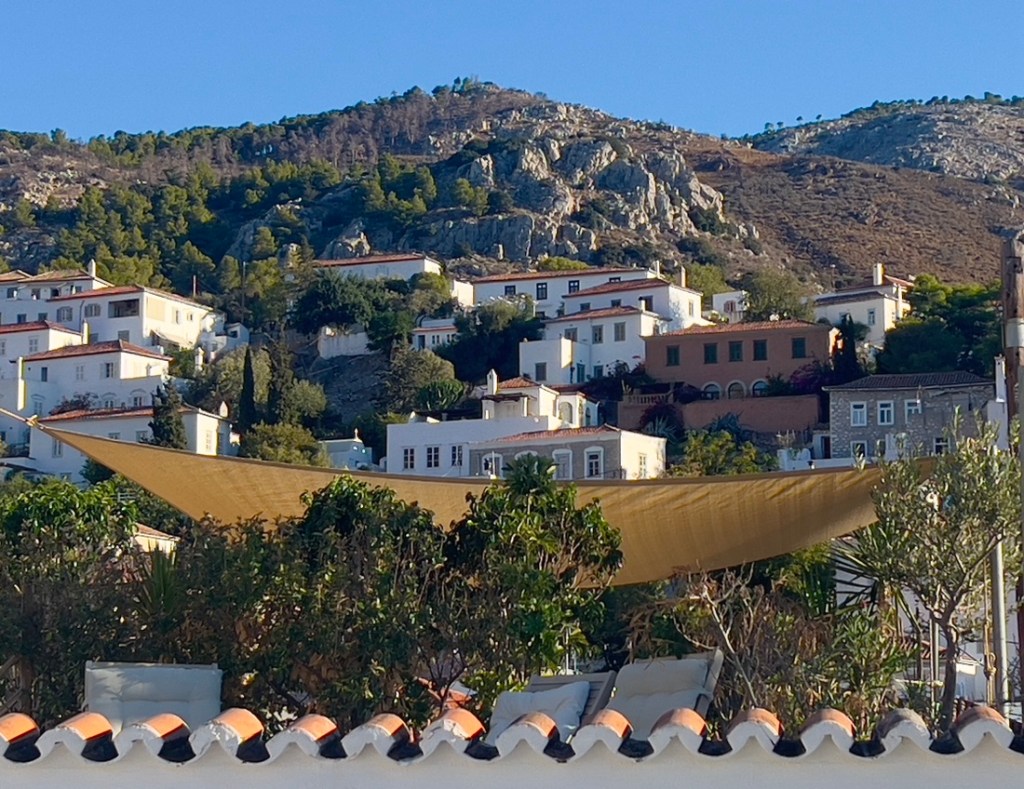

With sunrise at 7:45am and sunset at 7:00pm, the days are shorter than expected but this extends the cool mornings and evenings. Overall, it was all simple, efficient, and as expected. When booking the hotel three months earlier, there had not been a lot of availability. We did not book our ferry tickets long before sailing, and the ferries were nearly full. October is already classified as low season, so I expect it would be quite different in the summer.
Reflection
Hydra was a fascinating insight into a Greek lifestyle. Away from the beaches, it’s a different Greece, perhaps more authentic. Our walk to the island’s interior gave us some insight into traveling in Greece before motorized transport, coupled with the boats for passage by sea. The island’s many churches stand like monuments, declaring Greek’s Christian independence from Islamic Turkey, but did not appear very active. The ubiquitous cats, burros, and chickens reflect a simpler life. While one can readily get by with English and without speaking Greek, there remains a language barrier, supplementing a cultural difference that we haven’t spent enough time in country yet to notice. While these first days in Greece took us a little outside our comfort zone, it has been an adventurous introduction to contemporary Greek life while providing some initial insight into what it was like for Paul.
Find other posts from this trip on our Greece page.
Please follow us on this journey by subscribing below. We would love to read your thoughts: please leave comments at the bottom of the post.
 The Adventures of the Cajunlimeys
The authentic Greek salad looked delicious. Can’t wait to hear more about your journey through Paul’s travels!
LikeLiked by 1 person