
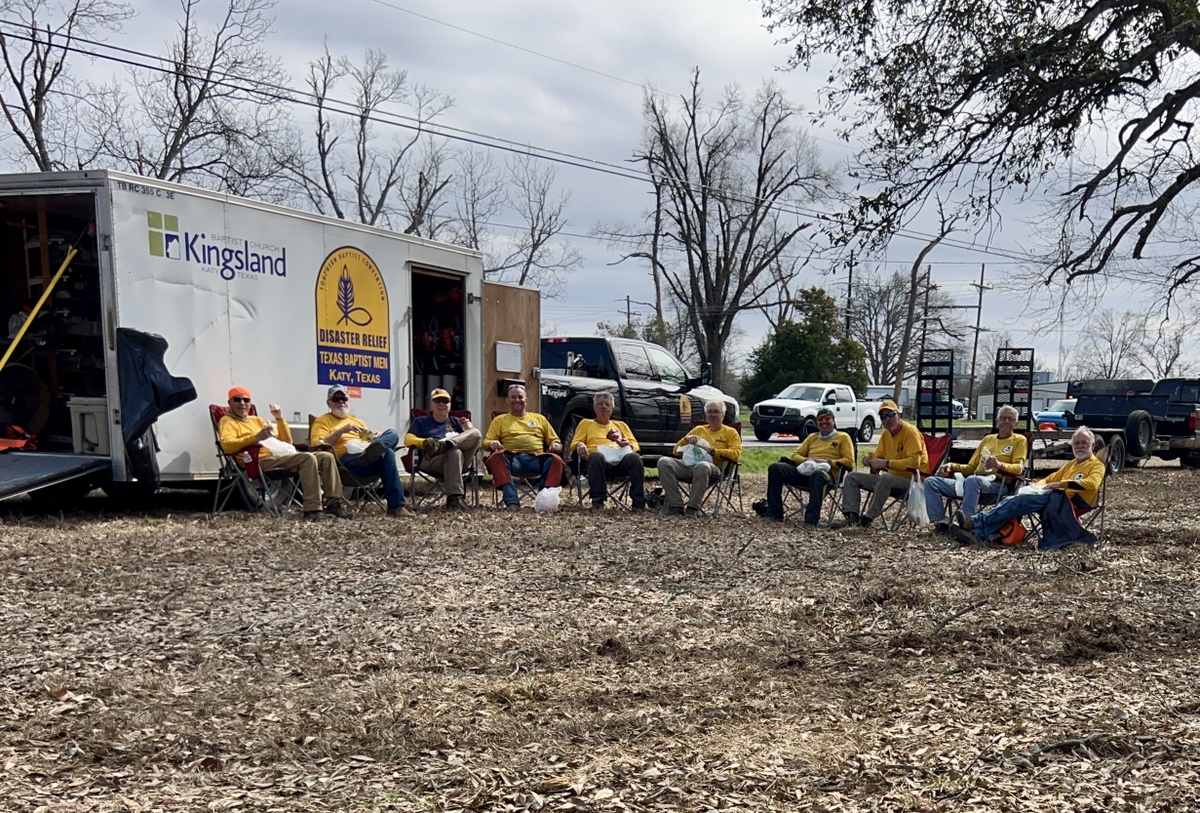
My multi-year search for disaster relief service opportunities led me to a group of exceptional brothers. In this post, I describe the journey that resulted in my joining a chainsaw disaster relief team based out of Kingsland Baptist Church in Katy, Texas, that deployed with Texans on Mission to Delhi in Northeast Louisiana to help with recovery after Winter Storm Freya in February 2026.
Background
I have hungered to help others for over thirty years. As my Christian faith grew, this hunger gravitated toward Christian ministries that struck a balance between helping people’s physical needs and their spiritual destination. I enjoyed using knowledge from my employment in water well drilling ministries in Nicaragua and Asia. I was moved when I served as a Red Cross volunteer at the George R Brown Convention Center mega-shelter during Hurricane Harvey in Houston. Volunteering with a Samaritan’s Purse team “mudding out” after a Louisiana hurricane was eye-opening about how to help homeowners after a natural disaster. Recent participation in Houston’s First Baptist Church’s Men Serve ministry, which helps widows and single moms, has been satisfying. I had looked into greater commitments, from leading the water well ministry in Nicaragua to applying to join Samaritan Purse’s international disaster relief team, but God simply closed those doors. I sensed God was saying “not yet” rather than “no,” and I focused on raising our children.
By the end of 2025, as both kids were engaged and defining their life’s trajectory, I started looking for Christian service opportunities beyond a single day. I had seen people in their greatest need after natural disasters and felt a responsibility to help. As God promised Abraham in Genesis 12:2, we have been blessed to be a blessing. That blessing was for all nations, which Jesus emphasized (Matt 28:18–20 and Acts 1:8). I had been to “the ends of the earth,” yet I felt drawn toward more local needs.
Getting Plugged Into Texans on Mission
My social media feed had periodically shown posts by Texans on Mission (TXM). I checked out their website, and their link to “Volunteer After Disasters” under “Let’s Do Something” caught my eye. Other links included Rebuilding After Disasters, Pursue Water Impact, and Volunteer in Israel.
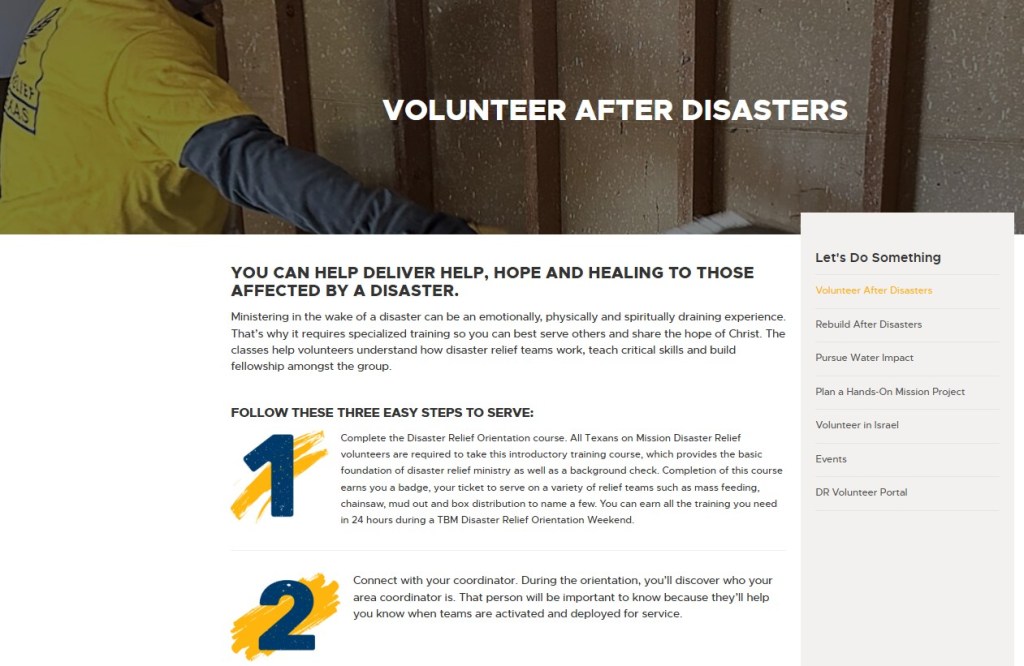
As per the Volunteer After Disasters webpage, I looked for a Disaster Relief Orientation Course. The trainings seemed to be Dallas-centric, and my concern that there might not be groups in the Houston area made me reluctant to commit to an overnight training (more on this below). I liked the idea of in-person training to help get plugged in, but I chose the online Disaster Relief Orientation class. I paid a nominal fee to cover the cost of a background check and my ID badge. I completed the orientation training on August 24th, 2025, which took about an hour. It provided basic background information, but did not help me with what to do next or whom to contact. I was stuck at “Step 2” above: who was my coordinator?
One or two weeks later, I got a package in the mail from TXM. Included with my ID badge was a welcome letter confirming that I was a “new yellow cap volunteer.” Also, there were enclosed papers titled “Leadership & Disaster Relief Leadership” and “Regional Map & Disaster Relief Leadership.” The papers encouraged me to contact my region leadership, and I worked out that Houston was in the Coastal Plains East region, so I emailed the contact (Jerry Ickes) on November 2nd. I was open to serving anywhere. I mentioned an interest in chainsawing, but with no experience, and Jerry encouraged me to register for the upcoming chainsaw training the following Saturday at Brazoria’s First Baptist Church, about an hour south of our home. I was warmly welcomed to the class, with breakfast and lunch provided by the church. We spent the morning in a classroom setting, and went to a local field in the afternoon, where we practiced what we had learned and chopped down a tree. I learned a lot of basic chainsaw safety, including essential PPE and practicalities, largely following the book, To Fell a Tree by Jeff Jepson. The practical session gave me hands-on experience of running a saw, including starting, using the brake, safe cutting stance, reading the stress on a branch to avoid pinching, and cutting down a tree. It was a valuable introduction, and without this training, you cannot deploy with TXM, even if you are very experienced with a chainsaw.
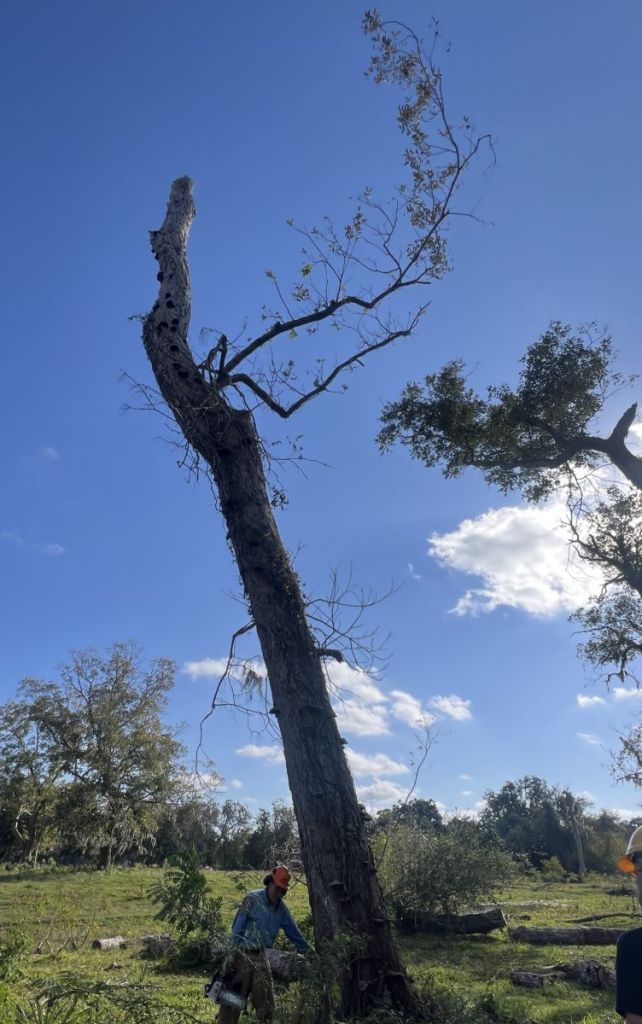
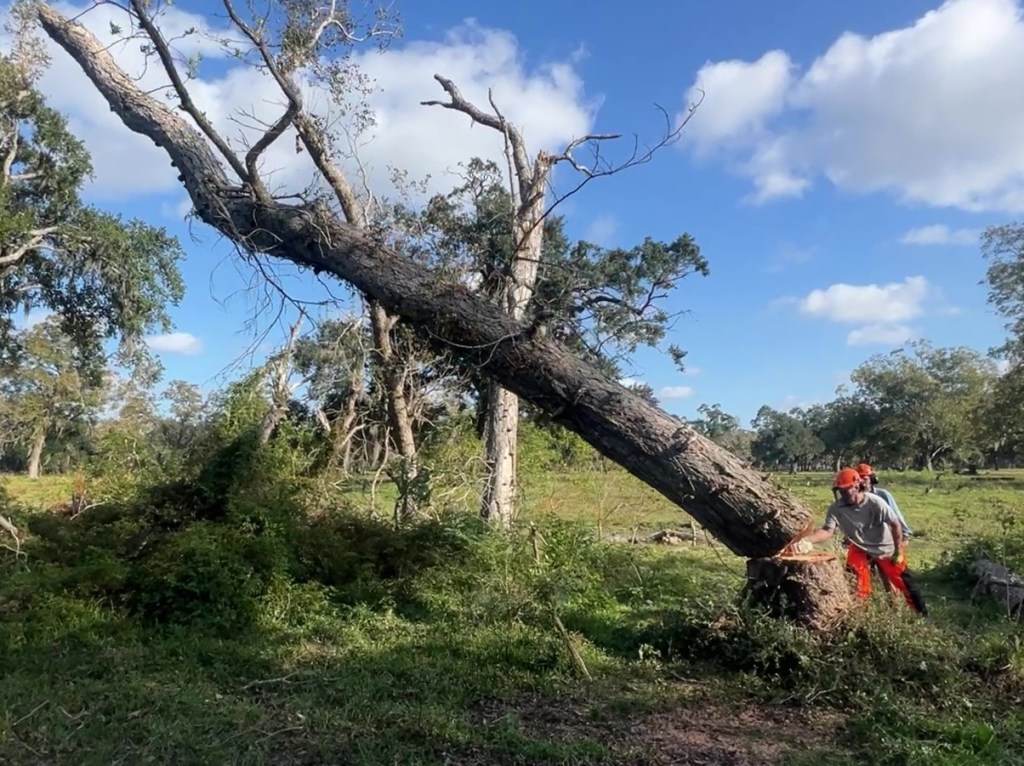
At the end of the training, you get added to the email distribution list for callouts. While this training had been supported by a chainsaw leader and trailer from south of Houston, the team closest to my home was based in Katy, so I asked to be on their list as well. The location of disaster recovery teams is not available on the TXM website.
Kingsland Baptist Church Chainsaw Team
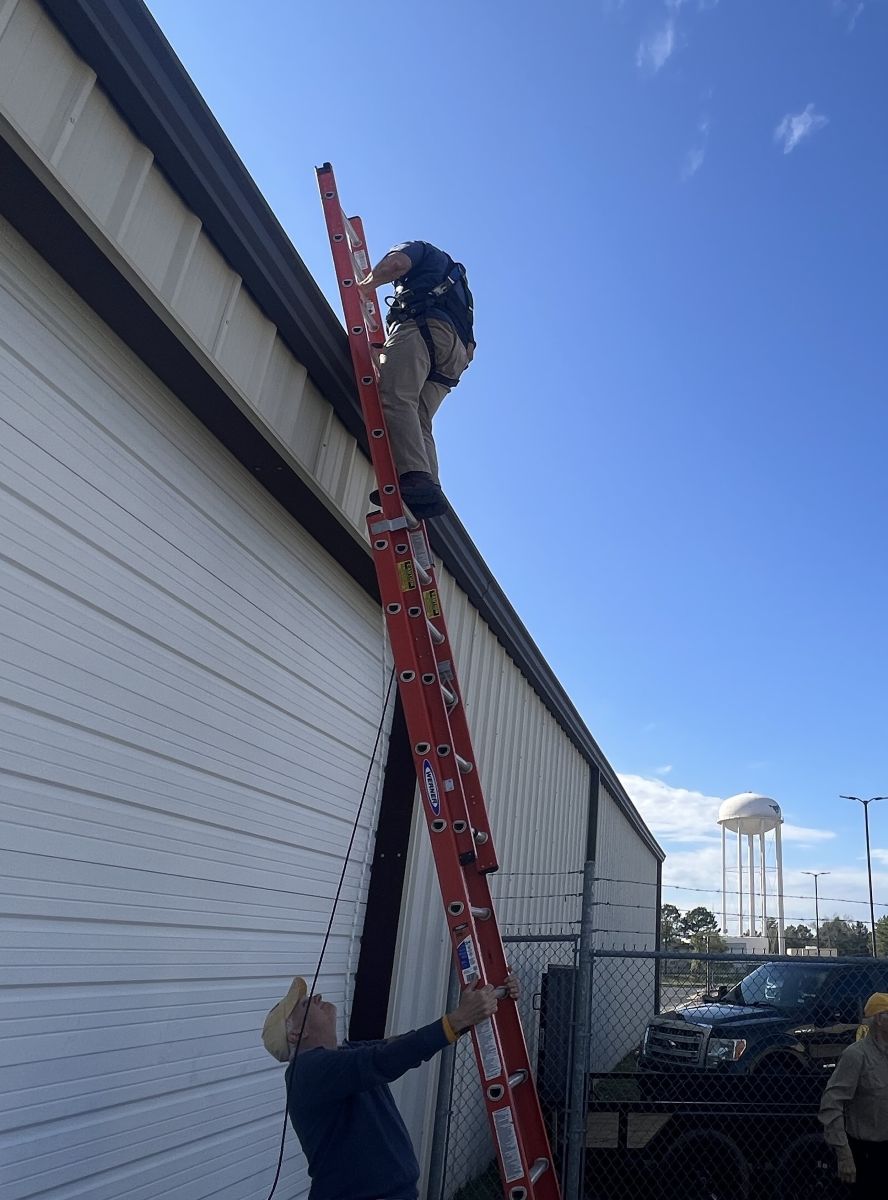
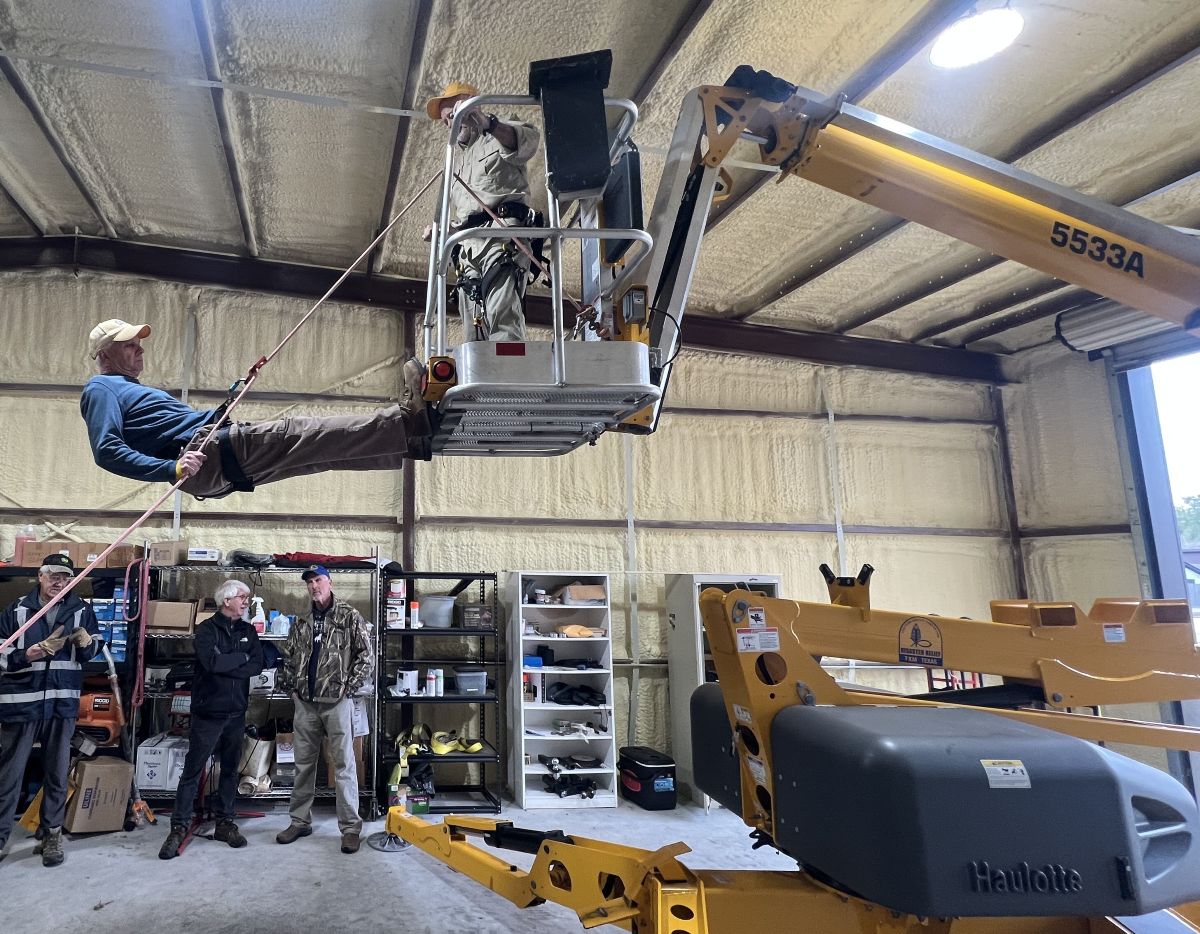
A couple of days after completing the training, I received a welcoming email from Marcell Hunt, the “blue cap” for Kingsland’s chainsaw team. A “blue cap” is the team leader. I was excited that I was on a team with the possibility of a one- to two-week deployment. However, the first notification was about some new manlift and roofs/ladders training, essential if you want to use the manlift or ladders. I eagerly signed up for these trainings on January 12th and 13th, looking forward to meeting the other team members. At the training session, I was warmly welcomed, though it was somewhat intimidating with a group of about thirty people who all seemed to know each other. I later discovered how a deployment creates strong bonds between the team members. The trainings were informative and practical, from tying off ladders to rappelling out of the manlift.
Deployment to Delhi, LA, after Winter Storm Freya
At the end of January, Winter Storm Freya caused major damage. While Texas fared quite well, Louisiana and states east and north suffered significantly. In northeast Louisiana, freezing rain accumulated up to five inches of ice on structures and caused the branches of many trees to break off. Disaster response teams are like first responders. In this case, they were primarily the electric companies repairing downed power lines to restore electricity to homes. Disaster relief teams, including TXM chainsaw teams, focus on reducing the risk of further damage from falling trees and helping life return to normal by activities like clearing debris.
Marcell put his team on notice on Monday, January 27th, that a deployment might be coming. On February 1st, he confirmed there would be a deployment to Delhi (DELL-high) between February 8th and 21st. Delhi is a small rural community in northeast Louisiana close to the Mississippi border, and is where Country music superstar Tim McGraw was born. Baptist disaster relief teams from multiple states had coordinated where they could best serve, with chainsaw teams supported by shower, laundry, and food teams. I was unsure what I’d need to bring, so I created this checklist, which ended up being a good fit. A fantastic laundry service meant I did not need all my clothes. My one yellow TXM shirt was insufficient as it was appropriate to wear this to each worksite.
Our Equipment
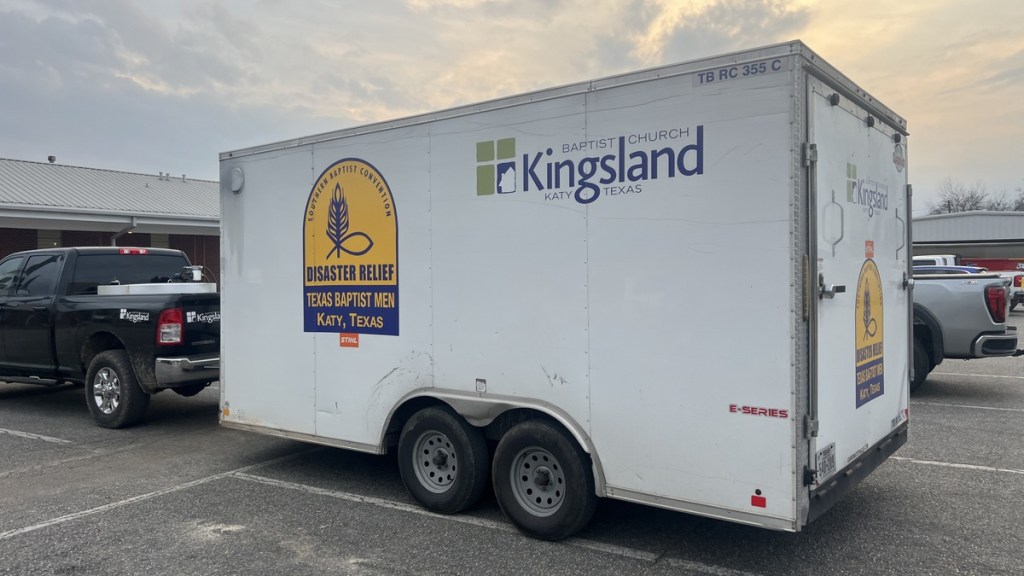
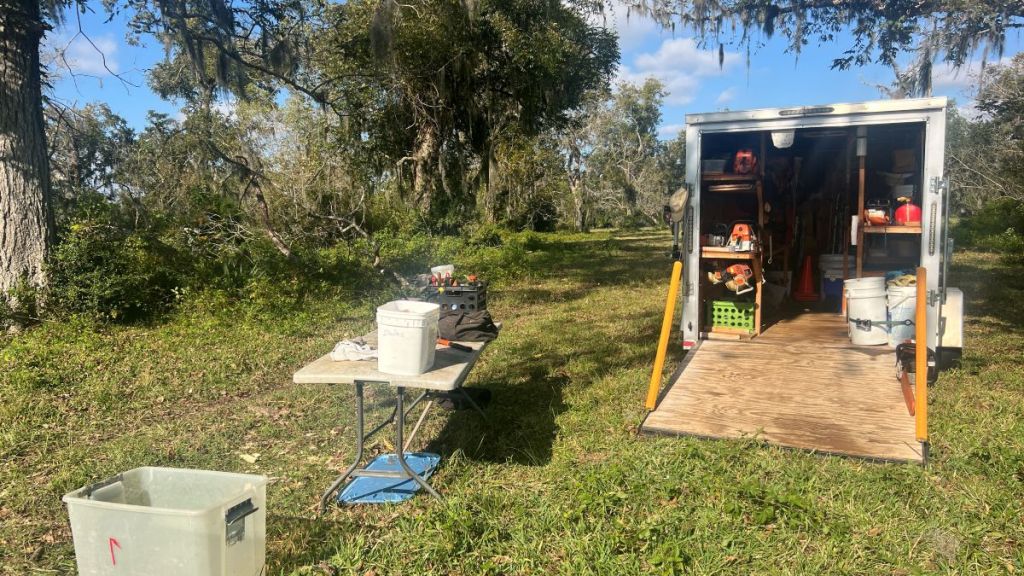
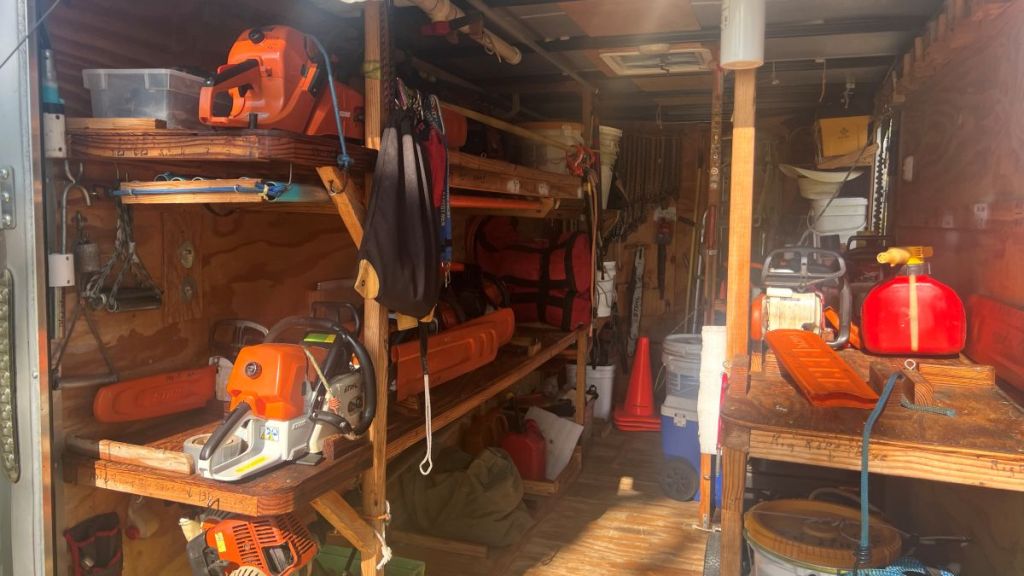
The work revolved around the team’s equipment trailer. This housed about ten chainsaws and lots of other equipment, gathered over years of experience. It was all very well organized and maintained.
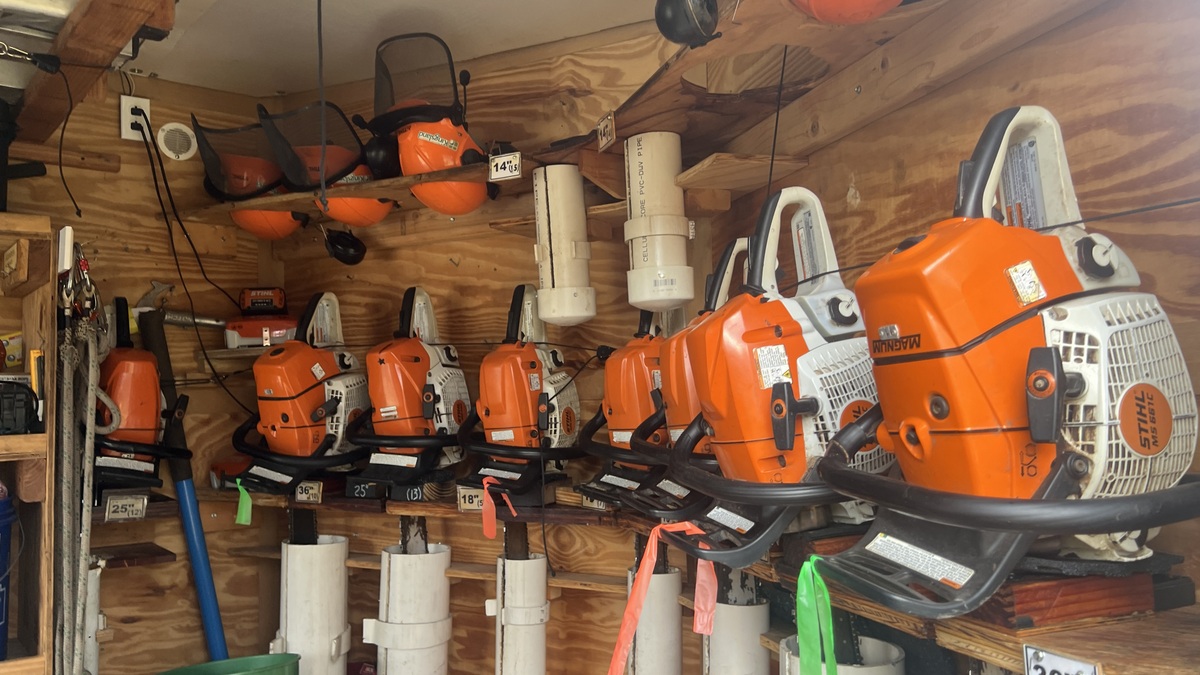
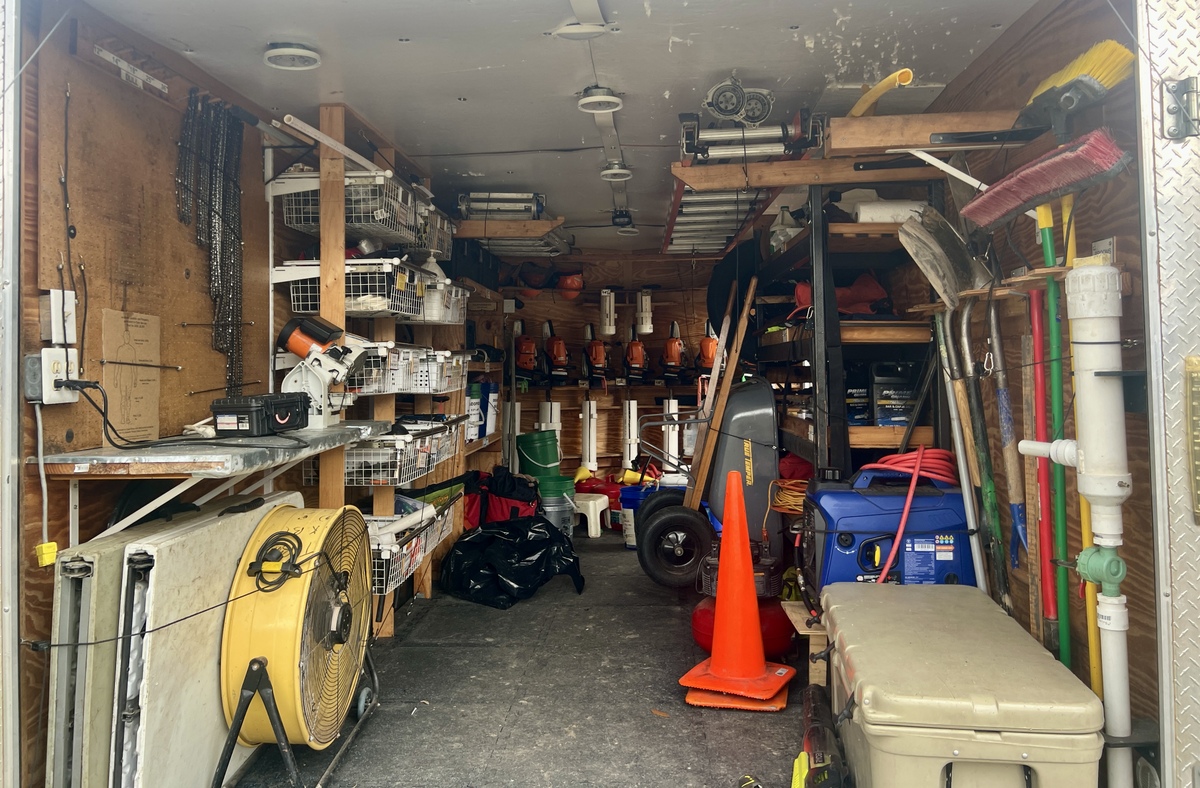
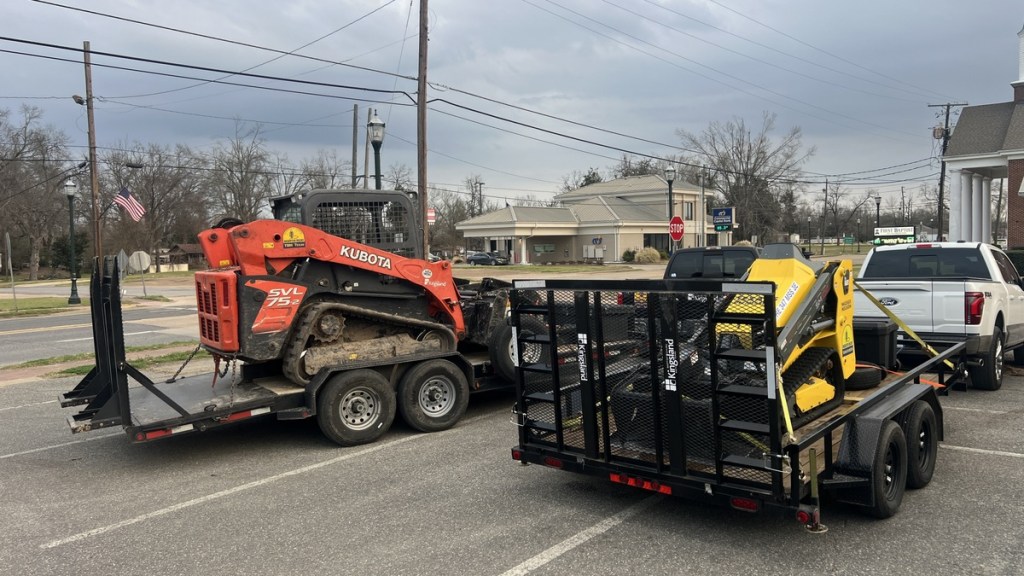
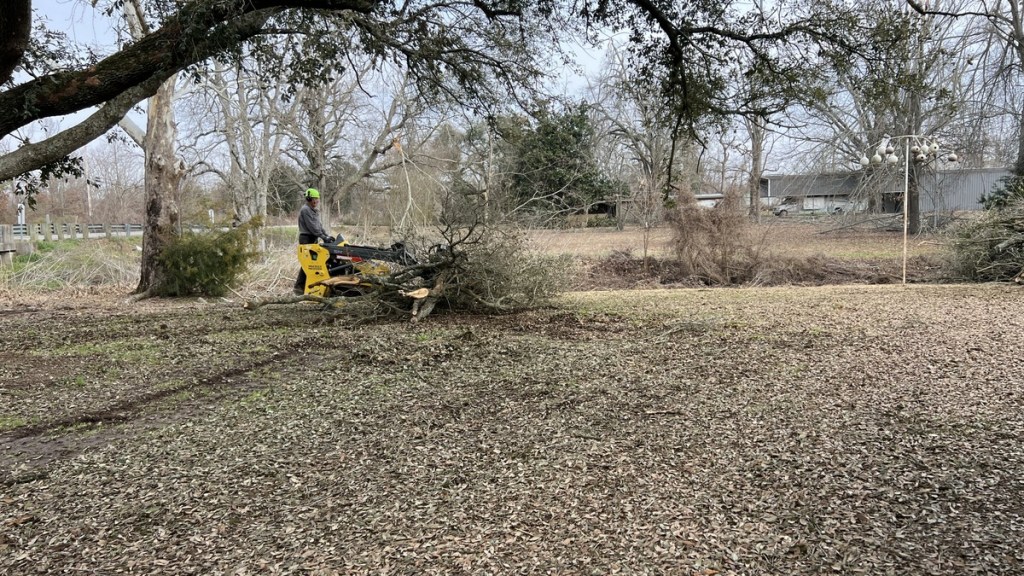
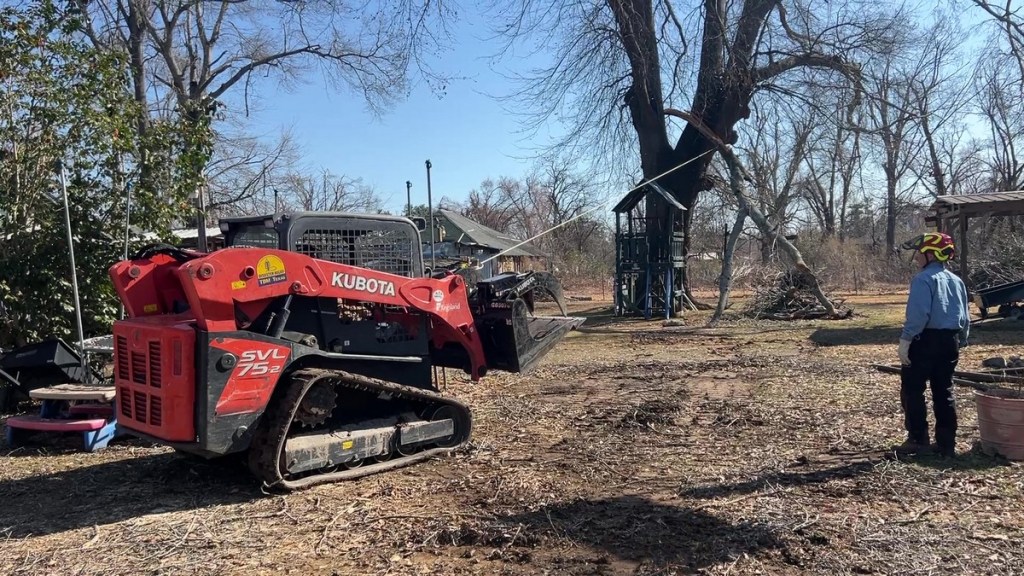
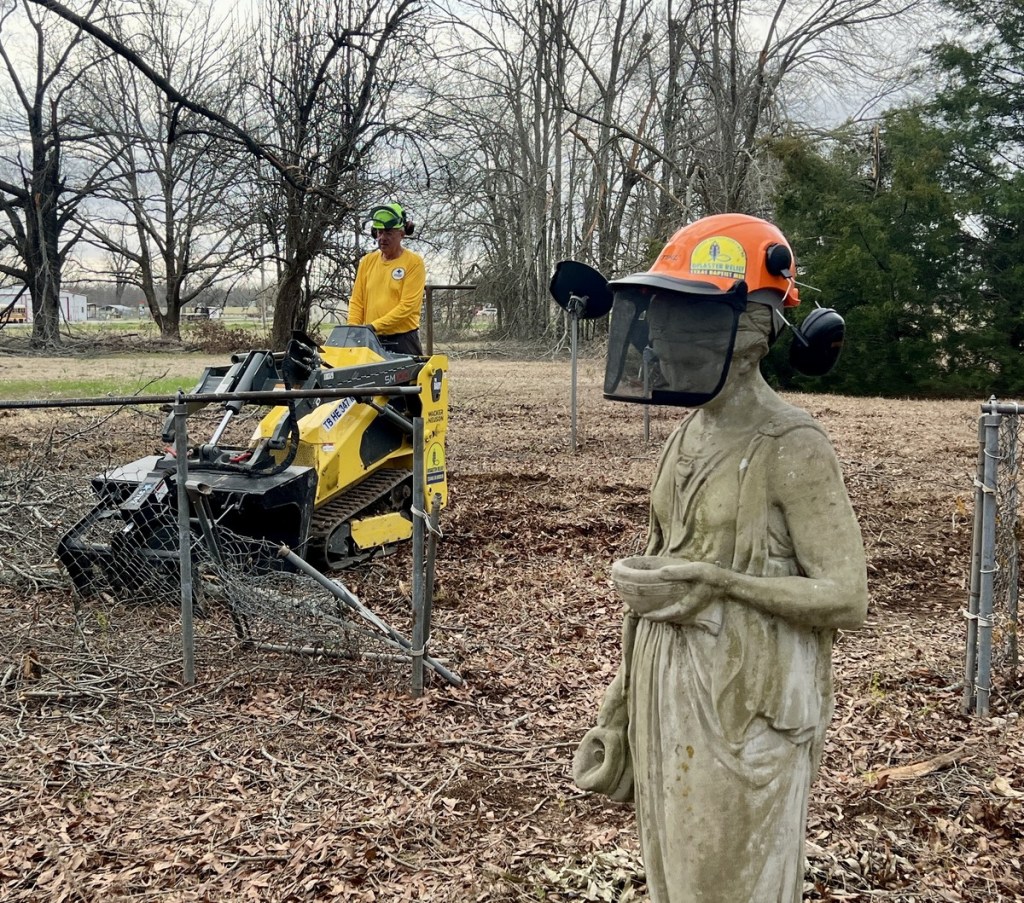
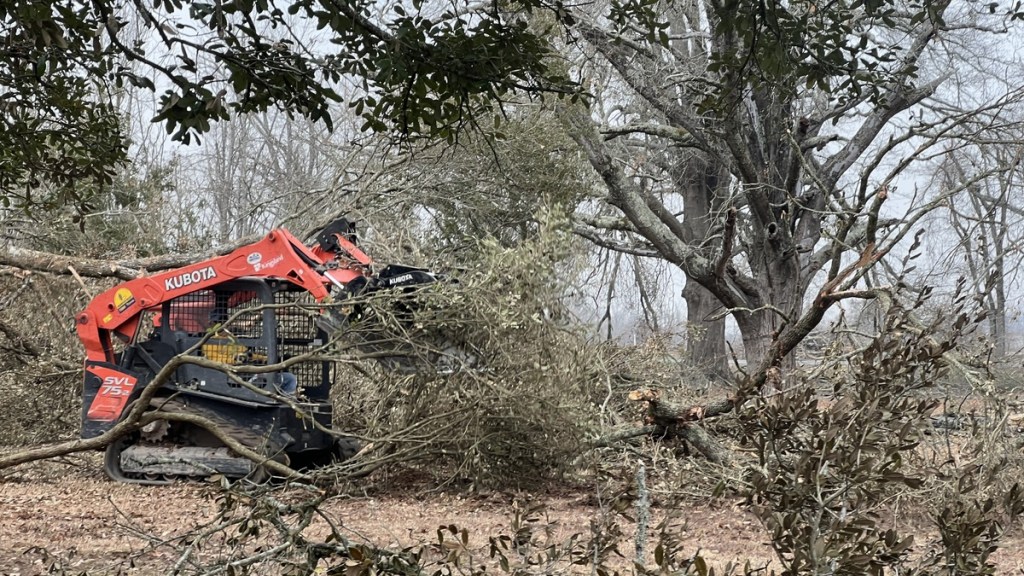
Skidsteers help move debris, bring down large leaners, and fell trees. The team recently got a second one, the “baby,” which was a valuable addition.
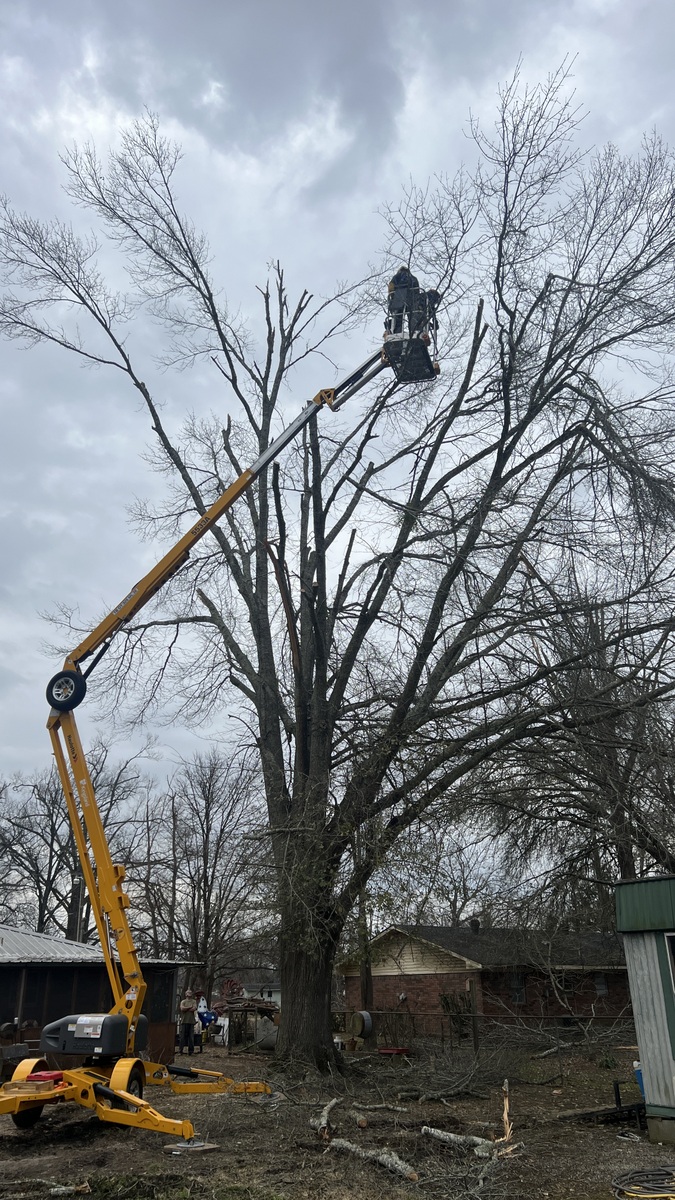
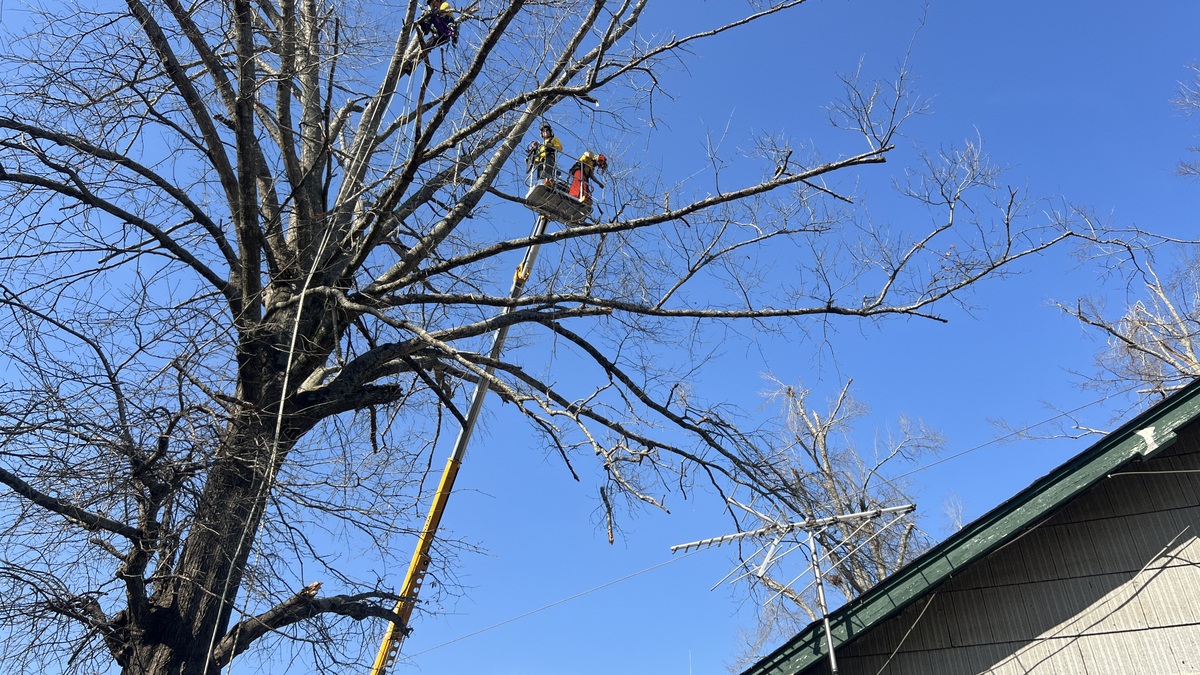
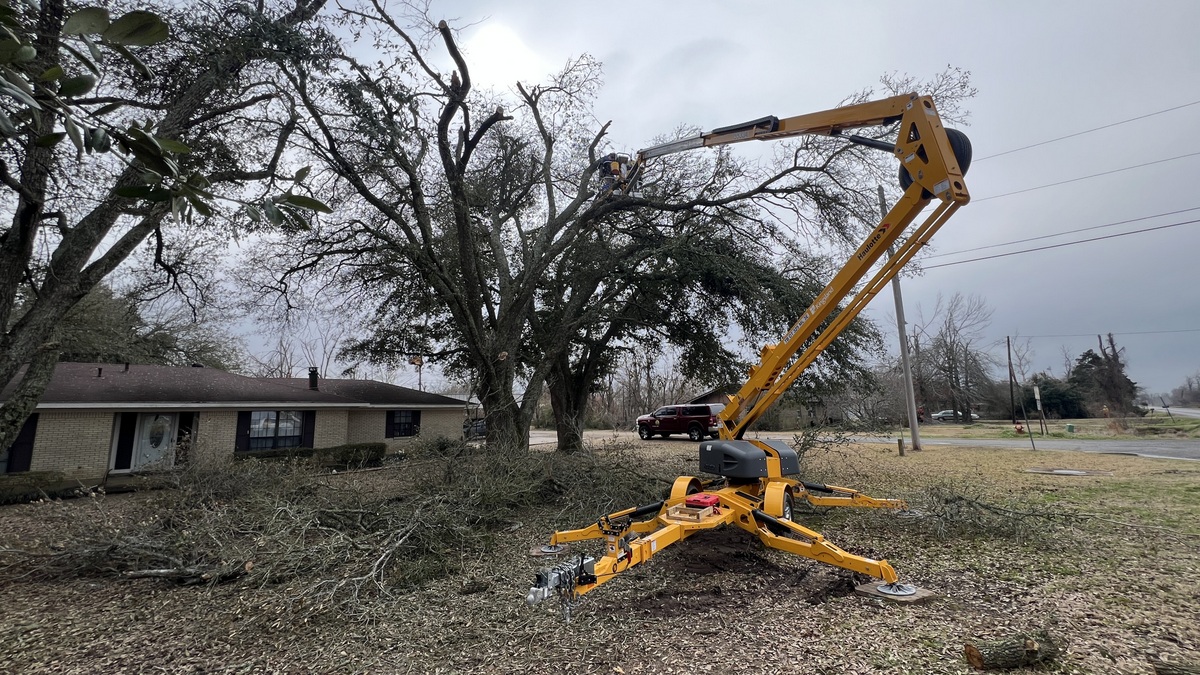
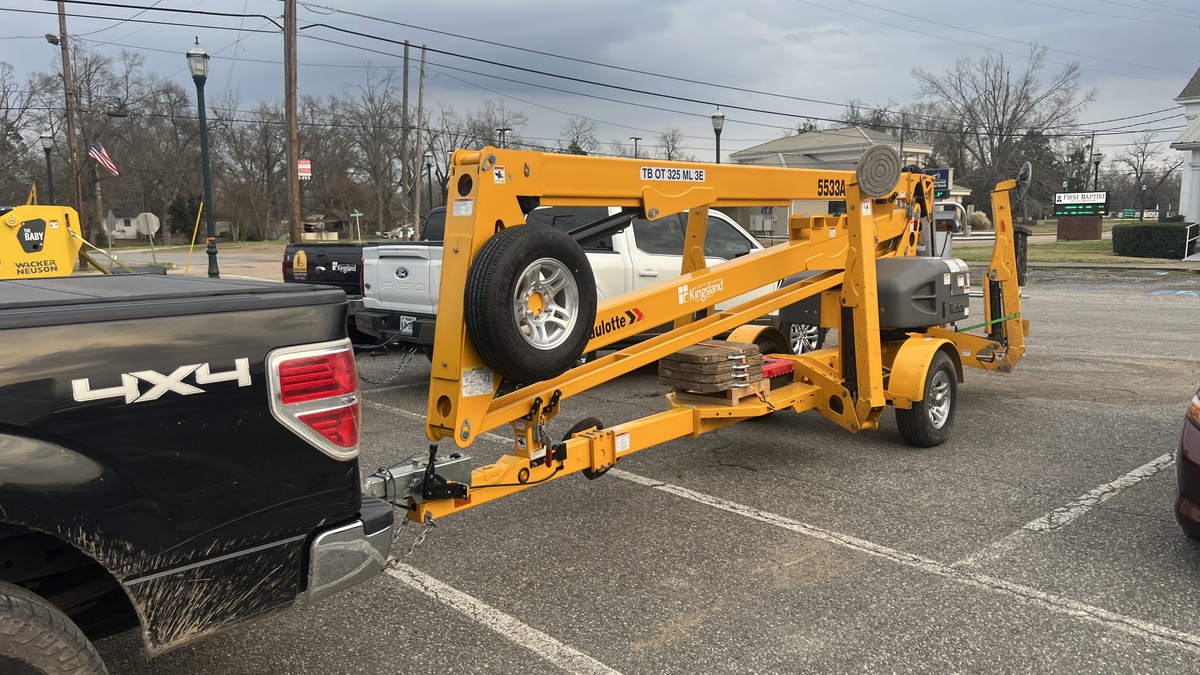
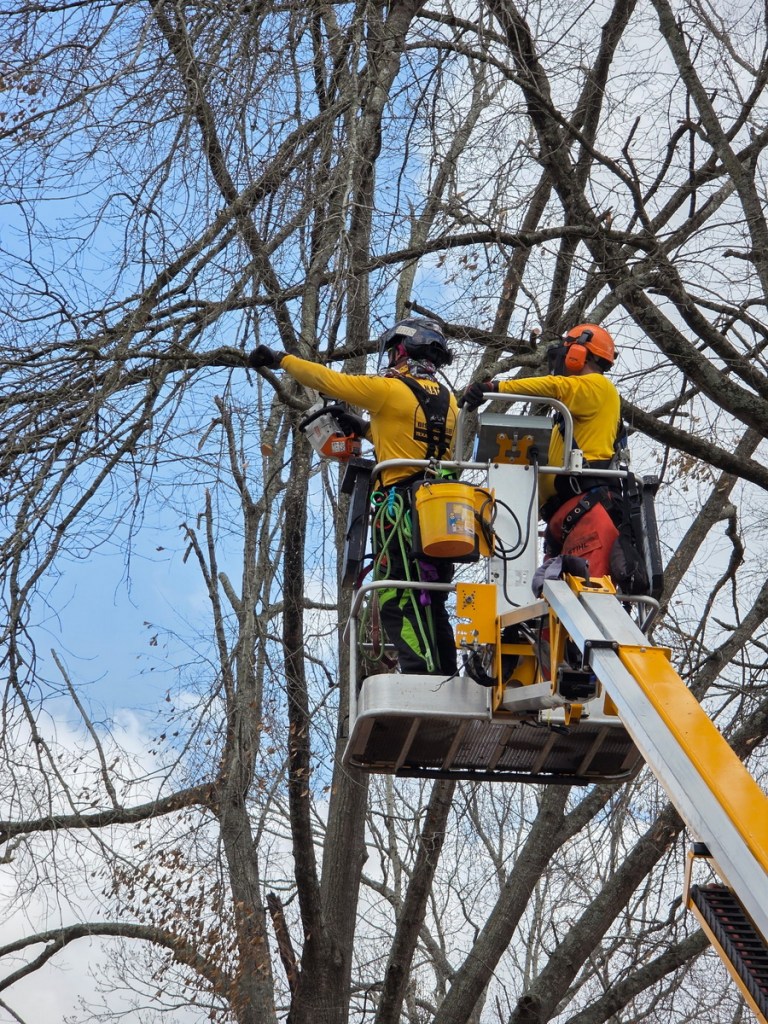
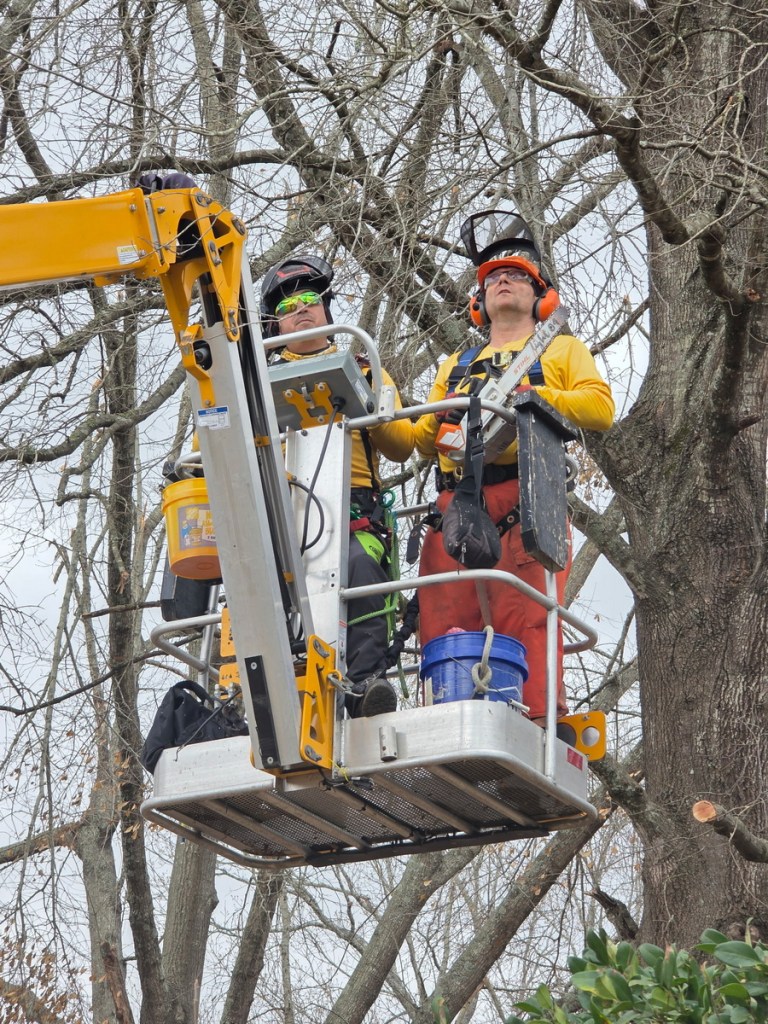
On this deployment to Delhi, the manlift was essential. It could raise two people in its bucket about sixty feet into the air. The ice had caused many limbs to break ten or more feet above the ground. They were hazardous as they could fall at any time.
The Work
My first day was an introduction, mainly watching and learning. This was important to understand how the team worked and communicated. I watched operations, then started dragging fallen limbs into piles for the skidsteer to pick up and take to a burn pile. I slowly learned to pace myself and leverage the heavy equipment rather than wear myself out. The nature of the worksites and the recent disaster meant that there were many hazards. We would mark things to avoid with orange cones or anything else to make them more visible.
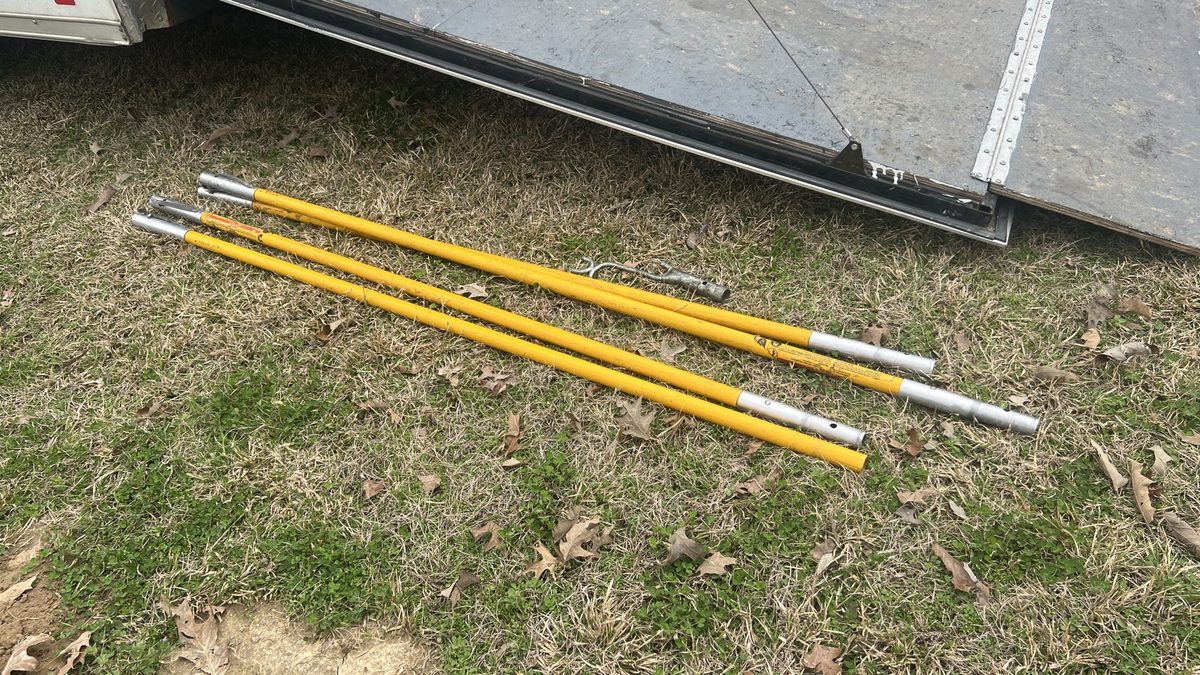
While I was hesitant to run a chainsaw or go up in the manlift, I saw an opportunity to help with “the pole.” The trailer had four six-foot sections of pole that fitted together, allowing us to pull down loose “hangers” high in the trees. I embraced the pole, and my determined stubbornness to pull down some hangers earned me the nickname “poleman.” I was honored!
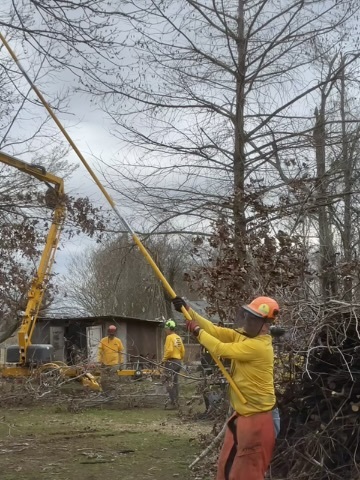
As I became familiar with the crew’s operation, I started running a saw. We always worked in pairs, generally one person sawing and one person clearing. I was expecting the clearing to be the hard work and was surprised by how exhausting running the saw was. Safety remained a priority, with a safety briefing at the beginning of each day and each job, and each of the crew looking out for each other. I got hot and sweaty in the cool February temperatures, and I am worried what an August deployment will feel like!
After a couple of days, the team allowed me to cut down a tree. I was carefully guided in the initial felling and subsequent chopping up of the fallen tree. It was very satisfying, but I learned how things could easily go wrong.
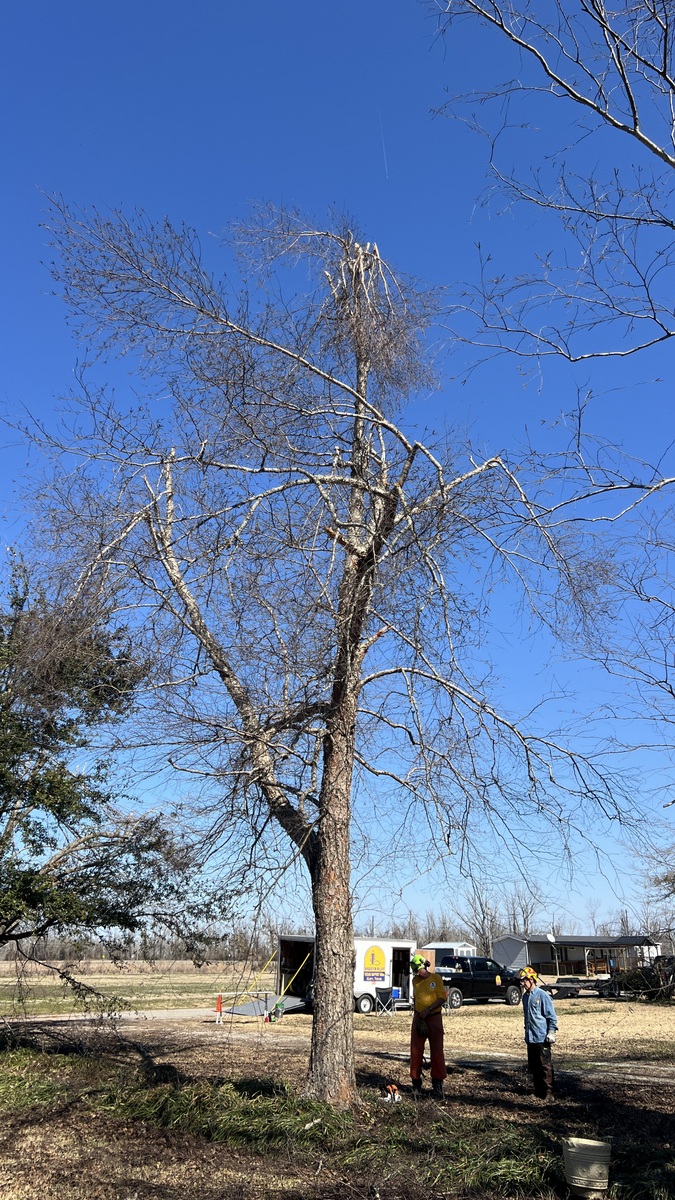
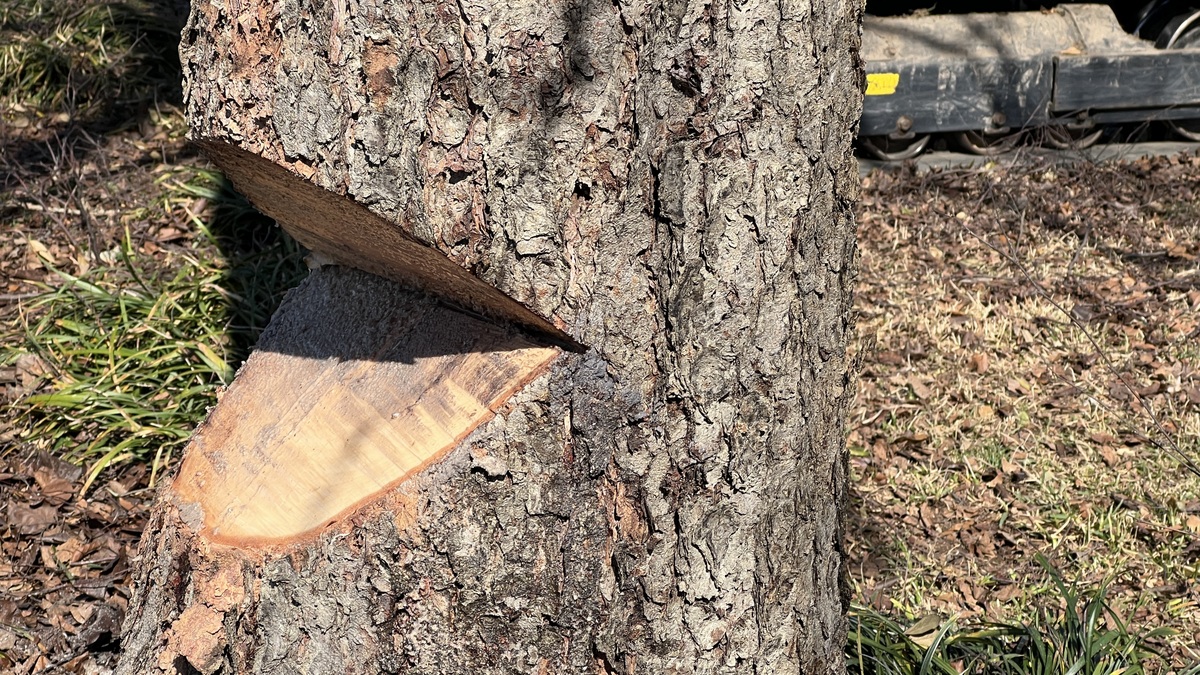
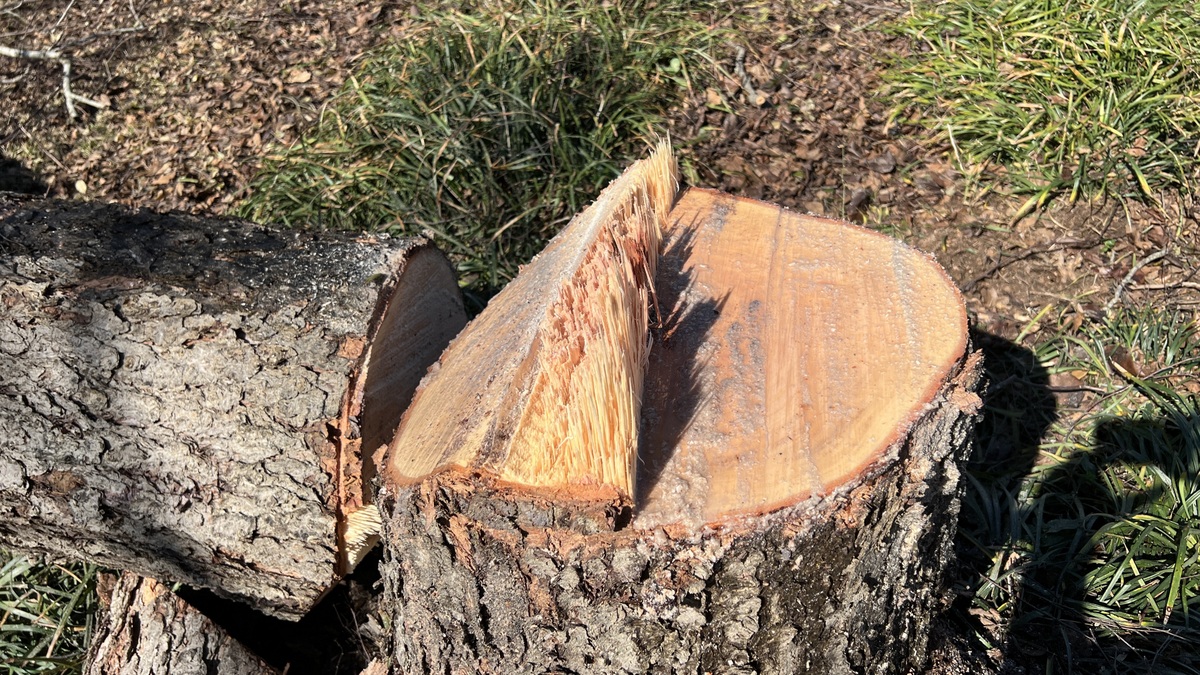
In the second week, I spent most of the day in the manlift. It was rewarding working so closely with someone, and working at height helped me overcome some of my fear of heights.
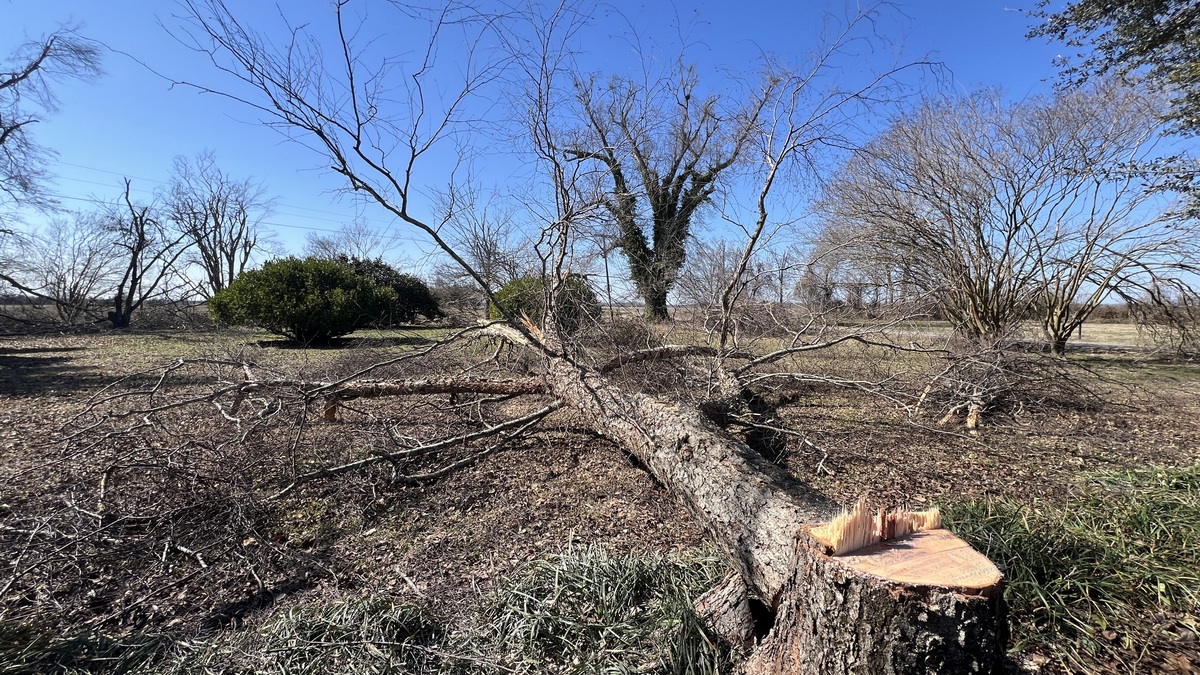
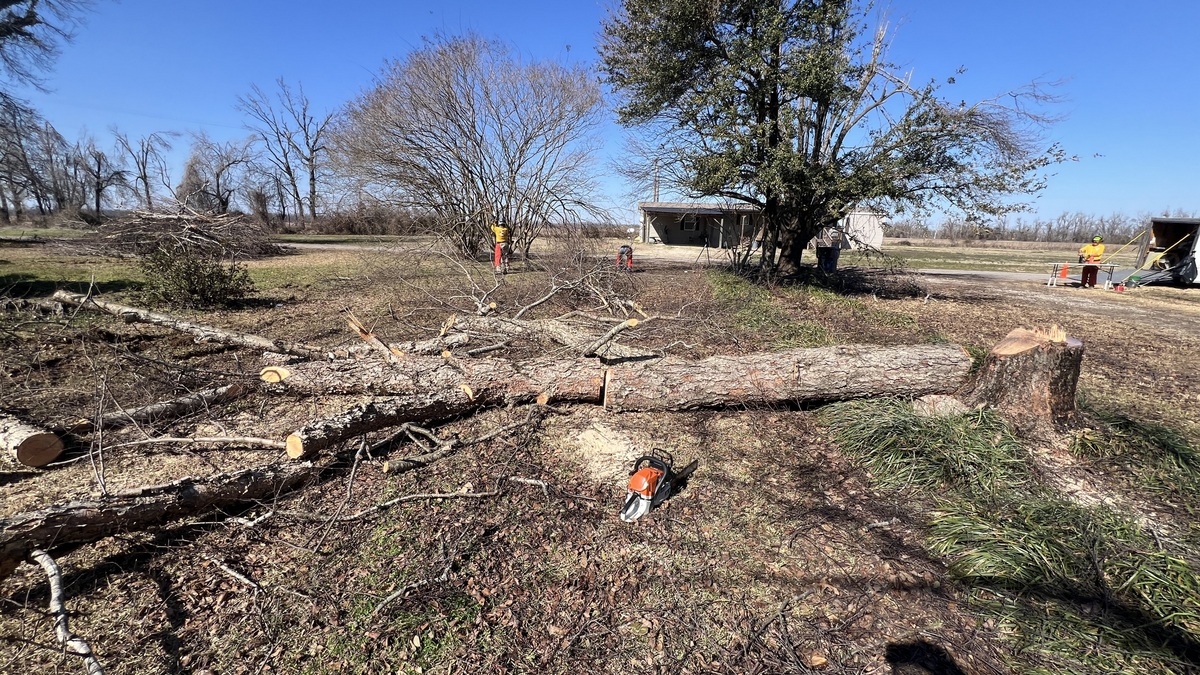
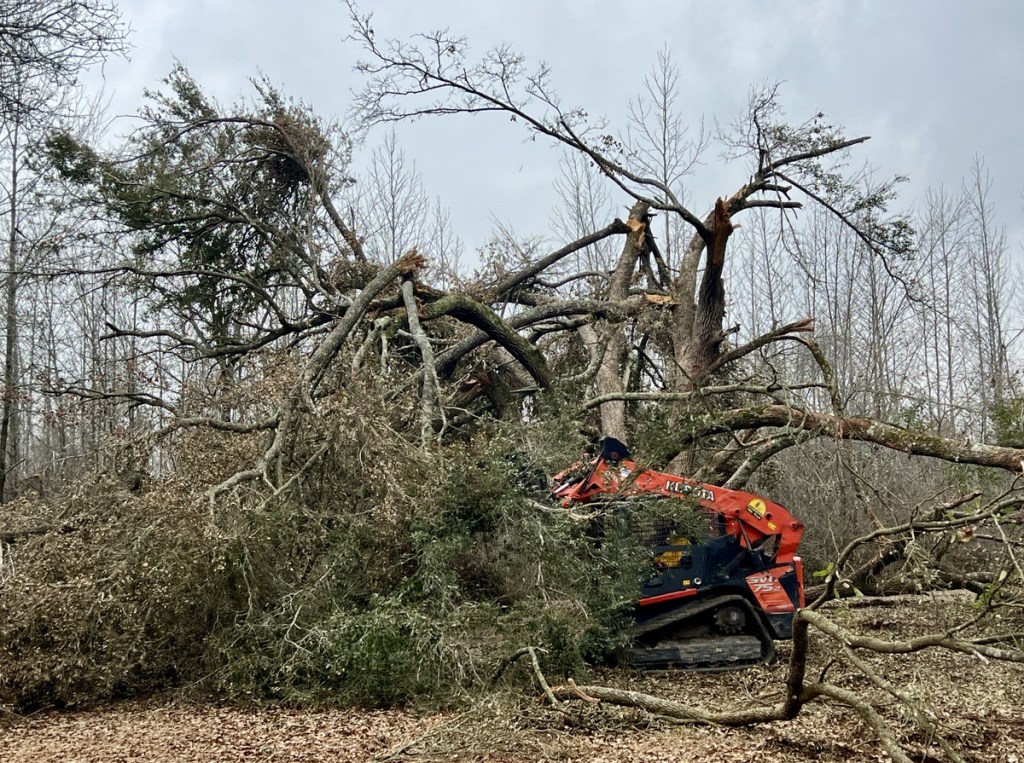
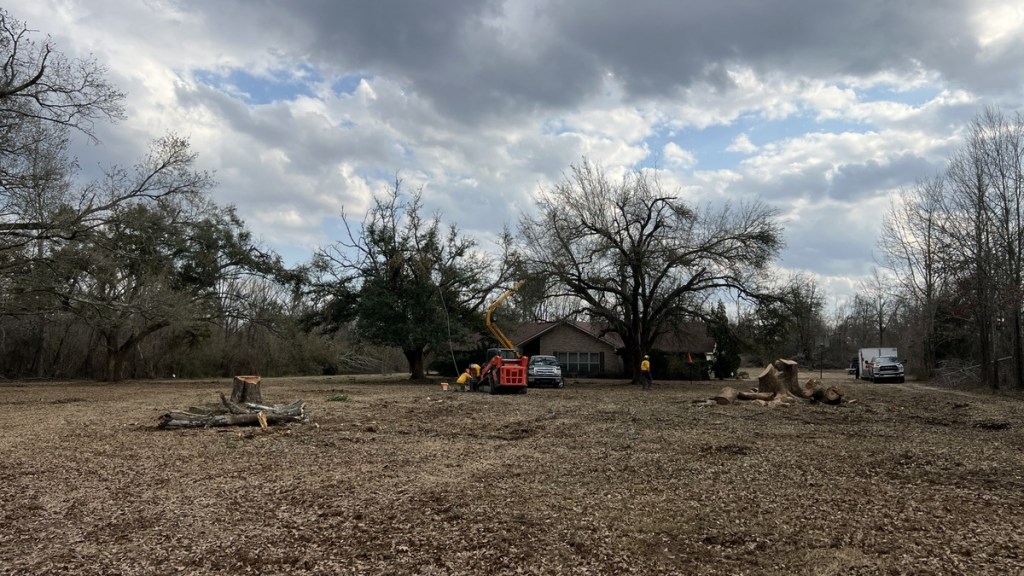
I was unable to capture the extent of devastation in photographs. People’s yards were turned into impenetrable jungles. The first two pictures below show the large skidsteer at work in one yard, with the third showing it after we had cleared it. Ten of us worked all day with the heavy equipment to clear this site.
Helping Local Residents
The focus of the work is showing the love of Jesus by helping people. The terrible situation that the resident has been put in enabled us to show love. Each resident had their own story, and that is for them to tell. We helped men with injuries or medical issues, and we helped single ladies.
I could only imagine what it was like, after a night of hearing trees exploding, to wake up and find what appeared to be every tree in the yard fallen over. The common theme was that the residents were completely overwhelmed. While the damage was not life-threatening, insurance either did not cover it, or the deductible would be too high. The residents cleared what they could, but it was simply too much or too high. It was heartwarming to see the their faces when they returned home after their workday and burst into tears of relief when they saw that the devastation had been cleared. After each job, we all signed a Bible and presented it to the homeowner as a reminder of the event and that Jesus loved them more than anything.
As we worked to undo some of the devastation, I thought of Genesis 3:17b. One consequence of Adam’s sin was, “Cursed is the ground because of you.” I struggle to understand why bad things happen to good people, and that includes natural disasters. Helping people recover from them is like working against Adam’s original sin, helping to bring Jesus’s light to darkened places in the world.
A special aspect of the deployment was that the small communities were so thankful and made us feel welcome. At one jobsite, the Chief of Police stopped, offering any help he could provide. The mayor stopped as he passed on his tractor – he had been the resident’s high school principal, and his wife had been their kindergarten teacher. There were some issues with confusion over property lines or blocking the road, and these helped develop our team leaders’ diplomacy! While we wanted to help everyone, our work scope was limited to those who had asked for help and had signed a waiver and permission form.
Support
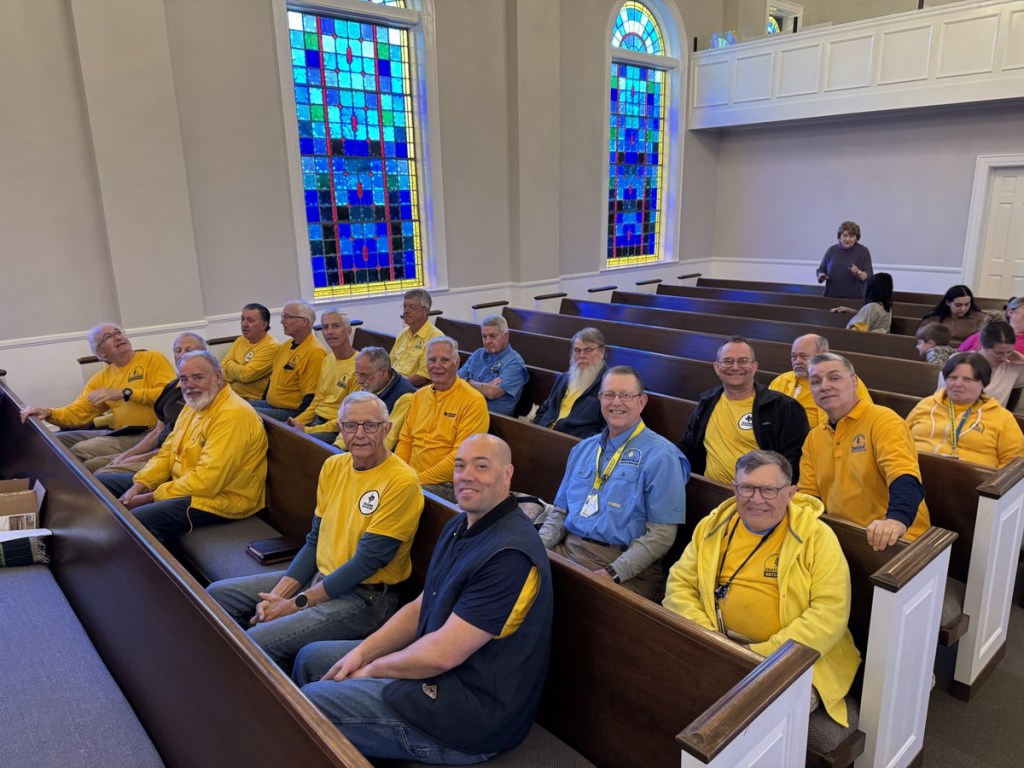
One of the huge benefits of working with Texans on Mission is that they are a well-structured organization that is coordinated with other Baptist disaster relief teams at the regional levels. Our chainsaw group of eleven was part of something much bigger.
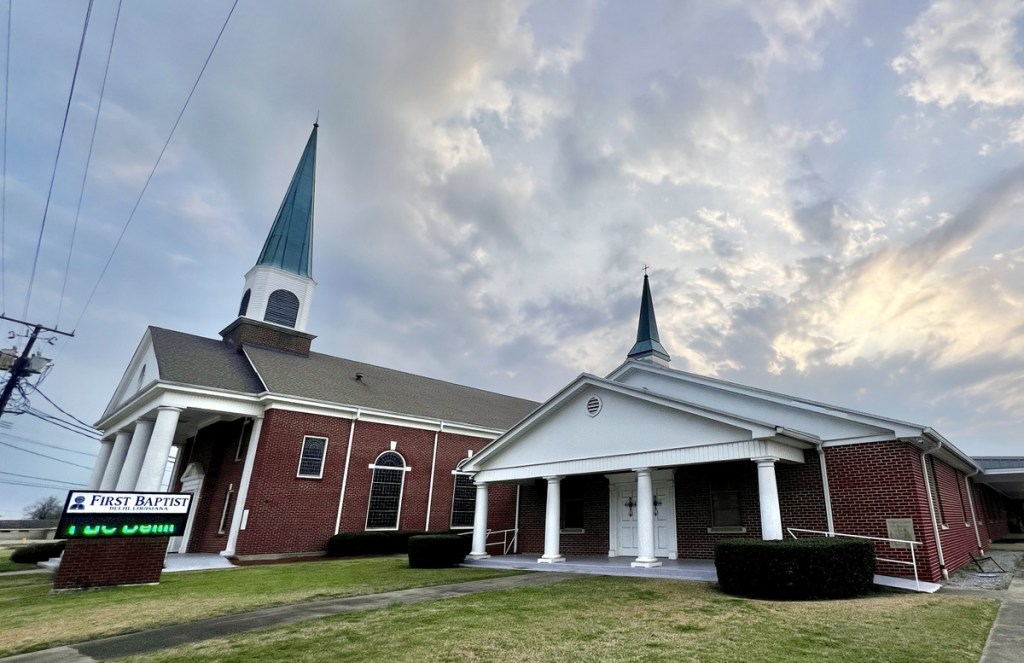
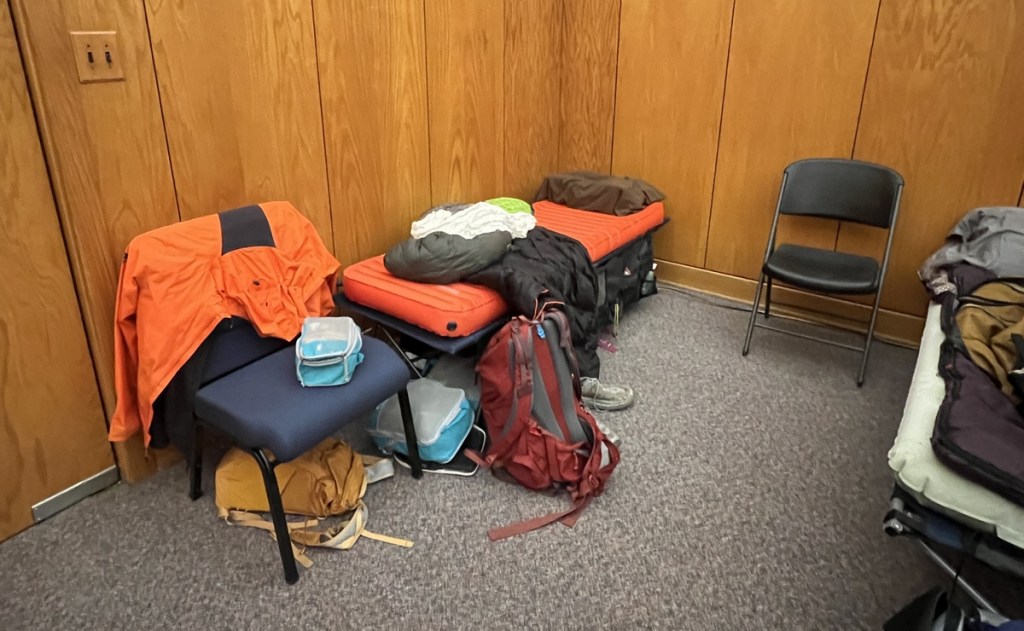
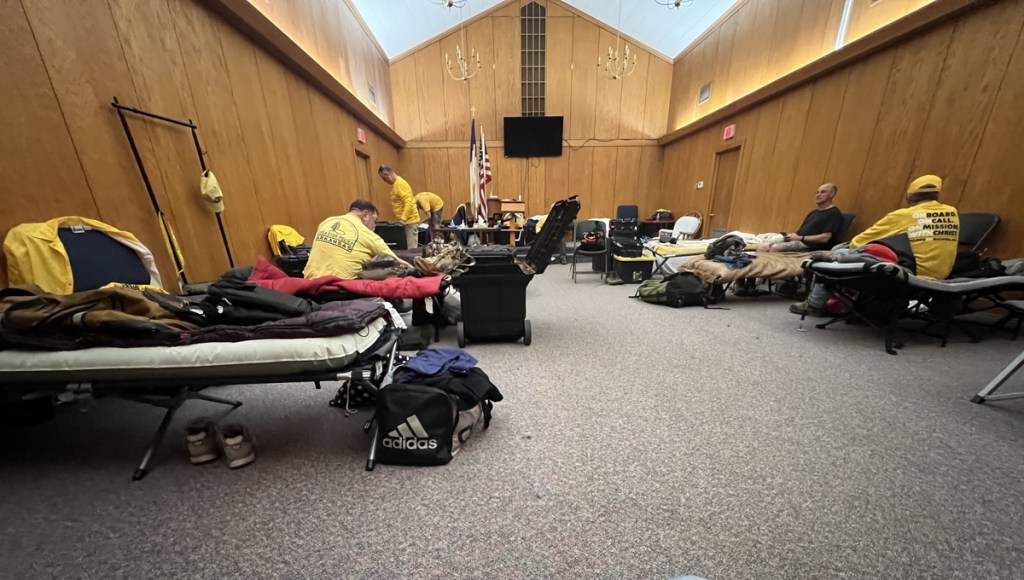
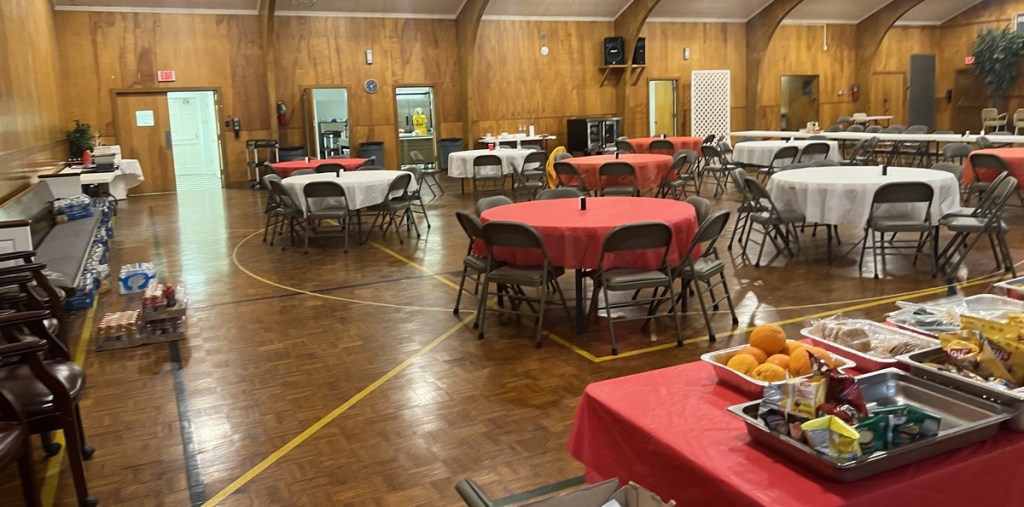
We were hosted by a local church, First Baptist Church in Delhi. Their pastor had been involved in disaster relief and welcomed the opportunity to be the command center and host for providing relief to his community. Up to eighty people stayed at the church, distributed in classrooms throughout the building. Our team stayed in the chapel. Sleep was really important. A typical day started with lights-on at 6 am, breakfast at 7 am, a devotional before heading out to work, a sack lunch at noon, return to the church at about 5 pm, dinner at 6 pm, and lights out at 9 pm.
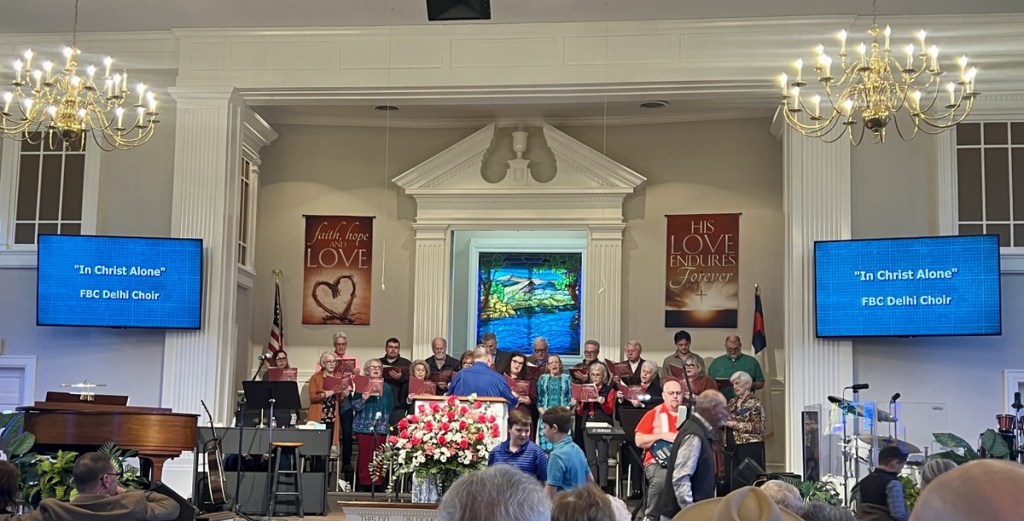
On Sunday, we all attended the church’s worship service in the morning, and so many people thanked us for coming to help their community.
In addition to two other chainsaw teams from Denton, TX, and Arkansas, there was fantastic support. At the end of each day, we were welcomed by a hot, clean shower. The shower team had also come from Houston. One unit, cubicle number five, was particularly popular as it was large and had a seat. The shower team even wrote a song about it for our final evening.
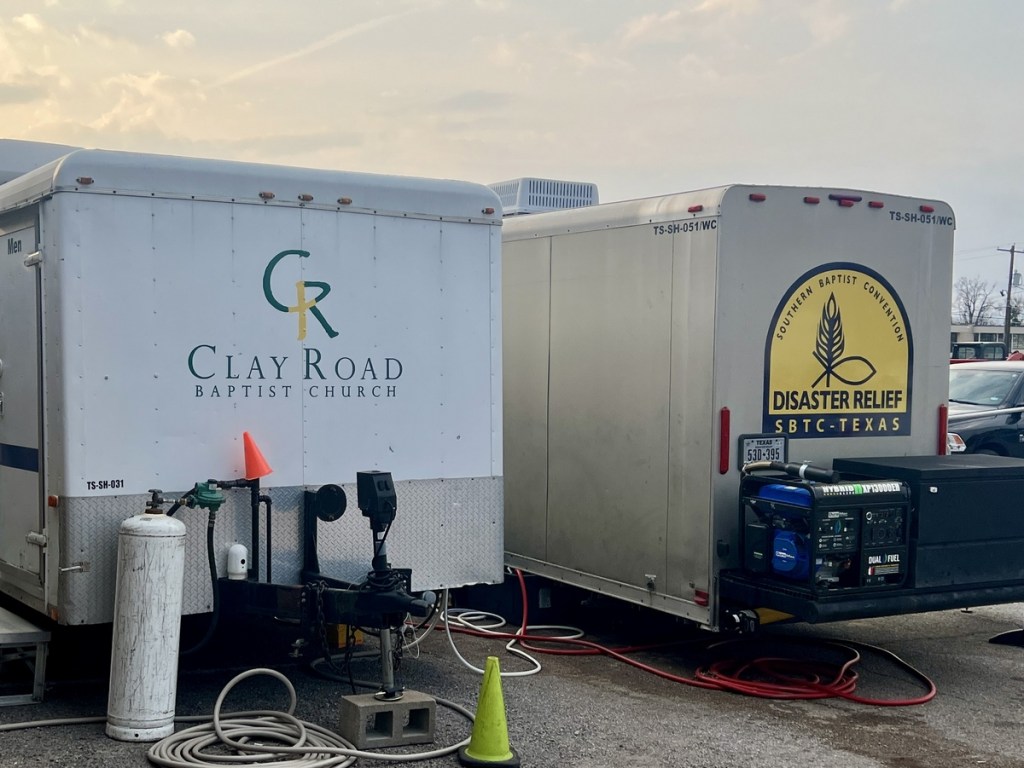
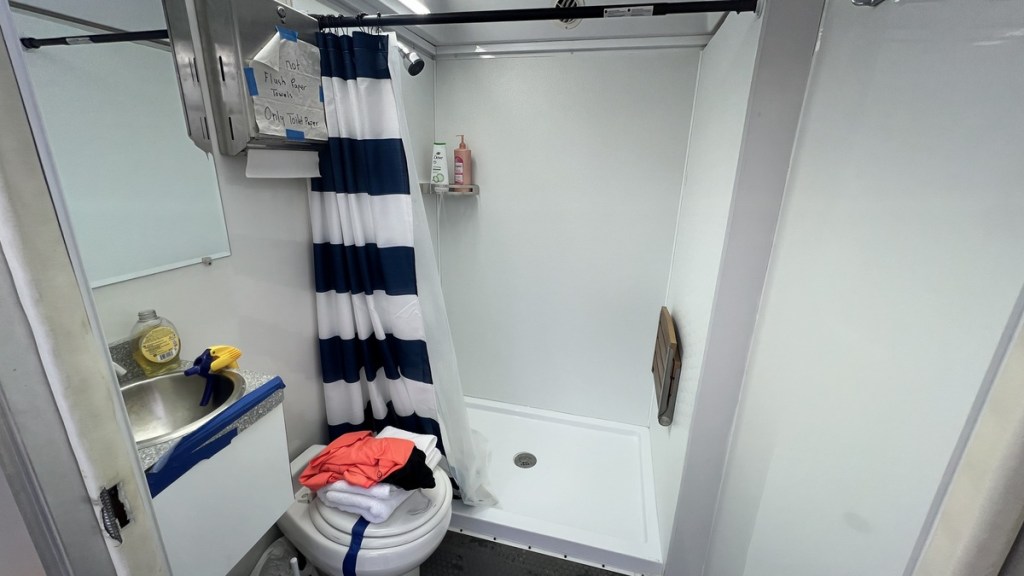
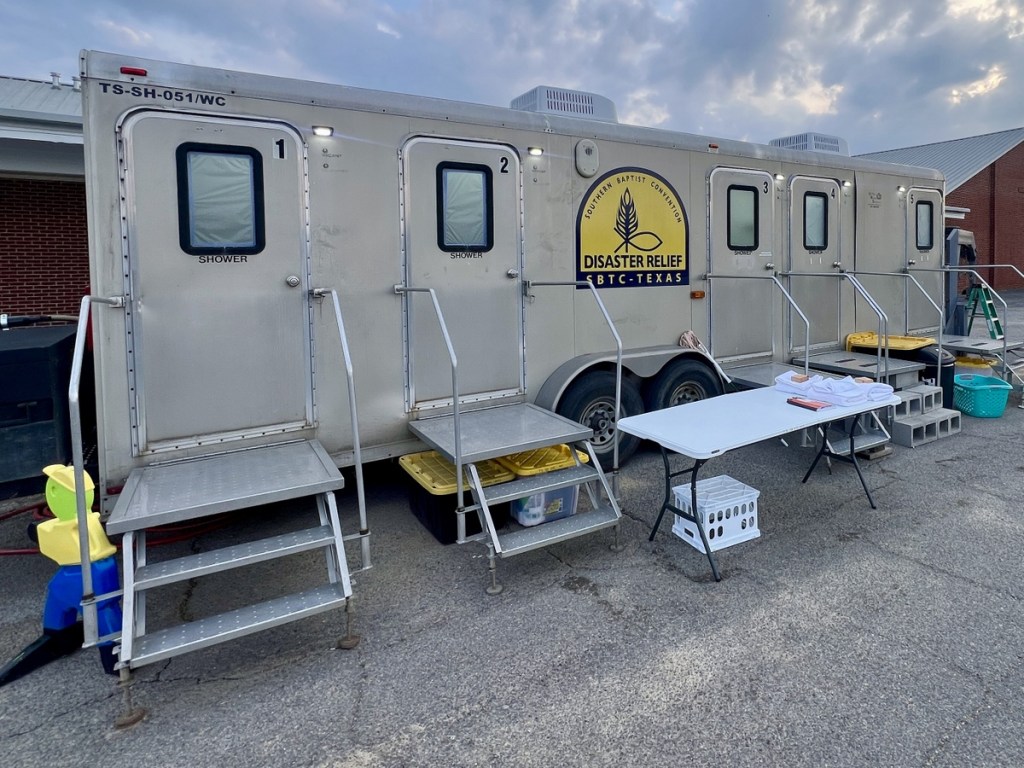
After a hot shower, we dropped off our dirty clothes at a laundry station, which originated in Missouri. Those clothes would be returned, clean and folded, the next day. With a clean body and an expectation of clean clothes, we headed to the church’s gym for dinner at 6 pm. A team from Arkansas cooked us tasty and hearty meals each day, with salad and plentiful desserts. They were brilliant at helping with special dietary requirements, too.
Behind the scenes was the Incident Management Team (IMT). Their coordination ensured that we only had to worry about getting to an address and doing work. They had received the initial request, performed an assessment, and prioritized, ensuring that our efforts had the greatest impact on the members of the community.
Our Team
While the work was fun, and helping residents by showing them the love of Jesus was rewarding, the greatest joy came from working alongside the members of the Kingsland chainsaw team. They were all professional, godly men who always had such positive attitudes. I was one of the youngest members with the team’s average age about 70 years old. Working with such capable, fit, and caring men was truly humbling. After the second day, I had to stop complaining about my aches and pains as no one else was saying anything, but I knew they hurt.
Each team member had their own story, which is theirs to tell. Almost everyone was retired from careers ranging from engineering to IT to real estate. Chainsaw experience before joining the team ranged from extensive to none.
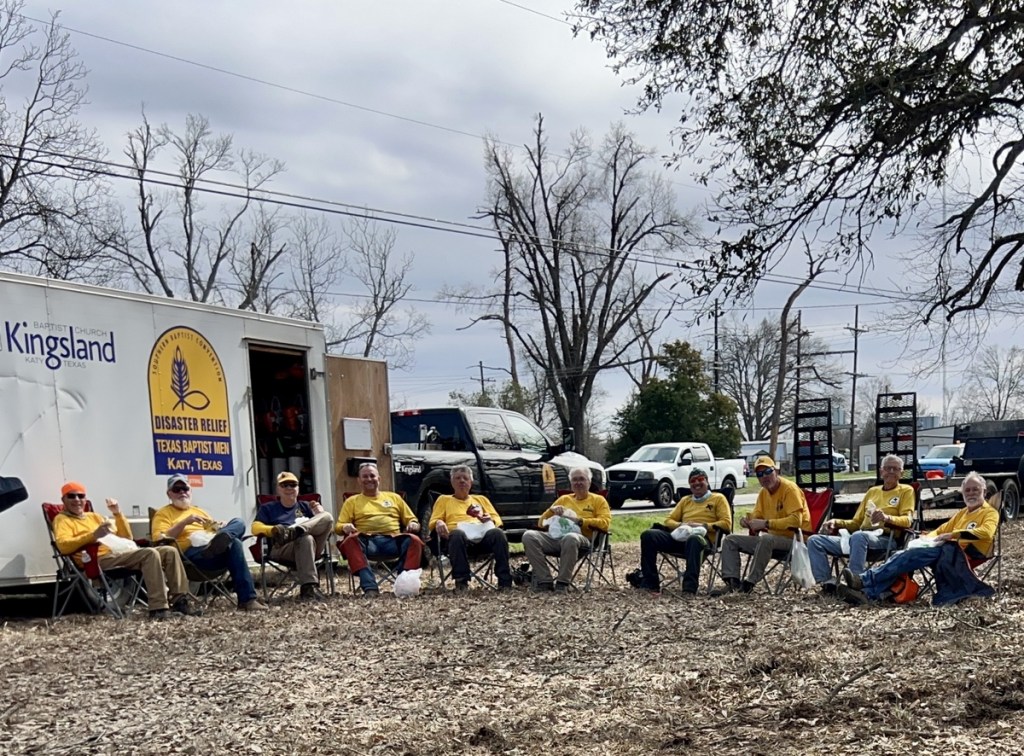
Here are some of my memories. Derek patiently helped me fell my first tree. Old Steve helped me with a polesaw and identified the River Birch trees. Kurt helped me get plugged in, as he was one of the few under 60 years old in the squad. Fred oversaw the equipment trailer and provided what was needed. Dan shared interests in birds and photography. Matt expertly trained me in the manlift. Roger wisely guided my activities for the first few days, keeping me safe, while expressing his love of Britain. Charlie had boundless energy and was always eager to help anyone. Hammer helped me understand the scope of work while looking for adventurous tasks. Marcell, the blue hat boss, with decades of experience, had a solution to every problem. Each team member reflected Marcell’s servant leadership.
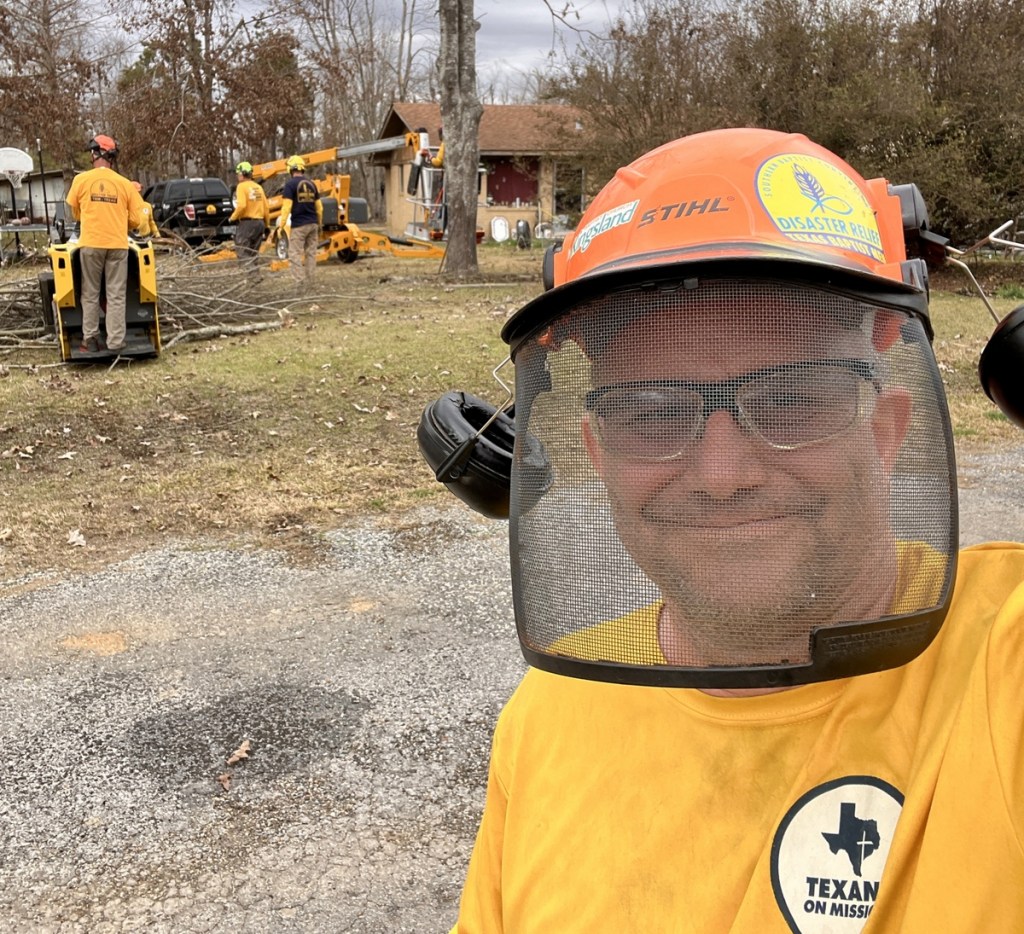
While I had felt some emotion when residents thanked us, I felt the most when the team was parting ways. I had been accepted into a new family. In my search for service opportunities, my prayer had been to find something where I was wanted. This Kingsland team made me feel more than wanted. I need to return to continue my quest as “the poleman.”
 The Adventures of the Cajunlimeys
What a wonderful ministry opportunity!
LikeLiked by 2 people
LUCKY THEM! I know you were in your element and enjoying the rewarding work!
Dianna Bolling Lower School Bible 713-365-2310 secondbaptistschool.org http://www.secondbaptistschool.org
LikeLike