It had been just six months since my last hike on Sabine County’s Trail Between the Lakes, and nine months since my first thruhike of it in January. The milder temperatures during this late October hike meant that I did not wake up to frozen shoes, as I had in January, but I was amazed at how different the trail was in less than one year. Such change made the repeat hike fascinatingly interesting. With the basis of my planning being the Trail Between The Lakes website, I thru-hiked westward over two days then spent a couple more days clearing some of the small downed trees and branches. Below are the highlights.
Trail Variety
I was amazed at how different some parts of the trail were than others. While some of this was due to recent mowing, in other areas it was very different undergrowth, perhaps due to a difference in logging activity. Around the middle of the trail, the undergrowth started reclaiming the trail as soon as mowing finished, virtually obliterating the trail’s path after about six months. In other areas, such as the westerly eight miles of the trail, there was a natural harmony between the trail and the rest of the forest, with the less-aggressive undergrowth content with our human trail.
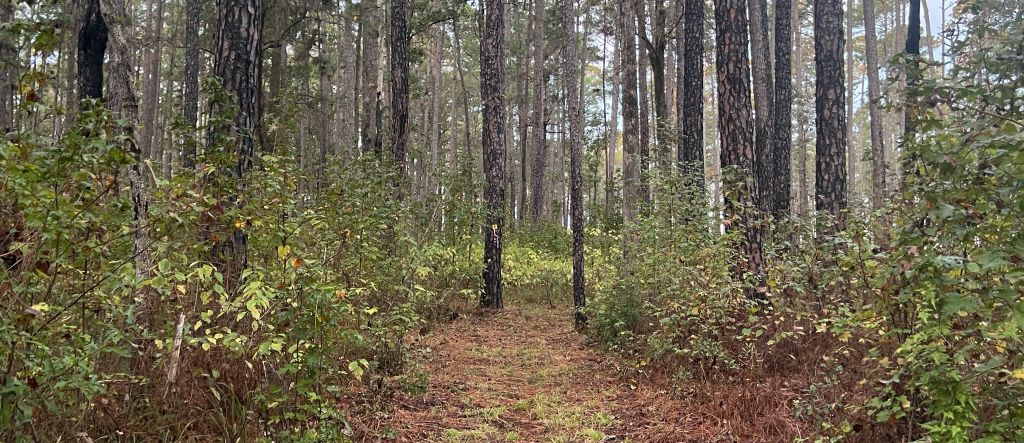
Between mileposts 4 and 5, the trail was easy to follow from the mowing that had been performed in the spring.
The undergrowth around mile 16 aggressively reclaimed the trail after mowing. Fortunately, I was hiking less than a month after the maintenance volunteers had done a fantastic job clearing this section.
The trail went through there! I remembered this section in January was completely clear having been logged. Nine months later, there was no sign of the trail except for a trail marker on a tree in the distance. It should be mowed soon as it is next on the maintenance schedule.
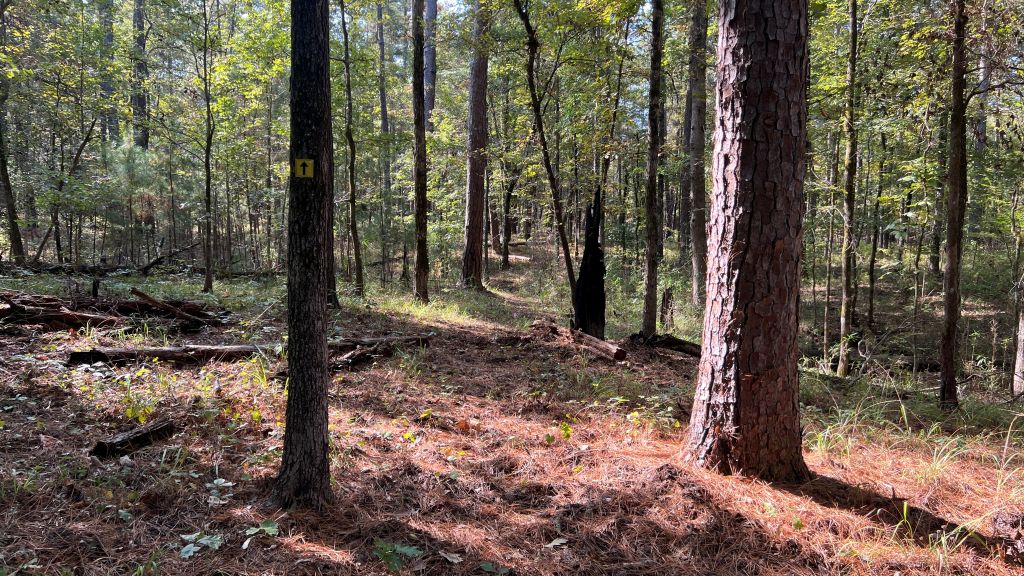
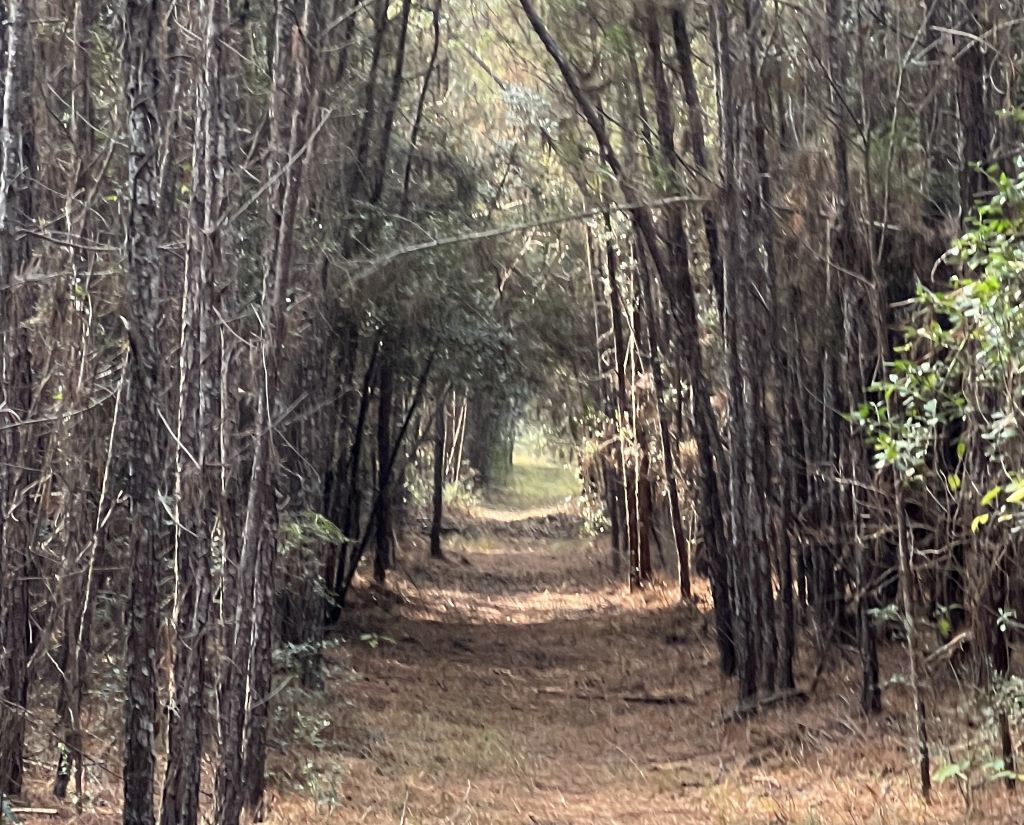
Around mile 20, the denser canopy reduced the amount of light reaching the forest floor, limiting the amount of undergrowth.The first few miles from the western end included some cool “tunnels” through a young dense forest with a carpet of pine needles, a completely different environment from anywhere else along the trail.
Life
Part of the attraction of this trail is the isolation from other humans. I saw no one else on the trail over four days, but that did not mean there was not other interesting life! I saw at least ten white tail deer running away from me before I could snap a photo, with one sounding like it was barking. I saw gray squirrels and heard coyotes. Below are photos of a few of the interesting things I could photograph.
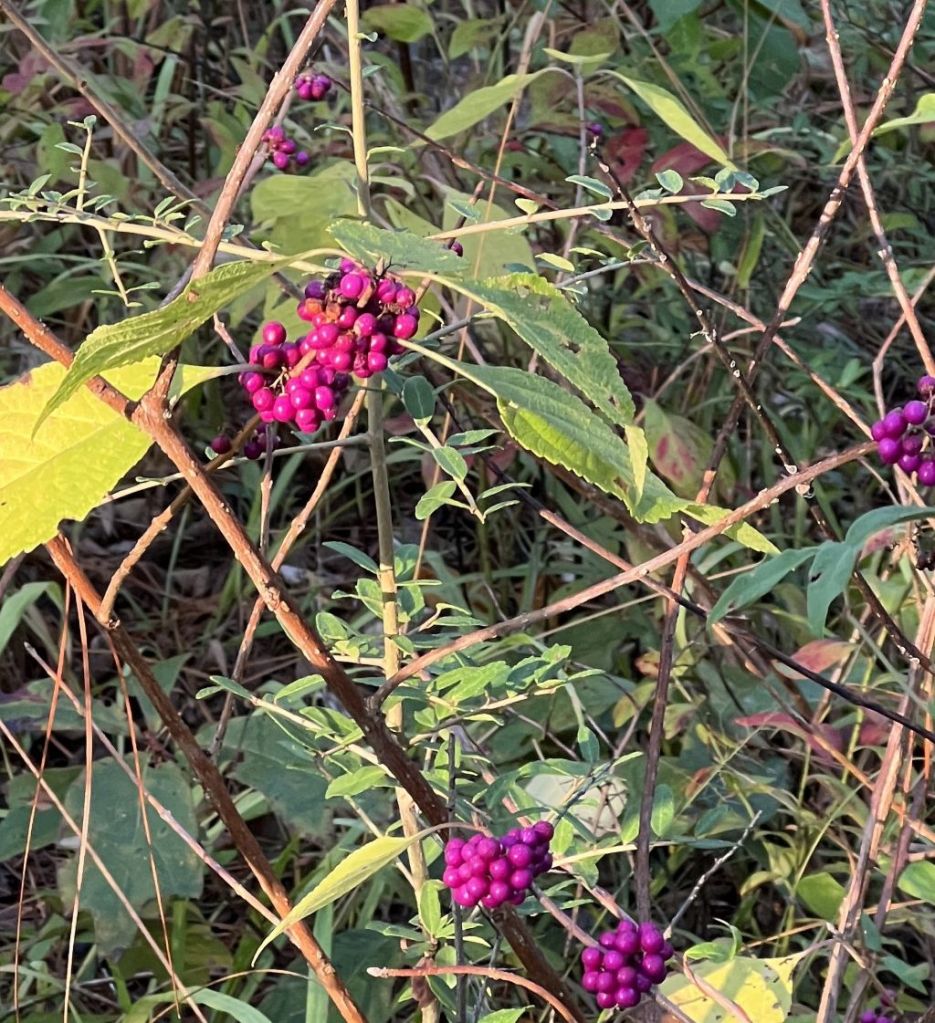
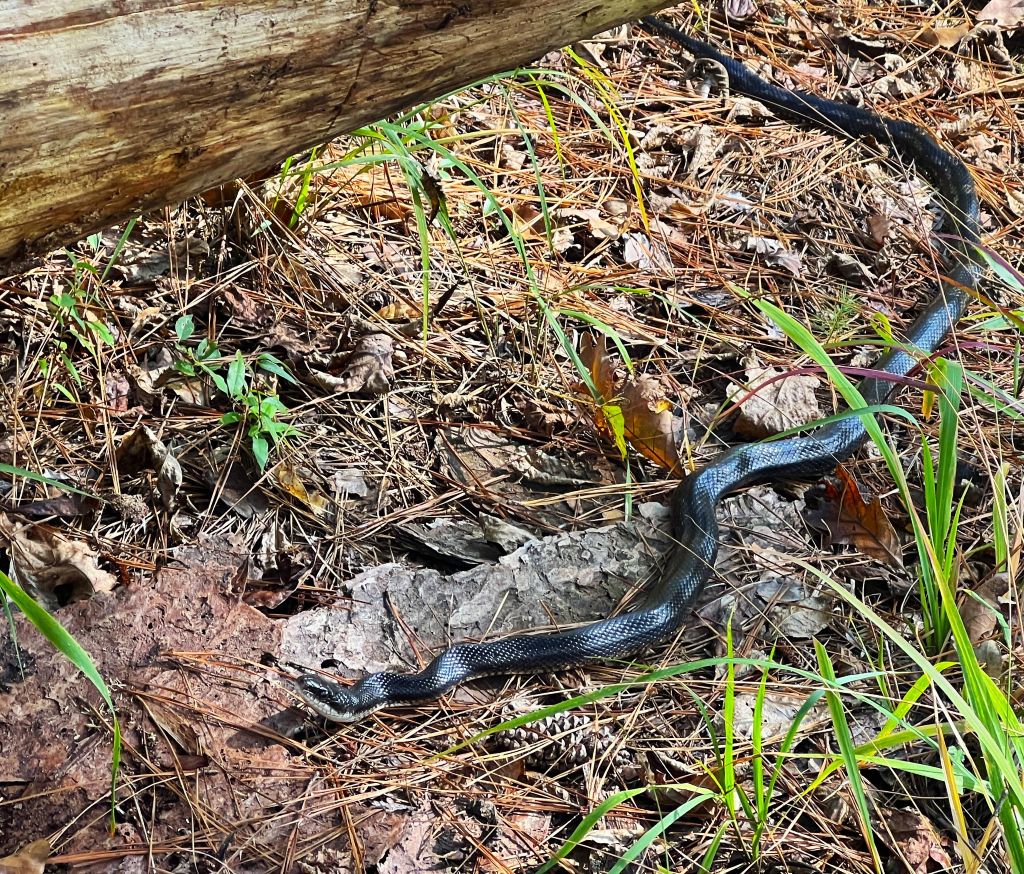
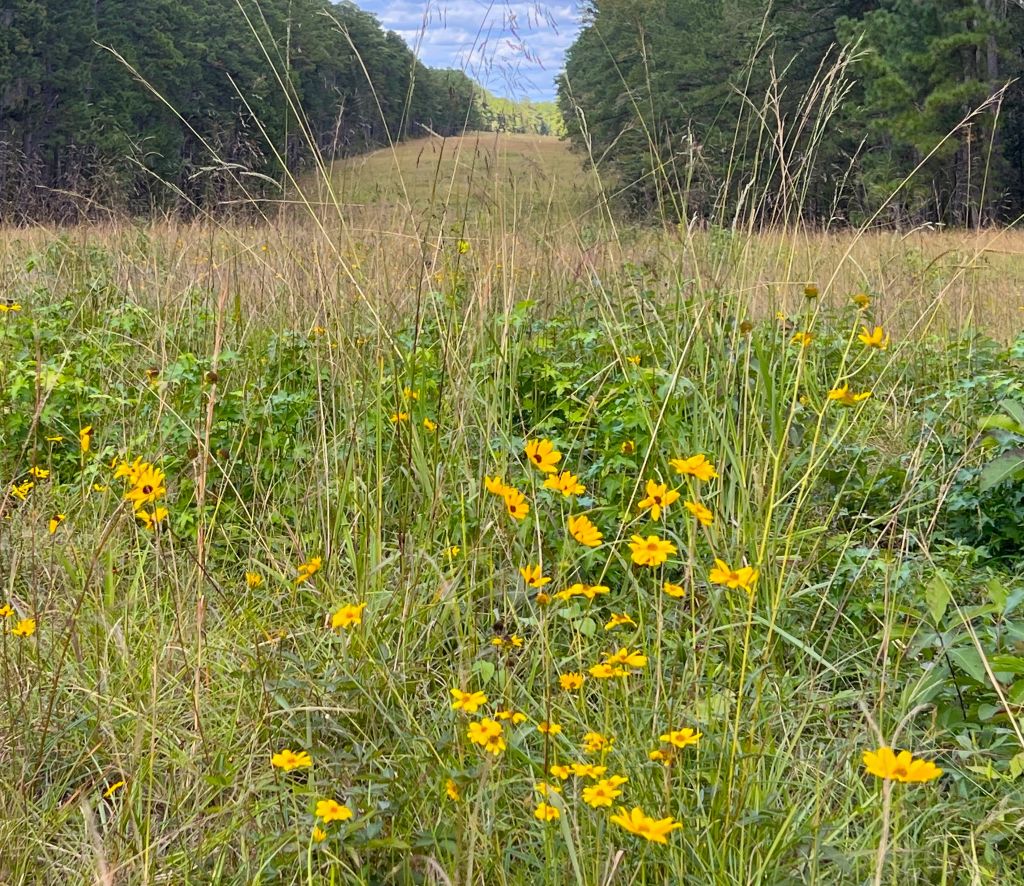
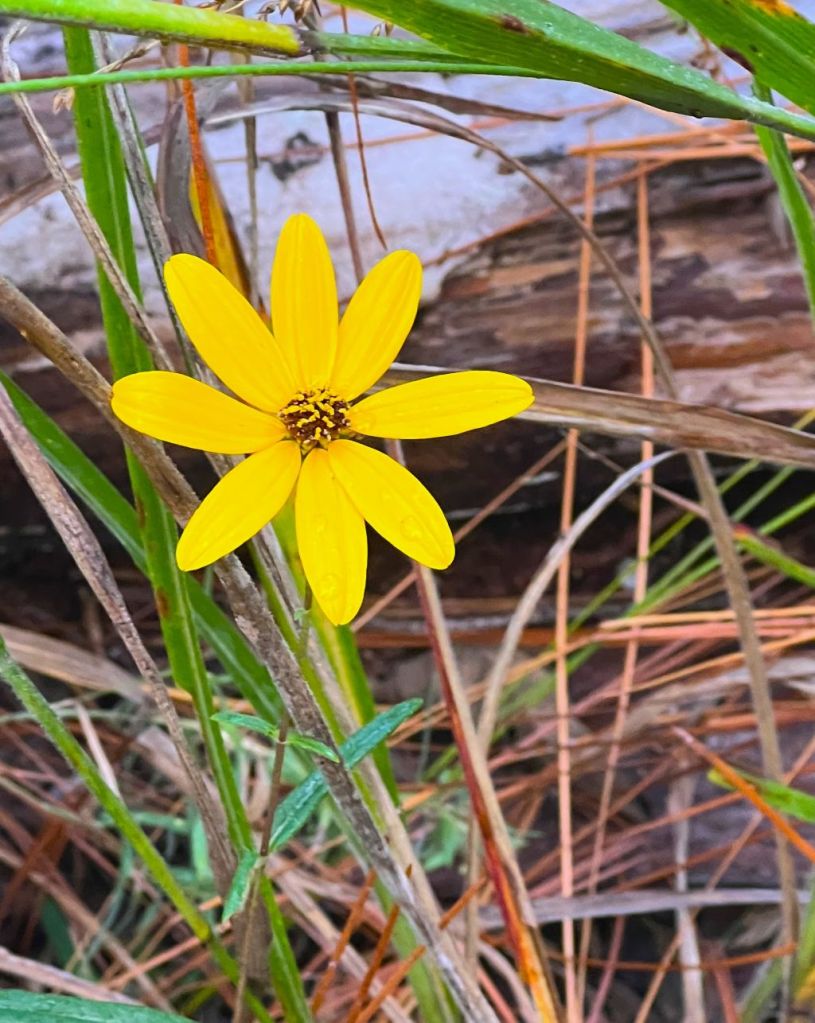
This banana spider builds intricate webs across the trail overnight. While they are not dangerous, it’s quite unnerving to meet one at eye level. My headtorch helped me spot them at night but my best recommendation would be to hike behind someone who is taller than you!American beautyberries grow throughout the trail, and aggressively reclaim the path after mowing.I spotted this close to mile 8. She did not move at all while I carefully snapped a photo. She was making the most of basking in the warmer temperatures before crawling back in to her hole. I think she’s a non-venomous Southern Black Racer. It was the only snake I spotted over four days.The cleared pipeline easement at mile 10.9 was a meadow with these miniature sunflowers. The miniature sunflowers also thrived in the forest. While this wasn’t the best time for wildflowers, there were a few to spot under the canopy.Just east of the Yellowpine trailhead was this evidence of human activity, and I was very thankful for a seat while I took a drink and a snack!
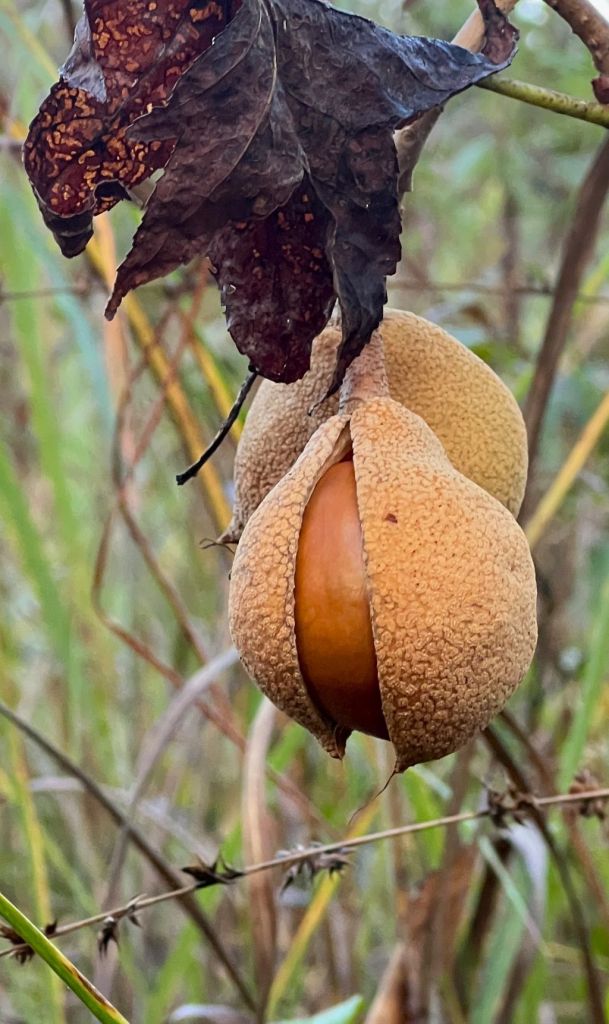
These buckeye seeds near mile 18 reminded me of horse chestnuts in England.
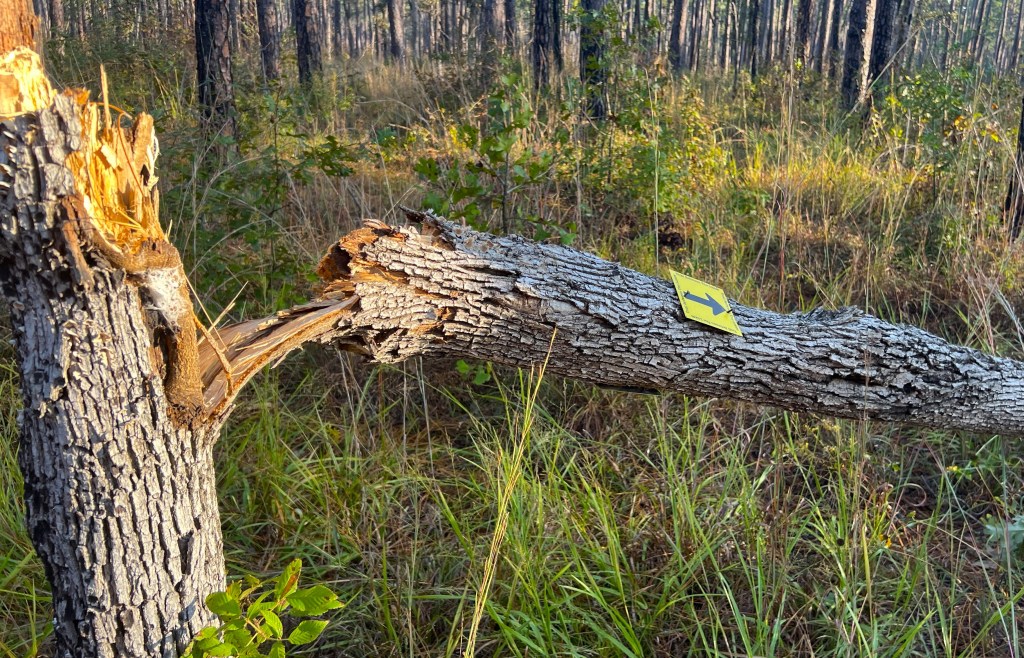
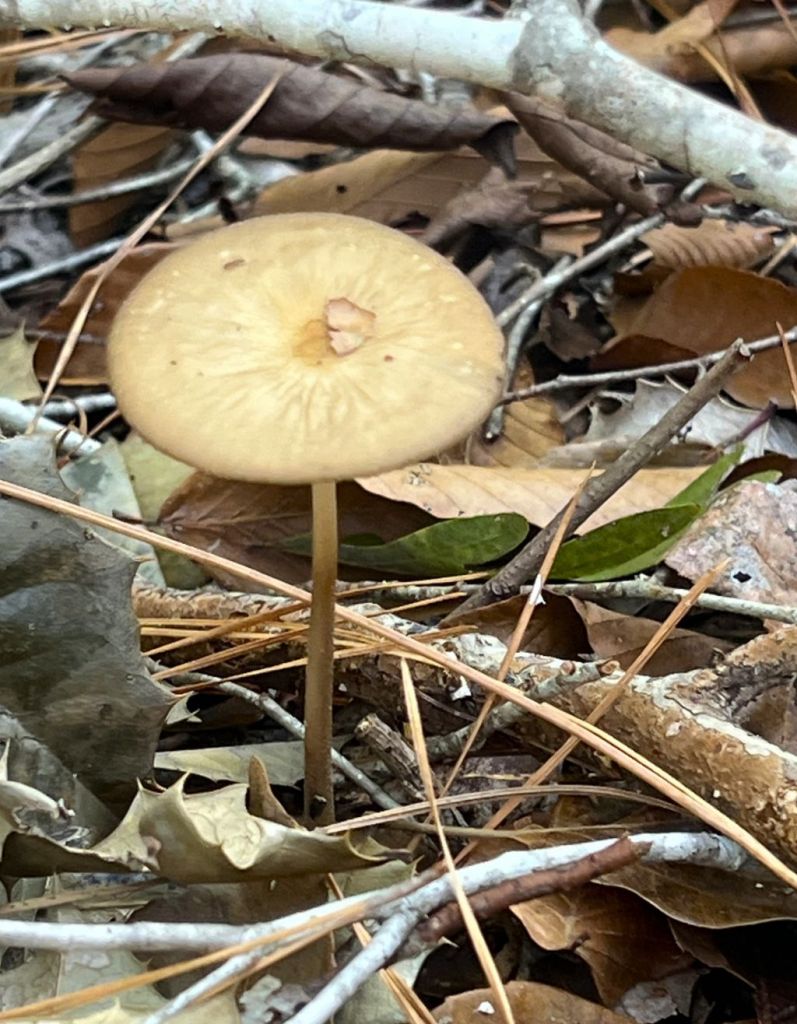
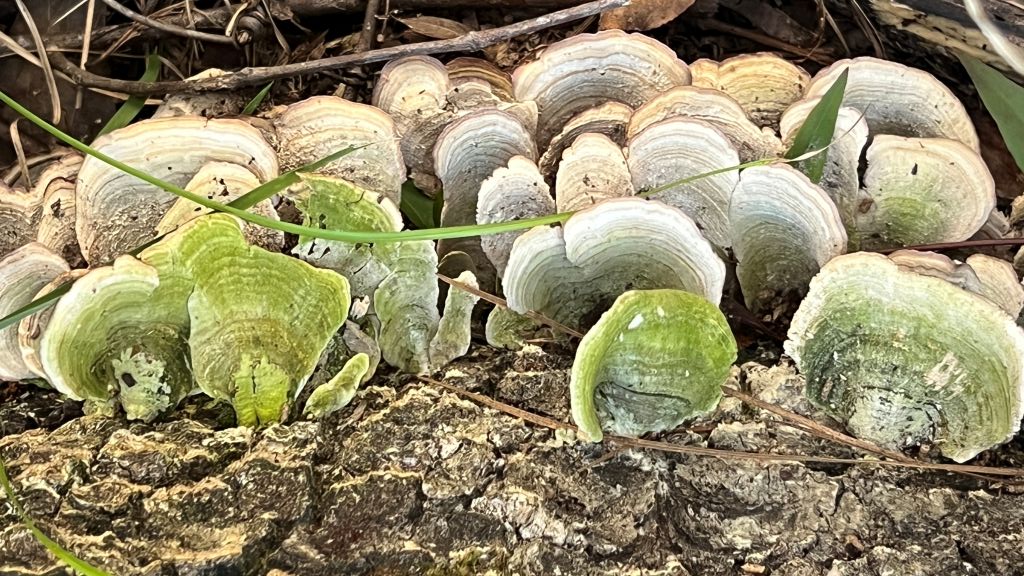
I fear that a TBTL trail marker is a tree’s death sentence!This hymenopellis mushroom might be edible, but I did not fancy it as a snack!Various fungi grew on dead trees and were fun to study during snack breaks.
Dry Rivers
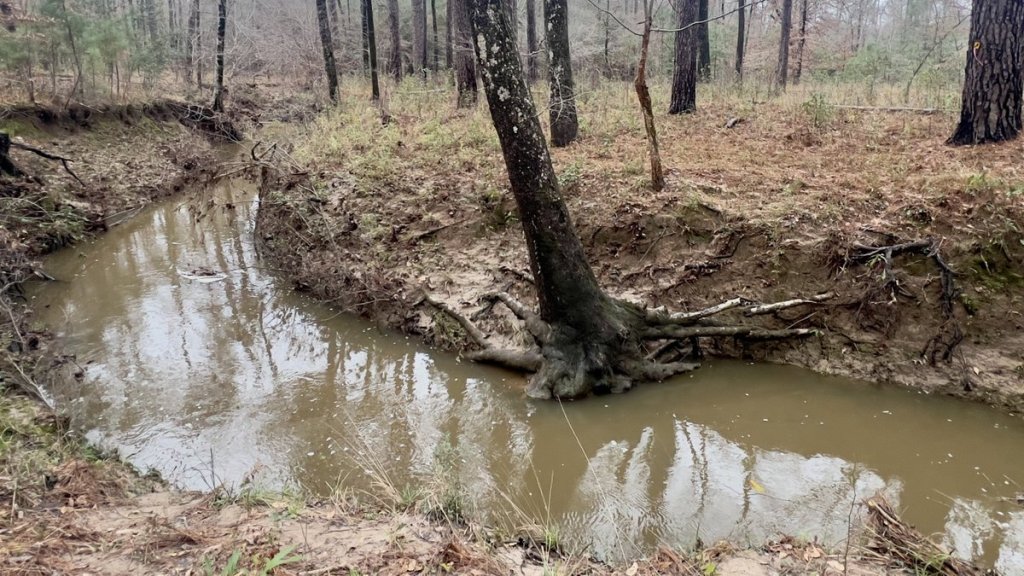
When I hiked the trail in January, I was unable to avoid getting my feet wet. While I could nearly stay dry by hopping over Walnut Creek at mile 13.5, Little Creek at mile 23.5 was a knee-deep wade. This time, the rivers were dry from the drought.
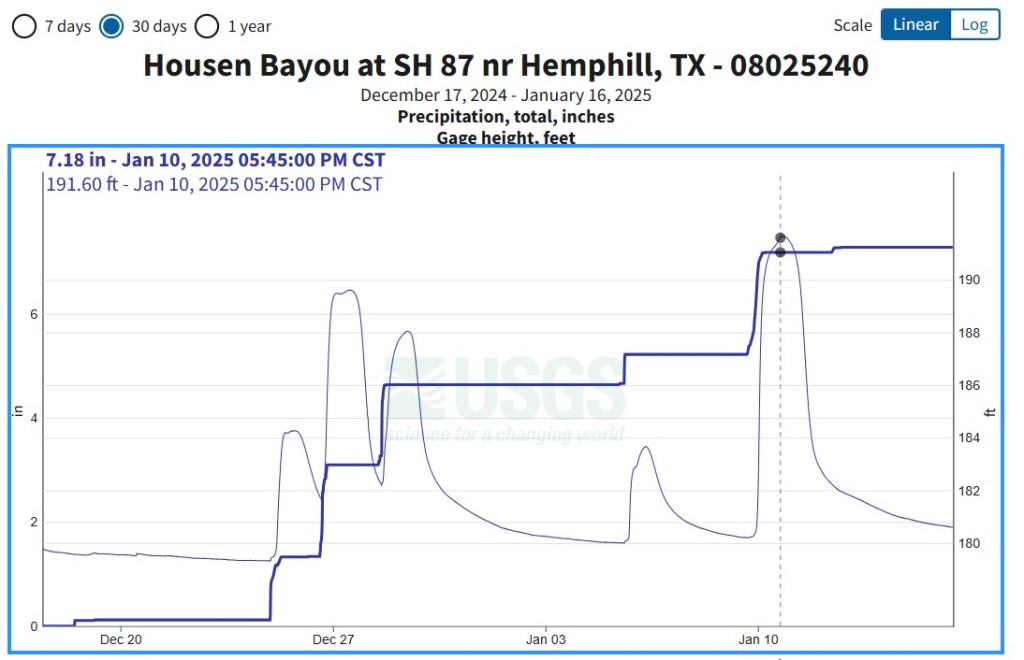
Walnut Creek was mostly dry and easy to stay dry while crossing, though the steep banks took some work.The left picture is of Little Creek in January, and the right one from October. In January, I could not tell how deep the water was, so I found a different crossing point. As the October picture shows, there is a log below this tree in this section that makes the water shallower when the river is full. However, getting down the bank remains difficult, especially from the southern bank.The USGS Water Gauge at SH87 in Hemphill is the closest gauge and the data was aligned with the water levels I experienced at Little Creek. There had been a lot of rain in January, just before I crossed, but the water level dropped very quickly to a safe level at about 181 ft., which was about 2 ft of water in the river at the crossing point. In October, the drought had caused the Hemphill gauge to drop to a height of 178 ft. corresponding with a dry crossing of Little Creek. Even the inch of rain that fell during the evening of October 28th probably did not make Little Creek impassable.
Campsites and Vistas
As I hiked during hunting season, I stayed at designated campsites. There are five to choose: Lakeview Recreation at the eastern terminus, along 109C at mile 10.9, and hunter camps near 15.8, 20.5 and 23.3. Lakeview has a water faucet, a trash can, and pit toilets. The hunter camps have portapotties. I hiked the trail in two days so camped at the eastern terminus and the camp about 1/4 mile from 15.8. If I was hiking over three days, I’d have camped at the eastern terminus, along 109C at 10.9, and have hiked 1/2 mile off trail to the hunter camp near 20.5. The campsites provided some cool vistas, complementing other views along the trail.
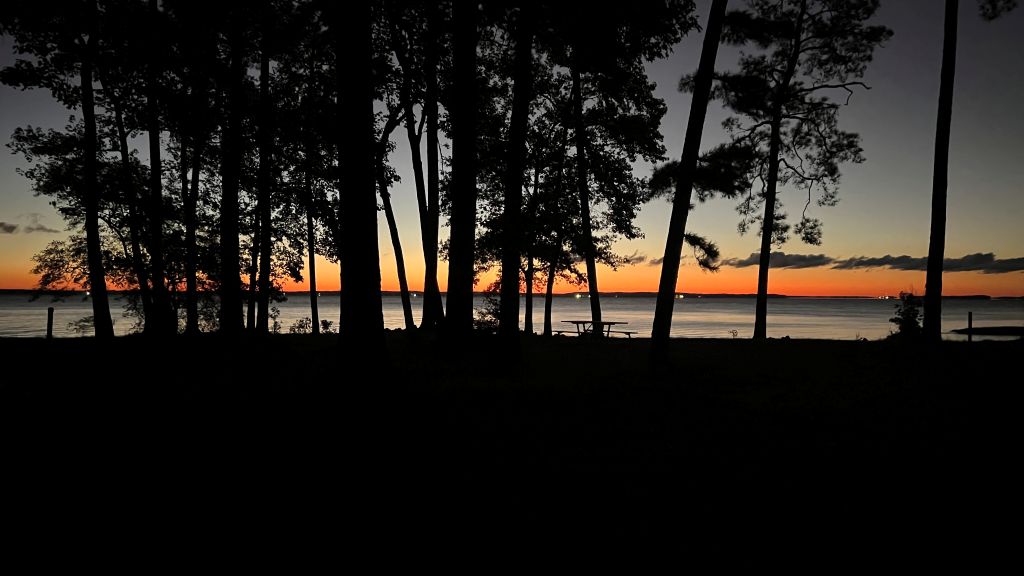
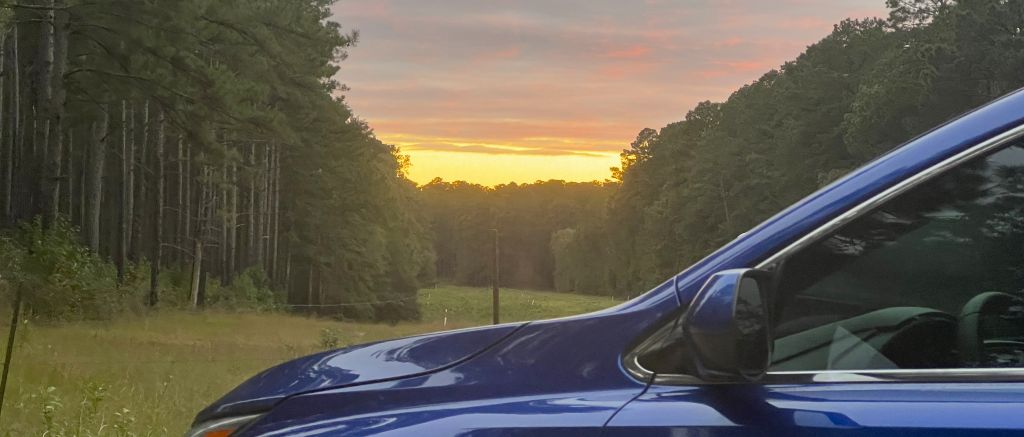
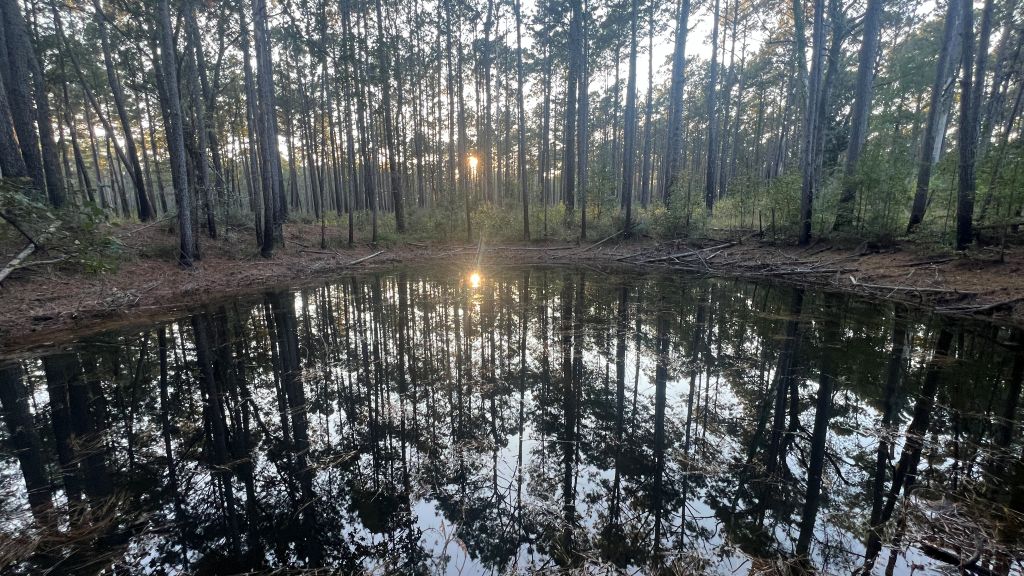
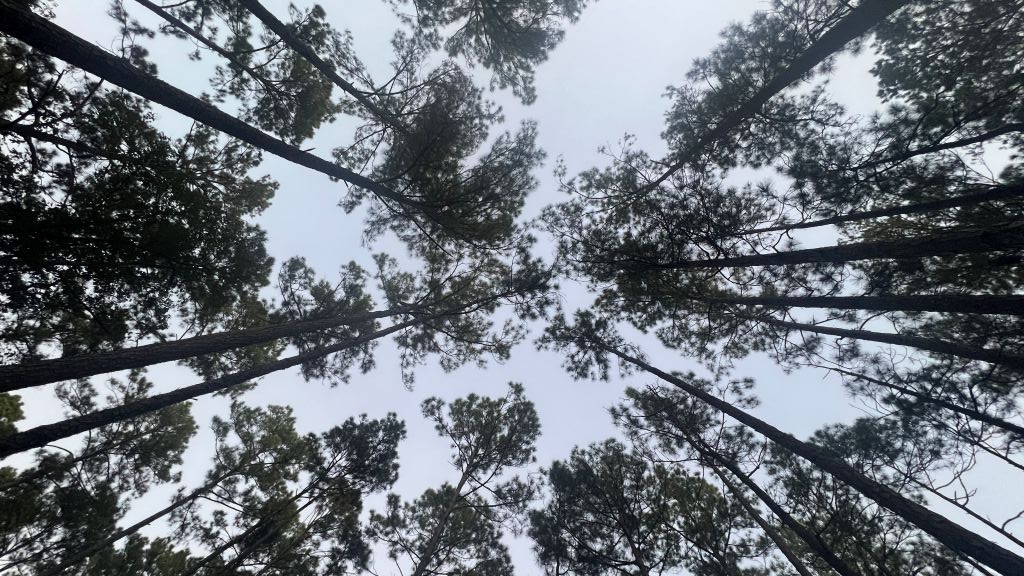
Sunset at Lakeview Recreation was so peaceful. Dawn is my favorite part of the day and the view from Lakeview of the lights from Louisiana did not disappoint.The easements provided brief openings in the canopy and I caught this photo at 10.9 where there was road access and camping is allowed during hunting season.The pond at mile 14.1 was my favorite spot on the trail, even when it was low from the drought.When I arrived at the N. Moore Plantation Hunter Camp near mile 15.8, I was happy to lay on the ground. My end-of-day treat was looking up at this canopy.
Reflection
The Trail Between The Lakes was another very satisfying multi-day hike. The well-positioned designated campsites were easy to access from the trail, and are quickly accessible by car to drop off water caches. The variety along the trail keeps it tremendously interesting, complementing the solitude. With such aggressive undergrowth, navigation was tricky in some spots and I had to look hard for the next marker and use a GPX route on my Garmin watch. However, the sections that had recently been mowed were like highways, and I appreciated having the mix. The hike illustrated how much effort it takes to maintain such trails, and the team of volunteers that support the Trail Between The Lakes do a fantastic job.
"Cajunlimeys" combines Lousiana (Janet) and England (Peter). For "limeys," check out scurvy in the English navy.
We love adventures and use blogging to write a photo diary to preserve our memories. Some crazy friends enjoy following us and my notes might help others plan.
View more posts









 The Adventures of the Cajunlimeys