
Why did we only glance at Stonehenge, and what is Avebury and that other stuff? Explaining this to our crew of Sems’s and Townsend’s was the day’s mission. In honour of Louie, the third duckling who was carried away to an unknown fate by a fat seagull while we cruised the canal on our adventure’s previous leg, our gang’s appellation evolved from “sloths” to “ducklings,” and it might be a while before we warm to “Scuttle” again…
Max had a fascination with Stonehenge’s rocks, coming under its spell when a family roadtrip had an unplanned visit to Stonehenge II in Texas! Research confirmed that Avebury’s stone circle remained a more accessible, less crowded, and significantly cheaper experience than Stonehenge, preferred by most. I felt that Max’s experiences in the US army would also make a visit around the British army’s training ground of Salisbury Plain insightful, and who can resist a white horse carved into a hillside!
The primary goal of the day was to transport our brood of ducklings from Hilperton Marina by Trowbridge, Wiltshire, to our hotel in central London. Train travel was an option but it bypassed the above sites, with a visit to Salisbury (and its large cathedral) possible. Buses would be complicated and we did not want a professional tour guide. We were blessed by being able to hire a car from Enterprise in Trowbridge, who “picked me up” and helped us on our way.

Our first stop was the Westbury White Horse. About three hundred years ago, white horses were carved into hillsides throughout Wiltshire, utilizing the underlying chalk to create highly visible hillside horses. Thirteen are known of, eight remain visible, and the largest is at Westbury. In the 1950s, the Westbury White Horse was covered with concrete to prevent it disappearing under encroaching turf.


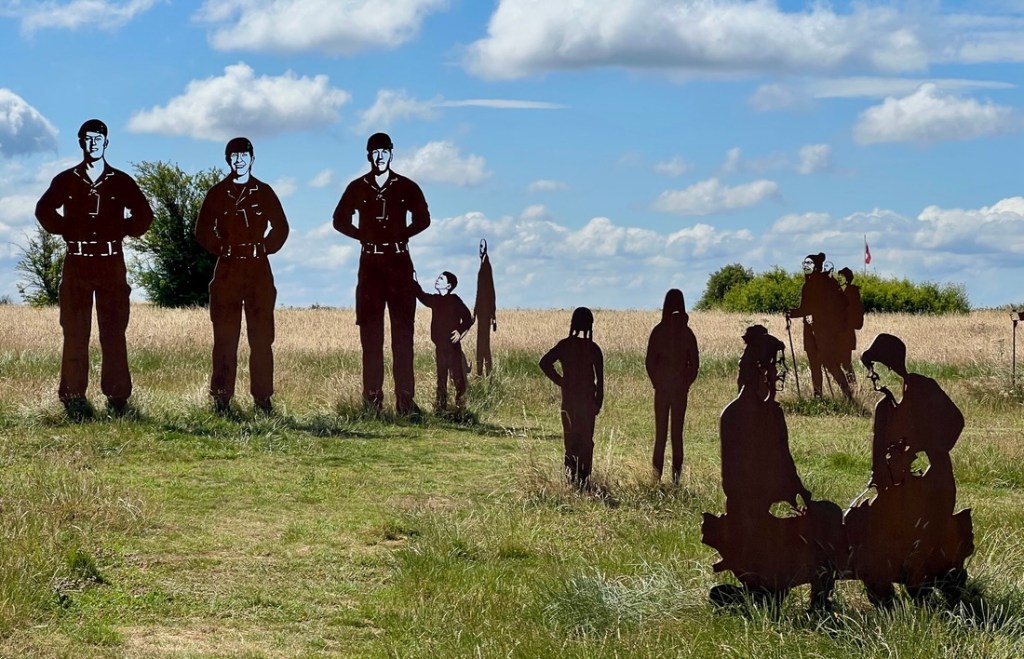
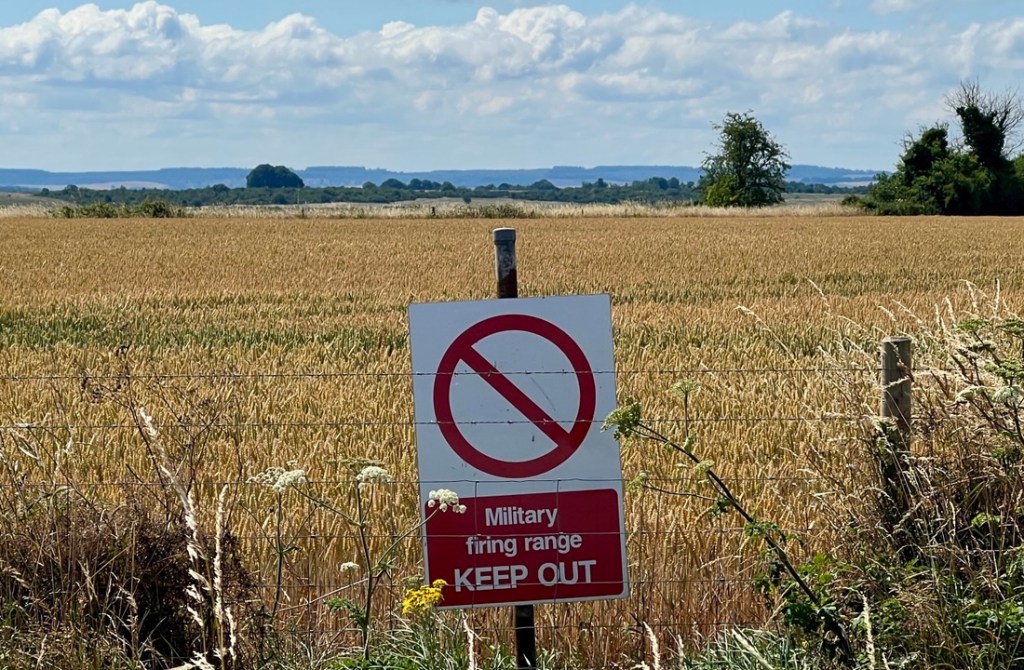
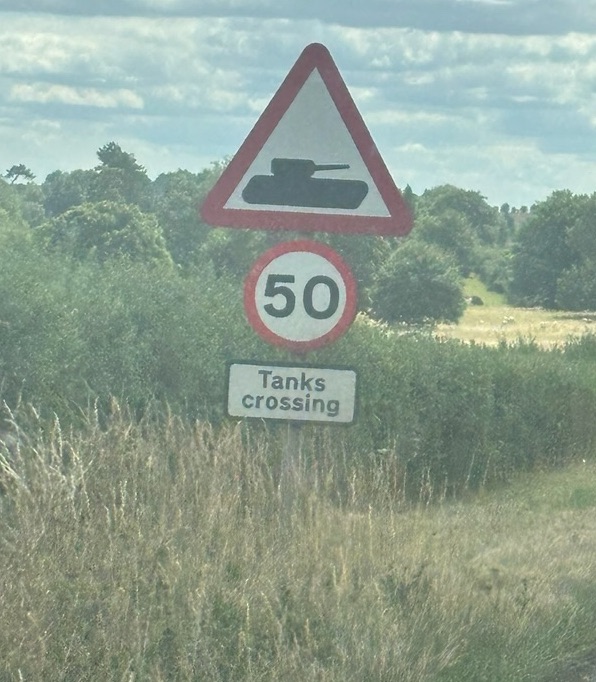
Close to the white horse was a “respect the range” exhibit. Large areas of Salisbury Plain are off-limits to the general public as they are used for live-fire training. An example is the abandoned village of Imler, including St Giles church which was built in the 13th century. In 1943, the village became a training ground for the Normandy landings and has continued to be used for urban warfare training. We were unable to visit as access is only granted for a couple of days a year around Easter, but we saw other evidence of Ministry of Defence (MoD) activity.

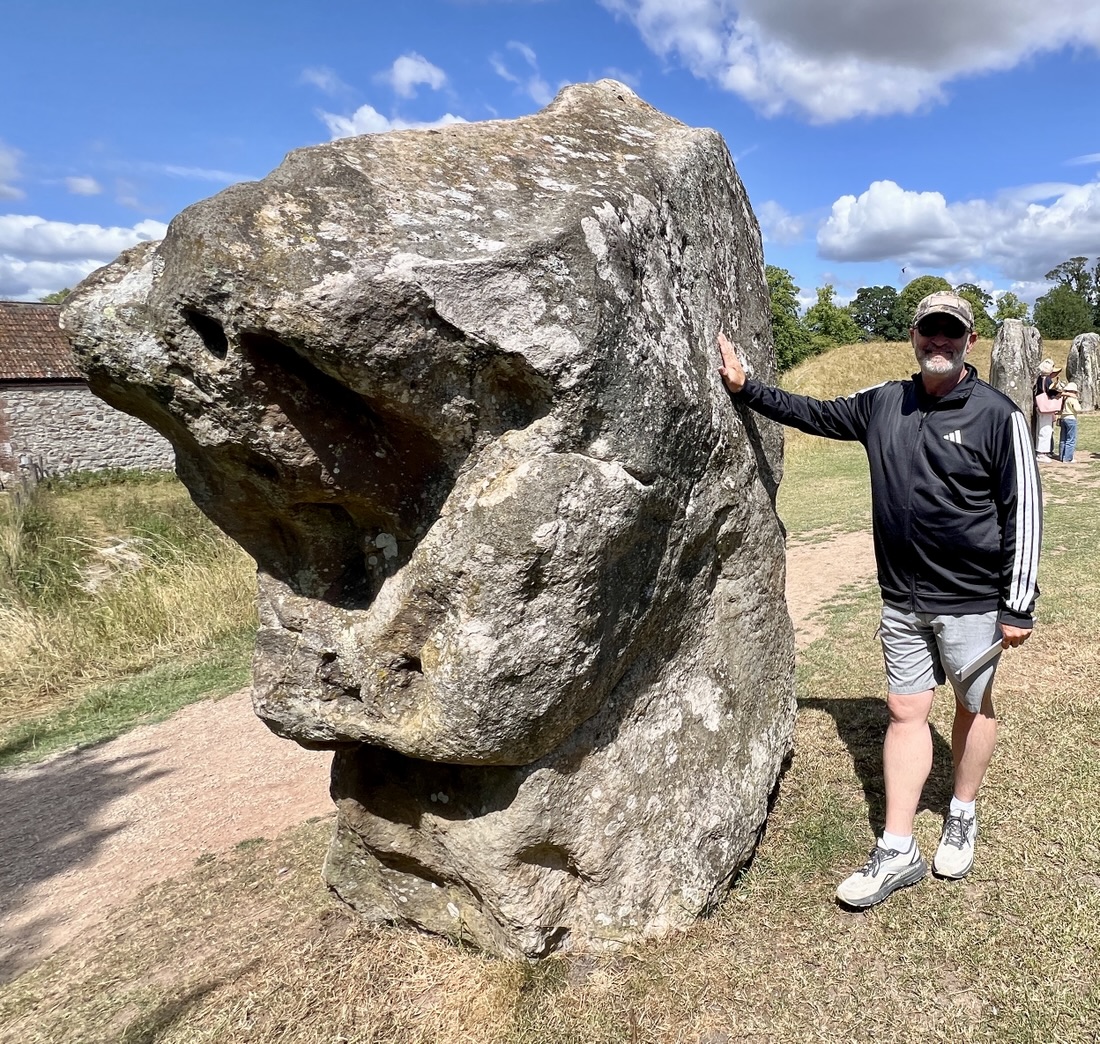
The day’s highlight was our visit to Avebury. “Avebury henge and stone circles are one of the greatest marvels of prehistoric Britain. Built and much altered during the Neolithic period, roughly between 2850 BC and 2200 BC, the henge survives as a huge circular bank and ditch, encircling an area that includes part of Avebury village. Within the henge is the largest stone circle in Britain – originally of about 100 stones – which in turn encloses two smaller stone circles.” What makes it special for visitors is that there are no access restrictions, and we could roam amongst the stones as much as we wished, only needing to pay attention to avoid sheep and cow deposits. We also enjoyed a fine lunch at the site’s cafe.


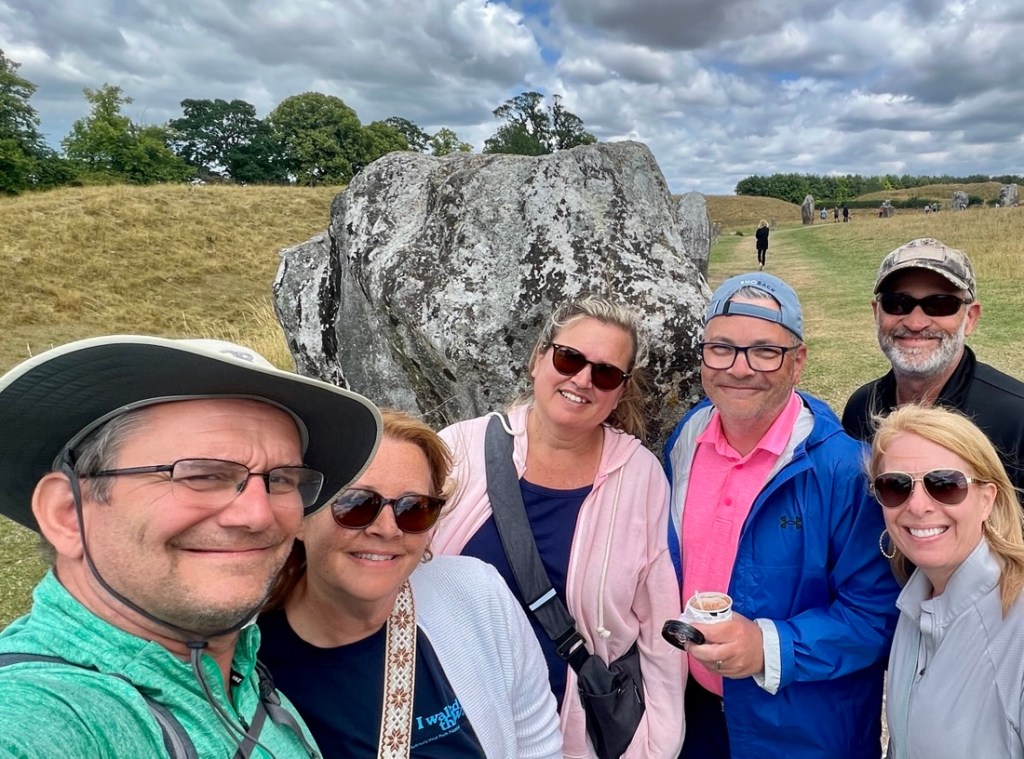
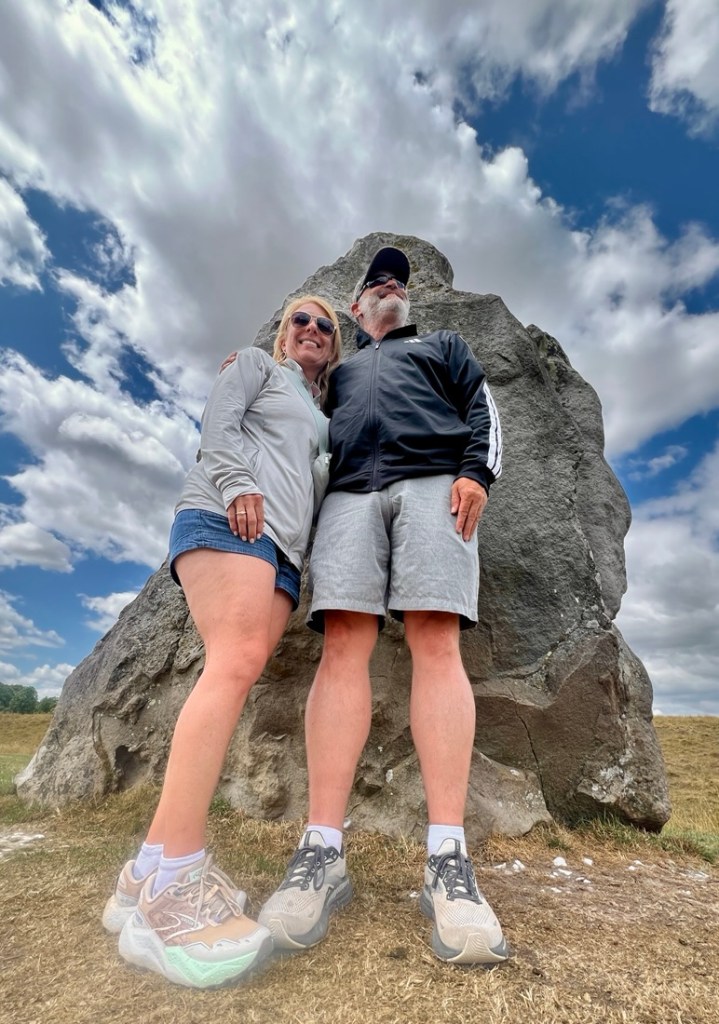
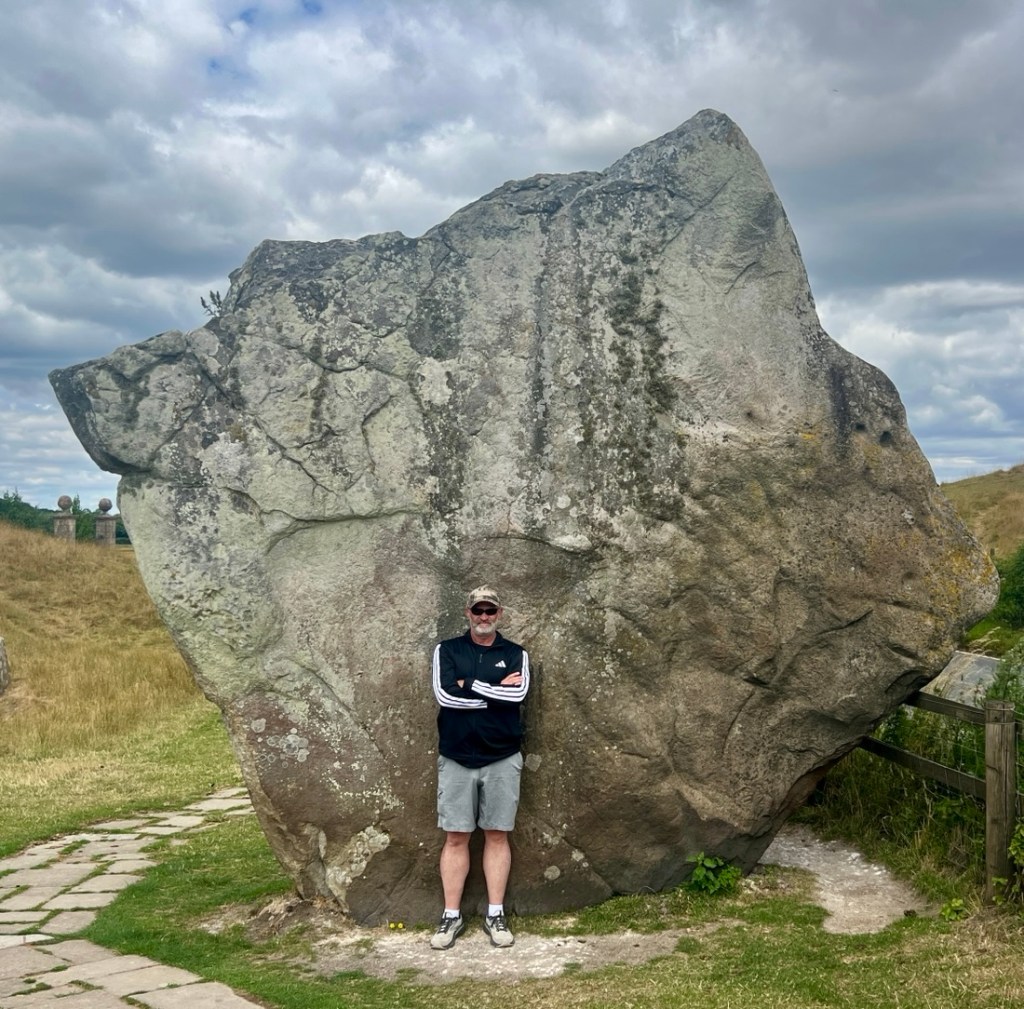
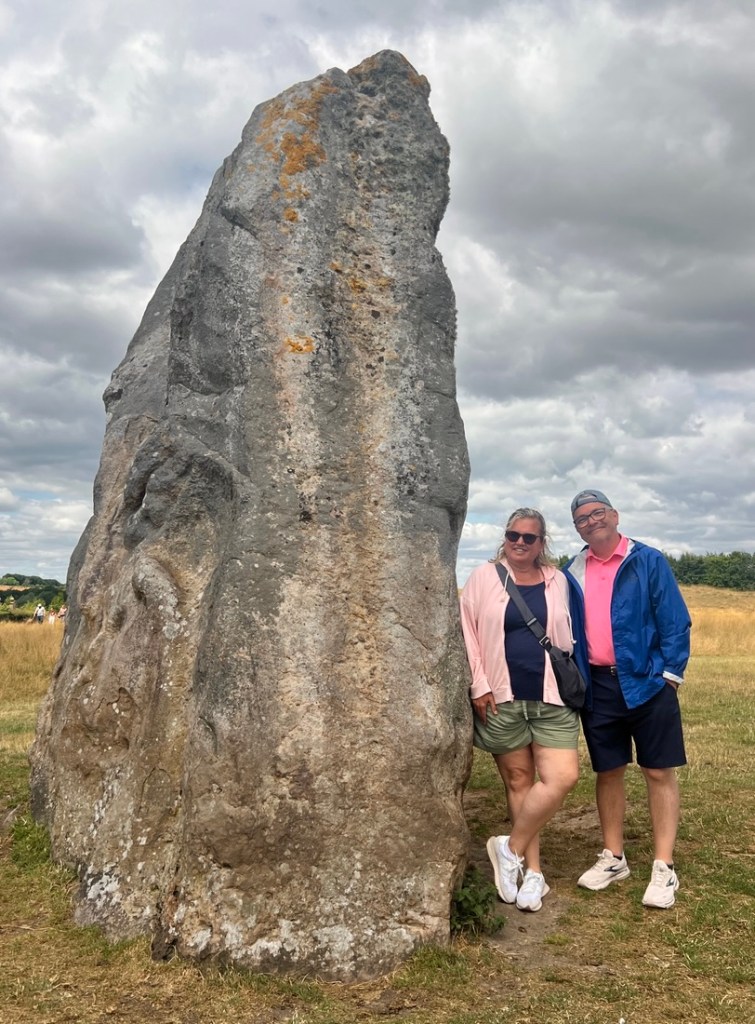
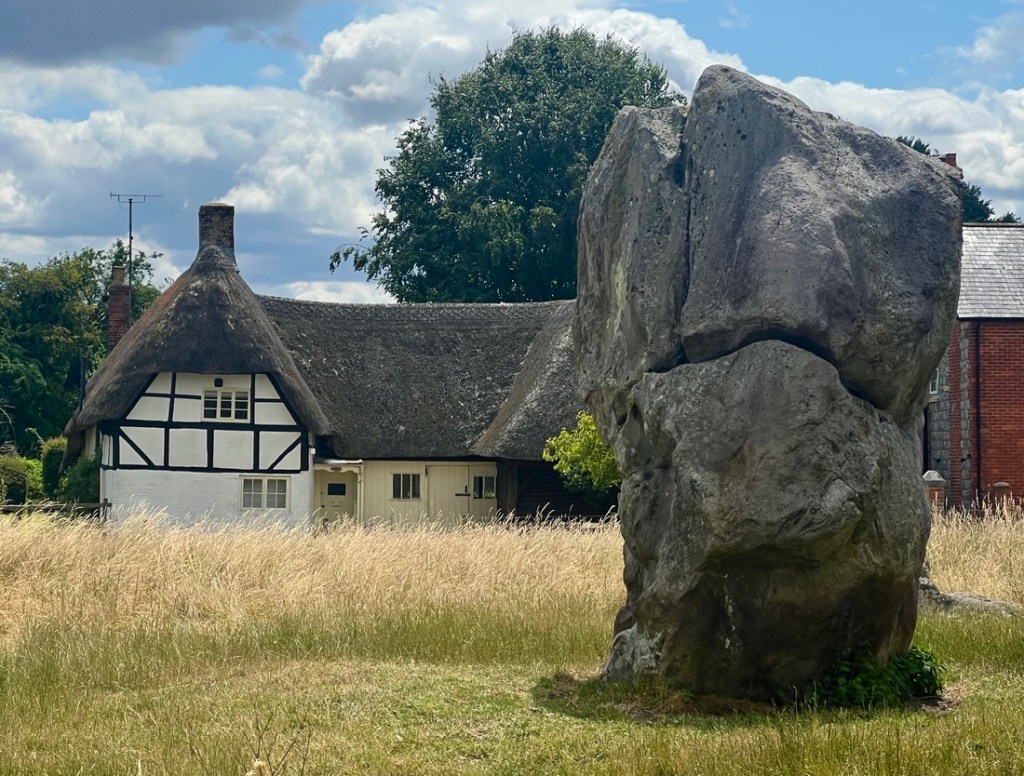


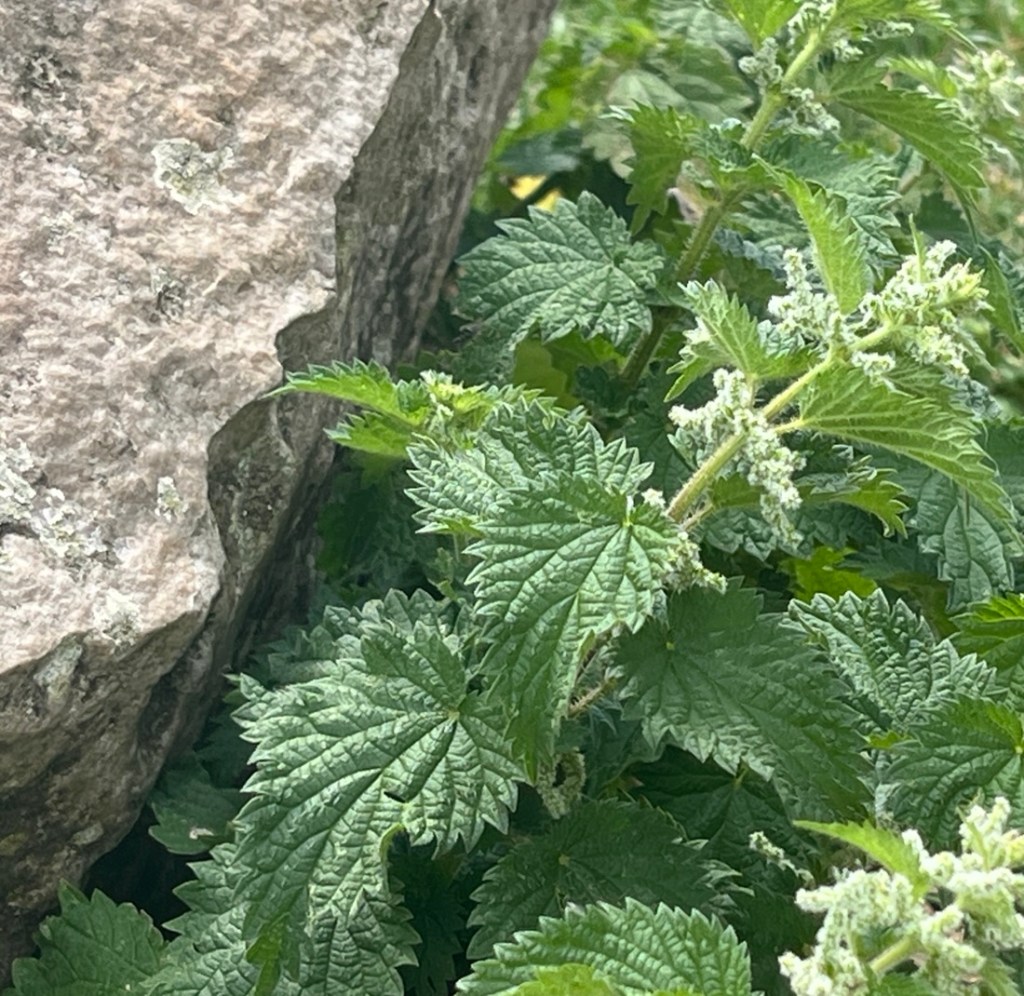
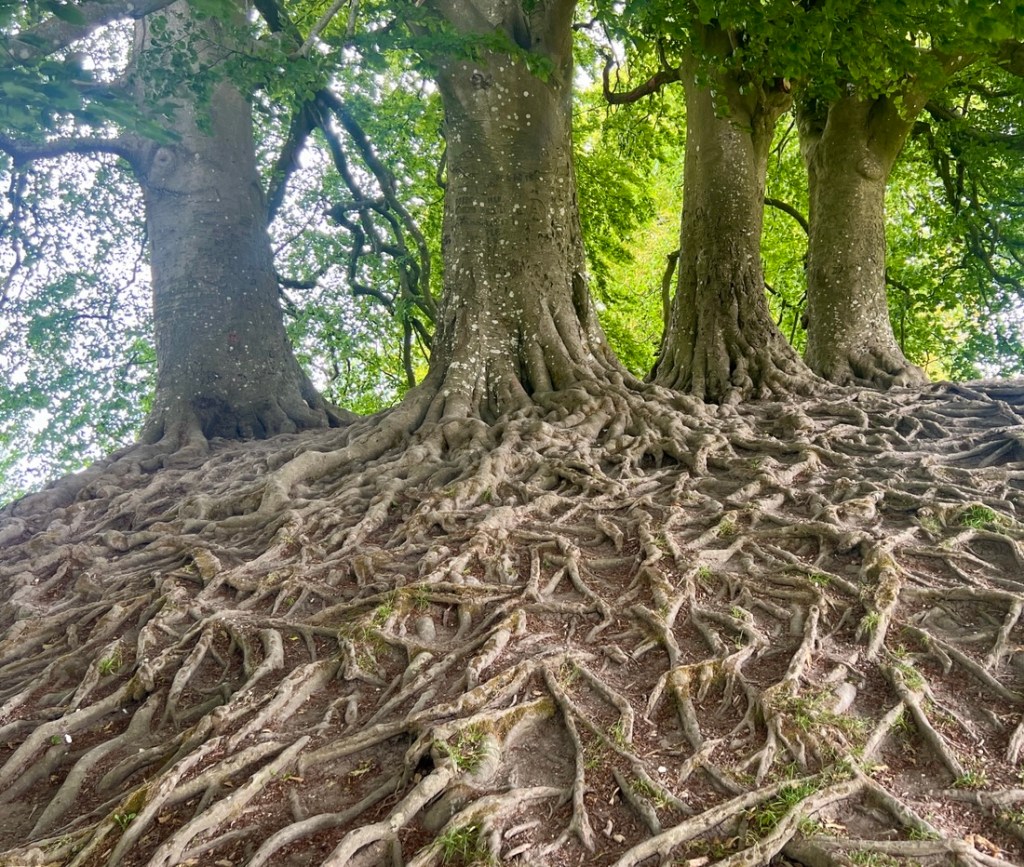
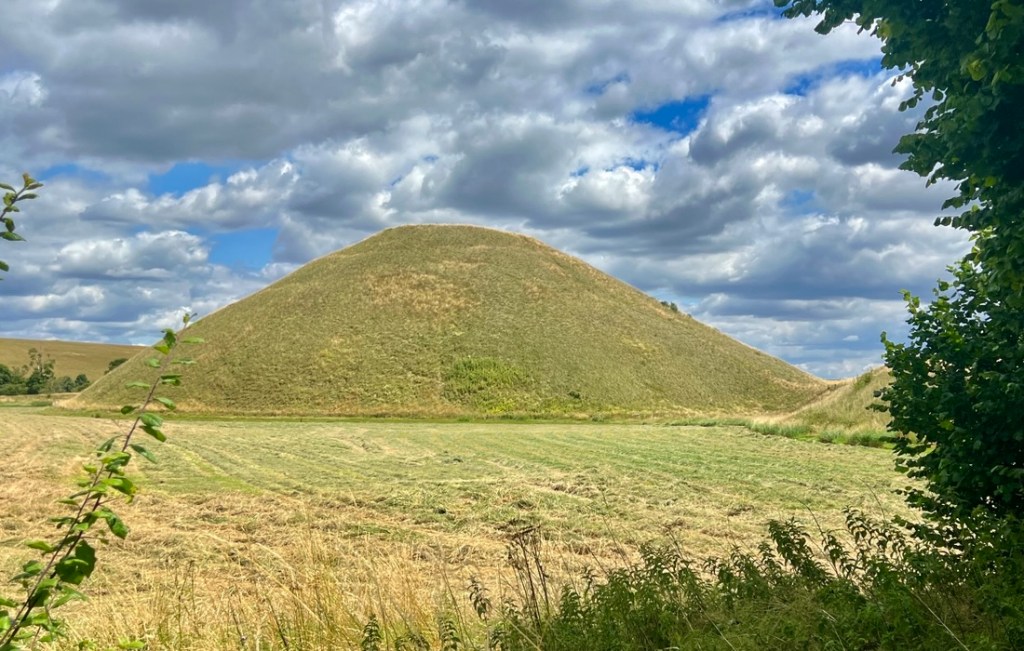
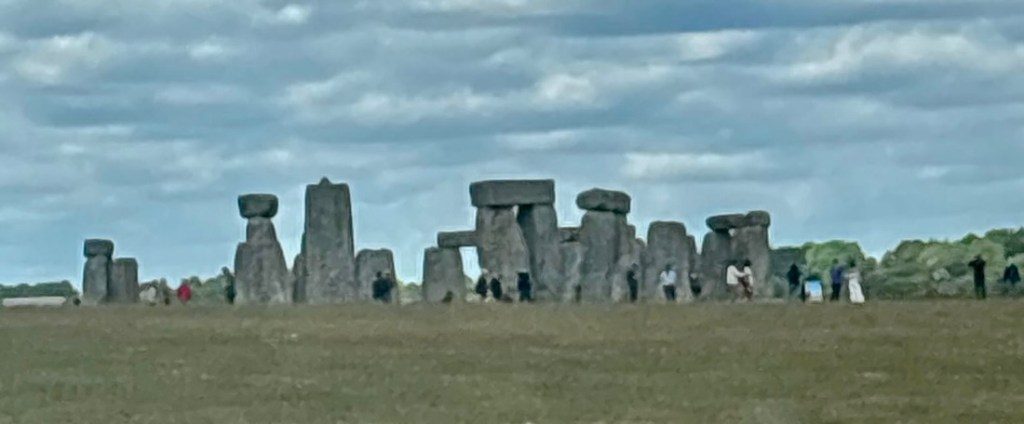
We enjoyed the peaceful wander around Avebury’s stones, wondering what might have led to the circle and remaining in the dark. Next, we drove thirty minutes to Stonehenge to find a very different reception. A large visitor centre and car park has been built about one mile from the site. Buses shuttle crowds of visitors but the £31 ($40-50) entrance fee gets you fifteen feet from the access-restricted stones. A public footpath allows the discerning visitor to come with within twenty-five feet of the stones for free after walking a couple of miles. The hoards of people remind that one does not wish to be the background in someone’s TikTok moment.
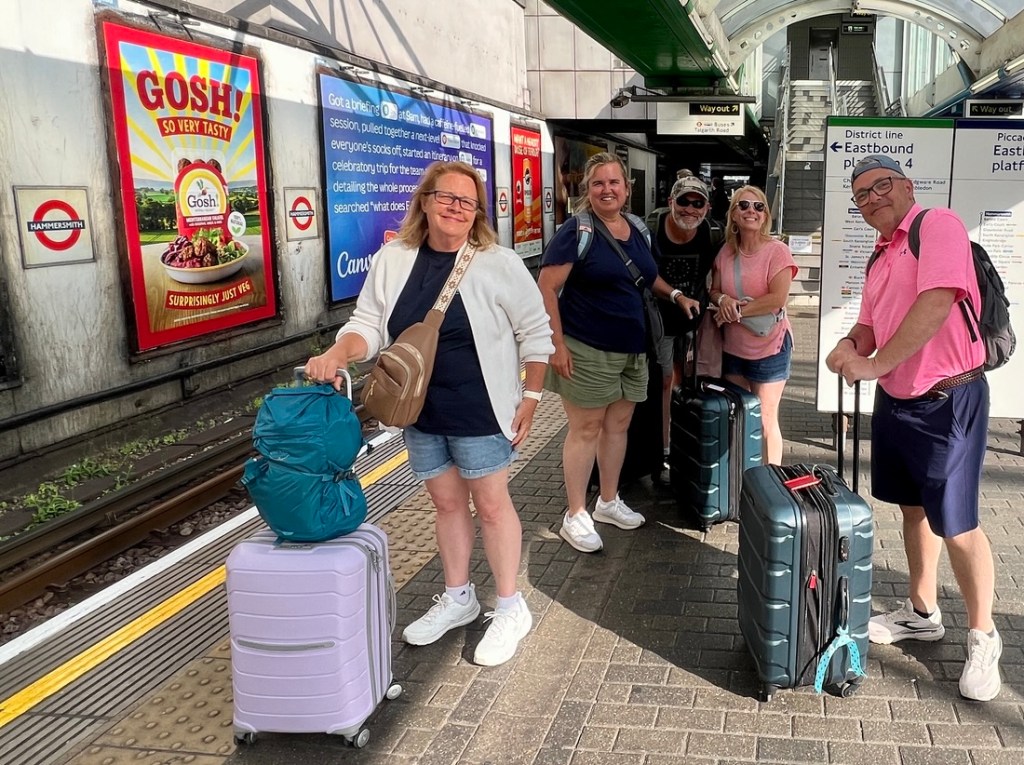
The two-hour drive to Enterprise at Heathrow was smooth and uneventful, and demonstrated to the passengers why roadtrips in the UK, with smaller roads and so much traffic, are less practical than in the US! An efficient drop off at Enterprise was followed by a quick transfer to the airport’s tube station and we were heading into the city before you could say “Mind the Gap.” On arrival at our fine hotel, “the Hub” at Westminster Abbey, my exhausted body just wanted to lie on the comfy bed, but London’s bustle had inspired new energy in our brood of ducklings so we enjoyed a sneak peak of some sites.
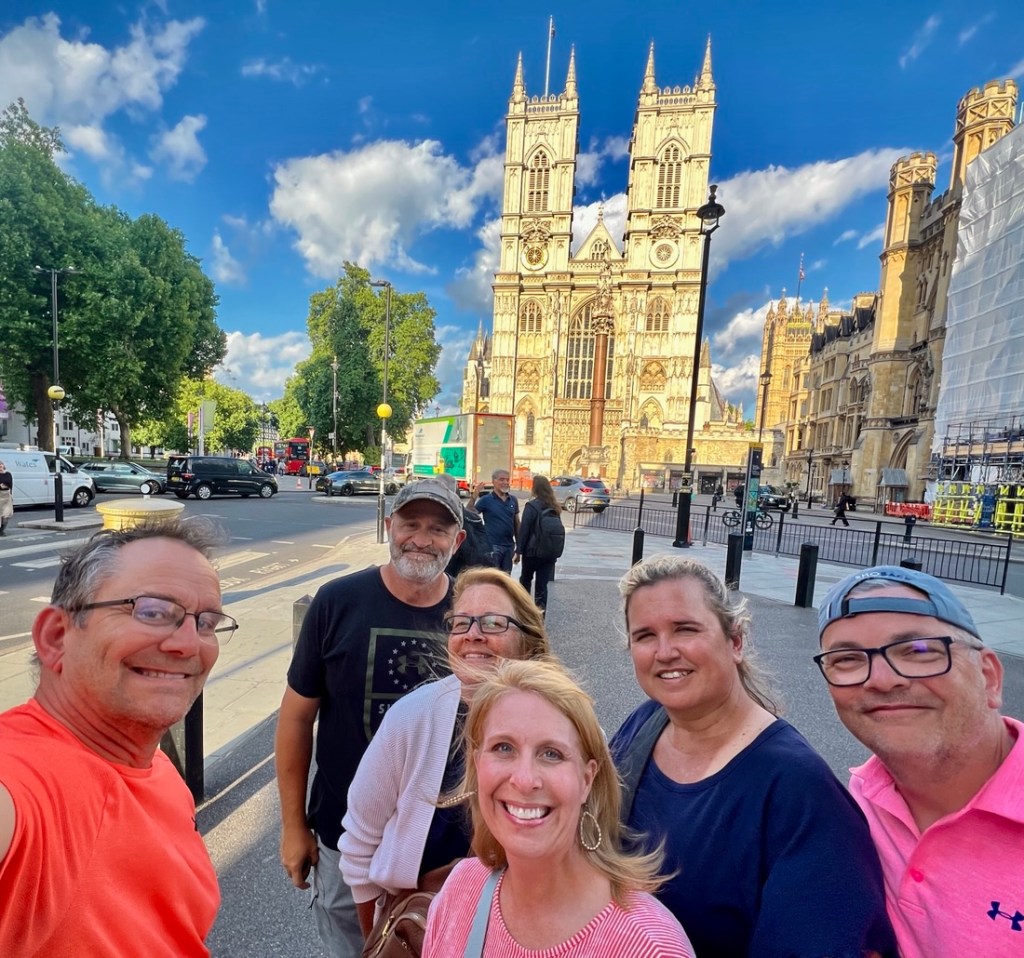
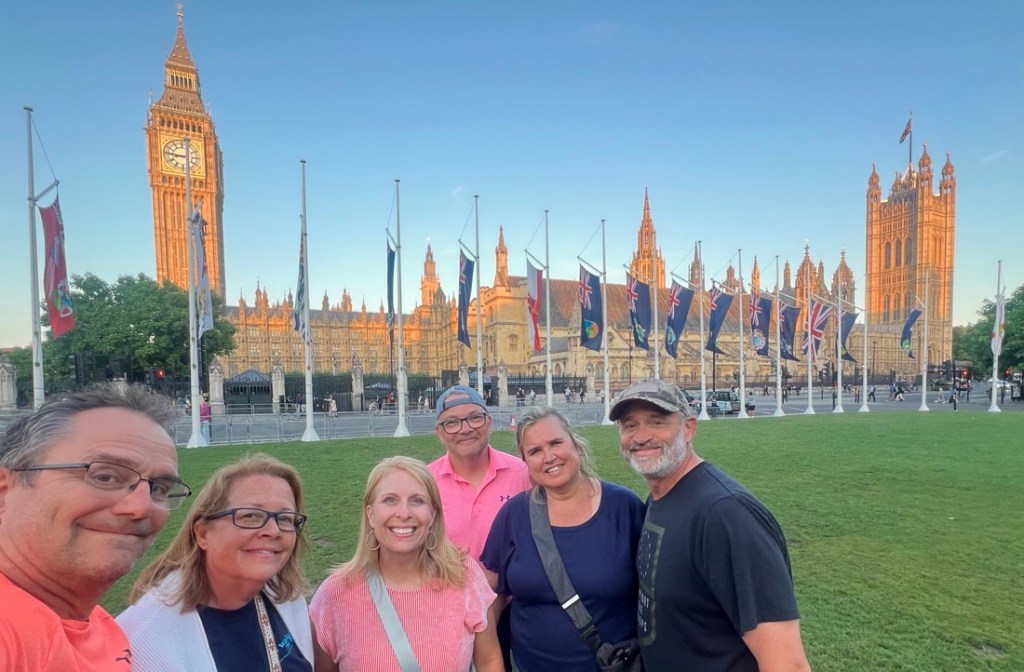
After a fine dinner in a small, family-run Italian restaurant (Mio’s), we were ready for a good night’s sleep that did not involve climbing over obstructions like people to get to the toilet, as on the canalboat. This day had been the designated “day off” before exploring London, which we had warned would involve more walking than hiking the Cotswold Way!
 The Adventures of the Cajunlimeys