We wrapped up our three days in Rome with visits to St Peter’s Basilica (including a climb to the top of the dome), and the Vatican Museums (to see the Sistine Chapel), with an Italian cooking class as our grand finale.
St Peter’s Basilica
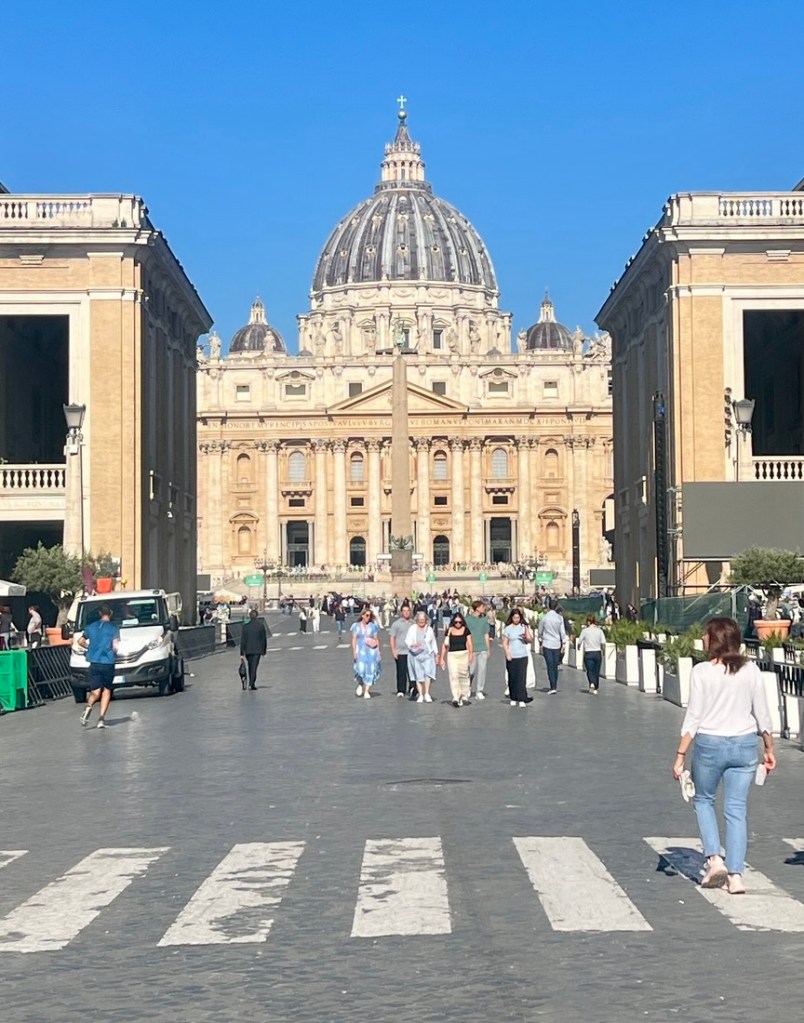
The Basilica is overwhelming. I used Brian Schmisek’s The Rome of Peter and Paul as a guide to its key features and to identify links to the historical Peter. The Vatican area is about two miles northwest of the Colosseum and the center of Ancient Rome, across the River Tiber, and outside the city limits. In antiquity, the location, Ager Vaticanus, was the site of a park, gardens, and a circus for entertainment. It was also the location of a couple of cemeteries as it was illegal to bury the dead inside the city. According to Catholic tradition, Peter was executed upside down by Nero in this area after the great fire of 64 (according to the non-biblical Acts of Peter, which were written in the second century, well after Peter’s death). The 98-foot tall obelisk that stands in the middle of St Peter’s square was Nero’s obelisk and would have been one of the last things Peter saw.
Nero’s obelisk in St Peter’s Square.
Peter was buried behind the circus, and there archaeological evidence suggests that there was a small shrine in a graveyard. The land was donated to the church during Emperor Constantine’s reign (early 300s) with a basilica erected over Peter’s burial site in 324. In 1452, Pope Nicolas V made plans to “renovate” the crumbling building but it wasn’t until 1506 that Pope Julius laid the first stone of a very ambitious project and appointed Bramante chief architect. Raphael became the project’s leader in 1514 followed by Michelangelo in 1547, who died before the dome’s completion in 1593. Maderno completed the nave and facade in 1614 and the building was consecrated in 1626. Bernini was appointed chief architect in 1629 and completed many of the statues.
To help raise money to pay for this 150-year “renovation,” there was an increase in paid-for indulgences, defined as “remission of punishment for sins, which reduces or eliminates the amount of time that an individual needs to spend in Purgatory after death.” A friar who led the campaign coined the phrase “when the coin in the box rings, a soul from purgatory sings.” It is unsurprising that the Protestant Church formed at this time. On 31 October 1517, Martin Luther (1483-1546) nailed his 99 theses on the door of Wittenberg Castle church in Germany, including thesis 86 which said, “Why does not the pope, whose wealth is today greater than the riches of the richest, build just one church of St. Peter with his own money, rather than with the money of poor believers?”
We felt that the whole Vatican was an opulent display of wealth, probably due to the Catholic church’s historical attempt to display her authority and power. There is a tremendous amount of art inside which I fail to appreciate and I do not include many pictures of the art below. Schmisek wrote, “It is difficult to see this mighty structure and not think that it might be more a monument to man than God. On the facade we see the Borghese family and Paul V’s name displayed prominently. But where is Jesus?” However, we witnessed it continuing to play its role with the Catholic faithful which saddens me as it is not aligned with what I believe the Bible teaches.
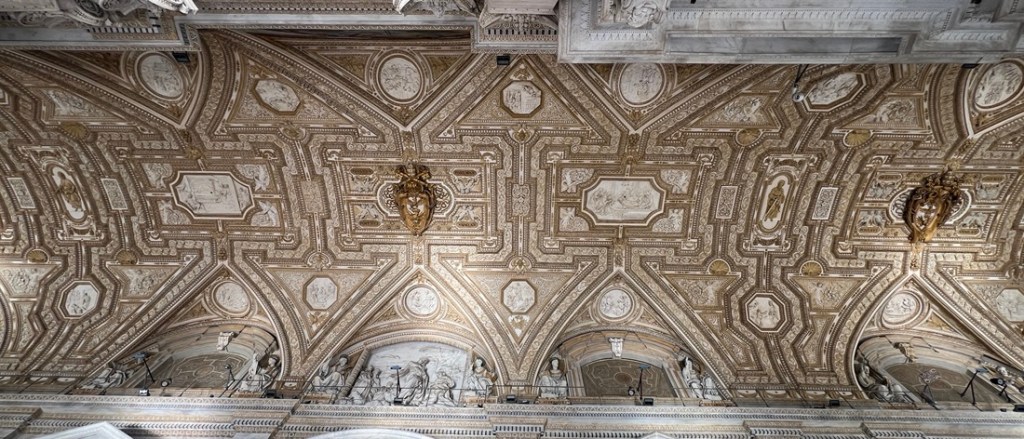
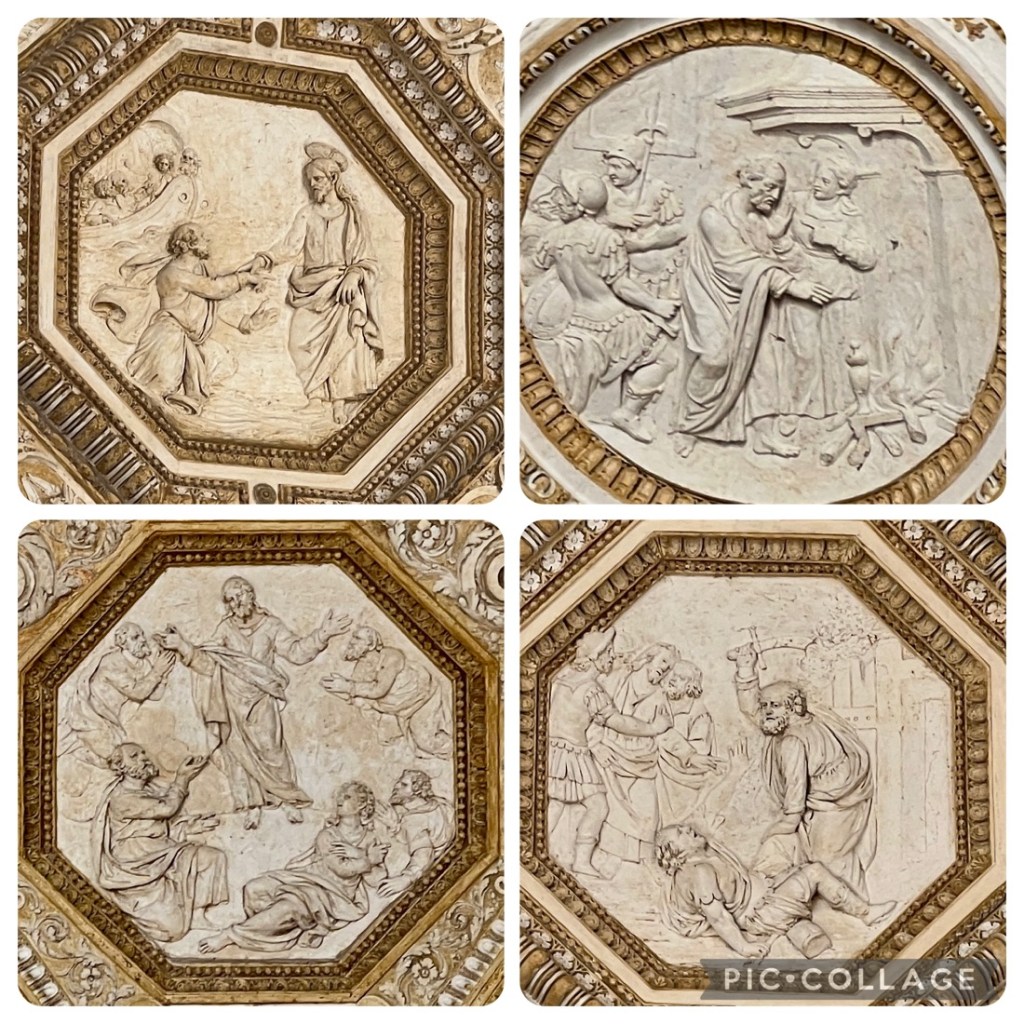
Talking of the Bible and the basilica, there are thirty two images on the roof of the atrium as one enters the basilica that depict the life of Jesus. While twenty three of these images depict narratives found in the Gospels and Acts, nine of them depict scenes not found in the Bible and that help present the authority of this site and the basilica.
Most people do not look up in the atrium before they go through the main doors into the basilica and miss the engravings on the ceiling depicting Peter’s life.Four of the episodes from Peter’s life in the Bible as depicted on the atrium’s roof.
The main central doors, known as the Filarete doors after their sculptor, depicts the scenes of Paul’s death (by beheading) and Peter’s death (by upside down crucifixion). An overweight Nero looks on in both images. There is little evidence that Paul was executed here, and as a Roman citizen, he probably would have been treated differently.
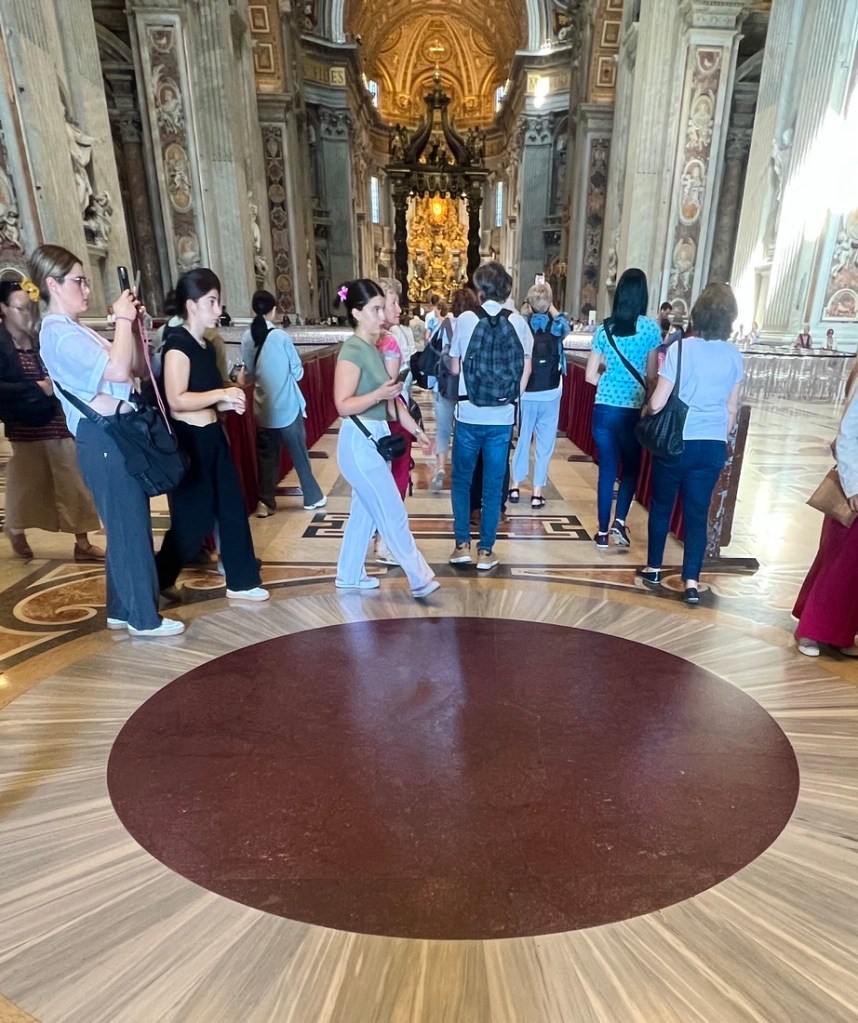
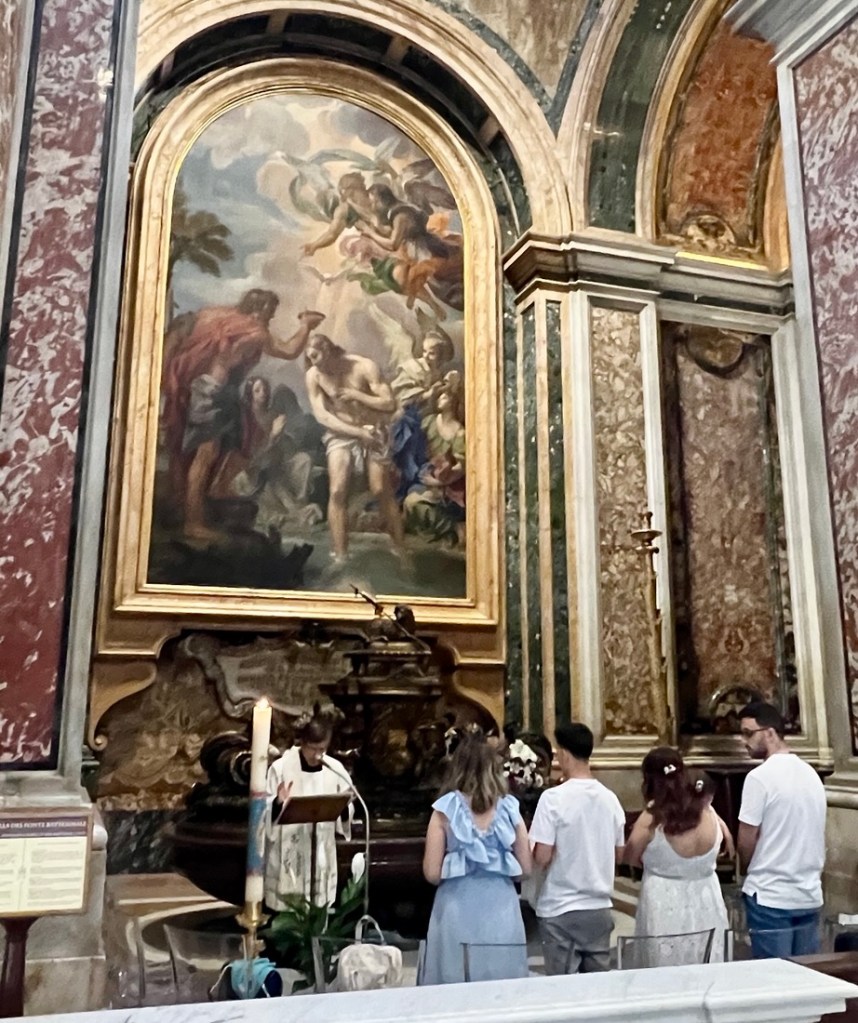
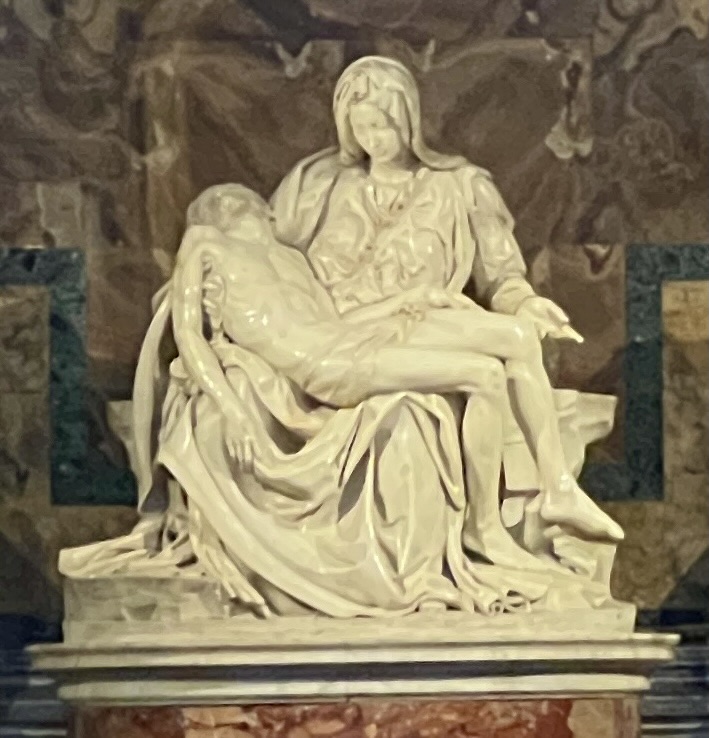
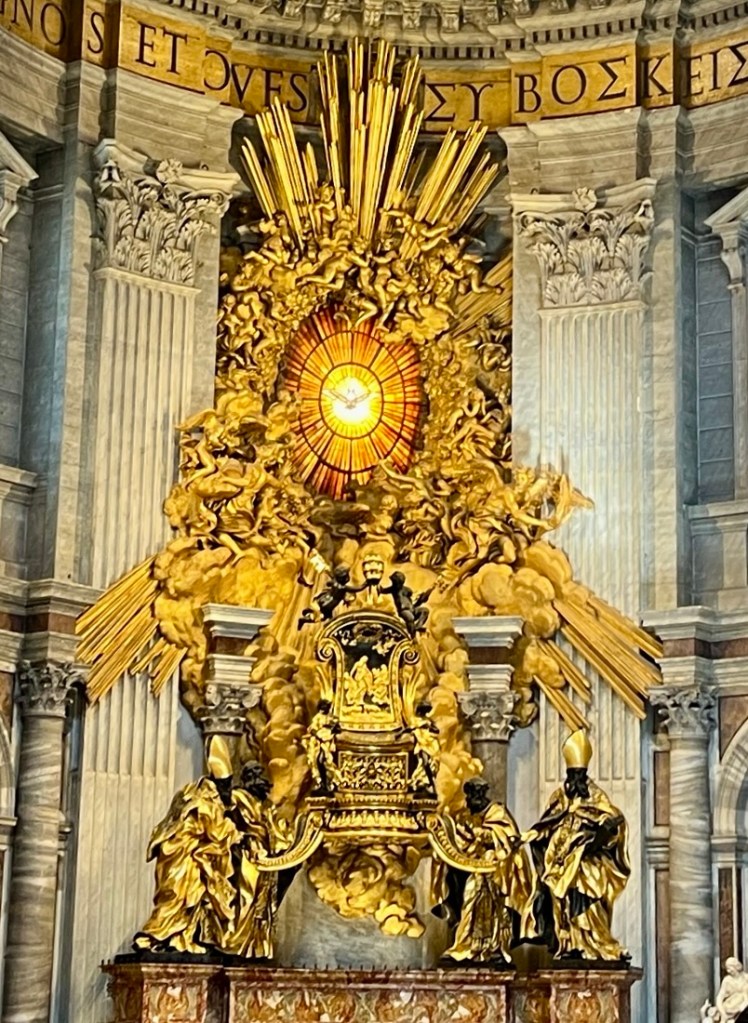
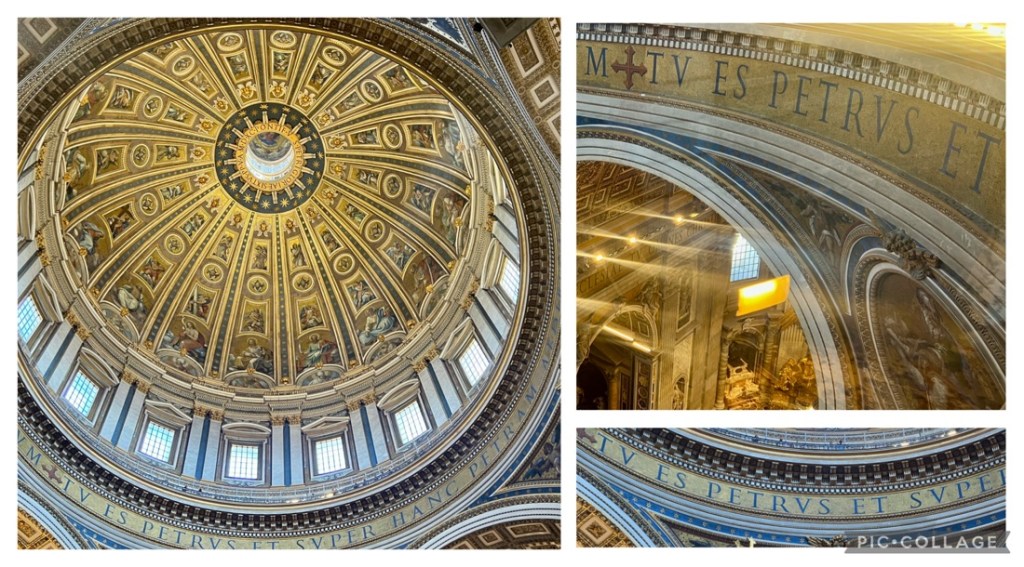
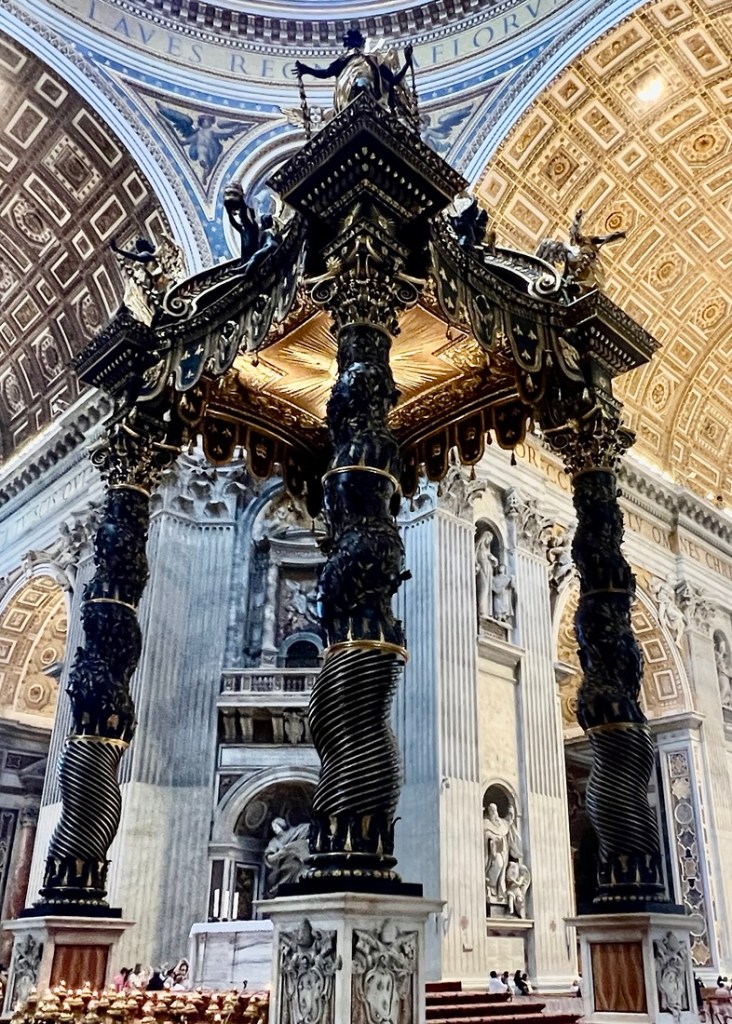
Paul’s and Peter’s execution as depicted on the central doors when entering St Peter’s.On entering the basilica, everyone walks over this red stone circle. It is a porphyry disk that was near the high altar in the original basilica. It was over this stone that about twenty-three emperors were crowed by popes from 800-1452, including Charlemagne.In the first side chapel in the left is a very large baptismal font. We witnessed a baby being baptized in front of a painting of Christ’s baptism.In the first chapel on the right side is this sculpture by Michelangelo in 1499 when he was only twenty-three years old. The Pieta depicts Mary holding an adult Jesus whose body is perfect except for nail marks to represent the perfect incarnation of God. It is the only work that bears Michelangelo’s signature.As one proceeds into the cavernous hall, one easily misses this writing on the floor that most people step on. There are several inscriptions like this that graphically depict the size of other large churches in Christendom. This one above shows that St Paul’s in London is the second largest with a length of 158.1 m (519 ft) compared to St Peter’s at 186.2 m (611 ft). These were inscribed on the floor between 1647 and 1649 and are seen as an authentic Italian expression of bragging rights!This bronze statue of St Peter, which dates from either the fifth or thirteenth century, has worn out feet from the touch of many pilgrims.These four statues are found on the four main pillars that support the dome. Each depicts a saint: Helen with the holy cross; Longinus with the spear; Veronica with the veil, and Andrew (Peter’s brother) with an X cross. The Vatican used to claim to have the associated relics in its archives but today the authenticity is dismissed with the stories coming from the medieval Golden Legend, probably compiled in the late thirteenth century.Bronze from the Pantheon was used to build the altar.There are many quotes of or allusions to Scripture written in mosaics in the frieze around the basilica. At the base of the dome is the phrase, “You are Peter, and upon this rock I will build my church. I will give you the keys to the kingdom of heaven” (Matt 16:18a, 19a). These scriptures form the basis of the Catholic church’s claim of apostolic succession in that there is an unbroken line of priests being ordained by bishops all the way back to Peter.We loved the acrylic chairs and wanted to use them in a certain upcoming wedding that we are not discussing on this trip!This structure marks the location of Peter’s grave. I’m unsure whether Peter would have wanted this basilica as his headstone!
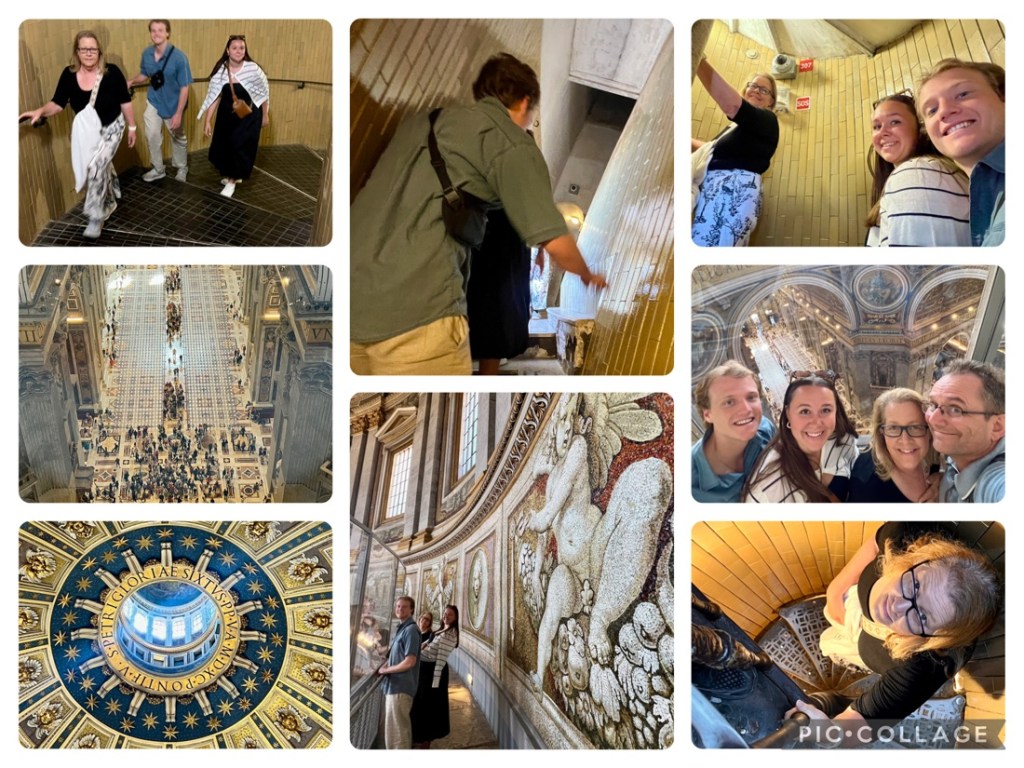
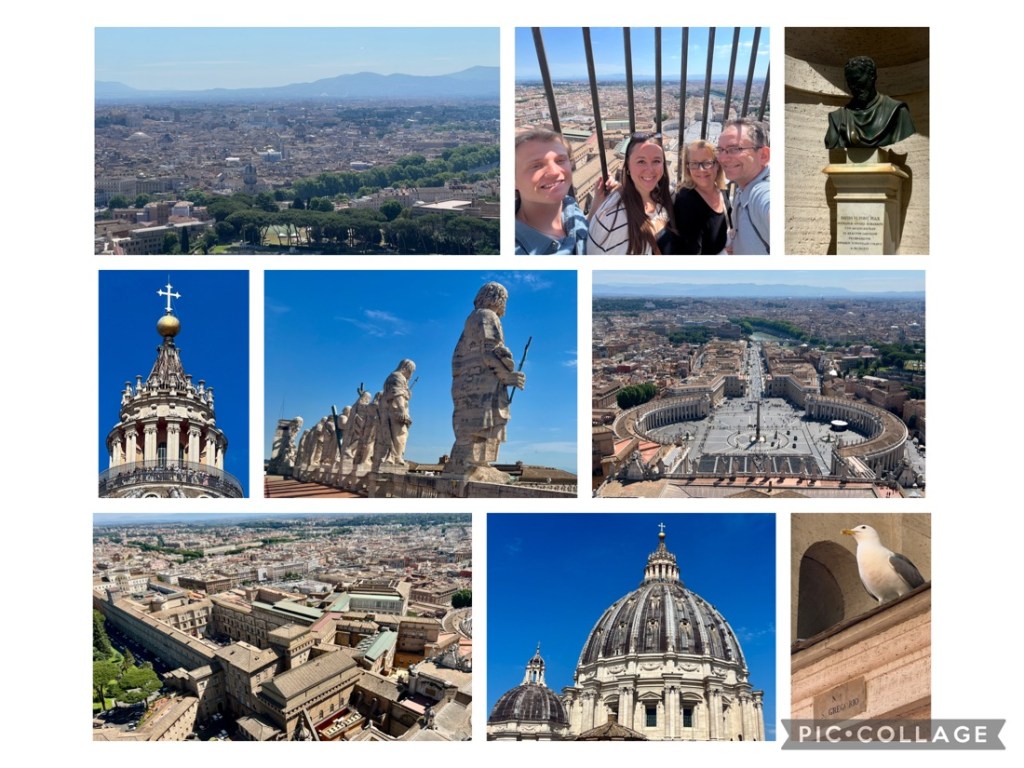
After an hour in the basilica it was time to climb the 551 steps to the top of the dome. we had prepurchased tickets so access was quick and easy. The climb took some time and the views were great, somewhat marred by barriers.
Pictures from inside as we climb.Pictures from outside and the views.
We had a couple of hours after this overwhelming visit before our time slot for the museums and it was time to eat!
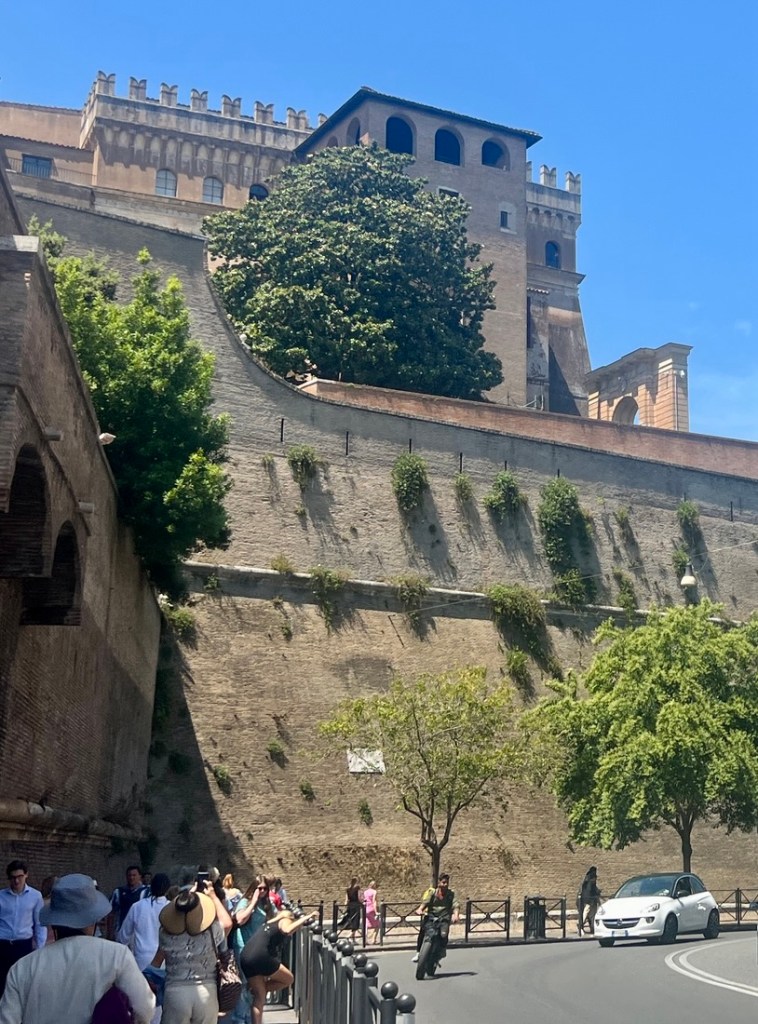
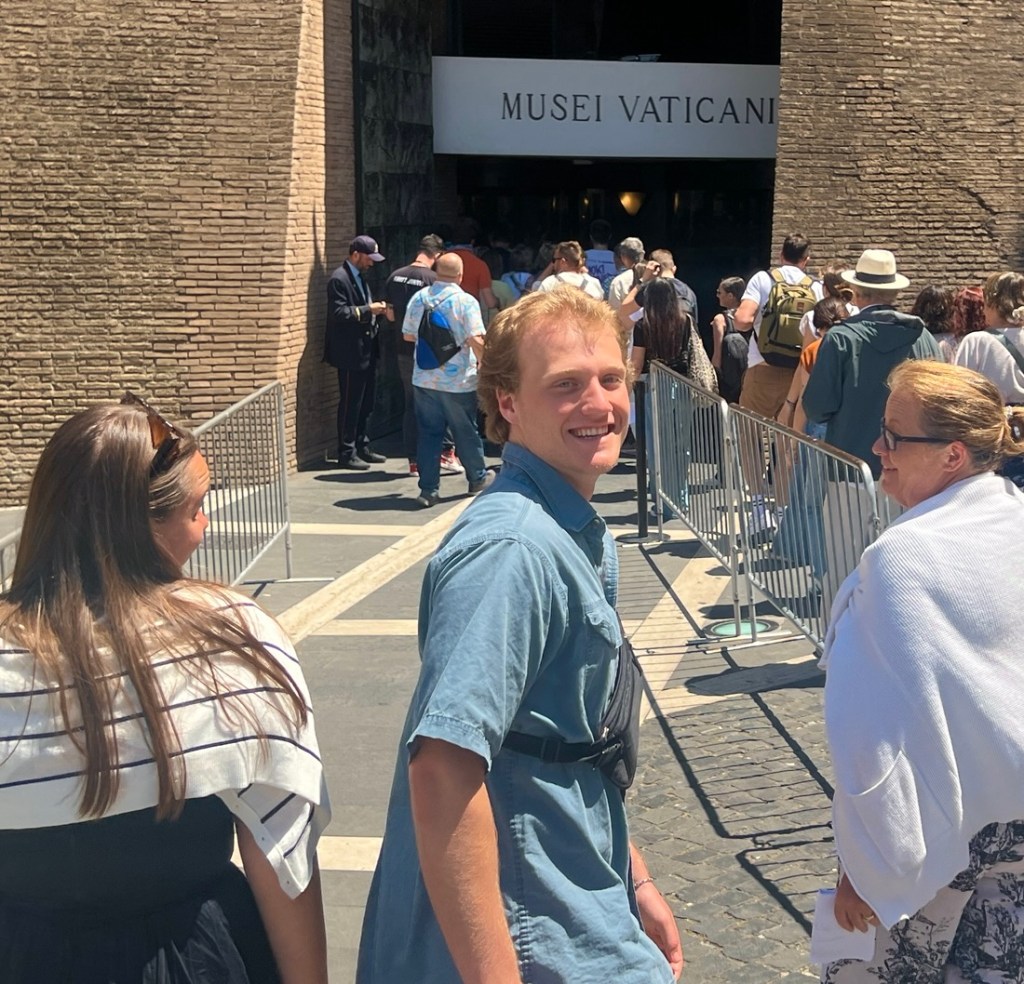
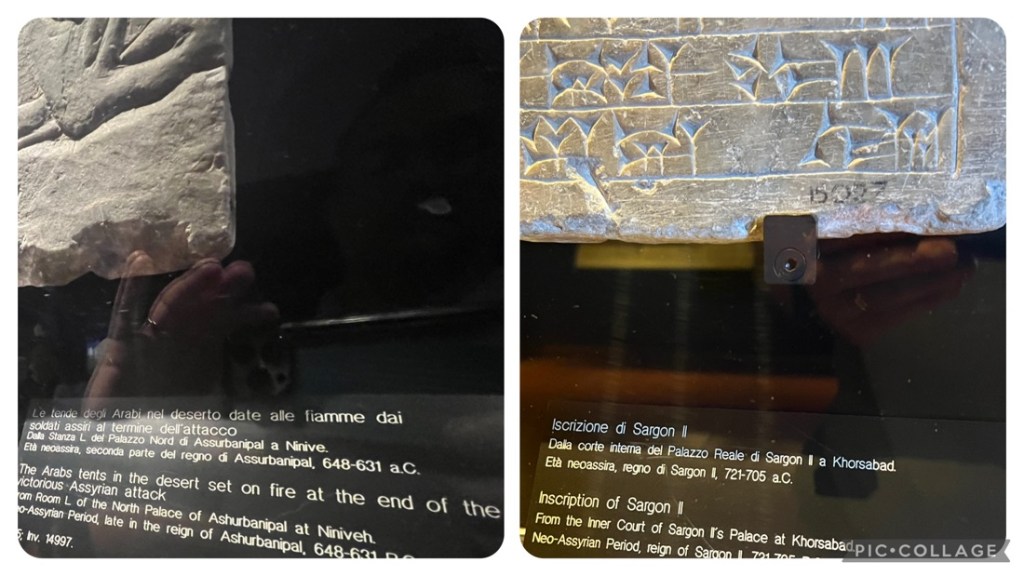
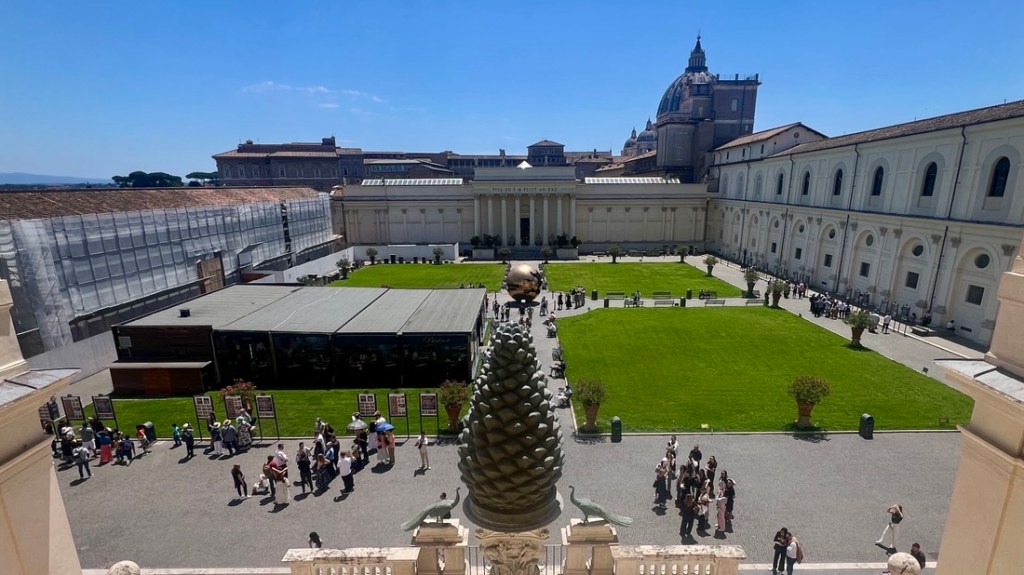
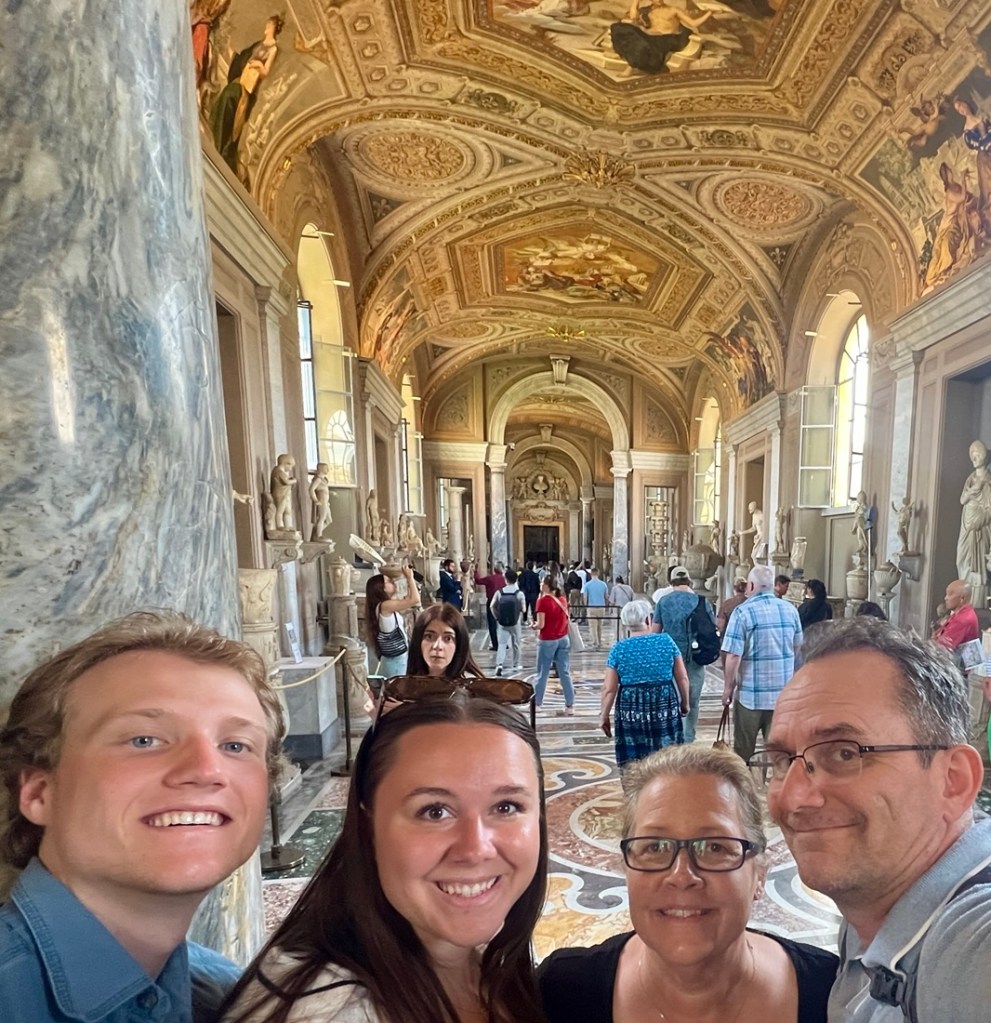
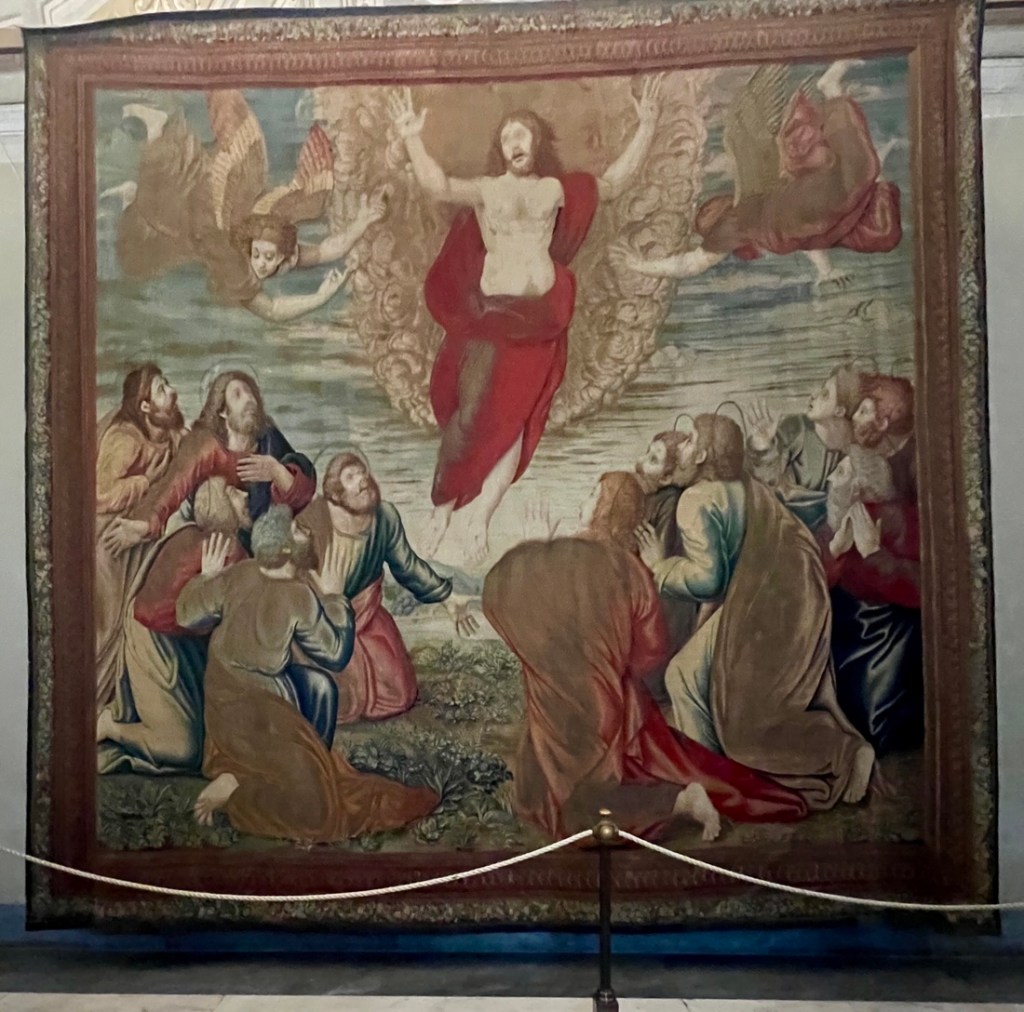
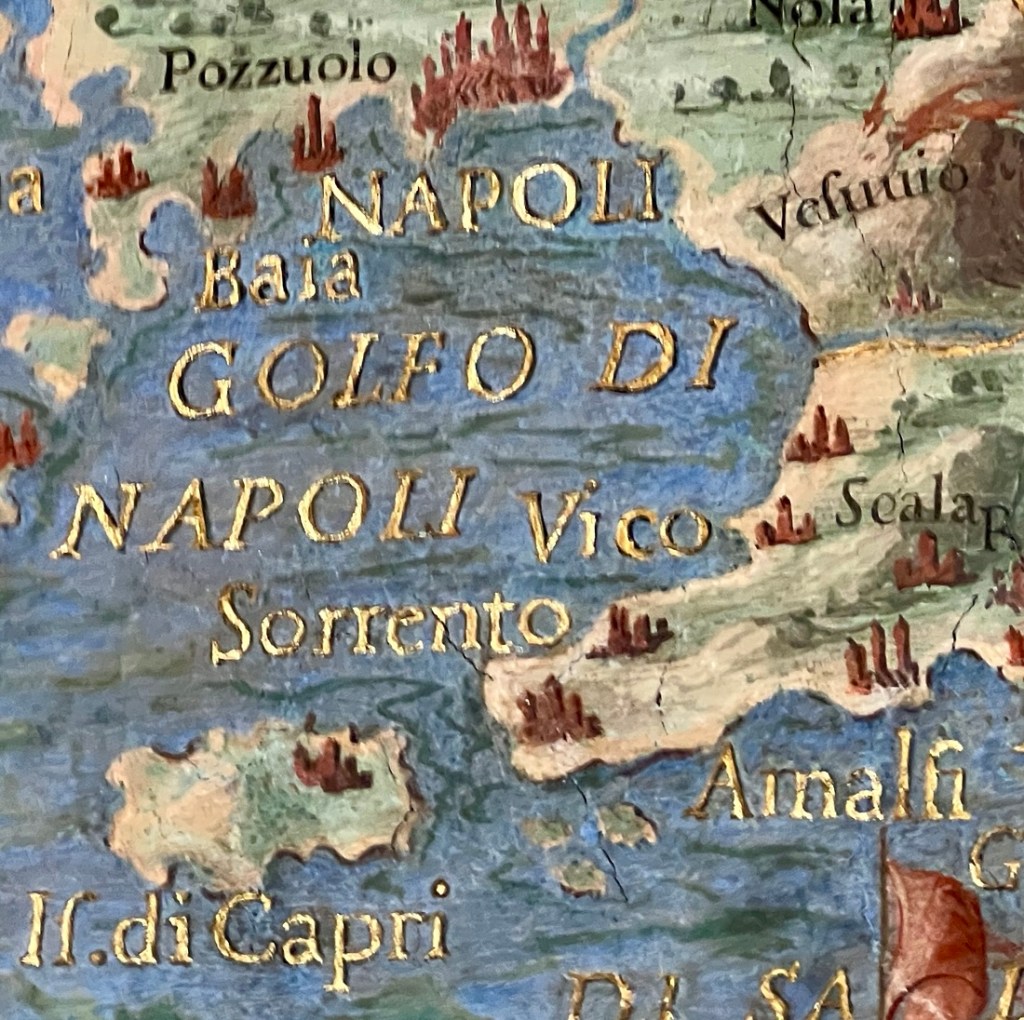
A restaurant with bruschetta caught our eye but did not open for 15 minutes, so first we satisfied a craving for french fries at McDonalds.This external wall of the Vatican reminded me of a scene from Mission Impossible III.As we approached the Vatican Museums, we walked past this long queue that would have taken several hours.Janet’s prepurchased tickets meant this was our queue – we walked straight in. Yay Janet! The only tickets we’d been able to buy included a tour guide, but we just used the entry. Guides typically take 3 hours and we were through in 1 hour. We don’t do very well with tour guides.An Egyptian mummy. The Vatican museum contains a wide variety of artefacts, similar to other large museums. However, it forces the visitor to walk through every exhibit on their way to the prize – the Sistine Chapel.I noted that these two tablets were from Old Testament times. Sargon on the left is mentioned in Isaiah 20:1 when Assyria was defeating the North Kingdom of Israel. The right tablet mentioned Ashurbanipal, grandson of Sennacherib who besieged Jerusalem in 2 Kings.The museum’s Pinecone Courtyard, with the pinecone representing immortality and rebirth.One of many elegant hallways.I thought that this scene was the angel appearing to the shepherds but I’ve since learned that it depicts Christ’s ascension (thanks Google Lens).Janet liked the map room.We’ve been there!Raphael’s school of Athens which includes pictures of other people that he chose to honor.
Finally we were in the Sistine Chapel, the pope’s personal chapel and where the conclave had recently elected the new pope. No photos were allowed and I got fussed at for trying! We spotted the Creation of Adam on the ceiling. Everyone knows that happy image.
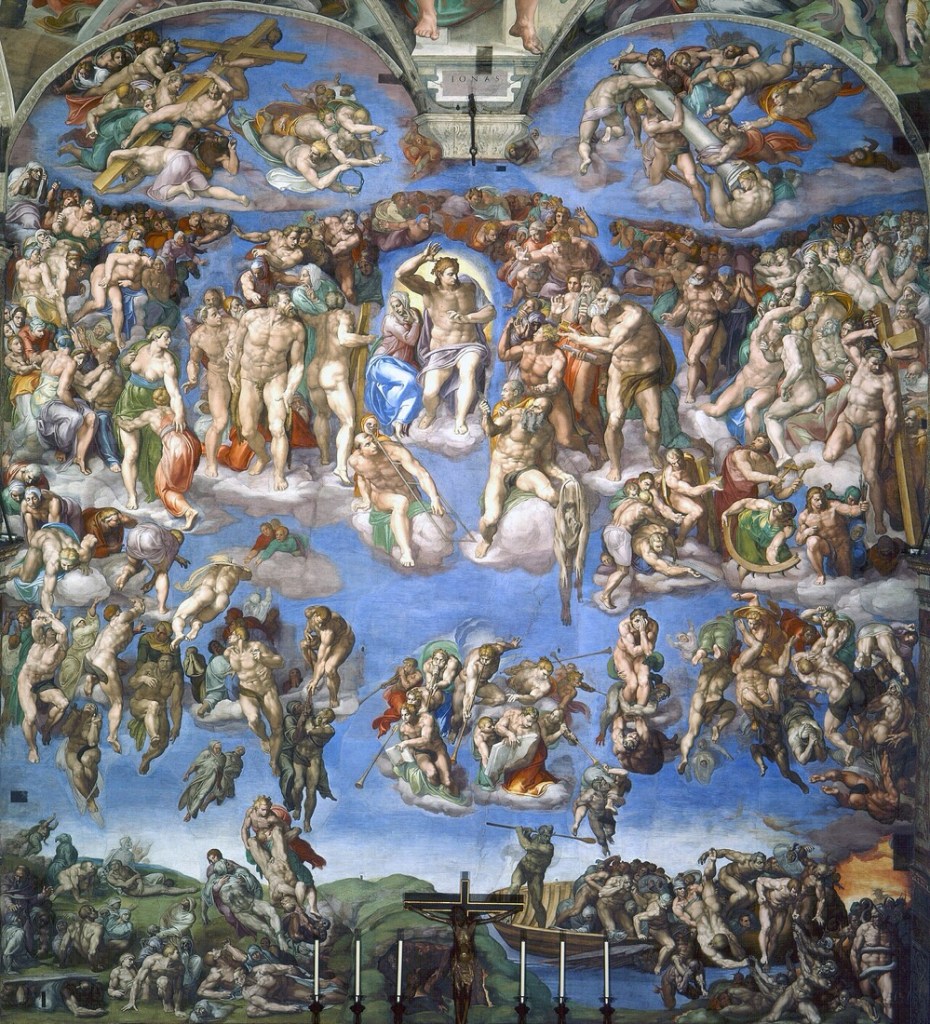
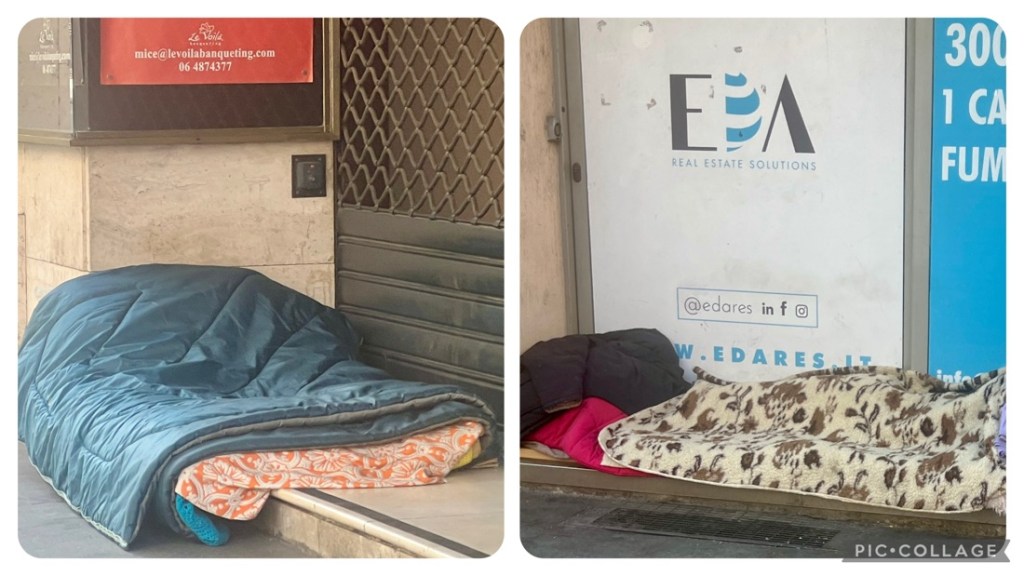
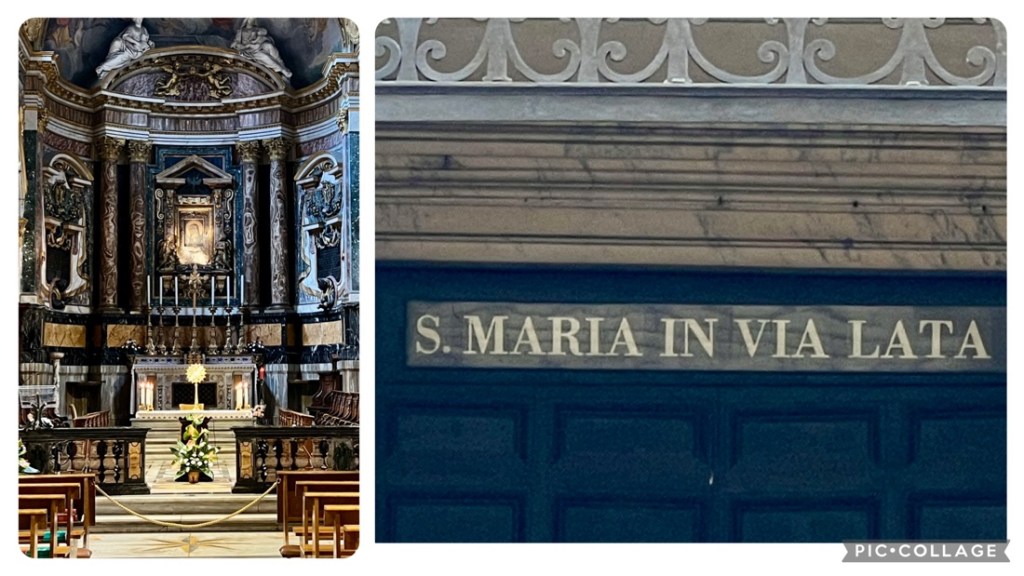
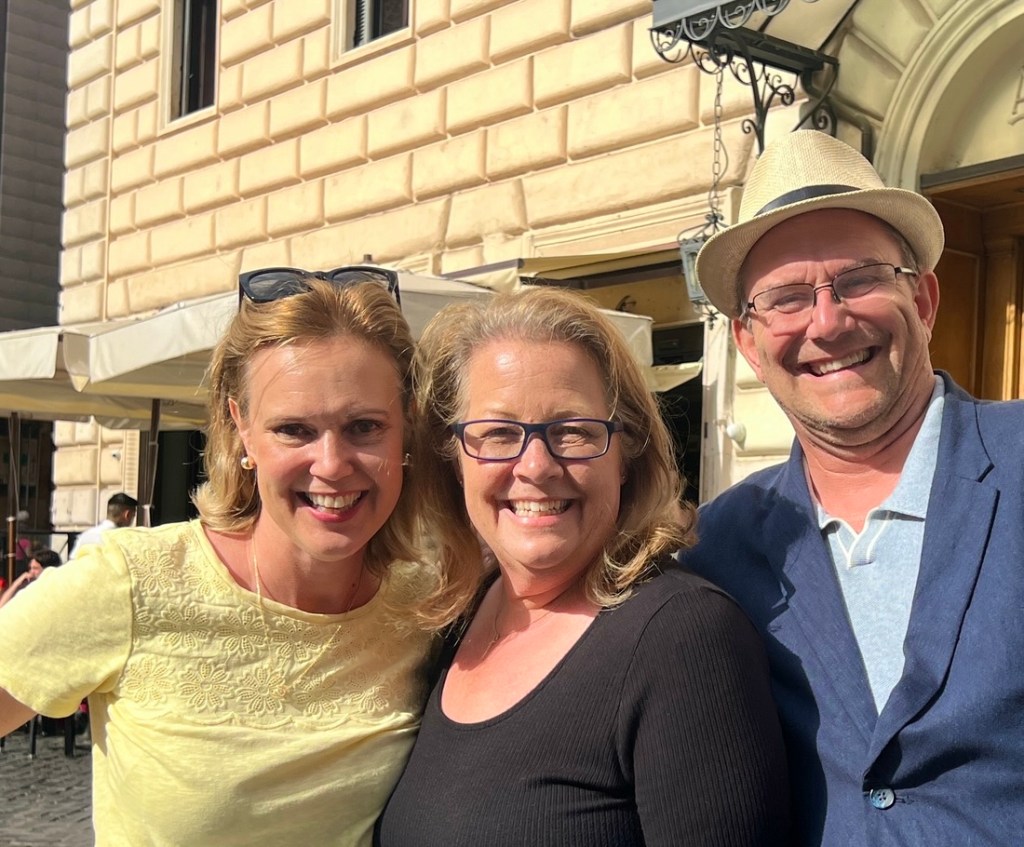
The Creation of Adam. Thank you Wikipedia for the image. it’s quite a small painting on the ceiling amongst many others. Michelangelo’s Last Judgment was unveiled in 1541 and it takes up a whole wall. It had a remarkable 3D look to it and felt very dark depicting souls being tormented and condemned to hell for eternity. Even the staircase to exit was ornate! It had taken us just over an hour to get through the museum as fast as possible.Seeing these homeless beds set up in door entrances in another part of Rome was a striking contrast to St Peter’s and the Sistine Chapel. I know that solving such problems is very complicated!We needed a sweet treat to recover from the museum and we found some maritozzis to enjoy before heading back to our apartment to rest and change. We were so happy to have such a central apartment. Taxis helped too 😁.After a rest, we headed off to our cooking class. On the way we passed this church. Legends suggest Paul was imprisoned here, or the centurion who guarded him stayed here, or this was where Luke, a traveling companion of Paul and the writer of a Gospel and Acts, lived.As we passed the Pantheon, we bumped into Laura Towne who had taught English to Bailey and Jett at school in Houston. What a small world!
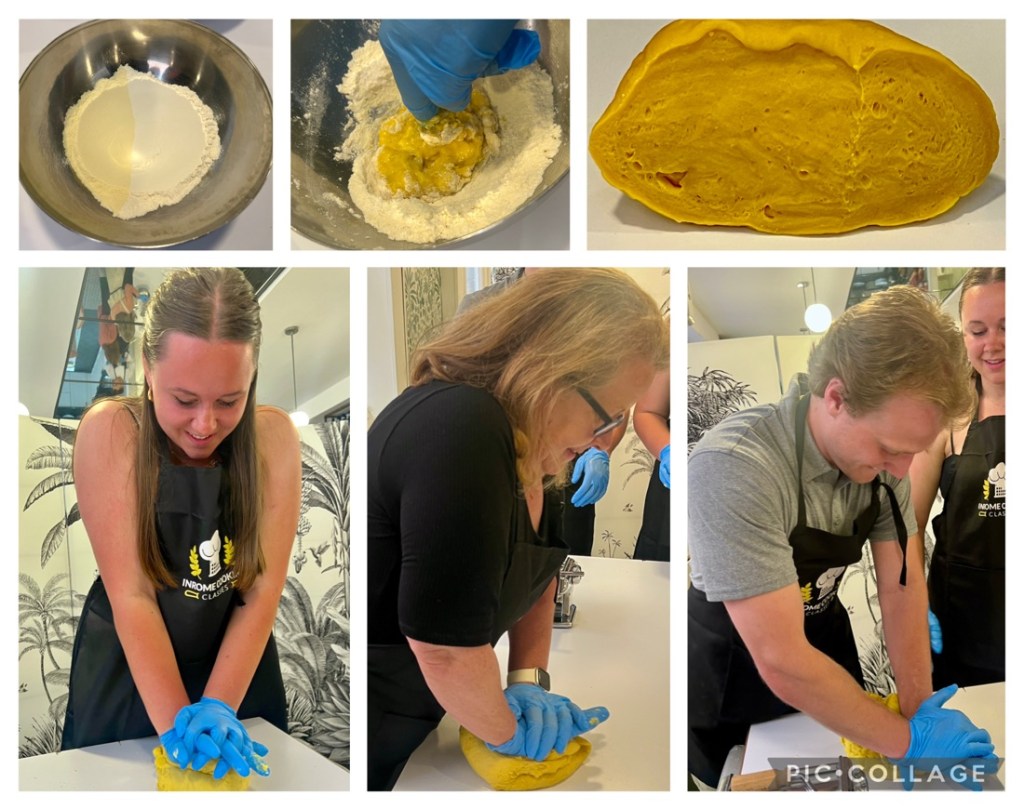
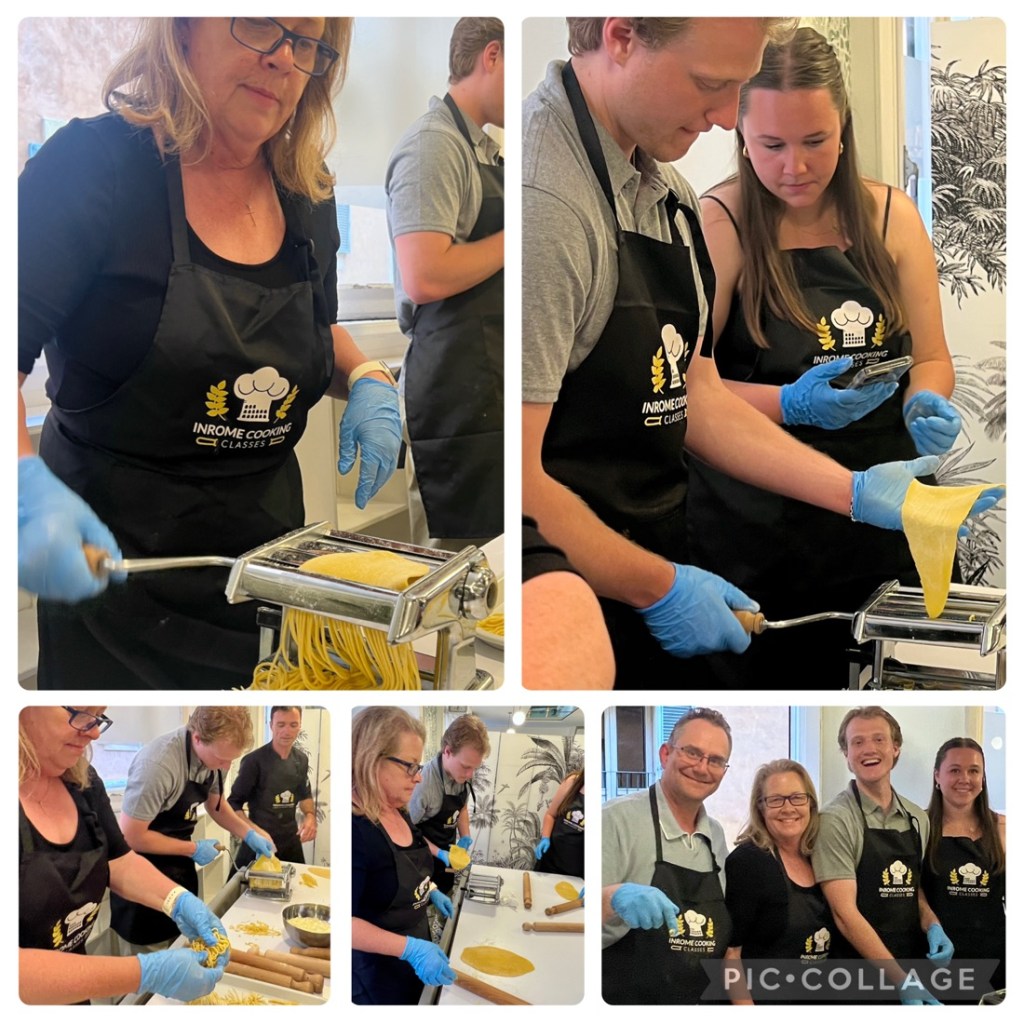
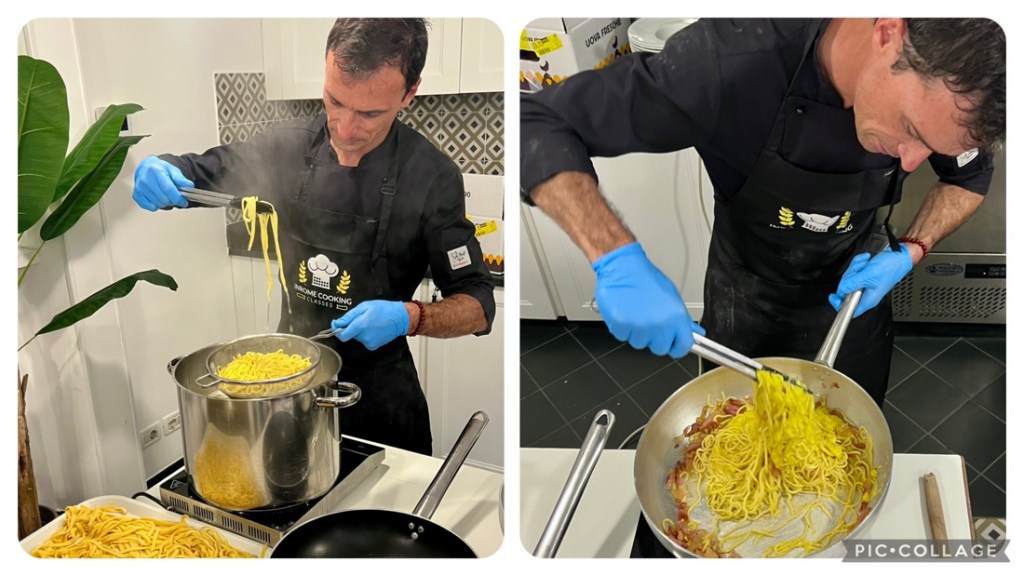
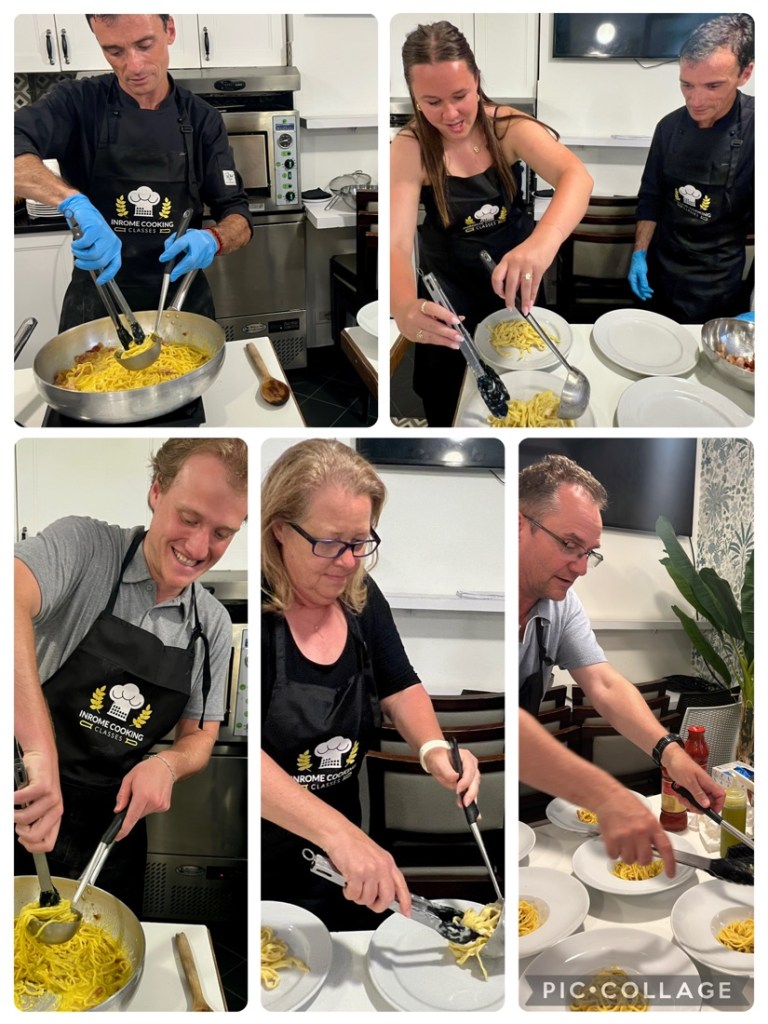
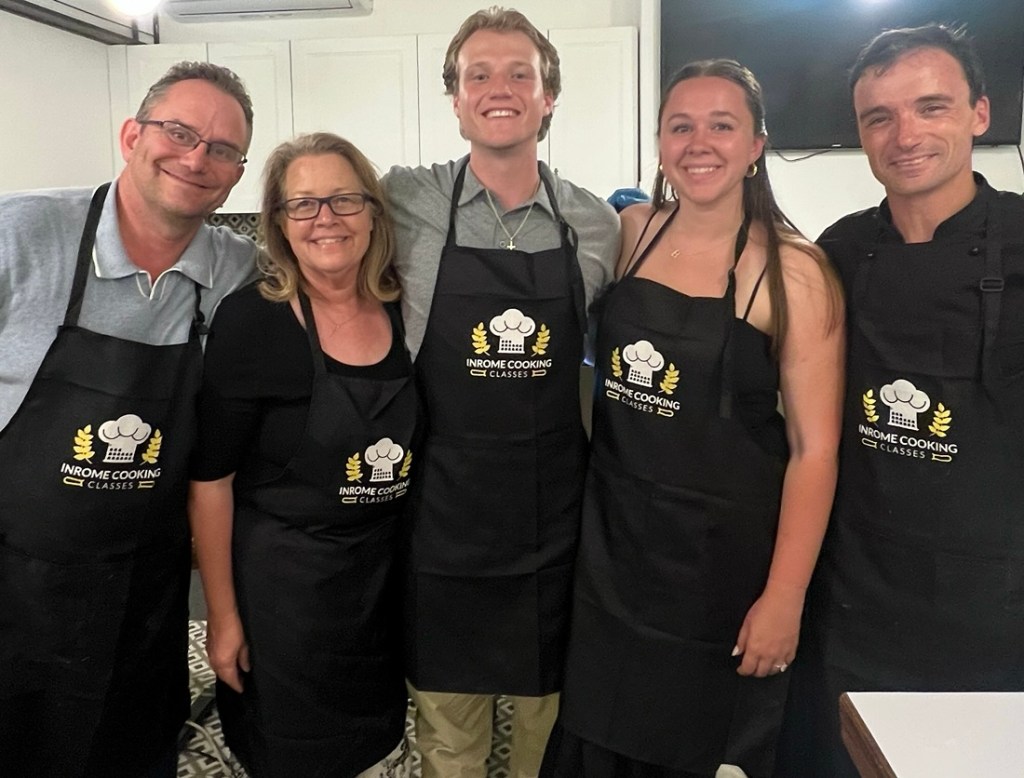
Next was a highlight of the trip. Janet had booked us into a cooking class where we made spaghetti carbonara, tiramisu, and more. The four of us were joined by another couple and Fabio gave us excellent instruction.
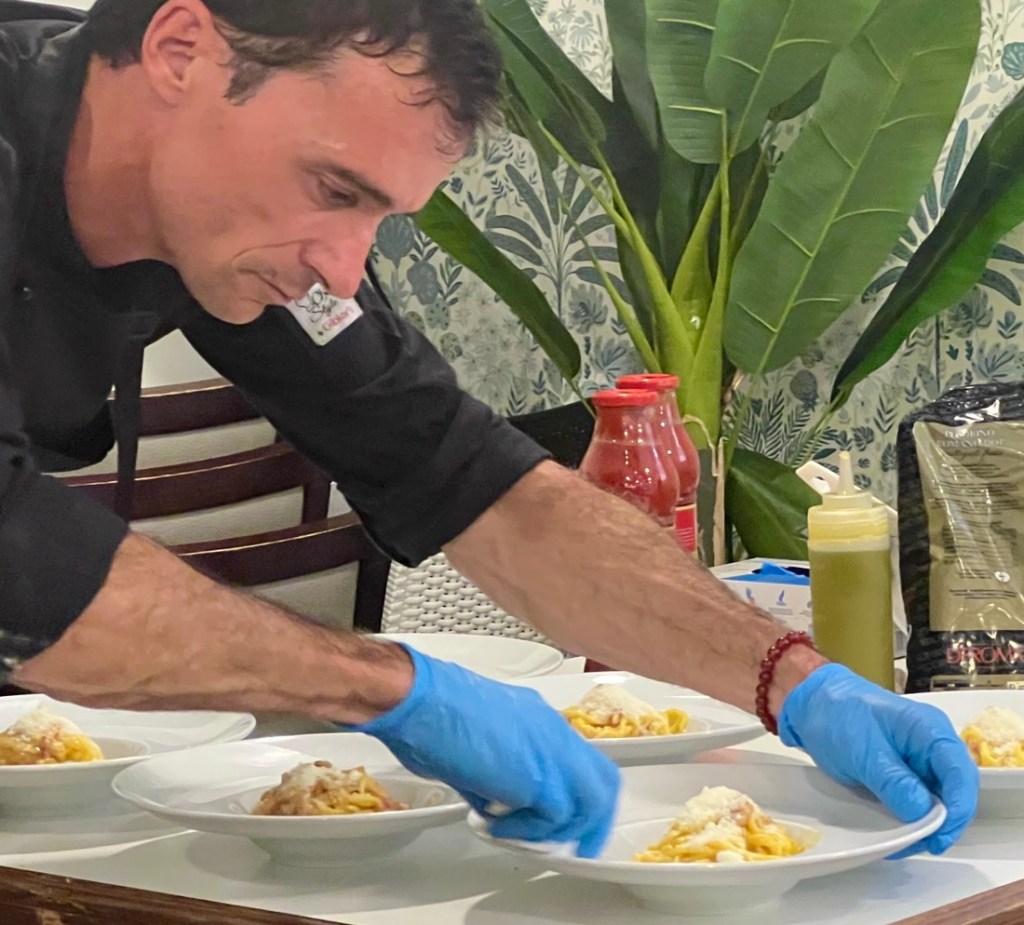
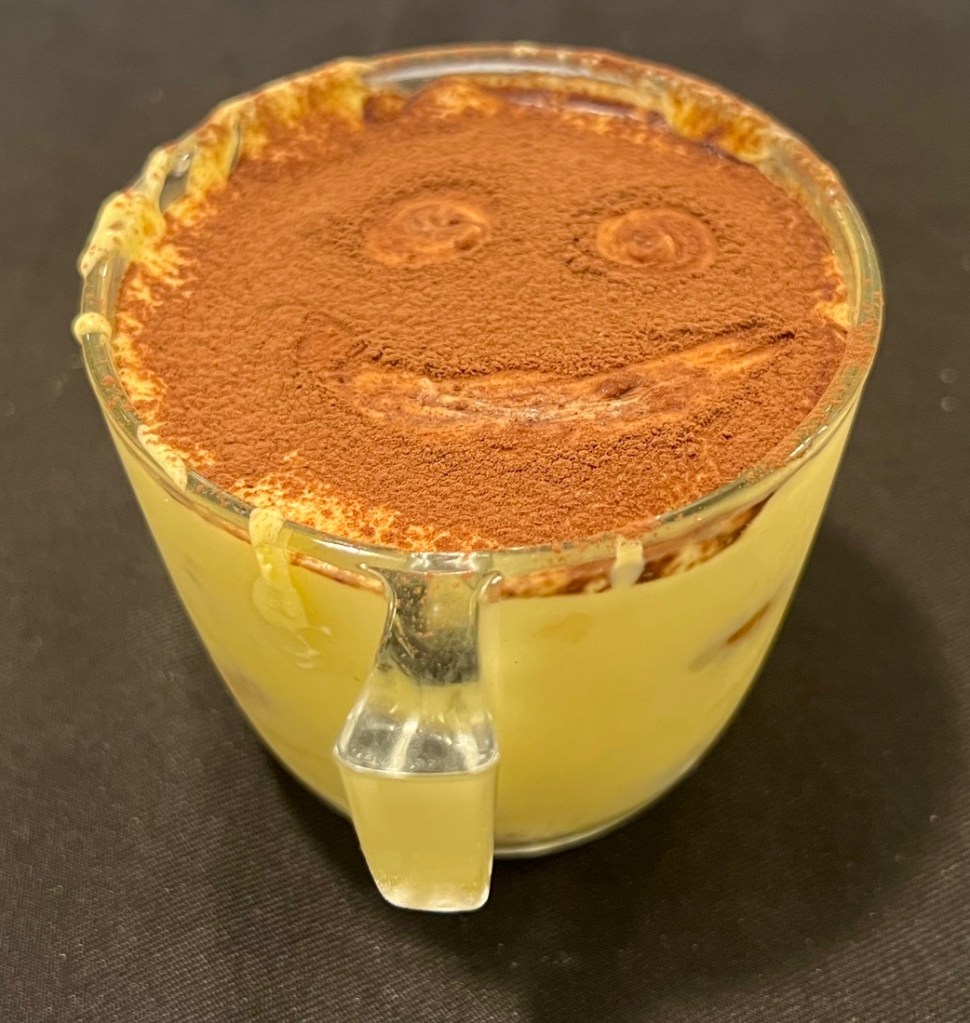
Fabio showed us the pancetta (pork cheek) and Janet was very interested in how to prepare it. Fabio described how his grandmother used this meat during the second world war because it was cheap. I thought about my uncle Den fighting in Italy with his tank at that time! I was brought back to the present day by the great smell of the cooking! Delicious food brings everyone together!We each made a tiramisu that was placed in the fridge to cool.Next was making the pasta base which had to be left to rest for a while. “Like CPR” Fabio explained.Then we made our spaghetti and linguine.Fabio cooked the pasta and made the dish.Following Fabio’s lead, we all had a go at plating.I loved Fabio’s focus when he was finishing off the plating.Fabio explains that this pasta is al dente.Time to eat! It was yummy.My tiramisu tasted better than it looked. I learned that I definitely need to be the sous-chef under Janet in the kitchen!A well-fed cooking crew!
What an amazing three days we had in Rome and what a grand finale this cooking class was. After six days of our trip, we were well over our jet lag but long term weariness was setting in after so many activities and so much walking. We were so thankful for comfortable rooms!
Our apartment’s living room. It had three bedrooms and two bathrooms, but the hot water ran out after one shower…
"Cajunlimeys" combines Lousiana (Janet) and England (Peter). For "limeys," check out scurvy in the English navy.
We love adventures and use blogging to write a photo diary to preserve our memories. Some crazy friends enjoy following us and my notes might help others plan.
View more posts
2 thoughts on “Italy Day 6: The Vatican and a Cooking Class”




















 The Adventures of the Cajunlimeys
Sounds enjoyable!
LikeLiked by 1 person
So fun! I know Janet enjoyed the cooking class! We are waiting to taste the fruit of her labor!!!
David
LikeLiked by 1 person