Time to go back 2000 years. My two previous visits to the Colosseum and Forum had left me somewhat underwhelmed by the piles of ancient rocks through my lack of understanding. This time, the Gladiator movies, Francine Rivers’ Mark of the Lion books, and a PhD in a related field helped me understand what I saw! The key was understanding the timeline of events and construction. A couple of good guidebooks helped too: Rick Steves’ Best of Italy and Brian Schmisek’s The Rome of Peter and Paul.
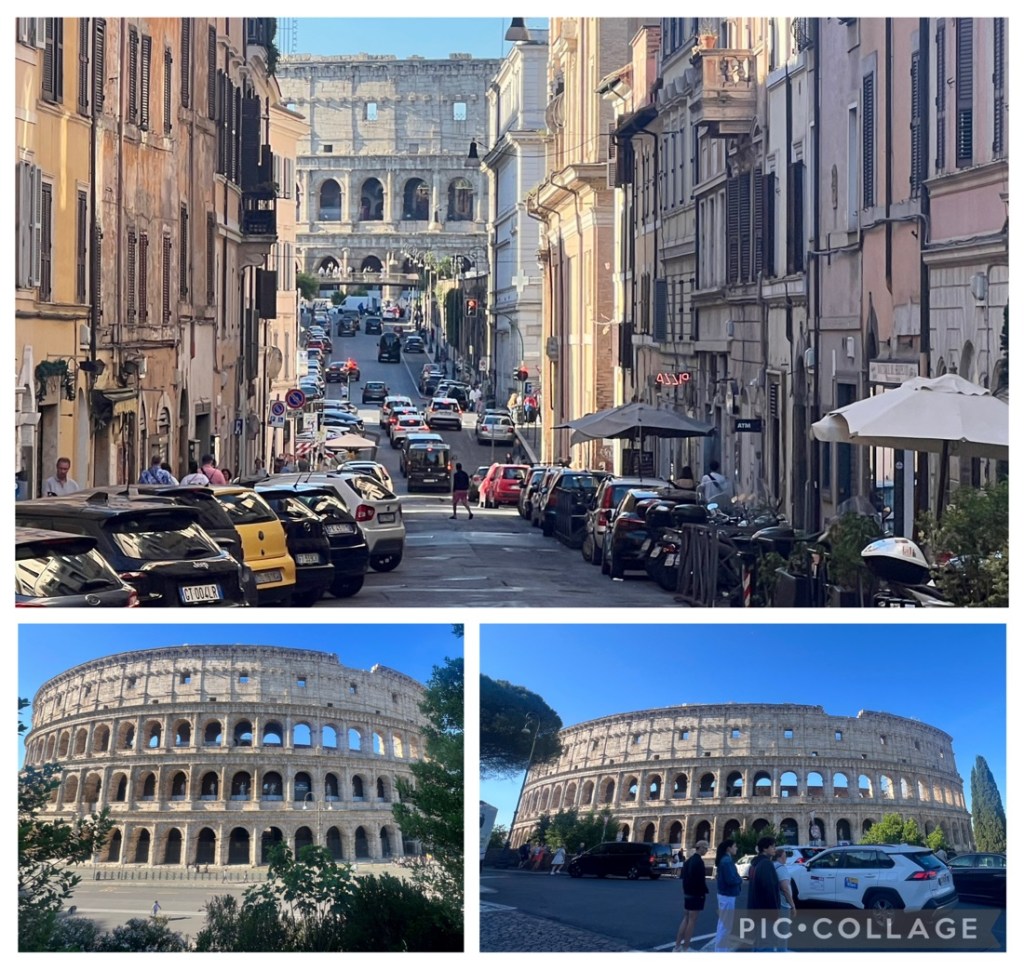
Our first stop was the Colosseum. Tickets went on sale exactly 30 days before the entry time, so we had been up at 2 am a month ago to get these… There are tours that take you to the top or around the basement. We chose the simplest: entry into the arena, only, which was perfect. To arrive for our 8:40am entry time, we’d bought simple breakfast items to enjoy before our ten minute stroll down the hill. We loved the fresh morning air and less people.
The Colosseum dominates central Rome.
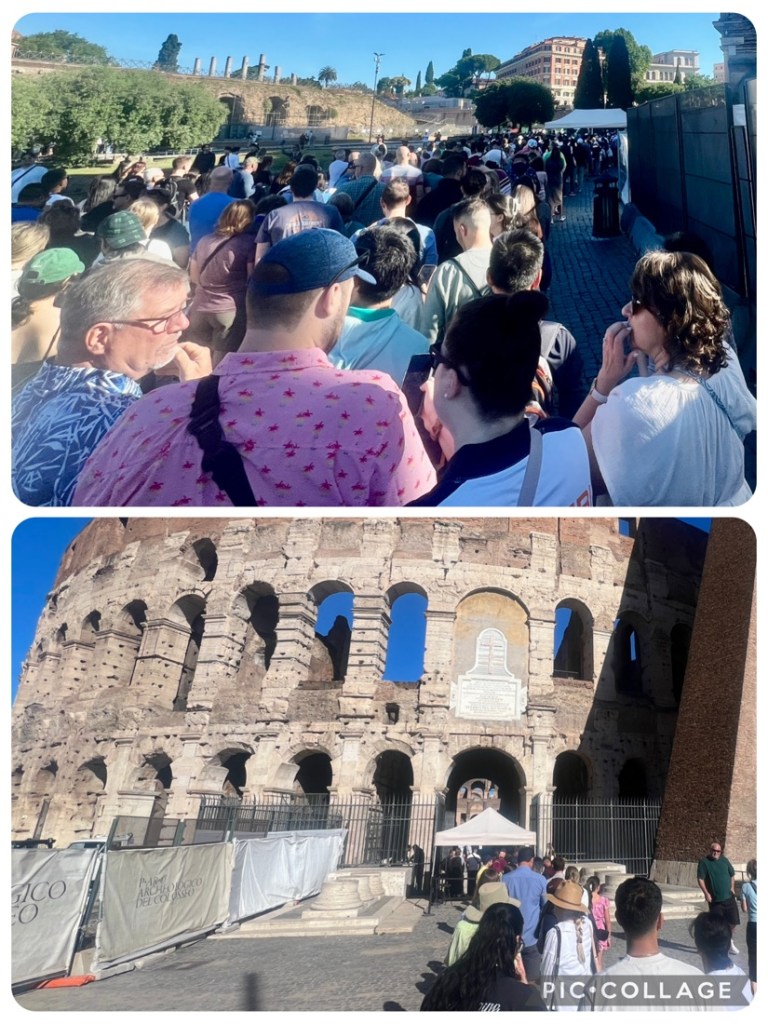
We joined one very long line, but quickly learned that the entrance for our tickets was on the other side. After a frustrated walk, we were very happy to find a short queue!
Long queue vs short queue. This was one of several occasions during our visit where Janet’s research to pre-buy tickets really paid off.
The name “Colosseum” comes from a 106-foot statue of Emperor Nero that he built near his lake after Rome’s great fire in AD 64 but no longer exists. Vespasian, after becoming emperor in AD 69, drained the lake to make an amphitheater for the people. His son Titus oversaw its grand opening in AD 80, one year after Vespasian’s death. This was after Jesus died (early AD 30’s) and after Paul and Peter came to Rome (probably early 60s). Notably, the Romans defeated the Jews in AD 70, destroying Jerusalem’s temple, whose riches helped pay for projects such as the Colosseum. While the Romans likely knew this site as simply the arena, the name “Colosseum” has been used for centuries.
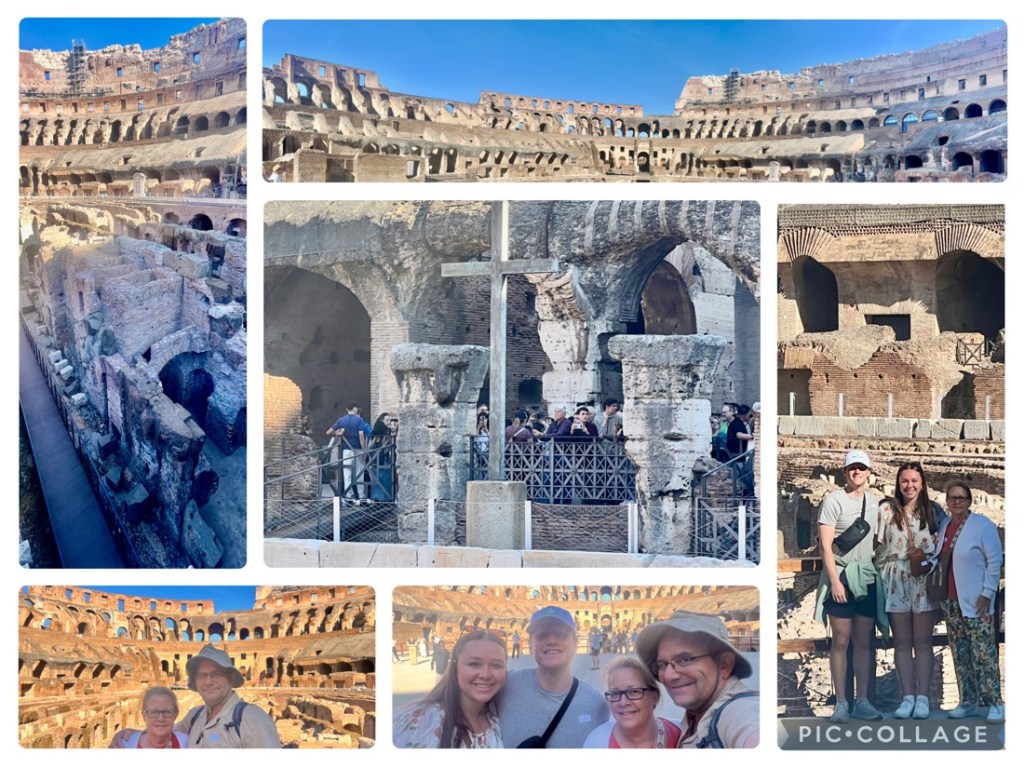
We were in the first group to enter the Colosseum and enjoyed its peace in the morning light though a crazy security guard almost ruined it. When we passed later and it was full, it sounded like a sports stadium. We imagined what it was like for gladiators and the roar of 50,000 bloodthirsty Roman spectators waiting for the emperor’s thumbs down. We noticed the large crucifix placed where the emperor would have sat and condemned many Christian martyrs.I was fascinated by the perfectly straight lines and curved arches at such a grand scale, so much of which remains 2000 years later.
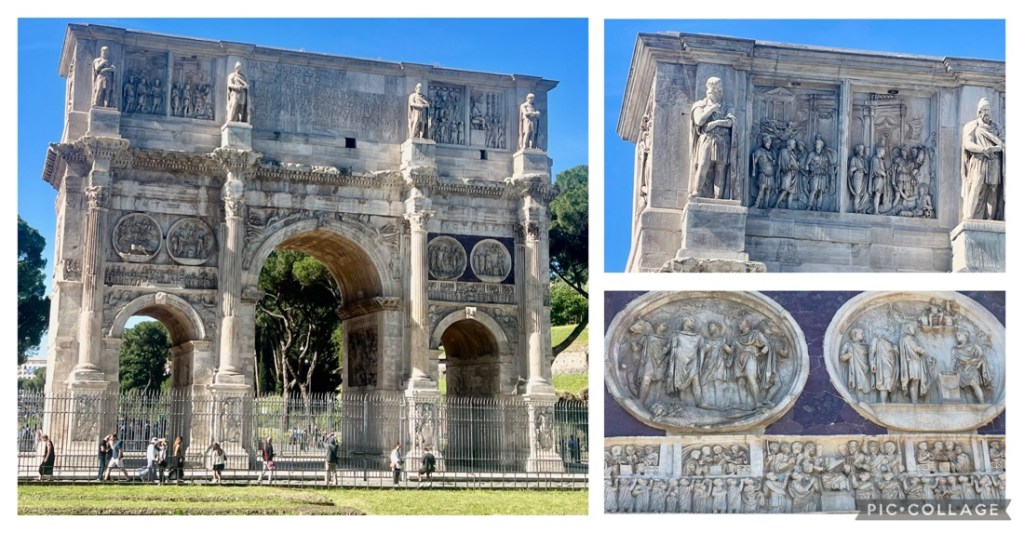
Our next stop was the Arch of Constantine, right next to the Colosseum. This was built in AD 315 to celebrate Constantine’s victory over his Roman rival Maxentius in AD 312. Tradition holds that Constantine had a divine vision before the decisive battle and thereafter legitimized Christianity in the empire by the Edict of Milan in 324. Constantine also convened the First Council of Nicaea in 325 which led to the Nicene Creed.
Intricate carvings remain in Constantine’s Arch from AD 315. This was built over 200 years after the adjacent Colosseum and Arch of Titus. On top of these arches there would have been a bronze statue of the emperor riding a chariot with four horses, like on the Victor Emmanuel monument. Roman emperors struggled to find room to build new monuments!
We entered the Forum complex next using an entrance between Constantine’s and Titus’s Arch. The queues were short and we were soon inside. The Arch of Titus was built around AD 81 by Emperor Domitian to commemorate his brother Titus who became emperor in 79 but reigned for only a couple of years before his death. The arch recognizes Titus’s greatest achievement before he was emperor in AD 70 when he quashed the Jewish rebellion and destroyed the Jerusalem temple. This indicates the importance Rome placed on defeating the Jewish rebellion and the belief that Rome was greater than Yahweh, god of the Jews. Carvings on the arch show people carrying the temple’s treasure back to Rome including a seven-candled menora.
The Titus Arch when entering the Forum. The arch was restored significantly in 1821 by Pope Pius VII who added an inscription on the other side to recognize his restoration.This carving was inside the arch. It shows the Romans taking the treasures of the Jerusalem temple back to Rome, including the prominent menora. To emphasize their superiority, the Romans forced Jewish slaves to help build the arch.
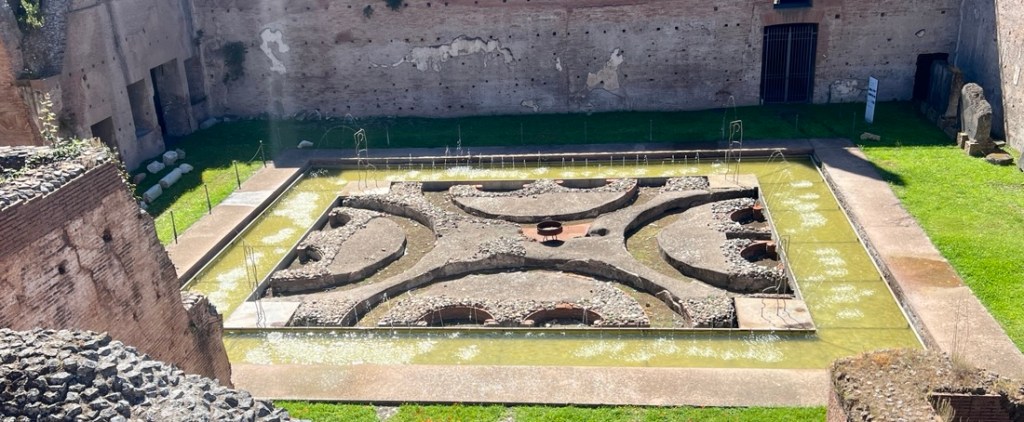
Upon entering the Forum complex, we immediately turned left up Palatine Hill which is one of Rome’s seven hills. There are remains of emperor’s palaces, and on the far side is a view of Circus Maximus, a very large outdoor arena where chariot races were held and made famous in Charlton Heston’s epic film Ben Hur in 1959 in which he plays a Jew.
The remains of a palatial garden on Palatine Hill.The view of Circus Maximus from Palatine Hill.
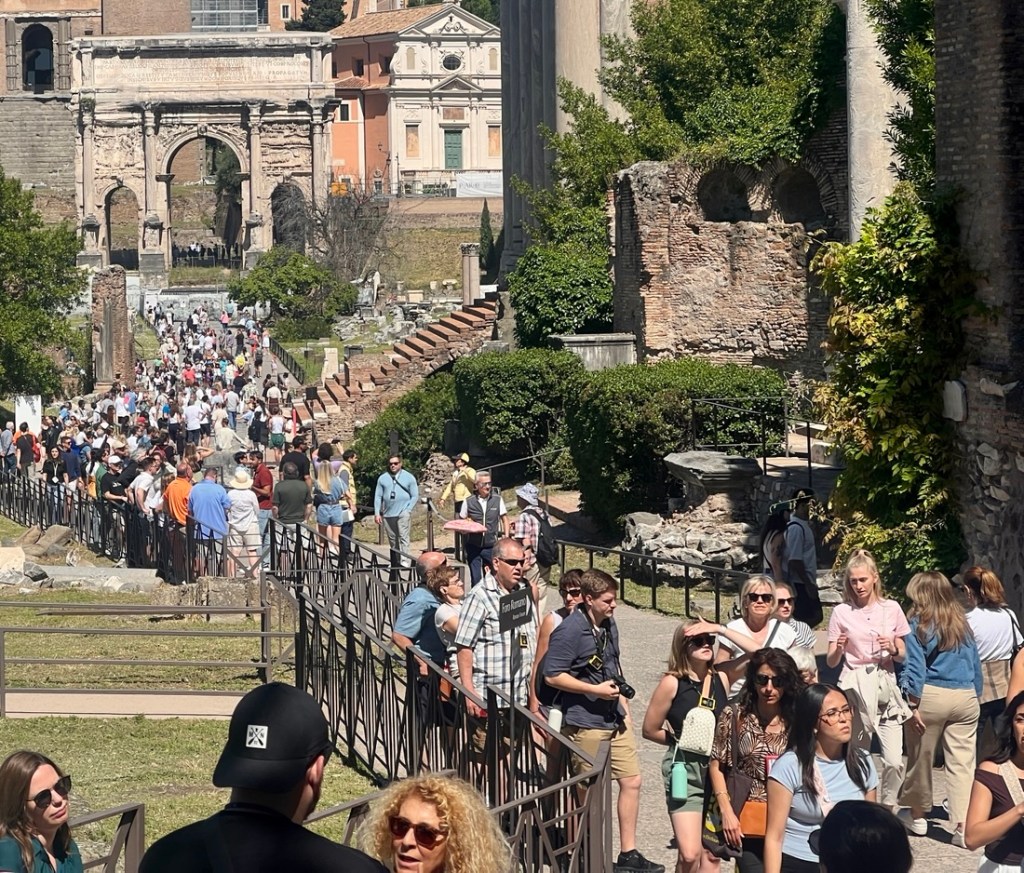
There are so many different significant ruins throughout the Forum complex. There were many tour groups guides passionately describing them for over three hours. We were thankful for a concise Rick Steves guidebook that gave a brief overview of the most significant ones and allowed me to work out their timeline. I felt that walking around was like the timeline that archaeologists identify when they dig vertically down. However, this was a two-dimensional horizontal plane and the timing was mixed up. The key sites are described below.
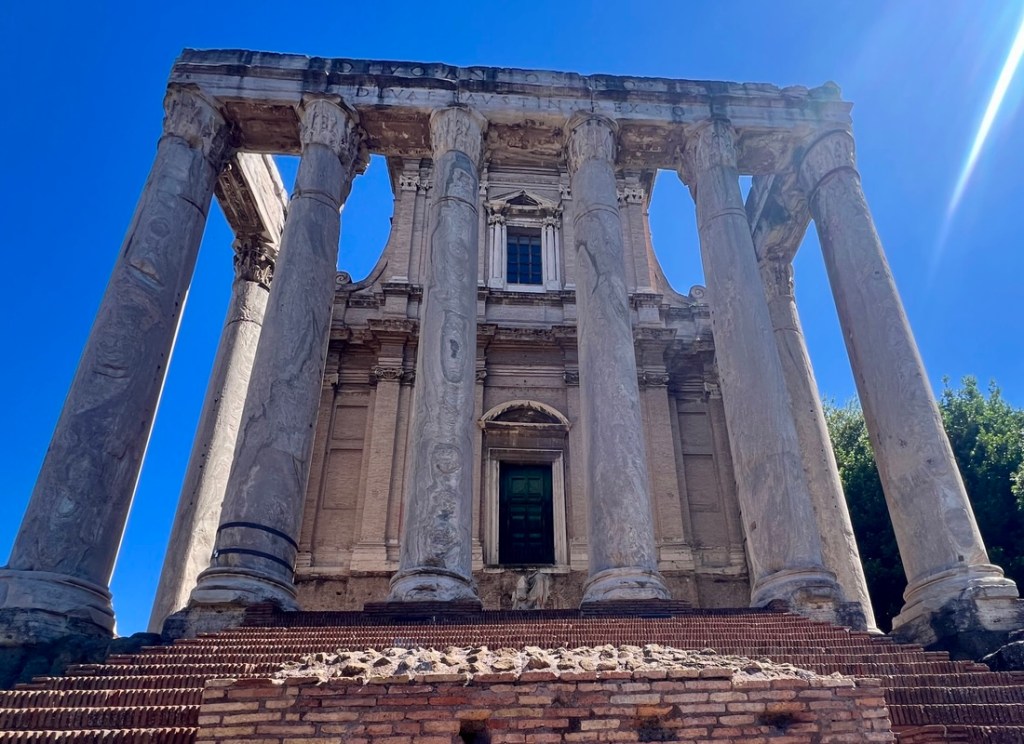
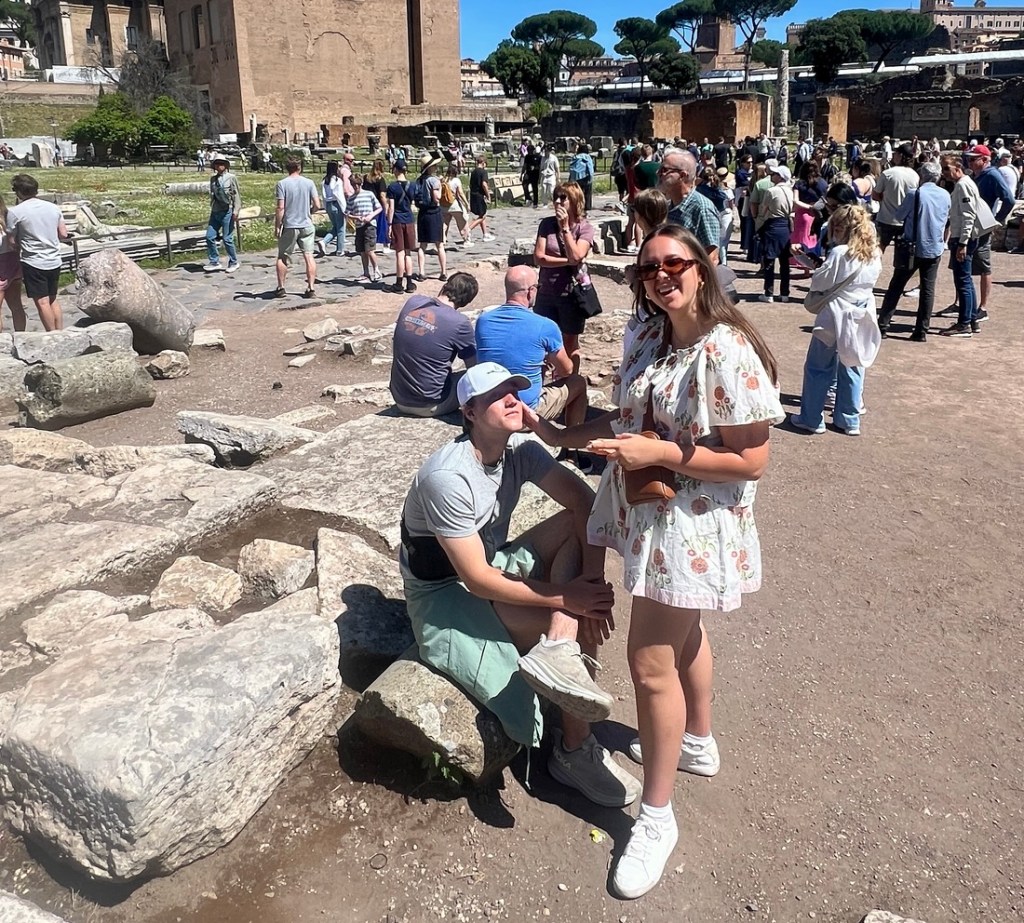
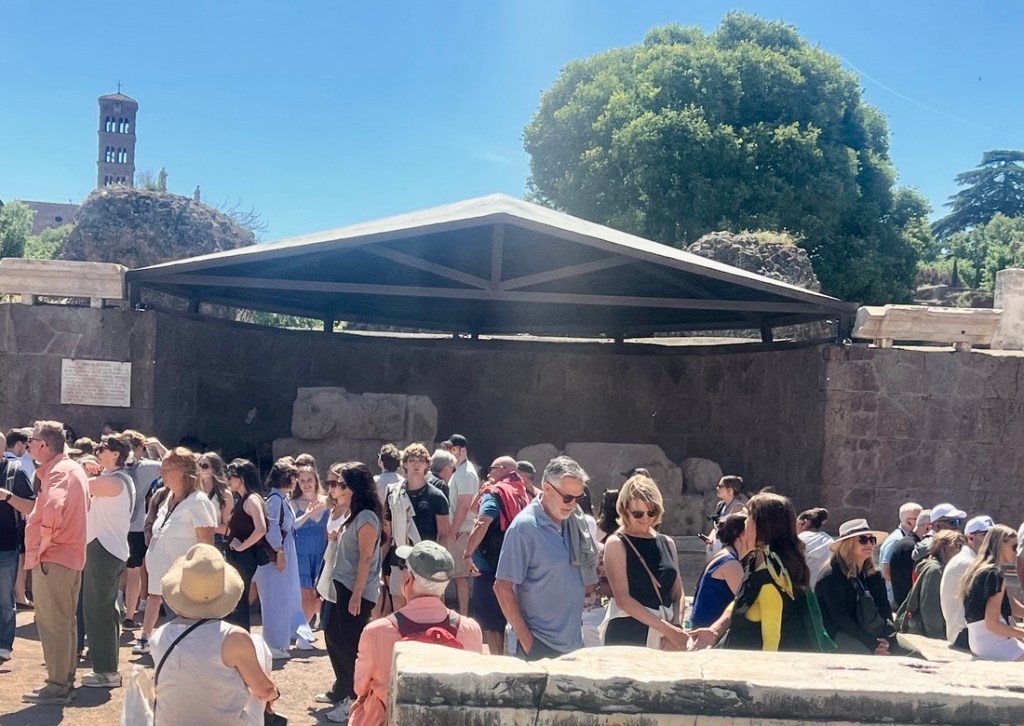
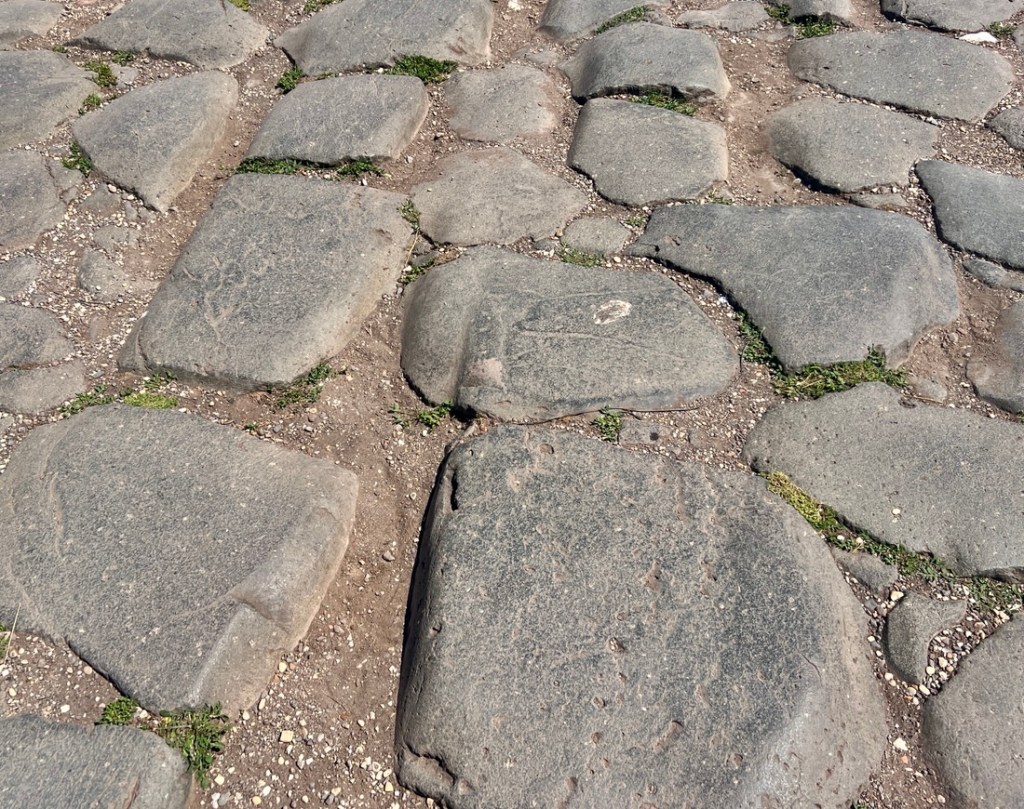
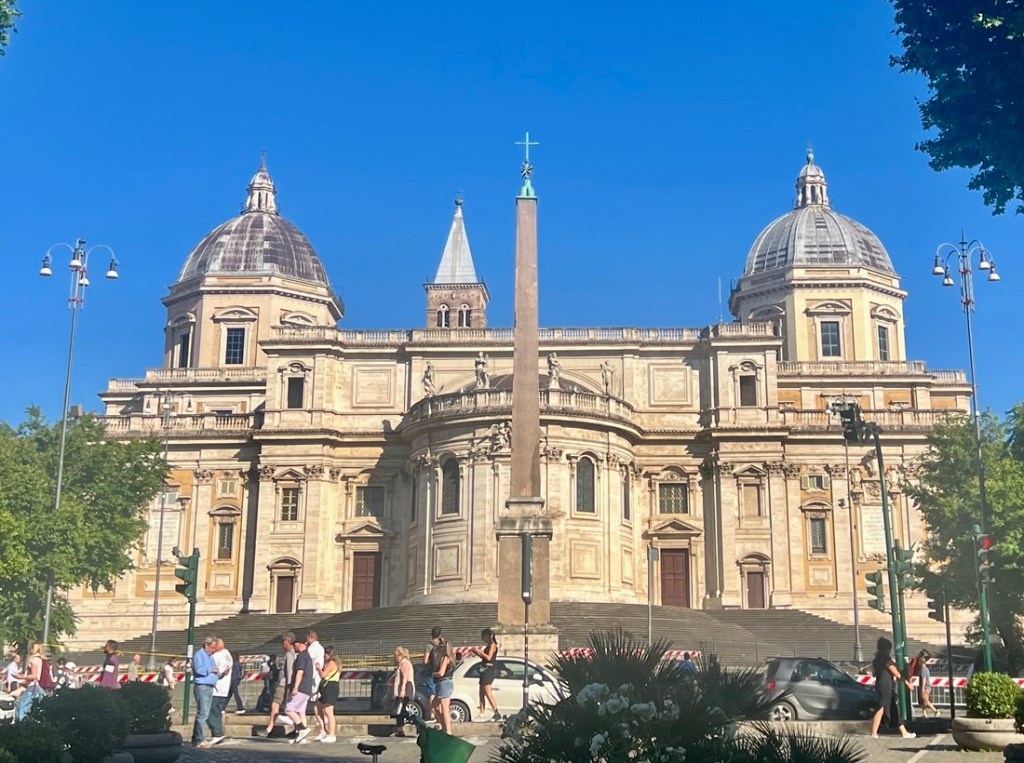
Three massive arches of the Basilica of Maxentius remain. It would have been at least twice the current size and was a mammoth hall of justice. Built in AD 312, it was a late addition to the Forum, the last basilica that the Romans built, and is also known as Constantine’s Basilica because a large statue of this emperor was at one end. Its layout has been used for many buildings since and inspired Penn Station. The building probably partially fell down during earthquakes in 847 and 1349. In 1614, Pope Paul V moved a couple of the remaining massive columns to help build the papal cathedral Santa Maria Maggiore (where the most recent pope was buried) and to decorate its piazza.The view up the Forum’s “main drag,” the Via Sacra. It would also have been busy in Ancient Rome and filled with visitors and locals, plus a few chariots.This temple’s door is original from the fourth century.The Roman Senate built this temple in AD 138-161 to honor Emperor Antoninus Pius and his deified wife, Faustina. Something else on the timeline. The Forum would have been much more open in AD 70.These three columns are the remains of the Temple of Castor and Pollux, dating from the 5th century BC, five hundred years before the Colosseum was built.The Forum’s Main Square is where, in 753 BC, Romulus and Remus made peace with surrounding tribes (based in the seven hills) and this marshy valley became a trading center and the birthplace of Rome. Today, Bailey used it to put some sun cream on Jett! It was hot in May, and we did not want to know what it would be like in August!This metal roof marks where Julius Caesar was murdered in 44 BC. He changed the Roman government from a constitutional republic to a dictatorship, from the Roman Republic to the Roman Empire.This is the view that made me recognize the criticality of understanding the timeline. On the far left are the Capitoline museums, the buildings dating from the 15th century, though the hill had been a seat of government going back 2500 years. Next is the Arch of Septimius Severus from AD 203. Behind that is the green door of the site of the Mamertine Prison, where Paul was likely held during the 60’s. Paul (and perhaps Peter) would have been held in the dungeon which might be as old as the seventh century BC. Today’s above surface building is a church built in the mid 1600s. Behind this building one can see the chariot on top of the Victor Emmanuel building, built in 1861. The church dome ( Chiesa dei Santi Luca e Martina Martiri) dates from the 1600s. On the far right is the Curia, the ancient Senate House and the site of Rome’s official center of government. The first senate building on this site was built in the seventh century BC with the current structure built around AD 300. Wow! This one view covers millennia of history, including a site where some of the Bible was probably written.Most of the Forum’s paths are covered with these huge rocks which are difficult and very tiring to walk on.
The Forum was huge and exhausting, but I finally have some understanding of where the different pieces fit in history. The Forum that Paul saw and perhaps walked in would have looked very different, with much of it constructed after AD 70.
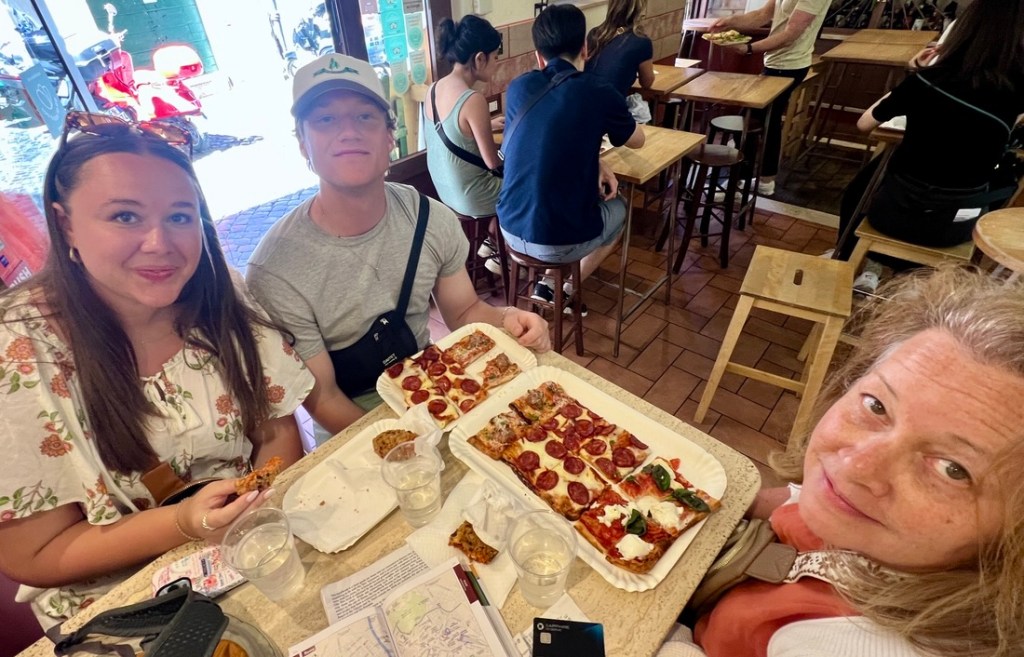
We ate a well-earned lunch of “pizza by the slice” with the cost worked out by weight!
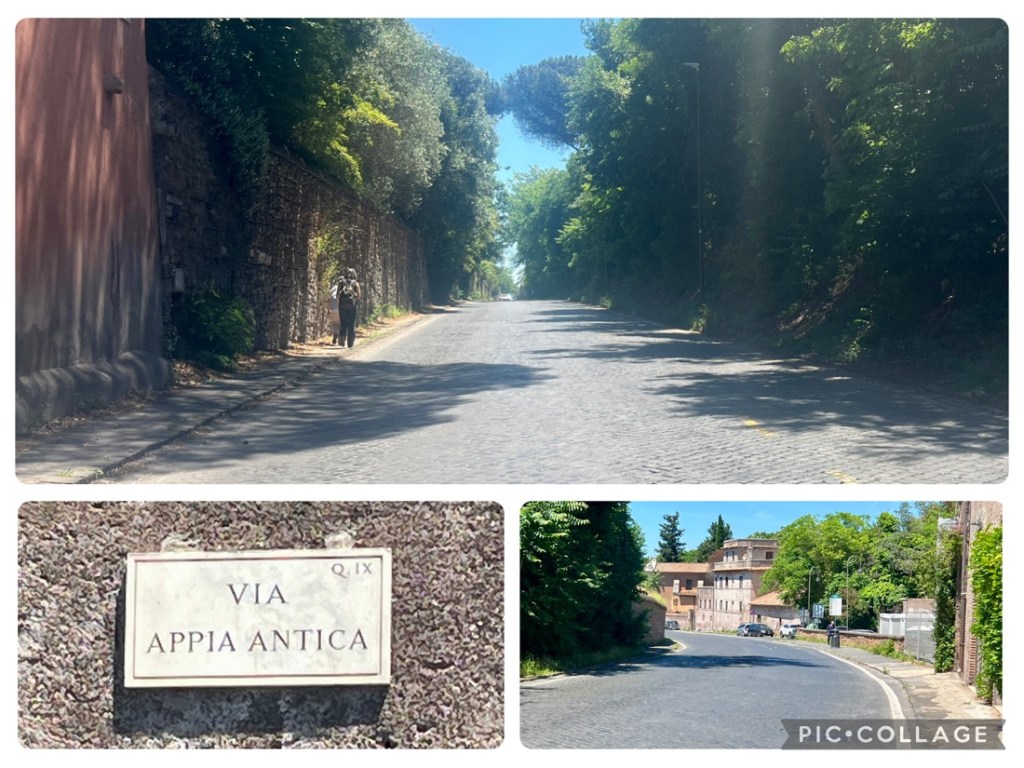
After lots of Roman ruins, we wanted a change of pace and headed out to the park of the Appian Way (Parco Appia Antica). The Appian Way is the old Roman road from Southern Italy into Rome and is mentioned in Acts 28 as how Paul traveled. We located a place on the map and were able to hail a taxi but struggled to explain our destination. However, he understood “parco Appia Antica” and off he went. We later discovered that the park is massive and is more historical than an open-access green space. After the taxi kept going past the destination I was aiming for, I suggested he stop and we got out a short stroll from the “Quo Vadis” church.
The Appian Way, as mentioned in Acts 28:15-16. The top picture shows the nice straight Roman road. I’m unsure what happened bottom left as it is going around a bend!
Next we visited the church of Santa Maria in Palmis, known as the “Domine, Quo Vadis?” church. It was a 17th century reconstruction of a 9th century chapel. It is on the place where, according to a sixth century legend, Peter, while escaping from Rome to avoid Nero, met Jesus, who was going to Rome. Peter asked Jesus, “Lord, where are you going (Domine, quo vadis?) to which Jesus replied, “I am going to Rome to be crucified again.” At this point, Peter returned to Rome to be executed.
Paintings of Peter (holding the keys to the kingdom) and Jesus inside the church. The white stone is a replica of a stone that supposedly shows Jesus’s footprints from the encounter.
We continued walking down the Appian Way. We came to a tourist information center and quickly realized the area was either for cycling or guided tours of the catacombs, neither of which appealed. Google showed coffee and gelato shops about 15 minutes walk away, via the city wall, so we headed that way.
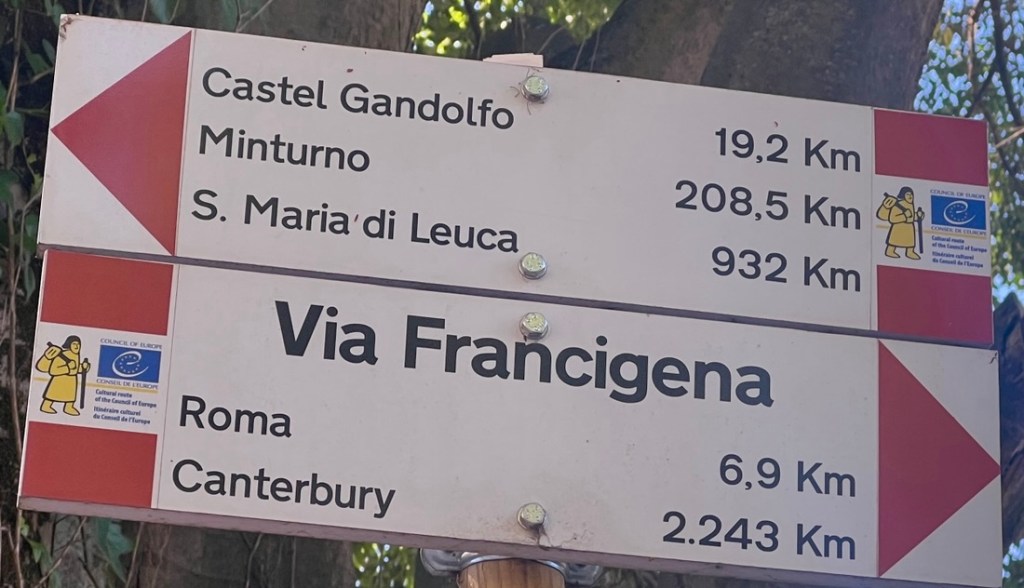
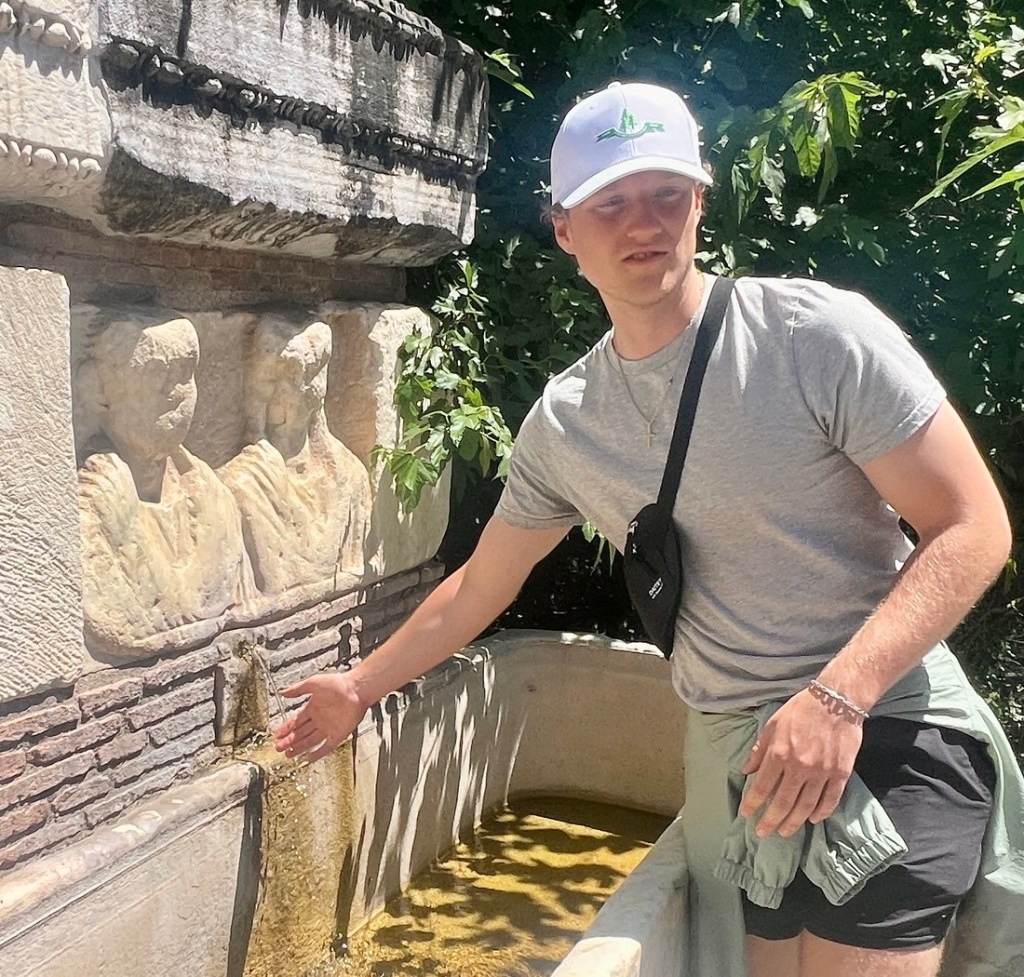
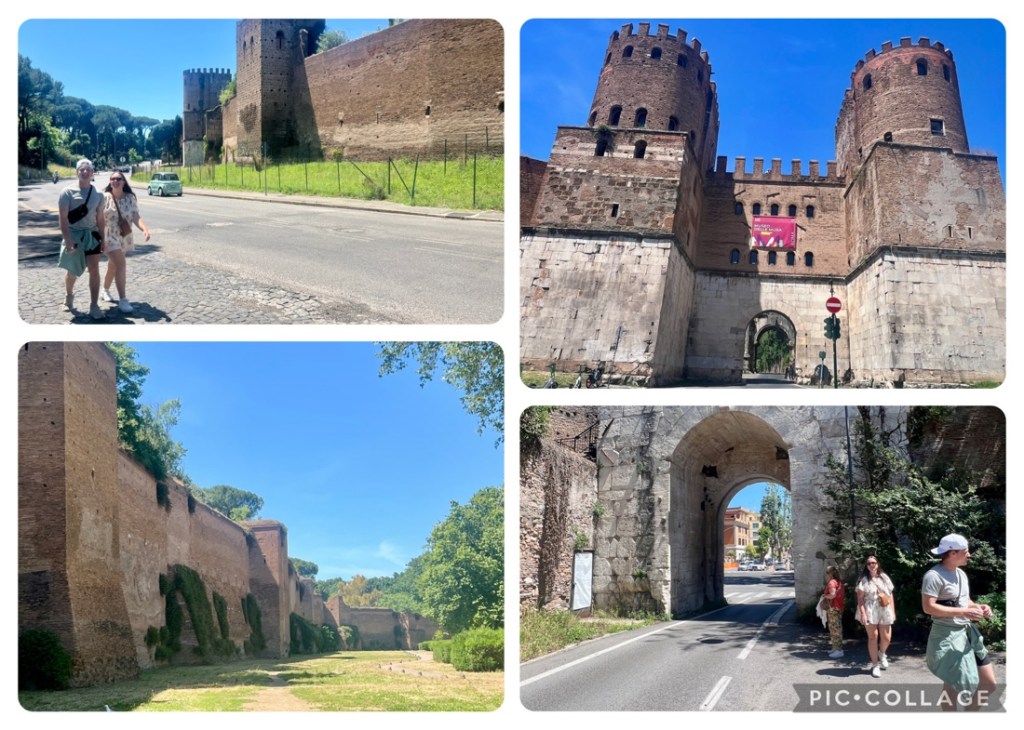
You can walk here from Canterbury in England. I would not want to walk that far on these cobble stones!Throughout the city we saw water fountains always running. We finally tried the water and it was cool and refreshing without ill effects.We walked alongside the ancient Aurelian city wall (built 271-275 AD) and past the San Sebastián and Latina gates. While this wall postdates Paul, we could imagine him arriving at Rome’s wall along the Appian Way.Our map took us into a leafy suburb and we opted for the gelato which was yummy. We had found a quiet part of Rome with the different vibe that we had been looking for.
After taking a taxi that we called with Uber to take us back to our apartment, we chilled for a while. On our way to dinner, I wanted to check out some nearby churches that had links, albeit tentative, to the Bible. ( I hope to write another blog that explores these links in greater detail.)
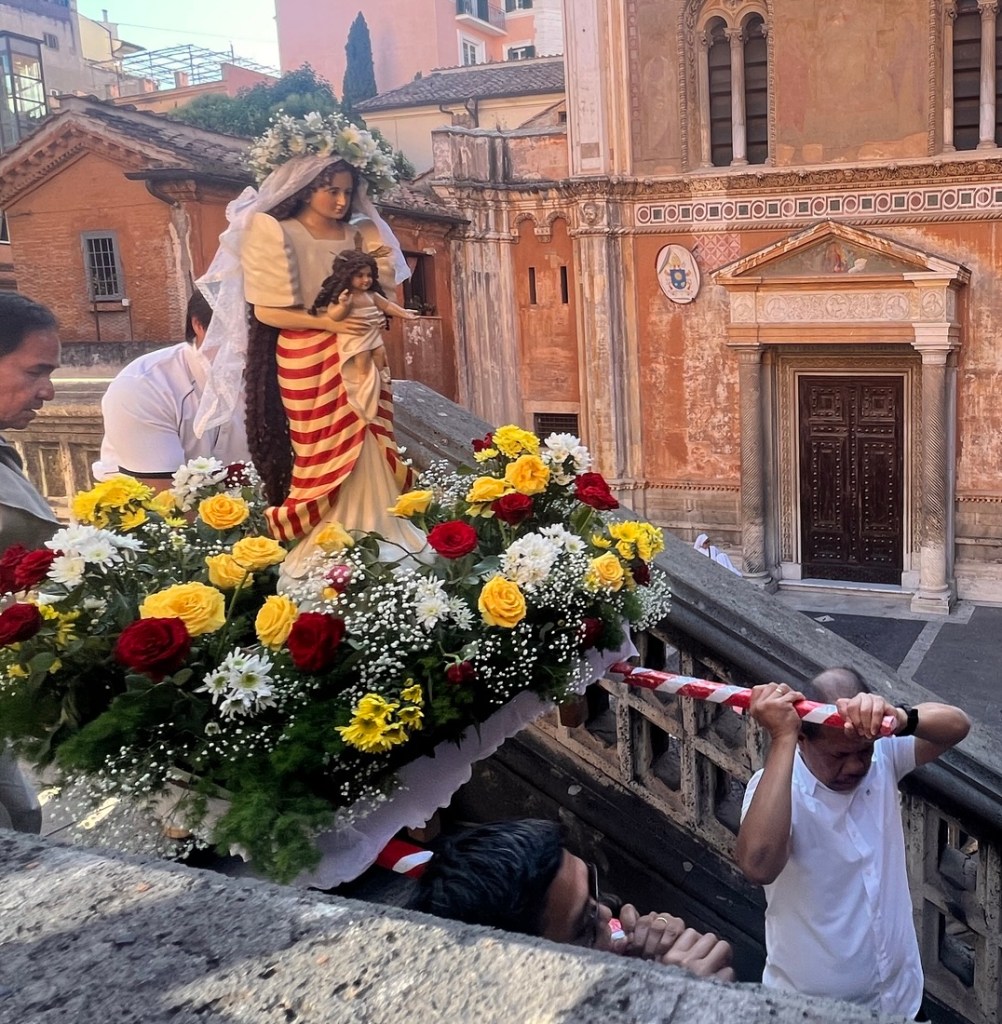
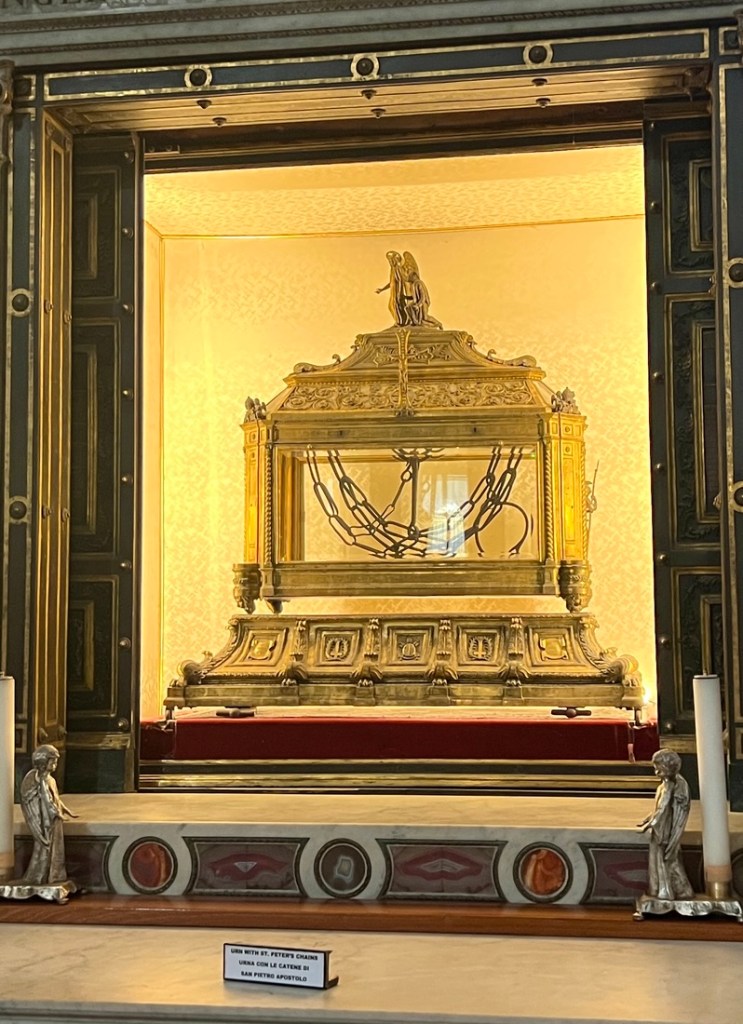
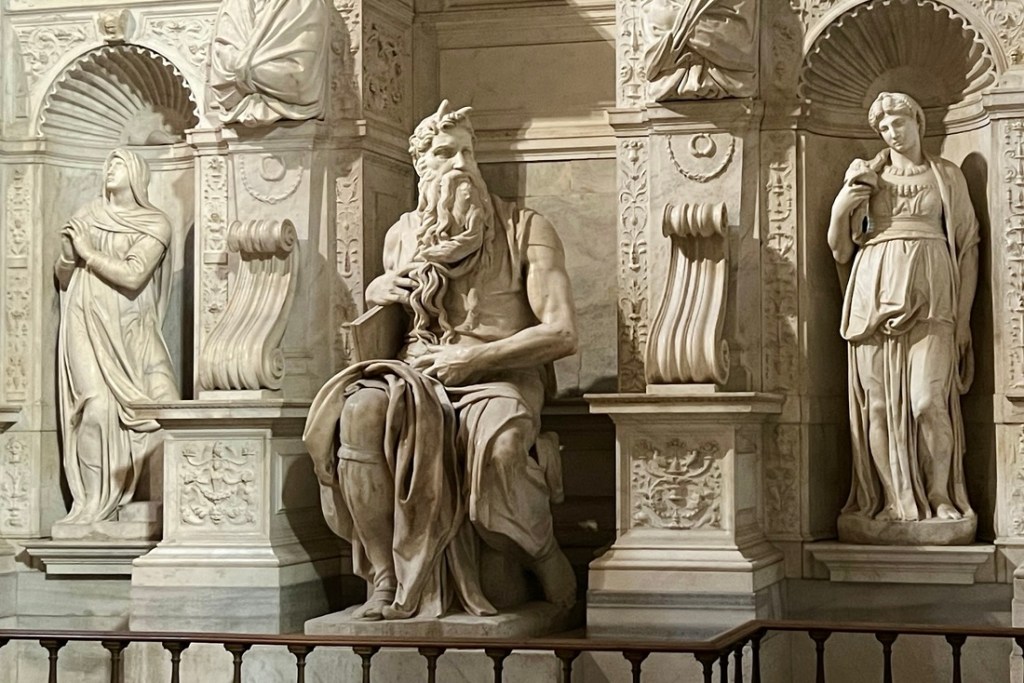
There is a tradition that this Basilica of Saint Pudenziana is linked to the “Pudens” mentioned in 2 Timothy 4:19-22. A procession started as we arrived.The Papal Basilica of Saint Mary Major is where the pope was recently buried. I’m unaware of any biblical links but we passed by it.At the Church of Saint Peter in Chains, the chains that fell off Peter in Acts 12 are supposedly on display. Also at the church of Peter in Chains is this statue of Moses by Michelangelo. It shows Moses with horns as Michelangelo would have used a Latin translation of the Bible (the Vulgate) which incorrectly translates the Hebrew in Exodus 34. The Vulgate says that Moses returned from his audience with God with horns instead of saying his face was radiant, as the words are similar in Hebrew.For dinner we chose a small place where you built your meal by choosing the pasta and the sauce. I thought the meal deal included tiramisu and salad, but learned afterwards that it was “or” not “and”. When asked whether I wanted the tiramisu, my immediate response had been yes!
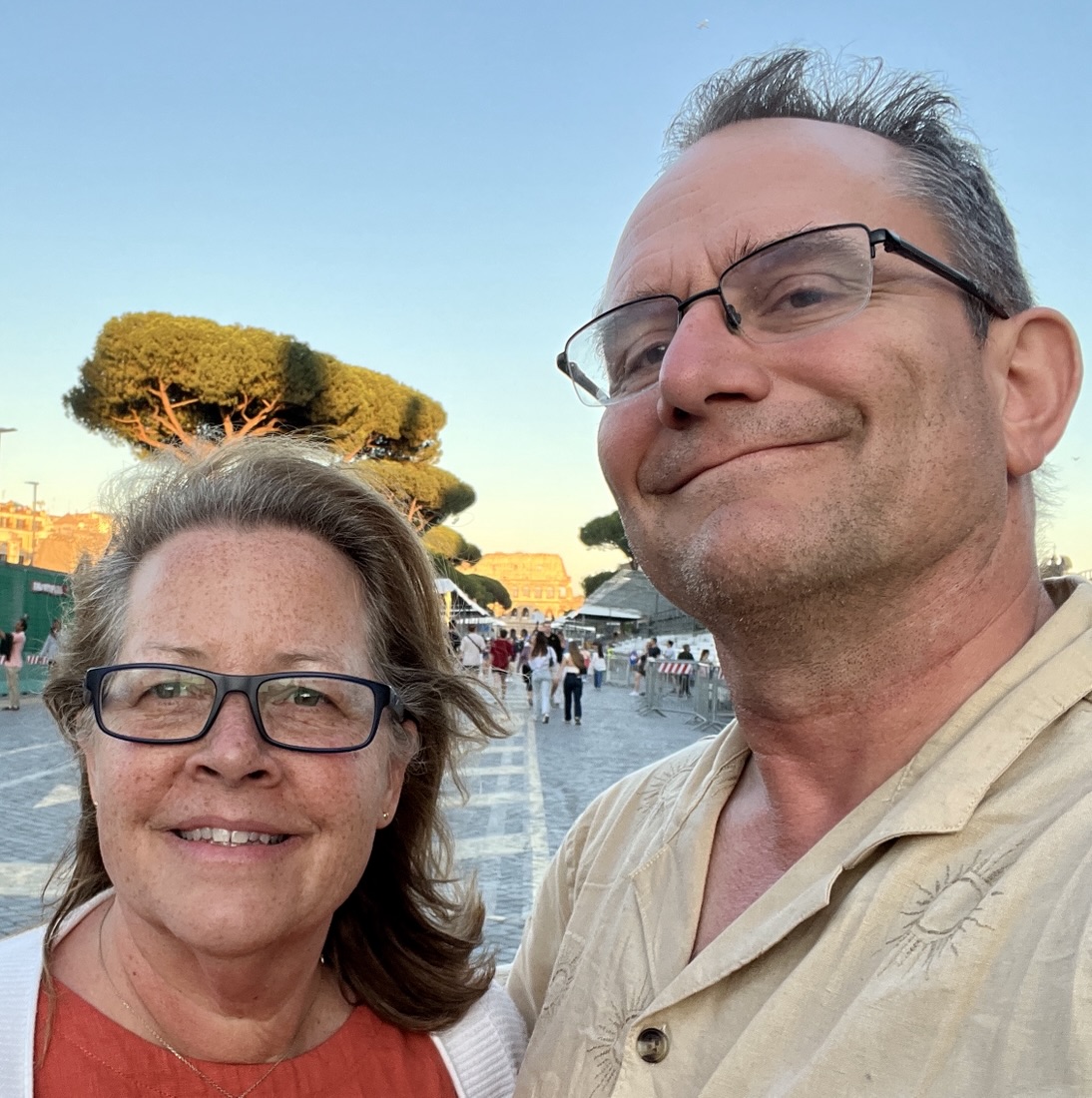
To round off the day we walked down the via dei fiore imperiale from the Victor Emmanuel monument to the Colosseum to catch them at sunset. Very cool.
It was a beautiful sunset and the streets were quiet.
It had been another exhausting day but we had seen lots and I’d improved my understanding of Ancient Rome and its associations with Paul and Peter.
"Cajunlimeys" combines Lousiana (Janet) and England (Peter). For "limeys," check out scurvy in the English navy.
We love adventures and use blogging to write a photo diary to preserve our memories. Some crazy friends enjoy following us and my notes might help others plan.
View more posts













 The Adventures of the Cajunlimeys