Two-nil. Naples scored two goals last night to win their national championship. I’m sure we felt the cheering through our apartment walls when they scored, and the fireworks outside our window were definitely loud!
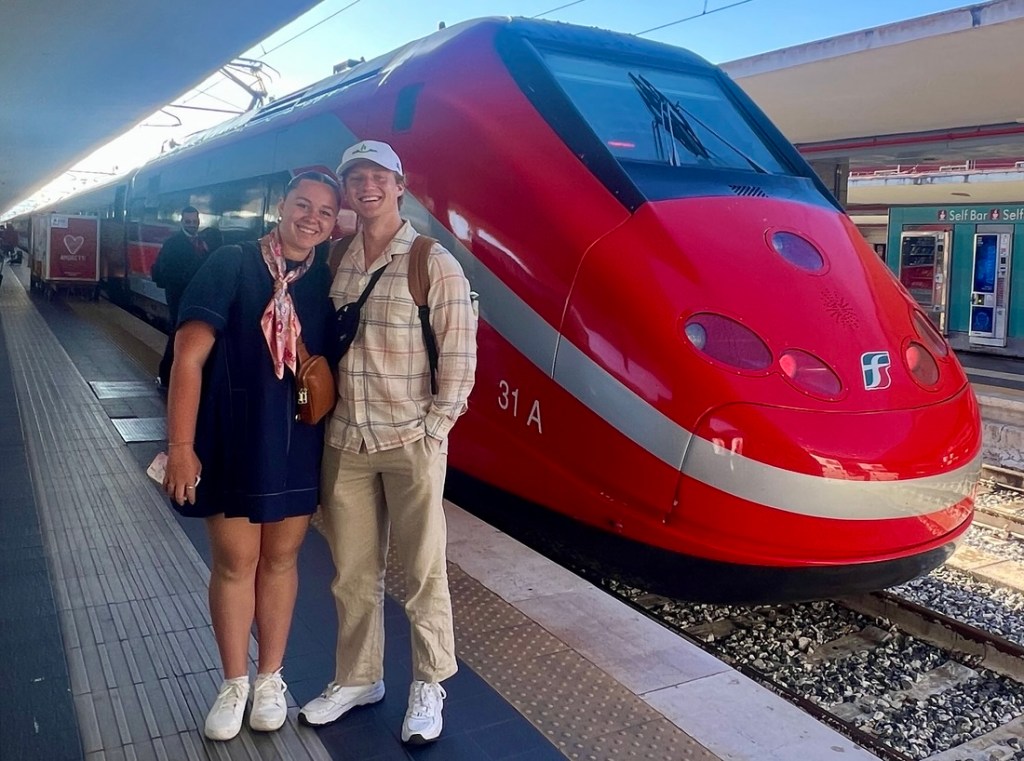
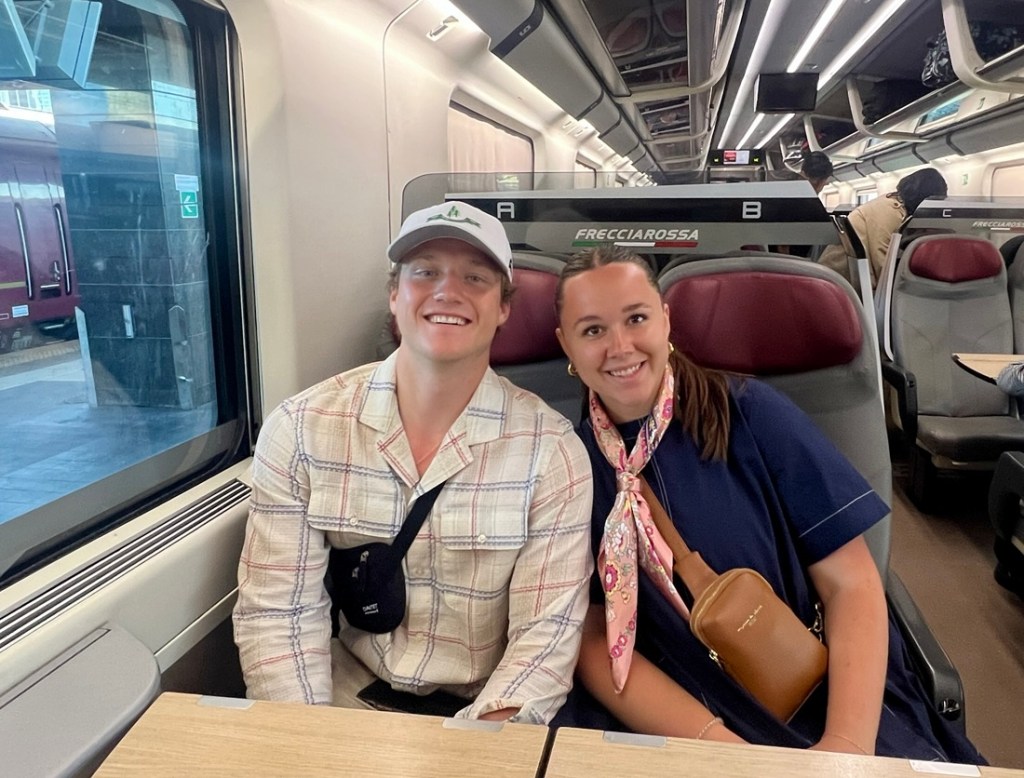
This wasn’t the best evening to have a 5:30am taxi to catch a train to Rome. After the delays in getting from Naples to Sorrento on arrival, we were hesitant to take risks on the return journey by train with a connection. Our driver Thomas was also risk-averse, getting us to Naples train station two hours early! We enjoyed a cappuccino so that we could relax in a cafe and soon were happy to get on the train. Bailey and Jett were even happier to be on a modern fast train than an old local train.
The 1.5 hour journey to Rome was smooth and uneventful. After leaving our bags in luggage storage as it was too early to check in, we headed out to hit sites. Rome is very much a city to wander around. While we headed for the sites, there was as much enjoyment from the simple Roman things, which are more difficult to capture by camera. Here is a sample of what we saw.
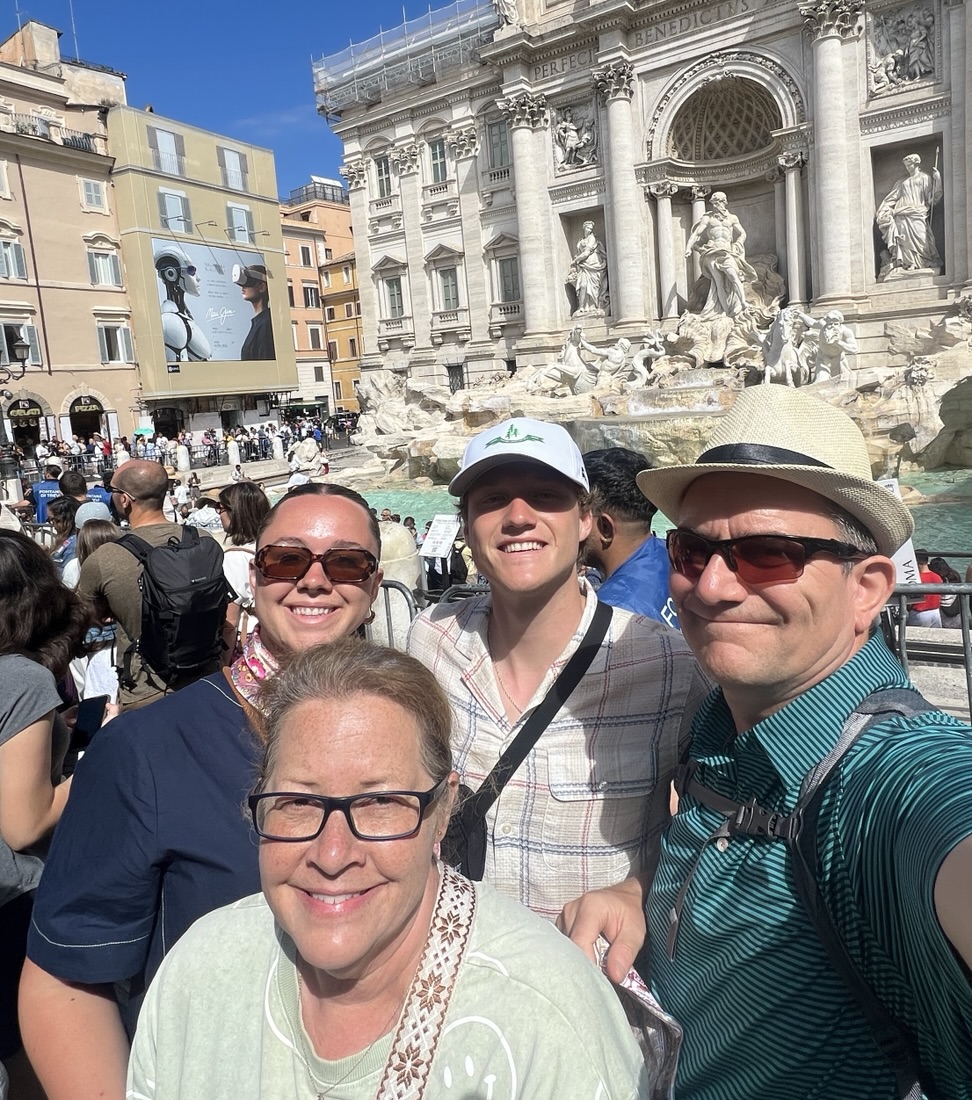
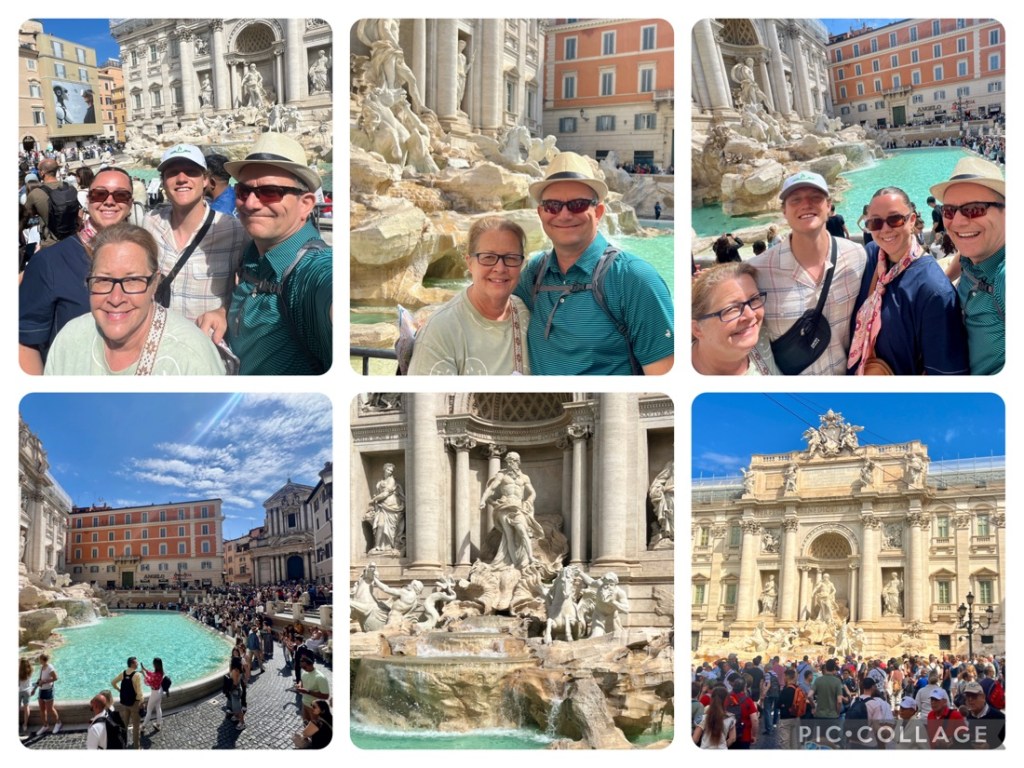
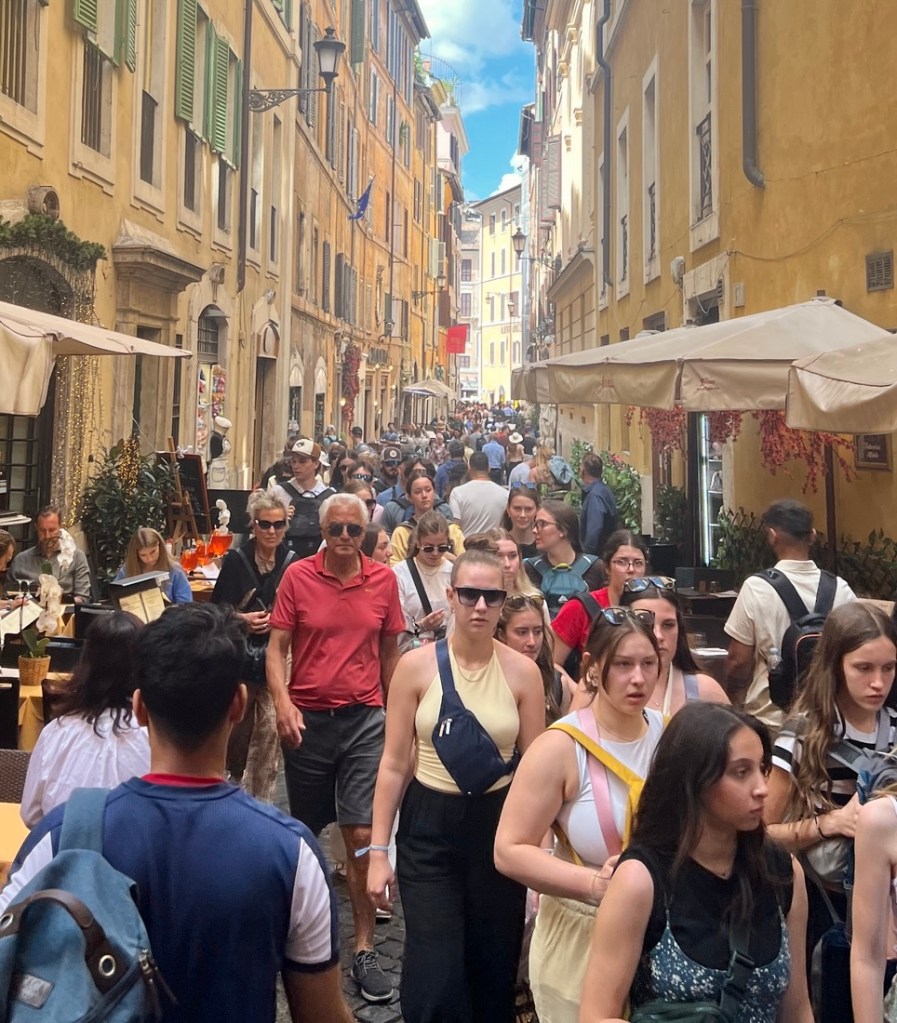
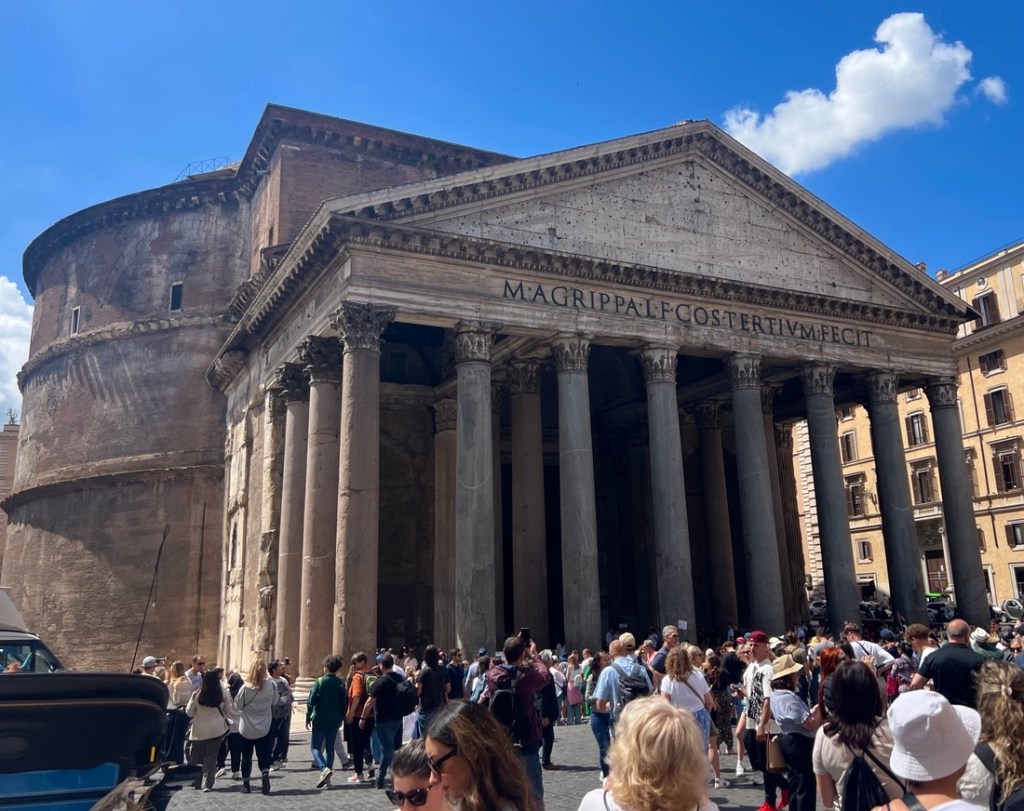
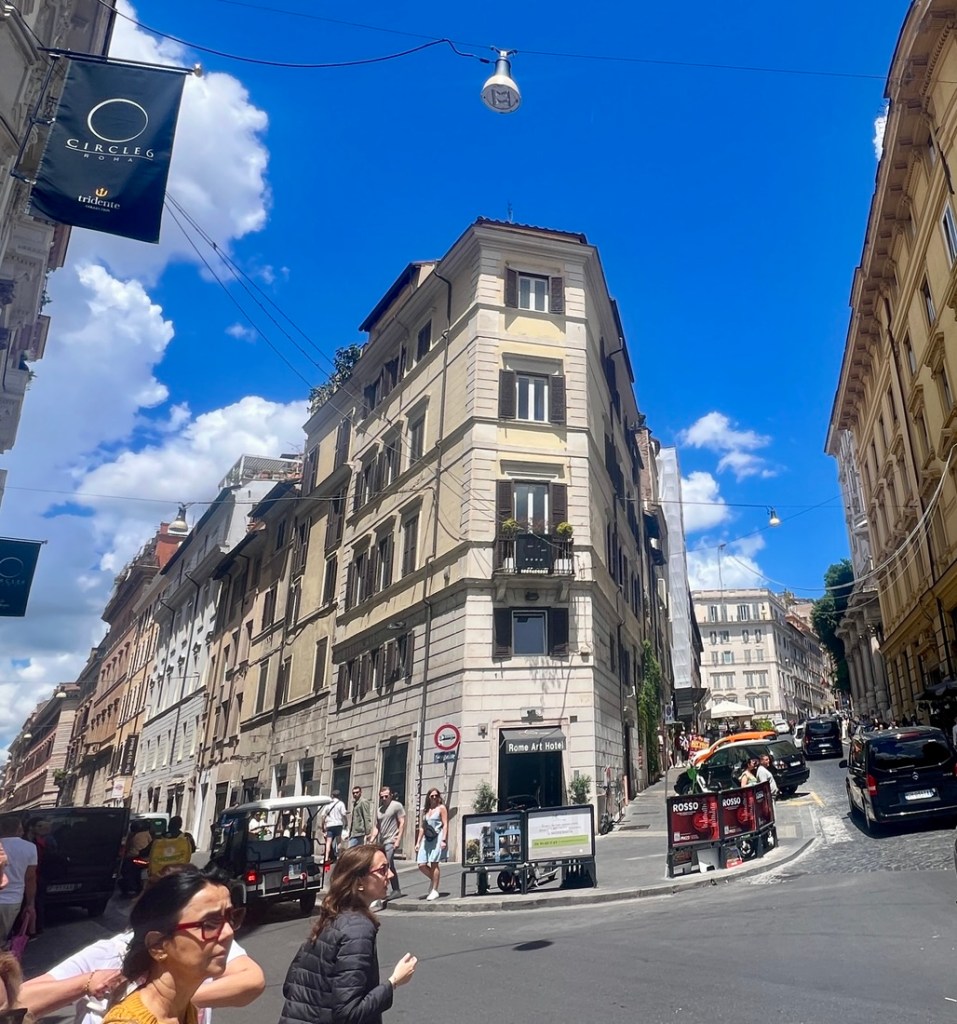
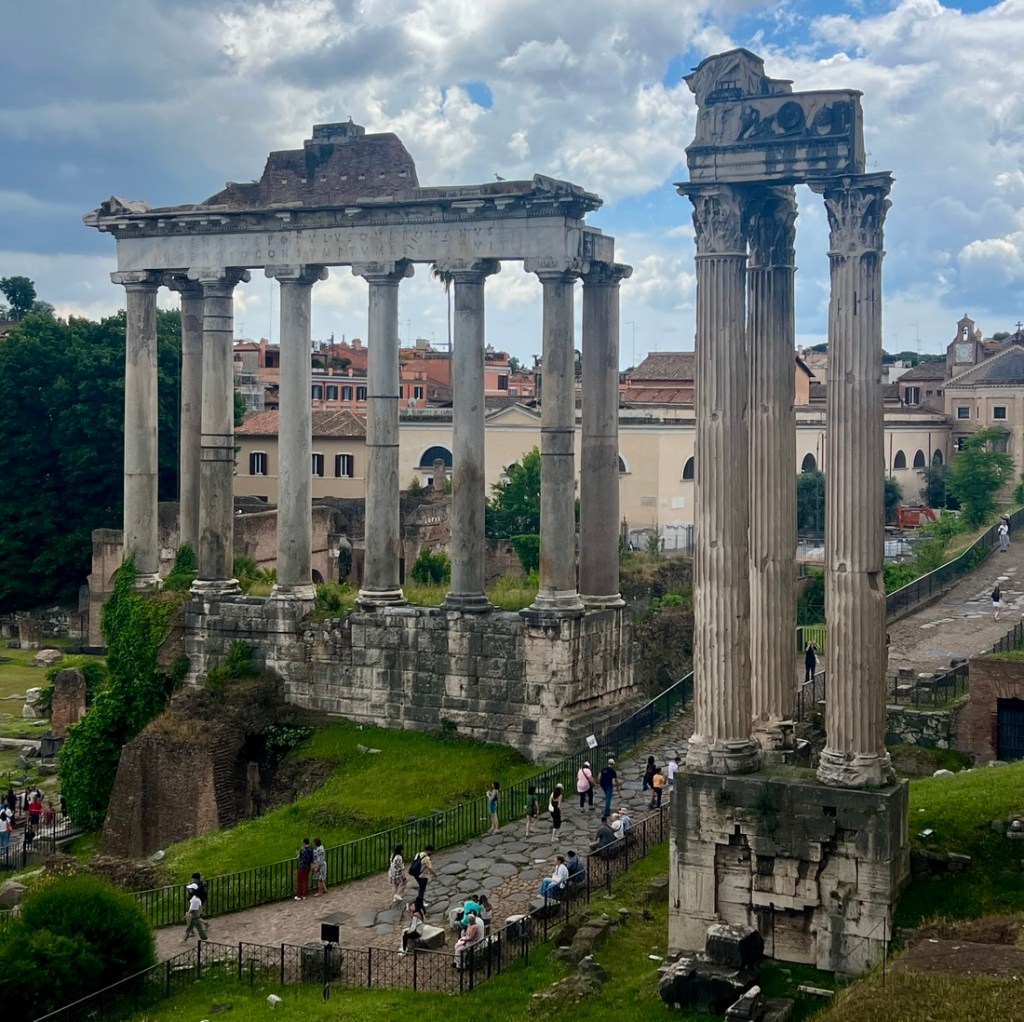
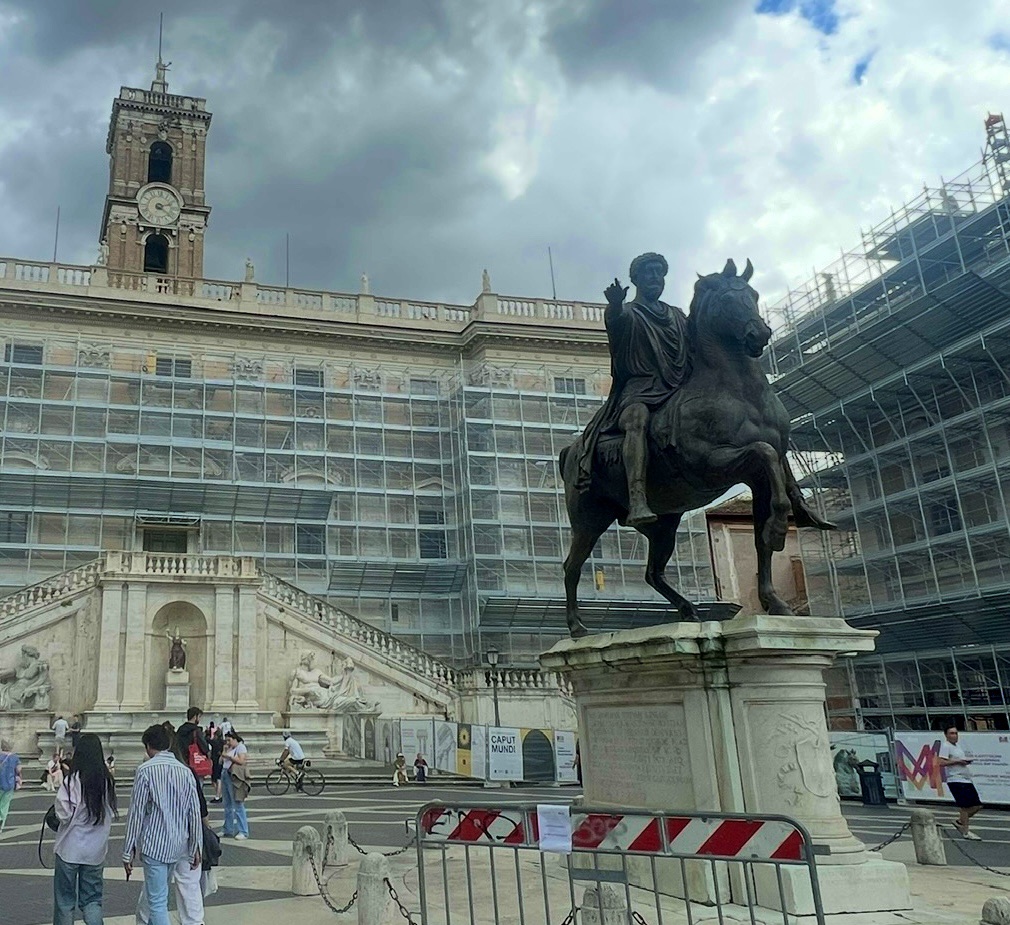
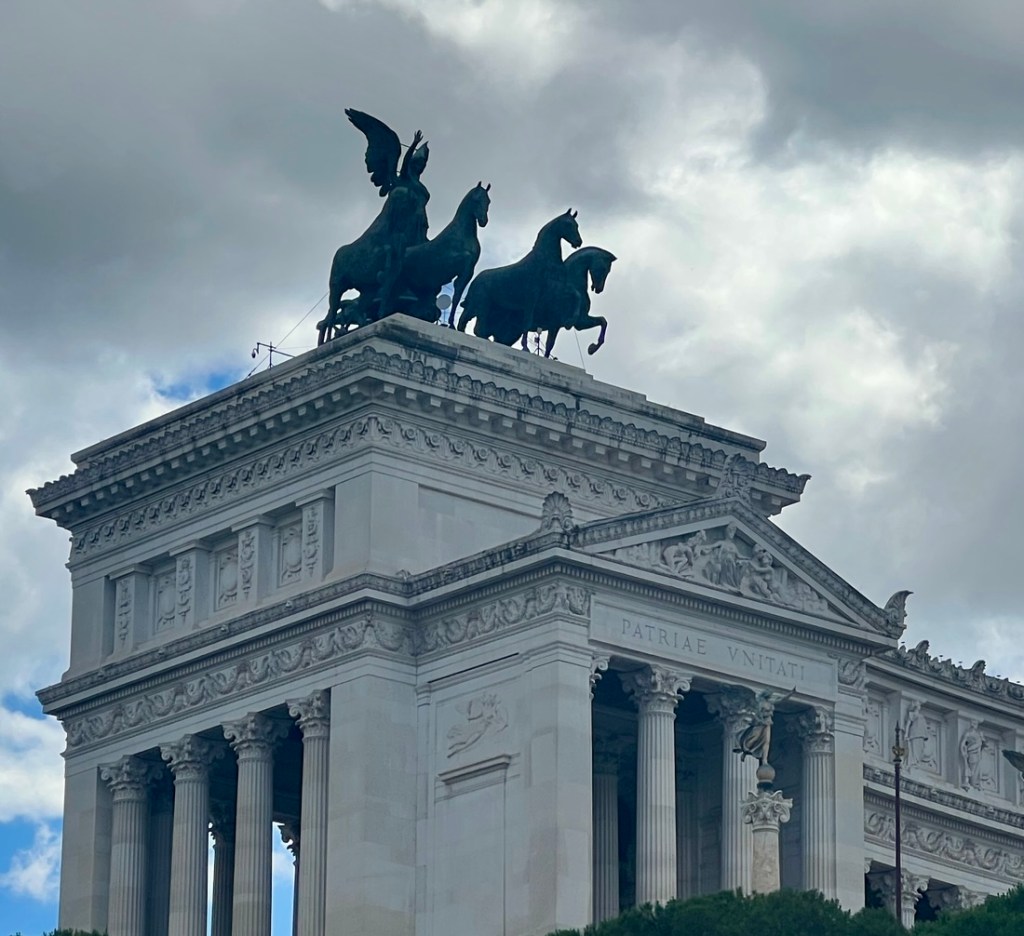
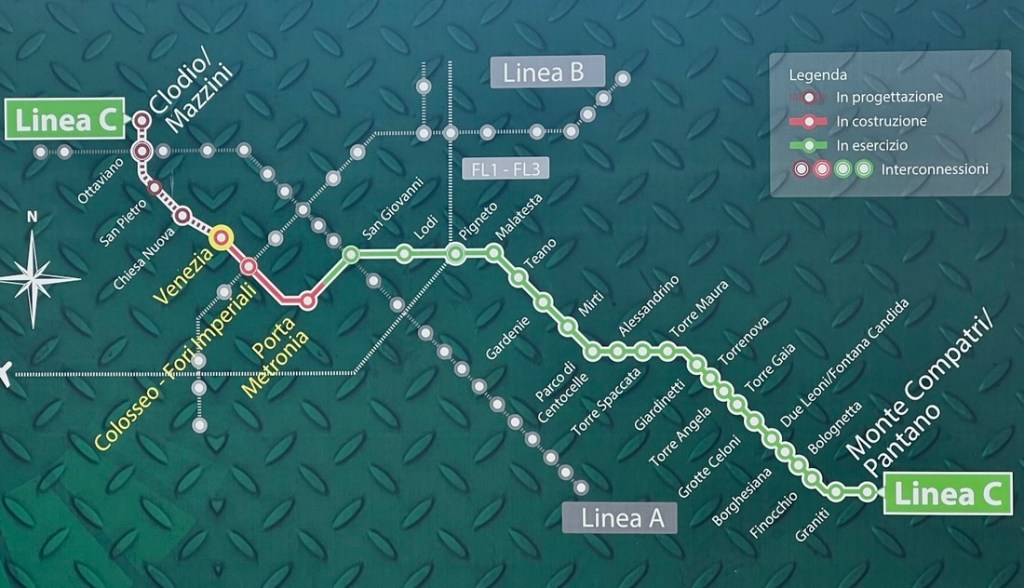
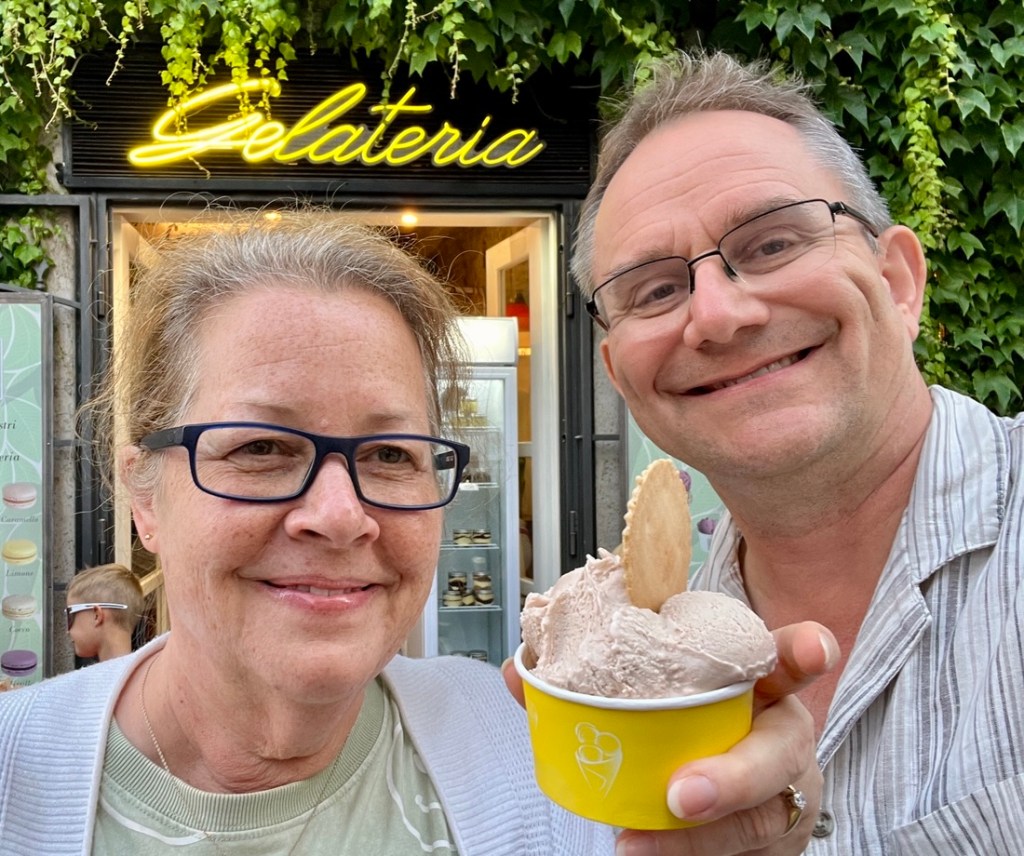
Our first stop was the Trevi Fountain as it was close to our apartment. It was crowded but was worse later, and will be much worse in July. The fountain was built in the 1730s by Nicola Salvi who won a competition to do so and the location marks an ancient Roman aqueduct. 80,000 cubic meters of water flow through the fountain each day.We passed this Column of the Immaculate Conception as we approached the Spanish Steps. It was built in 1857 in recognition of the church’s acceptance of the immaculate conception dogma. Such monuments are all over. I took this photo because I liked the silhouette.Next up was The Spanish Steps, built in the 1720s to signify peace between Spain and France, with the Spanish embassy close by. The fountain depicts a sinking ship with its design limited by low water pressure. The 138 steps used to be a great place to sit and enjoy lunch or people watch but sitting on them now carries a 250 Euro fine.This is the street that took us away from the Spanish Steps. The lack of cars was great.The column of Marcus Aurelius was all covered up, but at least I could photograph a seagull in the fountain.Heaving crowds in the narrow streets.Ready for lunch, but we had a different plan.The Pantheon was originally built by emperor Agrippa in the first century BC as a temple to all (pan) gods (Theo). Hadrian rebuilt it in AD 126 after the original burnt down and when he wasn’t building his wall. It survived through history as it was made into a church for all martyrs. Its inner dome has inspired other structures from St Peter’s Basilica to the US Capitol.Lunch was suppli (fried cheese and rice balls) and pinsas (a form of pizza) at a small but popular restaurant. The hat helped our ladies avoid sunburn.I spotted this in a shop window having noticed the acronym on many of Rome’s public works. Its usage dates back to 80 BC.This reminded me of the flatiron building we had seen in New York which was used as The Continental Hotel in the John Wick films. If they won’t let you eat on the Spanish Steps, people will find other ones!On our way to another site, we walked across Trajan’s Forum. It was the last forum to be built in the early second century to recognize Trajan’s victory over Dacia – using the spoils of war to pay for it. Today it’s free to enter and explore. The Mamertine Prison is the oldest Roman prison and dates back to the first century. It is likely that Paul was imprisoned here and he might have written the Prison Epistles (Ephesians, Philippians, Colossians, and Philemon) from here.Tradition claims that Peter was also a prisoner here. This is based on a sixth century account and there is no evidence that this was the case.We could look into the northwest end of the Roman Forum and this Arch of Septimus Severus from AD 203. The carvings on the arch mark Septimus Severus’s victories.Trajan’s Column used to have a statue of Trajan on the top with his ashes in an urn,. A 16th century pope placed a statue of Peter on the top. The carvings representing Trajan’s victories remain.Many of the ancient buildings have fallen down. It’s amazing these columns still stand.A statue of Marcus Aurelius on the top of Capitoline Hill, where Rome’s government has been based for 2500 years. This massive monument to Victor Emmanuel celebrated Italy’s first king in 1861. It’s rather over the top!The Victor Emmanuel Monument had to upstage all of Rome’s other architecture.The Roman government has tried to relieve the traffic problems with another tube line, but the excavations close to the forum keep identifying newly- discovered ancient treasures which hampers building progress. The black bird made me think that the Line C metro line is doomed.On our way to our apartment, we noticed the papal cathedral of Santa Maria Maggiore, one of four papal sites in Rome that have a special door that only opens in Jubilee years, like 2025. Pope Francis was recently buried there.The outside of our apartment!Our apartment’s inside.For dinner we enjoyed a Roman Scallopina and a swordfish steak with a couple of carbonaras and a fine tomato salad.It’s tough to resist rounding off the day with a Nutella gelato!
This was supposed to be a quiet, slow day! The calves continue to complain after > 20,000 steps and the lack of sleep is telling. We’d already tested out the beds for a siesta and we approved. There is lots more to do tomorrow so we look forward to sleeping well, but the bar down the street sounds like it is having a busy Saturday night. We shall see!
"Cajunlimeys" combines Lousiana (Janet) and England (Peter). For "limeys," check out scurvy in the English navy.
We love adventures and use blogging to write a photo diary to preserve our memories. Some crazy friends enjoy following us and my notes might help others plan.
View more posts
One thought on “Italy Day 4: Rome”
The boat fountain at the Spanish Steps is my favorite in all of Rome, especially at night.











 The Adventures of the Cajunlimeys
The boat fountain at the Spanish Steps is my favorite in all of Rome, especially at night.
LikeLiked by 1 person