The ancient Olympics started in 776 BC in Olympia.
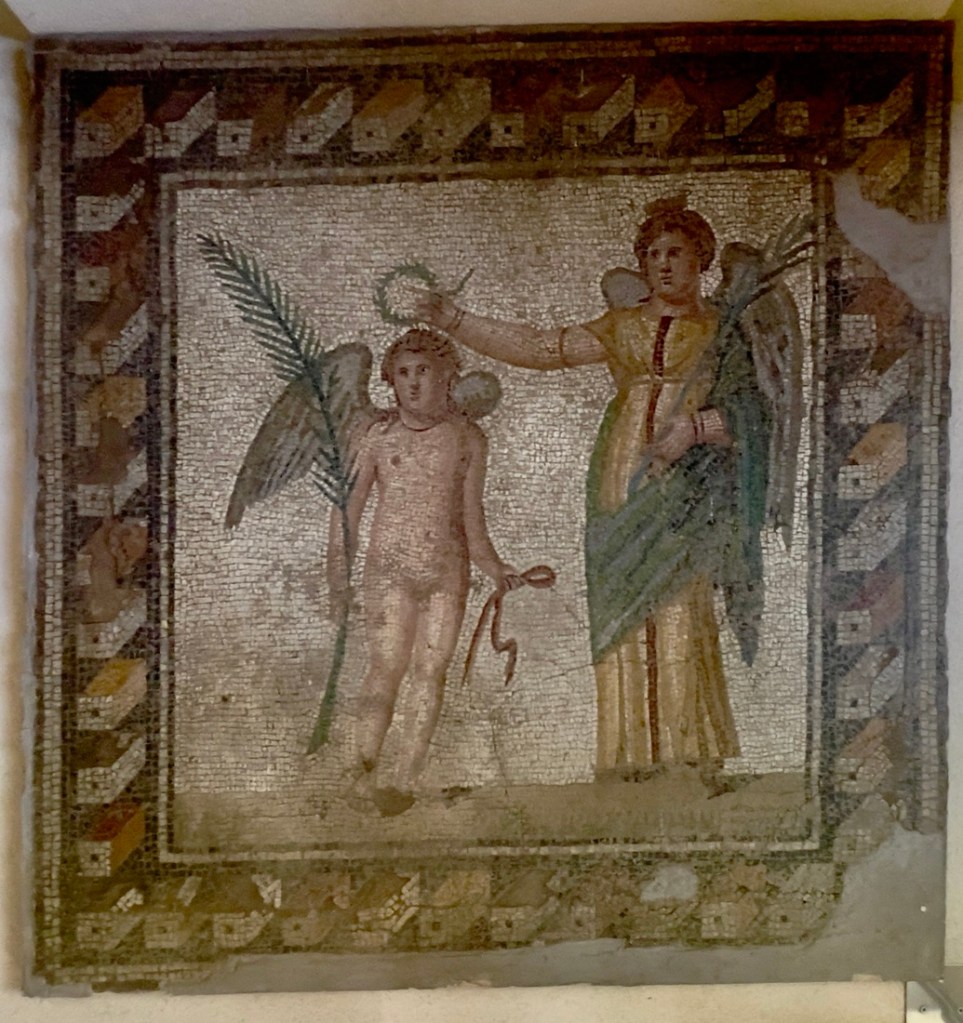
For centuries, it was a celebration in honor of Zeus. Winners were awarded a wreath of leaves from a sacred olive tree by the Temple of Zeus. Winning was a tremendous honor for the victor’s village and it led to many privileges. It sounded more like the Hunger Games than today’s Olympics! The games were primarily about honor, and cheats and quitters were despised. King Philip of Macedonia made the games his own, and the Romans turned them into a spectacle until emperor Theodosius outlawed the games in AD 393, followed by his successor burning pagan temples in 426. Early Christians used the site as a church until earthquakes flattened it in 522 and 551. Floods and mudslides buried the site under 25 ft of silt until rediscovery in 1875. It took nearly 100 years to dig the place out!
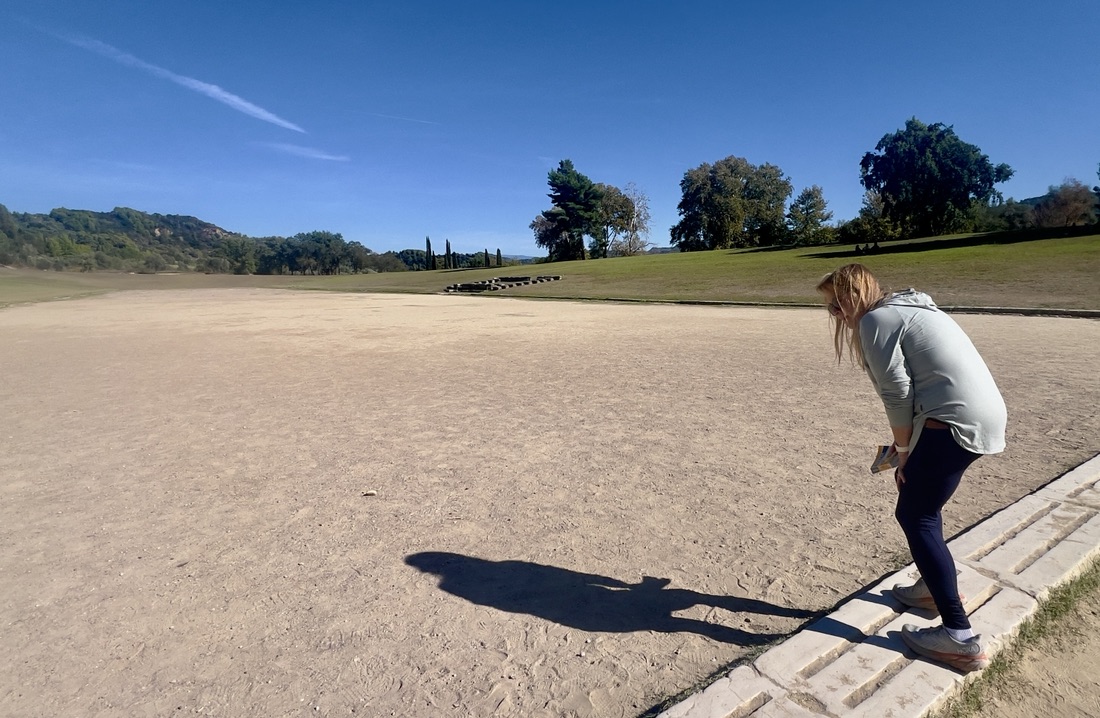
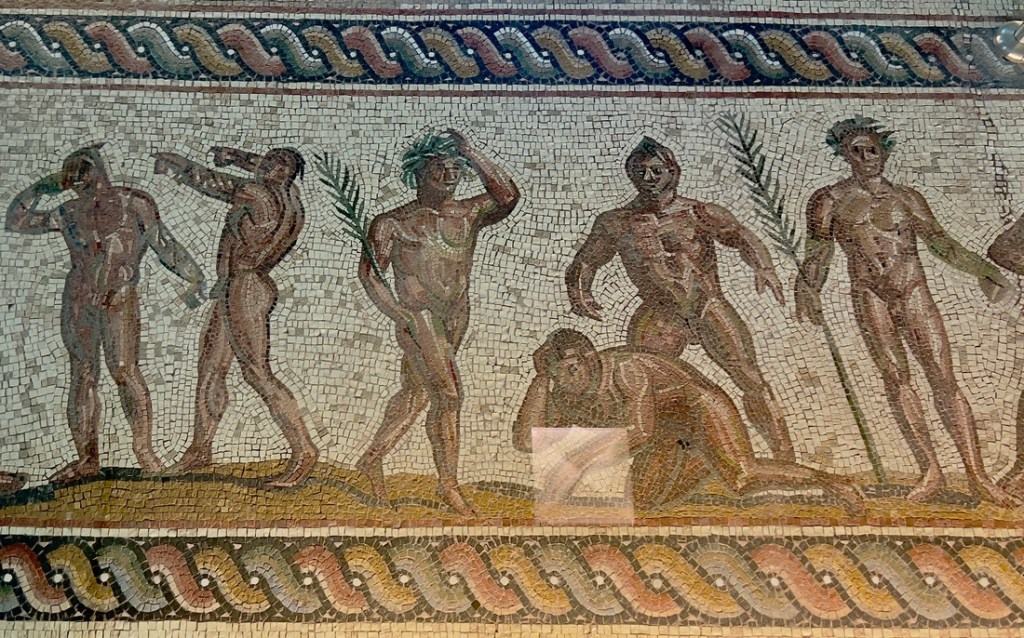
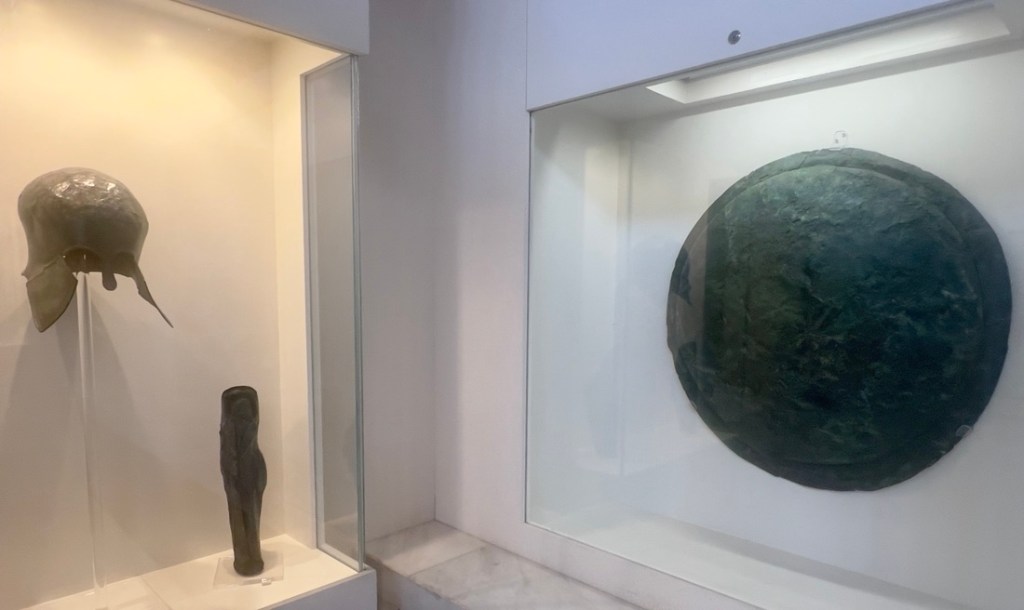
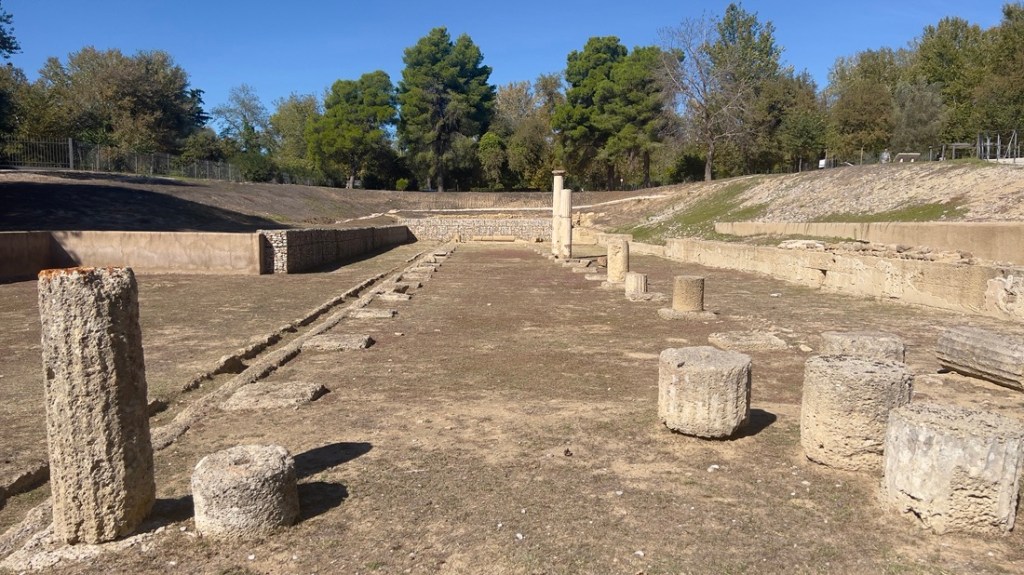
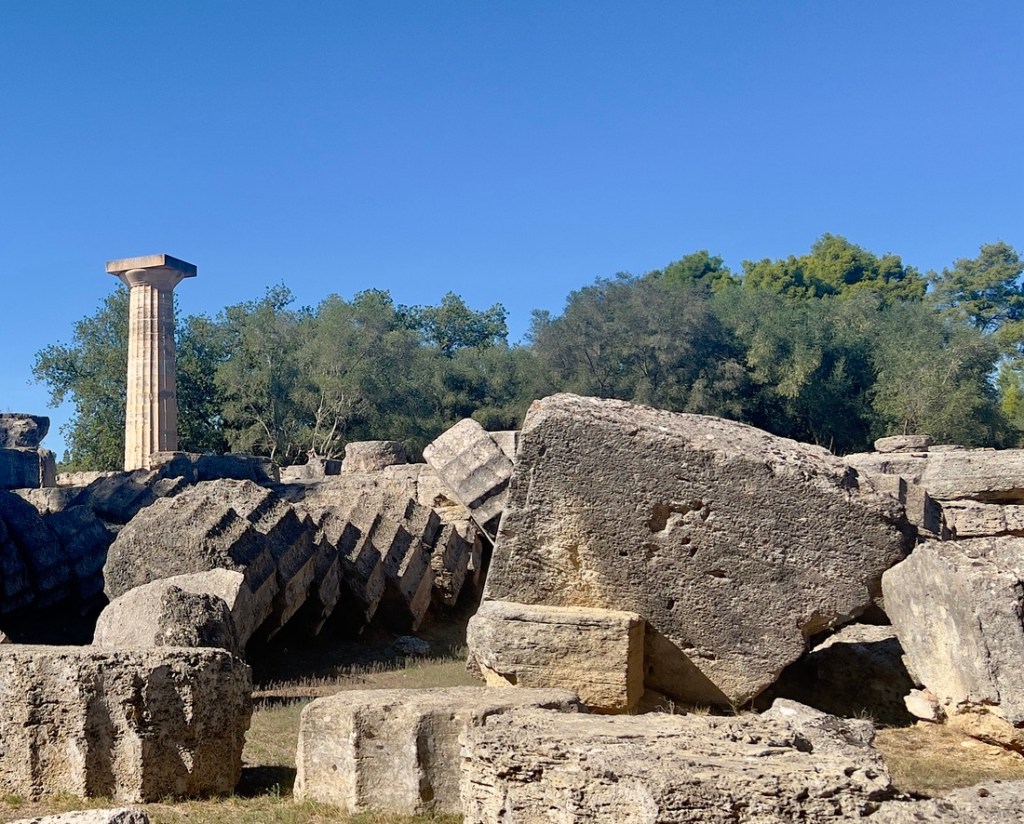
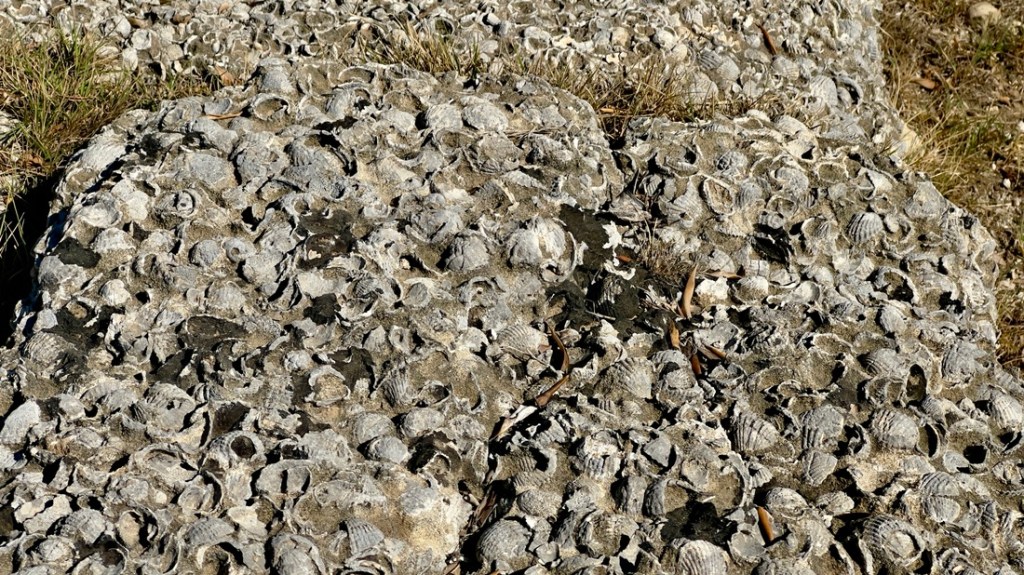
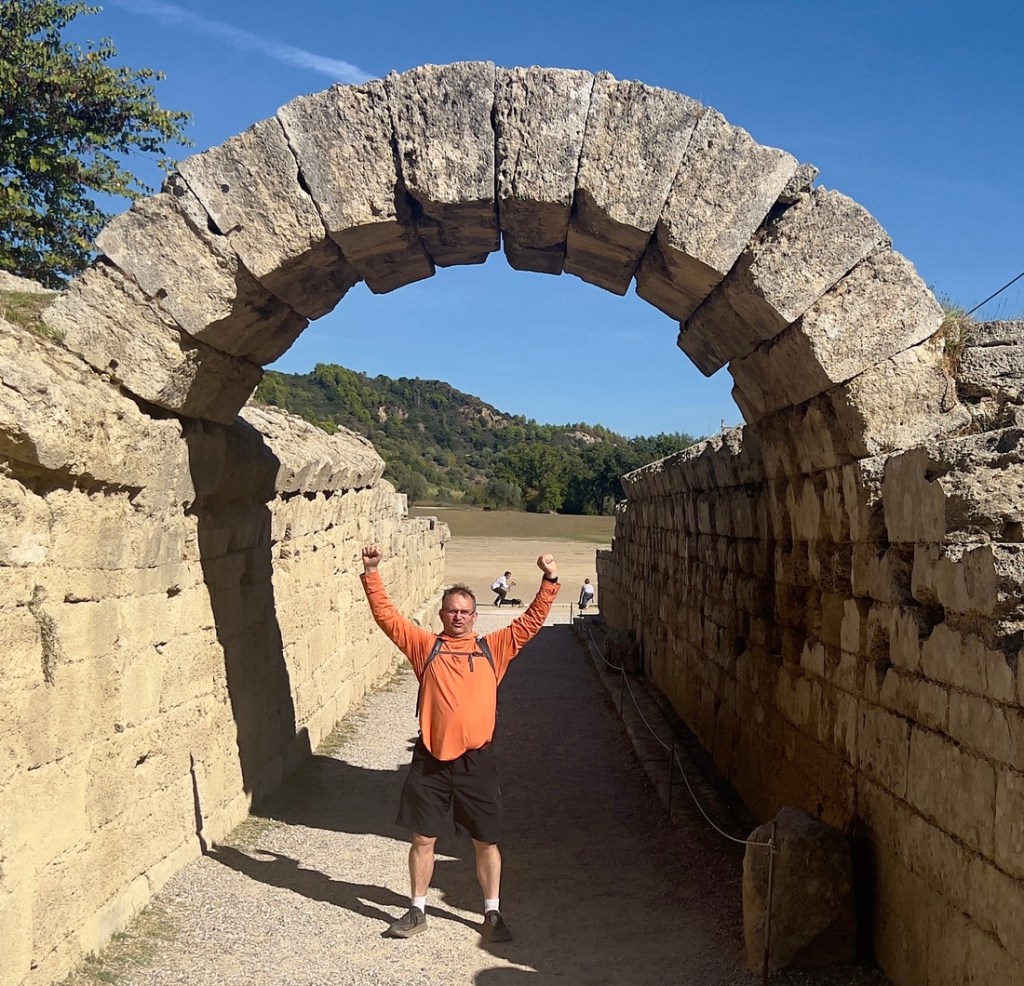
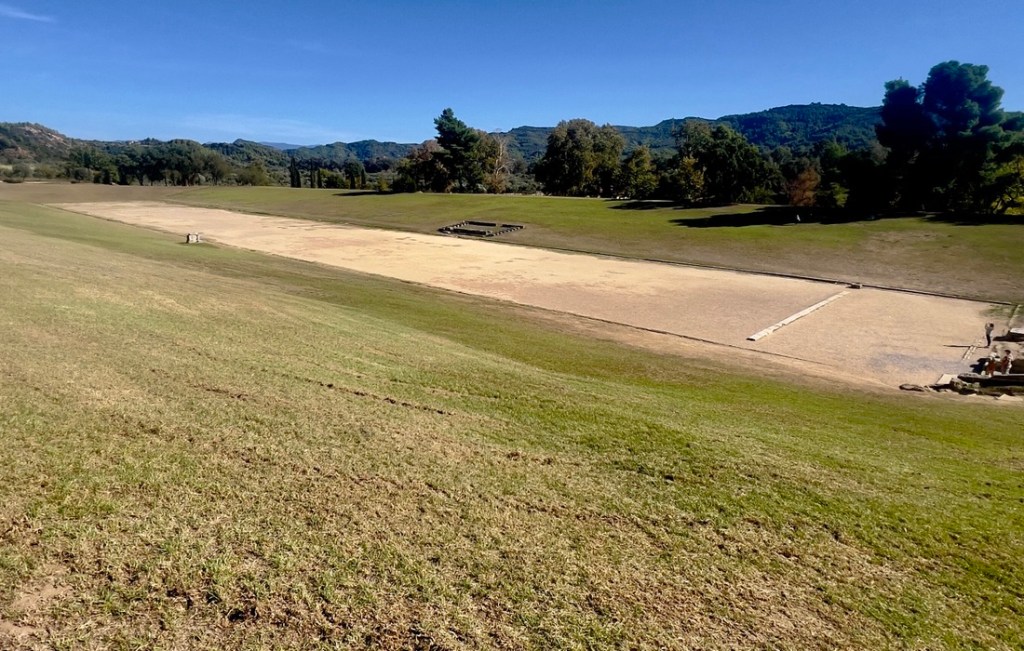
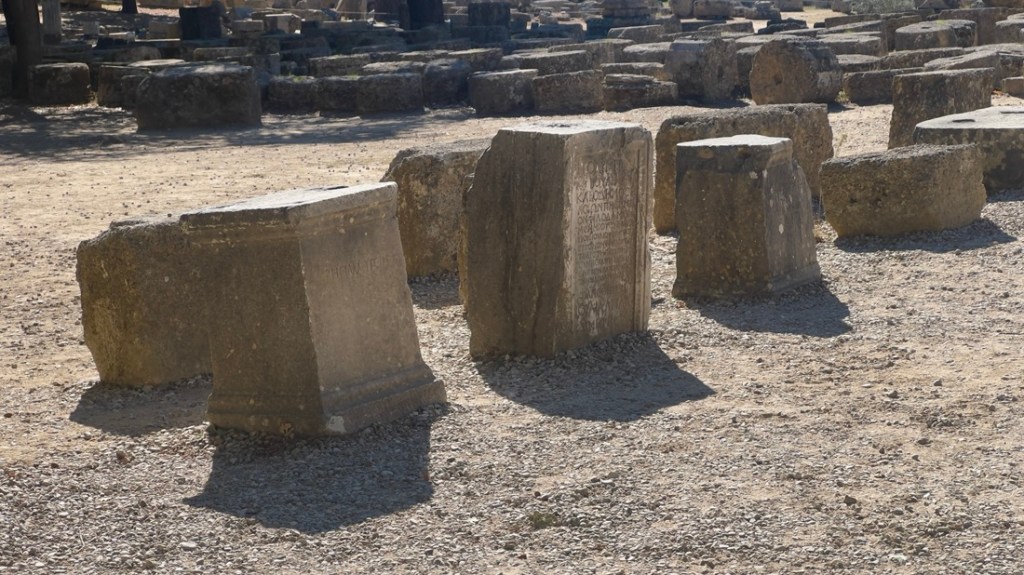
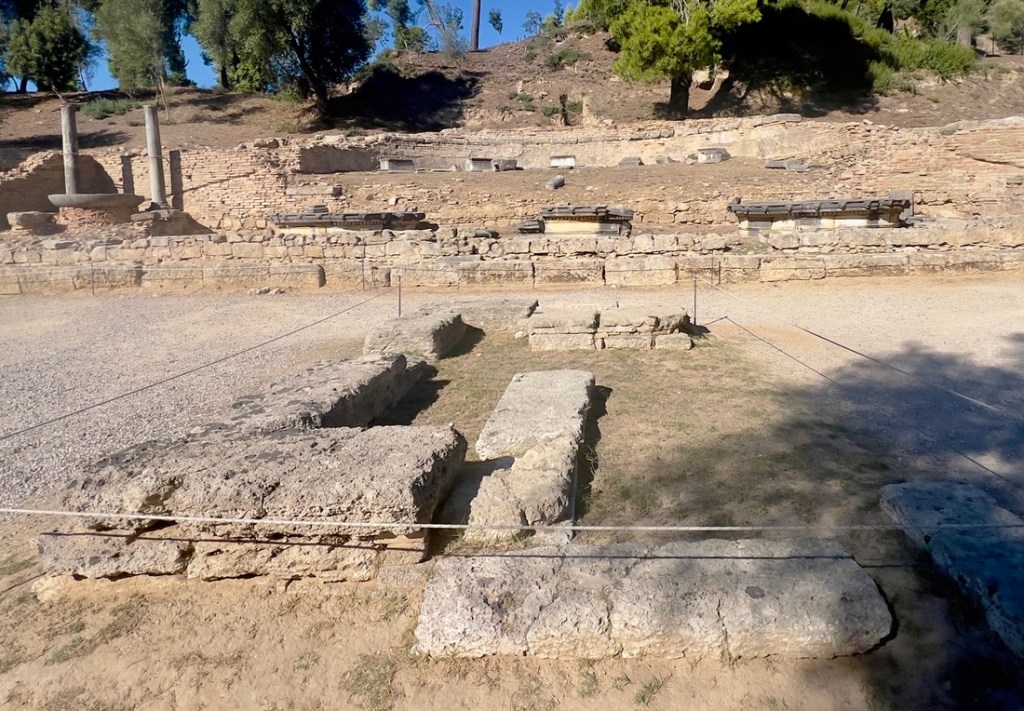
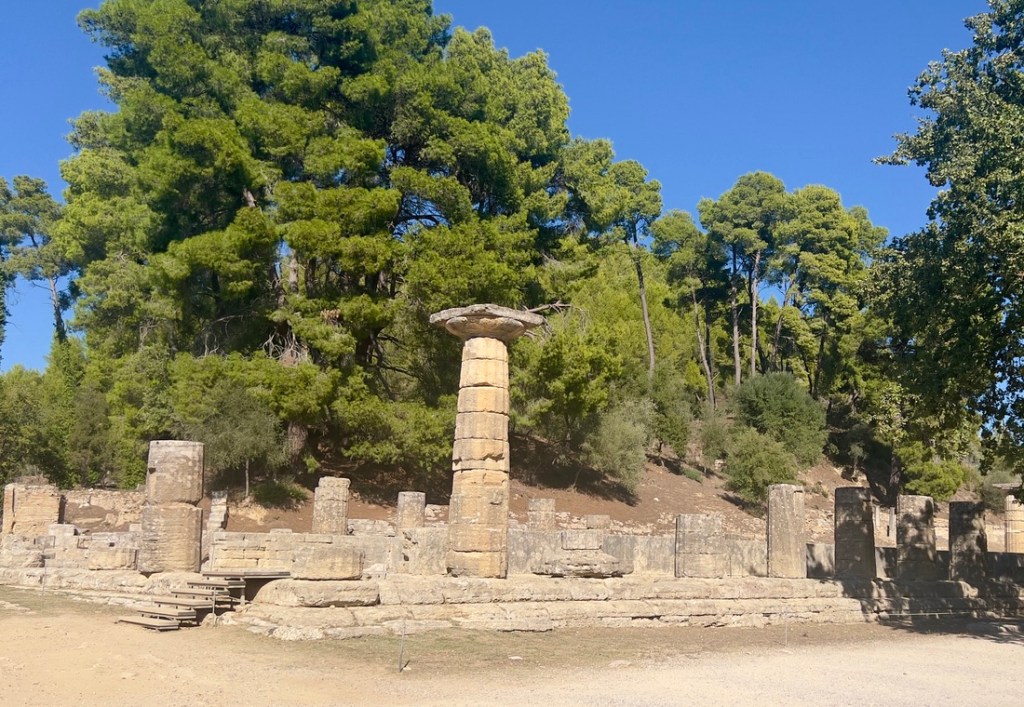
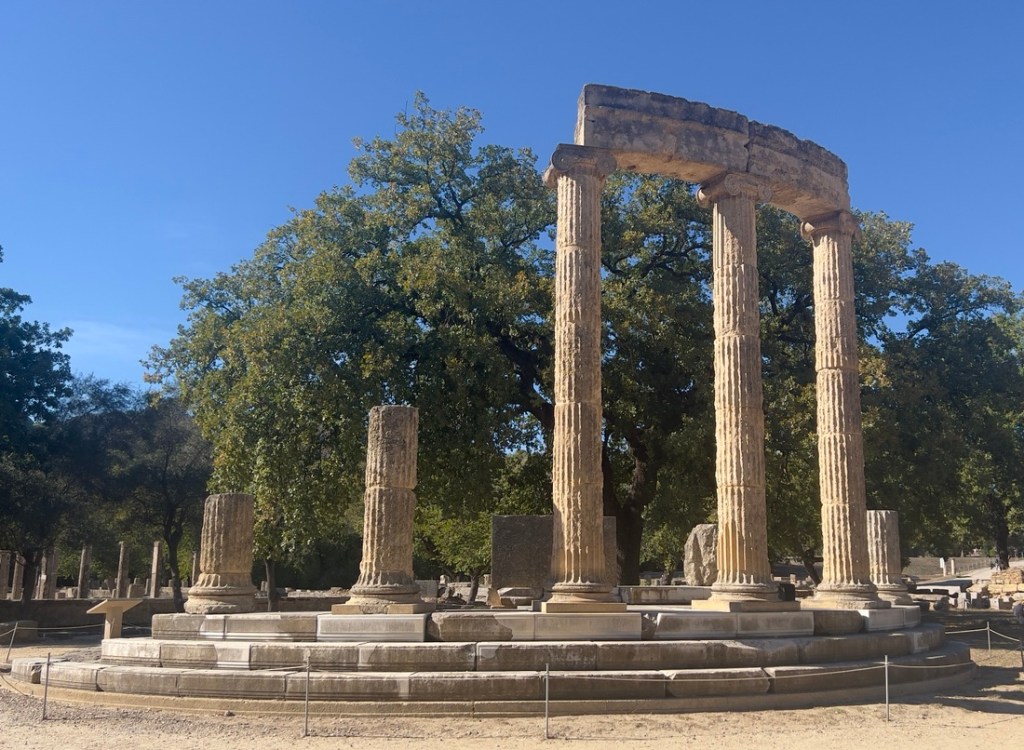
A mosaic from the ancient site depicting a winner receiving his prize wreath.Another mosaic depicting various sports. The games started as just a sprint running race, and various events were added through the years. Yes, they competed naked.An early event was running with a helmet, sword, and shield.These are the remains of a large gymnasium that the athletes would practice in. Men only, and in their birthday suits. Hence “gymnasium” from the Greek for naked!The athletes used these baths to wash off the olive oil they had covered themselves in for protection. Yuk!The great Temple of Zeus. The upright column is a reconstruction. In front of it, you can see a column where it collapsed. The area is strewn with huge, random boulders, that collapsed in the earthquakes.These buildings were built using local limestone. This piece, like most of the boulders, was mostly shells. The buildings were a similar size to Athens’s Acropolis temples.The entry tunnel to the stadium.A huge stadium, about 200 yards long. The only seats were for the judges and the priestess. About 45,000 could sit and watch from the grass.During the 2004 Olympics in Athens, one day of shot putt competition was held in this stadium.Janet in the starting blocks, ready for the 200 pace sprint. Note the two grooves – one for each foot.Before competing, athletes would crush bull’s balls while promising not to cheat. Cheating included bans on substances such as bull’s blood, the original Red Bull! Cheaters who were caught were greatly shamed and had to pay for a statue of Zeus to be built and placed on the pedestals, like those above, which described their cheating. Other athletes would spit on them!This was the altar of Hera, Zeus’s wife. It is at this location, since 1936, that the Olympic flame is lit using a mirror and taken to the games’ venue.The Temple of Hera, Zeus’s wife. Girls and women would not compete in the main games, but they could in alternative events that were held between the main games that were held every four years.Philip, Alexander the Great’s Dad, had to make his mark and built this temple to himself at the entrance to the complex in the 300s BC.The rivers seem so humble and the land so dry. Yet they suffer rainstorms like other places, and even severe flooding over 1500 years ago that buried this whole site. And it was a great opportunity to get our shadow photo!
We loved Olympia’s vibe. Our guidebook had prepared us to be disappointed, but we felt the opposite. Everyone was very friendly, and while set up for tourists, it did not feel touristy. However, it made the Olympics seem like a modern-day pagan festival!
Find other posts from this trip on our Greece page.
Please follow us on this journey by subscribing below. We would love to read your thoughts: please leave comments at the bottom of the post.
"Cajunlimeys" combines Lousiana (Janet) and England (Peter). For "limeys," check out scurvy in the English navy.
We love adventures and use blogging to write a photo diary to preserve our memories. Some crazy friends enjoy following us and my notes might help others plan.
View more posts





 The Adventures of the Cajunlimeys