At the end of the Liberty University trip retracing Paul, everyone said their farewells and headed in their different directions. Some went east, others north, and the majority headed west back to the US. While a few stayed in Athens, we headed south to explore the Peloponnese for the next seven days. The first adventure was exploring a couple of ancient sites: Mycenae and Epidaurus, using Nafplio as our base for two nights. Mycenae was an ancient civilization’s capital with buildings, including the Lion Gate, dating back to 1600 BC. Epidaurus has a very well preserved Ancient Greek theatre, and Napflio was the first capital of modern Greece. It was a very full two days as we explored 3,600 years of history!
However, the first challenge was to get out of Athens. An efficient Uber took us, with our luggage, to the Hertz office, close to Hadrian’s arch. Our reservation pick up was quick and efficient, they gave us directions to Corinth, and we were on our way!
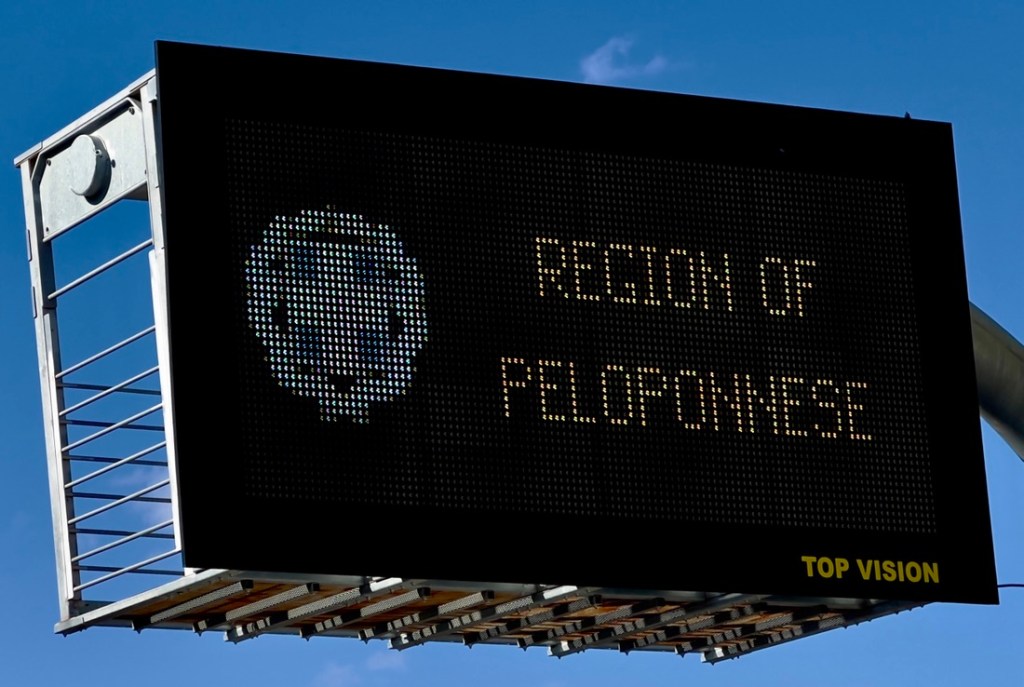
After traveling with a group in a bus, following someone else’s schedule, we felt free. We are independent travelers, and while thankful for the group and the organized trip that brought us to Greece, we’re glad to be heading out on our own again. However, driving in Athens might have changed that! It had looked very scary. With the directions from Hertz in mind, we followed Google Maps. The map’s GPS does not update the best in the city, so I think we took an indirect route to get on the main highway, and quickly appreciated being able to stop when we wanted to for the “W.C.” Soon, we crossed the Corinth Canal and entered the Peloponnese.
We visited the canal again and continued south. Soon we were on dusty paved roads, away from tolls and with only a few other cars.
Mycenae
A fortress city on a hill was the capital of a mighty civilization from one and a half millennia before Christ and Paul, and even a millennia before Greece’s golden age. The ancient Greeks visited the same ruins we visited, determining their residents were the heroes of Homer’s the Iliad and the Odyssey, including the great siege of Troy. We walked through structures built over 3600 years ago!
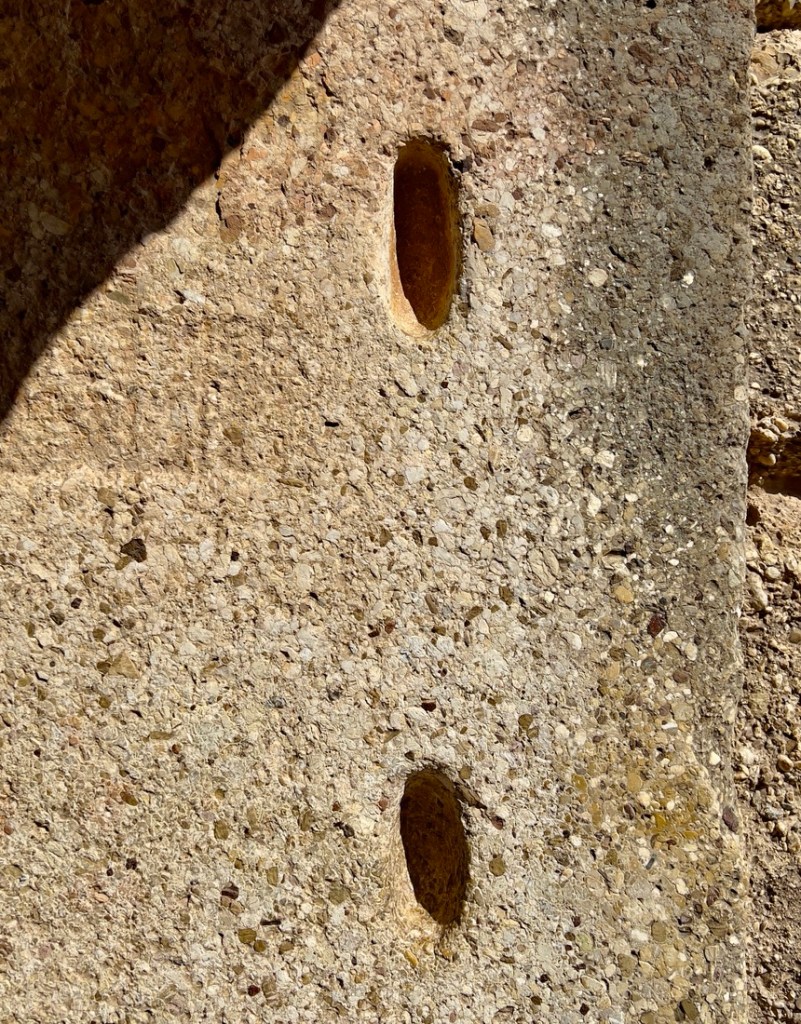
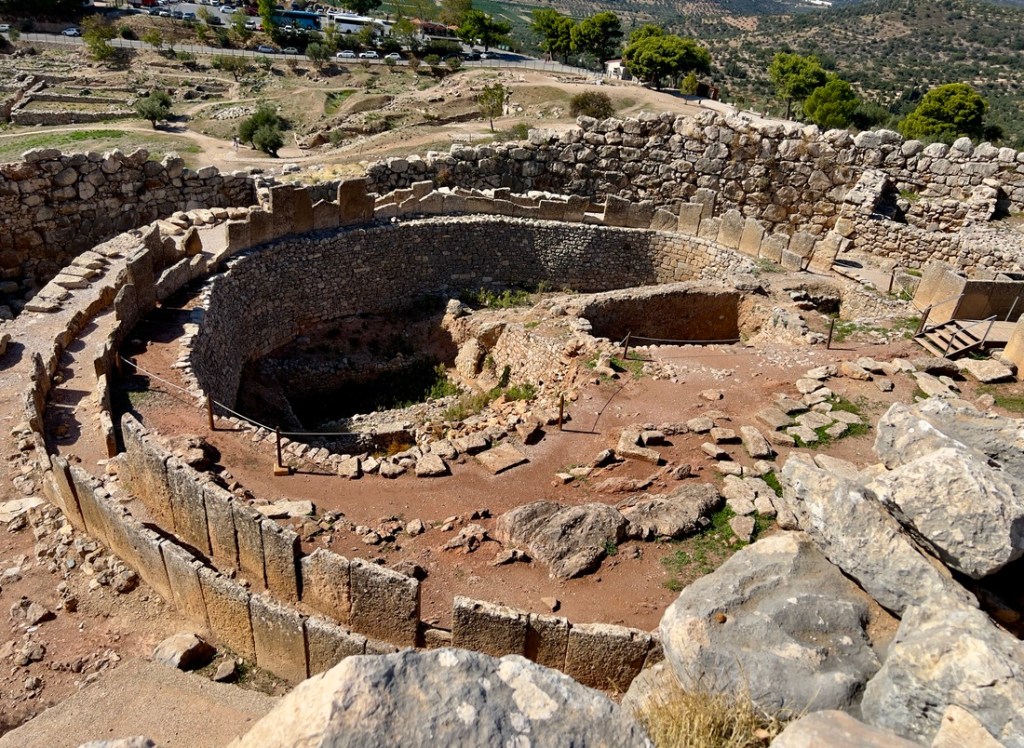
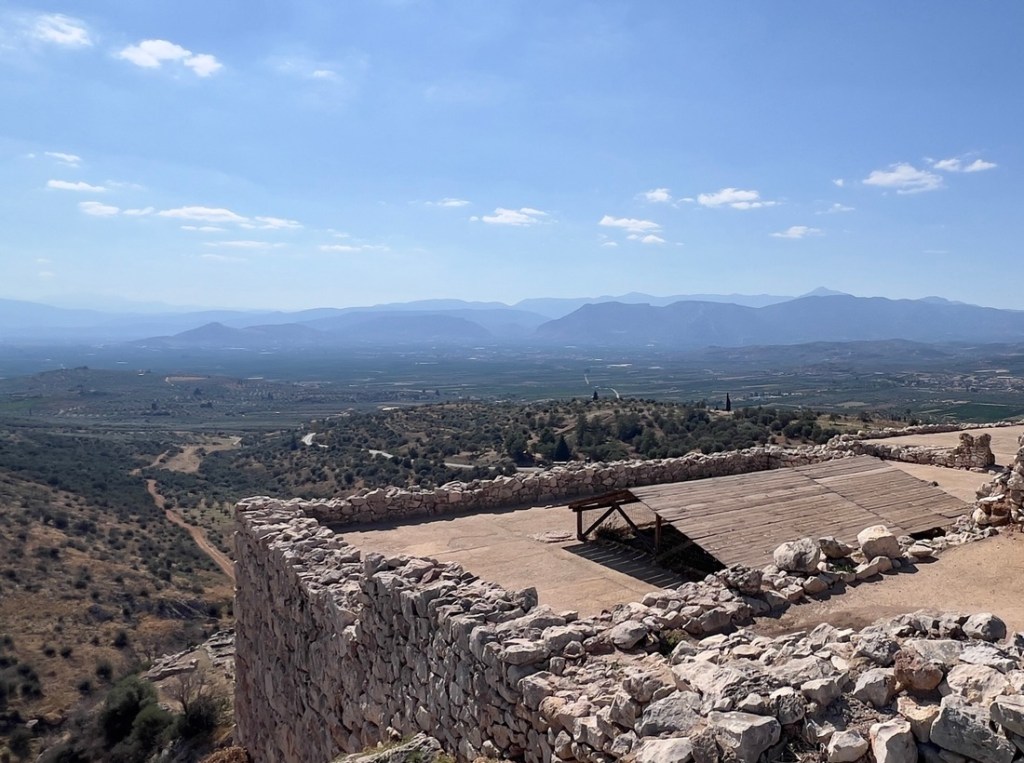
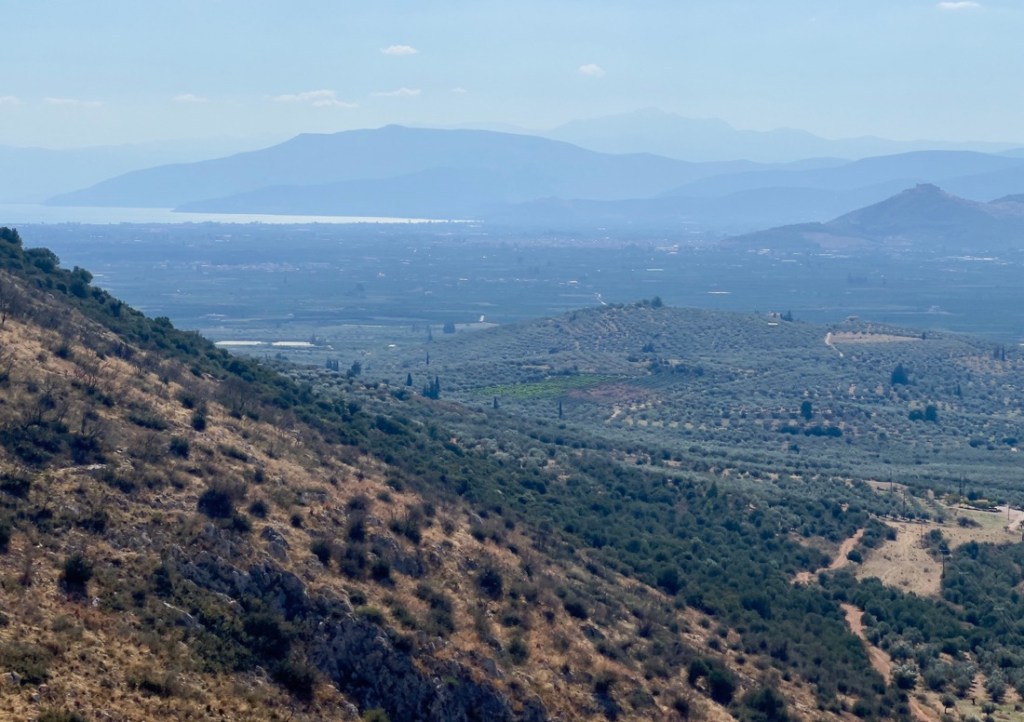
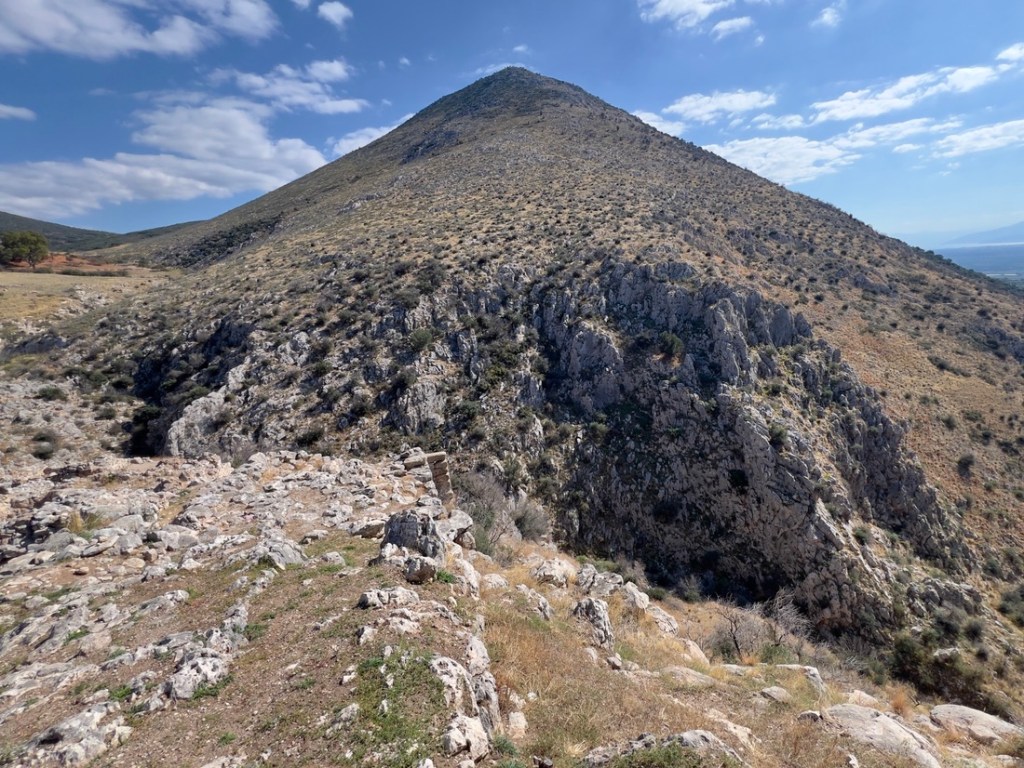
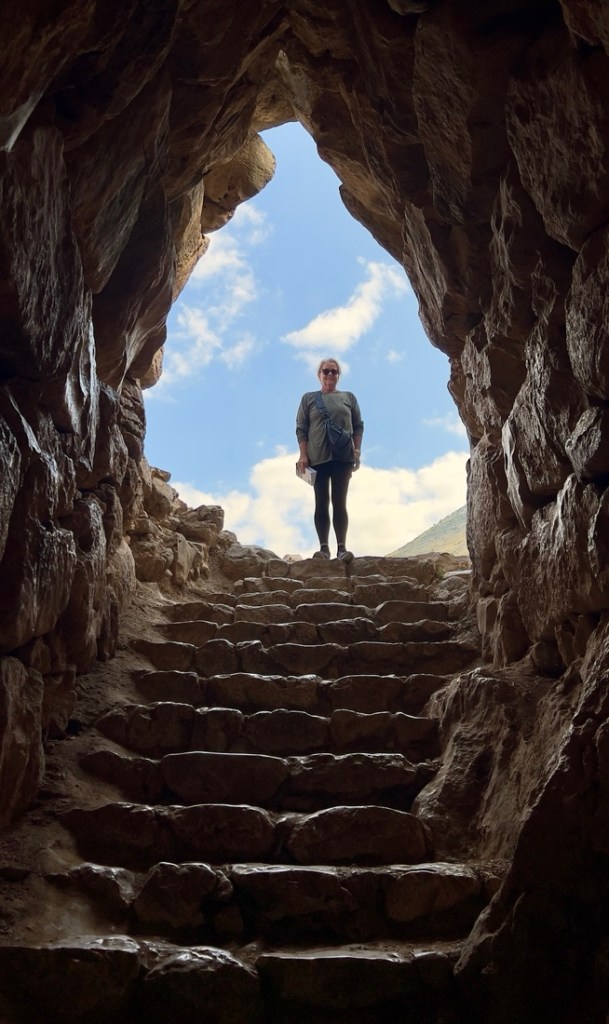
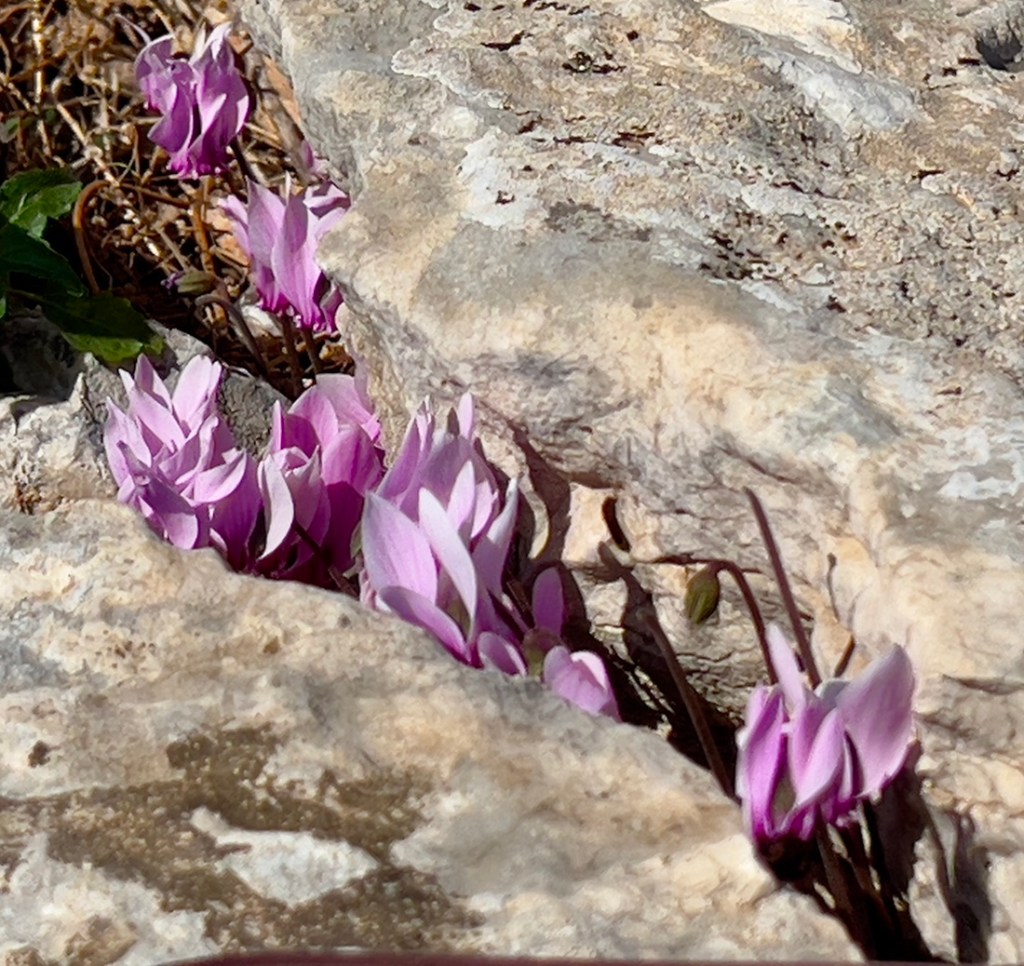
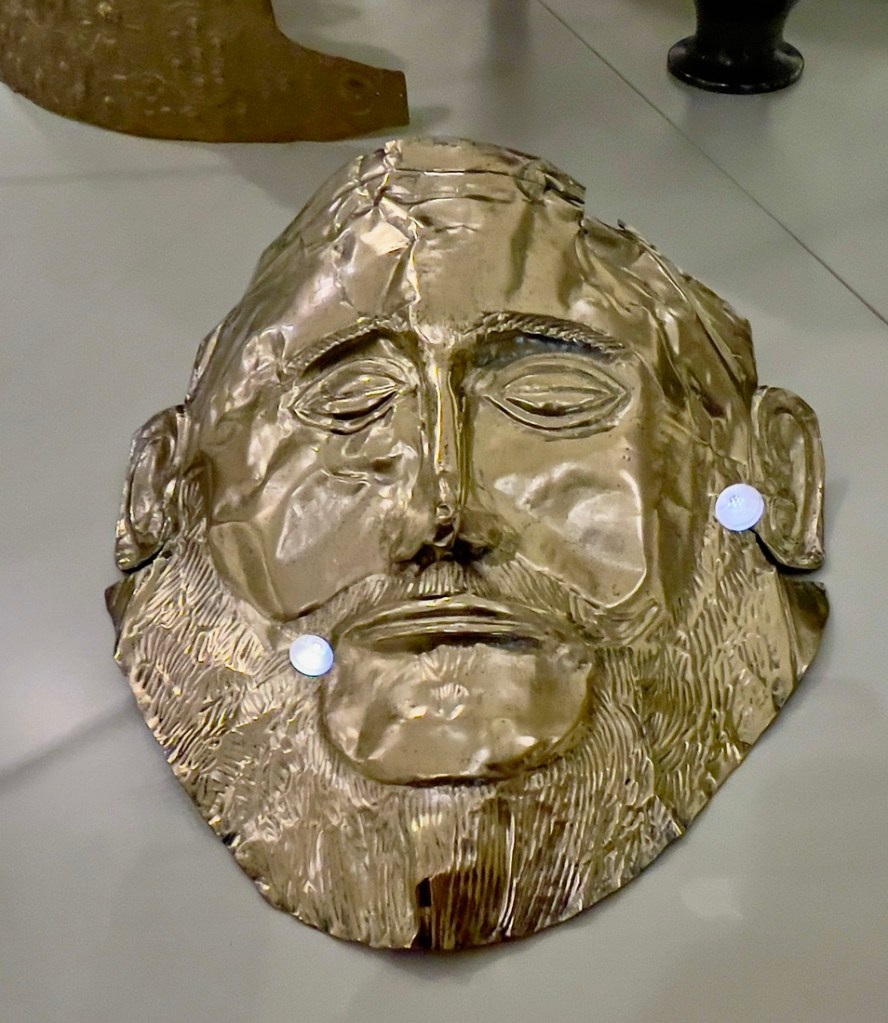
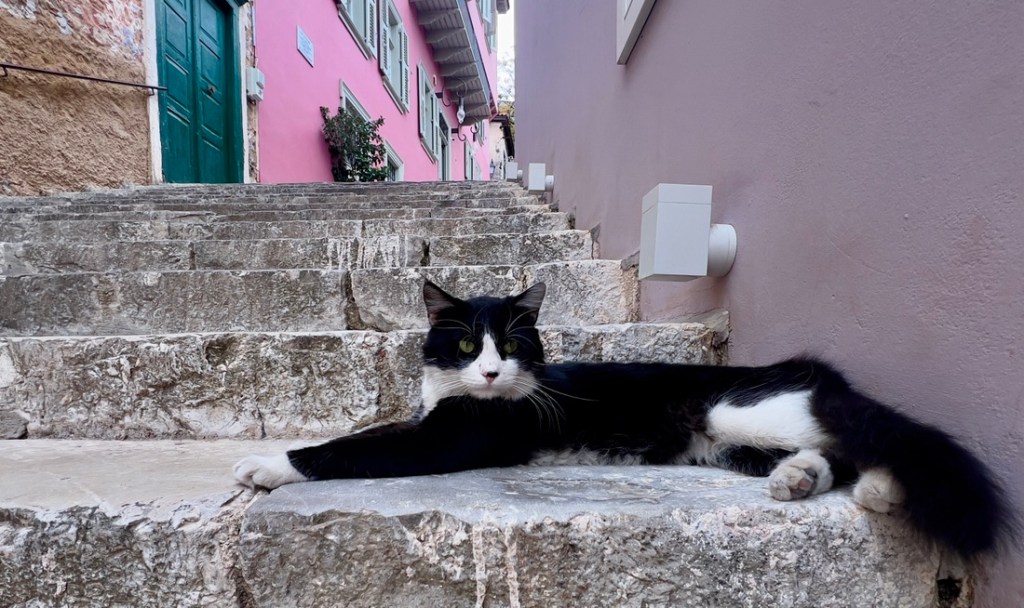
These two felines stand “guard” at the entrance to the city, replacing the lion statues of antiquity. Perhaps this is indicative of today’s society. The ancient entrance to Mycenae, built around 1300 BC. These rocks were huge and these walls have survived earthquakes for millennia.Above the doorway were the two lions. Their heads have gone, perhaps made of gold and plundered.Postholes in the sides of the arch that held the wooden door are clearly visible.A grave circle from about 1550 BC. When archaeologists unearthed the graves in 1876, they found treasure troves buried with the bodies.The inside of the Lion Gate and the wall, with lines of orange and olive trees beyond.This was the corner of the ancient palace where the throne was located. Nice view!The view extended far across the plane, even to the sea. This allowed the Mycenaeans to see any approaching attackers with plenty of time to prepare.Why was the city here? It’s unknown, but I knew they would need water. Behind the buildings was this ravine, and there is a spring top left of this picture.They built an impressive deep and dark cistern, with a system of gutters, to collect water from the spring.We have not seen many flowers in Greece in October, but I noticed these cyclamen squeezing through some gaps in the rock.In the museum was this bronze mask, sometimes known as the Mask of Agamemnon, which it isn’t.The archaeologists found evidence of trade throughout Mediterranean Europe, and beyond to Afghanistan and Europe.This writing is a form of hieroglyphic, often associated with ancient Egypt. Ancient Hebrew was one of the first letter-based languages.
In the graves, many artifacts were found, intended to accompany the dead person on their future travels. They were often miniature so they could travel light!
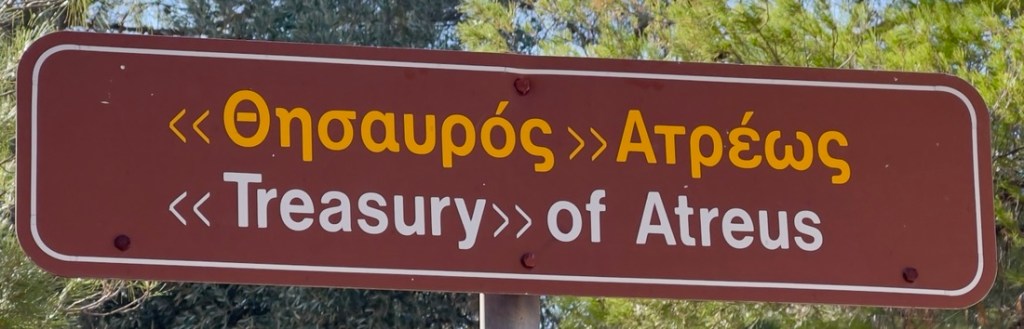
A short distance from the main site, which has the museum and Lion Gate, is the Treasury of Atreus.It could have been Agamemnon’s grave. It appears never to have been completely buried so anything inside had been plundered a long time before modern archaeologists found it.It is amazing that it still stands. The domed roof is made of large stones but it must have been built well! They don’t make things to last 3500 years any more 😎.
Epidaurus Theatre and Asklepios Museum
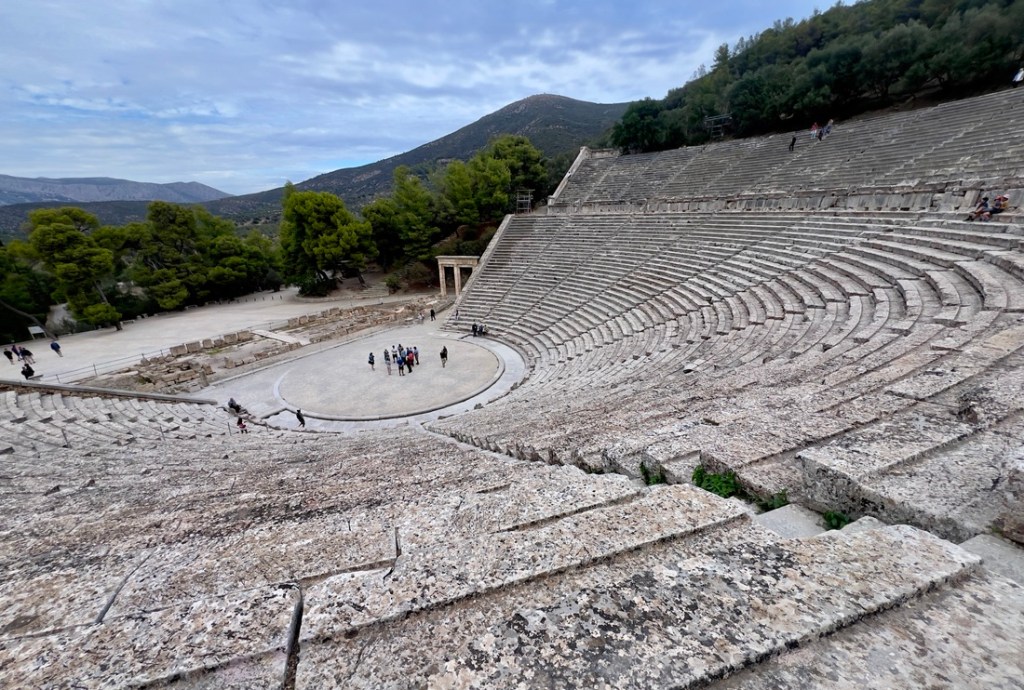
We visited Epidaurus for its theatre. It is on a large site with many remains. The site was a temple to Apollo, And supposedly his son, Asklepios, the god of medicine, was born there. The site was very popular in the fourth and third centuries BC for healing.
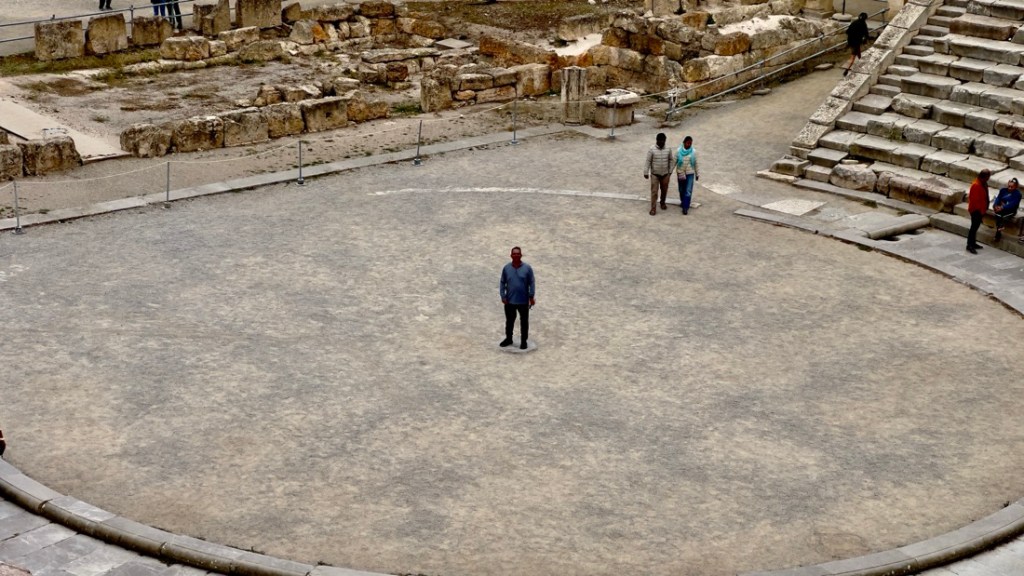
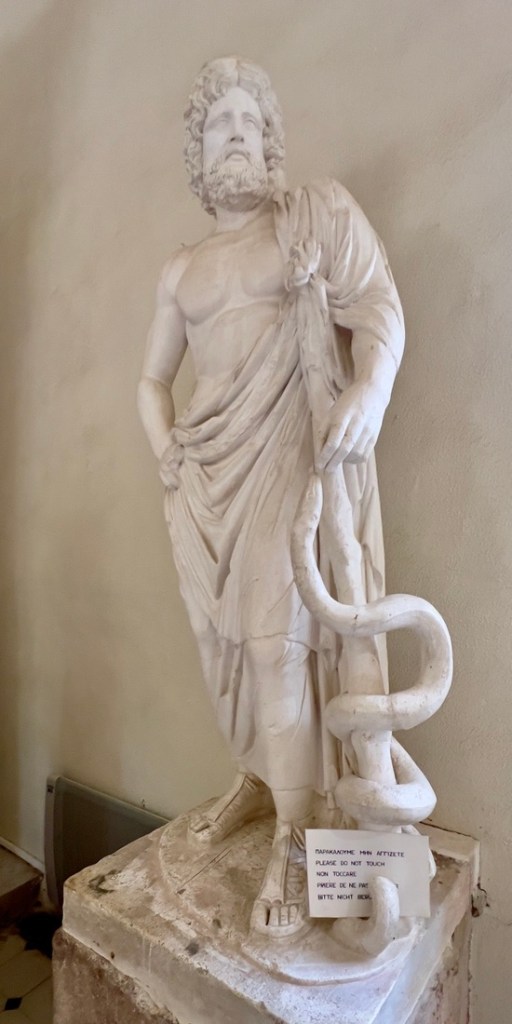
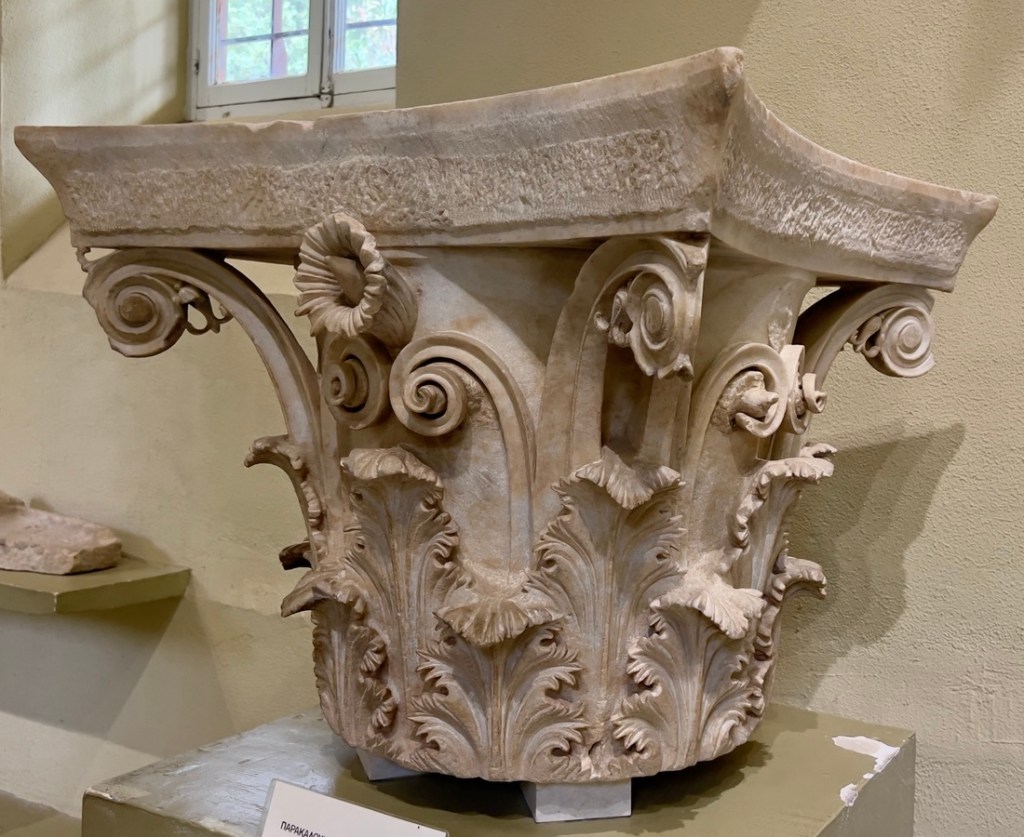
The theatre. It is the best preserved of ancient Greece’s 132 theatres.The view from in front of the theatre.The acoustics were amazing such that microphones were not needed (not that they were available!) I tried reciting a Greek monologue, but we needed a beautiful singer’s voice.There was a museum, which was nice and small! This is supposedly Asclepios. The medical symbol of the snakes around a staff originated with him!This was a large, intact “stele” with writing all over it.Lots of headless statues. I guess they fell off and the archaeologists weren’t sure which head went with which body!This capital from a Corinthian column was found buried at the site, perhaps as an offering to the gods.
Nafplio
We stayed here for two nights and used it as a base for exploration, while the town itself had lots to offer. It is popular as a weekend getaway for Athenians, including wealthy ones it seemed. Its car-free old town reminded us of Hydra, though this was even more elegant. We went on two walks and visited two forts.
Walking around the old town
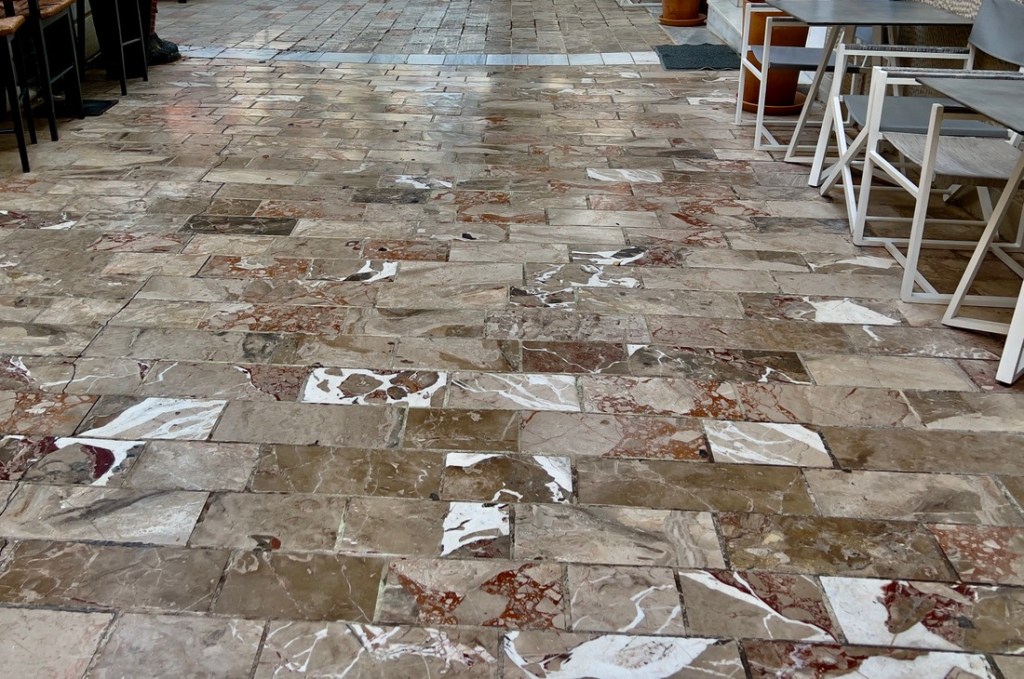
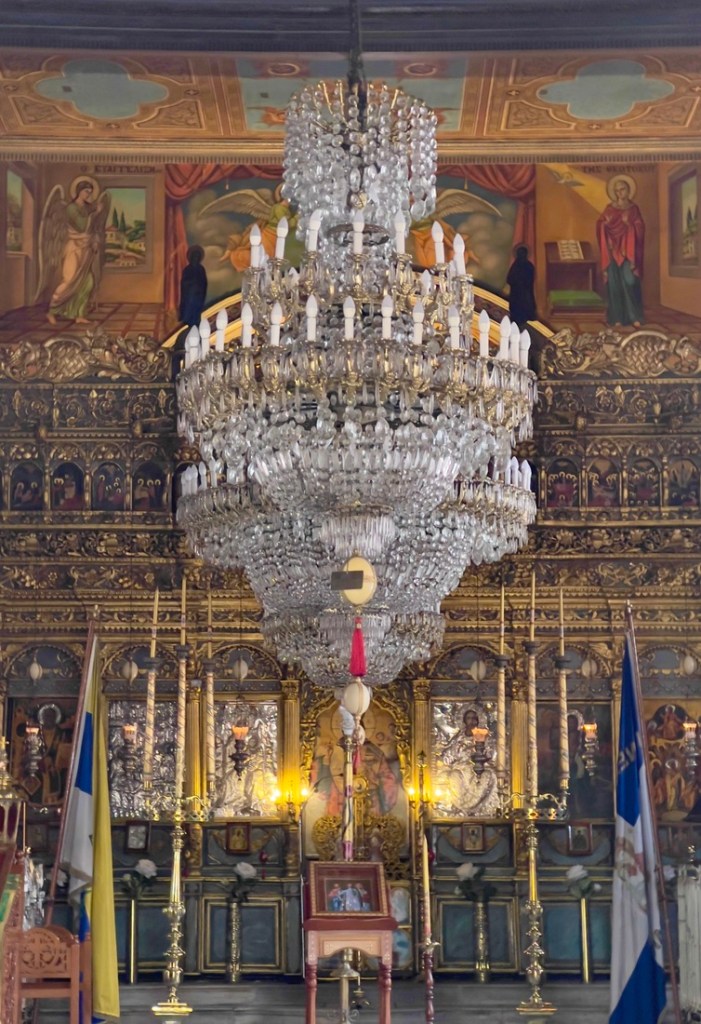
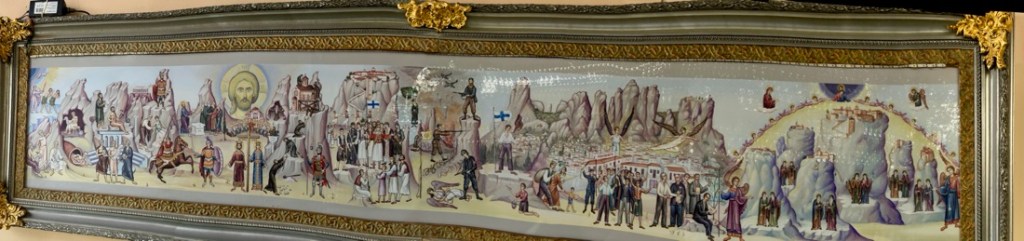
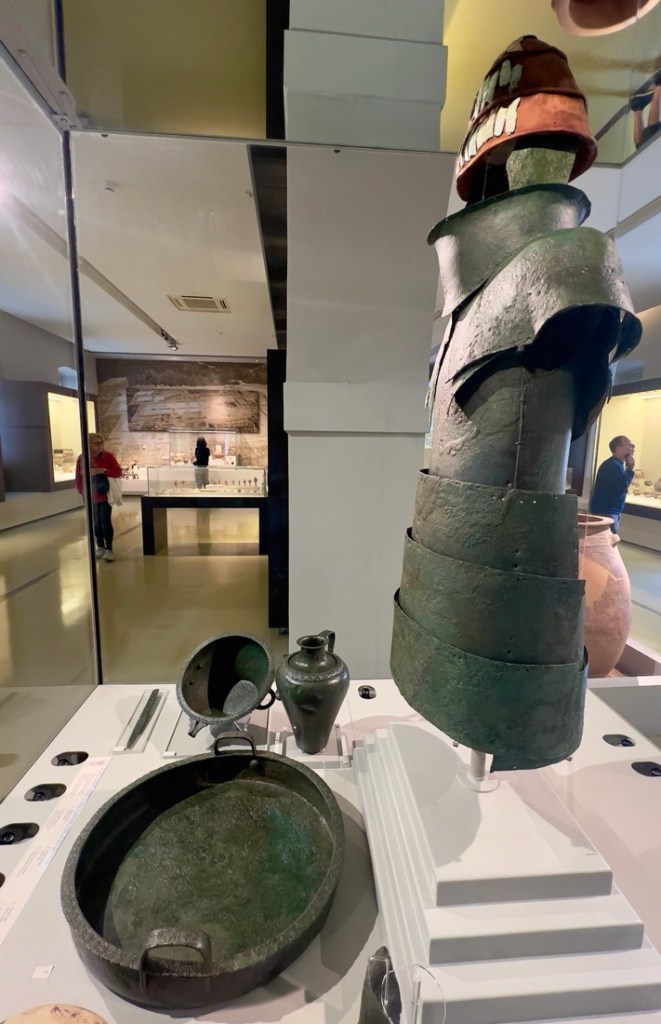
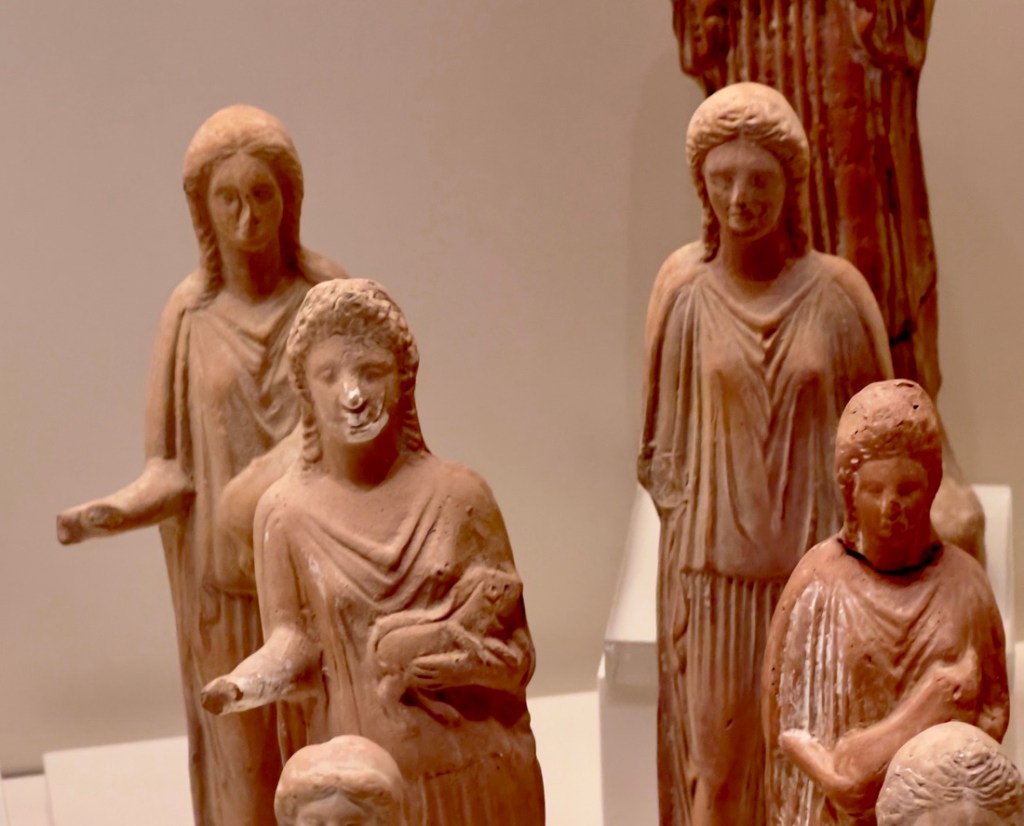
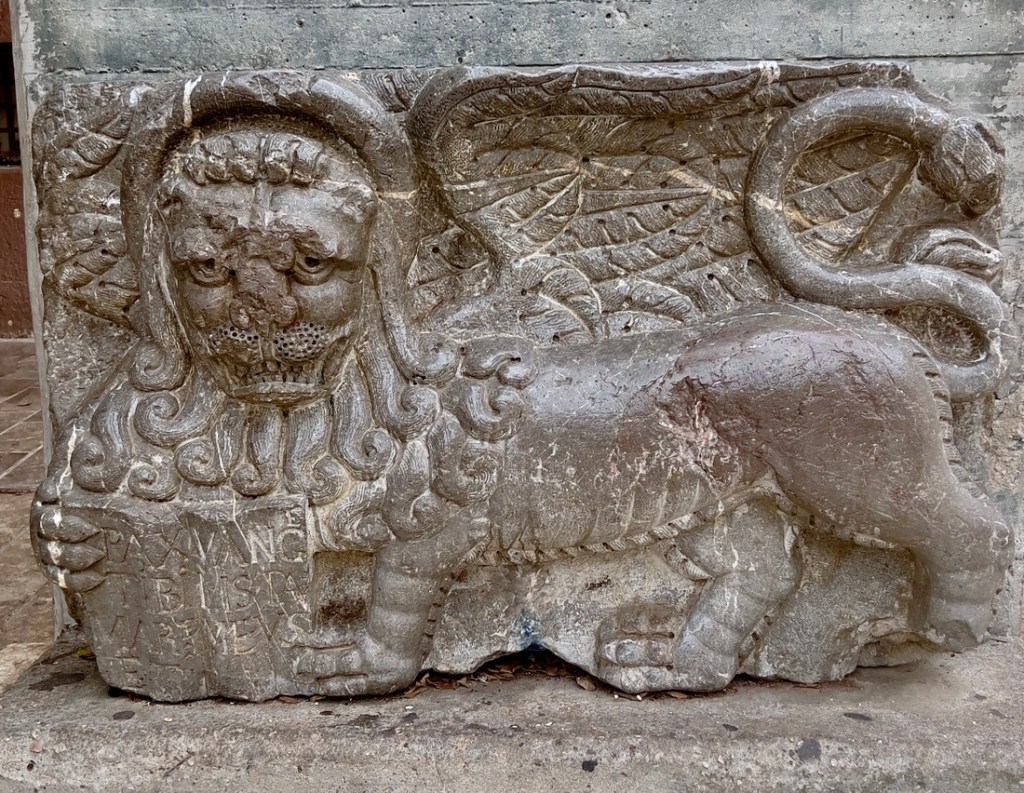
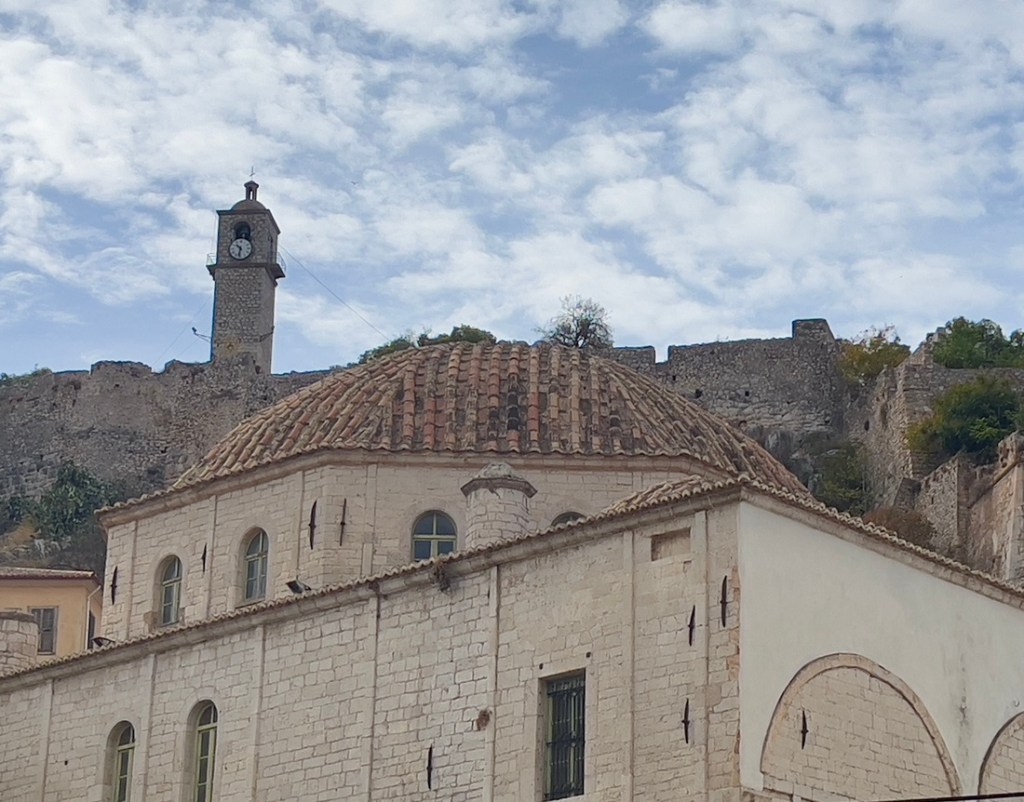
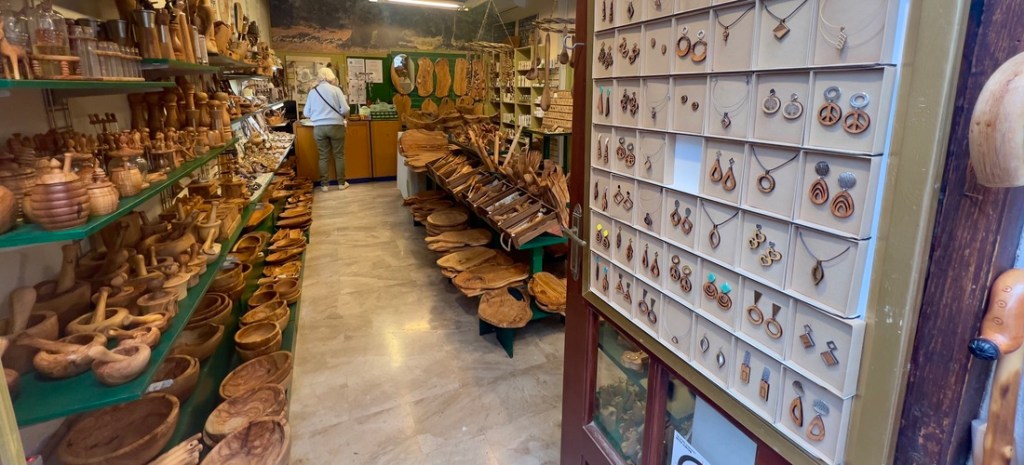
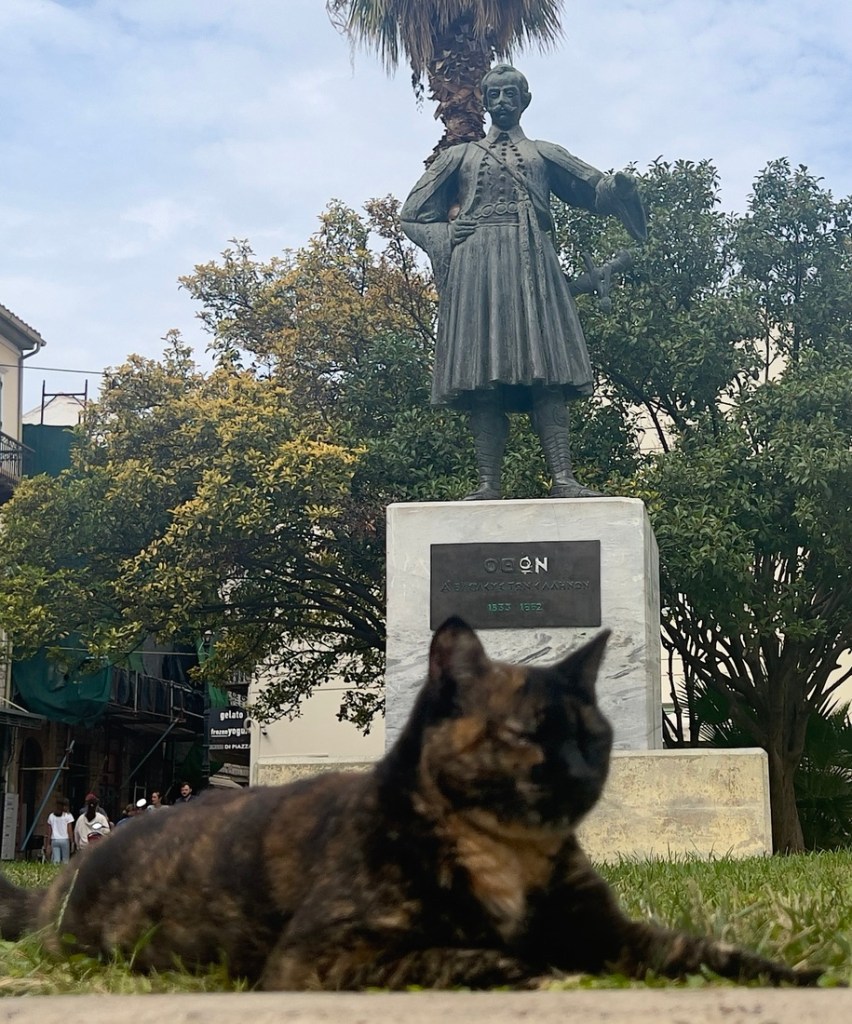
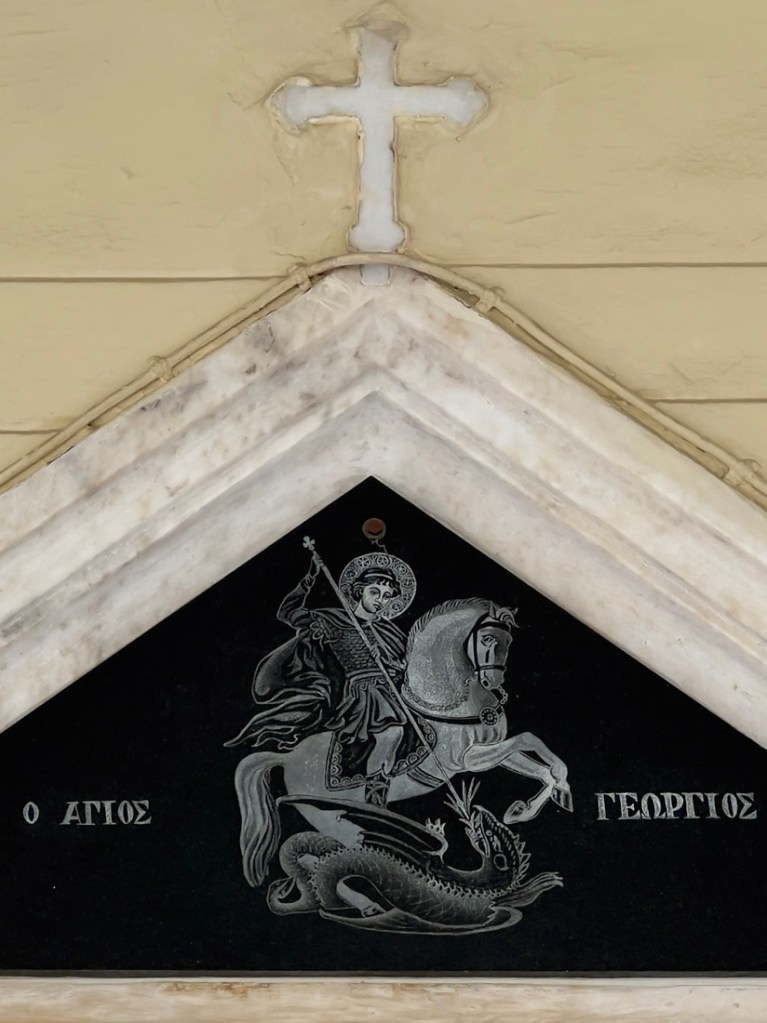
The central Square of Friends is named after the French soldiers who died fighting the Turks for Greek independence in 1821. This obelisk commemorates that, with the medallion showing the Greeks and French (Hellas and Gallia) fighting alongside each other.Most of the pavements in the old city are beautiful marble. The Hotel Grand Bretagne looks down on the monument to the French!Lions stand guard at the entrance to a hotelInteresting nuggets of history were everywhere.A large Greek Orthodox is in the centre of town: the Church of St Mary Above All Saints.On the church’s wall was this fascinating picture describing Greece’s history from Adam and Eve, Ancient Greece, Jesus, Paul, the Meteora monasteries, occupations by Turks and Nazis, and a representation of heaven.Next door, on a lighter note, was this gelateria that we later learned first hand served delicious ice cream. It may have links back to the Venetian occupation of the town in the early 1700s.The central square, Syntagma (meaning constitution) like in Athens, was quiet in the mornings and bustling in the evenings. This huge tree dominated the corner next to the museum, housed in the Venetian armory.Inside the museum was this armor, found in a nearby Dendra grave, from the 15th century BC. At first, I thought these were figurines of Mary and the baby Jesus, but the timing was wrong, and if you look closely, the “baby” was a pig! They are from the sixth century BC.Several buildings had this Venetian emblem of a lion. They occupied Nafplio in the early 1700s and tried, but failed, to defend it against the Ottomans.Several domed buildings remain in the city. The Turks built these as mosques and they are now repurposed as government buildings or a school.We passed, and shopped at, a very cool olive wood shop, with the craftsman working while we browsed.When the English, French, and Russians helped Greece gain their independence from Turkey in 1821, Nafplio was the first place liberated and was established as modern Greece’s first capital. These countries insisted Greece have a monarchy, and this is King Otto. In the foreground is who really rules though.There was a church of St George, and I recognized the dragon!A water fountain with an Arabic inscription dating back to the Ottoman occupation.It was a fun wander around the backstreets.
Akronafplia Fortress
This is one of the town’s three Venetian fortresses. While the fortifications dated to the third century BC, the Venetians upgraded it in the fifteenth century, and it is now flanked by two hotels.
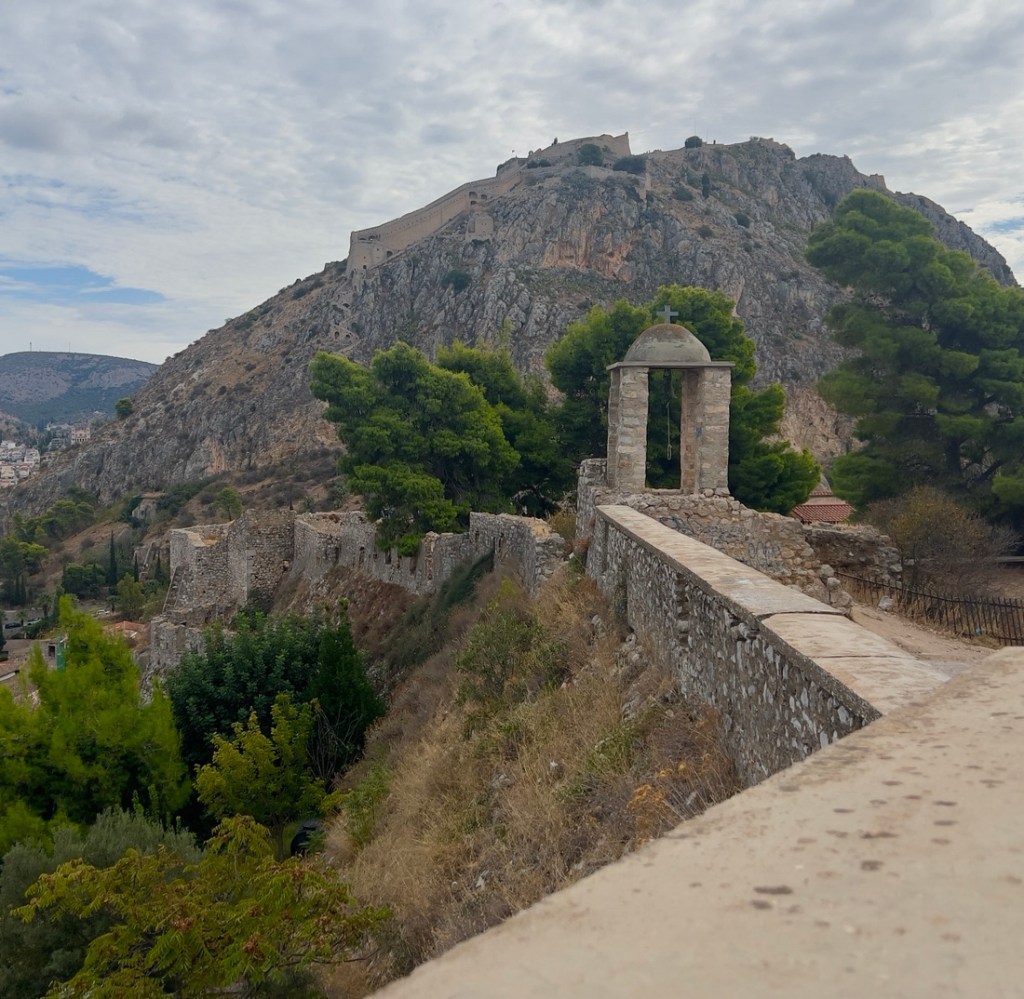
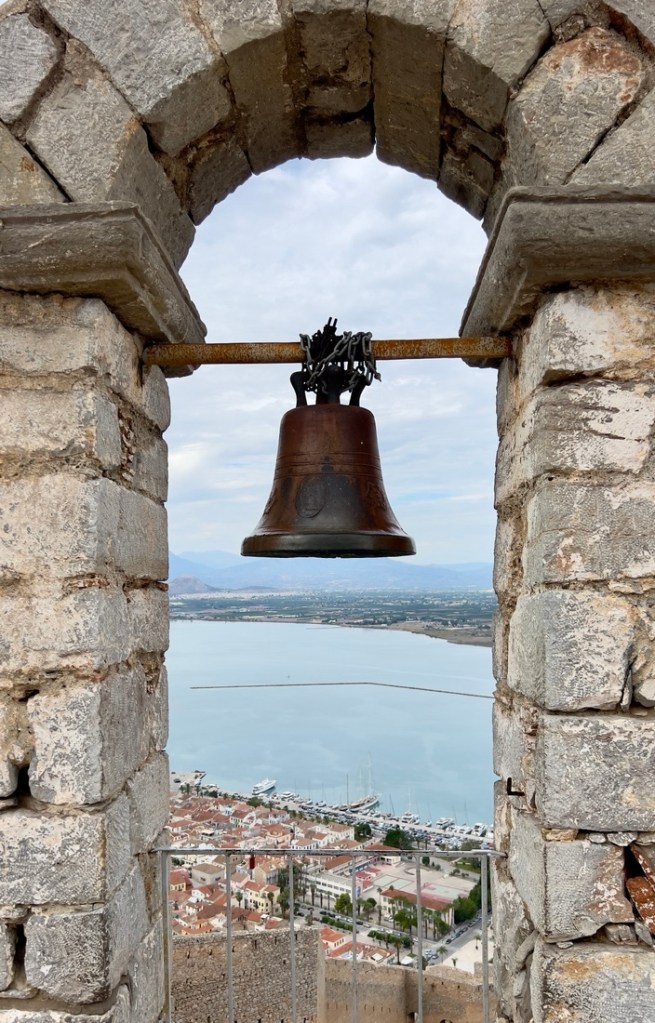
Our guidebook pointed us to an elevator up to a hotel. We walked down this long corridor, with no signs, toward three elevator doors. One door had a sign saying it was under maintenance, i.e., broken. We pressed the button for the operating one, and it made lots of noise. We risked taking the ride, but we were glad to get off it!Nice views from the Nafplia Palace Hotel.Cool views of old town and across the bay.The clock tower, which was straight but the photo distorted it. It was seven minutes late and chimed every 15 minutes, happily stopping in the evening.Some of the old fortifications, with another fortress, the Palamidi, visible above.
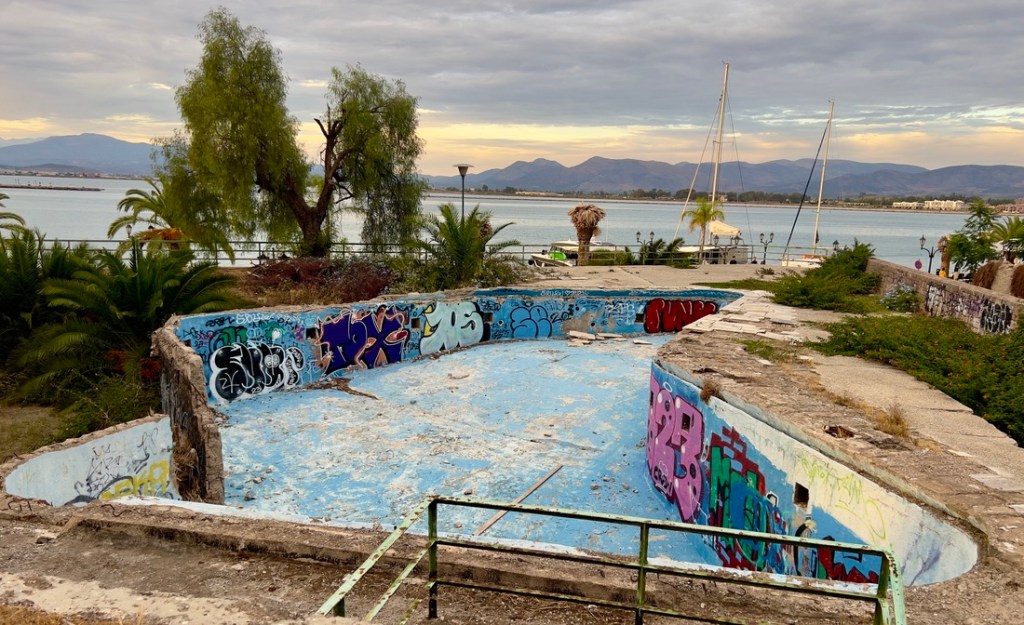
Next we came to the deserted Hotel Xenia. This was a (dictatorship) government-sponsored build in the 1950s and part of a broader program across the country. It was never very successful and failed rapidly when the conservative locals turned against the developer who bought it in the 1990s to turn it into a nudist camp! It was kind of spooky.
The Palamidi Fortress
The highest fortress above Nafpoli is the Palamidi Fortress, one of the best preserved Venetian Fortresses, built between 1711 and 1714. You can walk up the 999 steps or drive up. As we were in the car anyway, we decided to drive, and were lucky to find a parking space. The highlight of the fortress was the view.
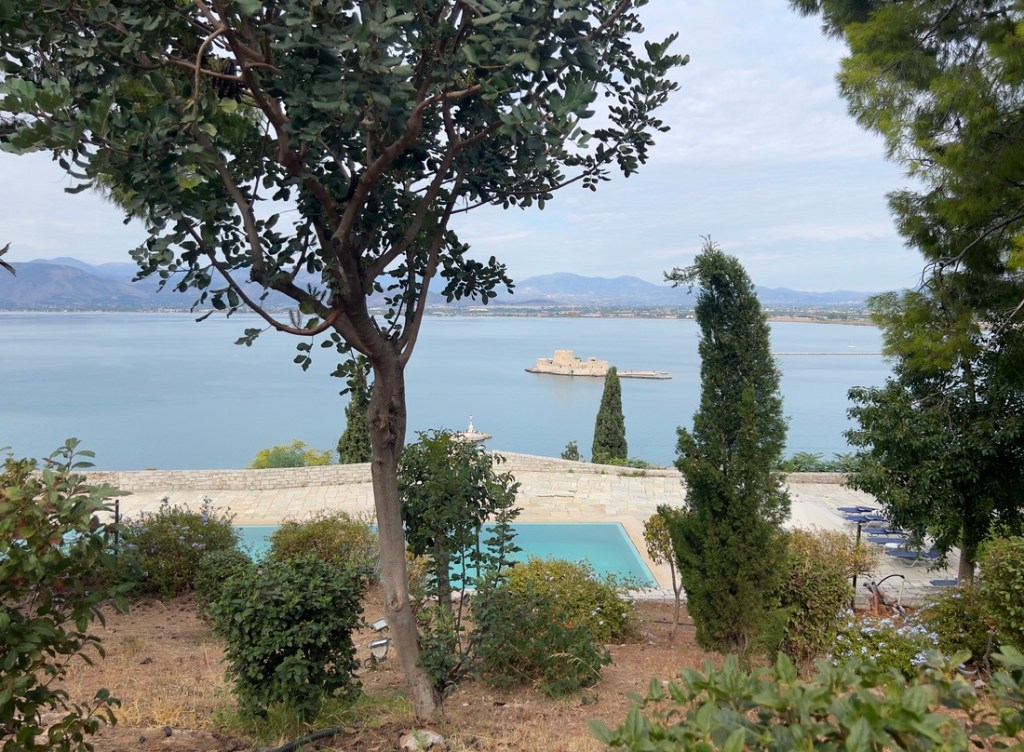
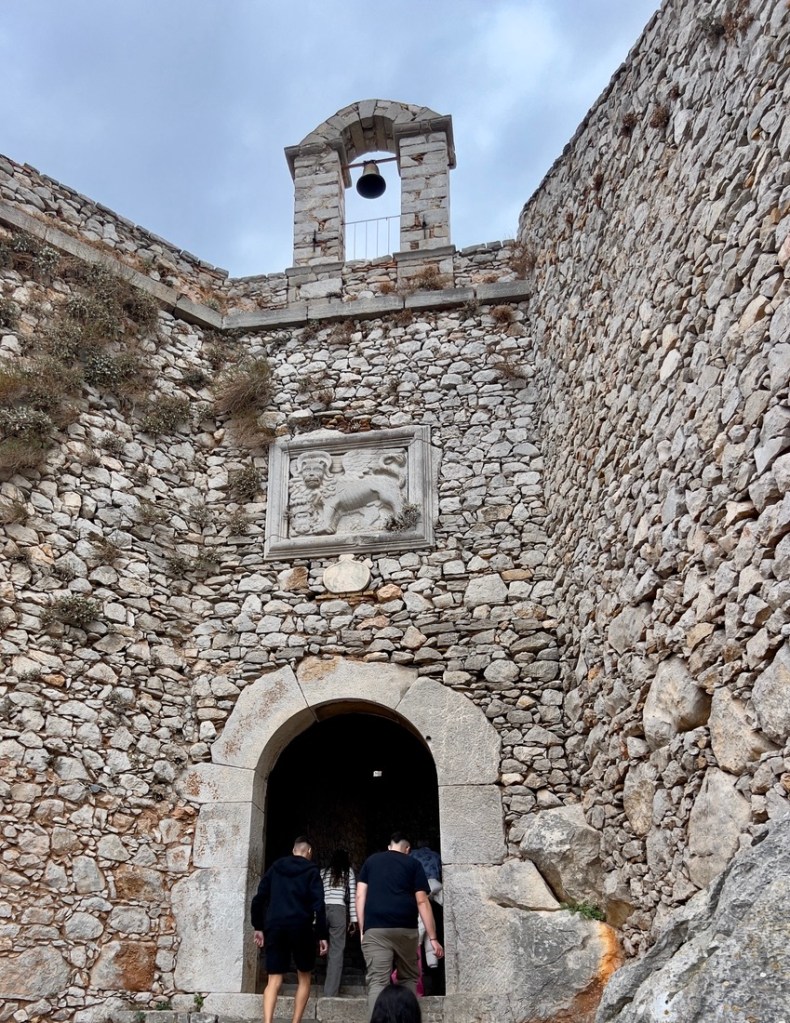
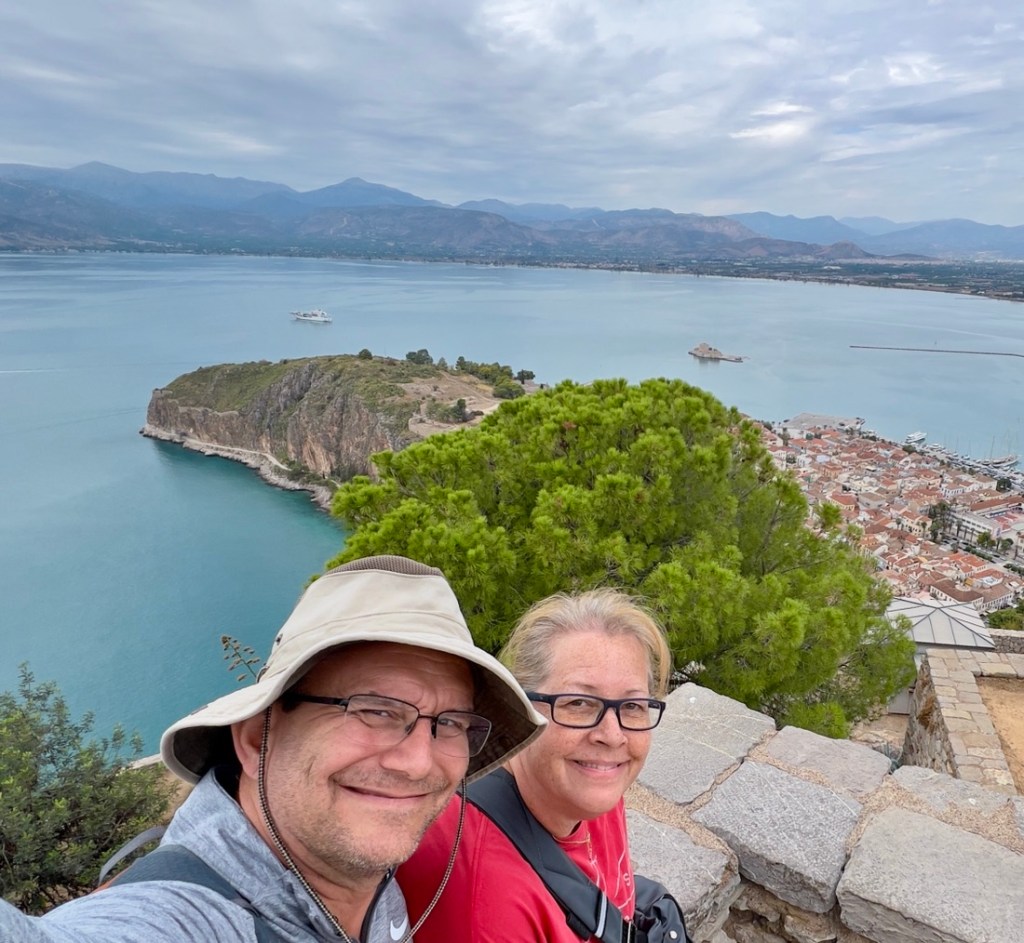
Another lion emblem of the Venetians above the fortress’s main gate.Selfie with a great view of Nafplio below.Syntagma Square, and another Venetian fort, the Bourtzi, on an island in the bay.
Walking to Arvanitia Beach
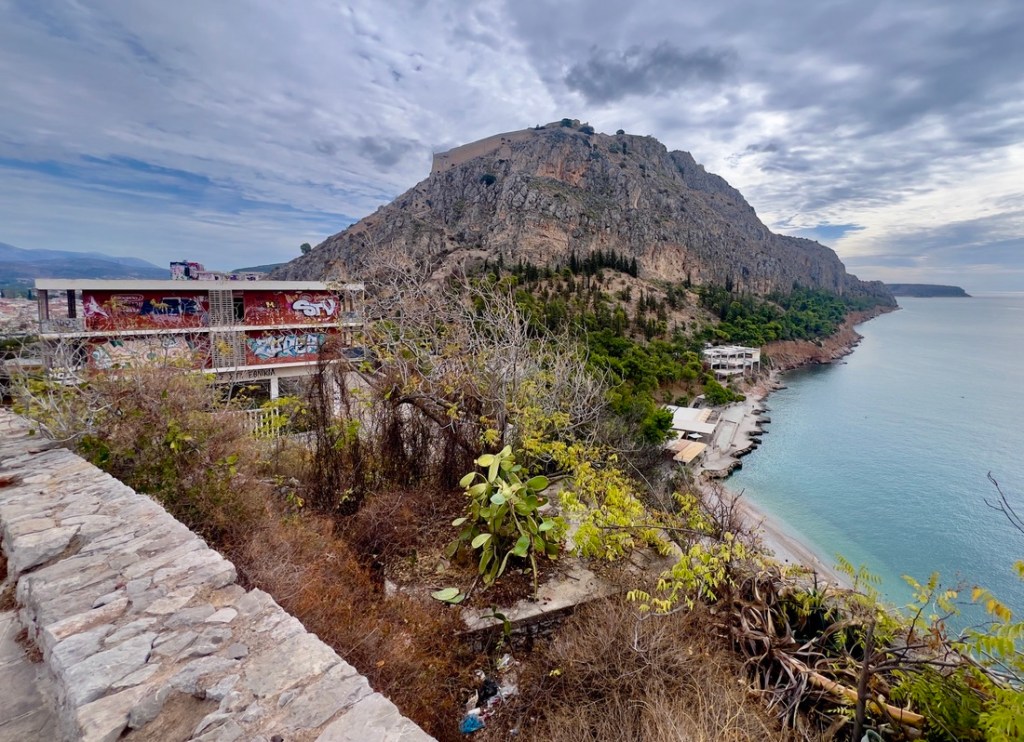
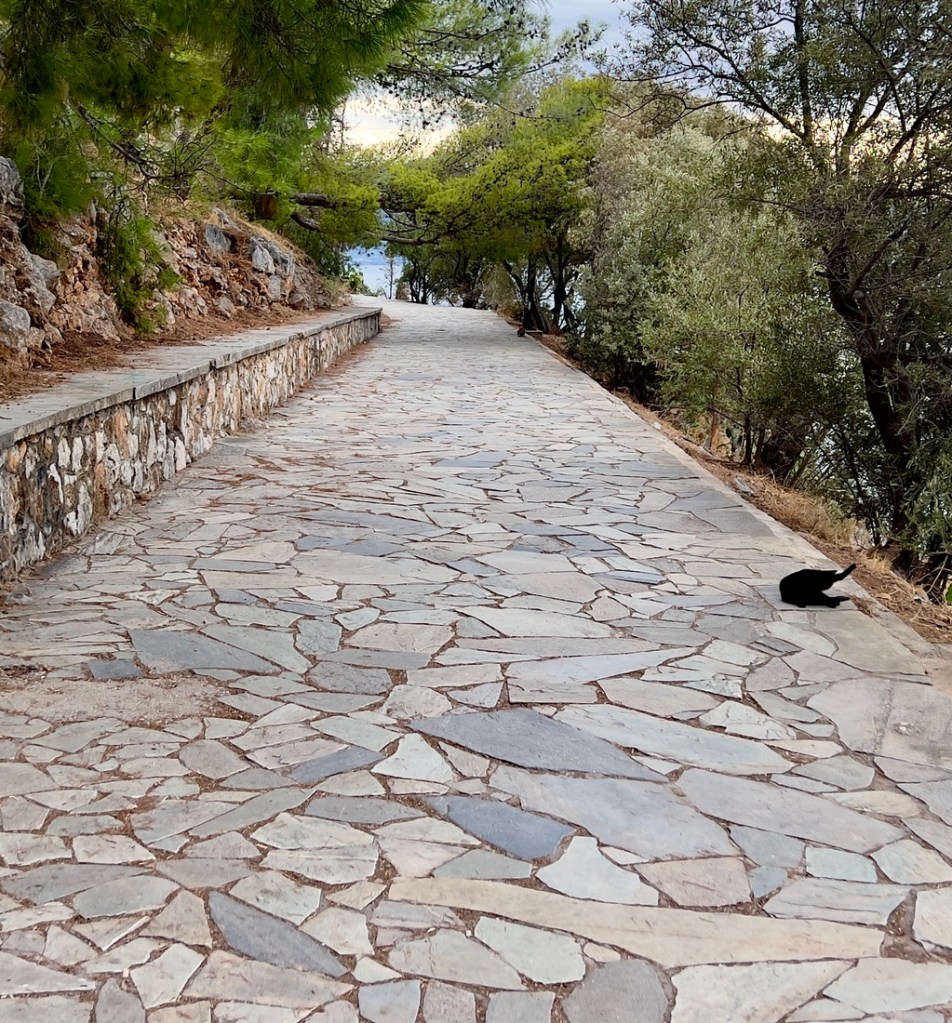
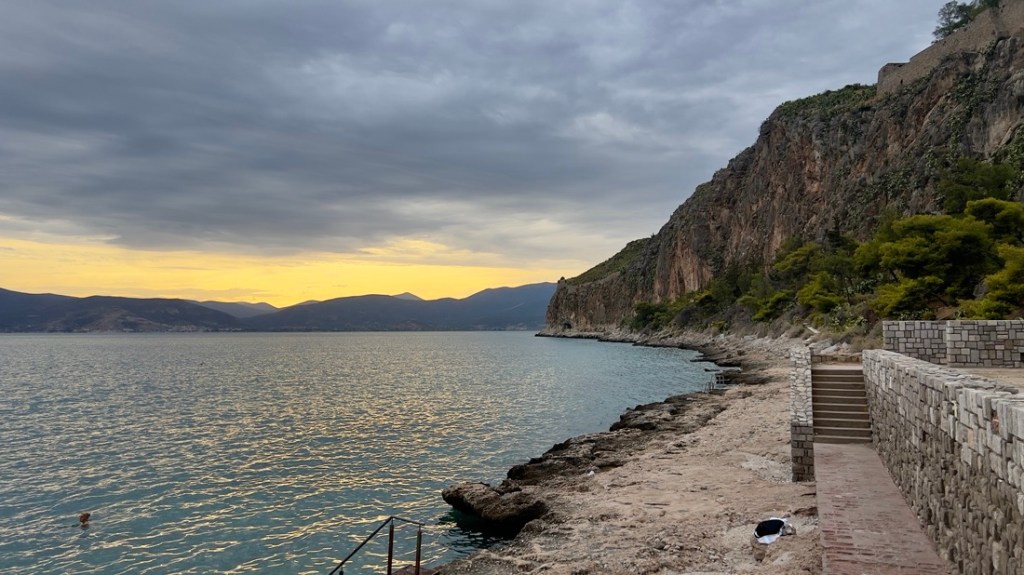
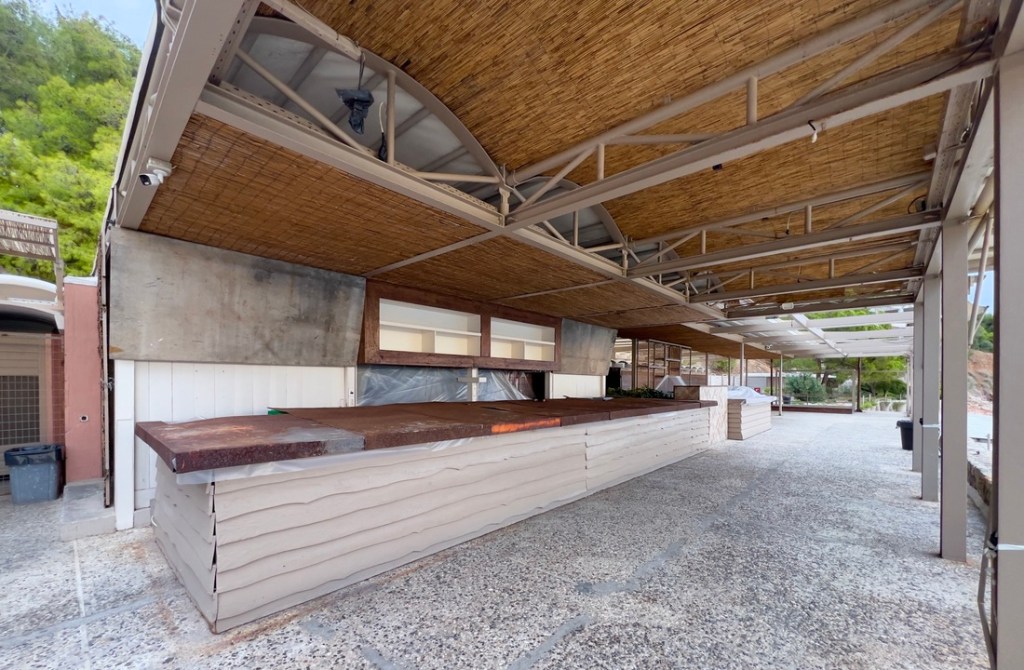
There is a flat paved trail that takes you around the headland to a beach on the other side of the fortresses. It has fallen into disrepair with damaged lights and graffiti. Its gates are closed, but everyone just walks around. It leads to a rocky beach and derelict-looking buildings.
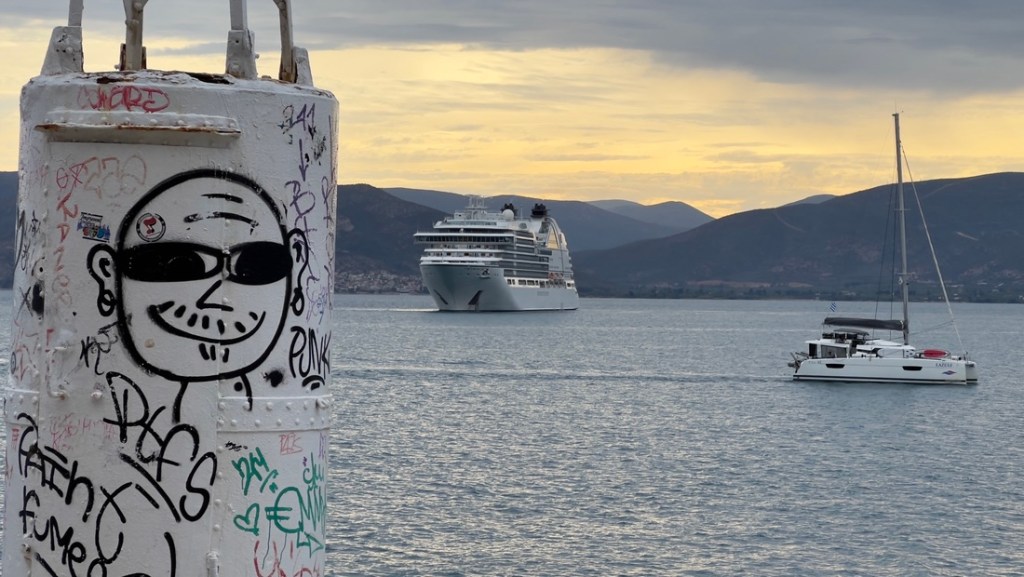
The fine trail.Interesting graffiti was all over.A cool stone archway on the way to the beach, with Palamidi Fortress behind the beach.The rocky beachThe view in the other direction. The derelict building might have once been a bar or restaurant. Great location!This bar looked shut down, but reviews suggested it came alive at night. Or it might be closed for the season.
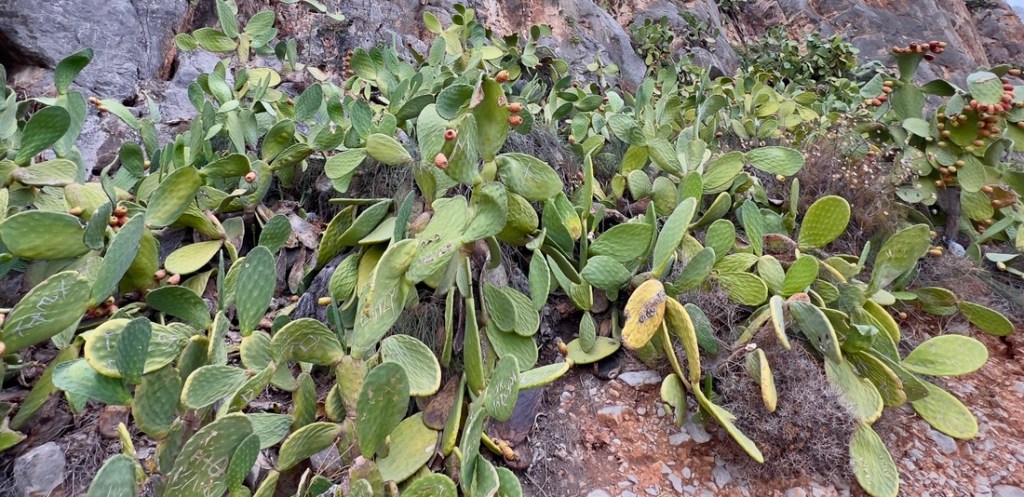
There were large cacti fields all over the rocky cliffs:
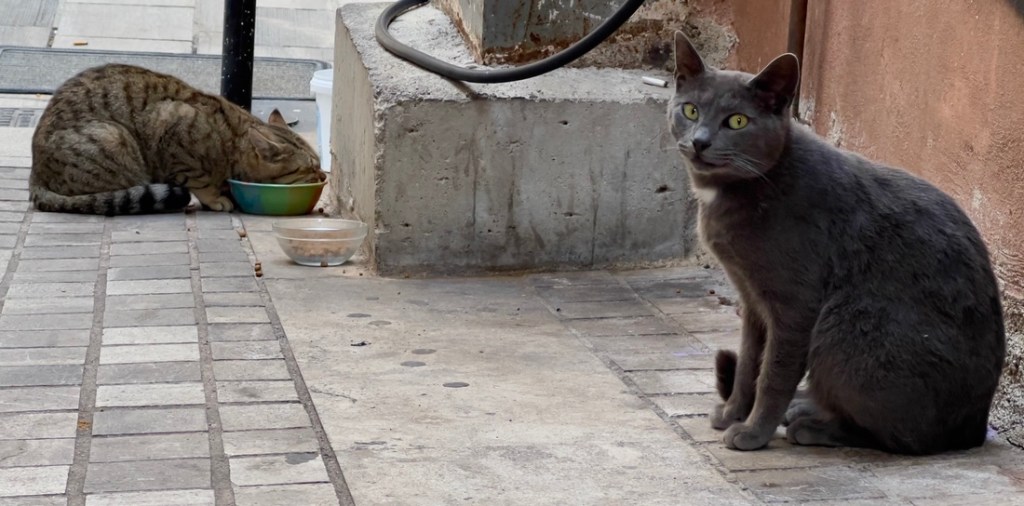
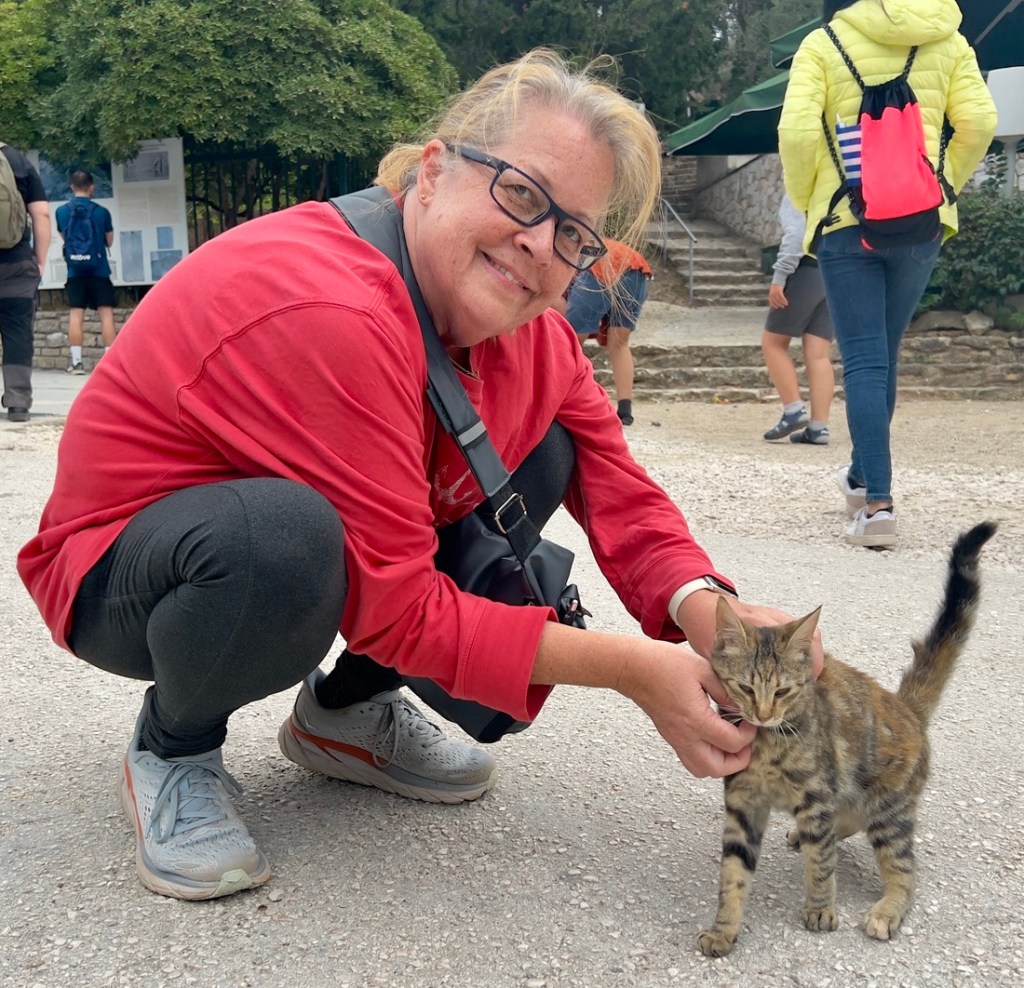
On this walk, like many other sites, Janet’s dilemma was which cats to stroke!
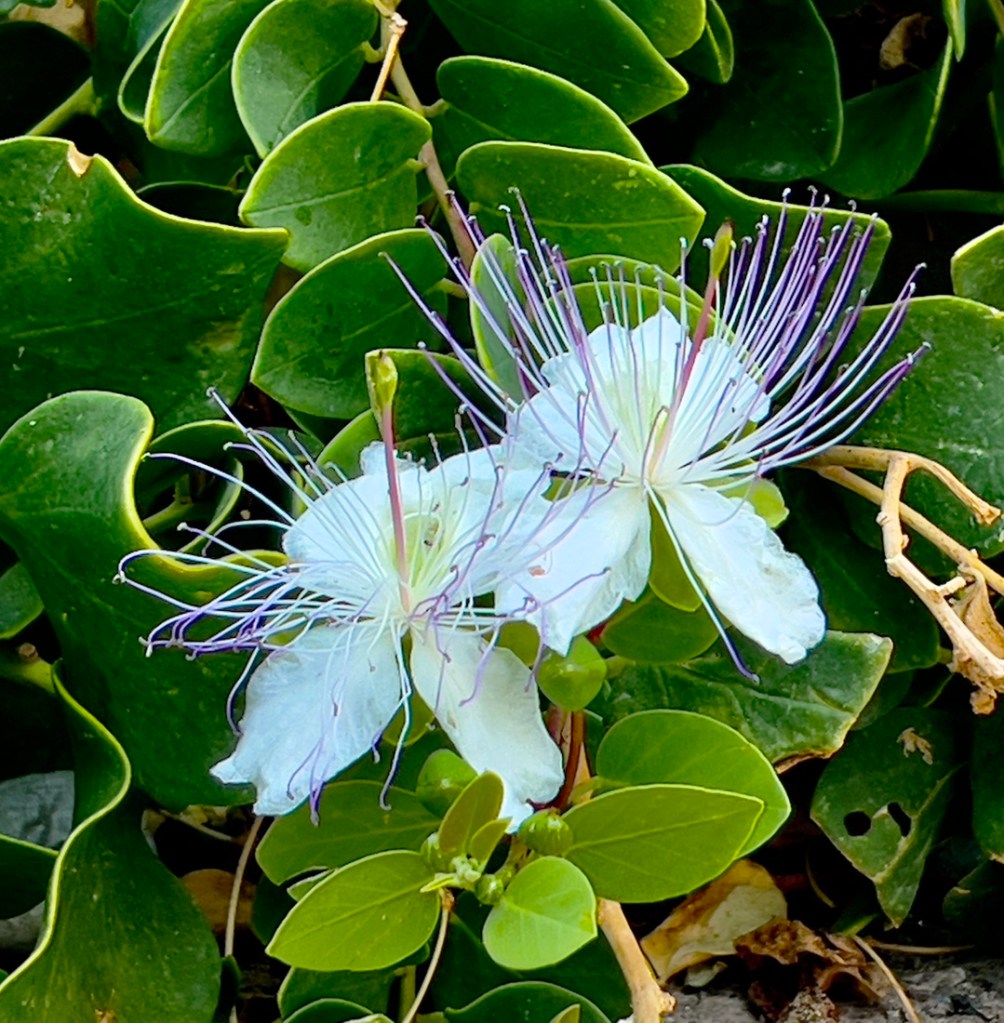
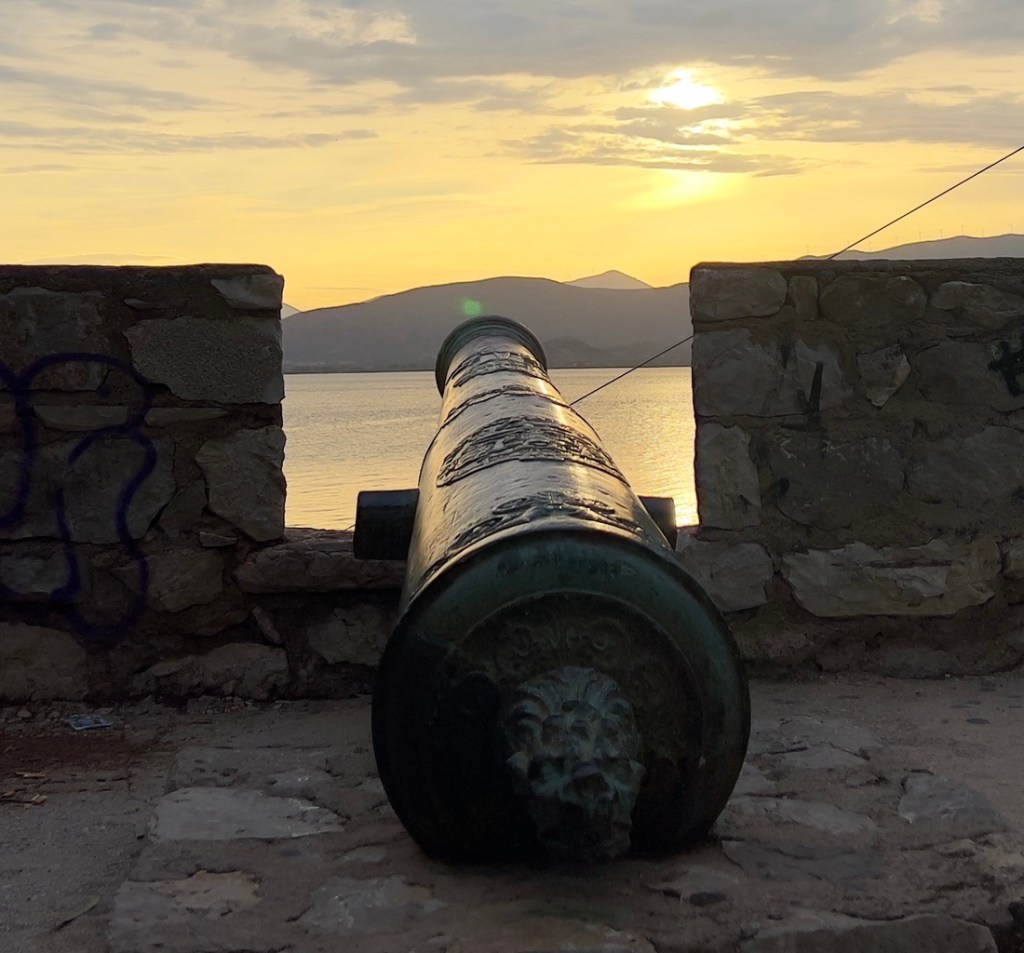
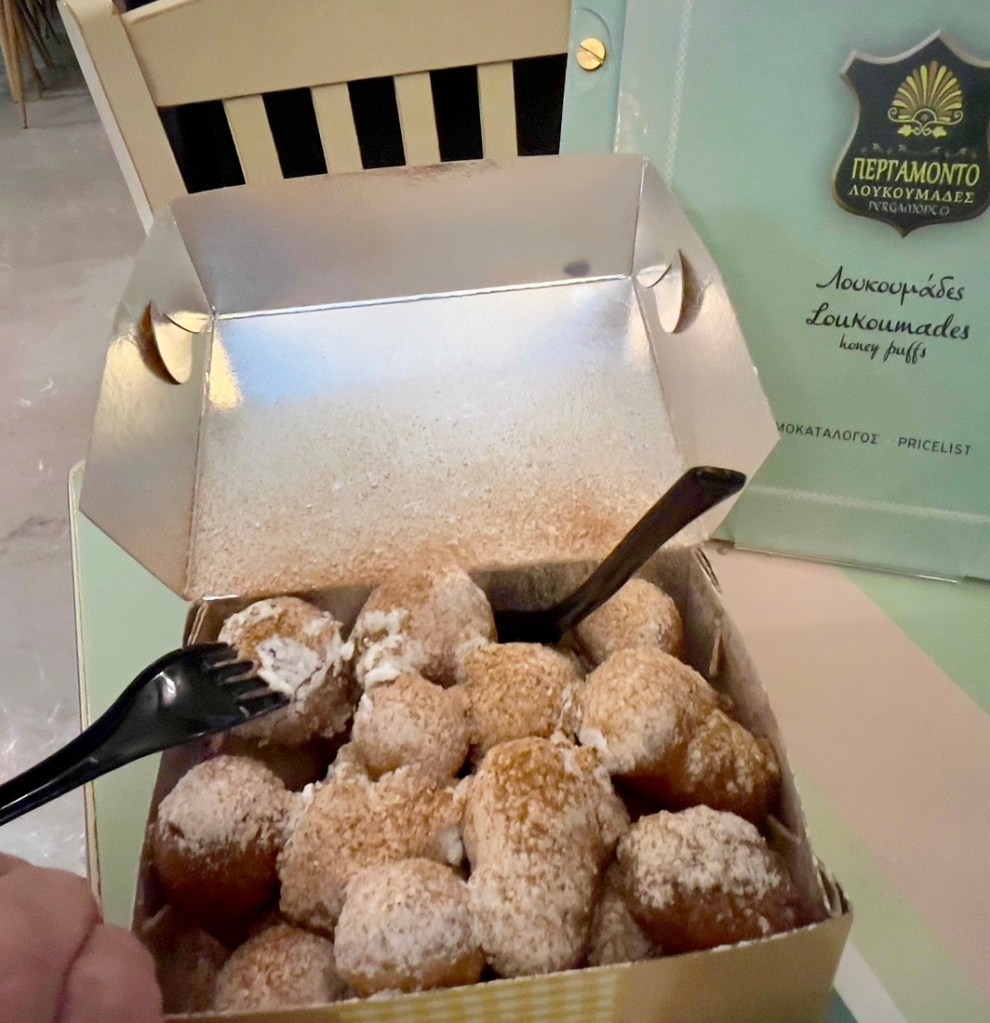
Some caper bush flowers by the path.The arch again.The flag of the Kingdom of Greece that formed after independence from Turkey.Cool waterfront restaurant.Old defences.Not too busy.We grabbed gyros “take away” as they were 1/3 of the price, and enjoyed them sitting on a bench by the water, watching the world go by.Local specialty “loukoumades” for desert, a cross between a donut hole and beignets.We watched them being made.
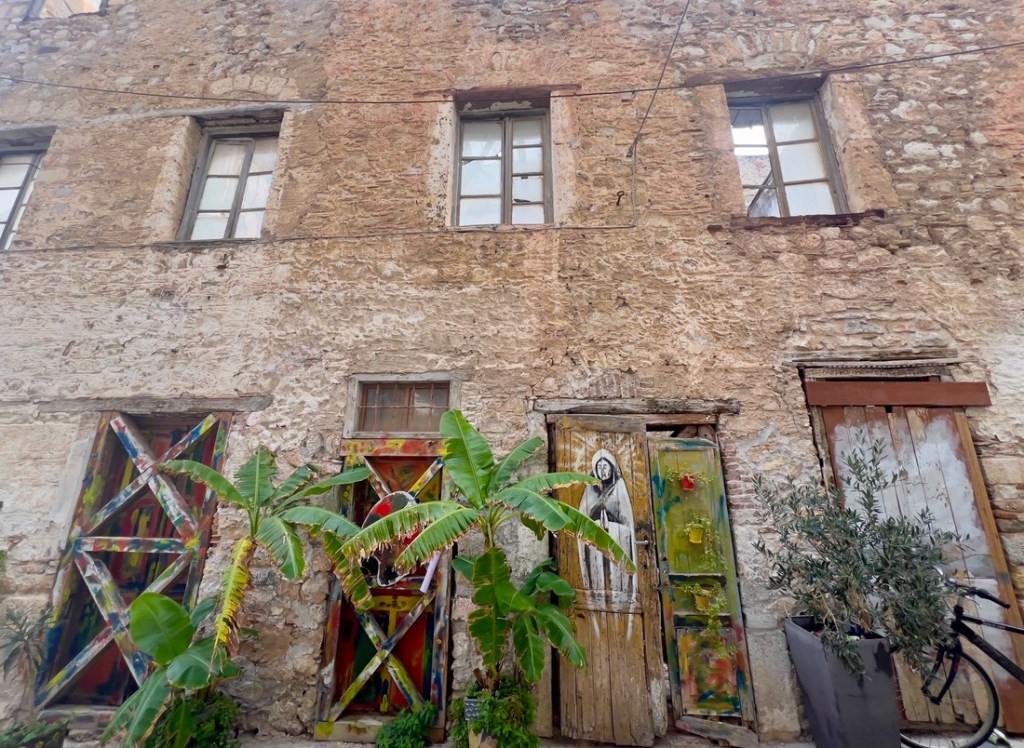
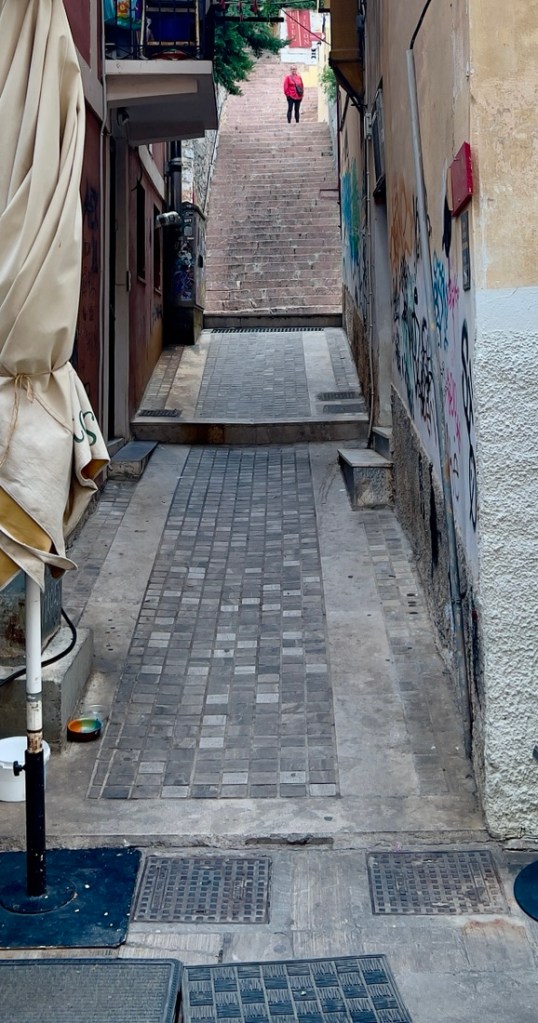
Another feature of town was the number of dilapidated buildings, indicative of the economic challenges that Greece has faced for many years:
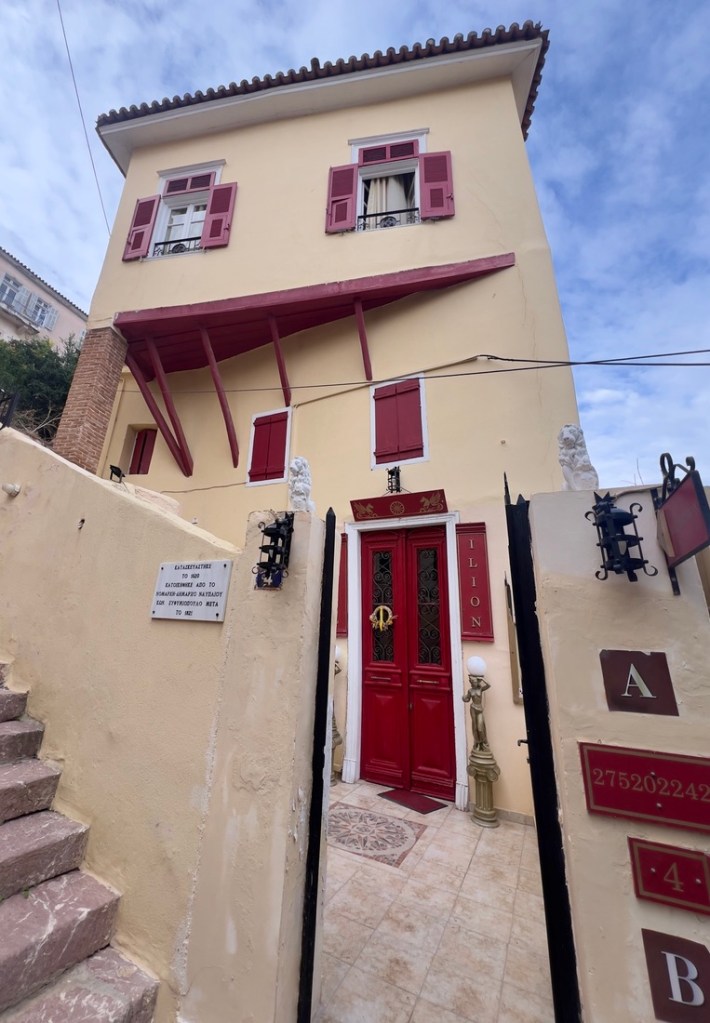
Finally, we stayed in the most quirky hotel. It was a walk up many stairs, the floors were not level, the bathroom door had the most amazing squeak, we heard cat fights through the night, and the wall and ceiling had paintings of nude “muses” on them. They were very friendly though!
Reflection
Over these two days, we were continually surrounded by history spanning 3500 years. Just as I was trying to remember whether something was from 300 BC or AD 1700, we passed a sign to a dialysis centre, abruptly bringing me back into the present. However, economic challenges are taking their toll on modern Greece’s progress.
After such a full two days, which has resulted in far too long a blog post, we need an easier day tomorrow!
Find other posts from this trip on our Greece page.
Please follow us on this journey by subscribing below. We would love to read your thoughts: please leave comments at the bottom of the post.
"Cajunlimeys" combines Lousiana (Janet) and England (Peter). For "limeys," check out scurvy in the English navy.
We love adventures and use blogging to write a photo diary to preserve our memories. Some crazy friends enjoy following us and my notes might help others plan.
View more posts








































 The Adventures of the Cajunlimeys