
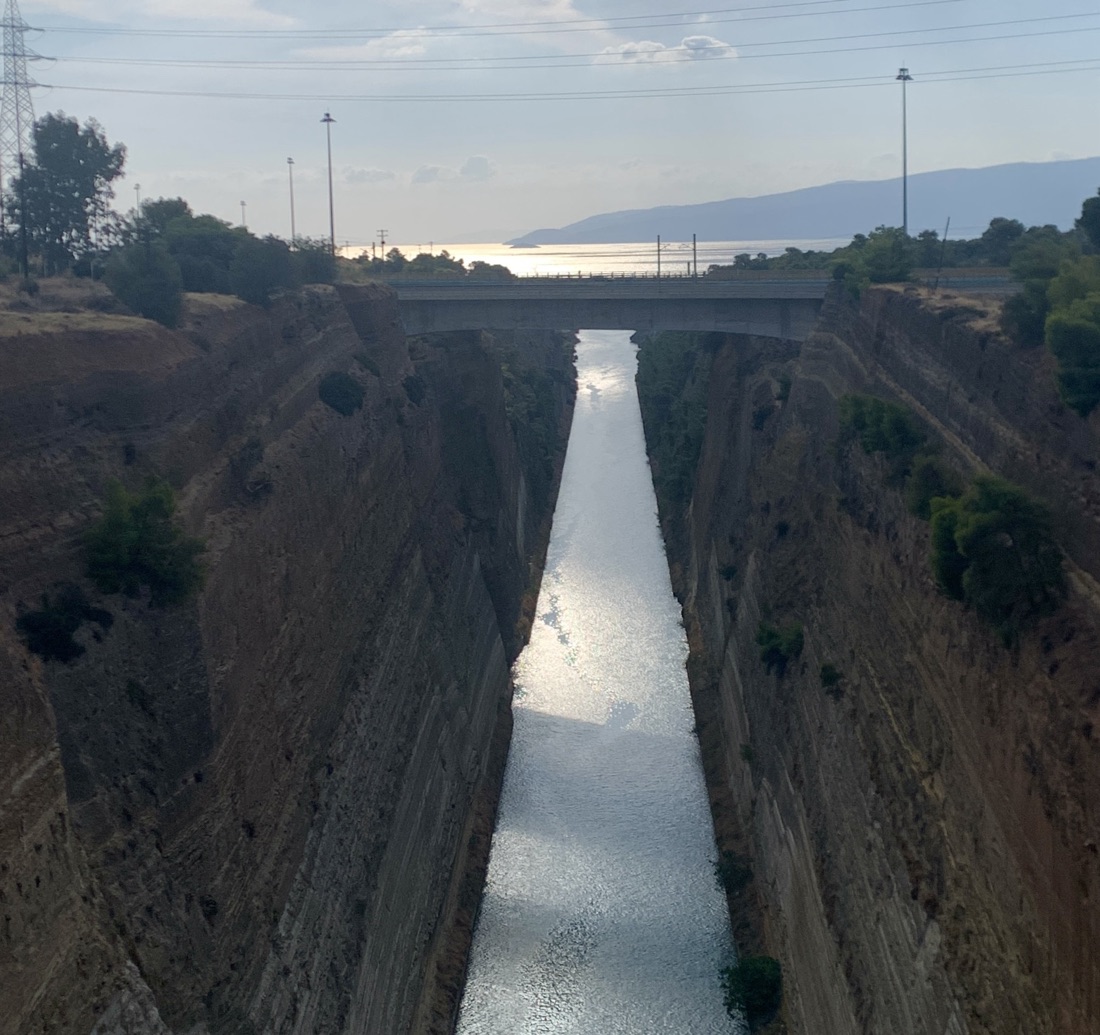
Summary: We visited the remains of the city of ancient Corinth, which Paul visited twice, staying 18 months. And from where he wrote Romans. We visited Acrocorinth’s castle from the time of the Crusades. We also visited Cenchreae, from where Paul departed Greece at the end of his “second” missionary journey. We also visited the engineering marvel of the Corinth Canal.
Corinth
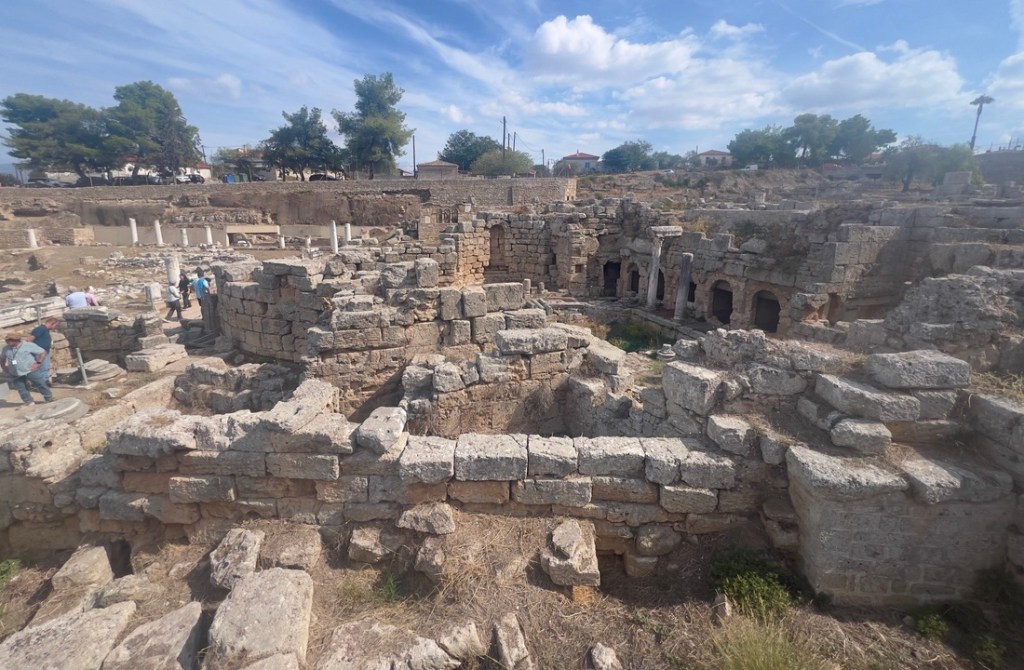
On the final day with our group from Liberty University, we started the day at Corinth. The first link to Paul was the Erastus inscription., which says that Erastus paid for the laying of a pavement. This is similar to the way that organizations sell engraved bricks to help fundraise for building projects. Paul mentions an Erastus in Romans 16:23 as the city treasurer, and it is probably the same person. An Erastus is also mentioned in 2 Timothy 4:20 at the end of the letter, and this is probably the same person. In the tradition of the Eastern Orthodox Church, Erastus served as a deacon and steward in the church of Jerusalem.

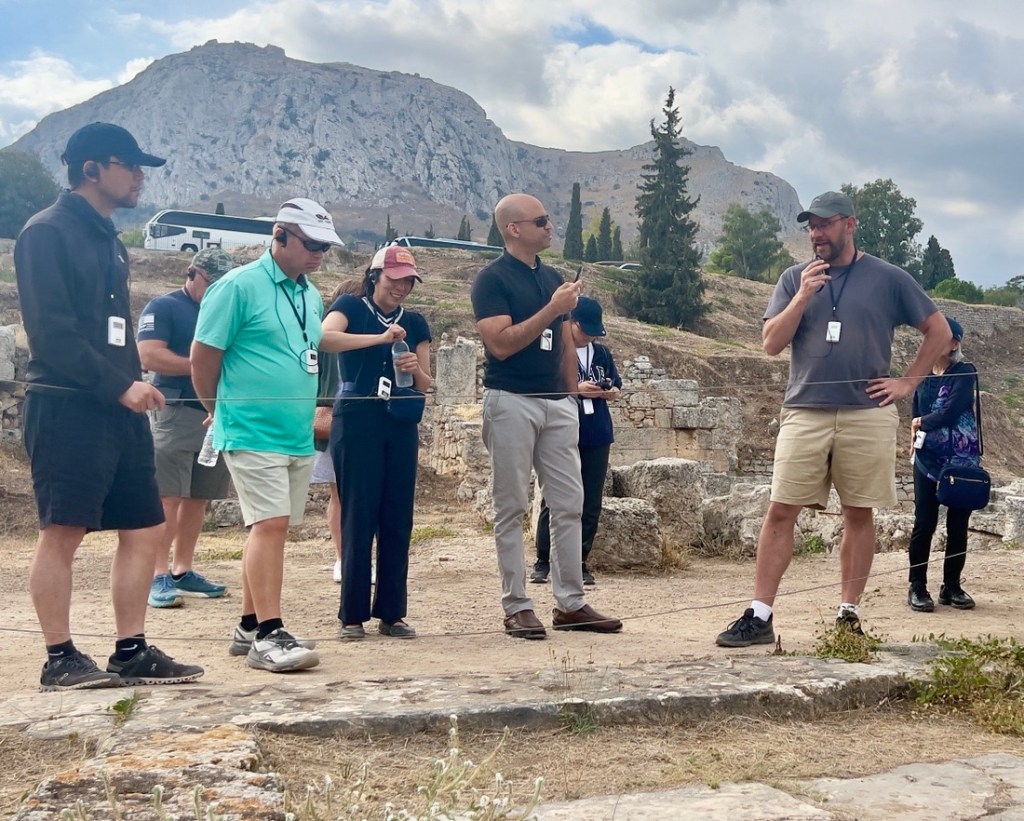
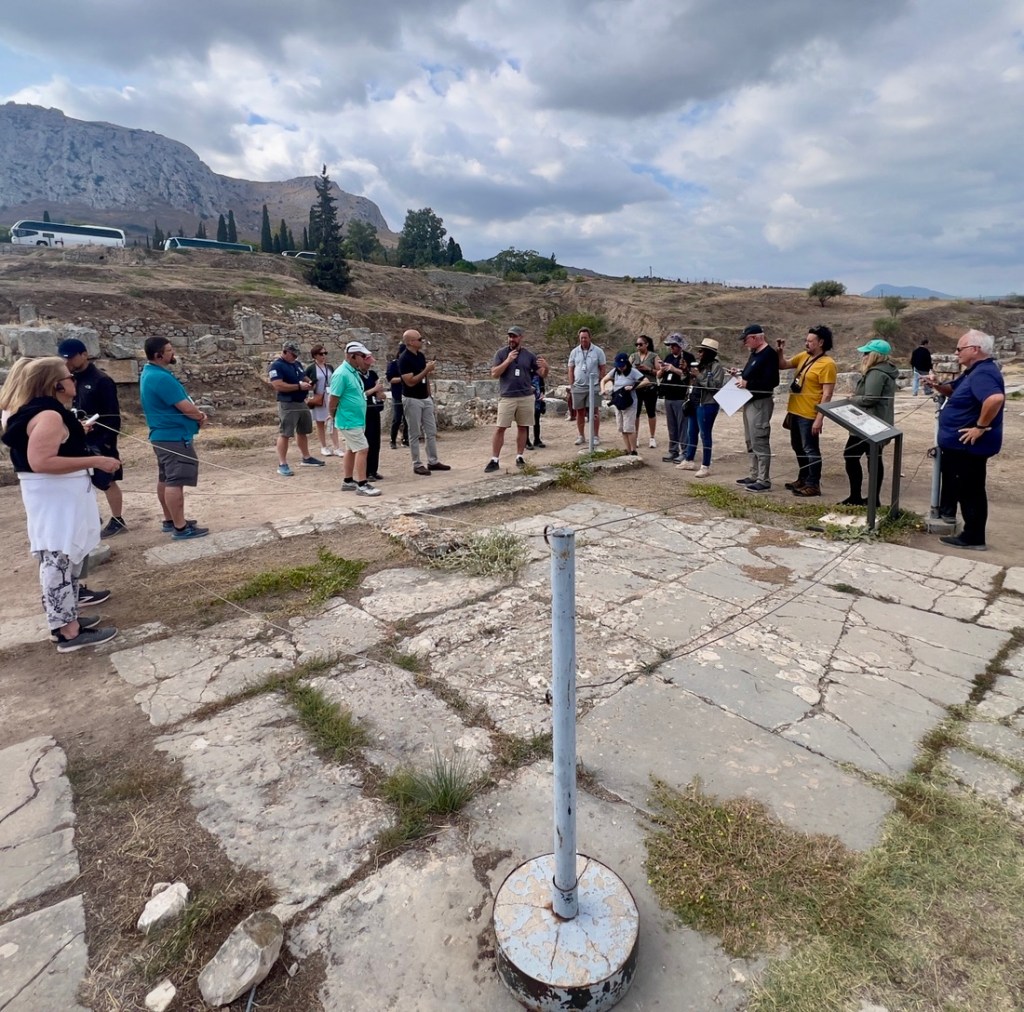
The next significant Pauline site in Corinth was the bema. In this context, it was the judgment seat upon which Gallio sat (Acts 18:12). Jewish leaders brought Paul in front of Gallio, but Gallio dismissed the case as an issue of squabbling between different sects of Judaism, which is how the Romans viewed Christianity at first.

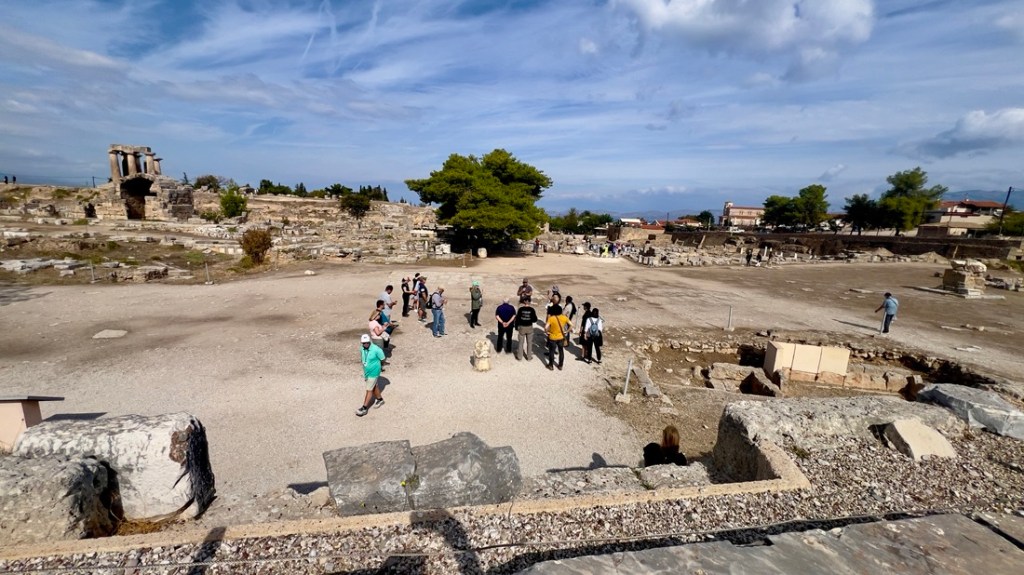

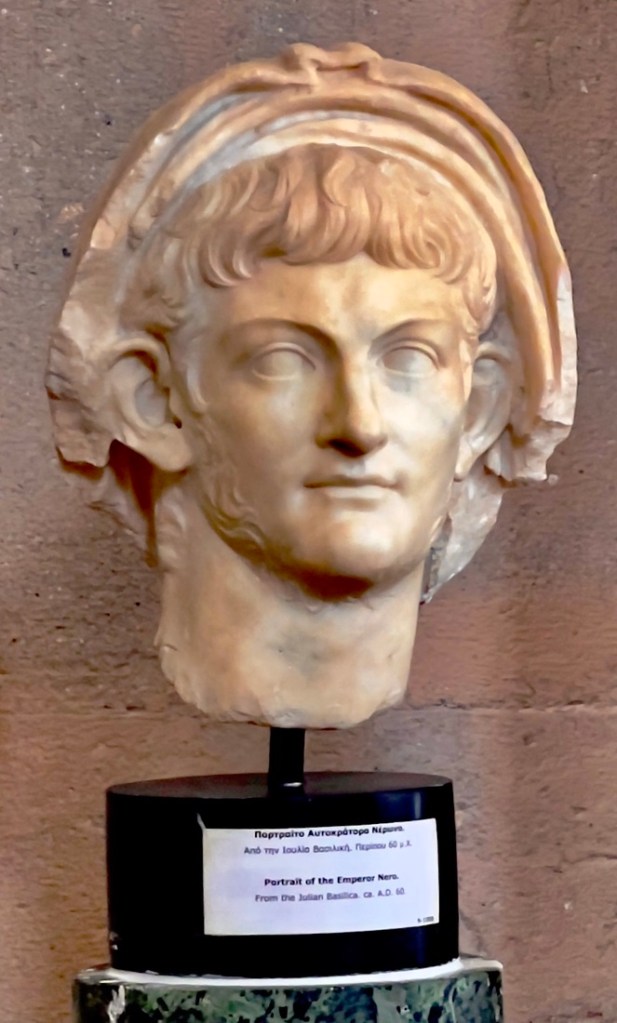
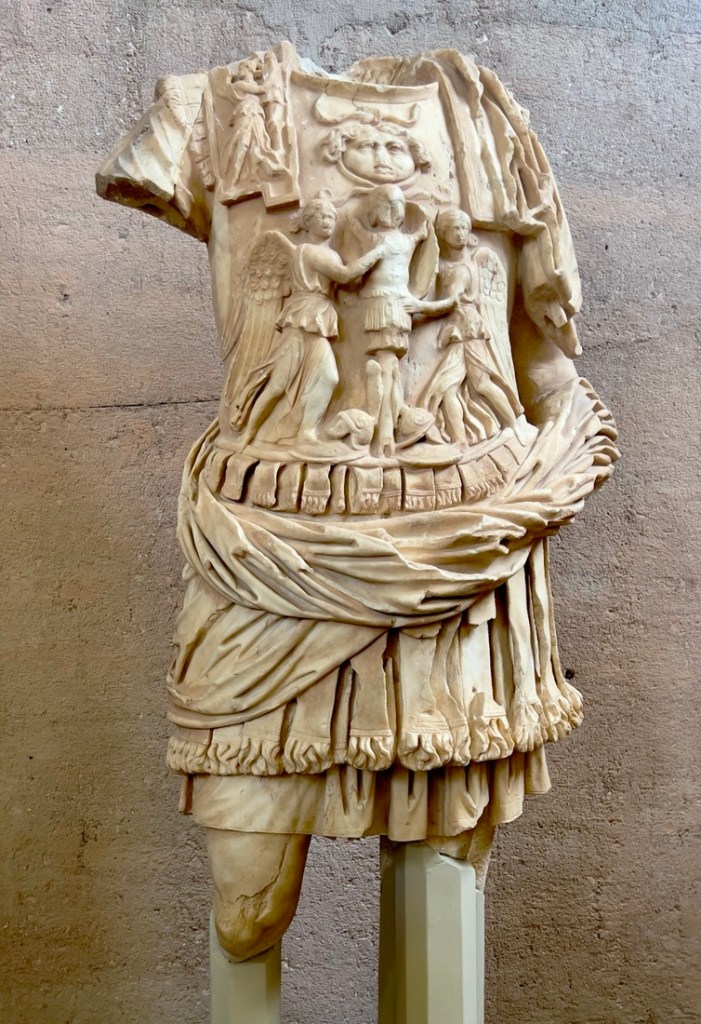
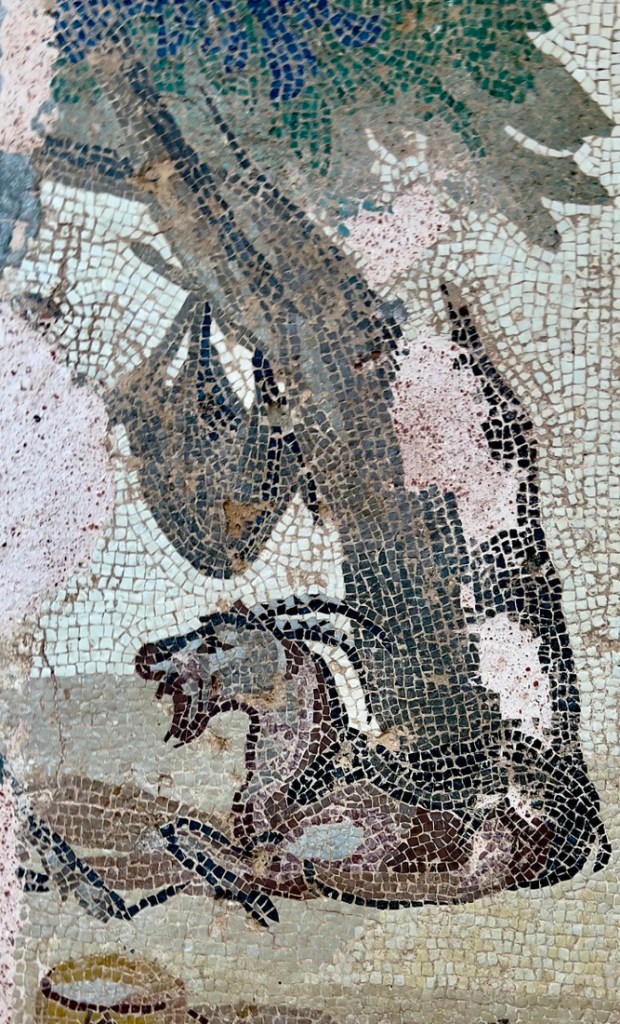
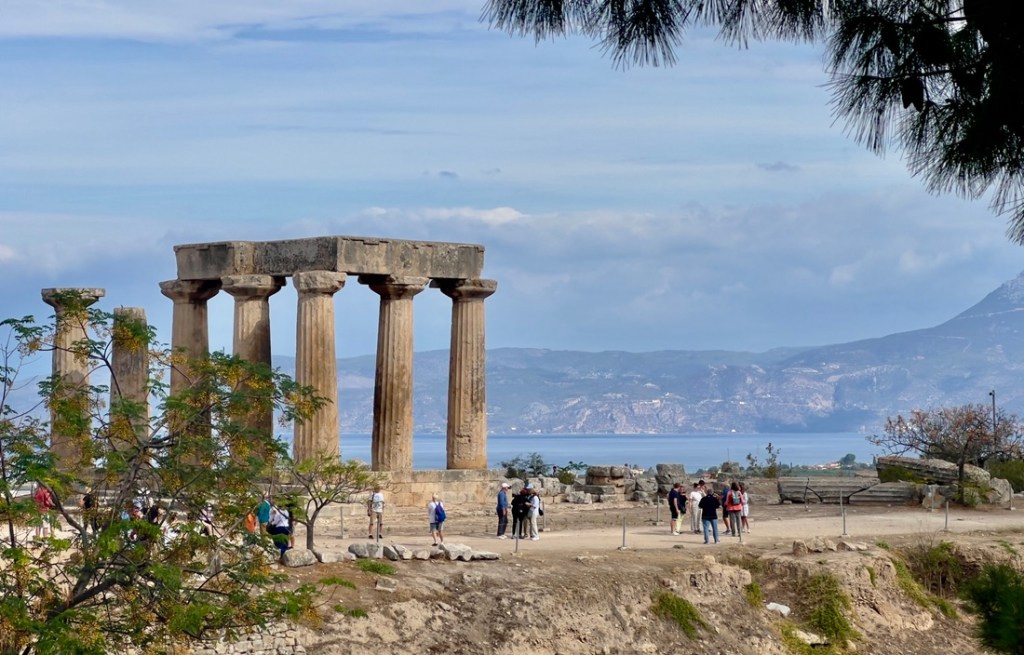
The Corinthian site also had lots of other interesting artifacts.


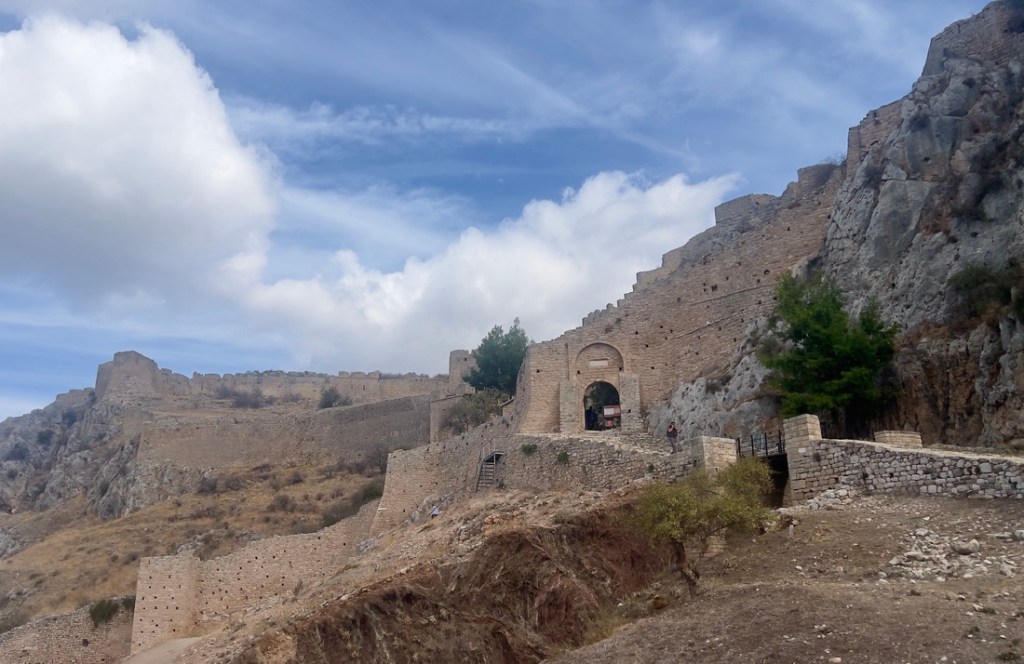
Acrocorinth
We took the bus as far up the mountain as we could. I walked some way up the mountain amongst fortifications built in the fifteenth century to get some great views. On the top are the remains of another temple of Apollo, and traces of a temple of Aphrodite. Some claim that this was the sexual debauchery hotspot of Corinth, but it was a long way away from where everyone would be. This is more likely to have been close to the bema in the centre of Corinth. The Greek mindset separated the soul from the body, so struggled to accept the resurrection and led to their belief that their body could do anything in this life. This led to Paul’s passionate criticism of them in 1 Corinthians.


Cenchreae
From Acrocorinth, we headed to the coast and the few visible remains of Cenchreae, with more remains underwater. The port is mentioned twice in the Bible at Acts 18:18 and in Romans 16:1. The Acts reference is most relevant for Paul’s travels and was the port from which he left Greece for Ephesus toward the end of his second missionary journey.


Corinth Canal
One cannot visit Corinth without noticing the Corinth Canal. Corinth is at the four-mile stretch of land that separates the Gulf of Corinth to the west and the Saronic gulf to the east. Transiting this isthmus rather than sailing around the Peloponnese saved time and avoided the risks of rough seas. Large ships would have their load carried over the isthmus but small ships would be dragged over! It was a center of trade so was rich and had many sailors of different nationalities passing through.
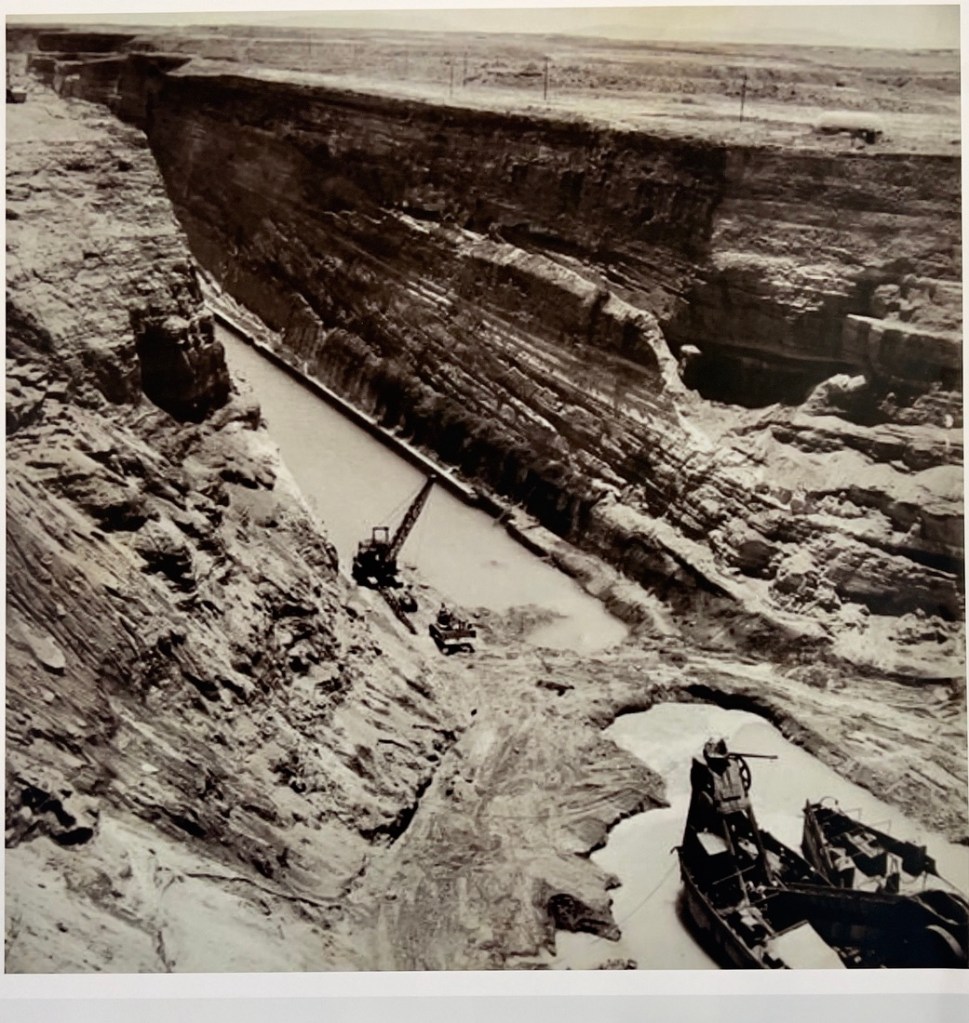
The ancient Greeks explored the idea of a canal but the advisors told them that the water levels at each end were not the same and a canal would cause the Saronic islands to flood. Nero started to create the canal but stopped after 700 yards. In the nineteenth century, the French team that had made the Panama Canal came to Corinth and made good progress but ran out of money. Then, a Greek businessman stepped in and assisted in getting it completed in 1893. However, it failed to become a significant commercial success, with its width of 81 ft at sea level being too narrow for modern boats and it is mainly a tourist attraction. The canal was sabotaged by retreating Germans toward the end of a World War II.
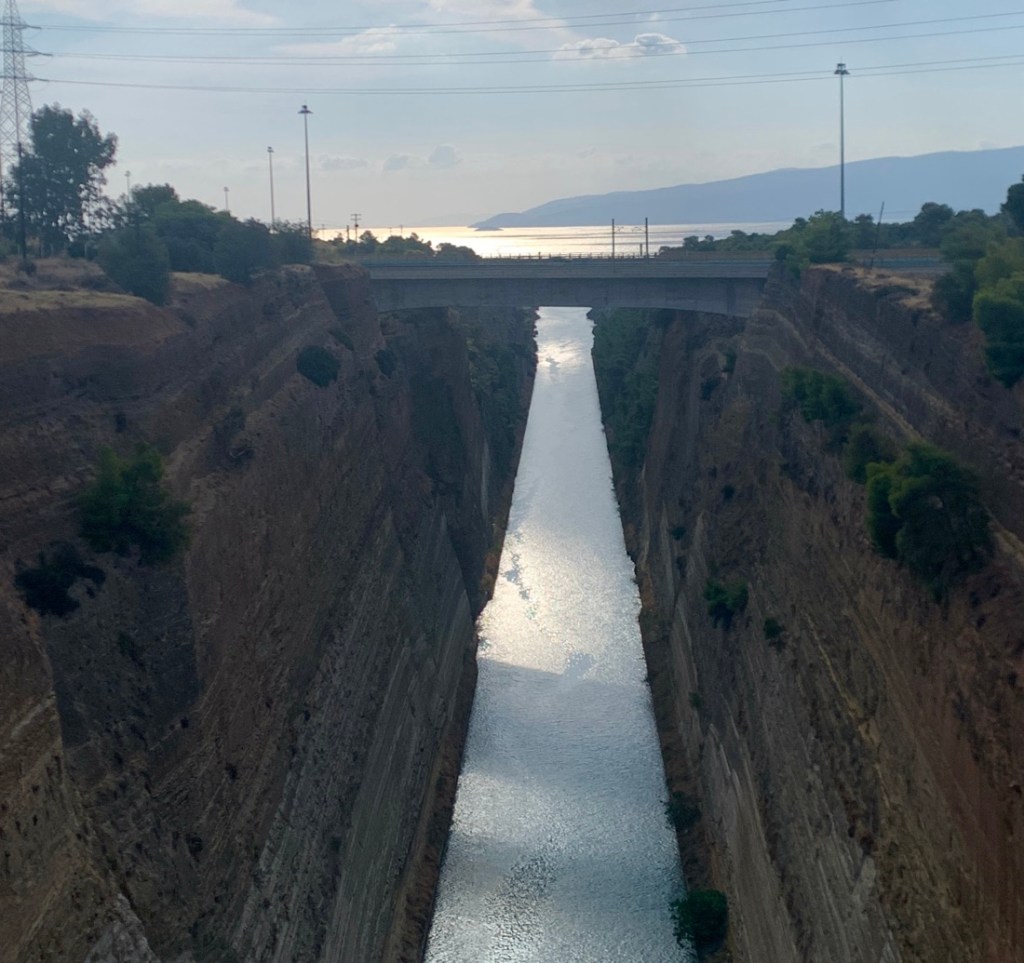

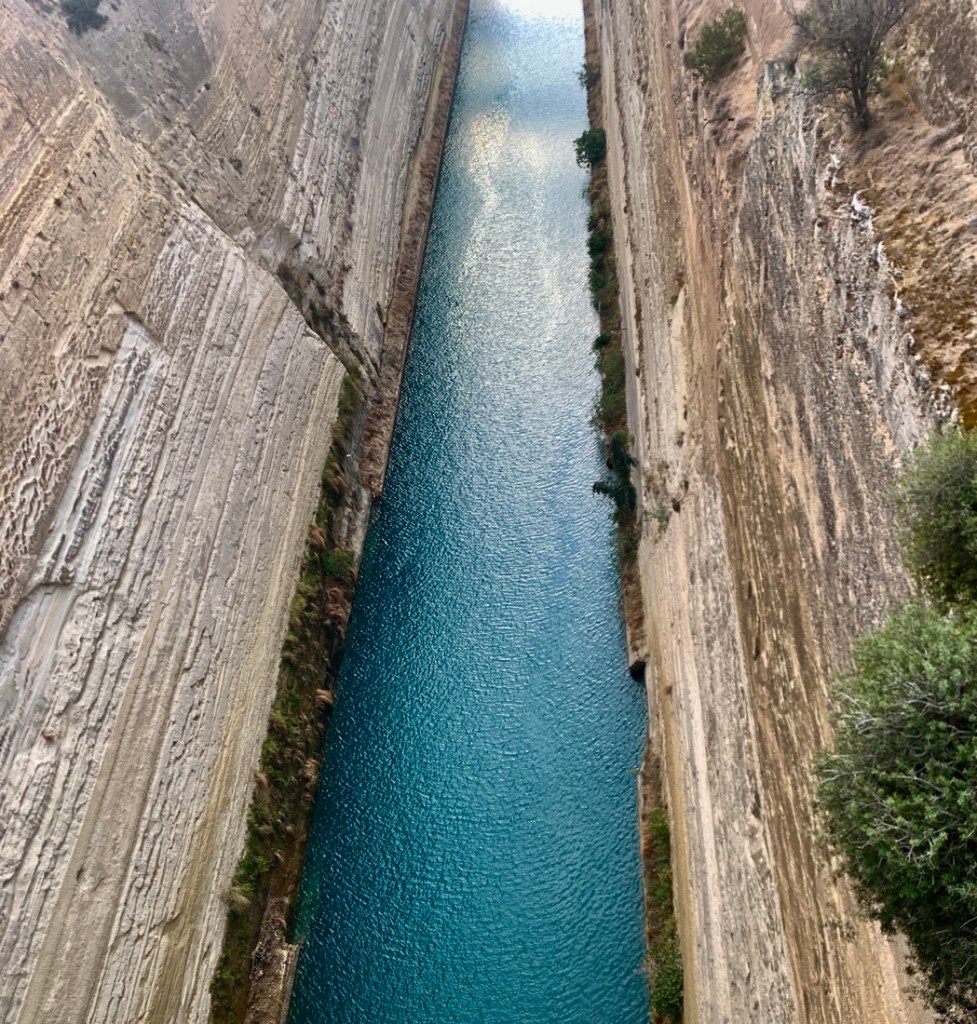

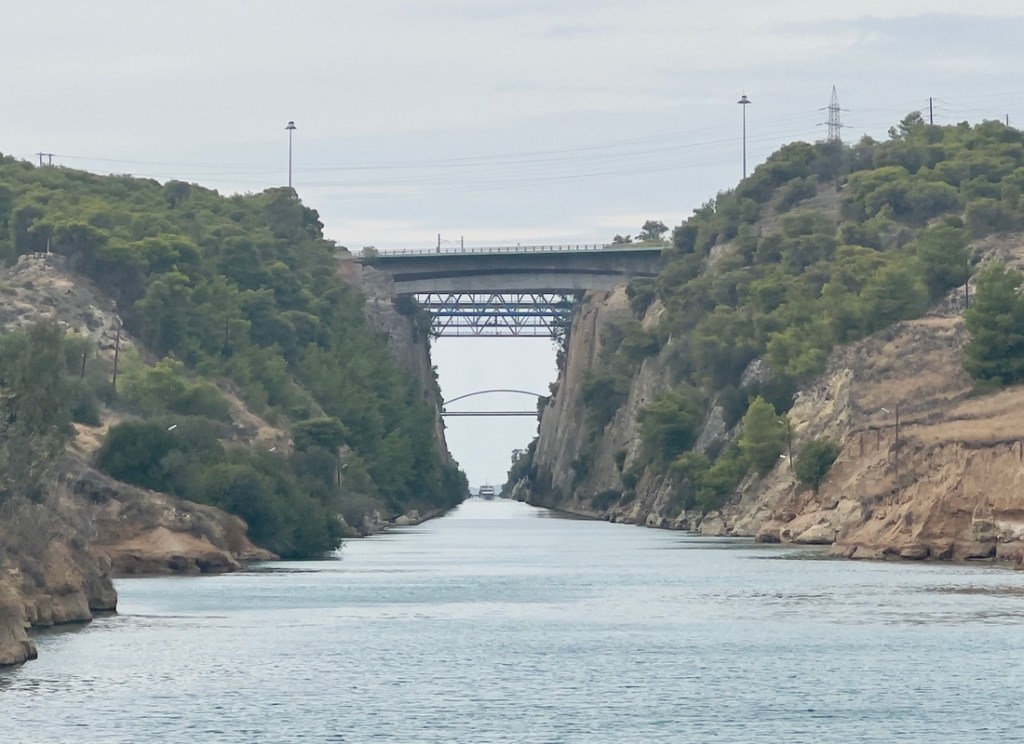
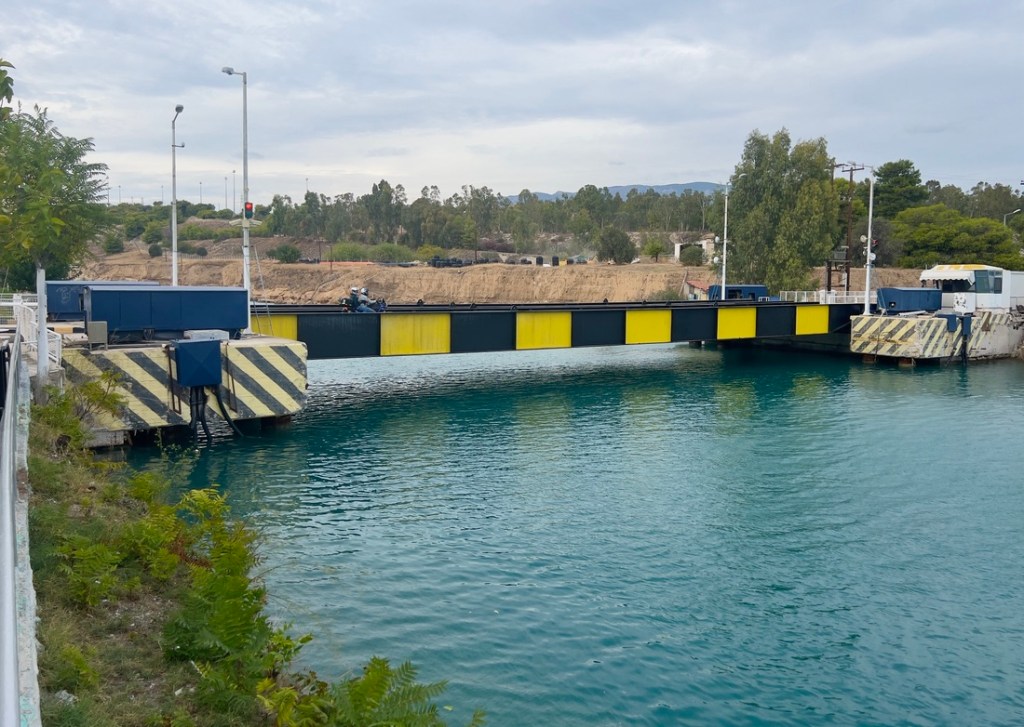
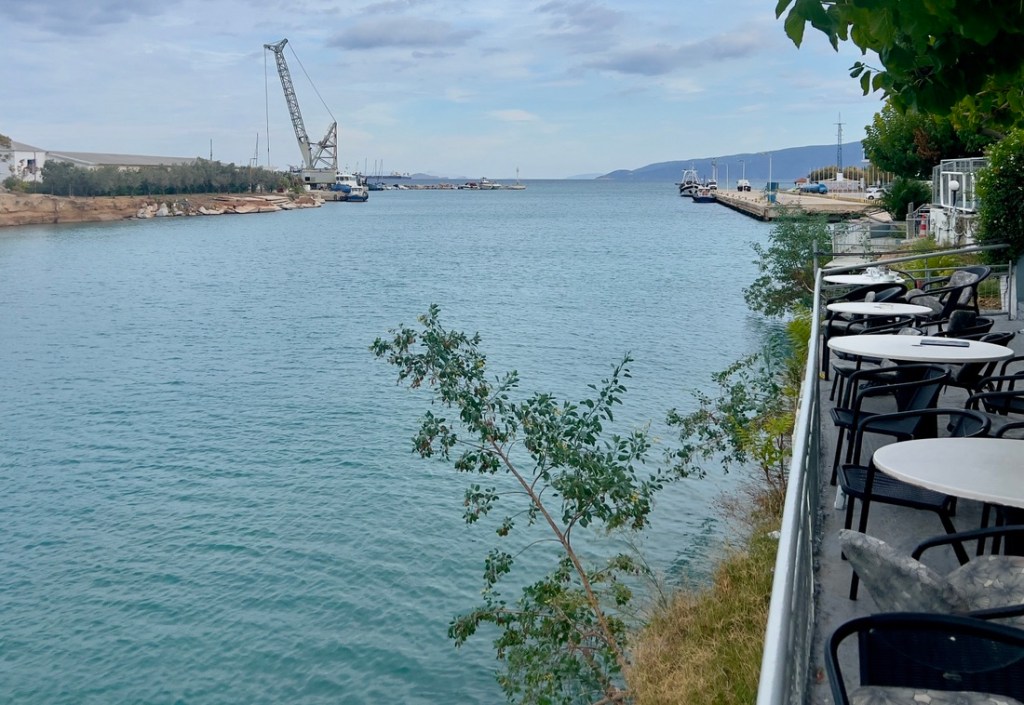
The following day, we returned to the canal by ourselves at the start of our Peloponnese trip, and managed to get more info and pics about the canal’s construction, and visited the last remaining pieces of the Diolkos, which was the path that boats were dragged upon across the isthmus.
First, we returned to the bridge over the canal and they had good souvenirs. Janet was happy that their dresses were 1/2 the price of similar items in Athens. I was glad that I found a gallery of these pictures inside the shop showing the construction of the canal and a picture of of the Doilkos in use, perhaps…




Next up was a trip to the west end of the canal. The bus could not reach here, and we quickly picked up a less touristy vibe as we checked out the Diolkos, and watched the bridge in action.
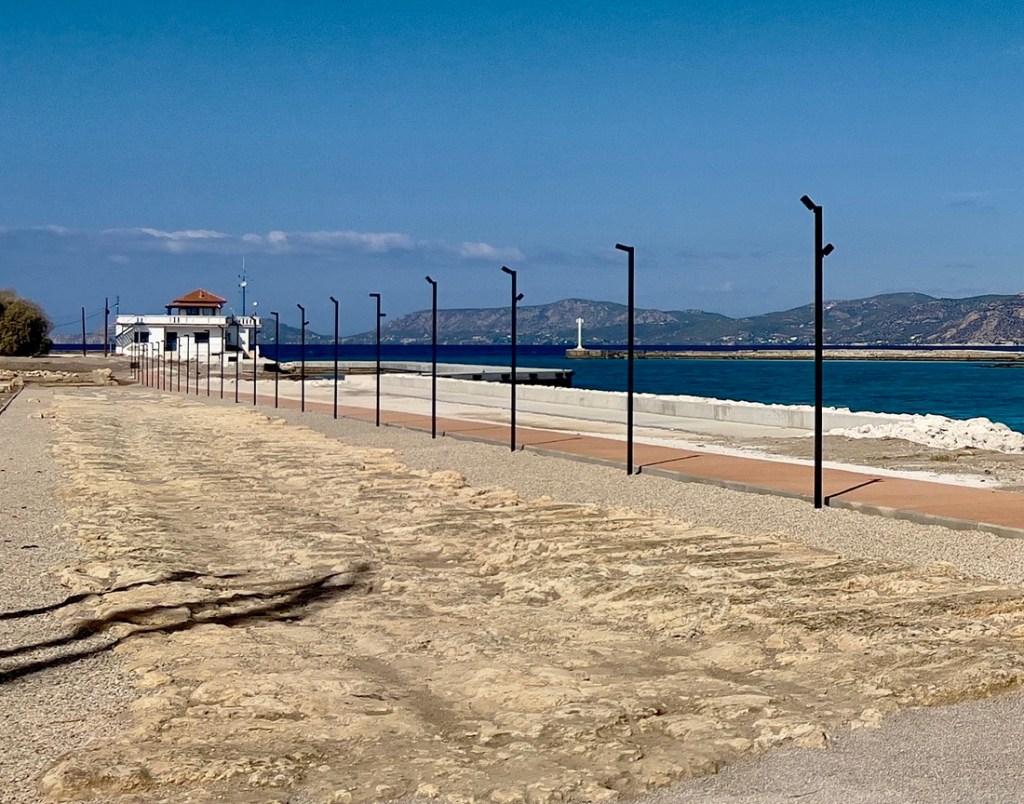
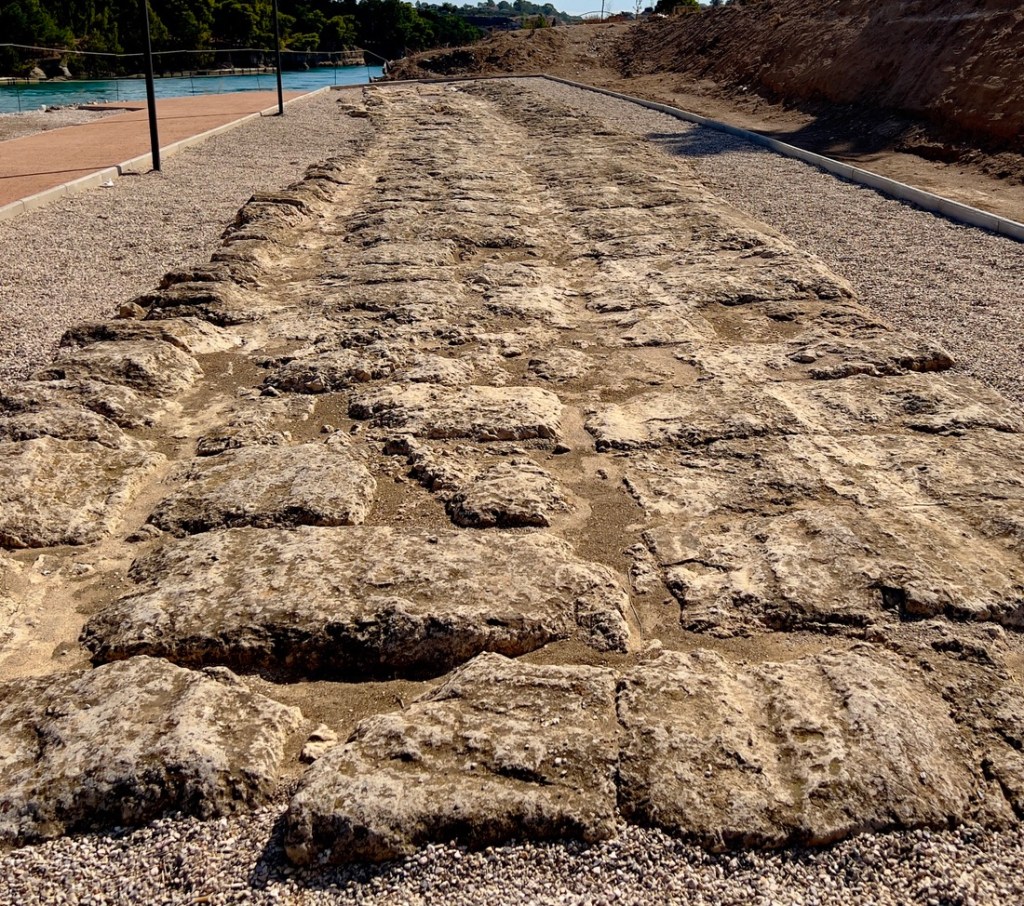

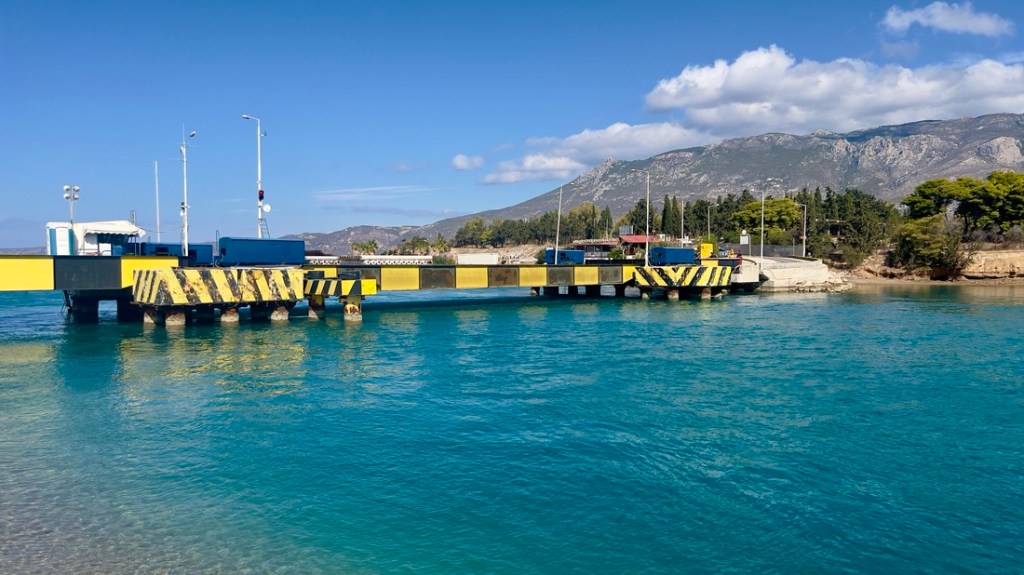
Next to the Dioclos is a bridge over the canal but it is too low for boats to pass under. When a boat wants to pass, they lower it under the water to the sea bed! we saw it being raised after a sailboat passed. And the water was so blue and clear!


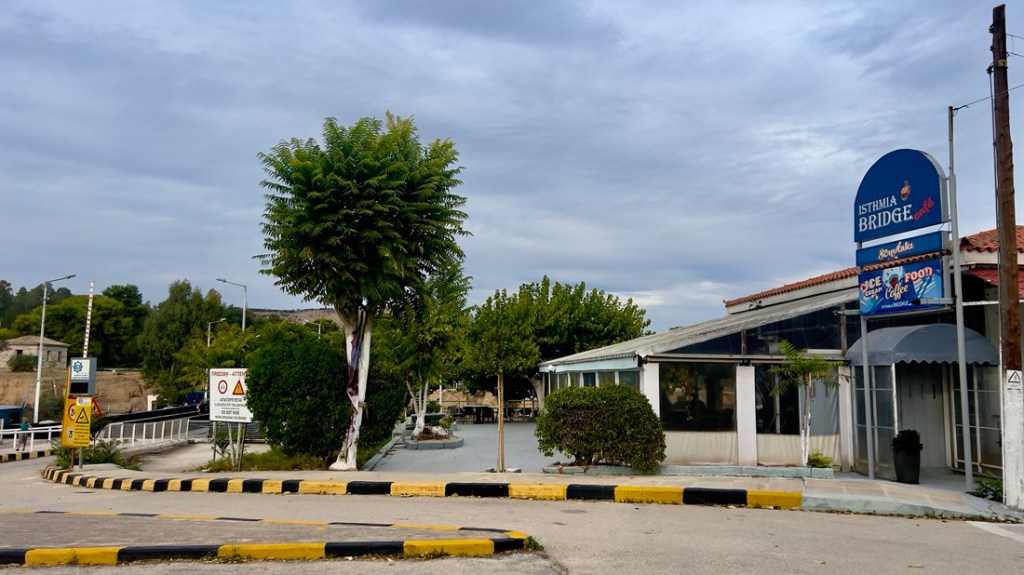
Here are photos from a couple of other sites close to the area.

Reflections
It was a fine final day following Paul. We reached Corinth and realized why it would have been a hotbed of depravity. Of our seven days, we only visited “Pauline” sites on four or five days. Those days brought Acts to life. On the other days, we learned much about the Ancient Greek religions that defined Greece’s culture when Paul visited. We also learned how the earliest Christian churches have evolved into the Greek Orthodox Church, despite occupation by the Muslim Ottoman Empire for centuries. I hope to share a more substantial reflection in a day or two, once I have sufficiently digested everything!
Find other posts from this trip on our Greece page.
Please follow us on this journey by subscribing below. We would love to read your thoughts: please leave comments at the bottom of the post.
 The Adventures of the Cajunlimeys