Summary: A fine hike to a monastery dating from the 16th century that is partially restored after the Nazis destroyed it in 1943, followed by a visit to a tiny church in a remote cave and a natural spring. We enjoyed some great gyros, a partially restored Roman theatre, and spent the day in Mount Olympus’s shadow. Who knew Greece was this mountainous!
The Old Monastery of Saint Dionysios
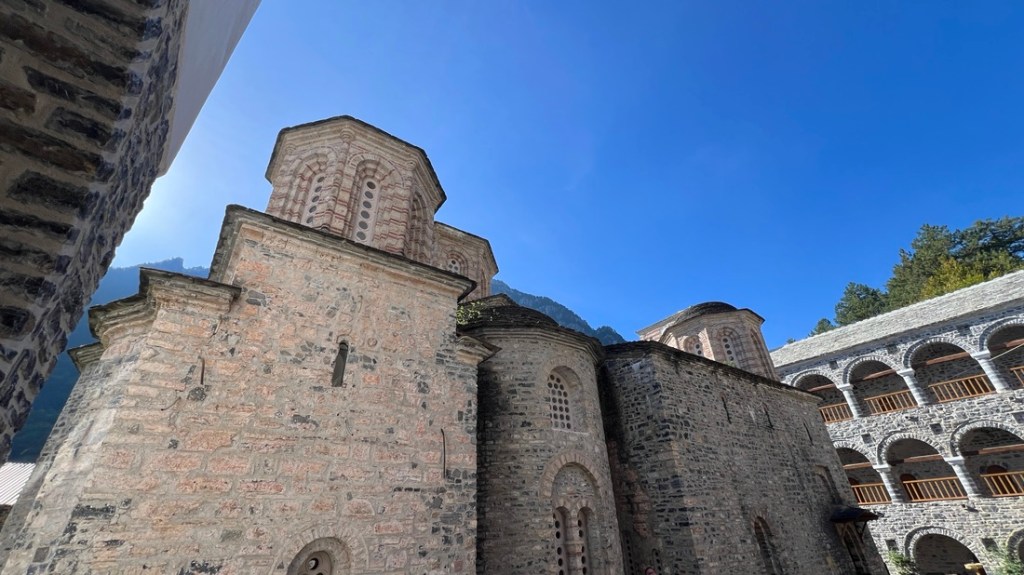
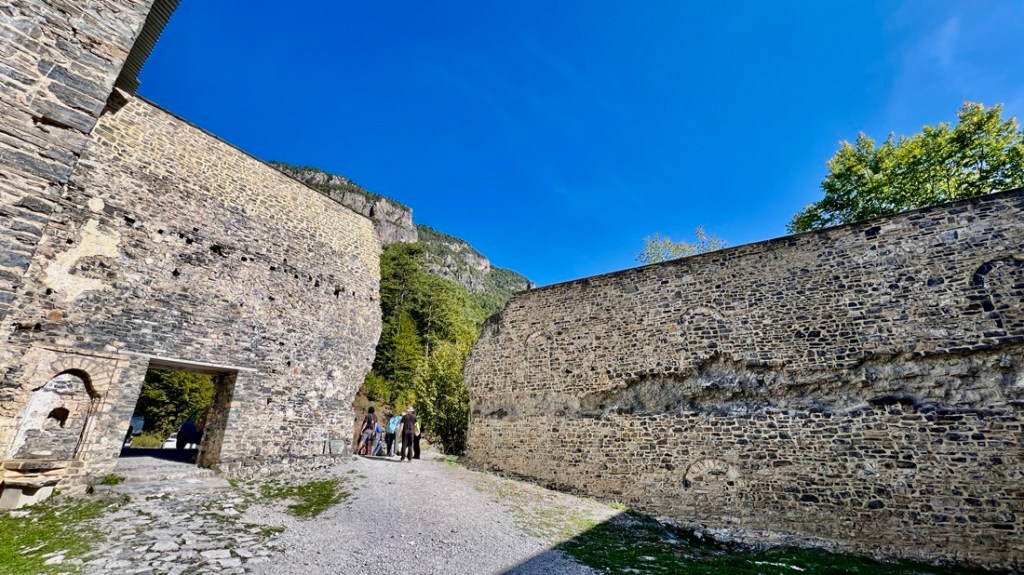
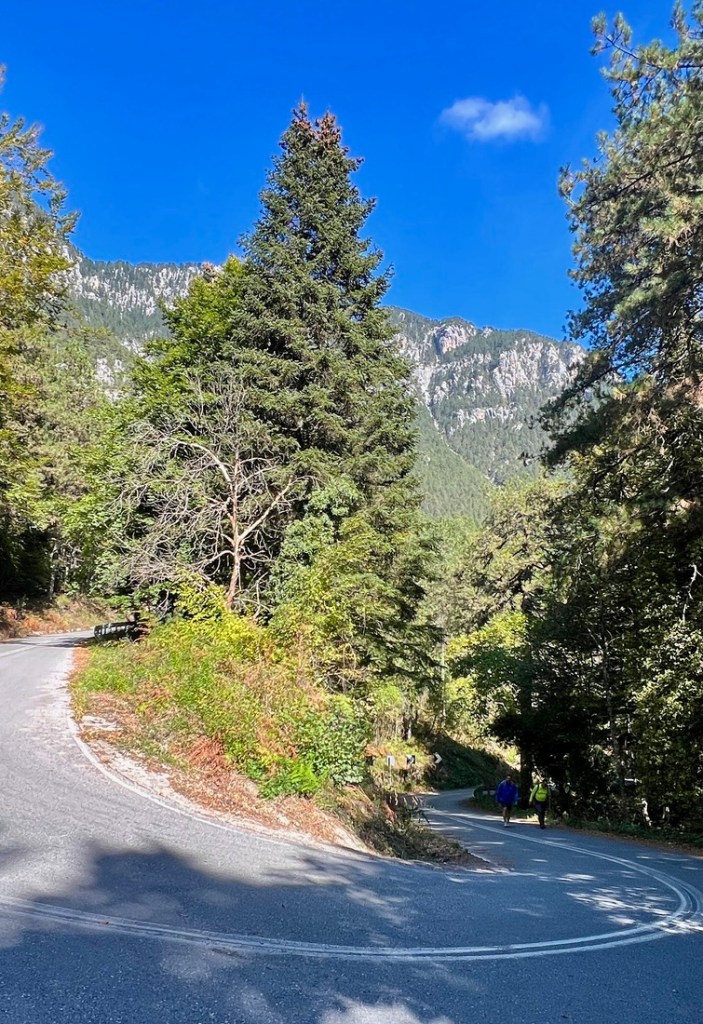
We were promised some Hiking on Mt Olympus so I was excited. The mountain was the traditional home of the twelve ancient gods of Greece, led by Zeus. The mountain is often shrouded in clouds or shaken by violent thunderstorms, which helped propagate the legend of the gods. Our coach drove as far as it could up Mount Olympus and then we walked about 1/2 mile down a road with hairpin bends to a monastery that was started by Saint Dionysius in the 16th century. It was destroyed by the Nazis in 1943. A new “branch” of the monastery was built further down the hill, and this new one is partially renovated and repaired. It was a peaceful visit, and its intermediate state of repair made it feel more authentic. While the church had plenty of icons, it felt less gaudy than the other churches we have visited. However, what was truly unique about this church was its lack of cats!!
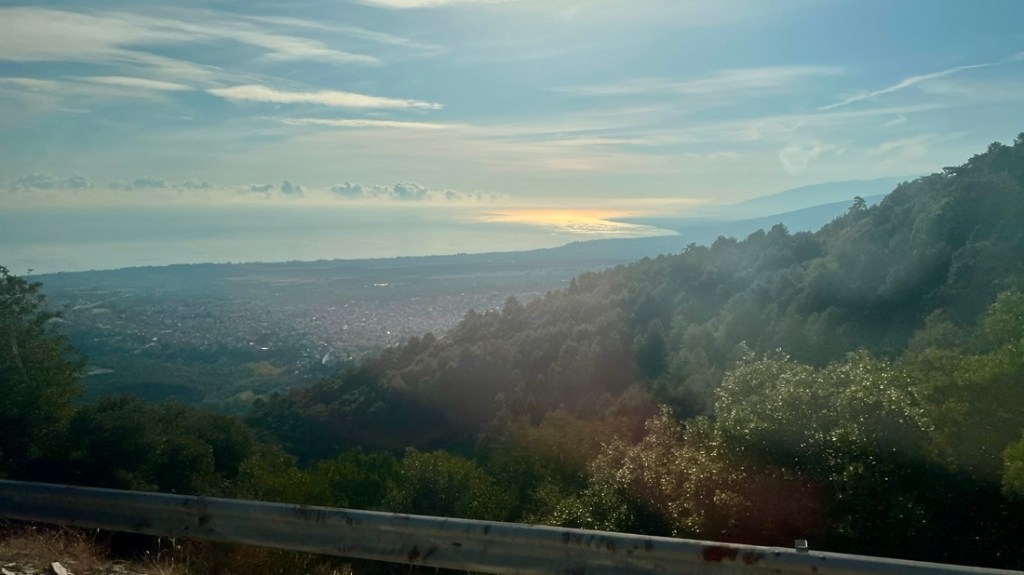
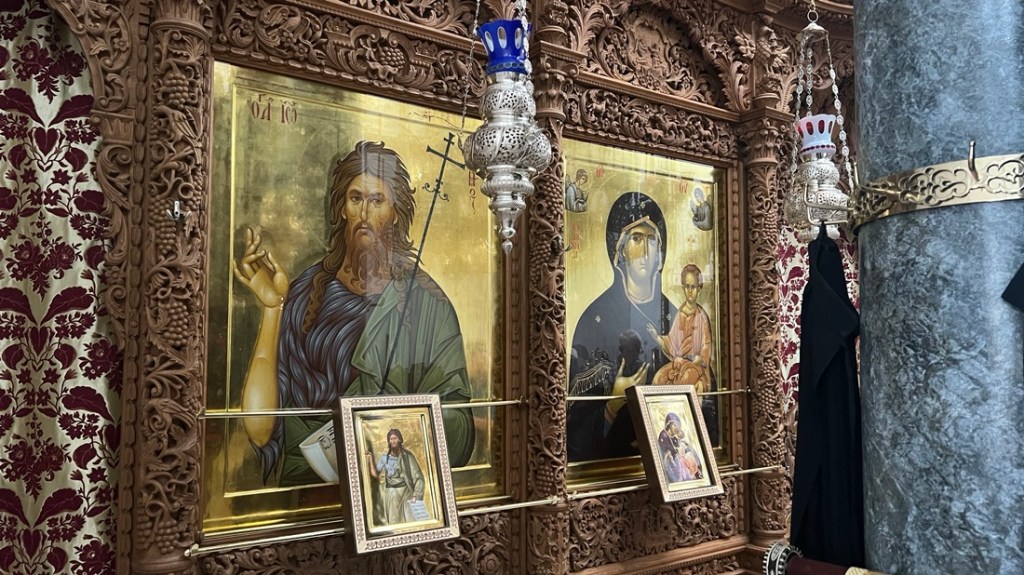
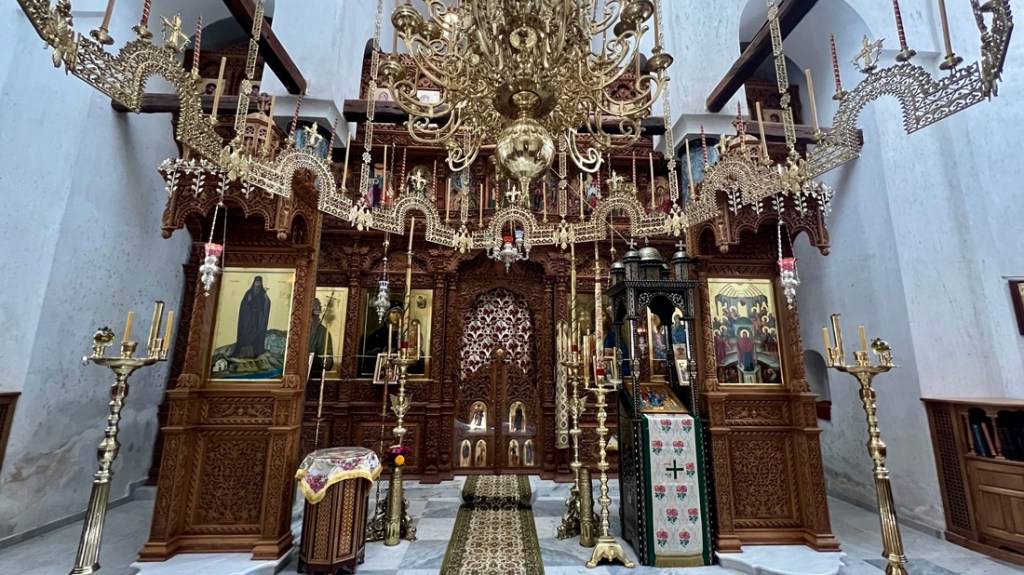
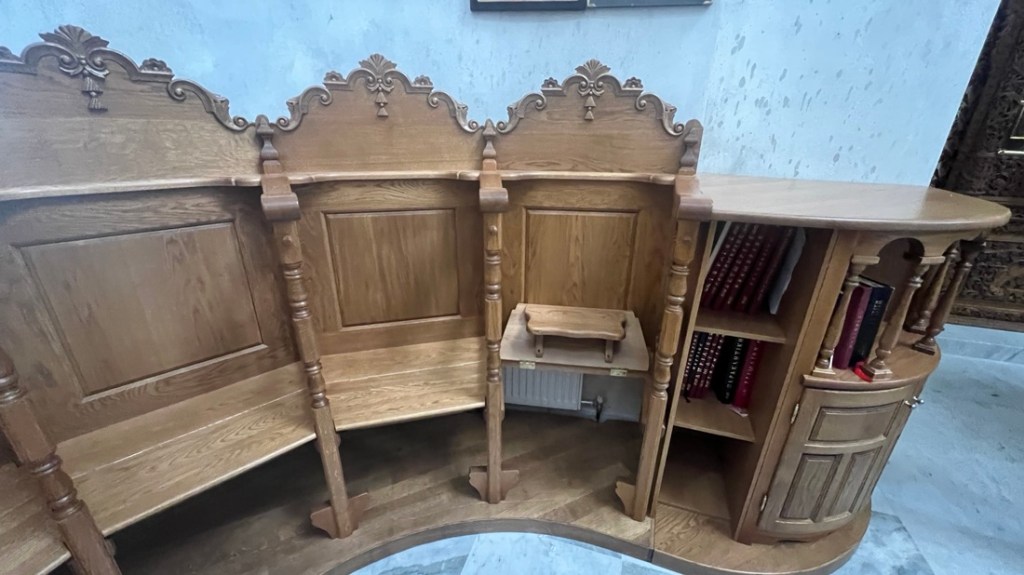
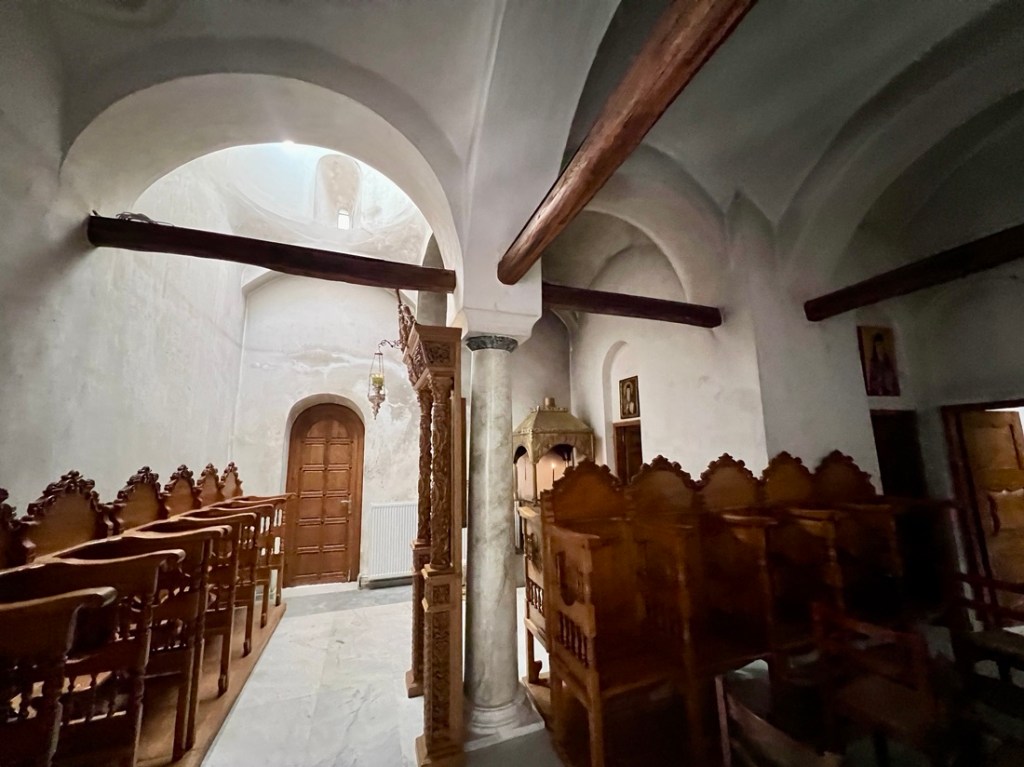
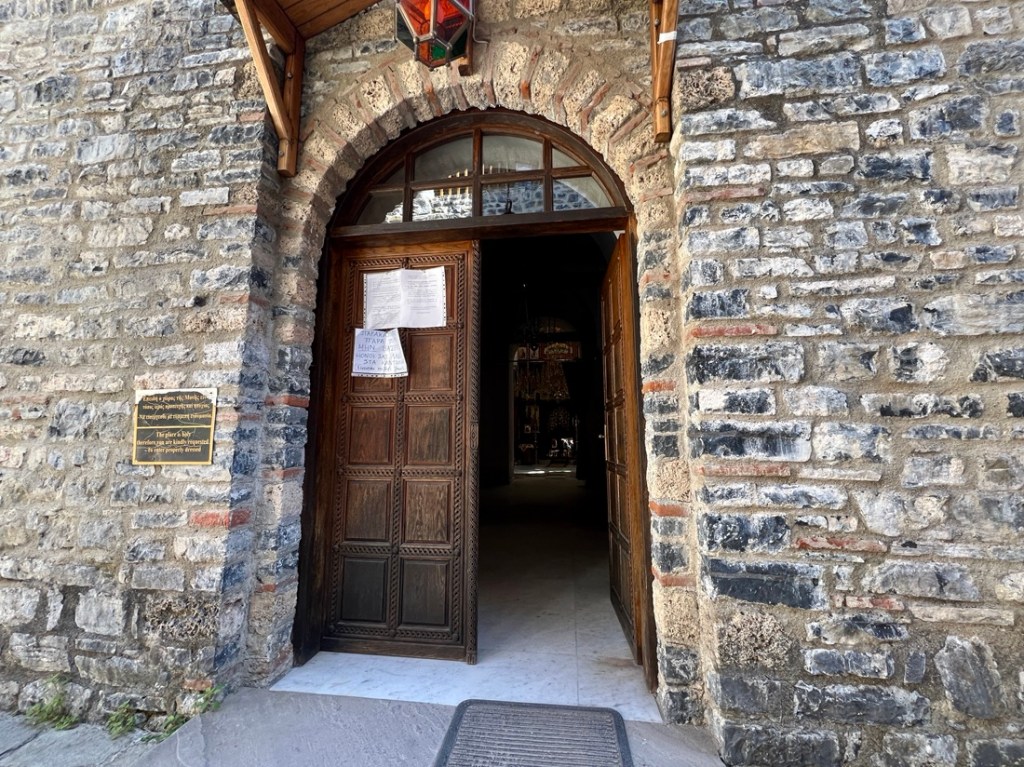
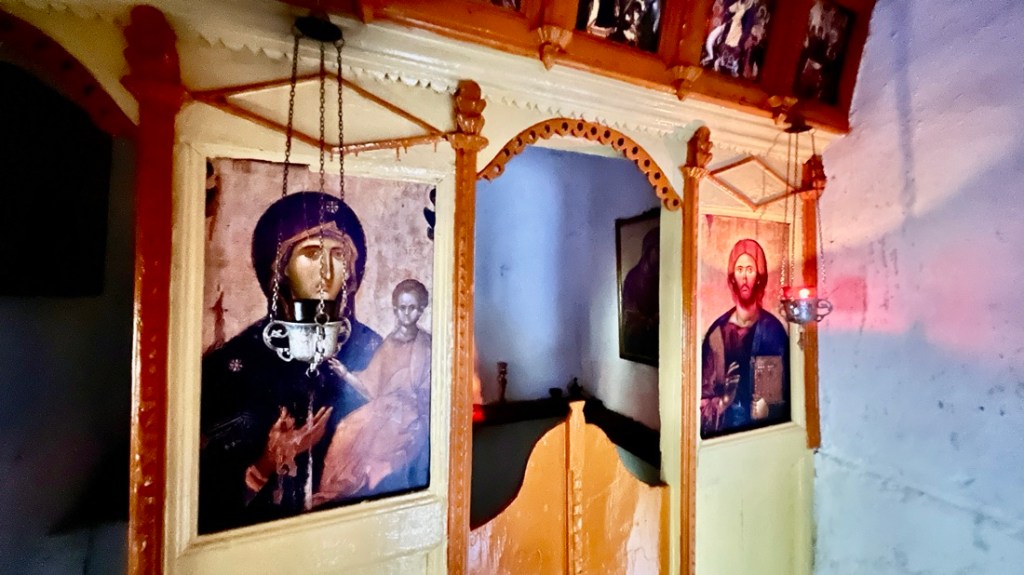
The view back down the mountain as we drove up. The bus climbed to about 3200 ft, less than half the height of the highest peak which is at 9573 ft.This way!!On a hairpin bend was this chapel, commemorating someone who died here. In the valley below were the remnants of a precious chapel. Oh dear!The monastery’s living quarters were partially repaired after the 1943 destruction by the Nazis.It appeared that the church had been restored first.Inside the monastery, Dr Laird explained Nominus Sacra, the use of two letters in the corner of a document, usually the first and last initial of a sacred entity. He is standing in front of a door that only the priest can enter. To his left is an icon of Jesus, in its traditional place.To the right of the priest’s door is the traditional location of an icon of Mary holding Jesus. Next to that is the Saint that the church is dedicated to. In this case, it is John the Baptist.The center of the church was quite ornate.The pews have a movable seat that allows you to sit or stand.The entrance to the church was simpler. Perhaps it had not been restored. This appealed to me more.The entrance to the church.Some of the outer walls remained in disrepair.I could not find a good explanation as to why these pipes stuck out of the wall.
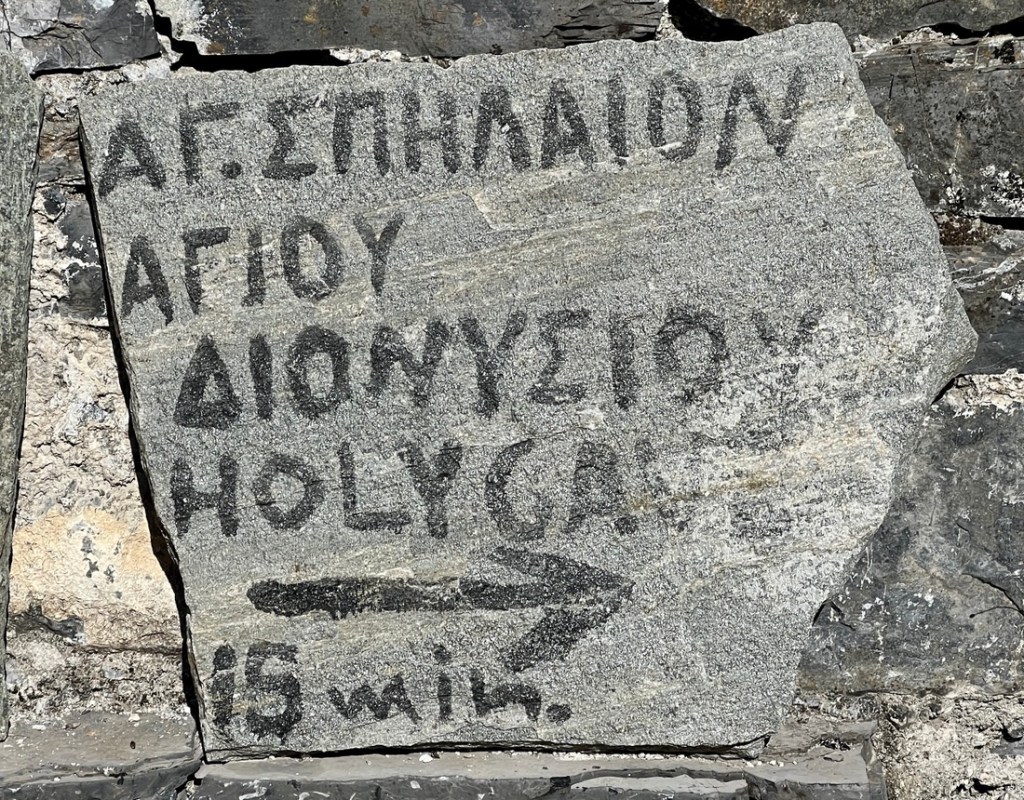
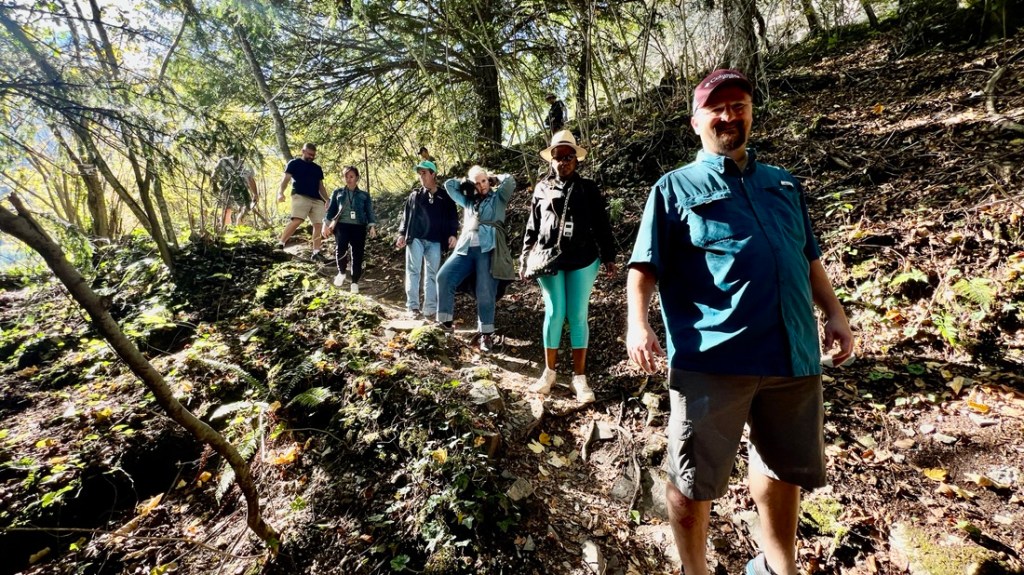
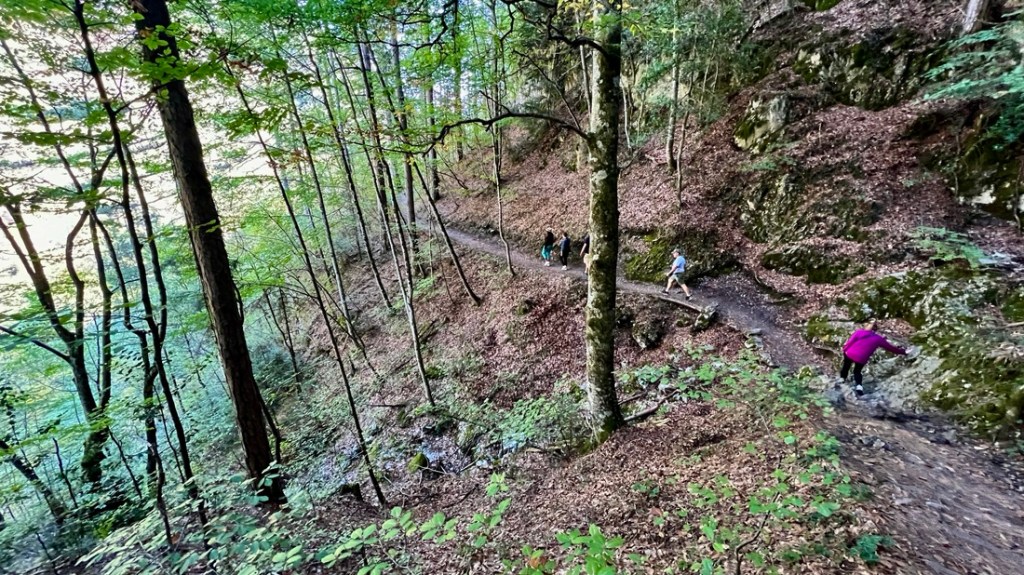
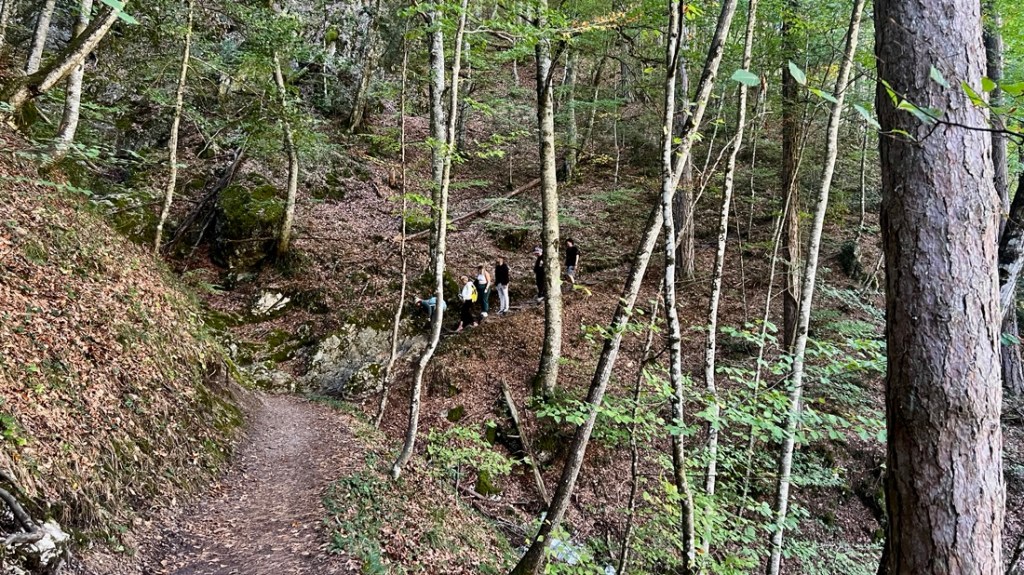
After our visit to the monastery was our real “hike.” It was about a mile down a trail through the woods, often quite steep and close to the Enipeas river. It was a little over a mile to the cave where Dionysius had built a small church by a spring that came out of the rock in the cave.
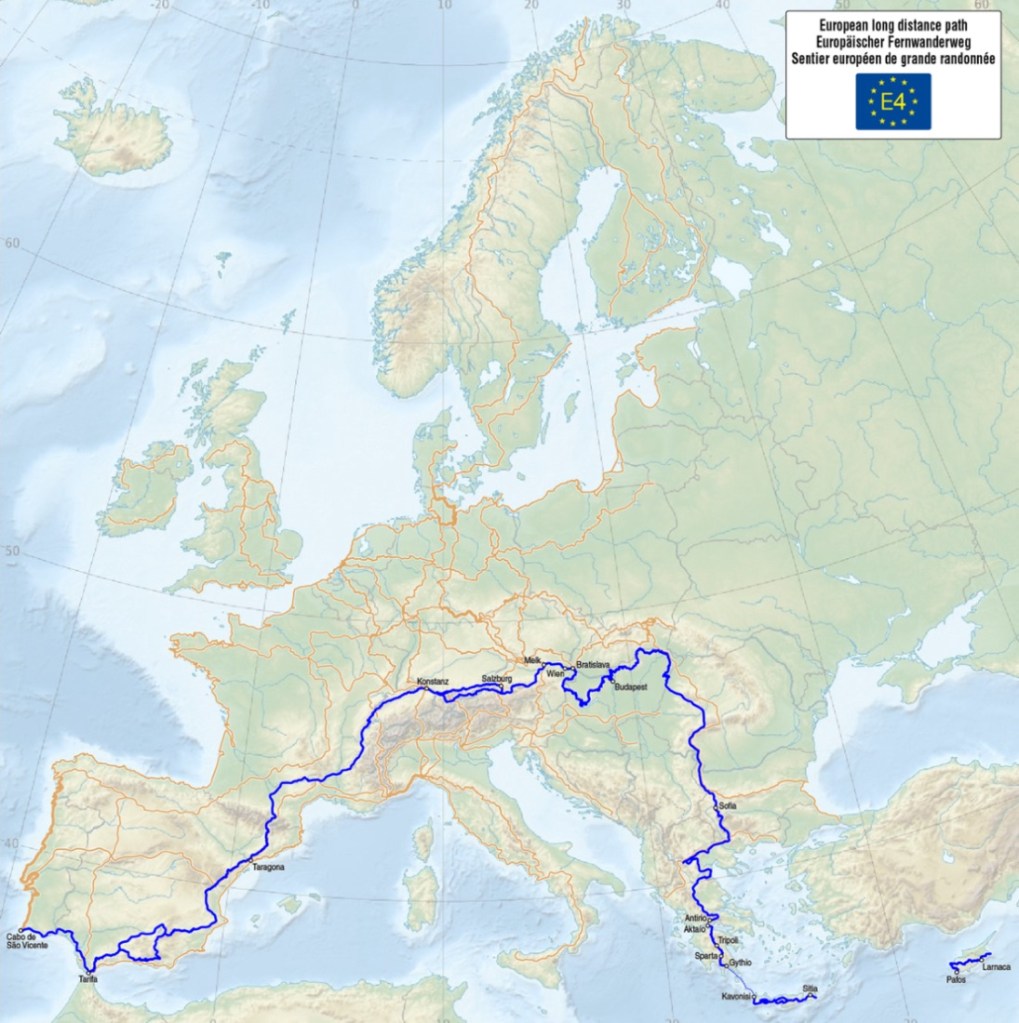
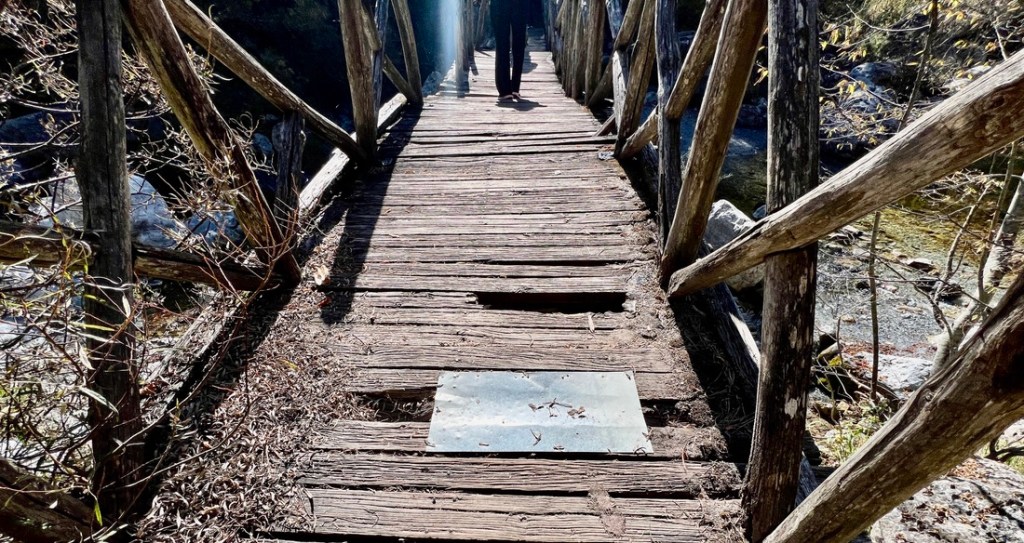
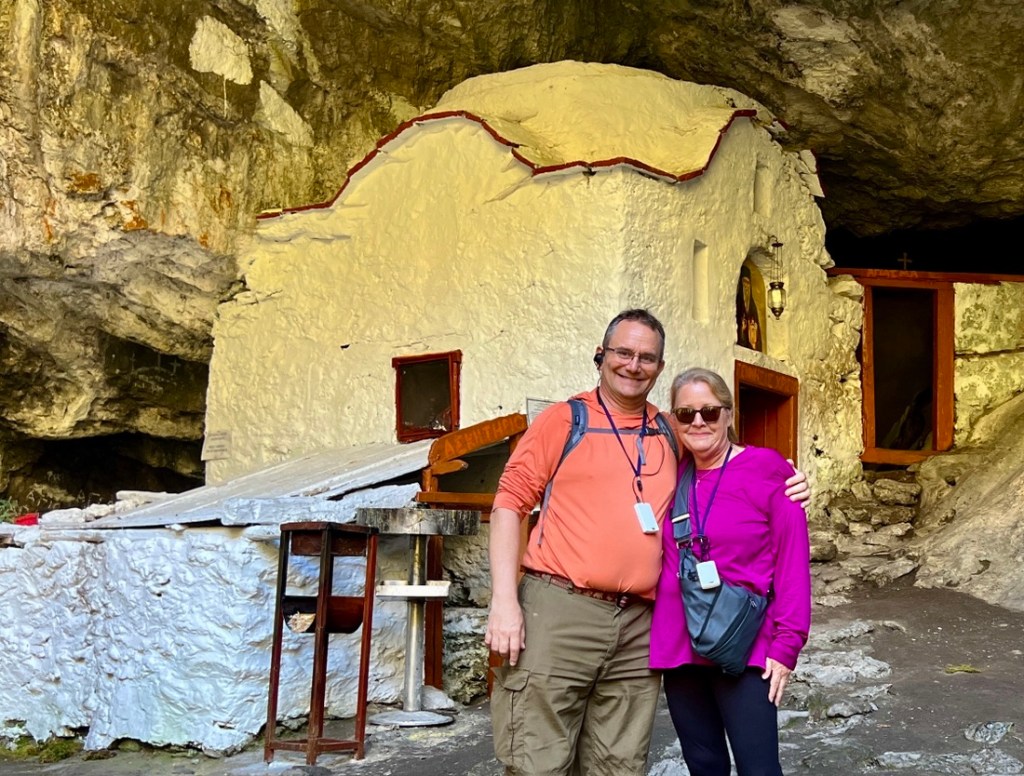
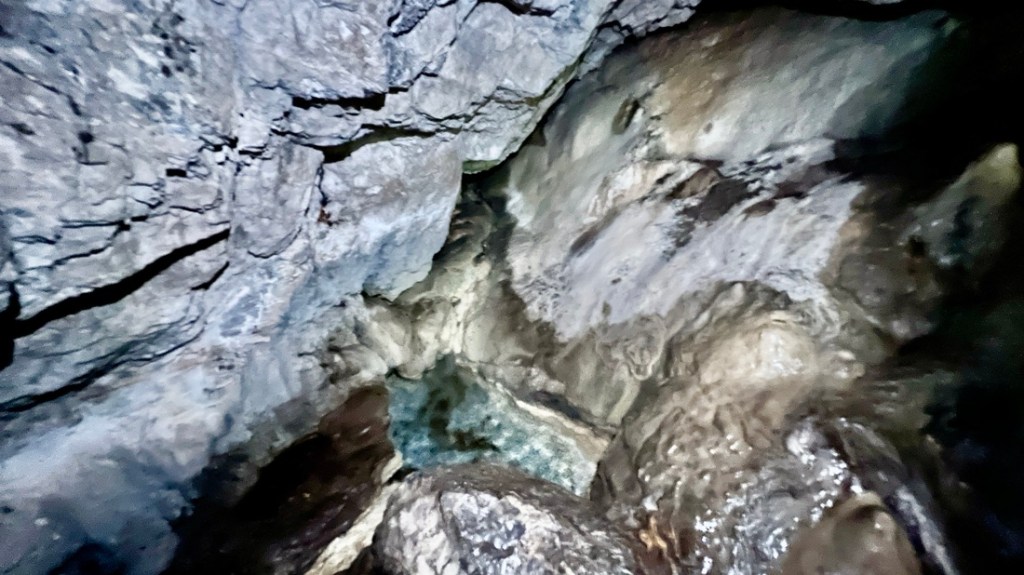
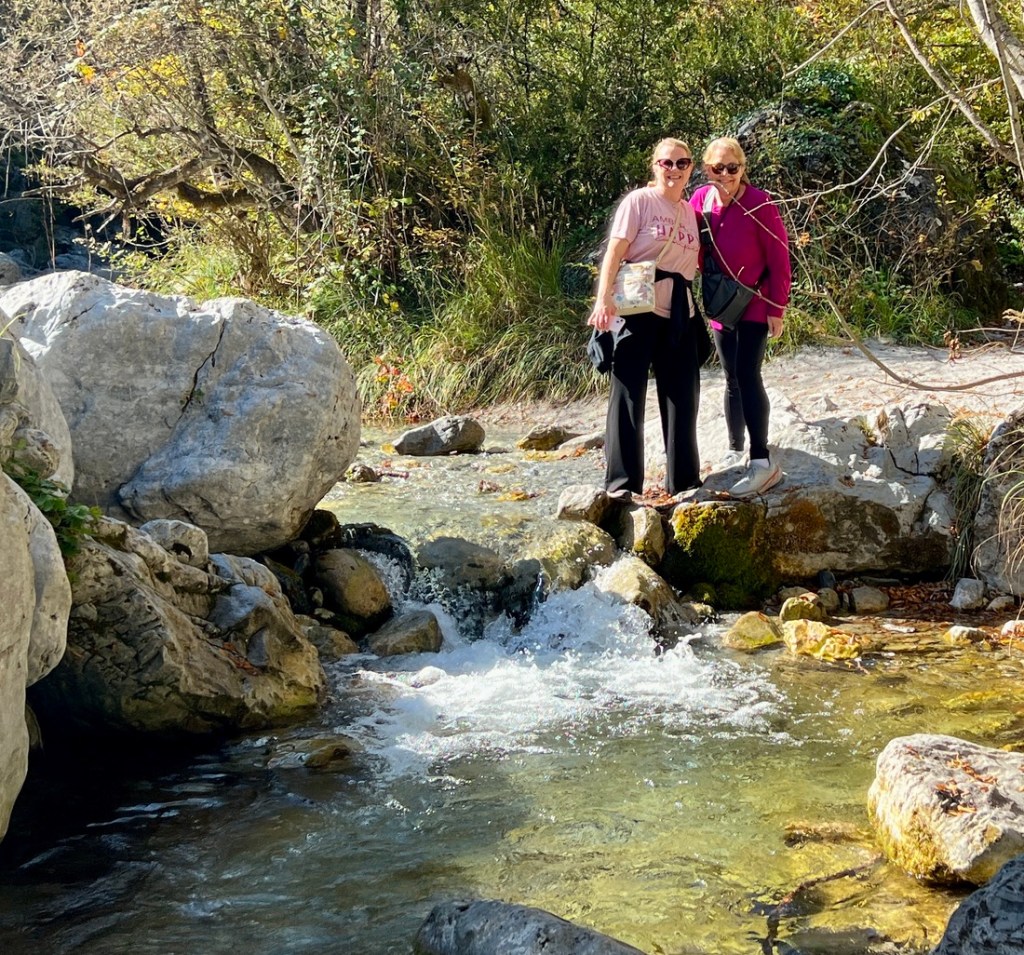
This way to the cave! It took us a bit more than 15 minutes.Hiking down.This trail was part of the European Trail E4, but some bridges were damaged. The E4 trail is over 6,000 miles long and travels from southern Spain to Crete. It would be most disappointing to have walked this far from Spain to find the path closed!!We had to cross this holey bridge. It was a bit wobbly! I rock-hopped across the river on our return to avoid it 😁.Railings?The river was pretty and made such a peaceful noise.Onward to the cave, through woodland and landscape that reminded us of England.You need to go down before going back up!We arrived! The church was built in the shelter of a natural cave. I can’t imagine how long it took Dionysius to find this location!Selfie-worthy. The main church was directly behind us. The lean-to in front of that was a prayer room . Behind the church was a natural spring.The tiny church resembled the structure of bigger churches, with the central door to the back room, and icons of Jesus and Mary on each side.This icon had a candelabra in front of it to keep it lit.Water coming out of the rocks at the back of the cave behind the church.On our way out, we noticed this small memorial chapel by a path that led down to a waterfall in the river. Be careful!The brave people among us took the bridge back. I was more comfortable rock hopping!The girls enjoying the water and contemplating a dip, not…On our hike out along this road, I noticed this view of the mountains looking down on us.This rock had fallen on the road. Red exclamation marks had been painted on it to warn drivers, but were very faded.I’m unsure whether this crash barrier worked!
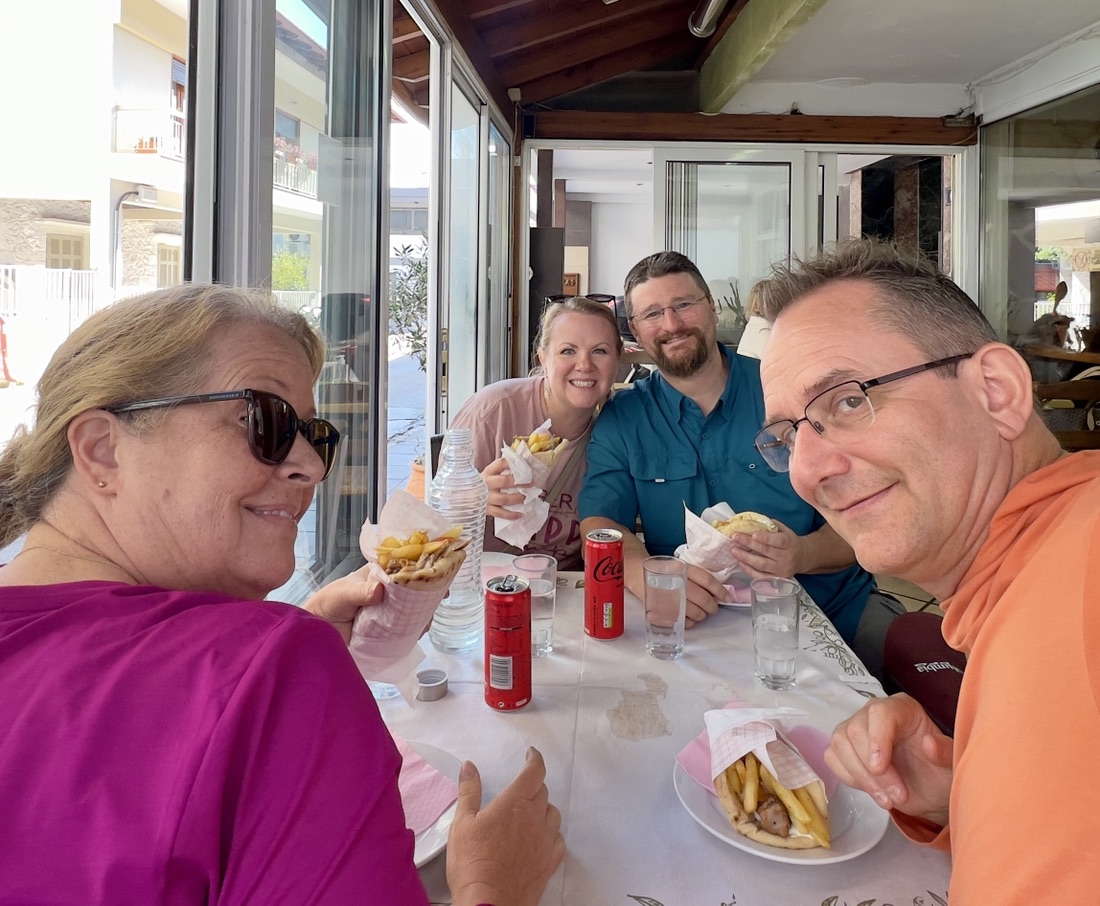
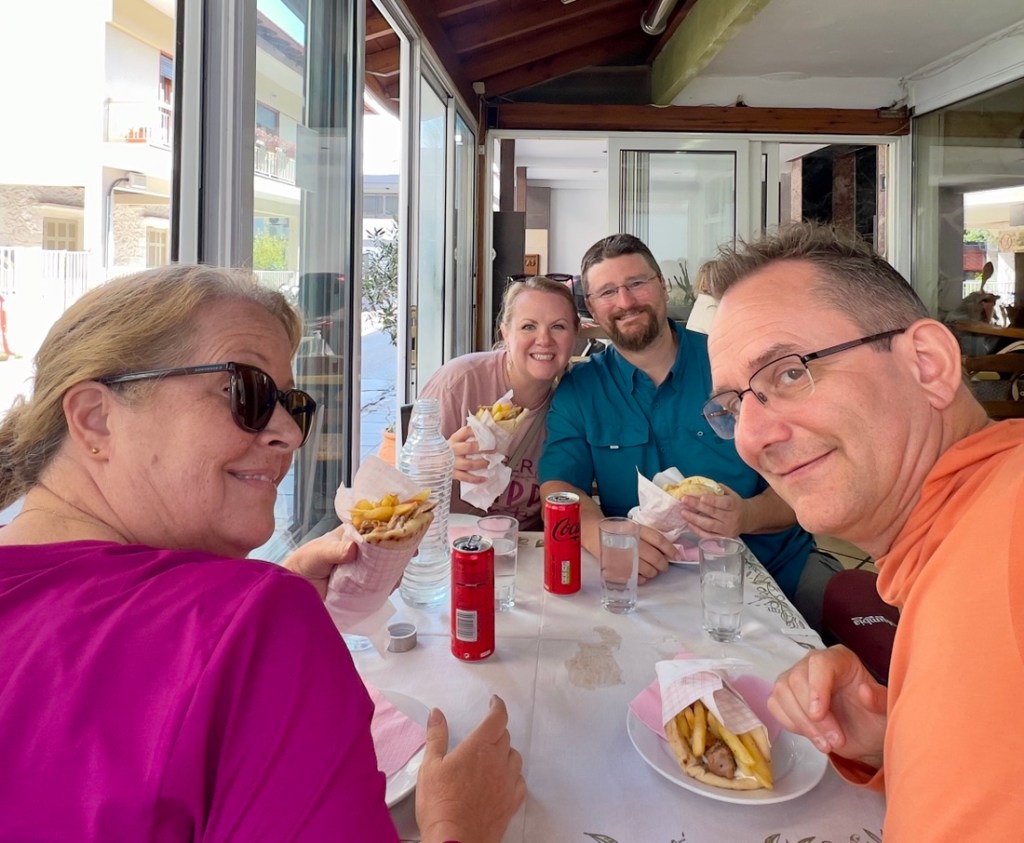
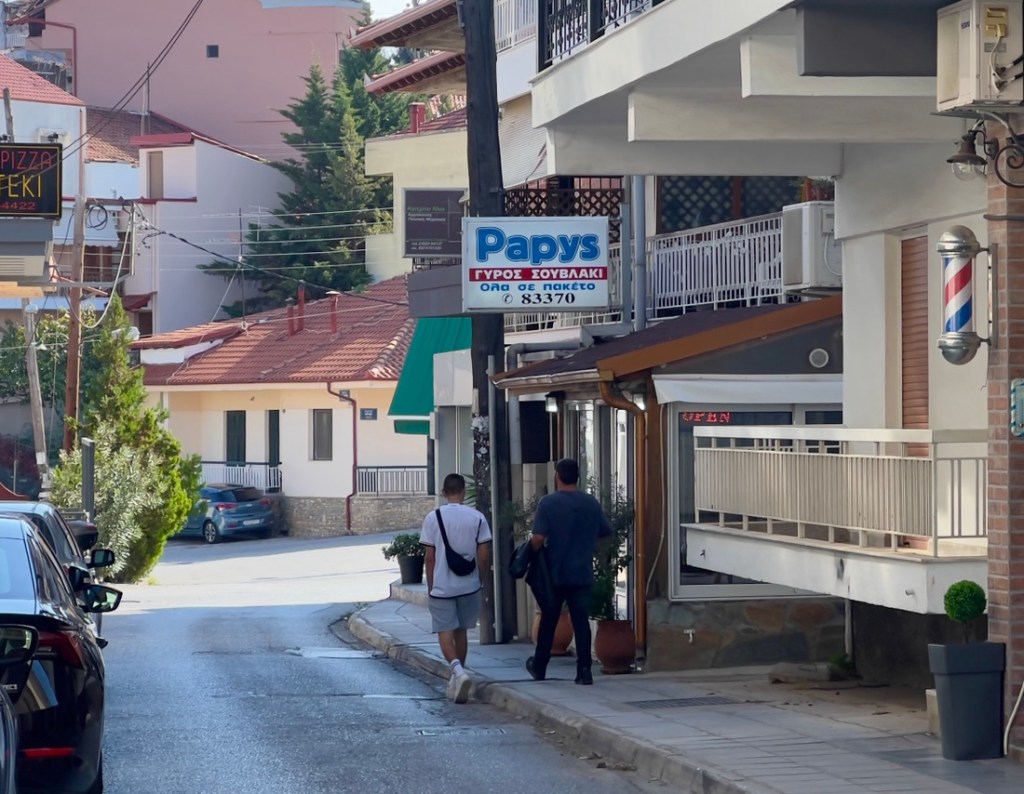
The hike had built up an appetite and lunch was in Litochoro. We found a hole-in-the-wall gyro place which we fell in love with.
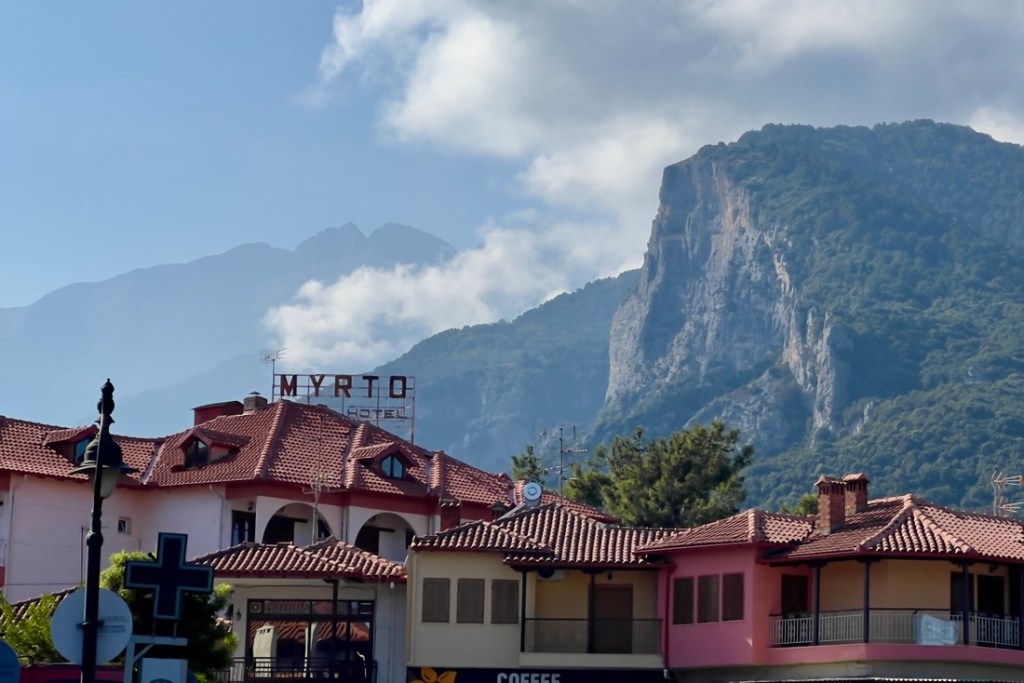
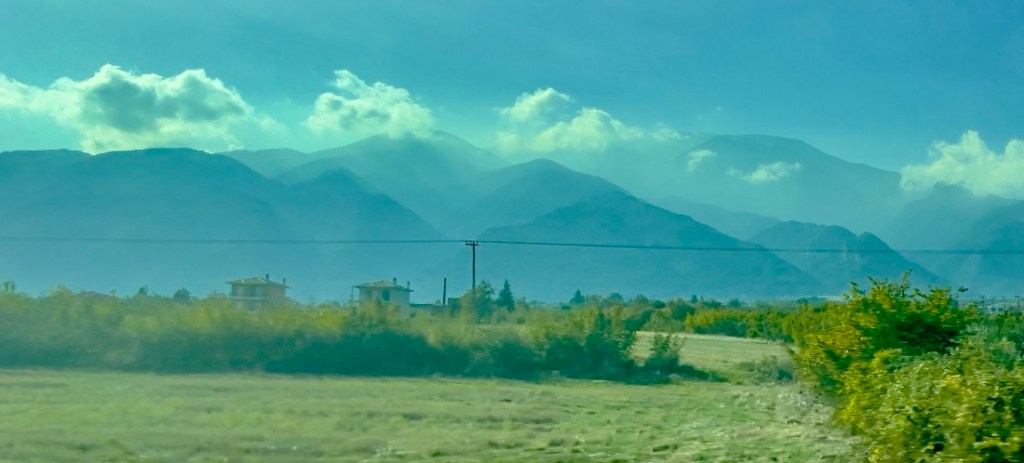
Happy people.The gyro. Maryanne taught us how to say it, and the closest I can write it is “year-o”. I need at least one gyro each year. The term “gyro” comes from the rotating stand that the meat is cooked on, using the same route word as “gyroscope.”Our lunch restaurant.Our restaurant. It was a hole in the wall! Mount Olympus looked down upon us as we looked for our next stop.Our next stop was a fine coffee shop with many yummy sweets and ice cream. I chose the tiramisu. I chose well 😃.I was also happy that they served a “flat white” coffee, my favorite, which is common in UK but rare in the US, for some reason that I have not found yet!On the way to our next stop in Larissa, we drove with this view of Mount Olympus, with the afternoon clouds gathering.
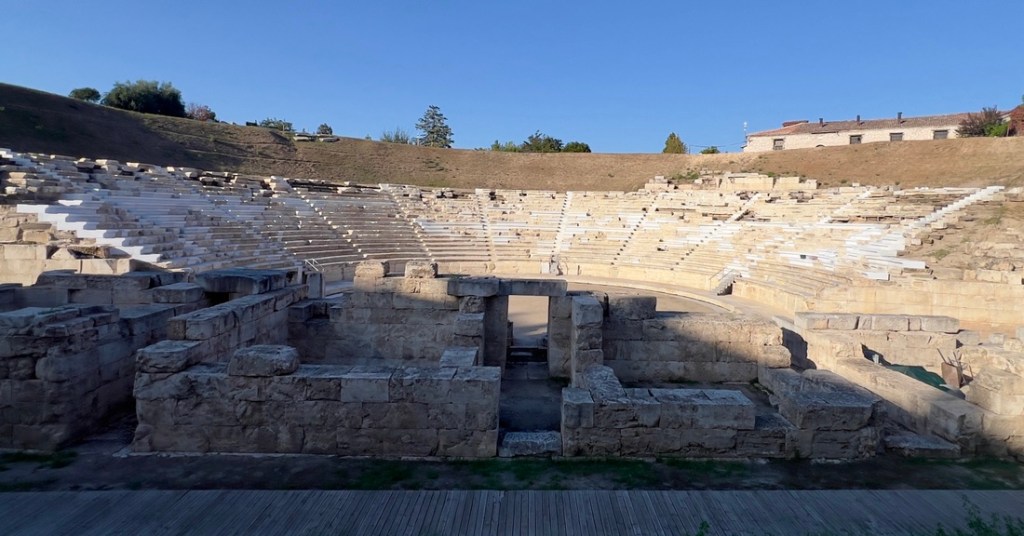
Our day’s journey ended in Larissa, but first we visited a Roman theatre. It dates from the third century BC and had a capacity of 10,000 people. Recent repairs to the seats suggest it is used for performances today.
The theatre.Our group looking at the theatre. For some odd reason, one member of the group is doing a moose impression! 😎
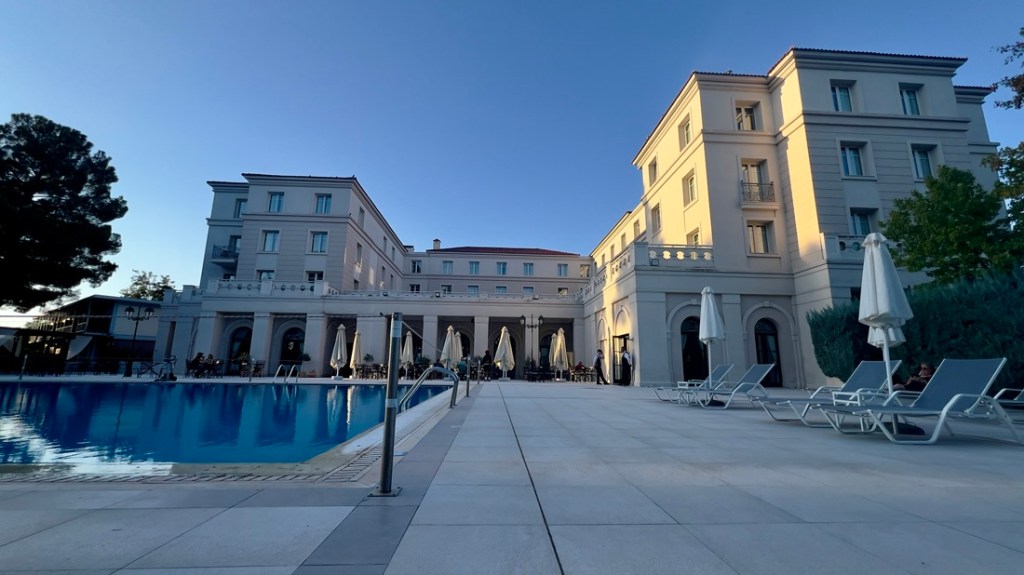
We reach our hotel, the Grecohotel Imperial, with a couple of hours before dinner, which allows some nice rest.
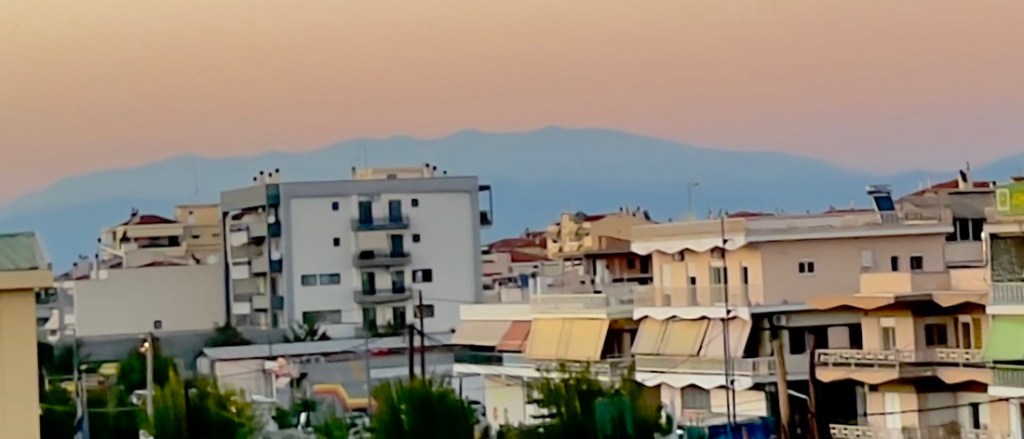
The hotel and pool. Unfortunately, the outdoor pool was closed. They had an indoor one but it was hot and noisy.Mount Olympus continues to look down upon us!
An Addendum
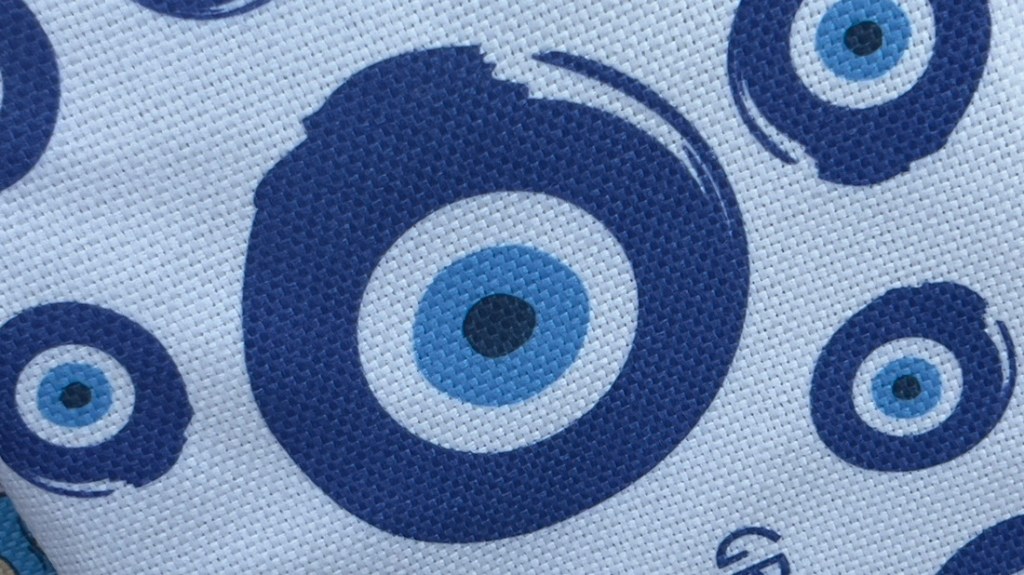
We frequently saw items, especially jewelry, with this image:
It never felt good to me. Some Google research told me that it is used on amulet and similar to protect oneself against the “evil eye.” It reportedly dates from prehistory. It is not what I want to put my faith in to protect myself from evil. No thanks!
Tomorrow, we are off to Athens!
Find other posts from this trip on our Greece page.
Please follow us on this journey by subscribing below. We would love to read your thoughts: please leave comments at the bottom of the post.
"Cajunlimeys" combines Lousiana (Janet) and England (Peter). For "limeys," check out scurvy in the English navy.
We love adventures and use blogging to write a photo diary to preserve our memories. Some crazy friends enjoy following us and my notes might help others plan.
View more posts



















 The Adventures of the Cajunlimeys