
TL;DR: I completed a master’s in theological studies and a PhD in Bible Exposition over four years at Liberty University. The post below outlines the timeline, shares my experiences, and makes some recommendations.
I recently completed my PhD, and perhaps the lack of writing assignments has caused me to blog more! In this instance, I want to write down the journey for my own reflection, while also potentially helping others who wish to pursue academic biblical studies.
Links to Sections
- Liberty University’s Graduate Certificate in Biblical Studies
- Master of Arts in Theological Studies (MATS)
- What Next?
- PhD in Bible Exposition Outline
- PhD in Bible Exposition Phase 1
- Valuable Resources
- Hierarchy of Format “Rules”
- Taking Classes Concurrently
- PhD in Bible Exposition Phase 2
- Preparing For My Dissertation
- PhD in Bible Exposition Phase 3
- Dissertation Defense
- Wrapping Up and Next Steps
- What Is My Dissertation?
Why Did I Start Formal Bible Education?
The trigger for me to take on some “formal” classes to study the Bible was COVID. For many years, I had had a desire to study the foundation of my faith more closely but had largely failed to satisfy that desire. Bible studies at church did not go deep enough, though I was also at fault for not engaging sufficiently. I had completed a Perspectives class in 2004, but then the kids became more demanding, and we moved to China. My job and the international travel that came with it were demanding, fulfilling, and exciting.
My job had included lots of international travel when COVID shut it all down in March 2020. It took me a while to settle in and adapt to working from home. With all of the travel on hold, I realized I would have some spare time and started looking for some structured Bible education. I wasn’t sure what I was looking for, but the priority was the Bible. With COVID bringing uncertainty, I did not want a large commitment. My research led me to Liberty University’s Graduate Certificate in Biblical Studies. The simplicity of four eight-week classes appealed to me. I made up my mind on what happened to be the day before the application deadline of April 15th to start classes in the 2020 Summer B term. The application was straightforward with the largest hurdle appearing to be an official academic transcript. I had completed a master’s in engineering management at the University of Texas in 2004 (my undergraduate engineering studies were in England) and I was able to order an electronic transcript electronically. I was accepted the next day. While I’m unsure how rigid the deadline was, I concluded that the smoothness of the application meant that this was meant to be! Having been accepted, I had to quickly register for my first class before that window closed, but I sense there was some flexibility. The tuition cost was competitive at $395 per credit hour, $1185 per class, with a $200 Technology Fee per semester. Liberty provides electronic access to all textbooks within the tuition fee, but I purchased paper copies in addition so that I could take a break from the computer.
Liberty University’s Graduate Certificate in Biblical Studies
The four classes for the graduate certificate are, unsurprisingly, two classes on the Old Testament (OBST515 and 520) and two on the New Testament (NBST515 and 520). They are three credit hours each, which meant little to me as I had not completed traditional college classes in the US before. There were no prerequisites or dependencies, so I kept it simple, doing them one at a time in the logical sequence, starting with OBST515. These classes took us deeper than a simple survey, introducing the student to the context of each biblical book, including topics such as historical setting, literary genre, authorial intent, and issues, to enable the student to interpret the biblical text with greater discipline. This was achieved through reading assignments, discussion boards, essays, and papers. The readings for the Old Testament classes were heavy requiring the student to read half of the Old Testament during the eight-week term with two textbooks. The four Old Testament textbooks were Handbook on the Pentateuch, Handbook on the Historical Books, Handbook on the Wisdom Books and Psalms, and Handbook on the Prophets, and I used them throughout my studies.
From the beginning, I took the classes very seriously. I had never done this much reading. I had to learn how to write academic papers and use the online library. The structure of Liberty’s online classes was ideal, and the asynchronous methodology suited me extremely well. I was particularly blessed by my first professor, Dr Steven Guest. Dr Guest was an adjunct professor, living and teaching at a seminary in the Philippines in addition to this class. We discovered that our paths had nearly previously crossed in our respective travels, and he knew some of my work colleagues. I was particularly impressed by Dr Guest’s feedback, attention to detail, and encouragement. I have since realized that the online format enables significant flexibility in how the professor engages his students and Dr Guest was one of my best. It is possible that if he had not taught my first class I would not have continued these studies! I also very much appreciated Dr Guest’s conservative approach to the Bible without forcing that view on the students, which is a trait I found in most of Liberty’s professors and welcomed.
After successfully completing OBST515 and a couple of weeks of OBST520, I realized I wanted to continue doing these classes and go deeper. The next logical step was a master’s degree, and this is where the alphabet soup starts with the different required hours. The following summary describes Liberty’s degrees, but it seems to be representative of other institutions. The M.Div. (Master of Divinity) requires the most study with 75 or 90 hours. There are various M.A. courses typically requiring 36 or 60 hours, with some but not all requiring a dissertation. At this time, I wanted the smallest commitment without a dissertation. I also wanted to complete the Graduate Certificate with my OBST and NBST classes counting towards my master’s. Liberty’s M.A. in Biblical Studies was 60 hours, including a dissertation, and was more than I wanted to commit to. The M.A. in Biblical Exposition was 36 hours and my OBST/NBST classes counted but it included two Greek and two Hebrew classes which scared me away. The M.A. in Theological Studies (MATS) included most of the classes from the M.A. in Biblical Exposition, including my OBST/NBST classes, but only required one language class and I was confident I’d be able to manage introductory Greek. I wasn’t so keen about the two classes on Systematic Theology but noted the M.A. in Biblical Exposition also included them. At the time, I would have been happy taking classes that just focused on portions of the Bible and went deeper, but I now realize the importance of the other classes to gain a broader perspective.
Master of Arts in Theological Studies (MATS)
OBST520 started on June 29th and the acceptance deadline for the 2020 Fall semester was July 29th. I made my mind up to take the plunge and go for the MATS degree and my application was quickly accepted. I wanted to complete it as quickly as possible, with the uncertainty about when my job would start requiring significant travel again, but I was concerned about the workload.
I initially registered for just NBST515 in 2020 Fall B and NBST520 in Fall D. I prioritized completing the Graduate Certificate in case my work picked up. I felt I could also squeeze in RTCH500 (Research, Writing & Ministry Preparation) as it was required in the first two semesters and did not look too heavy. I registered to do that in term “C” so it was staggered. After a couple of weeks on NBST515, I realized the reading workload on the NBST classes was significantly less than the OBST classes so felt I could add THEO525 (Systematic Theology I, a pre-requisite for THEO530) in Term D, concurrent with NBST520. After a couple of weeks of RTCH500 running concurrently with NBST515, I felt I was getting more organized and was thriving in the classes. Also, the likelihood of traveling with work before the end of the year was diminishing and I investigated how quickly I could finish all of the courses.
While the tuition is $395 per hour, there is a “block rate” of $2,750 per semester when you take 9–15 credit hours (3 to 5 classes). So, any classes in addition to my two NBST and RTCH were effectively free. They suggest a maximum of 15 credit hours per semester. While it might have been possible to get an override of this limit, this suggested a wise maximum. If I took 5 classes (15 hours) in the 2020 Fall semester and 5 classes in the 2021 Spring semester, I’d complete the master’s at the end of the Spring semester. This was attractive so on 14 September, I registered for one more class APOL500 (Apologetics) in 2020 Fall D (starting on 26 October) and would see how it went. As the class was “free,” I felt I didn’t have anything to lose. This meant I was doing three concurrent classes in that term. (I discuss the wisdom of doing concurrent classes later and advise against it.)
I knew the timing would be very tight. As soon as I had access to my three classes in 2020 Fall Term D, I entered all of the assignments into an Excel spreadsheet. I estimated the workload per assignment and totaled by week to identify hotspots (I provide an example spreadsheet below from the PhD program). It was a unique time with COVID; while our kids were at school, there were much fewer activities which gave me extra time. I completed RTCH500 as early as possible, as Term C overlapped with Term D, so that I was as ready as I could be to start the three concurrent classes. This ended up being probably the most intense term of all of my studies. This intensity was primarily due to the THEO525 class. Systematic Theology was not my first choice as I find the concepts abstract compared to the Bible. While the class has a great textbook (Erickson’s Christian Theology), my professor was Dr Andreicut, originally from Romania. Dr Andreicut expected excellence in all work, and with a wake-up call after my first assignment’s grade, I realized I needed to up my game significantly. The professor’s feedback was blunt, to the point, at times scathing, yet fair. It is arguably the toughest class I have taken at Liberty, but also the one where I learned the most. The two concurrent classes were relatively straightforward and the work did not have too many surprises, so I made it through the semester. The three classes being quite different (New Testament, Systematic Theology, and Apologetics) also helped “refresh” the brain as I switched between assignments. But I still advise against it.
Near the end of the fall semester, circumstances at work with COVID were such that my employment would end in March 2021, allowing me to pursue my studies full-time. I had plans so I still wanted to finish the master’s ASAP, and thus I registered for the remaining five classes in the 2021 Spring term: THEO530 (Systematic Theology II) and CHHI510 (Survey of the History of Christianity) in Term B; GLST650 (Intercultural Communication), NGRK505 (Greek Language Tools), and NBST610 (Hermeneutics) in Term D. THEO530 was another hard class though the History of Christianity was refreshingly different and very interesting. For term D, I was no longer working so I could devote more time to the coursework. My background living in multiple countries made GLST650 straightforward while the Christian context made it very interesting and insightful. My interest in my first Greek language class surprised me and I very much liked how it focused on using the electronic tools that are available to us now. I chose Greek over Hebrew because I had greater interest in the New Testament. Finally, the class on Hermeneutics opened my eyes to the concept of authorial intent, the importance of understanding the human author’s context, and the dangers of misinterpreting Scripture with modern Western eyes. Dr Caldwell taught my Hermeneutics class, and we had some valuable discussions about the relationship between science and the Bible, which is something my background prevents me from dismissing. By the end of 2021 Spring Term D in mid-May, I had completed my Master of Arts in Theological Studies.
Reflection on Liberty’s
Master of Arts in Theological Studies
The degree was what I was looking for and COVID created the opportunity. Liberty describes it as “an introductory graduate degree in religion.” It gave me the taste of academic biblical study while greatly increasing my biblical knowledge. Its asynchronous online format meant that I interacted little with my classmates so I didn’t find out much about their backgrounds or interests in the class, but I sense that for most, it was a vocational step, while there were a few like me that were simply trying to increase their biblical understanding without a plan for where it would lead. The interaction with other students and the professors opened my eyes to both a variety of views and approaches to the Bible and a general consistency in belief in its inerrancy, the latter unsurprising given Liberty’s conservative evangelical position.
Regarding the quality of the professors, I was not surprised. They all demonstrated an expectedly robust knowledge of the subject matter. When interactions revealed their bibliology, they held robust conservative, evangelical positions while avoiding direct persuasion of their positions. For my records, I rated them 1 to 5, with the number indicative of their level of engagement. For this master’s course, I gave a 4 to the three professors I mentioned above (Guest, Andreicut, and Caldwell). As perhaps indicative of my British/European roots, I struggle to give a “5” to anyone as there is always room for improvement. Of the other nine professors, their ratings ranged from 1 to 3. The majority were 3 and I assessed them as “Provided feedback as required. Quick to respond. Good communicator.” I recognize that each professor has a workload from other directions and can have personal things going on in their life, and some courses are better suited to leading to feedback than others.
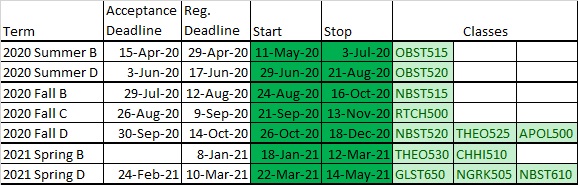
The degree had taken me one year to complete at a tuition cost of $8,647. I was very satisfied with the result and my increased knowledge. I wonder whether I rushed it and squeezed too much in. Fewer concurrent classes might have led to my spending more time. Dr Andreicut’s wake-up call caused me to strive for excellence in each assignment and I did not cut corners (such as skip readings). I was fortunate that my circumstances allowed it. However, my lowest three scores were for the term when I took three concurrent classes, and I believe I would have learned more without such an extreme load.
What Next?
For years, I had been interested in disaster response. I got a taste of it during Hurricane Harvey Now was the opportunity to do more. Samaritan’s Purse’s international disaster response efforts had caught my attention during COVID, so I applied. In summary, after a very delayed response to my application and a grueling and rather unprofessional interview process, they rejected my application to join their international disaster response team and would not give a reason. I was shocked and did not understand. Once I got my ego out of the way, I recognized that it was not meant to be. This was something I wanted rather than God, and God’s way is not our way! I now realize that this role would have meant that I would have missed lots of key moments in our kids’ lives.
However, a door closing leads to other opportunities. Unsure of what to do, I liked the idea of continuing my studies as they had been going well and were rewarding. A doctorate was the next step, even though it was a daunting one. I spoke to a couple of friends who had completed doctorates and looked around at offerings. My desire continued to be to learn more about the Bible, and I found Liberty’s PhD in Bible Exposition program. It was new and 100% online, which had suited me so well for the MATS. The PhD program took the student deeper into the biblical books. The required 60 credit hours and a significant dissertation were scary, but my approach was that I would learn from each course, and if something came along that prevented me from completing the degree, I would still have gained a lot. I preferred this to the several DMin (Doctor of Ministry) degrees that Liberty had on offer. A DMin’s intent is to help the student in a specific area of practical ministry whereas the PhD goes deeper and is about the research. This PhD in Bible Exposition was geared towards pastors who wished to pursue academic excellence in their Bible study. I feel it is less intended as the primary route for a student who wishes to become a full-time residential university professor. While I did not fit the intended target of the degree, the course content was what I was seeking, and I understand that time has shown that this PhD suits others in similar non-pastoral situations. Alternative PhDs did not fit what I was seeking, as they were residential, required French or German as a second language (enabling them to read European scholars), and focused on theology.
I applied to enter the program and my completion of the MATS at Liberty led to a quick acceptance. I was accepted early enough to take a class in the 2021 Summer D term, but our summer was full of trips and Bailey was starting at Baylor in the Fall. Also, my brain needed a rest after two 15-hour semesters, so I deferred starting until Fall 2021.
PhD in Bible Exposition Outline
The program comprises three stages that must be taken in sequence. Stage 1 is Foundational Courses (18 hours), Stage 2 is Bible Exposition Courses (27 hours), and Stage 3 is Research Courses (15 hours). Stage 1 includes prerequisites and stage 3 is the dissertation. The “Degree Completion Plan” is an excellent, accurate summary and proposes a nine-semester schedule which is aggressive, and the degree will normally take longer.
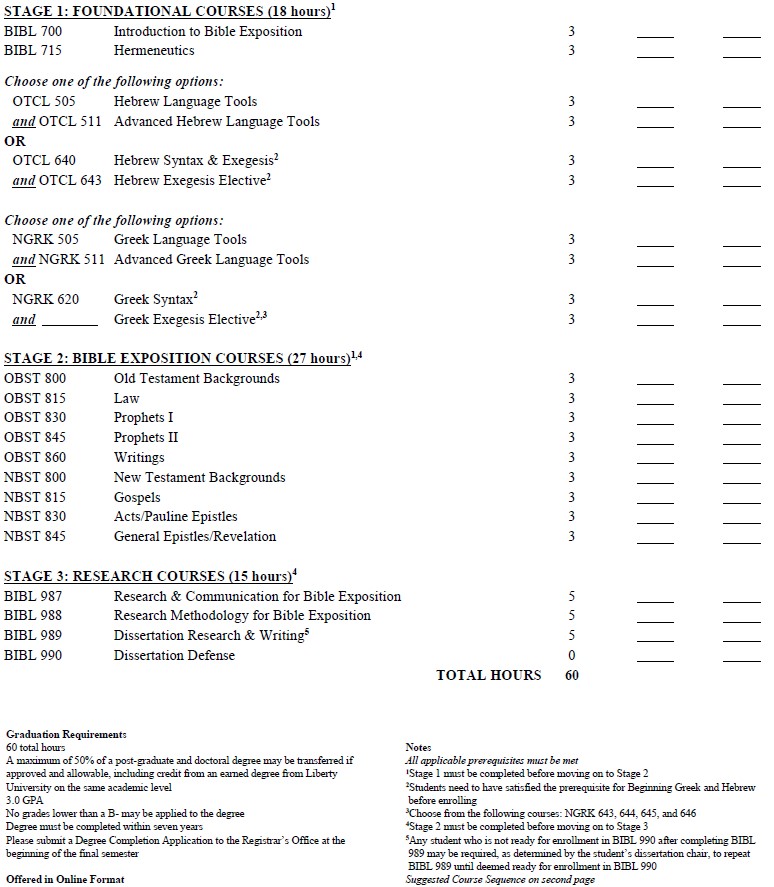
I completed the program in seven semesters, taking one summer off which I used to read the next term’s assignments. I worked on the classes and dissertation full-time without other commitments, for as many hours as my brain could take. The program director advises to take one class at a time. The cost per hour is the same as for the master’s classes at $395 per hour and a “block rate” of $2,750 per semester when you take 9–15 credit hours (3 to 5 classes). I spent $18,370 on tuition for my PhD, not including books and software.
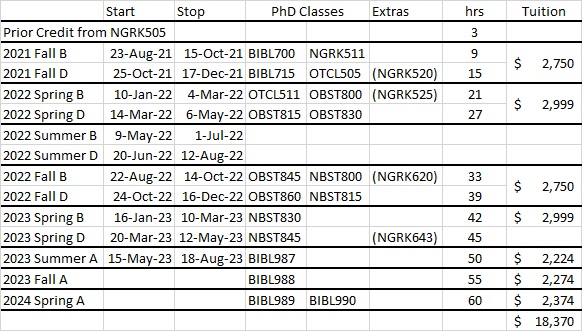
The “extra” classes are because I chose to go “back” and complete the traditional Greek Language classes in addition to the “tools” classes that I had taken to meet the Phase 1 requirements.
PhD in Bible Exposition Phase 1
Phase 1 consists of two pieces: (1) language classes that many students have already taken and (2) a couple of foundational classes for the program. For the languages, there are two tracks: traditional and “tools.” The purpose of the “tools” track is to provide a path for students who have not previously studied biblical languages. The traditional track is advanced lessons in Hebrew and Greek. In discussions on this topic in the program’s informal Facebook Group, there is heated debate about whether the “tools” track is sufficient. Having done both tools and traditional, as I will explain below, my position is that it depends on what your background is, the scope of your dissertation, and the intent of your studies. Each student brings different experiences and backgrounds. I am confident that there will always be the holdouts who will claim that the “tools” track is insufficient, but such holdouts don’t impact a student’s learning, what they get out of the program, and their future contribution to ministry or academia. I see the “tools” track as a wise approach from this program to remove barriers for mature students to study the Bible at a high academic level.
When I looked at the two tracks, I saw the potential added-value of the traditional route. However, I required only three classes if I took the “tools” track (bringing forward one Greek class from my MATS) and I would require eight classes for the traditional track. Also, I was impressed by what I had learned about Greek in NGRK505 Greek Language Tools and how I could (cautiously) apply that knowledge. I sensed my usage was going to be quite analytical which suited the tools. The language tools classes enabled me to understand what commentators were saying about the original texts which was my primary need. I found Greek much easier than Hebrew, which I think is a combination of the Greek letters being closer to English letters, and with biblical Greek being a more precise language than biblical Hebrew.
BIBL700 was an introduction to the program and was a great discussion about the program’s aims and got the student to think about their dissertation topic. Unlike some students, I had started this program with no idea whatsoever about what my topic might be, and this class encouraged me to think about the topic early and to try to align term papers in the classes to what the topic might be to assist with any dissertation idea development. The class also examined the process which included Kibbe’s textbook From Topic to Thesis. Understanding the need for a process made me recognize the value of establishing that process early to enable practice and refinement before spending a year writing a dissertation. My process refinement consisted of two main parts. First was the hermeneutical process itself to lead to the most accurate understanding of the biblical text. This process was the primary focus of BIBL715 Hermeneutics with the main textbook being Osborne’s The Hermeneutical Spiral. Osborne’s approach complemented textbooks I had used in other previous classes though it is the most comprehensive. The second part is about what additional resources you can use to improve the effectiveness and quality of your research and writing.
Valuable Resources
As I had not been a student for decades and did not have a writing background, I looked for all the legitimate help I could get. The resources that I started using part way through my studies would have been useful at the beginning, so I list them all here. They roughly fit into the two categories of research assistance and writing assistance and they are grouped accordingly. The topics below are The Library, Logos, Printed Resources, Zotero, Liberty’s Online Writing Center, Grammarly, Speechify, and Peer Engagement.
The Library.
This might seem obvious, and it is the backbone of any research. The earlier you become an expert in using Liberty’s online library, the better. The following are some hints I picked up during my studies and are helpful from the beginning:
(1) Utilize multiple ways to search for literature. While the library’s main search engine is quite good, searching directly within resources such as EBSCO can find things that the main search did not. Supplementing this with searches in Google and Google Scholar can help lead you to useful resources.
(2) Ask the librarians for help. It took me a long time to do this. They were very helpful and often found access to books that I had been unable to find. They also hold webinars and publish useful videos on the library website. Liberty is very well set up to support remote, online students.
(3) Suggest books. On several occasions, I requested online access to a book to be added. All of my suggestions were accepted, and often a digital copy of the resource was available within a month. This perhaps isn’t useful for term papers but it was for my dissertation. A digital copy in the library is text-searchable which I found very valuable.
(4) Visit other theological libraries. Early in the PhD program, a professor advised me that I would not need to visit any theological libraries. As I live in Houston, there are several theological libraries close by, and I visited Lanier Theological Library a couple of times. It was very interesting to visit, but it did not significantly help my research. I learned that WorldCat could show me the location of any books should I need them, but I ended up not needing that. Some types of research might need very specific resources that are not available online, but I agree with the professor that I did not need to, but perhaps this was because of archive.org.
(5) Archive.org. This was a fantastic resource. It provides access to many books that libraries have scanned. You check a book out for an hour, and typically only one person can check out any book, though I only once had such an instance that a book was unavailable due to checkout, and it was soon available again. This allowed me to find books that were either not in the Liberty library, or for which digital copies were not available. I understand there is litigation regarding the legality of this site regarding copyright. While I did not keep track, I would not be surprised if I accessed half of the references in my dissertation via archive.org.
(6) Inter-Library Loan. I did not use this. Once I asked for a chapter of a book at Liberty to be scanned for me, and they provided it within a week.
Logos
In the first semester of my PhD, Liberty started using Logos for electronic access to the textbooks that they provided for each course, so I started with “Logos 9 Academic Basic” in August 2021. I was able to migrate the books provided for the master’s. I saw the value of a paid package, especially for language study, and I bought the “Logos 9 Academic Premium” package for $732.44 and the “Logos 9 Academic Professional Library Upgrade” for $319.05 in November 2021. I can’t remember the specifics of why, though I did use the student discount. I tried the alternative Concordance software but Logos suited me better, especially as this was where the digital copies of the textbooks from Liberty live. I purchased the “Logos 10 Full Feature Upgrade” for $164.88 in February 2023. I felt it was worth being on the most recent version. One of the most advertised features of this upgrade was the “Print Library ISBN Scanner” which allowed you to add physical books to your library, causing them to come up in your Logos searches. While this sounded great and I could add most of my physical theological books to Logos, I did not find it very useful. Below are my suggestions regarding Logos:
(1) Assess the different packages. Logos is happy to take your money. Depending on how you work and how you might use Logos, the free basic version (with the books Liberty provides) might be all that you need. If you do buy anything, use the student discount, which you have to renew every six months.
(2) Do the provided training. Like other powerful software, Logos has a learning curve which can be a showstopper. Fortunately, they provide lots of free training videos. A professor indicated that taking such training was essential to get the most out of it. The training is particularly useful for (a) how to take notes in Logos and (b) prioritizing resources in the Logos search results. This latter point becomes essential when you are searching. Once you get into your dissertation, you might remember something you read somewhere but can’t remember where. Without prioritizing resources, your search will start with many hits that are of no use to you. I did not do this prioritization as well as I should and was inefficient because of it. For reference, my Logos library has 2,183 resources in it.
How you gather your research notes and utilize them in your workflow is worth working out early. Part of the challenge is the multiple sources: the Liberty Library, Logos, any printed books, and archive.org. My methodology evolved throughout my studies.
(3) Add your papers to Logos. When you are searching for something that you can’t quite remember, having your own papers appear in the Logos search results can be useful!
(4) Strategically buy electronic books. I bought two books in Logos. The first was The SBL Handbook of Style for $29.48. This may be provided in the first dissertation class (BIBL987), but I strongly recommend starting to write SBL2-compliant papers as early as possible, and having a searchable resource is golden. I would have also bought Turabian if Logos had it. The second book was Louw and Nida’s Greek-English Lexicon of the New Testament Based on Semantic Domains. The Logos version was $21.63 whereas the hardcopy was over $200, and I could not fine the electronic version in libraries. I just checked archive.org and it has searchable copies of Louw and Nida, SBL2, and Turabian 9th. So perhaps I did not need to buy any of these! However, having a book like Louw and Nida in Logos allows the software to provide clickable links to the boo that speeds research.
Printed Resources
Some Liberty professors told me that I would not need to buy any books to complete the PhD. I chose to buy the following because I wanted to get off the computer and it might be a generational thing. I note that my children, currently in college, have virtually no printed textbooks. I bought the following:
(1) Printed copies of textbooks. I purchased copies of the 107 textbooks from the thirty classes I took with required reading. I read the majority of these cover-to-cover. I saved a lot of money by buying used copies. (I wrote this blog post on my favorite ten books.)

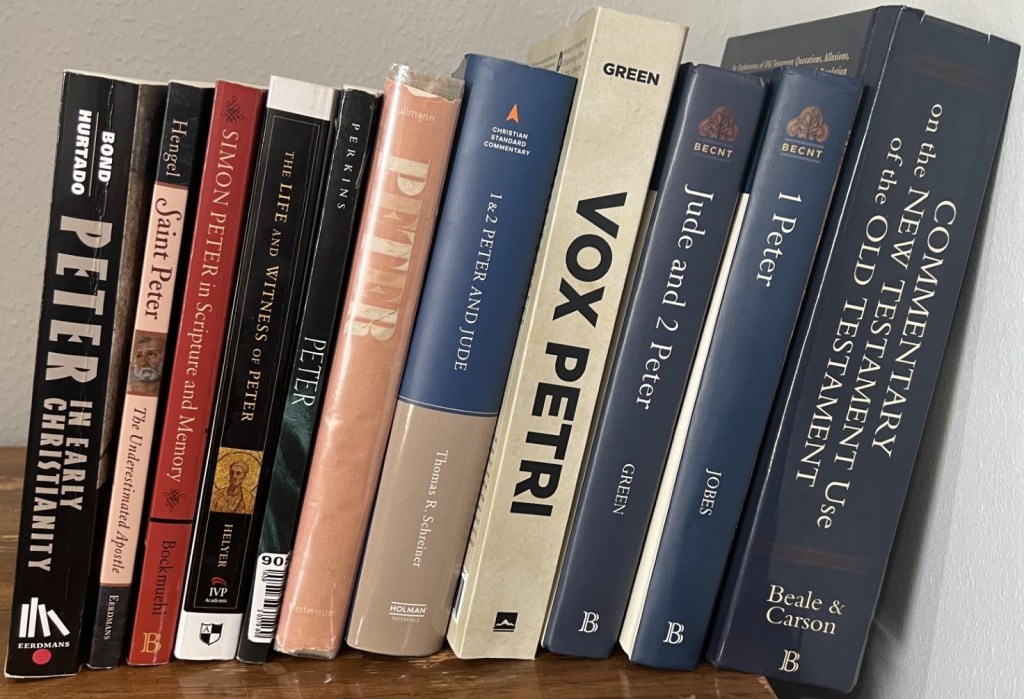
I also bought eleven books for my PhD research. I read these cover-to-cover, except for the Commentary of the NT Use of the OT.
(2) Journals. It was suggested to join the Evangelical Theological Society, primarily to obtain its journal to stay current on research in your particular field. I did this but found that it added no value to my situation.
Doing a PhD involves a lot of reading! Before I started these classes, I did not believe I would have been able to do this much reading. However, the reading for coursework is well structured and did not overwhelm me. The reading for the dissertation is an essential part of the journey.
Zotero
Zotero helps link the above research with your written output. In my MATS classes, I had typed out each footnote and bibliography entry. While I had become quite efficient at it, I recognized the chance of error, the effort to fix recurring errors, and the opportunity to automate which would be valuable in a dissertation. Kibbe’s From Topic To Thesis which we read in BIBL700 introduced “bibliography software” with Zotero as an example. This automation sounded very valuable. I researched options and decided Zotero was best as it was created by a nonprofit dedicated to developing software for researchers. Its price is great (free) but the paid alternatives were not expensive. Zotero has a learning curve and multiple facets of use, so I have several recommendations:
(1) Install Zotero and associated plugins. As well as Zotero itself, there are two valuable plugins. The first is for your browser which allows you to populate your Zotero database with a resource’s pertinent metadata when viewing its web page. The quality of the data depends a lot on the webpage but it is generally a good start for entering that resource in your database. The second plugin is for Word, allowing you to search for a resource in your Zotero database at the touch of a button, automatically adding it to your paper as a footnote and managing the bibliography entry.
(2) Select the SBL2 stylesheet for your document. There are also Turabian options. It takes some effort to work out how to use Zotero and these plugins, but I believe the return in time savings was orders of magnitude as well as resulting in a better result. My dissertation reader made many comments about my footnote/bibliography formatting, several of which I had not even thought about. Upon investigation, I discovered that he was very familiar with Turabian, but Zotero, with the SBL2 template, was compliant with SBL2 and correct in most instances.
(3) Populate your database. Start using Zotero ASAP and add resources that you might use in a paper when you read it online. This took some effort, but I greatly appreciated it. I tried to make each entry “correct” when I first entered it into Zotero, but mistakes are easy to identify later and correct. My Zotero database has 1261 items in it, added between 8 October 2021 and 7 April 2024.
(4) Correct multiple errors in Zotero. As the classes progress and you become more familiar with SBL2, you might learn that SBL2’s recommended names for publishers or for including state names with cities are different from what you have used. You will also want to use abbreviations for journals that you did not do at the beginning. It is very easy in Zotero to sort by Publisher, Place, or Series and update the entries. Sorting by such fields also highlights inconsistency, which I treat as a greater sin than SBL2 noncompliance. You can then be sure your Anchor Bible series are all called AB, and your works published by Zondervan are all from Grand Rapids, without the state. (These are a couple of SBL2-specific requirements). Zotero has a neat feature where you can right-click on a title and convert it to title or sentence case.
(5) Final Corrections. Zotero does not replace knowledge and it is not perfect. The reviewing checklist that I created had a few things to change in Zotero’s output, from removing “n.d.” to correcting the formatting when a book title ended in “?” to updating when my reference had multiple “s.v.” Internet research suggested these were known issues.
Utilize Liberty’s Online Writing Center (OWC)
The school’s OWC is an excellent resource and I wish to highlight three things:
(1) Turabian Writing Style Guide. This website has lots of information and includes templates. Use them. I found that the templates were not perfect but were a great start. I believe they have improved since the first one I used. They also have some great videos explaining how to set up your Word document optimally. To ensure formatting improvements were carried forward, I started each term’s paper using a copy of the previous term’s paper.
(2) Chicago Manual of Style (CMOS). Turabian builds on Chicago which is more comprehensive. The OWC has a link to CMOS v17 which is not otherwise available without paid subscription.
(3) Get your work reviewed by the OWC. On the OWC website, they have a section called “Draft Reviews” where you submit a paper and get feedback on various aspects including Turabian formatting. Between September 2020 and August 2022, I submitted ten term papers for review. For the first nine reviews, I got excellent insightful feedback on my document structure, thesis development, and Turabian formatting. This feedback was mostly from the same person. For the tenth review, which was from a different person, I found that the Turabian feedback was imprecise, which told me that I no longer needed their review! However, I had learned much from them. Also, they will answer questions about formatting, and they provided fast and accurate answers.
Grammarly
I started using the paid version of Grammarly during the MATS classes in January 2021 at the suggestion of a professor. This was before AI took off and such products could create content. Liberty provided guidance that such tools to check work were still permitted, but using AI to create content was forbidden and their plagiarism-checking tools could detect it. I continued to use Grammarly for all of my writing for spelling and grammar checking. This document from Liberty explains Grammarly’s strengths and weaknesses. I found it particularly useful for (a) identifying wordiness, (b) use of passive, (c) incorrect use of commas, and (d) use of British English rather than American English.
Liberty’s document stresses how it does not replace proofreading, but I found it a powerful tool to improve the quality of my end result. This might also have been because my engineering background made me a weak writer.
Speechify.
Once I was working on my dissertation in Phase 3, Dr Kennedy suggested I use Speechify which reads your paper back to you. While it is possible to get Snoop Dog’s voice to read to you, which makes you think about your work differently, I chose an English accent as I found it most effective at helping me detect opportunities for improvement in my writing. I would have started using this from the beginning of my studies had I known how useful it would be.
Peer Engagement.
Talking to other students is a great supplement to the above resources. While each class’s discussion board assignments allow some interaction, there is value in less formal interaction to share concerns, ask questions, vent, or seek prayer.
Two of the program’s first students, Jeff Kennedy and David Lott, established a Facebook Group called “Liberty University’s Ph.D. in Bible Exposition” for students enrolled in the program and for graduates who are not members of Liberty’s faculty. Right now, it has 159 members. This is a valuable group for enrolled students to ask current students and graduates about the program, which might be workload or a professor’s strengths or opportunities to read ahead. The group is administered by current and former students of the program. Answers shared in the group are not official, and like any Facebook group, are that person’s opinion.
To complement the Facebook group, you might want to find a “study buddy.” So much study in an online format leads to isolation. If you can identify someone who is going through the classes at your pace, you might be able to share notes directly, more openly than in a Facebook group. A comment in the Facebook Group suggested this for the dissertation phase. I followed their suggestion and reached out to Denise Pass when we were both taking BIBL987 in Phase 3 as I recognized her name from some Facebook Group interactions. We were able to give each other peer encouragement, comparing and contrasting the guidance we were getting from our dissertation mentors. I’m unsure how much help I was to Denise, but she gave me some valuable guidance and information!
Hierarchy of Format “Rules”
This topic is worthy of its own small section as a tremendous amount of effort is spent on your document’s formatting. It is an essential part of dissertation writing but it adds little “value,” so doing it as efficiently as possible is wise. Most of the “rules” are covered by published documents. There are a few gray areas. I found that two steps were essential.
The first step is to determine which published documents are relevant, and what is their hierarchy. By hierarchy, I mean that if two relevant documents disagree, which one is deemed “correct” for your work. The program’s PhD in Bible Exposition Dissertation Guide, which is shared at the beginning of BIBL700, states “Essential guidelines for dissertation form are found in A Manual for Writers of Term Papers, Theses, and Dissertations (current edition) by Kate L. Turabian. Details relevant to the field of Bible Exposition (biblical and theological studies, etc…) will additionally defer to the current edition of the SBL Handbook of Style.” I’m not saying my proposal is the only way, but defining one helps you avoid the “it depends” answer. The importance of defining this early on is that it might not be until your second reader gets involved that your SBL2 formatting gets significantly challenged, as happened to me. If you have not established a firm foundation for your formatting decisions, you might have to change a lot to satisfy that reader, and they are not necessarily up-to-date on SBL. I propose the following hierarchy which I used:
- SBL2 website of Explanations, Clarifications, and Expansions. https://sblhs2.com/
- SBL Handbook of Style, 2nd Edition.
- A Manual for Writers of Term Papers, Theses, and Dissertations by Kate Turabian, 9th edition.
- The Liberty template for dissertations.
- Chicago Manual of Style, 17th Edition.
I stumbled across the SBLHS2 website when I was internet searching. It is an official supplement from the SBL staff and clarifies ambiguities in the published second edition while sharing many great examples. It is very practical, and I highly recommend it.
I include the Liberty template for dissertations as no other resources cover that. In contrast, I followed SBL2 for Bible book abbreviations, even though Liberty proposes otherwise (i.e. SBL2 recommends not using a period). In the BIBL700 class, there is link to a video from Cliff Barbarick (not at Liberty) called “SBL Paper Formatting” which explains how to use SBL2 with reference to the “Student Supplement to the SBL Handbook.” I found this video and the student supplement confusing at best, and inapplicable in places. Its placement in Week 8 of BIBL700 is itself odd, especially when BIBL988 introduces the SBL2. For example, one of the first things Barbarick explains is a two-inch margin at the top for the Bibliography, as per the SBL Student Supplement, which contradicts Liberty’s template. Liberty’s Turabian page at the OWC includes some great Video tutorials on setting up the Word document. I concluded that Liberty’s guidelines replaced the Student Supplement to the SBL Handbook, so I did not use the supplement or Barbarick’s video to guide my formatting.
The second essential step is to own your document. It’s your dissertation and you can stand by your decisions, while carefully assessing feedback. For example, I decided to go against two SBL2 guidelines. First, SBL2 proposes that “gentile” is not capitalized (Section 4.3.6, page 42). Much of my usage of this term was citing other authors who almost universally capitalized it, so I chose to capitalize it. Second, SBL2 proposes abbreviating books of the Bible whenever used with a chapter reference. For instance, it suggests that “The passage in 1 Cor 5 is often considered crucial” is correct. I tried following this convention and found it difficult to read, different from all of my sources, and it triggered corrections from my mentor and reader. I decided to spell out the books of the Bible unless it was a parenthetical reference.
If you can establish your own rules early in the program, you can practice them in research papers and be consistent once you get to your dissertation. This saves a lot of heartache.
Taking Classes Concurrently
I have had a couple of questions about taking classes concurrently. Readers notice that I even took three at the same time, both in the MATS and PhD programs, so I am led to clarify my position.
In summary, I strongly recommend AGAINST taking concurrent classes. Taking two together can be a stretch. Taking three is either impossible or might break you. I had some special circumstances which I’ll explain here.
- Available Time. The first concurrent classes I did were during COVID. There were NO activities outside of the house! Our kids were already teenagers, so they did not need entertaining or driving anywhere. At that time, my work was remote and slow, so I had plenty of available time. Later, both my wife and I had retired, and she was very supportive of my studies. However, taking concurrent classes was always very draining, there was no wiggle room, and I needed a breathing space before resuming studies – either the Christmas break, or taking the summer off. Also, I did not have any sickness which would have put the classes at much greater risk.
- Family commitments. While the available time is a factor, how to prioritize that time is equally important. Our kids had either left for college, or were over sixteen, meaning that they could drive, and even run errands. For the most part, I planned specific times when I would be with them, either visiting them at college or attending their high school events. At other times, I needed to be available and present but was not generally needed. With kids under sixteen, it’s a different type of commitment. You can’t ensure their schedules are light during week 7 so that you can get the papers done! Also, I could readily manage any work commitments at this time.
- Planning. My background is engineering and project management, especially planning. I treated these terms as projects. The first time I attempted concurrency, it nearly did not go very well. It impacted the quality of my work. I learned some lessons and did concurrency again, but it was still extremely tight, and the points above defined my special circumstances.
- Professors. I know that professors advise against concurrency, especially when working or with families. They have seen many students and understand the impact.
- Results. With the above said, I have been asked whether it “impacted my grades.” I’ve revisited this question and have to say “yes.” Of the thirty-three classes I took at Liberty, the lowest three scores were for the three classes I first took concurrently. While I still got A’s, one of these classes was a 940 – the lowest possible for an A. While grades might be the driver, they reflect the quality of your learning. I did not learn as much in those classes as I would have done had they not been concurrent.
I must admit that the challenge of taking concurrent classes in subsequent terms varied. I found it harder during MATS than PhD, but that reflects my academic maturity. Also, when I did it during my PhD (see below), my third class was an extra language class, which used a different part of the brain, so it was almost refreshing! Looking back, I recognize that each class has a different workload, both in thought and in work output, and taking high workload classes together makes it more difficult, but it is difficult to know ahead of time which ones have the highest workload.
Once again, I recommend against class concurrency, but if you try it, tread very carefully. Pray about it. Why are you doing these classes? Does completing it quicker/cheaper fit the priority of why you are doing the classes?
PhD in Bible Exposition Phase 2
The student can start Phase 2 when they have completed all of Phase 1. It consists of nine classes, with five on the Old Testament and four on the New Testament. Of note is that OBST800 (Old Testament Backgrounds) is a mandatory pre-requisite for four Old Testament classes (OBST815, 830, 845, and 860), and NBST800 (New Testament Backgrounds) is a mandatory pre-requisite for three New Testament classes (NBST815, 830, and 845).
I started Phase 2 in the 2022 Spring B term, and a few comments are worthwhile. First, the system allowed me to take my final Phase 1 class, OTCL511 (Advanced Hebrew Language Tools) concurrently with my first Phase 2 class, OBST800, which I believe was a glitch that should not have happened. (Note my comments above regarding why I recommend against doing concurrent classes.) Second, I did not take any classes during the summer of 2022 as I wanted a break and had other commitments. However, once you have started phase 3, you cannot take any semesters off and must be continuously registered (with payment). Third, I took extra Greek classes. After BIBL700, I recognized that my dissertation was likely to be on the New Testament and that additional Greek classes would help. I saw the value in completing the program’s “traditional” Greek classes. I could add the four classes to the plan with most of them “free” as they were part of the block rate. I believed I would prioritize the Phase 2 classes, but in practice, I did not neglect the Greek Classes. NGRK520 and 525 were quite straightforward (and I needed an override with Dr Fuhr’s permission to register for them), but NGRK620 and 643 were a lot of work. I’m unsure how much these extra classes directly contributed to my dissertation, but I was able to choose topics and passages that were pertinent to my area of interest. As with any language, the more you learn and practice it, the better you become.
All of the Phase 2 classes, or “PhD Seminar” as Dr Fuhr calls them, were robust. While the workload varied, they all included lots of valuable reading and instructive assignments. As with the MATS, the amount of feedback from the professors varied. Once again, I kept a rating, with Drs William Price, Jordan Jones, Alan Fuhr, Gary Yates, Brian Main, and Brian Wallace providing truly excellent instruction. These are all busy professors and have worked out how to give great feedback efficiently. Of these professors, Dr Yates’s OBST845 is the toughest with high expectations and a heavy course load but good feedback, and hence where I probably learned the most. Dr Wallace, who taught my final Phase 2 class NBST845, was particularly insightful regarding my choice of dissertation topic, complementing some previous excellent guidance that I had received from Dr Jordan Jones. I sensed that all of the professors were eager and happy to help but had heavy workloads and their own areas of interest. It is up to the student to initiate engagement, and they might sometimes be disappointed but should not be disheartened. The professors that I have not mentioned above were also very good.
I would like to share a couple of my term plans. They are downloadable Excel spreadsheets from 2022 Spring B (when I took OBST800, NGRK525, and OTCL511) and 2022 Fall B (when I took NBST800, NGRK620, and OBST845). As soon as the class schedules were released, I created these plans with my estimates of hours required and looked for hotspots (i.e. weeks with big assignments). These were my most intense terms, with 2022 Spring B averaging ~46 hours per week. The plan for 2022 Fall B indicates an average load of 72 hours per week, but this was immediately after a summer semester where I had not taken classes and had done most of the reading ahead of time, which is not factored into the plan. Such workloads will not suit the majority of students.
Preparing For My Dissertation
With Phase 2 complete, I was ready to start Phase 3 and my dissertation. I had been thinking about the dissertation topic since BIBL700. I did not join the program with a topic in mind. Most of the Phase 2 classes caught my interest. I started talking to professors about ideas as early as I could. As I progressed through the classes, I was particularly interested in (1) the role of foreigners after studying Joshua, (2) the intertestamental period and extrabiblical literature from NBST800 NT backgrounds class, (3) the role of the Septuagint in the NT. Once I started the NT classes, my interest in the Apostle Peter grew. I shared these thoughts with professors and got some insightful feedback. While my interest was broad and I would like to cover many topics, the challenge would be finding a dissertation mentor whose expertise covered so many topics. Also, there was the risk of something so broad being too shallow, but I got conflicting feedback about how narrow the topic needed to be.
I had strived for my research papers to be around the topics of foreigners, NT use of the OT, and Peter. Even though I did not know my dissertation topic when I wrote those papers, being on a related topic allowed this work to contribute directly to my final dissertation. I reused the research but rewrote the text as my writing quality had improved and it had to fit into my dissertation’s argument’s flow.
A major leap forward occurred in the summer of 2022 when I was taking a break from classes. In the Facebook group, Dr Jeff Kennedy offered to provide feedback on people’s dissertation ideas. He had recently completed the program and was likely to join the faculty as an adjunct professor. I shared my ideas with him and was immediately blown away by the passion, knowledge, and wisdom in his response to me. From an initial exchange of emails, we had a framework for a possible dissertation. This had been a burden on my shoulders as I knew I had to have something! Having a good idea of my dissertation’s direction at the halfway point of Phase 2 allowed me to steer my research papers closer to my topic. Indeed, the professors of my subsequent classes were very flexible and supportive of my choosing topics that, while still within their class’s overall scope, would feed into my dissertation topic. For the following year, I communicated little with Dr Kennedy. He joined Liberty’s faculty and I completed the phase 2 classes. During those classes, I asked him a couple of questions that I felt he would be able to help me with, and was impressed by each answer. The interactions very much helped with my motivation, which I needed to maintain my intense schedule.
PhD in Bible Exposition Phase 3
I completed Phase 2 and the extra Greek classes in the Spring semester of 2023. I knew that Phase 3 consisted of at least three 16-week semesters, BIBL 987, 988, and 989, repeating a class if insufficient progress had been made. Continuous enrollment was required after starting. My wife had commitments through the Spring of 2024, after which we planned to travel, so once again I wanted to complete the work into the shortest timeframe. My final two Phase 2 classes had included research papers that were very relevant to my dissertation, so I was eager to keep going, choosing to start Phase 3 without a break in the Summer of 2023.
The first Phase 3 class, BIBL987, takes sixteen weeks and consists of two primary components: comprehensive exams and dissertation prospectus completion. While you take it as part of a class with a professor, there is little if any required interaction with the other students and it is a good “warmup” for the isolation of dissertation writing. My professor was Dr Fuhr and Denise had Dr Price and it was useful being able to compare notes as the professors’ styles were different yet complementary. The work in Phase 3 was straightforward. If you have completed the Phase 2 classes diligently, the comprehensive exams are routine, though time and energy consuming. The main deliverable of BIBL987 is the prospectus as this sets the direction for the multiple semesters of dissertation work. Already having a dissertation topic made the prospectus writing relatively routine. Starting this class without a dissertation topic would make it quite challenging. Having completed the prospectus with professor approval, it goes to Dr Smith who identifies a mentor for you. I was uncertain how I approached this having already identified Dr Kennedy, so I reached out to Dr Kennedy, who informed Dr Smith that he was ready to mentor my dissertation, and thus I was registered for BIBL988. If you have a dissertation mentor in mind, I recommend reaching out to them directly, and if they agree, ask them to say that to Dr Smith. An assigned mentor is the key milestone for the completion of BIBL987 and a significant step forward. The second reader is not assigned yet.
BIBL988, another sixteen-week class, has three components with the primary one being the completion of the dissertation’s first three chapters. The intent is that you have completed more than half of your dissertation before exiting BIBL988. The class proposes a schedule that is fair, though trying to go faster than that allows for any delays in your mentor’s response to first drafts. One of the other components is reading the SBL2 book, which is much better if done at the beginning of the program, though this is a good time to revisit to refresh. There are also various documents and videos about the process which are very helpful, and I recommend watching all of them early in the semester. How you interact with your mentor will depend on your mentor. Dr Kennedy answered my questions promptly and gave me good ideas. However, I still waited with trepidation for his response to my first chapter. Receiving his feedback was a relief for two reasons. First, there was lots of it on both little things and big things, which showed he had seriously considered my writing and could add value. Second, there weren’t any major changes. Some of the feedback was wise personal preference. Some was about formatting that I could check against SBL2. Some were about my approach. Having understood his position with the first chapter, I aligned my writing in the second and third chapters which thus received less feedback, but there were still valuable comments. I was able to start but not finish my fourth chapter by the end of the semester. About a month before the end of the semester, Dr Kennedy appeared reluctant for me to move onto 989. I feared that the second reader’s feedback was the greatest remaining unknown, and if I did not move onto 989, I would complete all my chapters early in the next semester and have to wait for the following semester before 989 registration and receiving reader feedback. I discussed my case with Dr Kennedy and outlined my schedule over the Christmas break that included completing my fourth chapter before the Spring semester started. That left my fifth chapter and my conclusion to complete in 989, in addition to responding to feedback. He was sufficiently convinced that he asked Dr Smith to register me for BIBL989.
I started BIBL 989 with strong momentum. Writing these chapters had been the most prolonged intense work that I had ever done. I worked each morning, starting early until my brain had had enough, which was normally early afternoon. I sought ways to relieve my brain, but these ended up being more about food than exercise and I gained twenty pounds during my dissertation. During my dissertation writing, I had one other commitment that involved dedicating two weeks a couple of times. I treated these times as deadlines to complete a chapter, using the activity as an academic break. My wife was also extremely supportive. I did not get much else done during these two semesters, and I am still working through my catch-up list. Dr Jordan Ballard was assigned as my reader, but the uncertainty remained until his first review. Would he derail my direction? I did not get any feedback until mid-February, and it appeared scathing about my first two chapters. There were areas I could defend, like my SBL2 formatting, but the feedback about content was more serious. Some of it was about the smallest detail which indicated the high effort Dr Ballard had given the review. The nature of high-volume feedback as comments in a Word document is that you cannot see the wood for the trees. I got lost in the comments, struggling to distinguish between a passing observation and a potentially showstopping criticism. I tried to work through the comments but realized a phone conversation with Dr Kennedy would be best, and it proved very fruitful. My first realization was to communicate with Dr Ballard via Dr Kennedy. Dr Kennedy was my advocate and advisor and could understand the context of Dr Ballard’s feedback. The second realization was that there were two themes in my dissertation that Dr Ballard had wisely had issues with. The first of these was my presentation of Paul. My dissertation was about Peter. I had strived to avoid putting Paul down while highlighting Peter but had unintentionally failed. This extended to other areas where my words were read as critical rather than a statement of the situation, for example, describing Peter as “ethnocentric” can be viewed as racist. I realized the need to use neutral terminology, including evolving “ethnocentric” to “ethno-religious preference” which was more precise and without undertones. The second theme was my use of some evidence regarding Peter’s background. A leading scholar had drawn conclusions, which I followed, but the evidence remained scant. While I still find some of these conclusions fascinating, they contributed little to my thesis’s argument, so I was more than happy to tone them down. I was relieved that Dr Ballard’s feedback had not derailed me. While it required some adjustment in each of my chapters, it was uncomplicated as it was more about the tone. I am very glad these had been pointed out. There were also plenty of other good points of feedback that I could incorporate moving forward.
It was mid-March by the time I had worked out the above response, which was more than halfway through the term. I was also neck-deep in my fifth chapter, the most important to culminate my thesis’s argument. I completed and submitted my fifth chapter’s first draft and then revised the first two chapters based on the feedback, submitting them in early April. I ensured I addressed each piece of feedback from Dr Kennedy or Dr Ballard by either implementing a change or adding a comment explaining why I had not. I was very concerned that there would be another round of significant feedback and correction and that I would run out of time with this semester finishing on May 10th. In a phone conversation, Dr Kennedy explained that Dr Smith liked to have dissertations completed at least a couple of weeks before the end of the semester to enable BIBL990 registration. I had already been registered for BIBL989 for the upcoming term and did not want to extend it to another semester when I was so close. This was when it was very useful to compare notes with Denise Pass. She was at a similar level of completeness but faced different challenges regarding feedback. We encouraged each other in various ways to “go for it” which meant (1) compiling a single dissertation document with all of your completed chapters, even if some have not received feedback from both the mentor and reader and (2) pushing to get a dissertation date. We also encouraged each other by sharing similar tales of brain fatigue. My remaining tasks were (1) Update Chapters 3–5 based on feedback, (2) write my Chapter 6 summary and conclusion, and (3) combine all chapters into a single document. In early April, I remained uncertain whether I would be able to complete this semester. However, I completed the remaining tasks much quicker than I was expecting and submitted a single, complete document on April 11th, having submitted my fifth chapter’s first draft only 3 weeks earlier on March 20th. Things then happened very quickly. I was registered for BIBL990, which includes the tasks in Canvas to submit final versions of the dissertation for the mentor and reader. My defense date was set for April 21st.
Dissertation Defense
BIBL990 and my mentor provided guidance for defense preparation, and I compared notes with Denise whose defense was a couple of days before mine. The defense is with the mentor and reader. Our mentors provided somewhat different guidance about the presentation. Her mentor expected a longer and more comprehensive summary than mine, and it appeared the PowerPoint was optional for me. I wanted to use PowerPoint to help communicate over Teams though I identified Dr Kennedy’s emphasis on keeping my presentation short, as the mentor and reader were already very familiar with the dissertation. I leveraged previous experience in presenting over Teams to ensure the technology (microphone, camera, network, lighting) was robust and that I was very familiar with how the Teams meeting would work. I practiced by recording my presentation which made me realize I had to reduce it by half! For the meeting, I wore a suit and ensured the bookshelf behind me was tidy!
After the presentation is the Q&A. I had reread my dissertation several times and prepared notes. I had heard from others, especially in the Facebook group, that the defense is more of a discussion between peers, so I wasn’t too worried. However, my professionalism drove me to present the most substantial piece of work that I had ever created as best as I could. On reflection, I remember reading some guidelines about what the questions will cover, though I cannot remember where. I was not thinking about these during my defense which prevented me from realizing where the question might be coming from. For instance, one thread of questioning was about what material I might have missed or excluded from my argument. My initial reaction to the questioning was defensive rather than recognizing it as an expected probe and embracing the insight that the question provided. The potential omissions we discussed are something I will certainly include if I update my dissertation for publication. After the Q&A, I left the call for 5–10 minutes to allow the reviewers to have a private conversation, and then I rejoined to be congratulated on passing and being a doctor. I will always remember Dr Ballard’s final comments, “It is not about the letters after your name, it is what you do with the knowledge.” I received an official email from Liberty three days later on April 24th, informing me that my “Doctor of Philosophy: Bible Exposition was officially conferred.”
Wrapping Up and Next Steps
The final mandatory step is submitting a PDF copy of your dissertation to Liberty’s library. Signatures are no longer required, with an approval email from your mentor replacing them. I submitted my copy on April 23rd and received an acceptance email on April 25th.
I had already decided that I would not attend graduation. Its timing clashed with the optimal time for a family vacation and such gatherings are not my thing. I believe there were 60,000 graduates on campus that day. It means that I did not step foot on Liberty’s campus at any time during my studies! I received my degree certificate in the mail in early May.
I submitted my completed dissertation to the bindery that Liberty suggested and ordered a copy for me and one for Dr Kennedy (Dr Ballard declined my offer). I also handwrote a thank you letter to Dr Kennedy with some appropriate personal anecdotes. I hope to work with a publishing house to publish my dissertation or a variant of it, so I have not submitted it to ProQuest Dissertations. I don’t yet know how this will work out.
What next? Each graduate answers this differently and will take a unique path. I remain uncertain how I will use this degree. I am enjoying my break from studies, but less than two months after completion, I am already missing them. I apply my knowledge in a Bible Study that I lead. I am ready and available to do more as the Holy Spirit might lead. I like the idea of researching to assist either another researcher or a preacher. I might create my own messages and see where that goes, and am open to teaching opportunities. I believe there is a gap in the research to use a biblical author’s background to provide greater insight into the personal experiences that influenced their writing (e.g., their upbringing and education), in contrast to the existing focus, which evaluates the biblical author’s immediate context. For now, Janet and I have lots of traveling planned. I am oddly uncomfortable being addressed as Dr Ireland, perhaps because of Dr Ballard’s comments that it is more about what I do with the knowledge, and I don’t feel I am doing much with it yet. I look forward to future opportunities.
What Is My Dissertation?
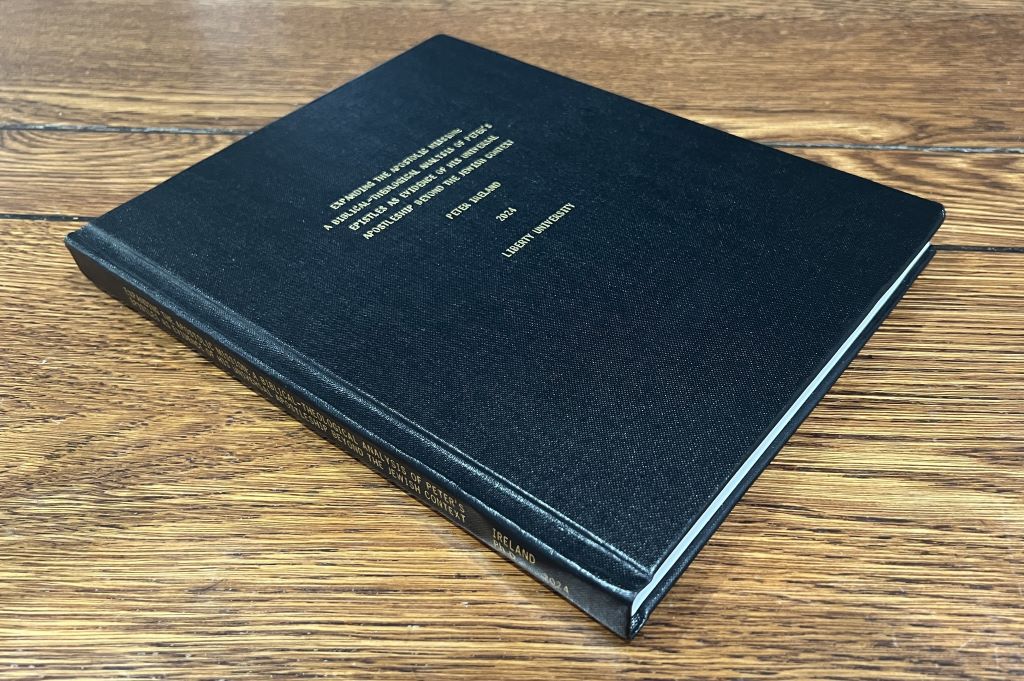
My dissertation’s full title is
Expanding the Apostolic Mission:
A Biblical-Theological Analysis of Peter’s Epistles as Evidence of His Universal Apostleship Beyond the Jewish Context
which is quite a mouthful! I like the short title “Peter: Apostle to the Gentiles,” intending to appear to contradict Paul in Galatians 2 though I argue that there is no contradiction. The abstract is below. I welcome discussing topics relevant to this, including Judaism’s approach to non-Jews, anything to do with the Apostle Peter, the Petrine Epistles, or foreigners, and using a biblical author’s background to provide insight into his writings. Just leave a comment or send me a message!
The dissertation is available for anyone to download from Liberty University’s library at https://digitalcommons.liberty.edu/doctoral/5545/. At the end of 2025, it has had 1,701 downloads since May 2024, which is very surprising. I wonder how many of those are bots! It is also in ProQuest Dissertations at https://www.proquest.com/docview/3190439555.
ABSTRACT
Paul’s designation of Peter as the apostle to the Jews suggests that Peter’s mission was restricted and impacts the interpretation of his Epistles. Scholarly neglect of Peter and critical scholarship’s rejection of the Petrine Epistles’ authenticity result in the underutilization of the context of Peter’s complete life in the analysis of the Petrine Epistles. However, categorizing Peter as always being the apostle to the Jews does not fit the rest of the biblical evidence.
Using a biblical-theological approach to the biblical texts supplemented by extrabiblical evidence to understand the biblical authors’ contexts while considering the passage of time, this dissertation argues that the Petrine Epistles reveal a lack of Jewish ethno-religious preference in Peter’s mission at the end of his life. Paul’s identification that Peter was an apostle to the Jews was accurate for the period immediately after Jesus’s ascension. However, Peter’s baptism of Cornelius (Acts 10:44–48) and his defense of non-Jew inclusion in the Christian community (Acts 11:15–17 and Acts 15:7–11) indicate a change in Peter’s understanding. The Petrine Epistles, which represent Peter whether authored by him or pseudepigraphical, confirm Peter’s universal approach to Christianity by the lack of Jewish ethno-religious preference.
What Has Happened Since? (added January 2026)
As the two-year mark since my graduation approaches, I have added this section to share what I have done with my PhD.
- Dissertation Publication. I found the process with publishing houses frustrating. I approached a few. T&T Clark were the only one that responded and showed initial interest. I agreed to exclusivity while they did their scholarly review. After several months, their scholar rejected it. I believe this publishing house is more on the liberal end of the publishing spectrum and they did not like my evangelical position. By this stage, my interests had moved on. Also, I fear I am at the stage in life where I avoid putting a bunch of effort into something that might get rejected. I would still like to publish my dissertation as I think it adds value and publication would increase its reach. If anyone could help me find the right publisher, I would be most appreciative!
- Visiting Biblical Sites. Since graduating, visits to biblical sites in Greece and Rome have been greatly enhanced by the knowledge from my studies. Our family had visited Israel in December 2018, before I had started my studies, and I felt quite ignorant. In October 2024, Janet and I retraced Paul’s journeys in Greece. We joined a group of students and graduates from the PhD program, led by Drs Laird and Fuhr. The learnings from the Ph.D. program helped me research the sites and increased my appreciation and understanding of the information provided by our guide and Dr Laird. On the way to Greece, we visited the Museum of the Bible in Washington, D.C., which my education made much more rewarding. On a family trip to Italy in May 2025, I spent some time exploring Rome’s biblical sites. With a couple of carefully-selected guidebooks, I was able to gain as much insight as I wanted into the sights. The books also helped me navigate the challenges of Rome’s architectural timeline and the influence of the Roman Catholic tradition. A visit to Turkey remains on our bucket list.
- Confident Participation in Bible Discussions. As I shared at the beginning of this blog, a motivation for my education journey was to understand what my Bible study teachers were saying, and I am very happy to be able to do so! I enjoy small group studies and discussions, either as a leader or active participant. I particularly enjoy validating arguments, researching difficult questions, or digging into a topic until I find a new, fascinating nugget. It is a blessing that graduates retain their access to Liberty University’s library.
- Mentoring. I mentioned above that my first formal Bible education had been a Perspectives class. As I had completed that class with a certificate, I was eligible to return as a grader/mentor, helping students take the class. I started this role at the beginning of 2026. I find it fulfilling to give constructive feedback to others while continuing to learn from the material and others, and have looked for other mentoring opportunities
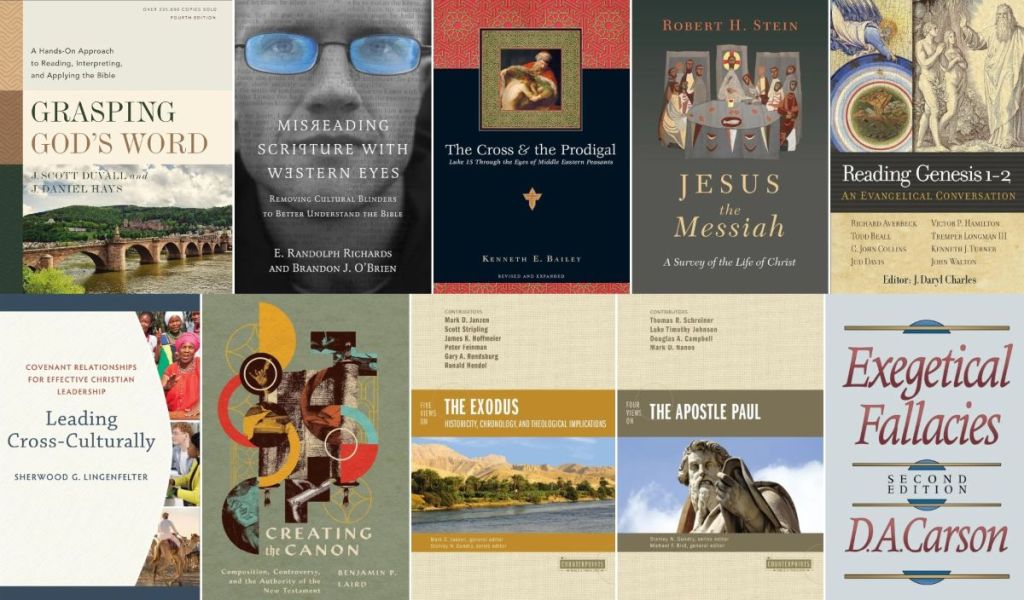
- Blog. While blogging about adventures on this website, I often had a yearning to blog about the Bible. After about a year mulling over ideas, I launched “The Bible and I” at the beginning of 2026. I wish to share nuggets that will help others study the Bible. My goal is to post one blog each week. I started with a series exploring the Bible’s transmission and translation. I also wrote a post about the ten books that I recommend for learning more about the Bible (graphic below).
What next? I look forward to continuing to participate in Bible discussions and mentoring in Perspectives. Such activities benefit me more than I expected. I hope I can help others, and I look forward to mentoring more. I have several ideas for my blog, from book reviews to a series about Peter in which I will leverage my dissertation’s research. As I immerse myself in these activities, I feel a peace that I am where God wants me to be. I anticipate that these activities might lead to others, but I will see what doors God opens. Even though my previous attempts to help in disaster relief hit closed doors, I am making myself available and will see where that goes. Finally, we need to plan our trip to Turkey!
The key theme of the Perspective course’s first class is that God blessed the Israelites so that they could be a blessing to other nations. God has certainly blessed me, and I believe that I have a joyous responsibility to bless others through sharing the Gospel and helping those in need.
If you want to see a YouTube review of this Bible Exposition program, checkout James Davidian’s video here.
 The Adventures of the Cajunlimeys
Wow, is all that I can say! As I read through the workload of studies you took on the past few years my eye started twitching. You worked so hard, never giving up. What an inspiration. May God bless you as you seek to share this new found biblical knowledge with others. I’m excited to see what the Lord has planned for you. Congratulations Dr. Ireland …….you did it!!!!!!!!!!!!
LikeLiked by 1 person
Peter, I really enjoyed reading this. I
LikeLiked by 1 person
Congratulations on all of your hard work! What an accomplishment! Thank you for sharing your journey with us. I am applying to the M.A.T.S, so all of your insight was very helpful! I
LikeLiked by 1 person
Ashley,
I am glad you found it helpful. The MATS was a great steppingstone onto the PhD program. Also, if you have any questions about the MATS or BEx PhD, don’t hesitate to ask.
Peter
LikeLike
Thank you so much, Peter! I would appreciate your input so much regarding my first 8 week course load of I’m accepted into the program. I am thinking of taking the RTCH 500 and New Testament Orientation I together. I do have a family, so I don’t want to be overwhelmed, however, it seems these two courses would go well together workload wise. Any feedback you may have would be so appreciated!
LikeLiked by 1 person
Ashley,
It is wise to see how the workload goes with your specific circumstances as each one is different. I started with one class per B and D term but ramped up once I realized I could do concurrent classes. Having the fourth and fifth class in a semester “free” (because of the block rate) is attractive if you can do concurrent classes. However, my very specific circumstances gave me the opportunity to do more classes, and I recommend against it. (I’ve updated the blog post with a section on taking classes concurrently.)
I found RTCH500 to be quite a light class. There are many small assignments which spreads the load throughout the eight weeks. I also found NBST515 relatively light with a robust textbook and the reading assignments including half of the NT. For some, the biggest learning curve is writing in Turabian. Most classes have their biggest assignment in week 7, and if that clashes with other commitments, you might be able to work ahead. Classes typically have discussion boards where you post and need to reply to a couple of other people’s posts, which makes it more difficult to complete early but a response isn’t as challenging as the initial post or a paper.
One option with many classes is to stagger them across 3 terms in a semester: B, C, and D. While C overlaps with B and D, it means you spread out the load, especially the significant week 7 paper. I did the RTCH class in a C term. Not every class is offered in the “C” term. It seems OBST, NBST, THEO, and RTCH are but not APOL. It might also be different in the summer semester. I think I preferred not to stagger though and just prepared myself well for the week 7 crunch.
I found the heaviest classes in MATS to be the OBST and THEO classes. The OBST classes were heavy because of the need to read 1/2 the OT in each class, along with associated textbooks. Valuable, just lots of reading. I also found the THEO classes heavy, but I was new to systematic theology. Again, there is a robust textbook but my THEO professors were some of the most demanding (and hence I learned the most). Note, for my elective courses, I chose NBST520 and OBST520 to complete the survey of the Bible, and a NGRK505 class as an intro to Greek and because it transferred to the PhD program.
If you would like to email me at pireland3@liberty.edu, I can email you a couple of things that might help.
Peter
LikeLike
Hi Peter! I just wanted to follow up to thank you for all of your valuable advice. I went with the writing and NT course to start (I began both classes this past Monday) and so far it has been such a blessing. I sure do appreciate your willingness to share your experience. It boosted my confidence and I am even thinking about maybe continuing on to a PhD, following your same path, because of how rich my experience has already been. Thank you so much again. Coming across your website was God ordained.
LikeLiked by 1 person
Great! I am so glad this was able to help and encourage.
LikeLike
Hello Peter,
This is great! I read through much but then had to skim the rest until I have time to finish reading. But my biggest question is, and forgive me if it’s addressed above, what is the difference between biblical exposition and biblical theology? Does one offer more college teaching opportunities than the other?
Thank you,
Joel
LikeLike
Joel,
I am unable to provide feedback on college teaching opportunities as it is not anything I have experience with. To compare PhD programs, my suggestion is to look at the courses included each the program. LU’s Bible exposition program focuses on the Bible’s meaning using hermeneutics and exegesis. The courses included illustrate how it leverages context/background to help identify authorial intent of each section of the Bible. I understand biblical theology to be what the Bible tells us about God and it has a more topical approach. While Bible exposition and biblical theology overlap and might end up in the same place, Bible exposition starts with the Bible’s text while biblical theology would start with a subject and identify what the Bible tells you about that subject. When it comes to writing the dissertation, the difference becomes less relevant as you use the academic tools you have learned to argue your thesis, which might be about what a passage of the Bible means, or what the Bible says on a particular subject. Hope that helps!
Peter
LikeLike
Thank you Peter. This is very encouraging. I am on that road at the moment. I am planning to start the program this summer.
LikeLiked by 1 person
Cool.
LikeLike
Peter, thank you for writing up your experience, it was helpful. Would you be willing to email me a few syllabi so that I can see the work load? Preferably, the two classes in one semester, so that I may judge my ability to handle the workload. Thanks, brother. burmabill07@gmail.com
LikeLike