
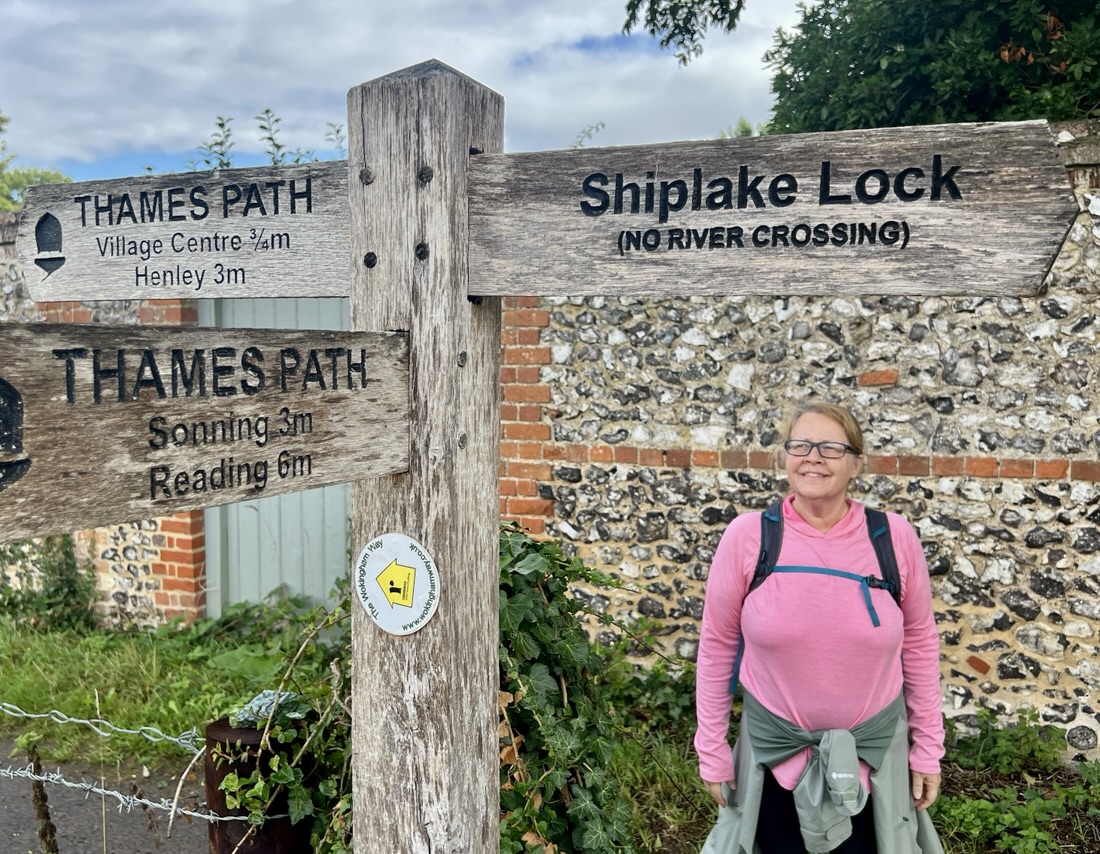
We enjoyed a fine day along the river, sampling the quaintness of Sonning and the history of Henley, with a few light rain showers separated by sunny spells. The Thames was cool, from a swan’s runway to the biggest weir I’ve ever seen. A couple of diversions contributed to the 14.3 mile day but added some great variety to a fulfilling second day.
We both slept very well at the Market House. The bar downstairs was hopping, but our bedroom was well soundproofed. In the morning, we fixed our coffees and breakfasts in the room and headed out shortly after 8am.

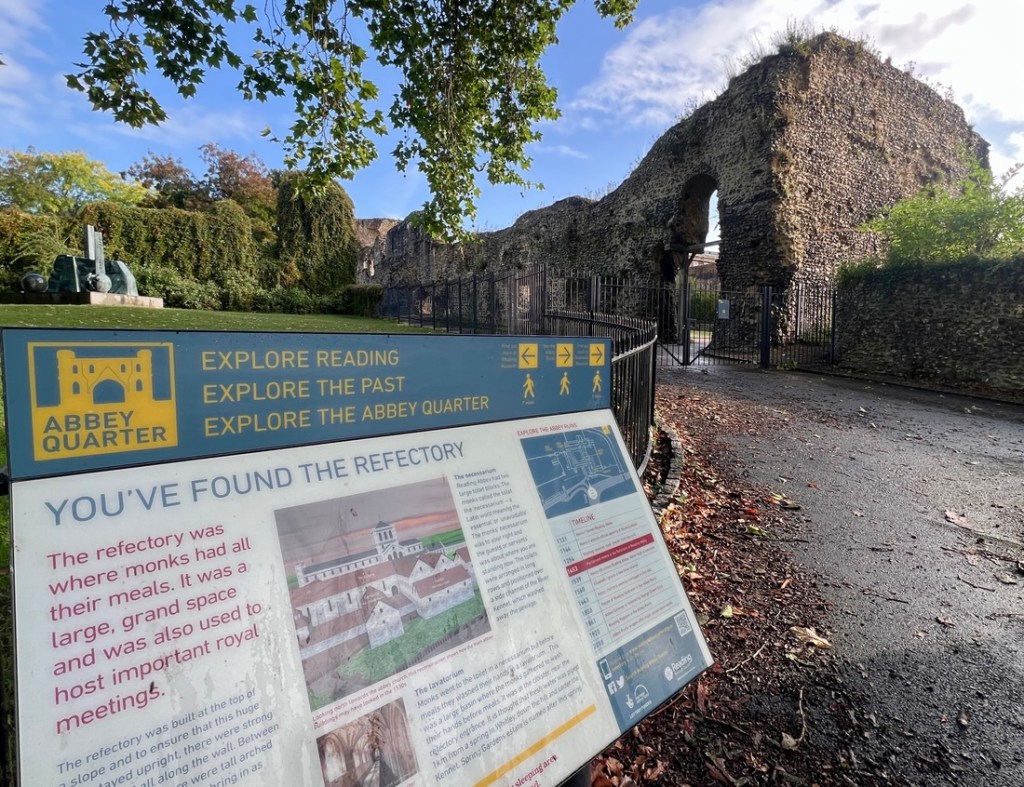
We were soon walking past Reading’s Abbey, which honestly we found a little underwhelming.
While still in Reading, we walked along the last half mile of the Kennet and Avon canal, joining lots of kids walking to school with their parents. In July, we’d spent three nights on a narrowboat at the other end of this canal near Bath.


Soon, the canal ended when it ran into the River Thames. While we could not see the river or canal move, we remembered that these were rivers, and hence flowing!
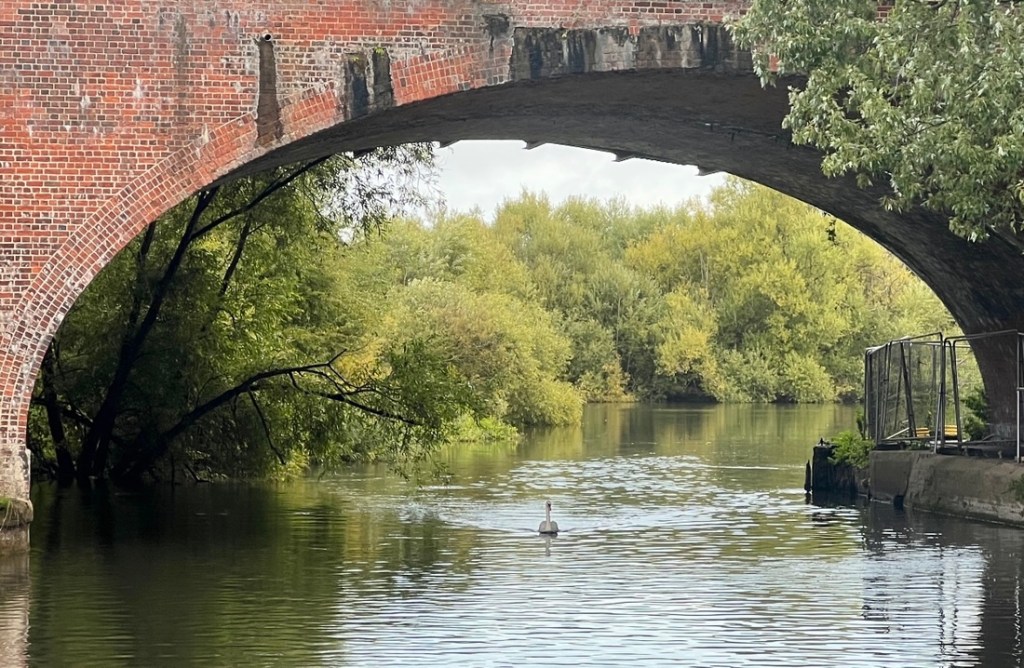
It was fun being back by the Thames. A sign confirmed we were on the path, and we were soon out of Reading and back into nature.


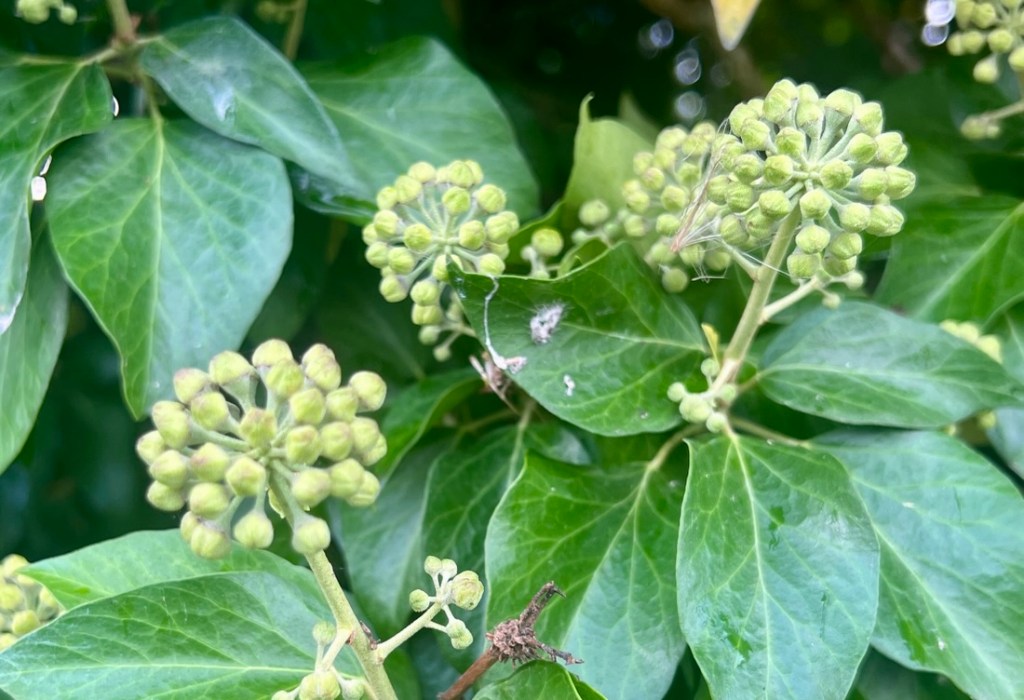

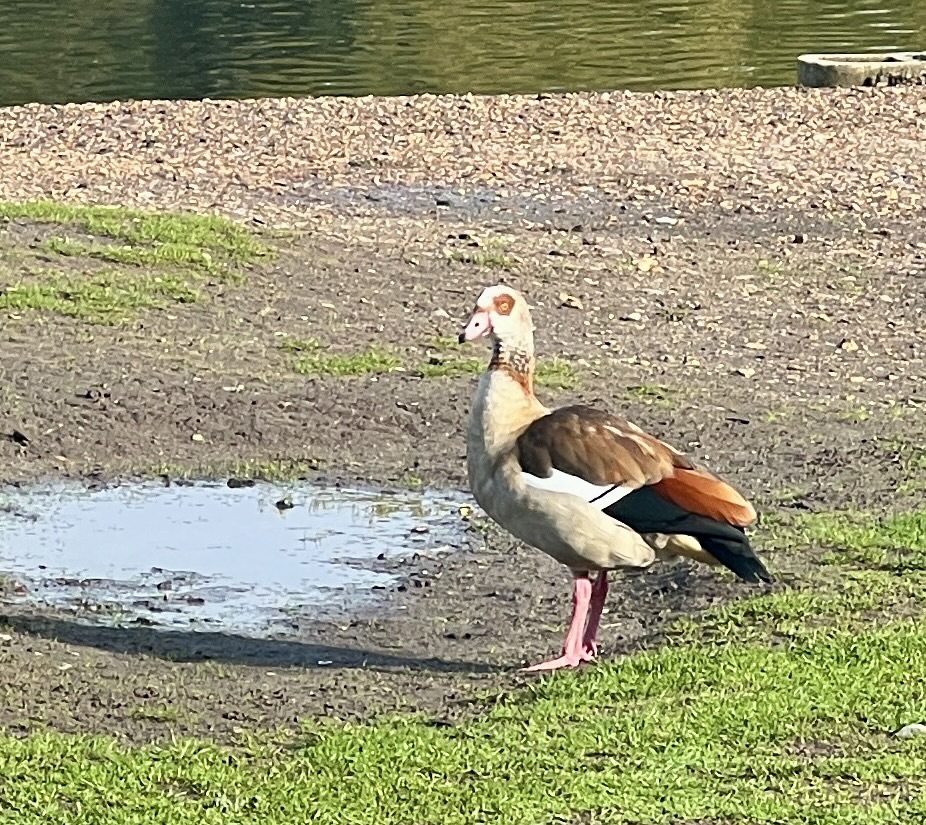

The Thames Valley Park provided a fun variety of walking environments on the short walk from Reading to Sonning.

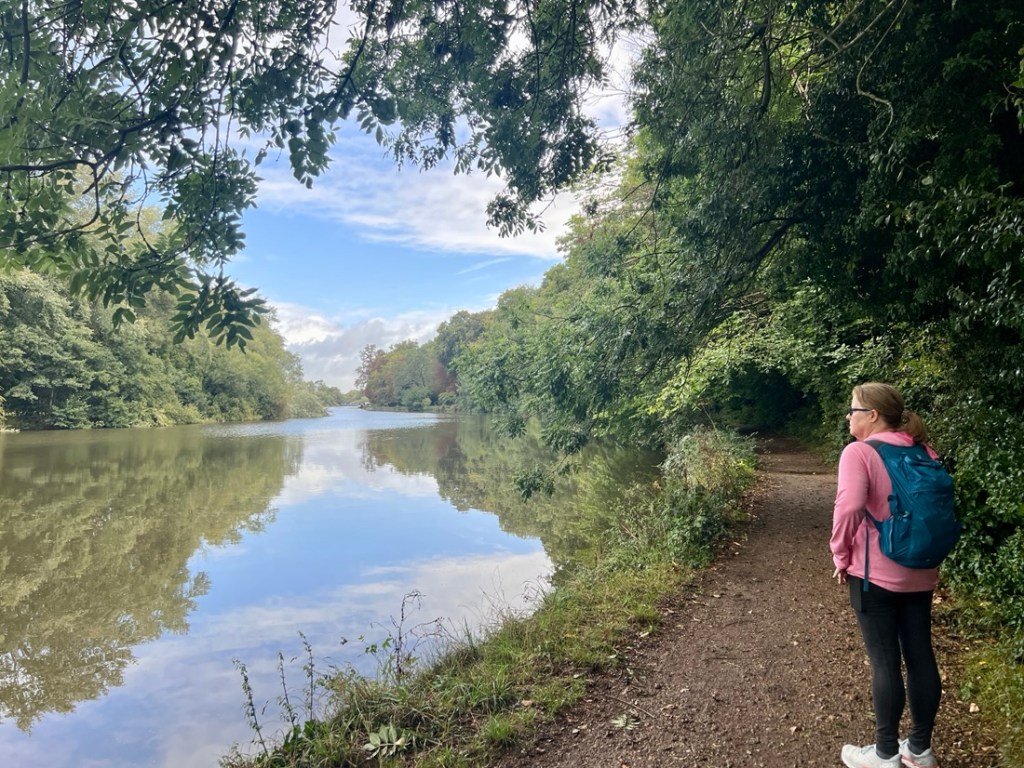
Sonning village dates from the 13th Century, and its lock marked our arrival.


We crossed the Thames for the first time as that’s where the path took us.

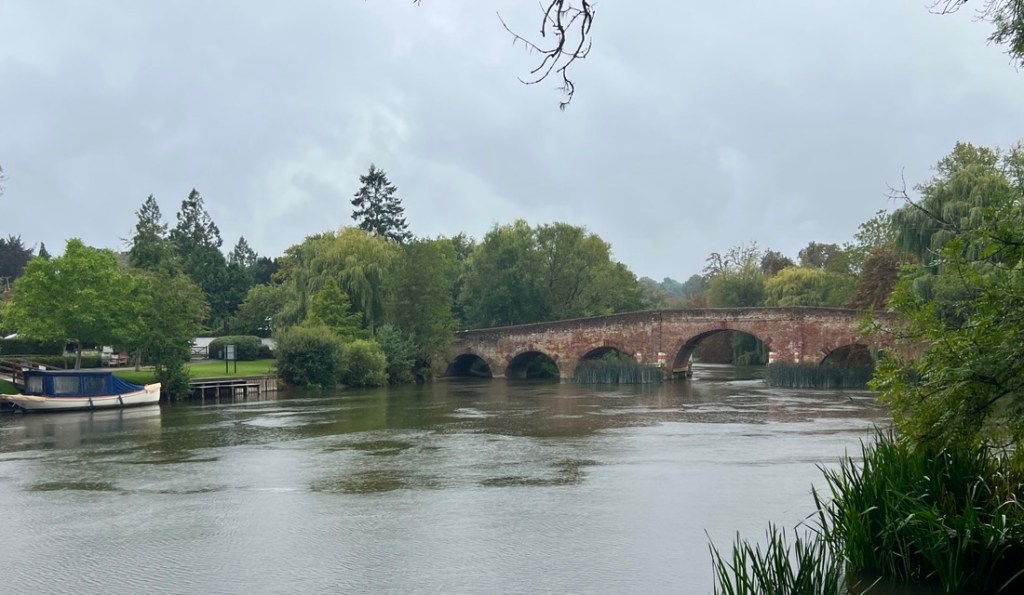
Our stroll after Sonning felt very much in the country. A few boats were moored, but often barely accessible from the tow path. We passed a field full of sheep that was about a mile long.


Hunger pangs called and we found the perfect park bench next to Shiplake College’s boat house to eat biscuits and apples.

The trail to Shiplake took us past some cows.

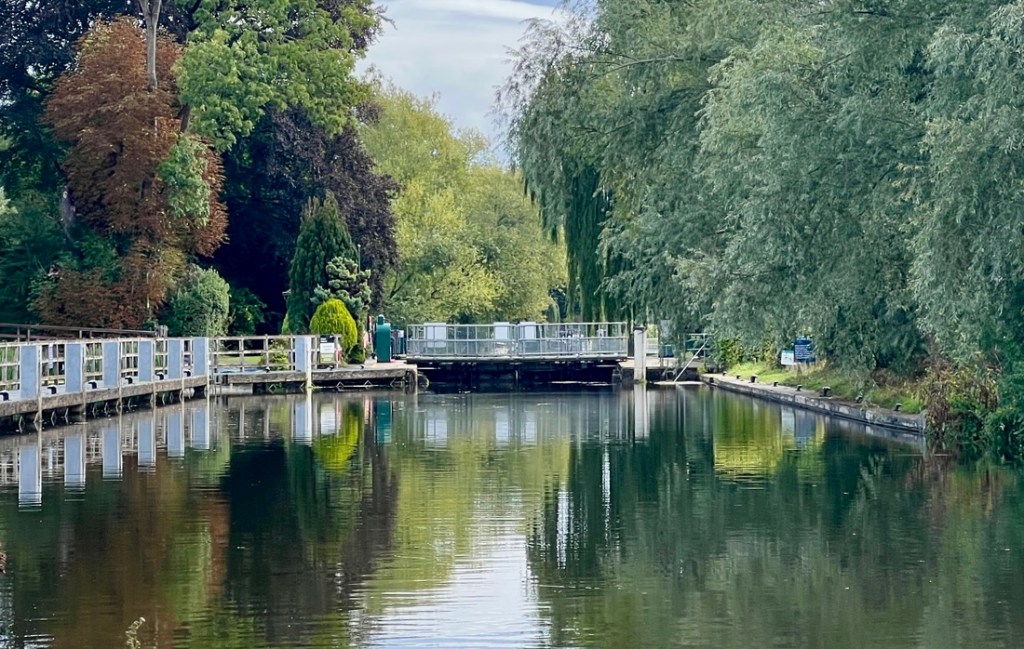

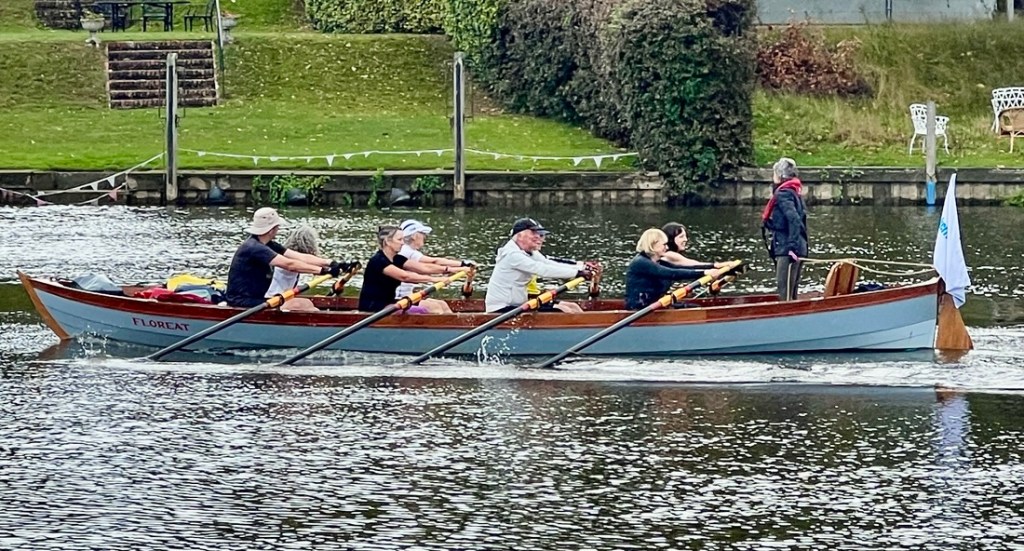
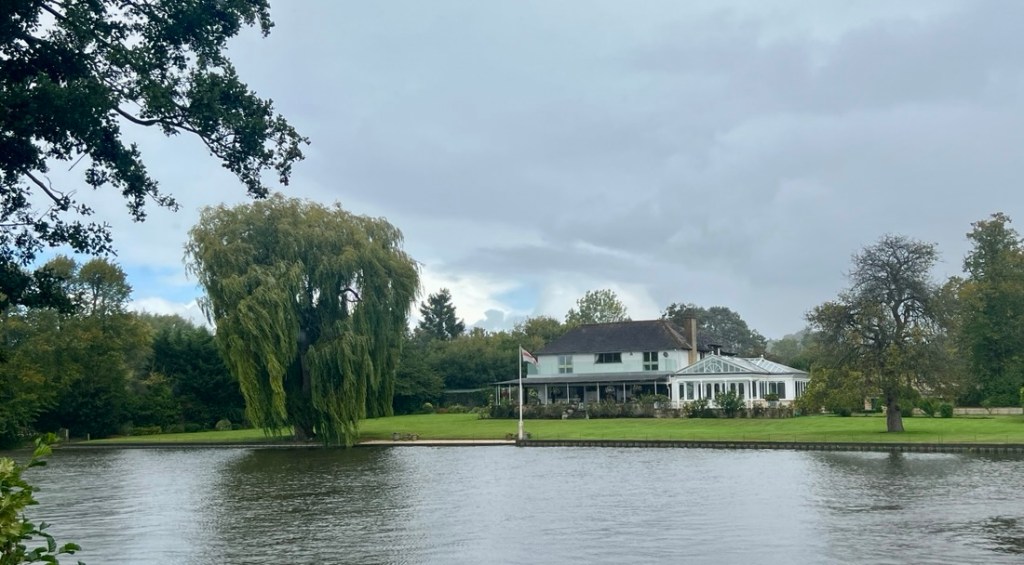
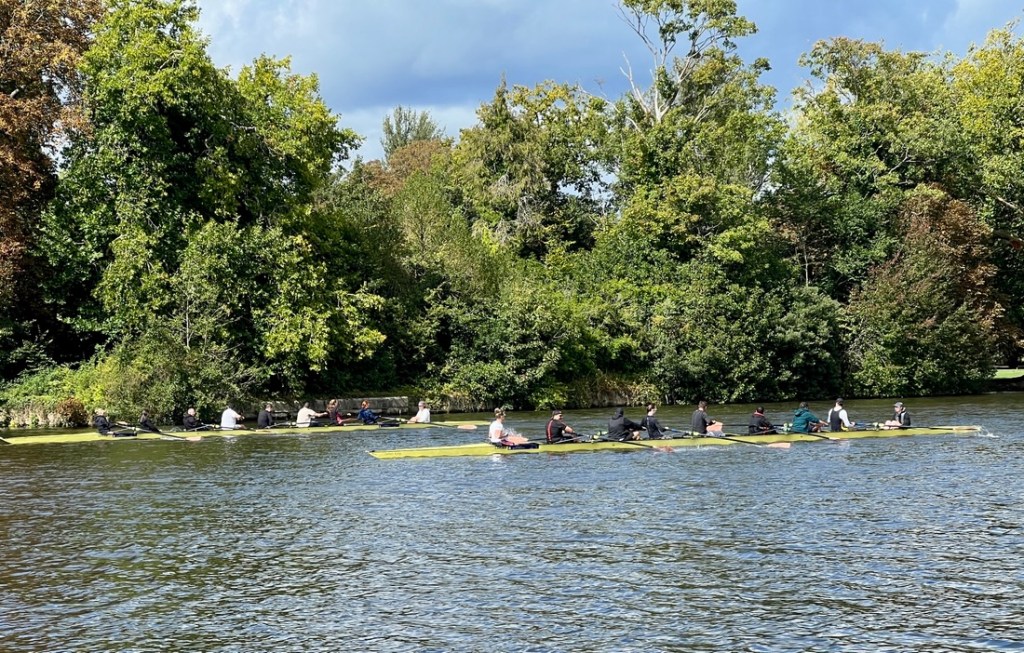
The path found its way back to the river on a big bend opposite Wargrave. Everything was well groomed and we saw our first rowers.

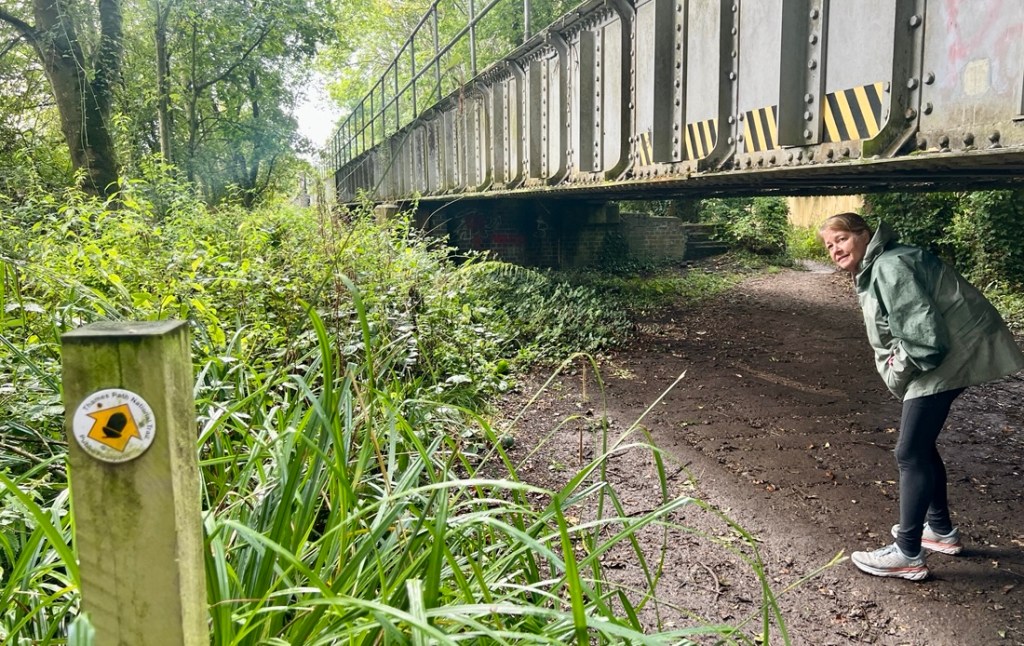
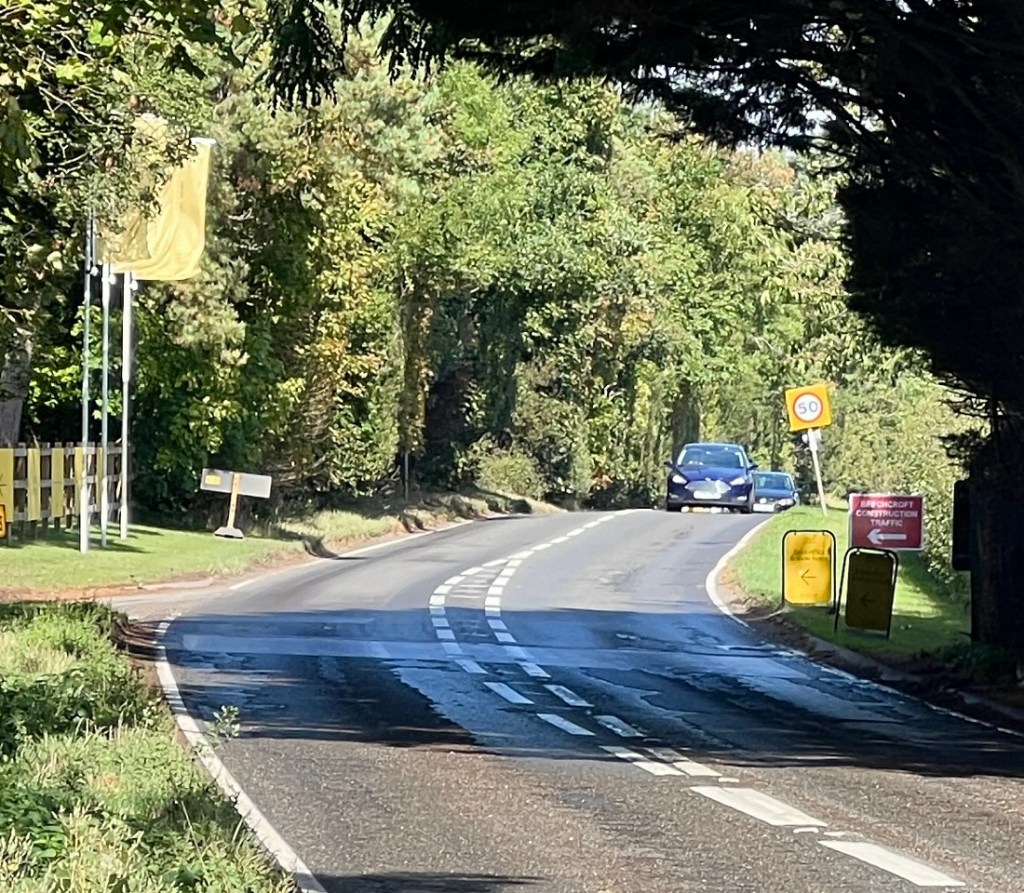
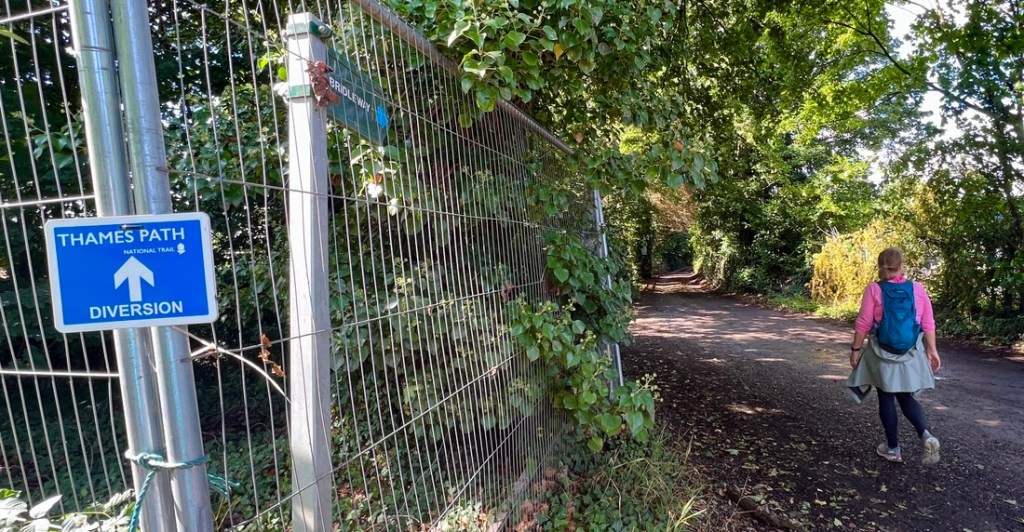
Unfortunately, the trail along the river past Shiplake was closed because of a bridge was unsafe. The diversion took us away from the river but the change in scenery helped the extra mile pass quickly.
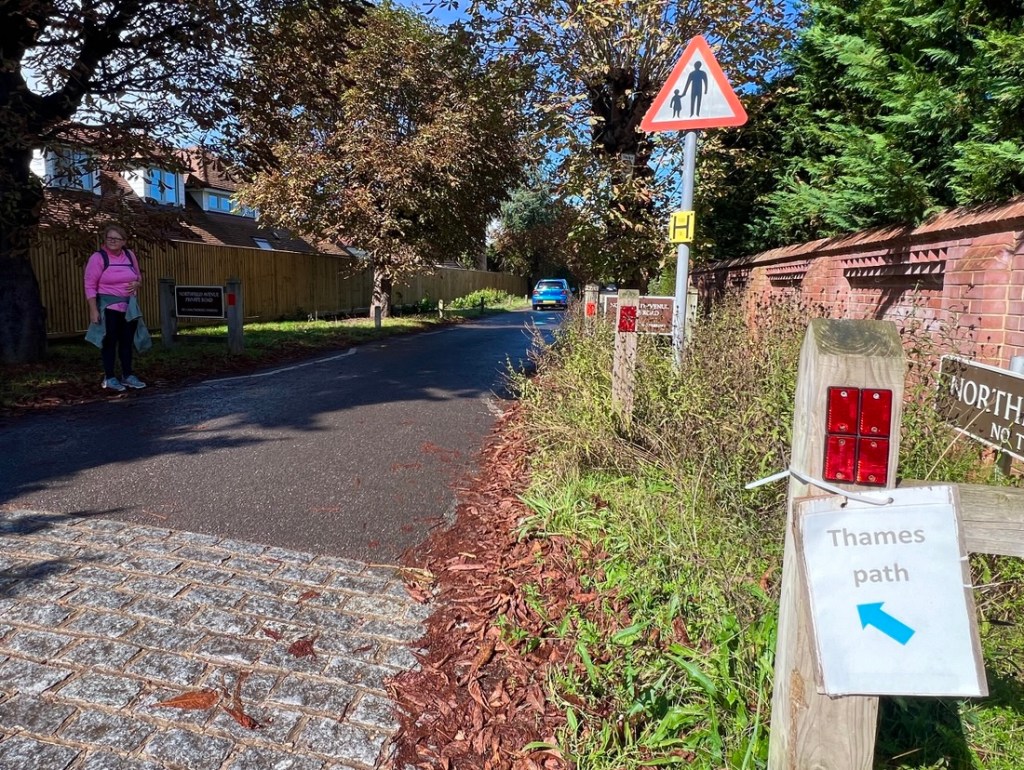


We were very happy to enter the quaint town of Henley-on-Thames.


We enjoyed fine sandwiches for lunch at Daisy Love Cafe before taking Henley Bridge back over the Thames. The bridge is the finishing point for the rowing races held at Henley since 1839.

After the bridge, it was a fine walk along the river past where the rowing boats race: the Henley Reach.
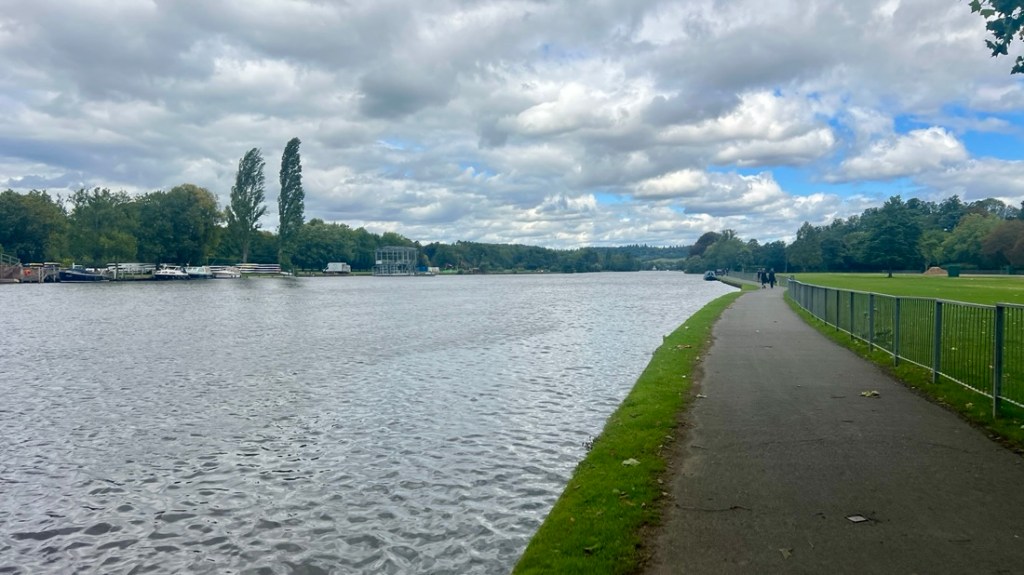

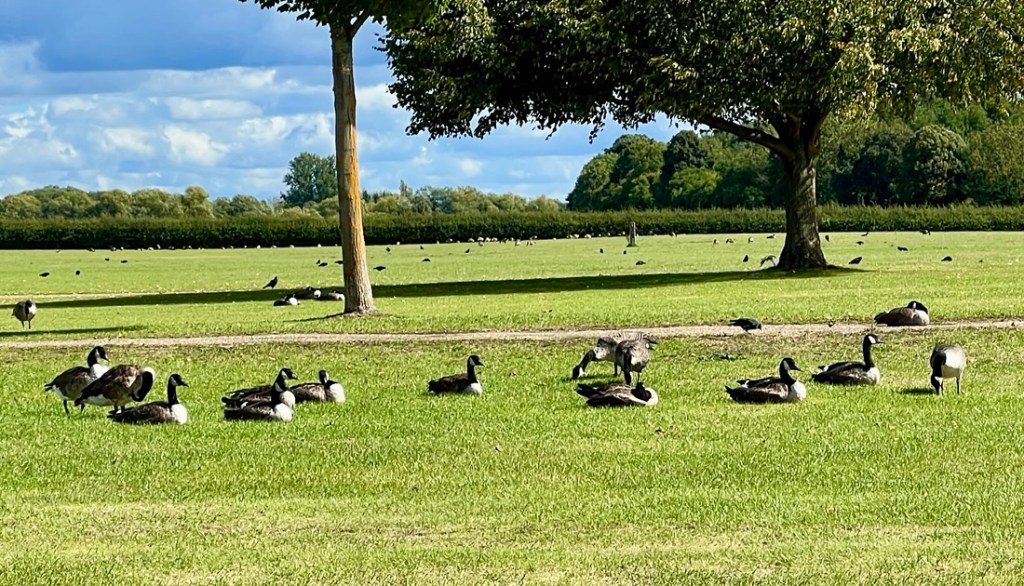
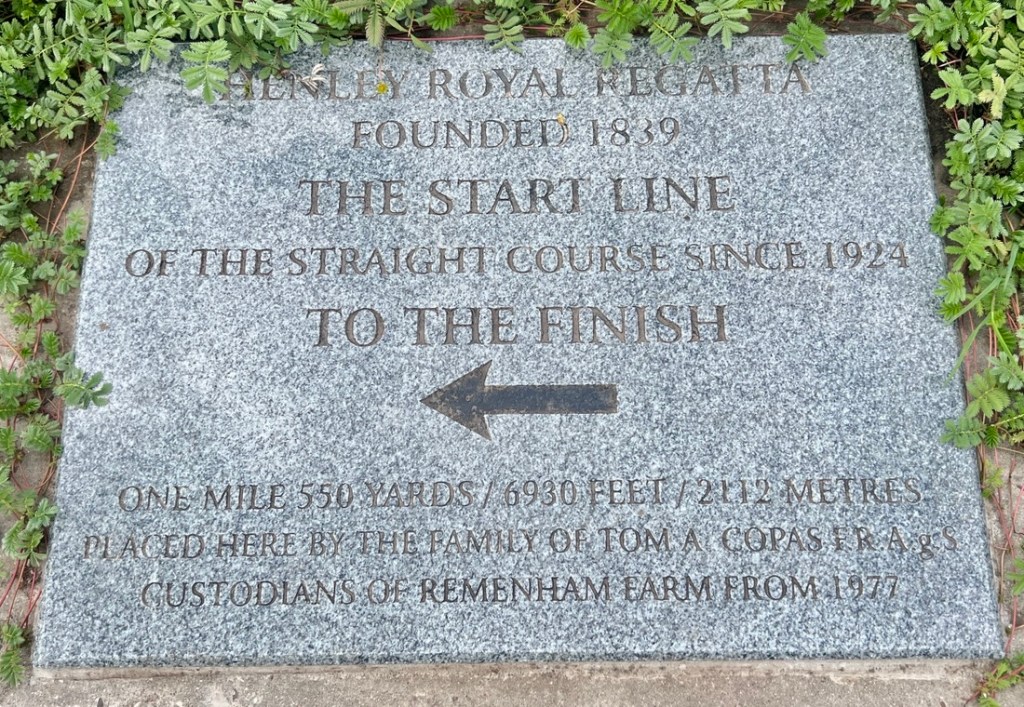
Just over a mile later, we came to the commemorative stone marking where the regatta races start. It marks the beginning of the longest straight section of the Thames.

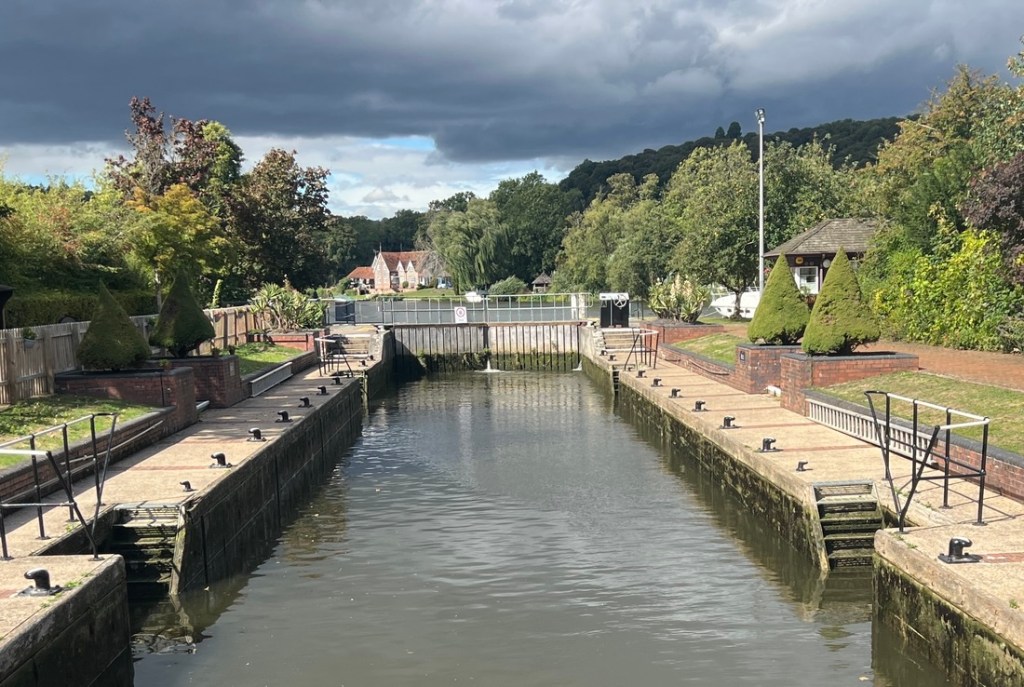
After walking a bit further, we reached Hambledon Lock, which was the starting point of the first Oxford Cambridge Boat Race in 1829.

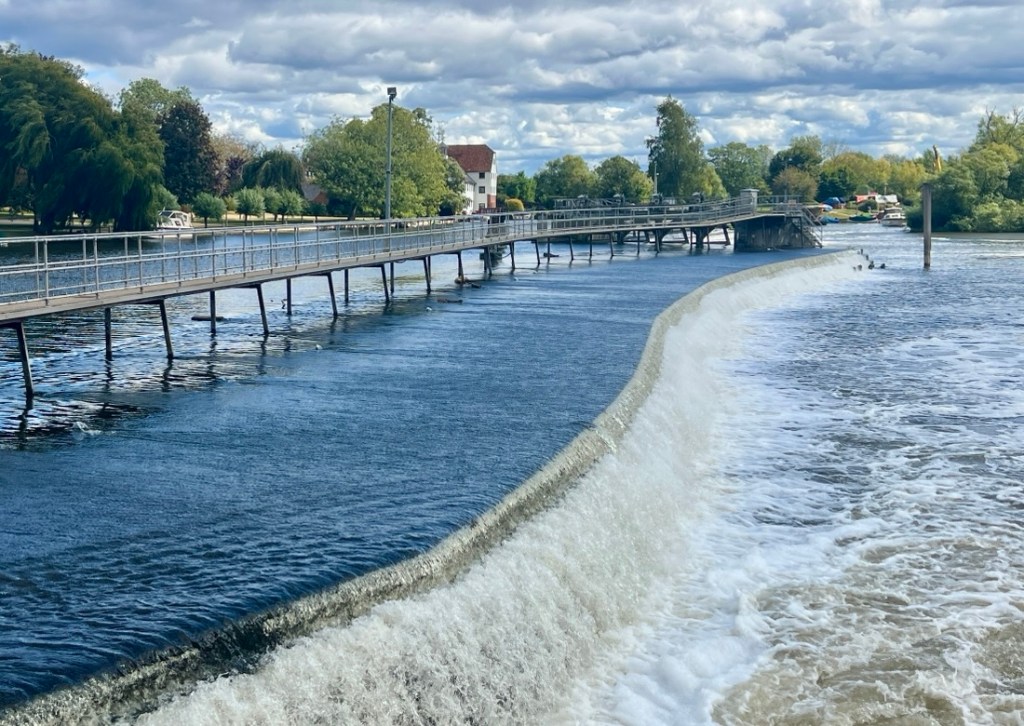
Hambledon Lock has a huge weir with a walkway over it. For the first time, I could feel the strength of the River Thames.
It was only about 1/2 mile from here to our hotel – The Flowerpot in Aston, but the threat of rain made us hurry.
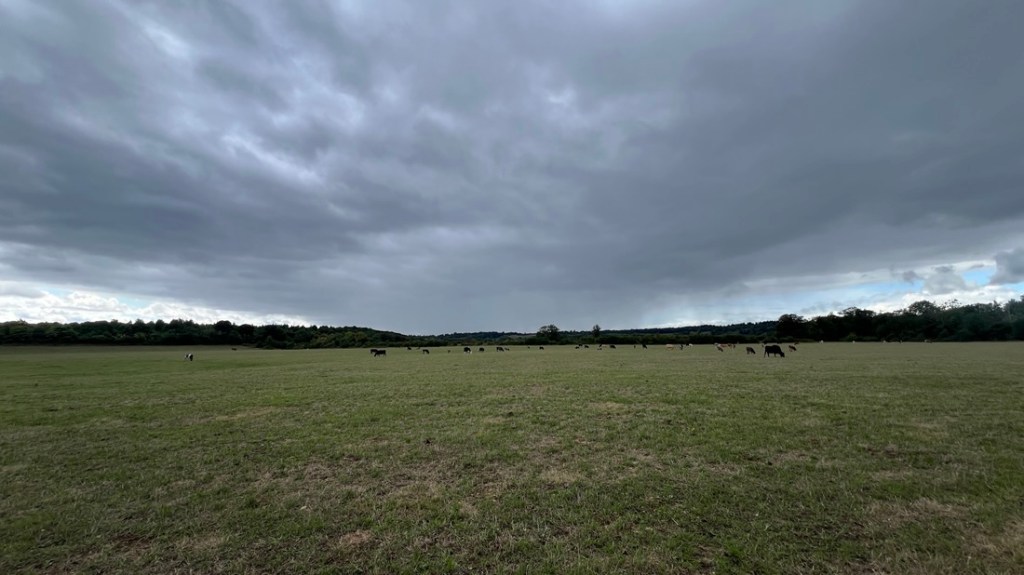

We had beaten our luggage, but we were happy to just relax in our room. We were the only customers for dinner in a large dining room and enjoyed gammon and eggs and fish and chips.
We had enjoyed a great variety of scenery and everything was neater in this section of the river compared to the day before. This was probably the longest walking day of the trip, but the clear flat paths make it quite easy.

Tomorrow takes us another ten miles along the river. The forecast is for fine weather, but we know not to trust that!
 The Adventures of the Cajunlimeys