
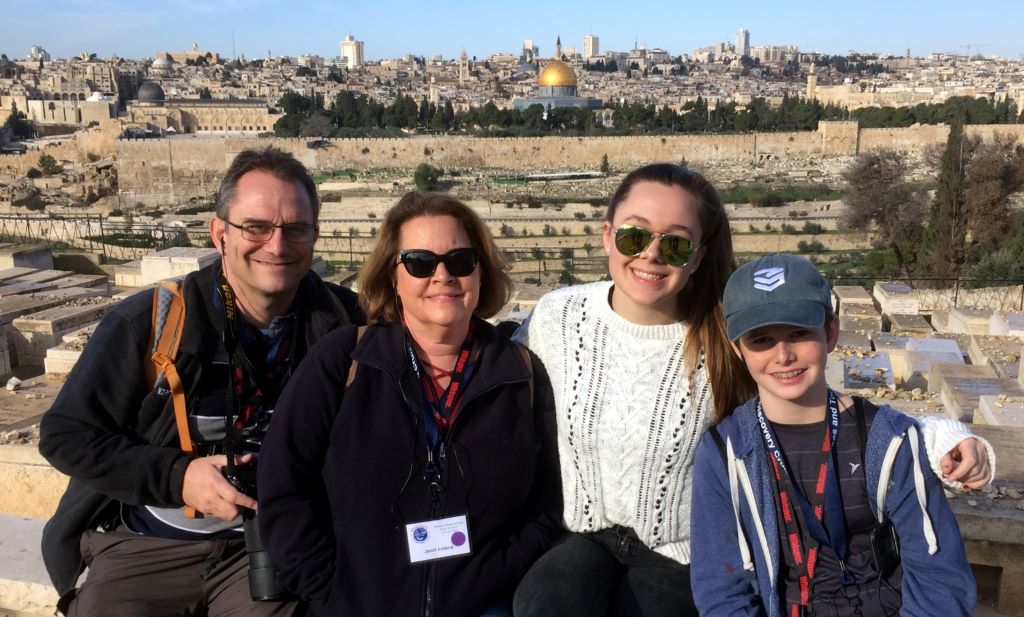
As Janet and I prepare for a trip to Greece in October 2024 to retrace the Apostle Paul’s footsteps, I write this post describing our trip to Israel to help refresh my memory. Perhaps you’ll enjoy reading it? I warn you that it was a packed trip, and this post includes many adventures.
Summary
- Day 1: Houston to Istanbul Flight
- Day 2: Istanbul to Tel Aviv Flight, Bus to Tiberias, Galilee
- Day 3: Galilee, including Mount of Beatitudes, Tabgha, Capernaum, the Galilee Boat, a boat trip, Yardenit baptismal site
- Day 4: Galilee to Jerusalem, including Nazareth, Megiddo, Mt. Carmel, Caesarea Maritima, Jerusalem
- Day 5: Mt. of Olives, Gethsemane, US Embassy, St. Anne’s Church, Via Dolorosa, Damascus Gate
- Day 6: Bethlehem and Yad Yashem
- Day 7: Jerusalem Old City, Church of the Holy Sepulcher, Western Wall, Southern Steps, City of David, Israel Museum, Garden Tomb
- Day 8: Qumran, Masada, Ein Gedi, the Dead Sea
- Day 9: David’s Tomb, the Upper Room, Peter in Gallicantu, David and Goliath Field, Friends of Zion Museum, King David Lightshow
- Day 10: Fly Home!
Reflection
A trip to Israel might be described as a pilgrimage, but what is a pilgrimage? It might be described as a sacred journey or a journey to a holy place, which depends on the traveler’s belief and faith, and in this case, the holiness of sites in Israel. Our trip was for discovery, walking in the steps of Jesus, and to understand more about biblical events by visiting their locations to improve our understanding of their contexts. We don’t view these sites as holy or sacred but respect others that do.
It was an amazing adventure to walk where Jesus, and Paul, David, Peter and many other biblical characters walked. Some sites were likely very similar to 2000+ years ago, like the Sea of Galilee or Ein Gedi. The overall geography remains the same, such as the location of the Mt. of Olives relative to Temple Mount, or the distances between Jerusalem and Bethlehem, Caesarea, Galilee, and Ein Gedi. Archaeological artifacts survive from biblical times at some sites such as Capernaum, Caesarea, Megiddo, and Jerusalem. Qumran and Masada were more historical than biblical and were among the most interesting sites we visited. The Garden Tomb attempts to create an environment that was similar to biblical times.
Three points complement the above understanding of biblical context. First, as should be expected, there is significant uncertainty about most key biblical locations. At many sites, there is a relatively modern building claiming to be the location of anything from the rock where Jesus wept, cooked breakfast, or was born or crucified. The confidence of these claims was often not linked with their veracity and the challenge of historicity is something I have since learned much more about in my formal studies.
The second point is the continuing tension and conflict throughout these lands, emphasized by current events as I write this, with Israel entering Lebanon and Iran sending missiles at Israel yesterday. While there has been so much tension since the formation of the nation of Israel in 1948, the Six-Day War in 1967, and the continuing struggles with the Palestinians, similar tensions have been present in this part of the world since the earliest biblical times. Differences are expected between Jews and Muslims, or between different countries, yet the squabbling between the Christian denominations over control of the Church of the Holy Sepulcher highlights the sinful nature of mankind.
The third point is how biblical sites have been adorned in the name of religion. We found the Church of the Nativity in Bethlehem at the traditional site of Jesus’s birth, and the Church of the Holy Sepulcher at the traditional (and disputed) site of Jesus’s crucifixion and burial, to be quite gaudy and lacking the humility we associate with Jesus. This is a difference in approach by denominations and I need to be careful not to fall foul of the “squabbling” that I am critical of above.
Complementing the discovery of biblical context is the question of Israel’s role in the future and whether the Bible predicts a restoration of the nation. My biblical studies taught me about the debate around whether the promises to Israel in the Old Testament (e.g. Abrahamic Covenant, Genesis 12:1–7) remain as promises to Israel or whether what Christ’s achievement through his resurrection means such promises apply typologically to His church. Here is an academic discussion that I wrote on this topic during my studies. Some Christians use the first position to argue that they are obliged to help Israel as unfulfilled biblical prophecies remain. Others support Israel for different reasons. I am unconvinced by the arguments that the Bible predicts the restoration of the nation of Israel and am primarily saddened by the ongoing conflict and current human suffering of so many innocent bystanders. The murder of nearly 5 million Jews in the Holocaust demonstrates the evil that mankind is capable of. I do not have solutions to offer other than trusting in the Lord (Proverbs 3:5–6; Isaiah 55:8–9)!
Planning
We immediately decided that we wanted to join our church’s trip to Israel when they announced it in April 2018. Visiting Israel was on our bucket list, but we hadn’t considered how we would undertake a trip. Looking back, we were blessed by the timing as we visited during a period of stability, before COVID, and at good ages for our kids (14 and 15). Indeed, in the Q&A from the tour operator, they stated, “Israel is the safest country in the world with less crime per capita than any place.”
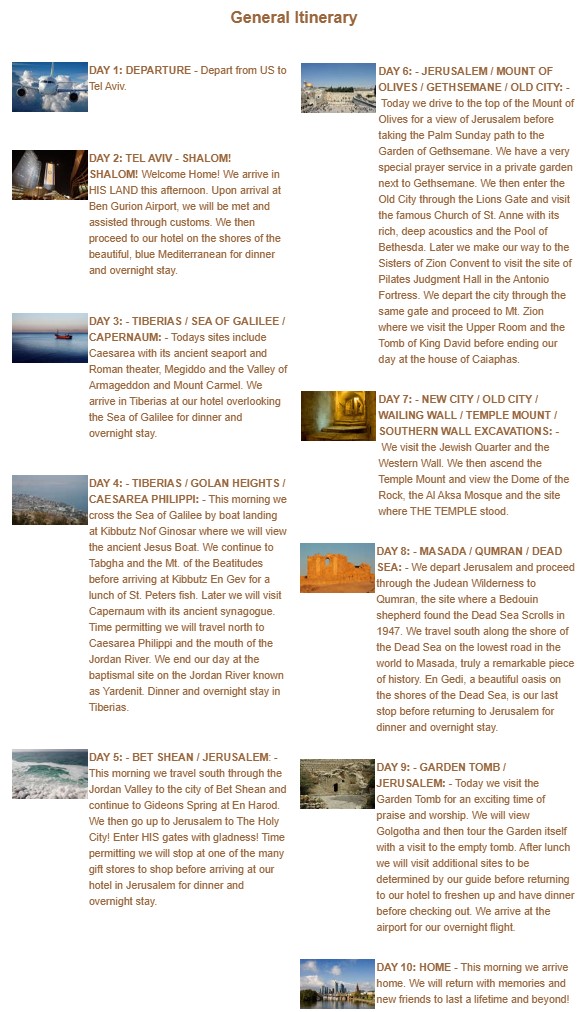
Our church partnered with the tour operator Discovery Cruises and Tours who have lots of experience in leading such trips. They provided the following general itinerary:
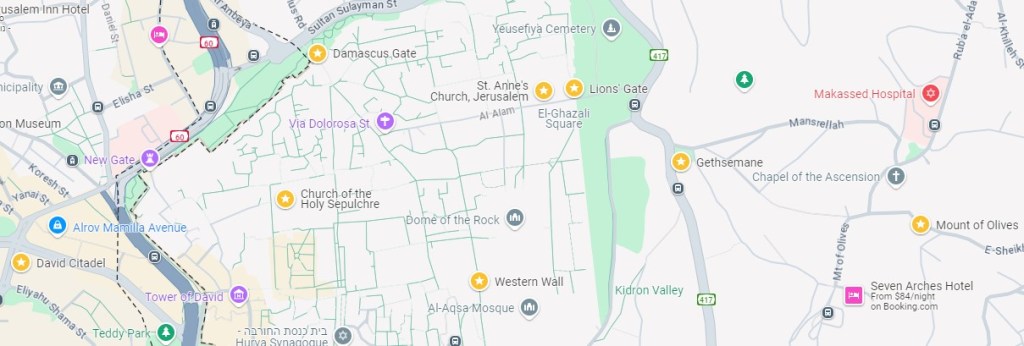
I tried to do my own research in preparation for the tour using The Holy Land for Christian Travelers by John A. Beck and The Christian Traveler’s Guide to the Holy Land by Charles H. Dyer and Gregory A. Hatteberg. I also bought the Lonely Planet guide to Israel and the Palestinian Territories and sought input from a Jewish colleague at work who had recently visited Israel. Such research was generally unsatisfying because it was difficult to process so much information and history alongside the contemporary disputes. With work pressure and knowing we were on a guided tour, the incentive to prepare was low. However, I put our likely destinations on a Google map so I could get my head around where we were going. This emphasized how many places we were going to visit. Note the area in the middle labelled “West Bank” which our bus had to avoid for security reasons and reminds me of the reluctance of Jews to travel through Samaria around the time of Jesus. However, unlike Jesus and the disciples, we did not cross on the eastern side of the Jordan which is now part of Syria.
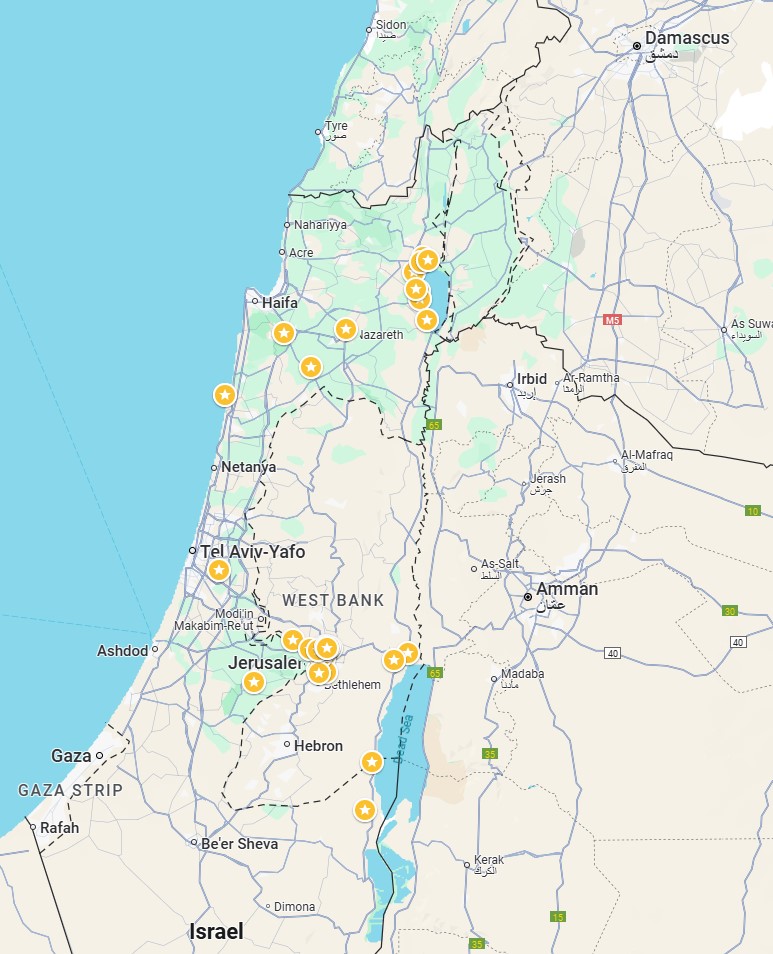
In summary, we were to spend two nights with one full day in Galilee, one day transferring to Jerusalem via Nazareth, Megiddo, Mt. Carmel, and Caesarea, and six nights in Jerusalem.
Day 1: Houston to Istanbul Flight
The tour operator organized our flights on Turkish Airlines, with the first leg a long 11hr 40min overnight flight to Istanbul. The only thing I remember about the flight was that a male passenger behind Bailey strongly objected to Bailey reclining her seat by what I considered to be an acceptable amount. The issue appeared to be associated with eating and we sorted it out.
Day 2: Istanbul to Tel Aviv Flight; Bus to Tiberias
Our transit through Istanbul was uneventful though crowded. There was a special security area for passengers traveling to Tel Aviv. I fell afoul of cultural differences when I placed my removed shoes on a table for inspection and was immediately chastised for placing shoes on a table. For most of the ten-day trip, we were in our tour-group bubble so were less directly exposed to local culture. Our arrival in Tel Aviv was smooth and it was exciting to see Hebrew text, not that I understood any. After an airport arrival at 9:45pm, there was little to see during the 1.5-hour transfer to our hotel in Tiberias. But we were in Israel!
Day 3: Galilee
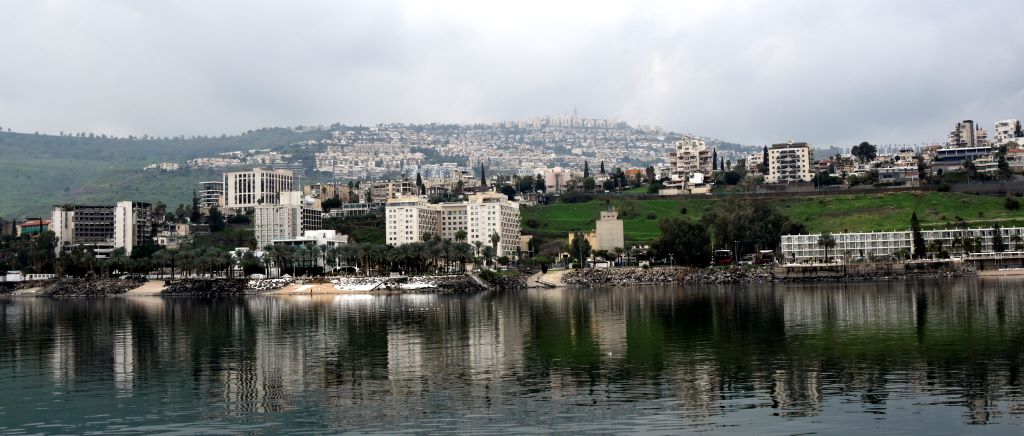
We awoke to views across the Sea of Galilee, also known as Lake Tiberias and Lake Kinneret.

Our hotel, The Lake House, catered to international tourists and Holy Land tours, and it suited our group well. Our room was at the back of the hotel and did not have a view over the lake!

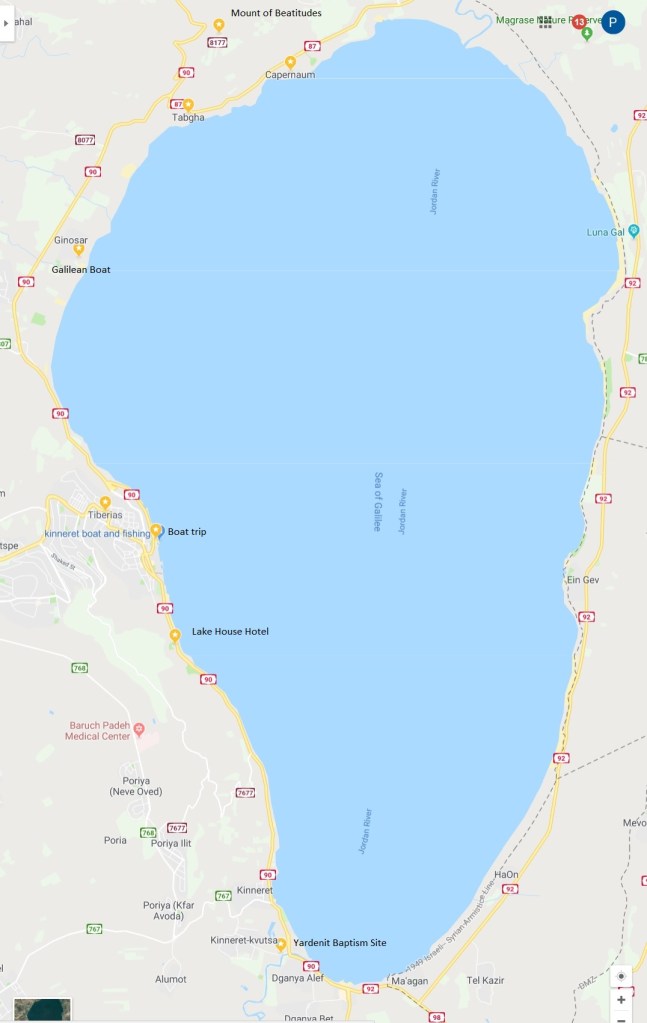
Today was about exploring Galilee and it was a packed day visiting six sites. The map shows the sites we visited though note that the length of the Sea of Galilee is just 13 miles, about a day’s walk.
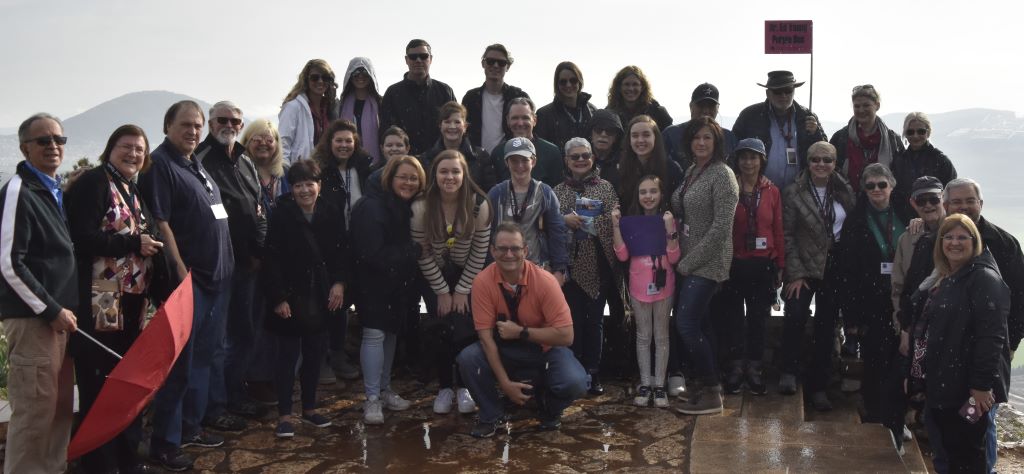
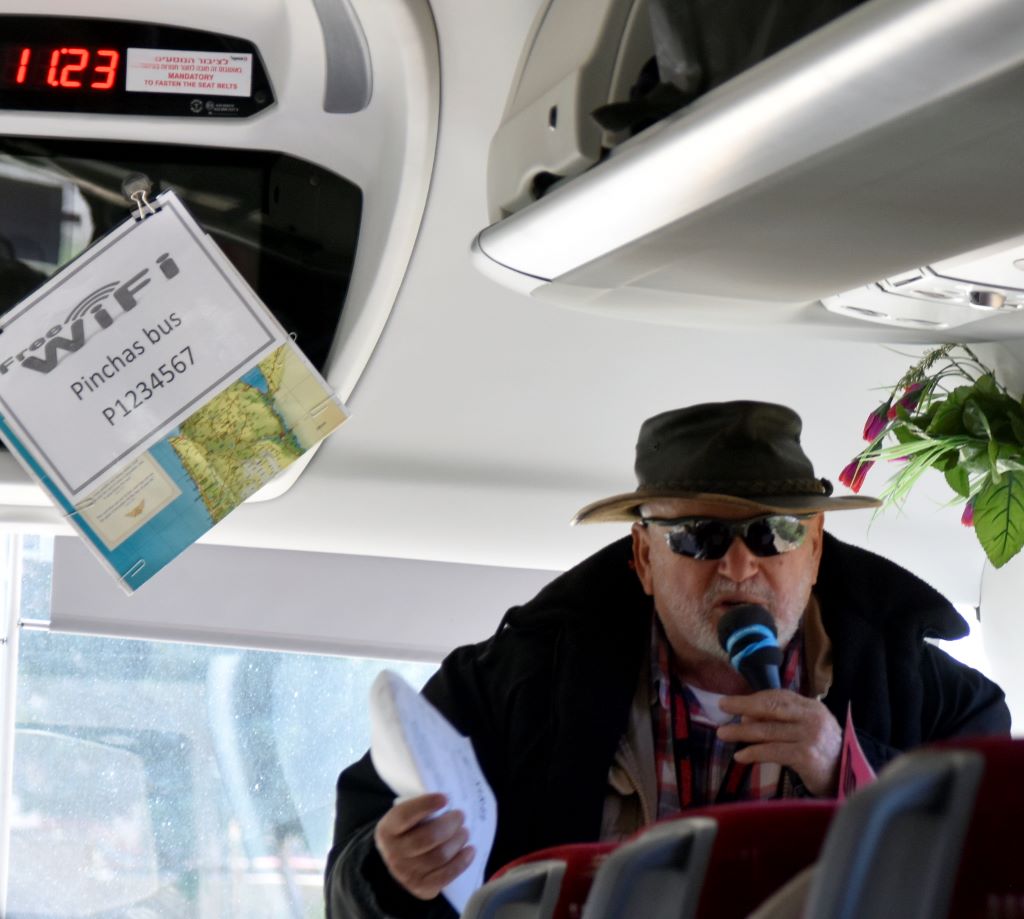
We rode on the purple bus which defined our group. The bus journeys were surprisingly good, as the distances were not long, and we were thankful to sit down between the visits. We also had great commentary from our local guide, Jacob. Jacob was Jewish, not Christian, but was very knowledgeable about the New Testament.
It is the traditional site for where Jesus was nearly killed by a mob in his hometown in Luke 4:16–30.

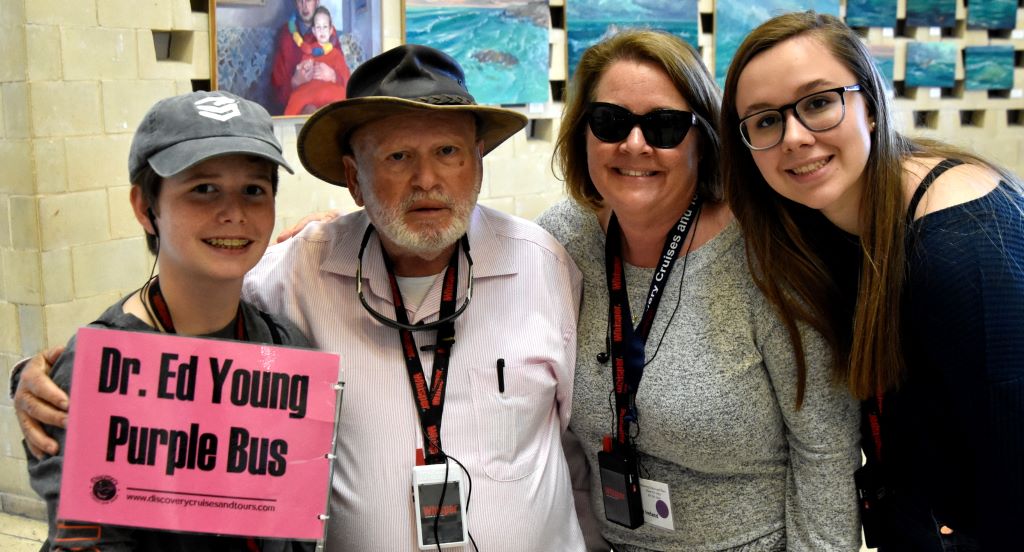

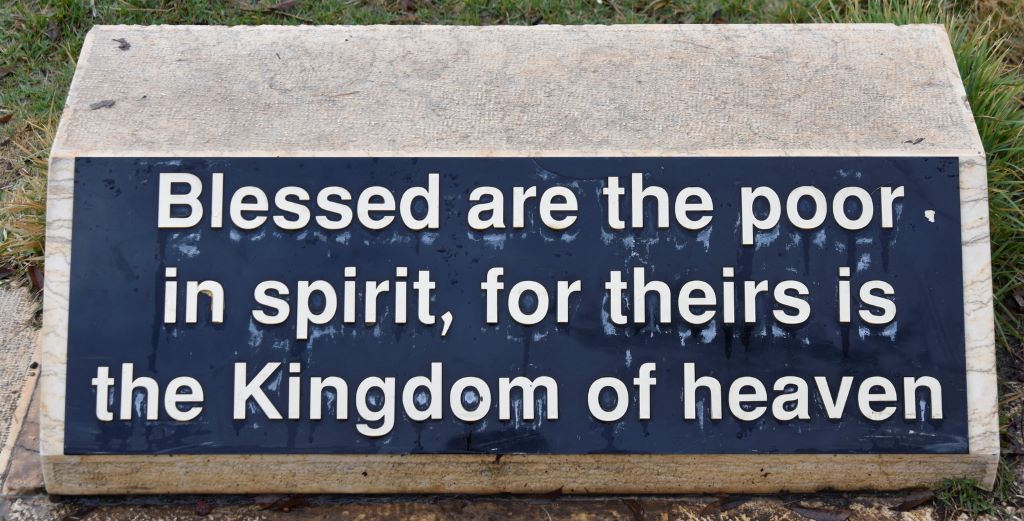
Day 3 First Stop: Mount of the Beatitudes. The site is developed with a church and various spaces for visitors to assemble, and Dr Ed Young gave us an introduction. The area has tremendous outdoor acoustics which aligns with this location being where Jesus spoke to many people in the Sermon on the Mount in Matthew 5 to 7. The octagonal church was built in 1938.
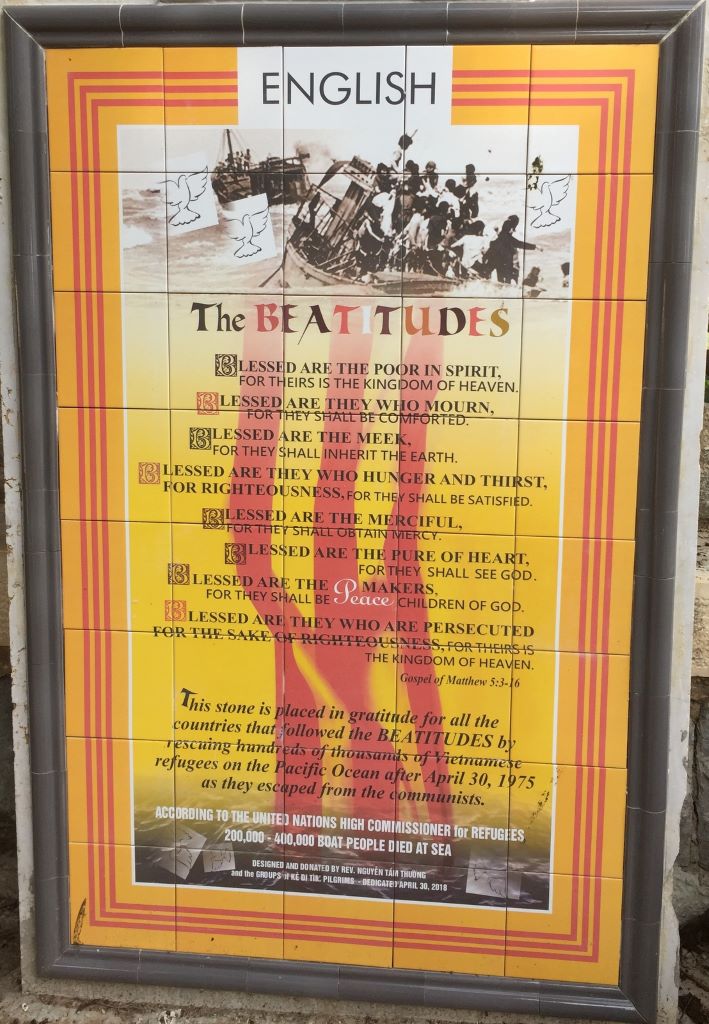
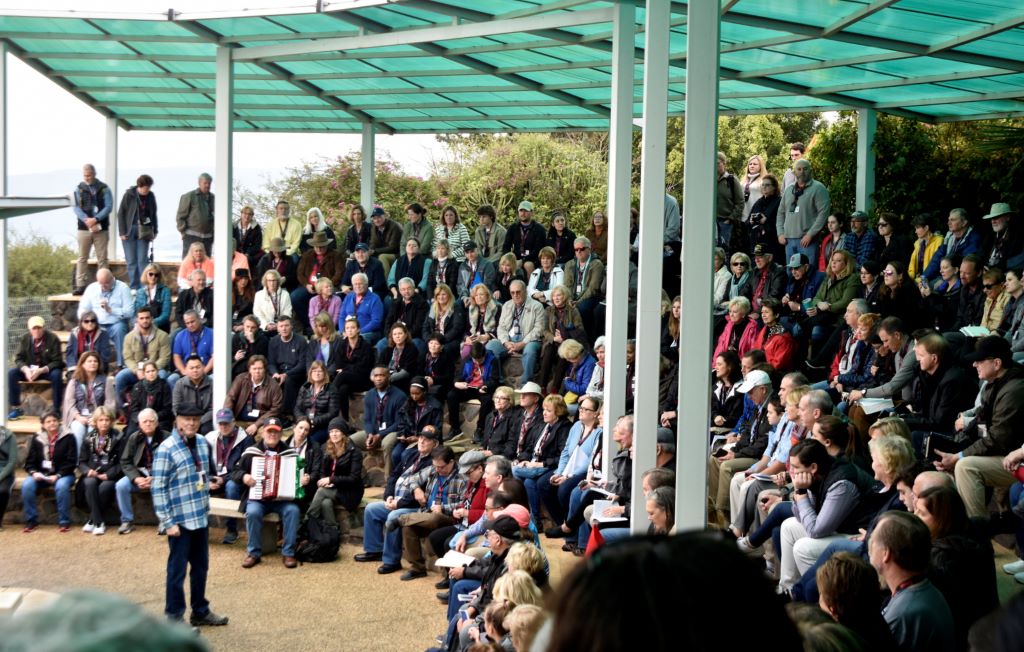
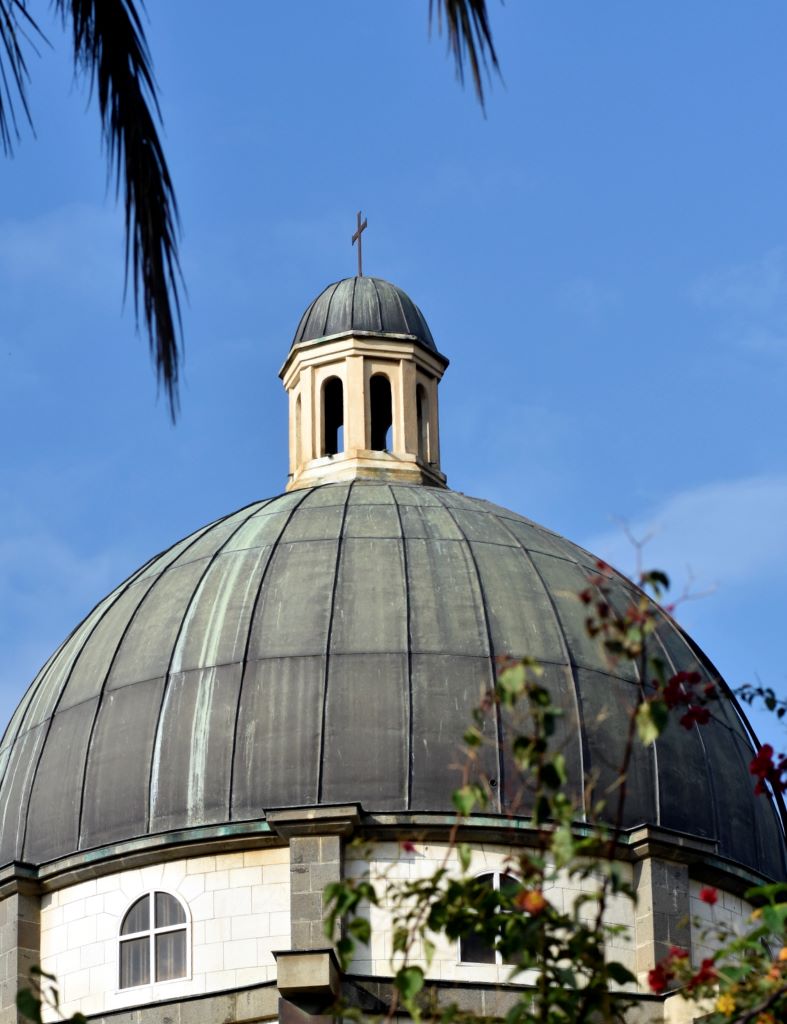
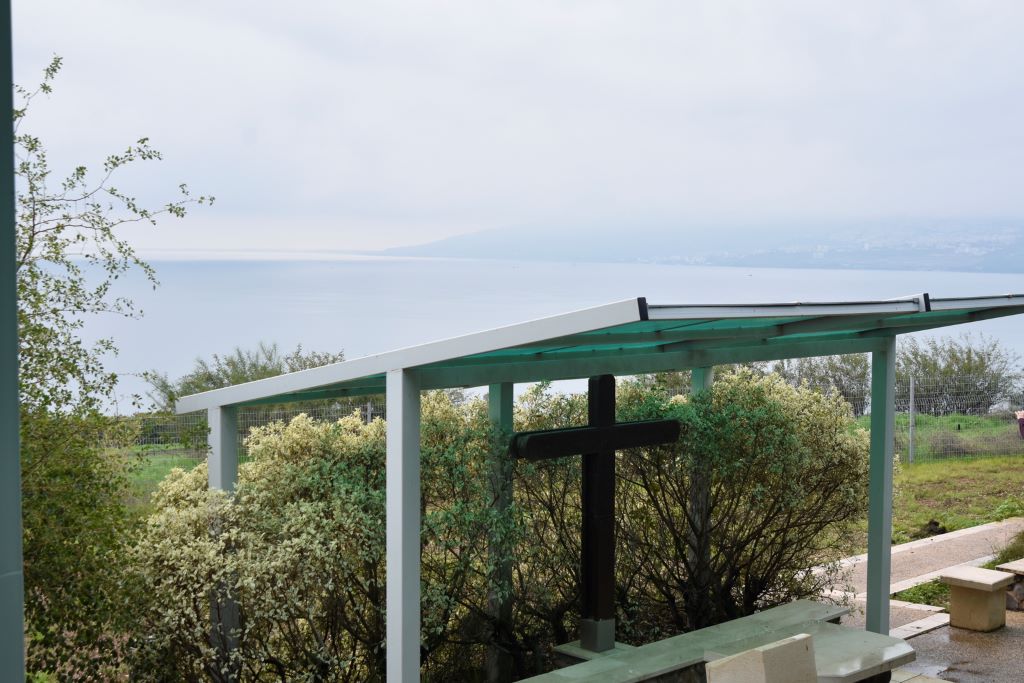
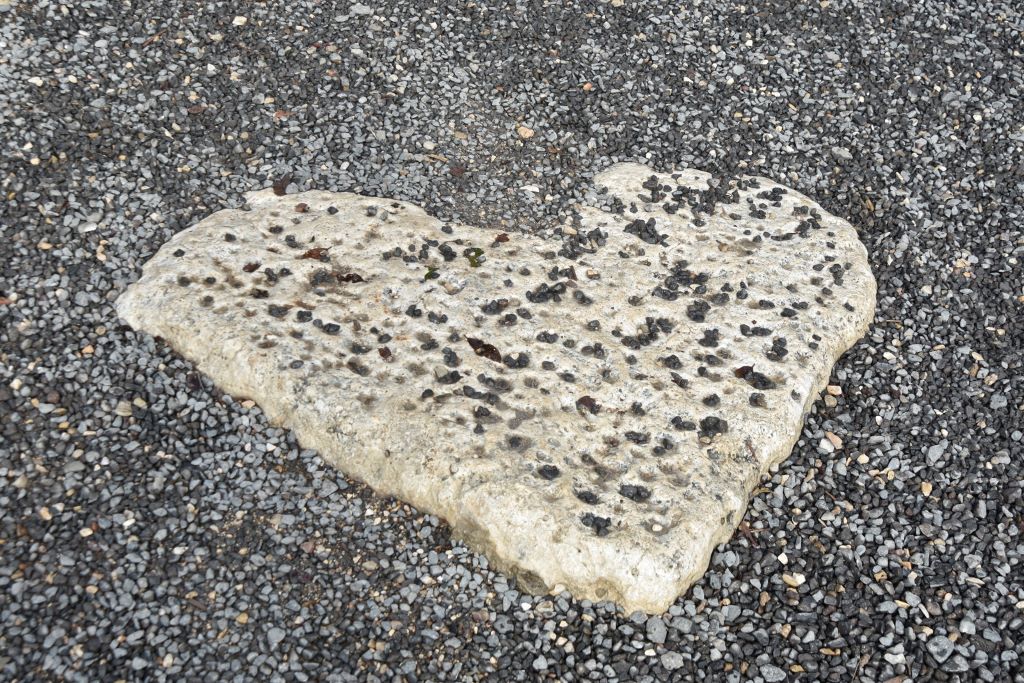
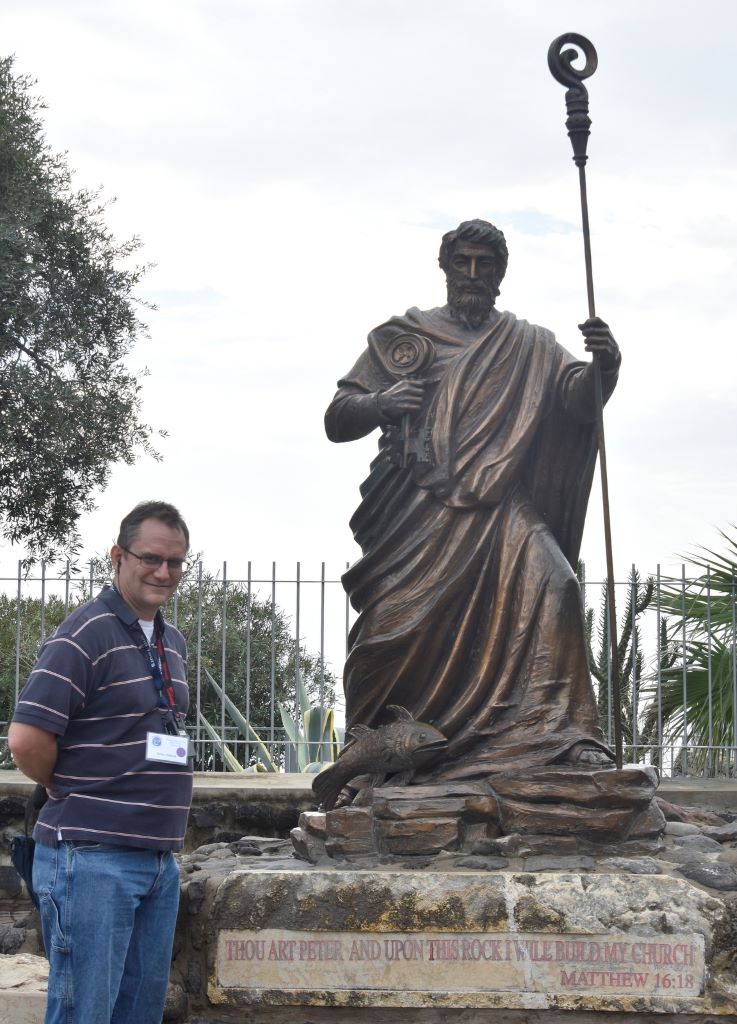
Day 3 Second Stop: Tabgha. This site is traditionally considered the place where the miracle of the multiplication of loaves and fishes occurred, as well as the site for Jesus’ fourth resurrection appearance after his crucifixion (John 21:1–24). We had a peaceful walk along the shore and peaked inside the Church of the Primacy of St Peter at Tabgha which was built in 1934 over the rock (Mensa Christi, Table of Christ) traditionally associated with the breakfast that Jesus prepared.


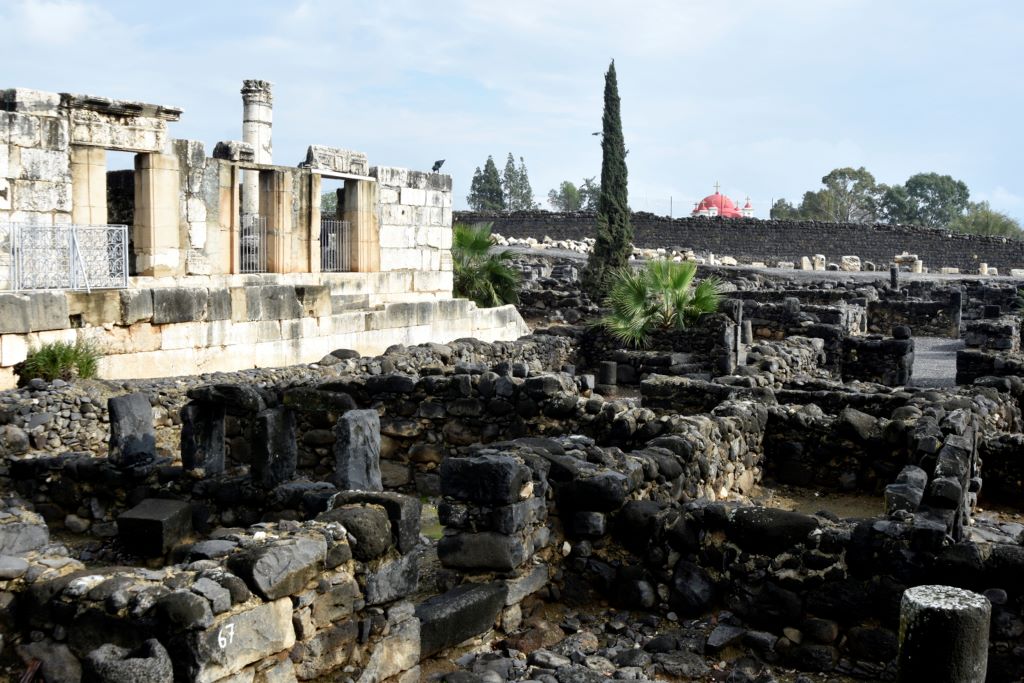
Day 3 Third Stop: Capernaum. The city is mentioned in all four Gospels (Matthew 4:13, 8:5, 11:23, 17:24, Mark 1:21, 2:1, 9:33, Luke 4:23,31, 7:1, 10:15, John 2:12, 4:46, 6:17, 24, 59). According to the Synoptic Gospels, Jesus selected this town as the center of his public ministry in Galilee after he left the small mountainous hamlet of Nazareth (Matthew 4:12–17). Later, He formally cursed Capernaum, saying “you will be thrown down to Hades!” (Matthew 11:23) because of their lack of faith in him as the Messiah.
The remains of a synagogue at the site date from the 4th or 5th Century. Beneath its foundation lies the foundation of another synagogue that dates to the 1st Century and could be the one mentioned in Mark 1:21–28.
The three Synoptic Gospels recount how Peter’s mother-in-law was healed by Jesus at their home in Capernaum (Matthew 8:14–17, Mark 1:29–31, Luke 4:38). In 1984, the archaeologist Stanislao Loffreda claimed that a house that dates back to biblical times was Peter’s house though the evidence is weak and disputed. In 1990, a church was built over the site which includes the remains of a 5th Century Byzantine church.
We did not travel east of Capernaum due to political instability. Biblical Bethsaida is close, but the Six-Day War destroyed many archaeological sites in 1967.




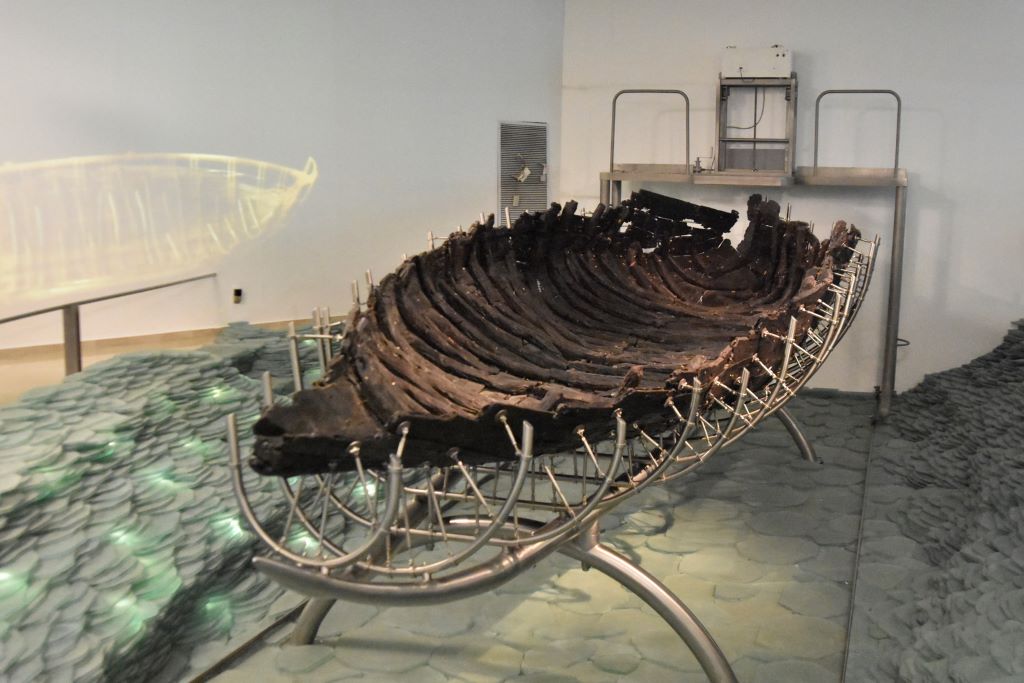
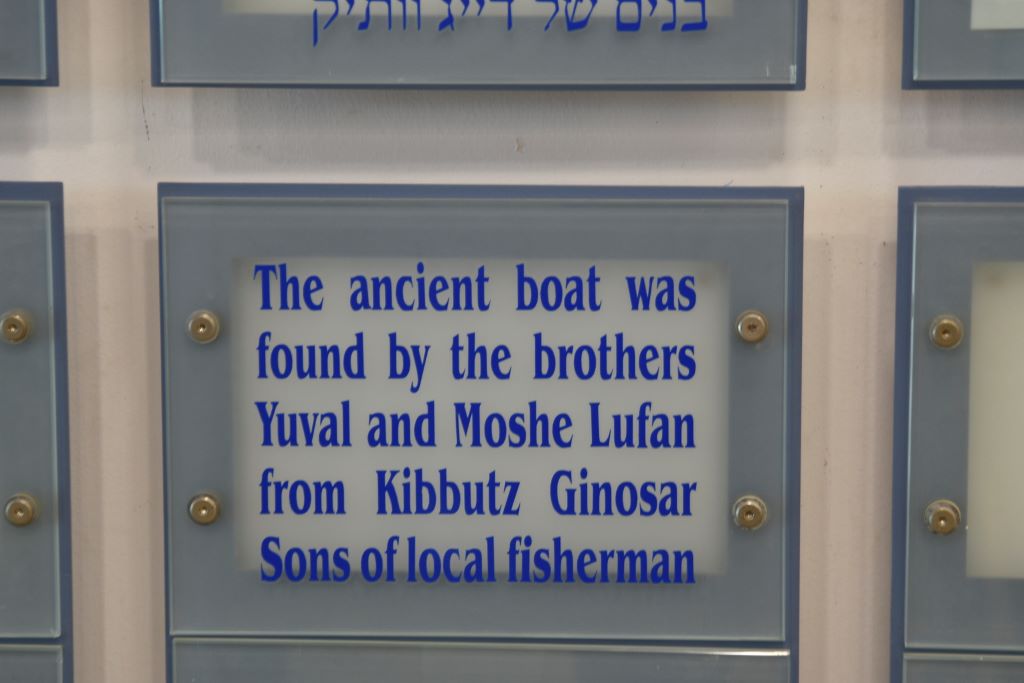
Day 3 Fourth Stop: The Galilee Boat. In 1986, a pair of fishermen from Kibbutz Ginosar discovered an ancient fishing boat from the 1st century AD. The remains of the boat, 27 feet (8.2 meters) long, 7.5 feet (2.3 meters) wide and with a maximum preserved height of 4.3 feet (1.3 meters), first appeared during a drought, when the waters of the lake receded. Other than the dating, there is no evidence connecting the boat to Jesus or his disciples. The remains are kept in a museum and are recognized as a boat likely to have been used around the time of Jesus.

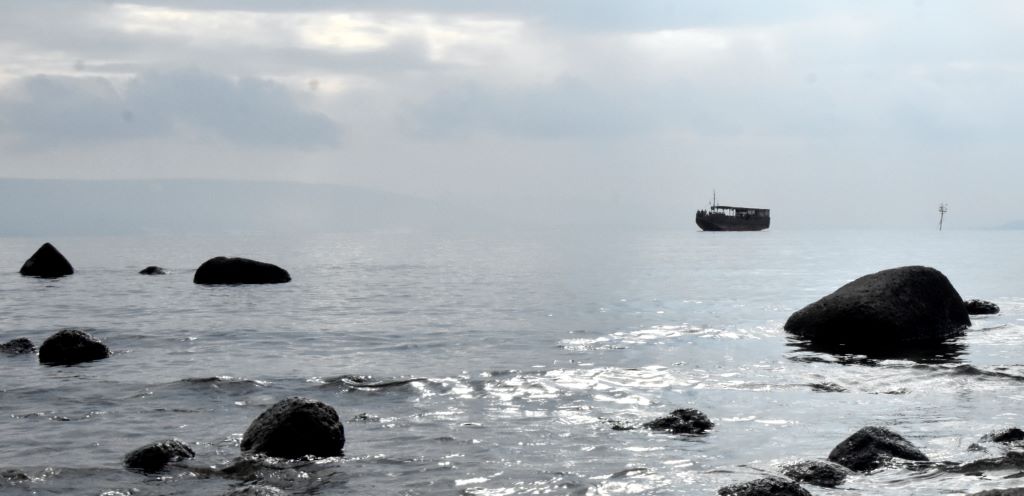
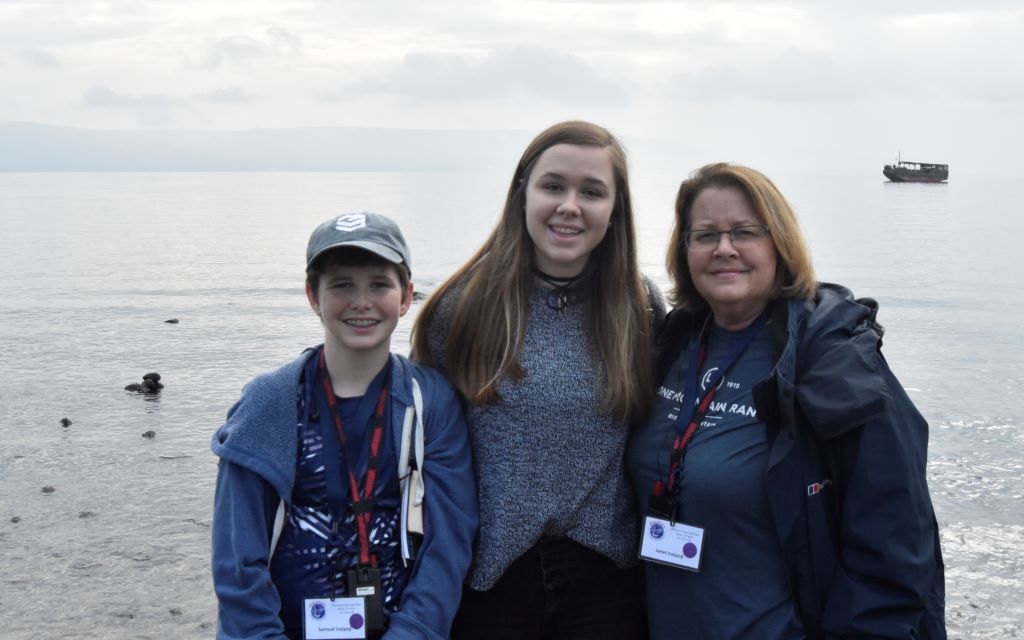
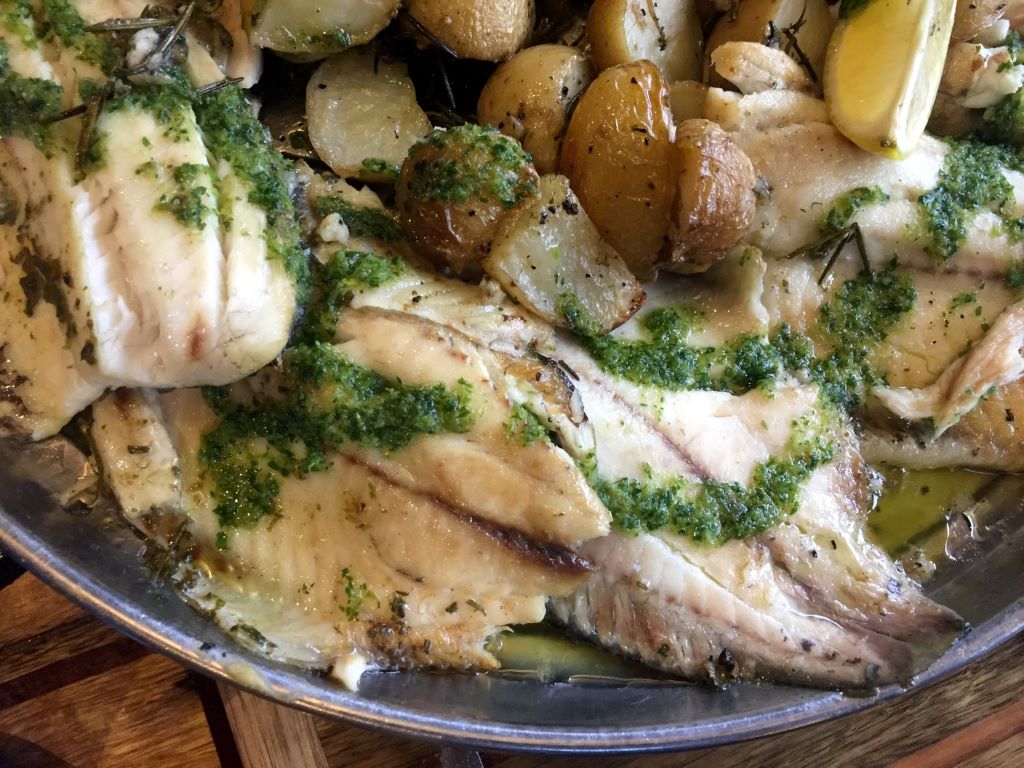
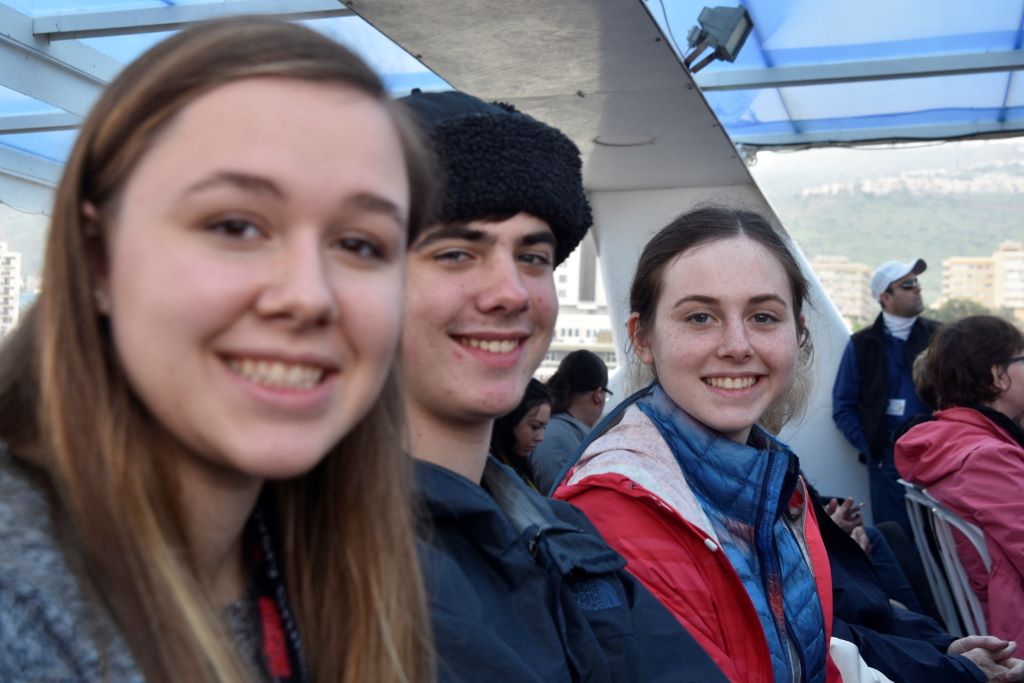
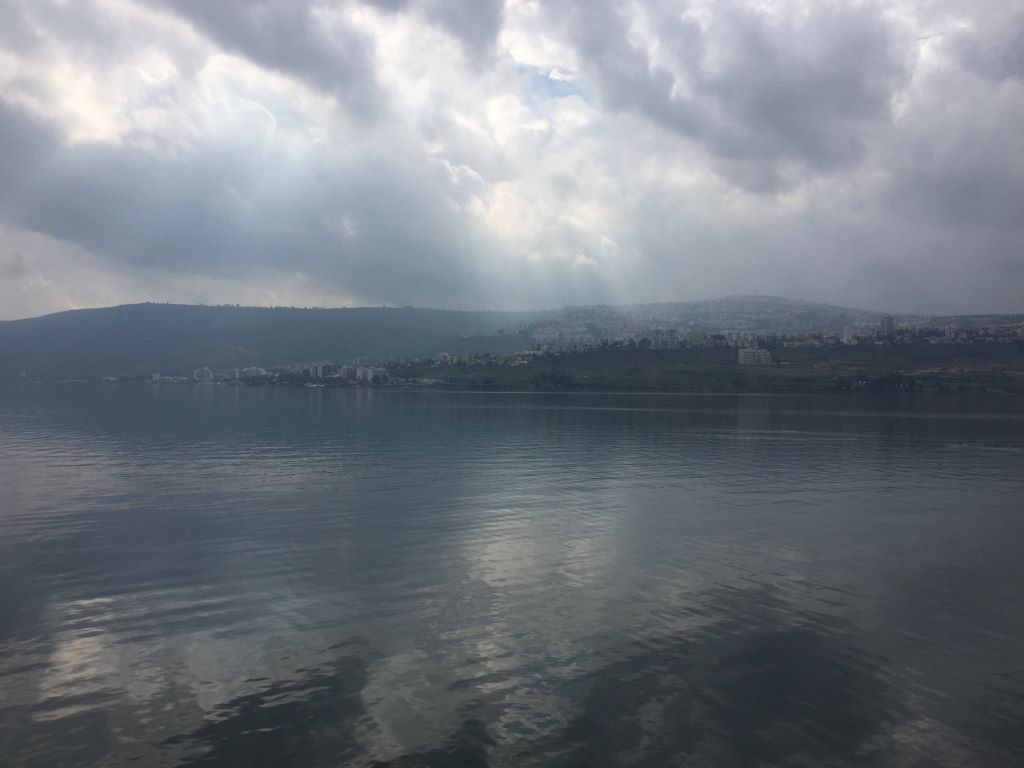
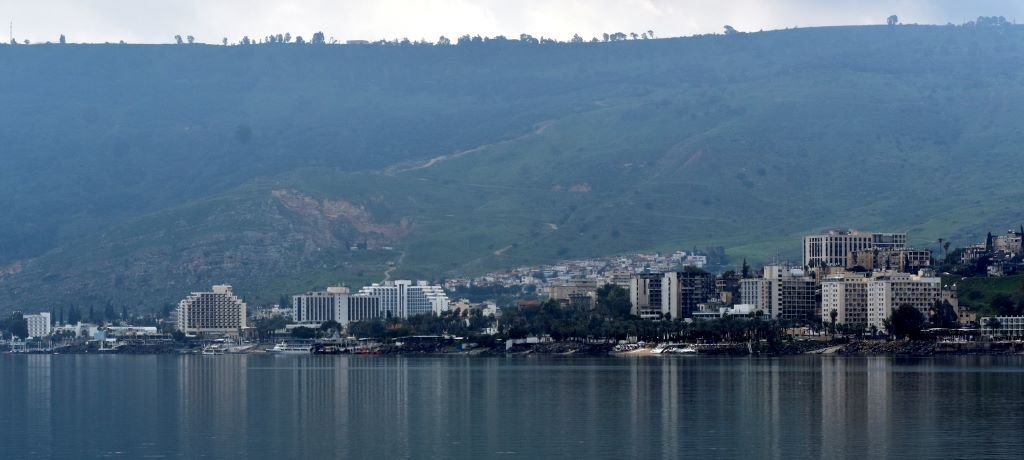
Day 3 Fifth Stop: Lunch and a boat trip on the Sea of Galilee. For lunch, we enjoyed fish freshly caught from the lake before taking a boat out on to the lake from Tiberias on a very still day. It was cool to see the shore and surrounding towns from the lake. The buses mingled and we spent some time with Jackson and Audrey who went to school with Bailey.



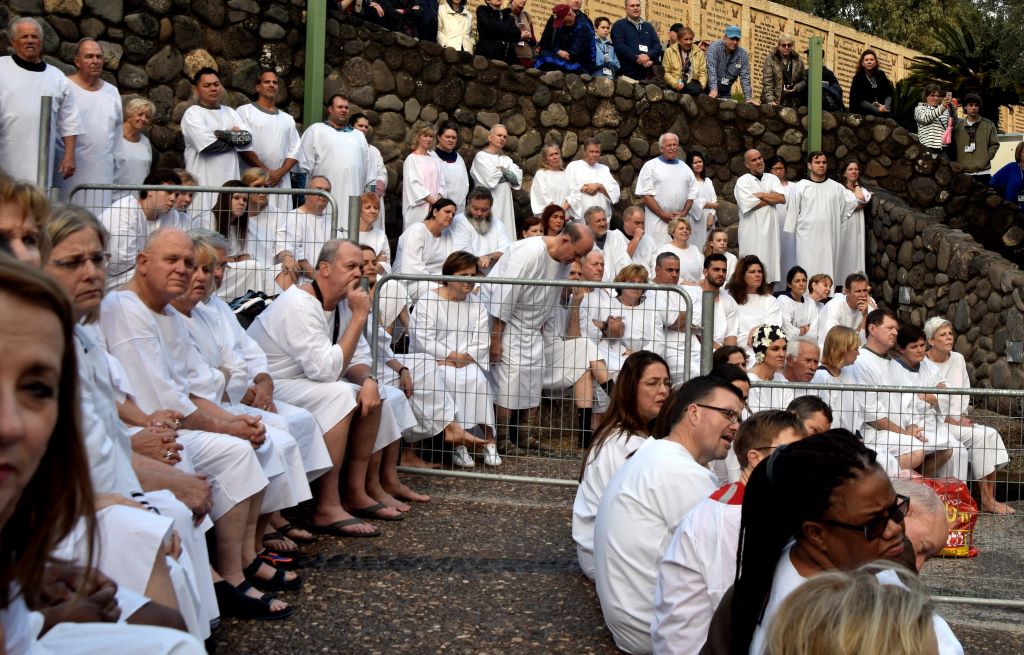
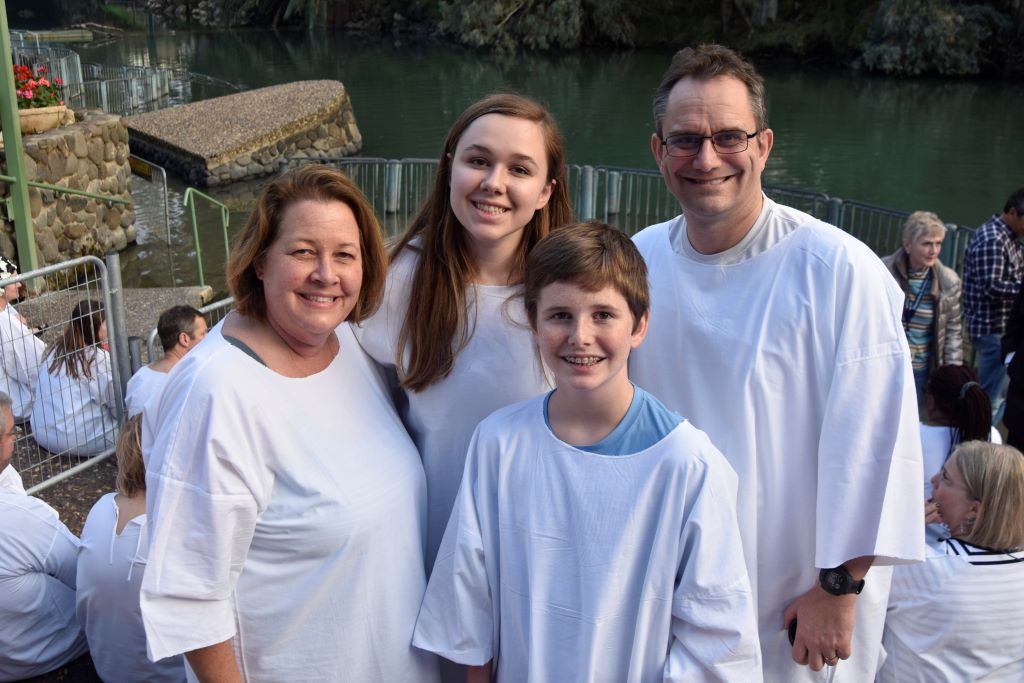
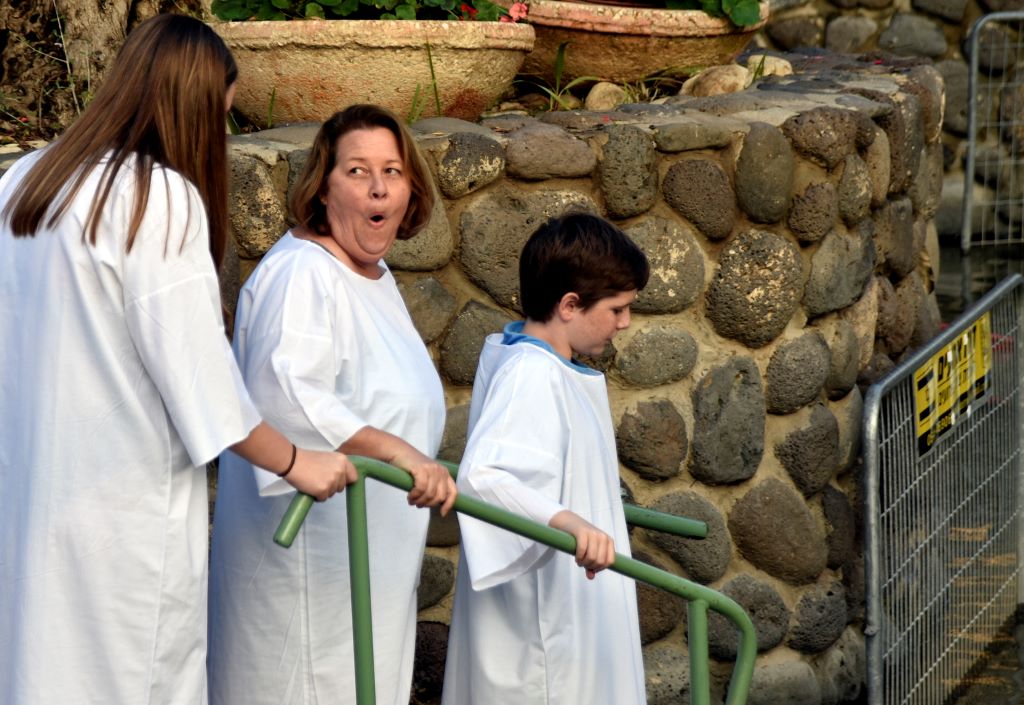
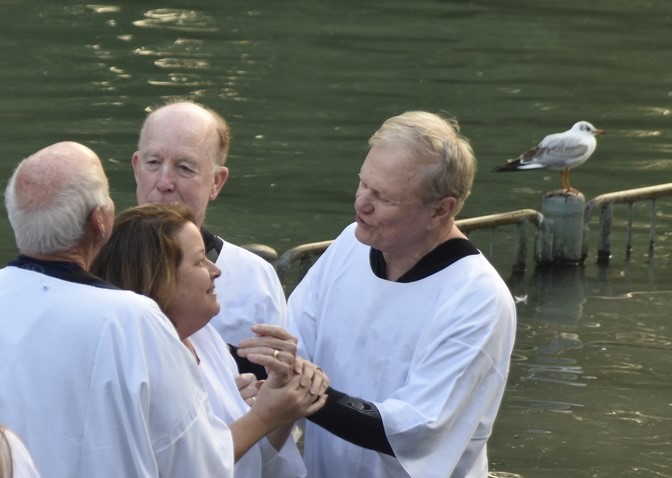
Day 3 Sixth Stop: The Baptismal Site of Yardenit. The site was established in 1981 to provide a safe place for pilgrims to be baptized on the Jordan River. A site on the east bank of the Jordan at Al Maghtas claims to be the site of Jesus’s baptism by John the Baptist (Matthew 3:13–17) but it is unsafe to visit, and the claim is disputed.
Yardenit does not claim to be the site of Jesus’s baptism. It states on its website, “Each year we welcome over half a million tourists and pilgrims, who come to experience the tranquility and spiritual beauty of the waters in which Jesus was baptized by John the Baptist.” We all participated and learned that the Jordan’s water is very cold in December. In personal reflection after the visit, I’ve had doubts about the appropriateness of such an act, attracting tourists/pilgrims to be baptized in the Jordan, the lack of biblical direction regarding multiple baptisms, and my approach to this. Baptism is an individual choice and should be a reverent act, and I was more focused on getting photos!



We finished day 3 with a bus ride back to our hotel and dinner. We were all exhausted and slept very well.
Day 4: Galilee to Jerusalem
After a very full day 3, we had another full day 4 as we traveled from Galilee to Jerusalem via Nazareth, Megiddo, Mt. Carmel, and Caesarea.
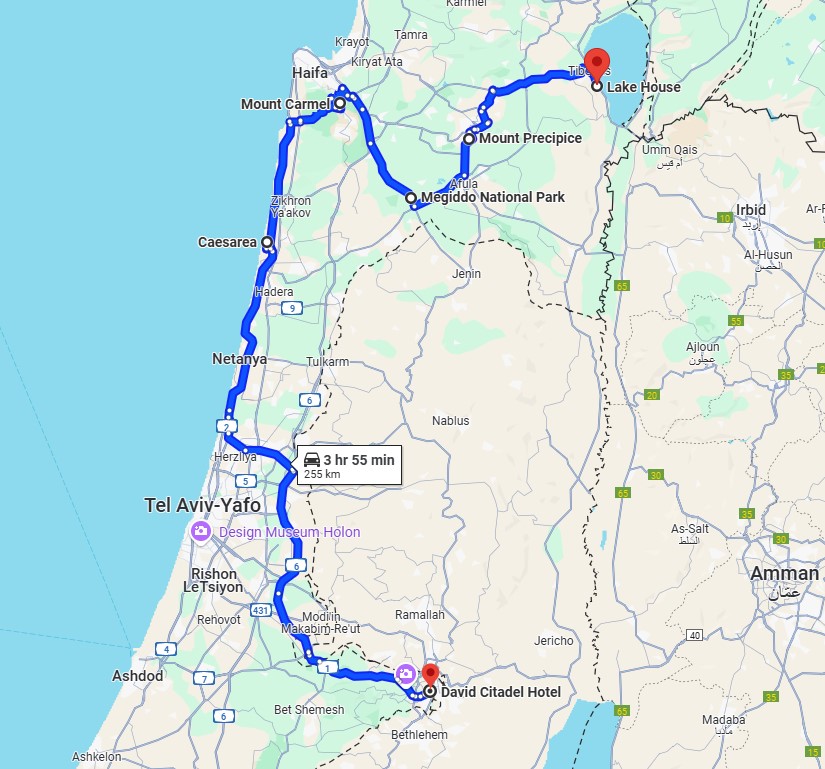
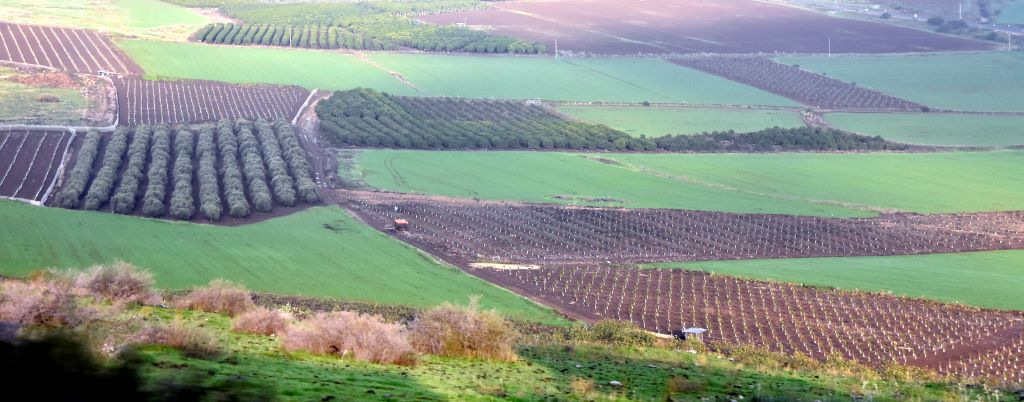
The four-hour bus ride was interesting as we saw the fertile lands that God gave to the Israelites as The Promised Land in the Old Testament, a land “flowing with milk and honey” (Exodus 3:8). We travelled through the Jezreel Valley which has multiple references in the Old Testament. Much of the land that we drove through had been flooded marshland, but improvements had made it very fertile. Water remains precious and crops are covered with plastic to reduce evaporation.
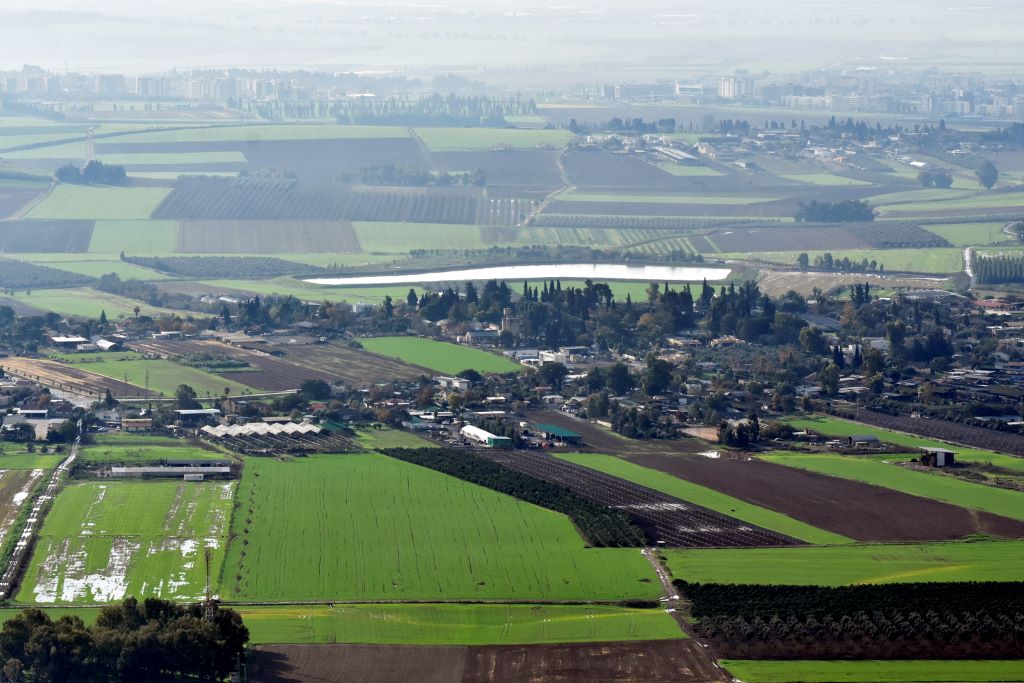
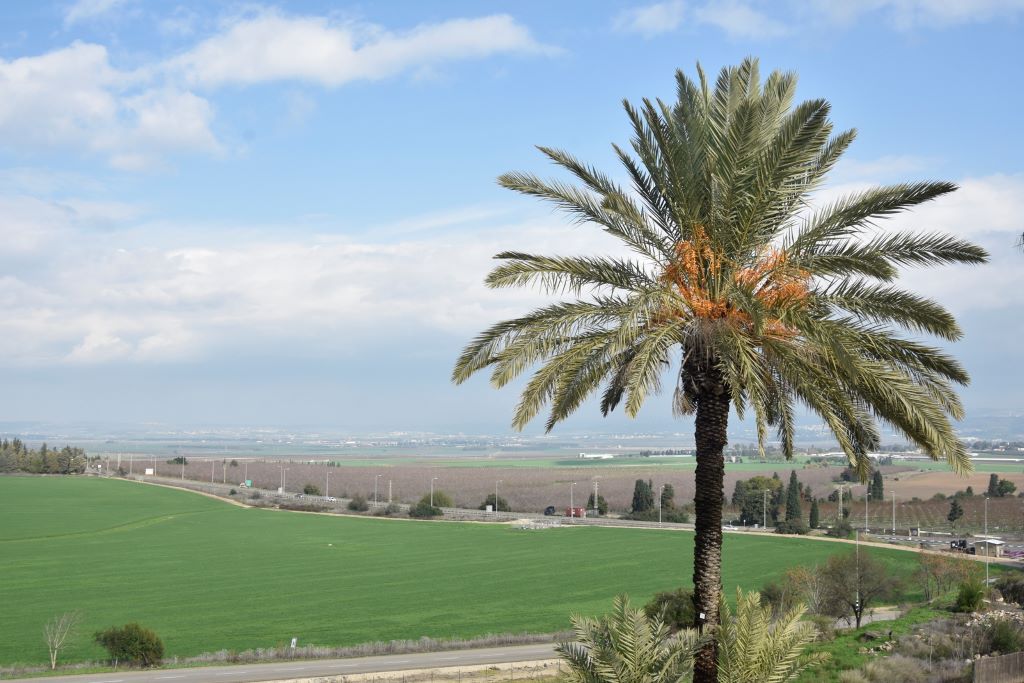
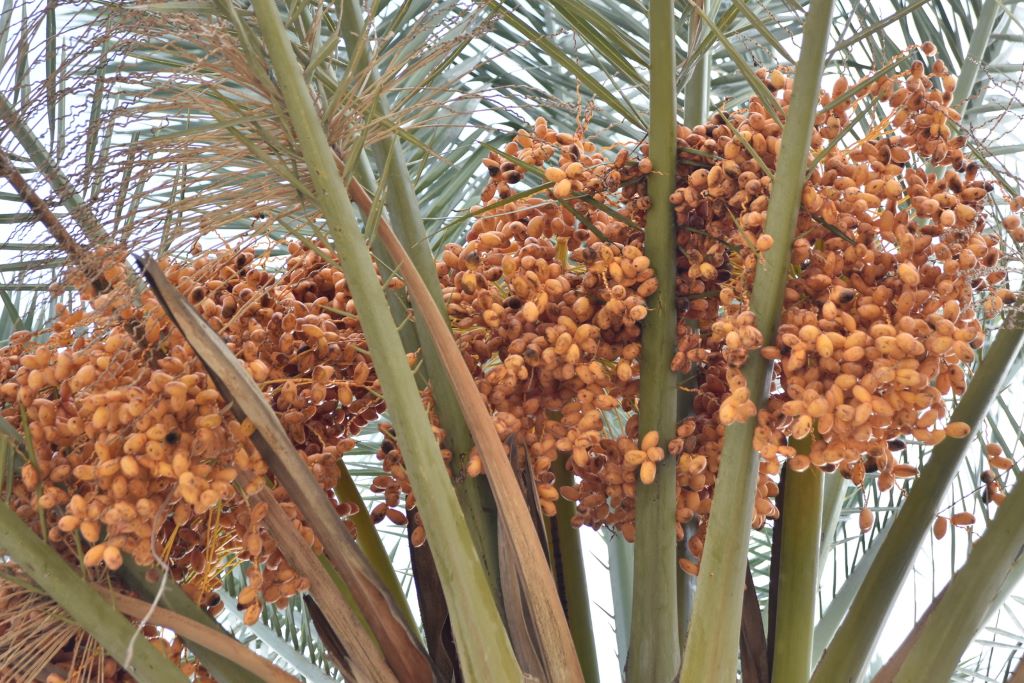
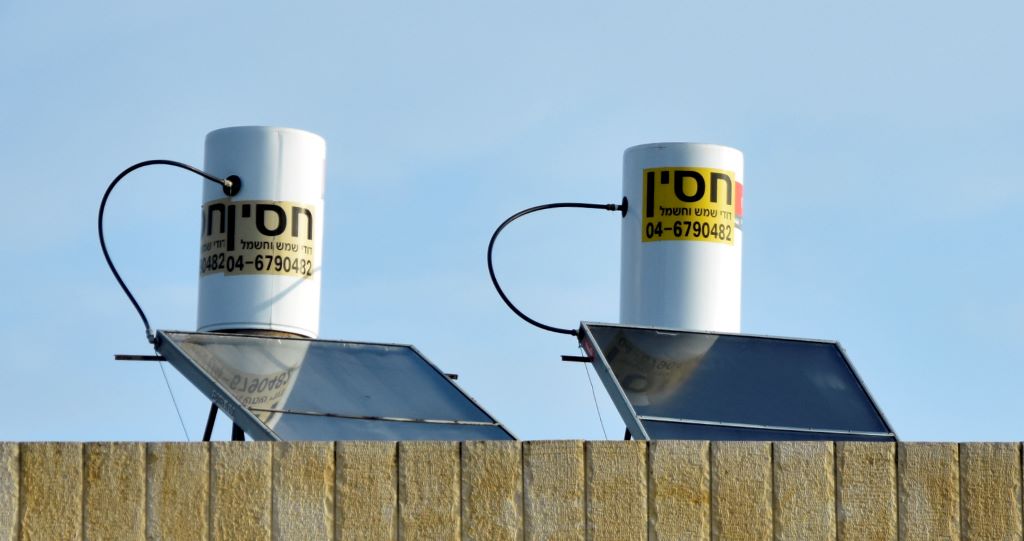
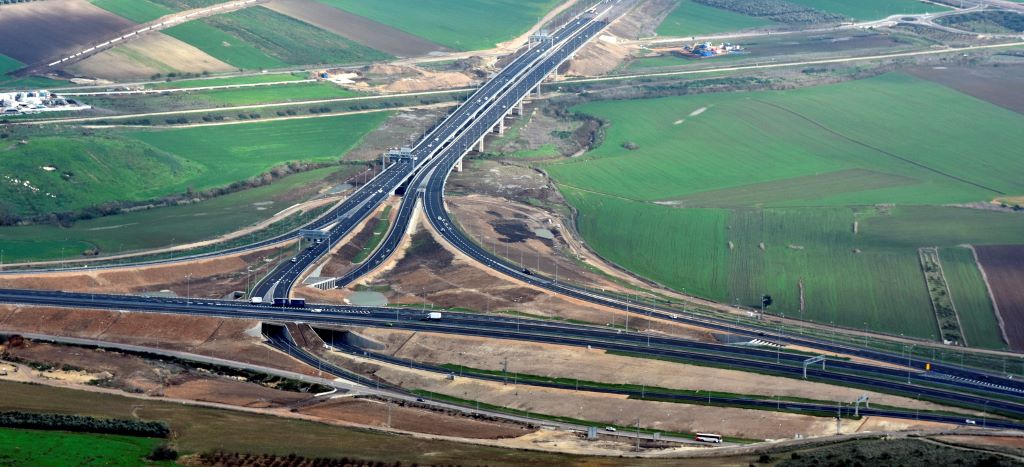
The agriculture blends with modern artifacts from natural water heaters and solar panels to major roads and an airport. With so much history in the area, it is difficult for construction to avoid historical sites, as illustrated by the road intersection below which is over the Kishon River below Mount Carmel, where 1 Kings 18:40 describes Elijah slaughtering the prophets of Baal. The lack of identification of the airport on maps, like the one shown below, is indicative of the security challenges of the area.


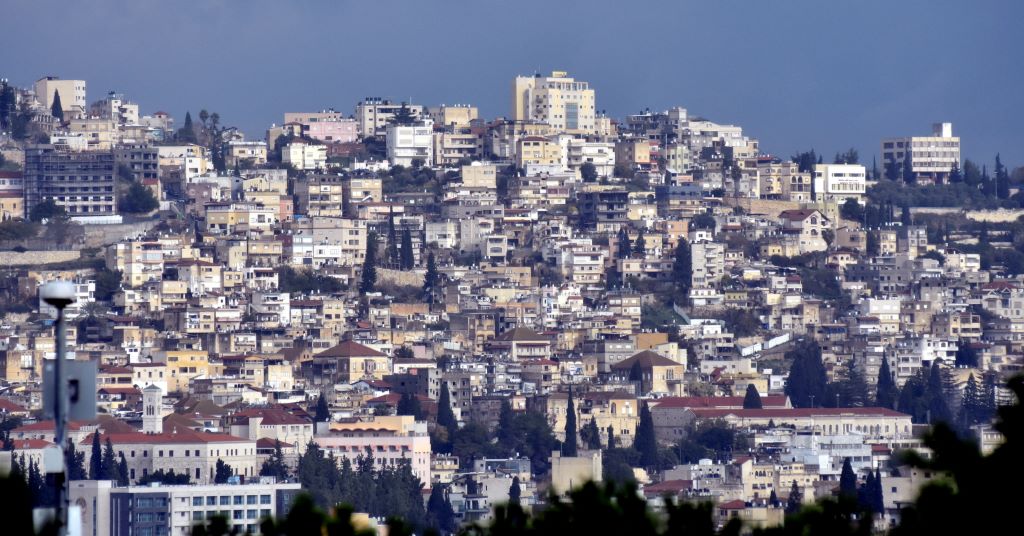
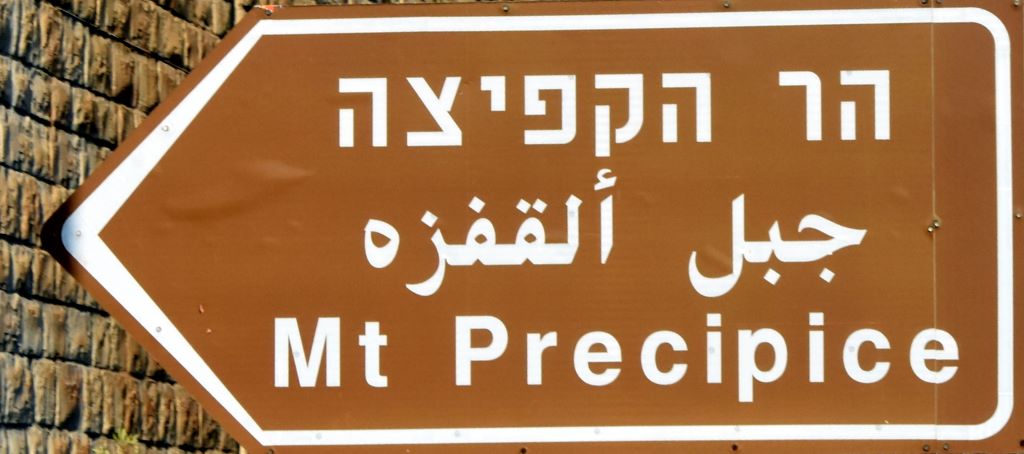
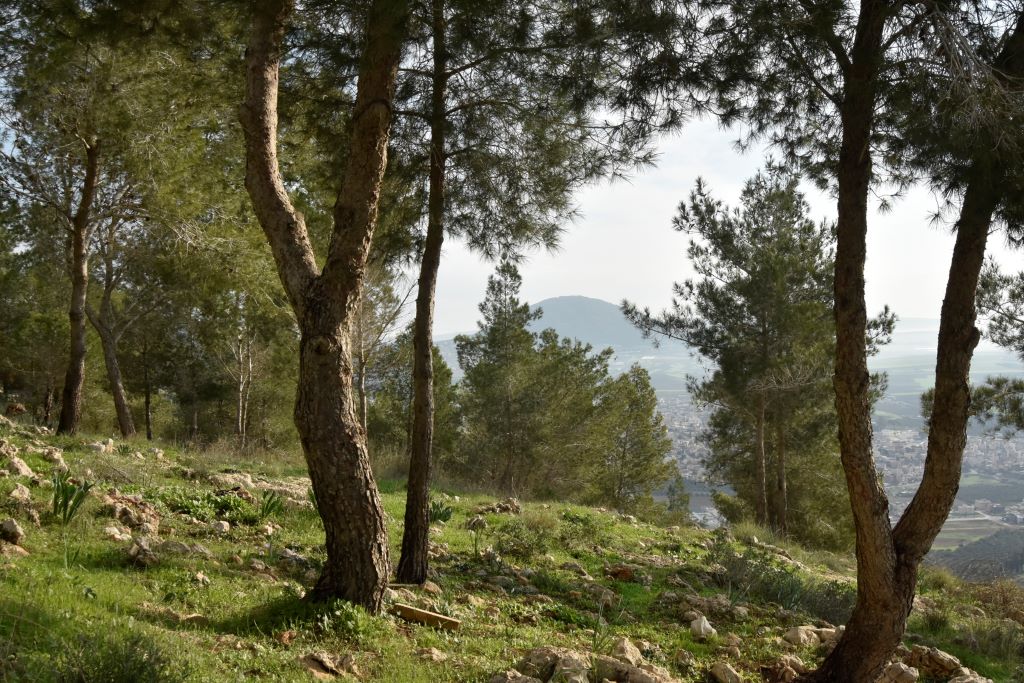
Day 4 First Stop: Nazareth and Mount Precipice. Nazareth was Mary’s hometown (Luke 1:26), and Mary and Joseph returned to Nazareth with Jesus (Luke 2:39). Today, it is a large city and is known as the Arab Capital of Israel. There are various churches in the city associated with events according to different traditions, but we did not visit any of them. Our visit focused on Mt Precipice, the traditional site for where Jesus was nearly killed by a mob in his hometown (Luke 4:16–30). Some traditions claim that Mount Tabor, which we could see from Mt. Precipice, is the location of Jesus’s transfiguration (Matthew 17:1–8, Mark 9:2–13, Luke 9:28–36, 2 Peter 1:16–18). However, this is generally disputed due to its distance from Caesarea-Philippi, where the events before the transfiguration took place (Matthew 16:13, Mark 8:27), and is believed to be located 25 miles north of the Sea of Galilee at Banias at the base of Mt. Hermon, which we did not visit.





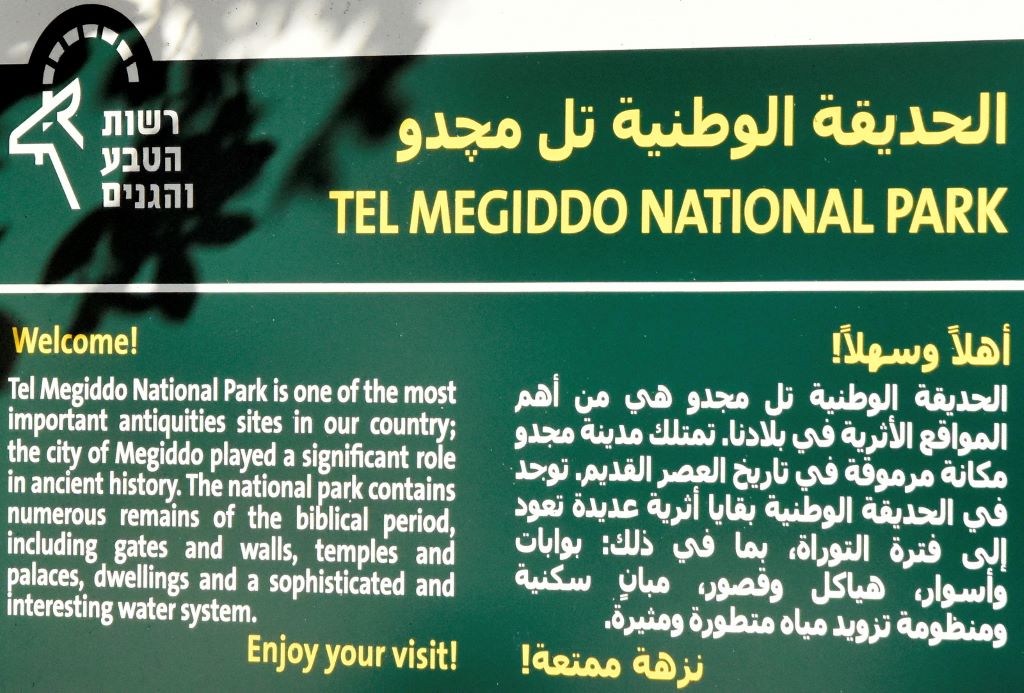
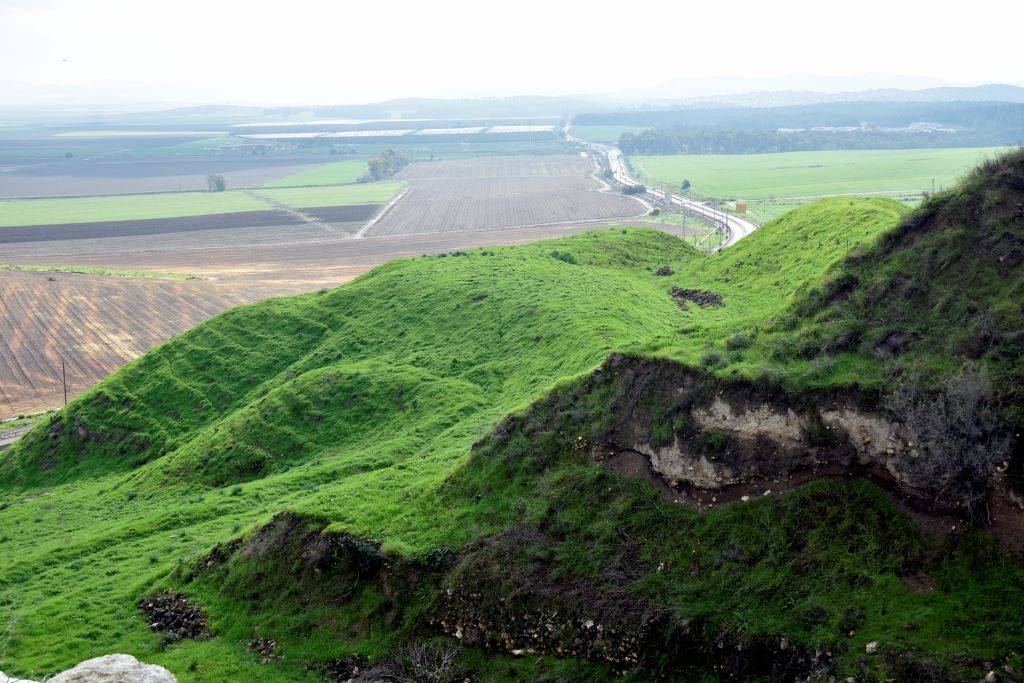
Day 4 Second Stop: Megiddo. Our next stop was Tel Megiddo. A “tel” is a mound formed when new buildings are built upon old ones over multiple centuries. Excavations at Tel Megiddo have revealed at least twenty layers indicating the length of habitation at the site. Megiddo has been the site of epic and decisive battles down the ages. The Battle of Megiddo in the 15th century BC, when Egyptians under Thutmose III conquered Canaan, is the first reliably recorded battle in history. More recently, it is the location of General Allenby’s battle with the Turks in 1917 during WWI. Megiddo is mentioned twelve times in the Old Testament. These mentions include Joshua’s defeat of the King of Megiddo after the Israelites entered Canaan in the 14th century BC (Joshua 12:21) and both King Ahaziah (2 Kings 9:27) and King Josiah (2 Kings 23:29–30) died here. Revelation 16:16 describes the end-times battle of Armageddon which is a transliteration of the Hebrew Har Məgīddō.

Inside the museum was a scale model of the ancient city which highlights the different layers. Walking around the ruins we saw how wood was used in the construction to stabilize against earthquakes, a manger, and a grain silo. It was an impressive site, complemented by the views of the plains below.



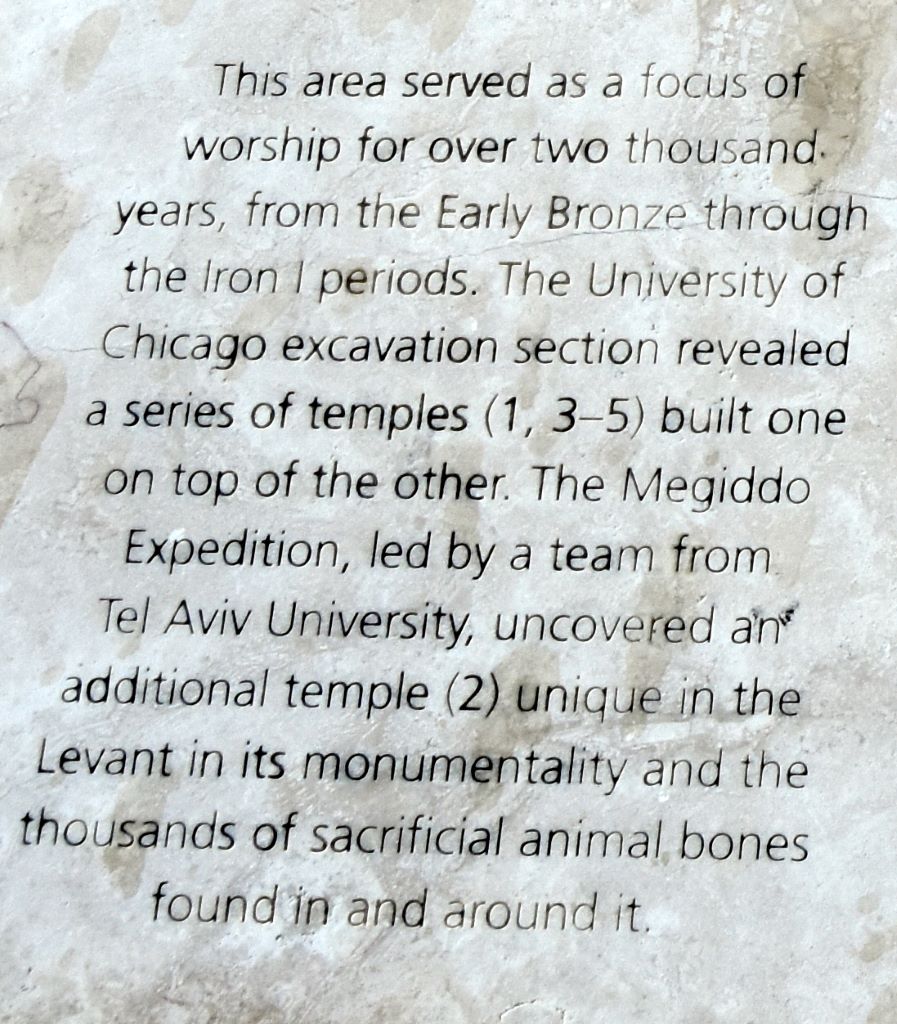
A highlight was an ancient pagan Canaanite altar that was built around 2700 BC and was used until approximately 1900 BC. Archaeologists found thousands of bones from sacrificed animals close by.

Day 4 Third Stop: Mt. Carmel. Next was the Carmelite monastery on Mt Carmel where Elijah challenged the prophets of Baal to bring fire in 1 Kings 18:20–46. While there is a commemorative statue of Elijah representing his subsequent slaughter of the prophets, Bailey was more interested in the kitties that roamed around.


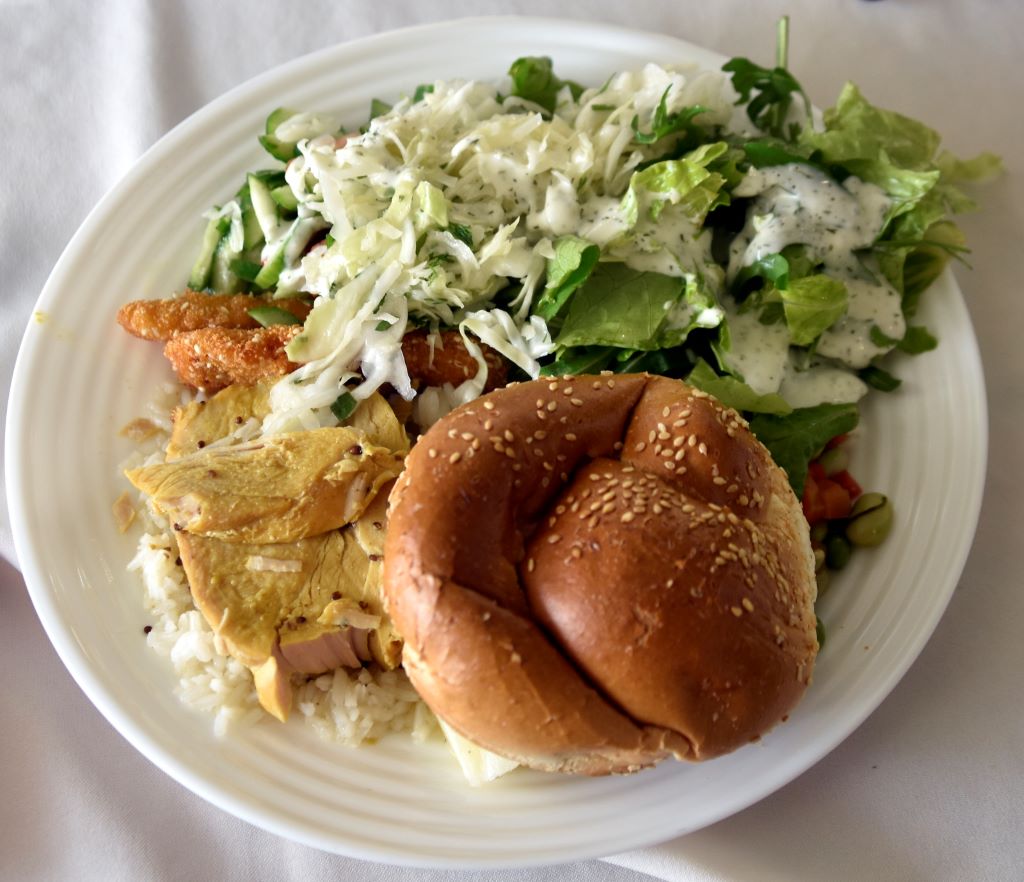
We grabbed lunch at a kibbutz on the way to the next stop.

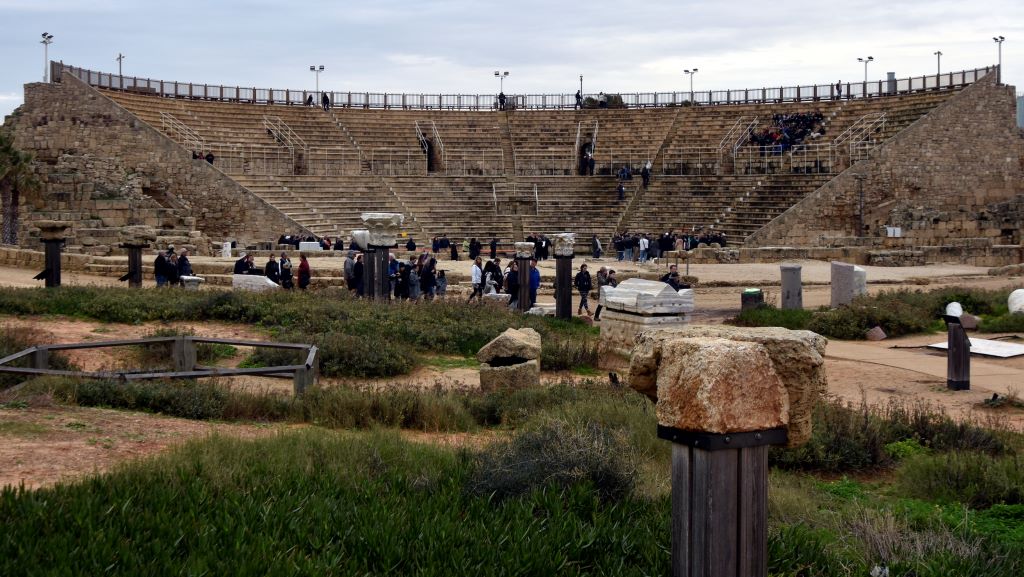
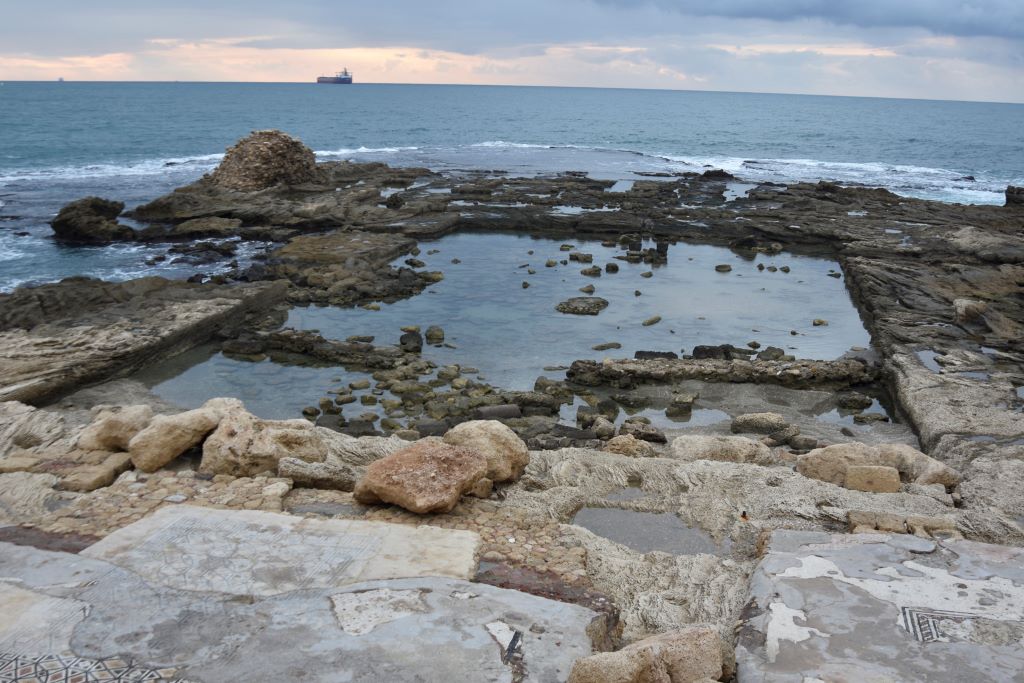
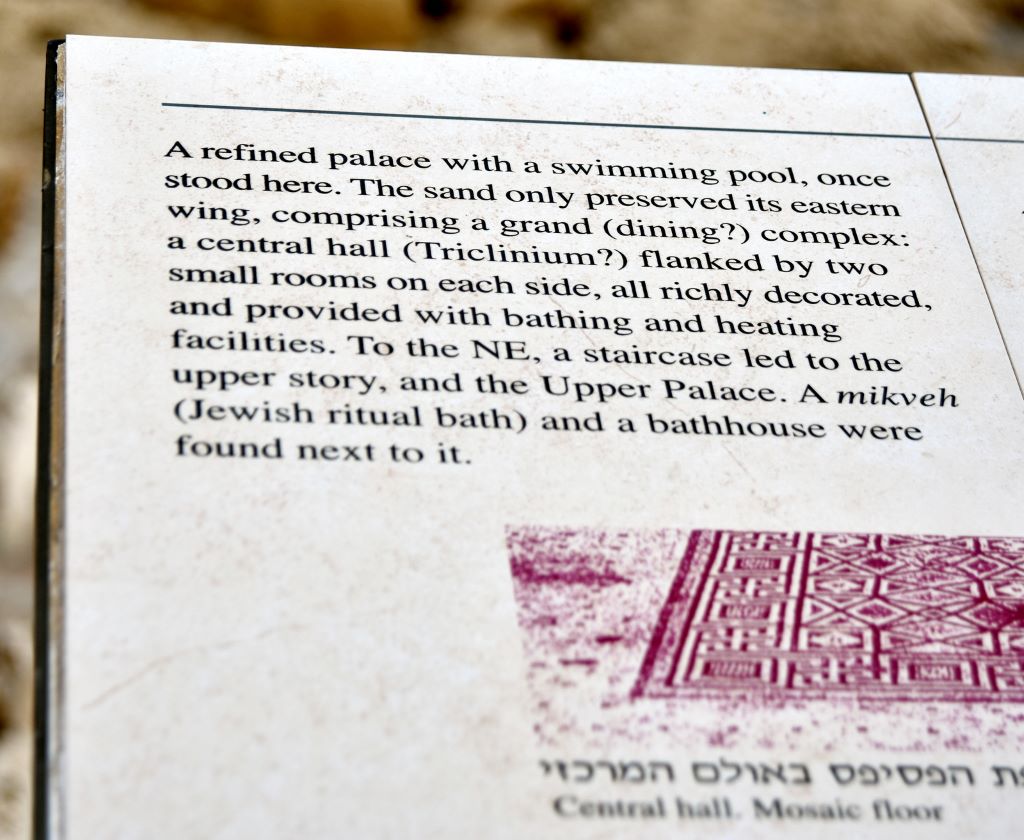
Day 4 Fourth Stop: Caesarea Maritima. Having been a Jewish fishing village in the 1st Century BC, it was enlarged in the Roman period, and Herod I dedicated the city to Caesar Augustus. It was the seat of the Roman procurators for the region, including Pontius Pilate. In the Bible, Peter baptized the Roman Centurion Cornelius here after his life-changing trance that explained that Jesus had come for all people, not just Jews (Acts 10:1–48). The Bible mentions Paul transiting the city on his way to Antioch at the end of his second missionary journey (Acts 18:22), and staying in the city with Philip on the way to Jerusalem at the end of his third missionary journey (Acts 21:8). Paul was brought to Caesarea by the Roman Tribune Claudius Lysias to avoid an ambush by a Jewish mob (Acts 23:16–23). He was held in prison there for two years until he appealed to Caesar in front of the Roman Tribune Festus (Acts 25:1–12). He presented his defense to King Agrippa and Bernice, after which Festus concluded that Paul could have been released if he had not appealed to Caesar (Acts 26).


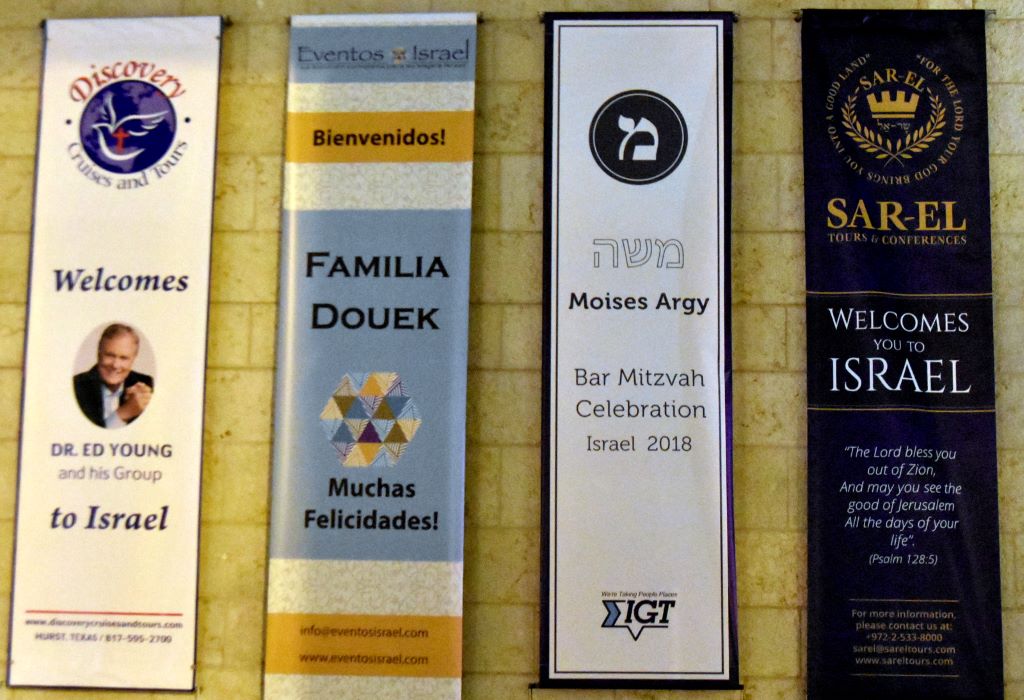
Day 5 Fifth Stop: Arrival in Jerusalem. We felt a climax in travelling “up” to Jerusalem, similar to when Jews made the journey to the Temple in the Bible, but our visit was for the history. We stayed at the David Citadel Hotel for six nights, with the hotel hosting other groups. This hotel was very comfortable and within walking distance of the old city. Even though the hotel had protections, we always felt very safe. But on the night of our arrival, we were most interested in our beds!

Day 5: Mt of Olives, Gethsemane, US Embassy, St Anne’s, Via Dolorosa, Damascus Gate
Days 5, 7, and 9 were for exploring Jerusalem and its immediate surroundings. Our fifth day was filled with exploring the route from the Mount of Olives, across the northeast corner of the Old Town, to the Damascus Gate.

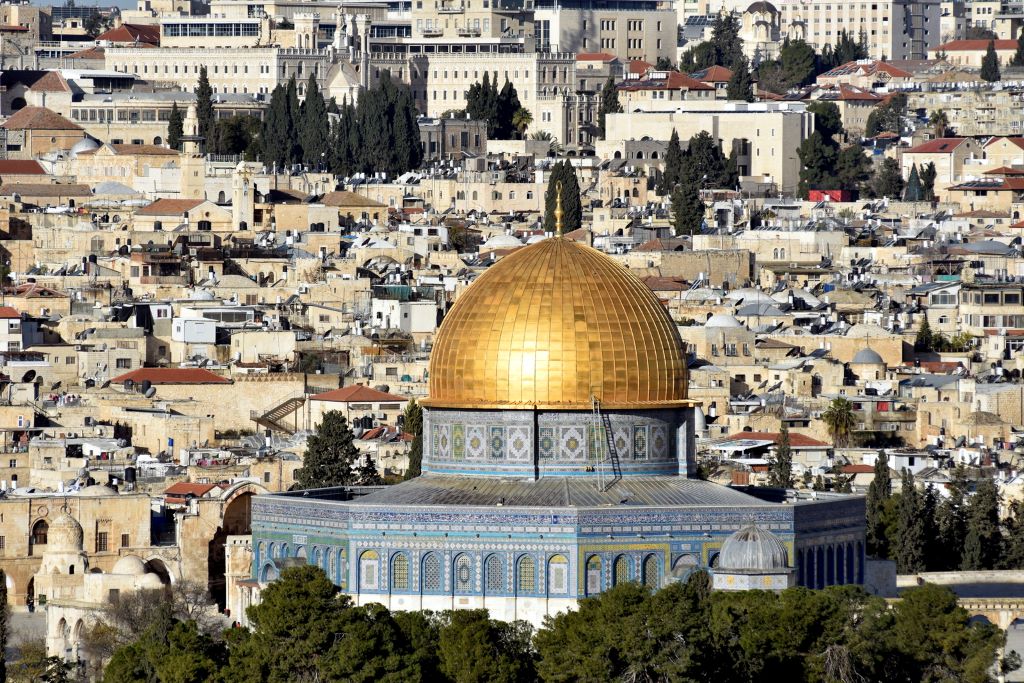
The day started on the Mount of Olives which provides magnificent views of Jerusalem’s Old City across the Kidron Valley. The view is dominated by the Islamic Dome of the Rock, the bold gold dome that was built in 690 AD on Temple Mount, the location of Solomon’s Temple and the Second Temple, which was destroyed by the Romans in 70 AD. The dome is over a rock that tradition claims is where Abraham attempted to sacrifice Isaac (Genesis 22). The dome is part of the Al-Aqsa mosque compound, and is one of the most important sites in Islam. We did not visit due to difficulty of entry and security concerns. For visitors like us, it symbolizes the tension between the Jewish and Islamic communities that are prevalent throughout this region.



Of greater historical interest is the old city wall which can be clearly seen. This includes the Golden Gate which Jewish tradition holds is the gate through which the Messiah will enter, while Muslim and Christian traditions generally believe that this is the gate through which Jesus triumphantly entered Jerusalem on a donkey (Matthew 21:1–11, Mark 11:1–11, Luke 19:28–44, John 12:12–19). The gate was closed by Muslims in 810 to prevent a false Messiah using it. The Crusaders reopened it in 1102, but it was closed again in 1187 and 1541. The Muslim authorities forbid archaeological work which hampers further understanding. The Israeli authorities control access and sealed off access from within Temple Mount in 2003. Outside of the gate is a Muslim cemetery, also to prevent a false Messiah as the Muslims believed that such proximity to corpses would make the Jewish person ritually unclean.


As we walked down the Mount of Olives toward Jerusalem, we passed many Jewish graves. A Jewish bereavement practice includes the placing of small visitation stones on the graves as a way of participating in the burial, while flowers are not placed.


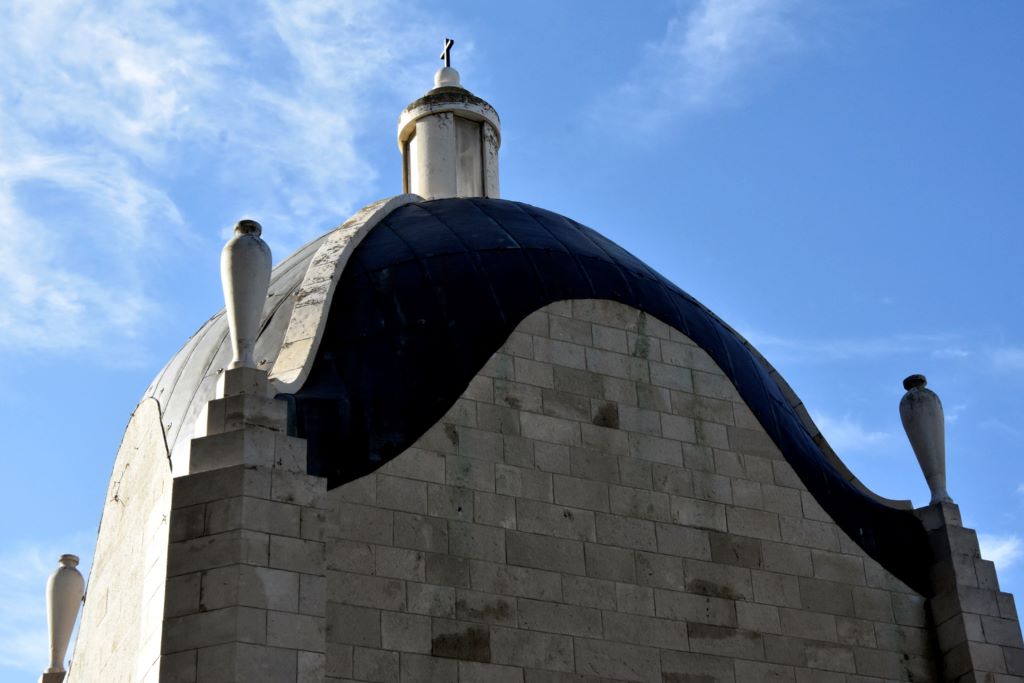
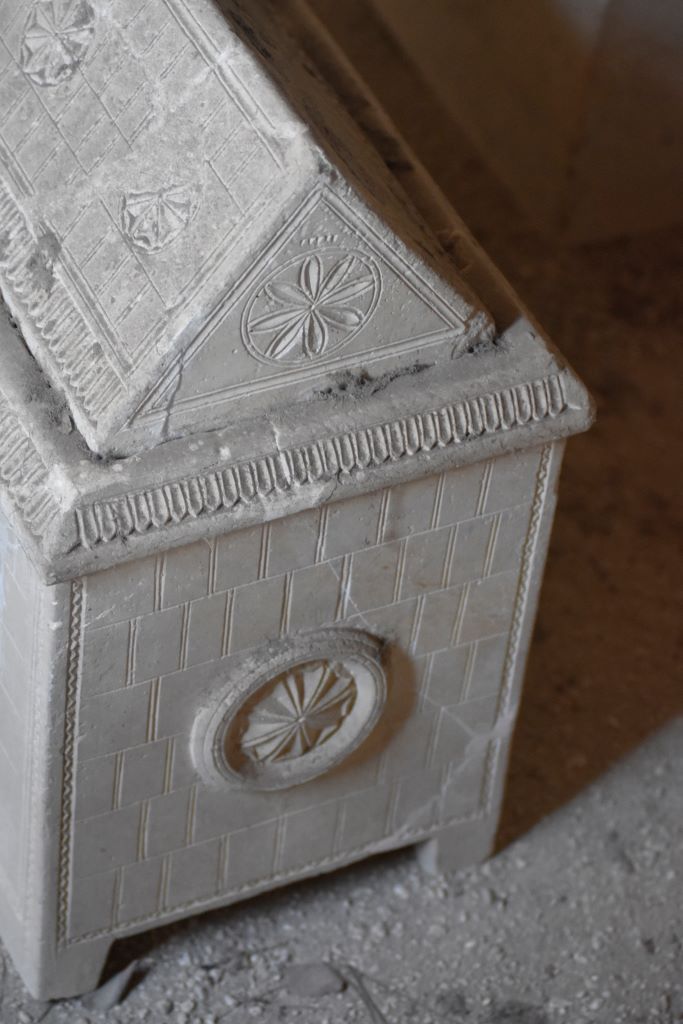
As we continued down the hill, we came upon the Dominus Flevit (The Lord Wept) church, with tear-drop shapes to recognize the traditional location of where Jesus wept as he looked upon Jerusalem before his triumphal entry (Luke 19:41-44). It was built in 1955, and during its construction, tombs from between 136 BC and AD 300 were unearthed.

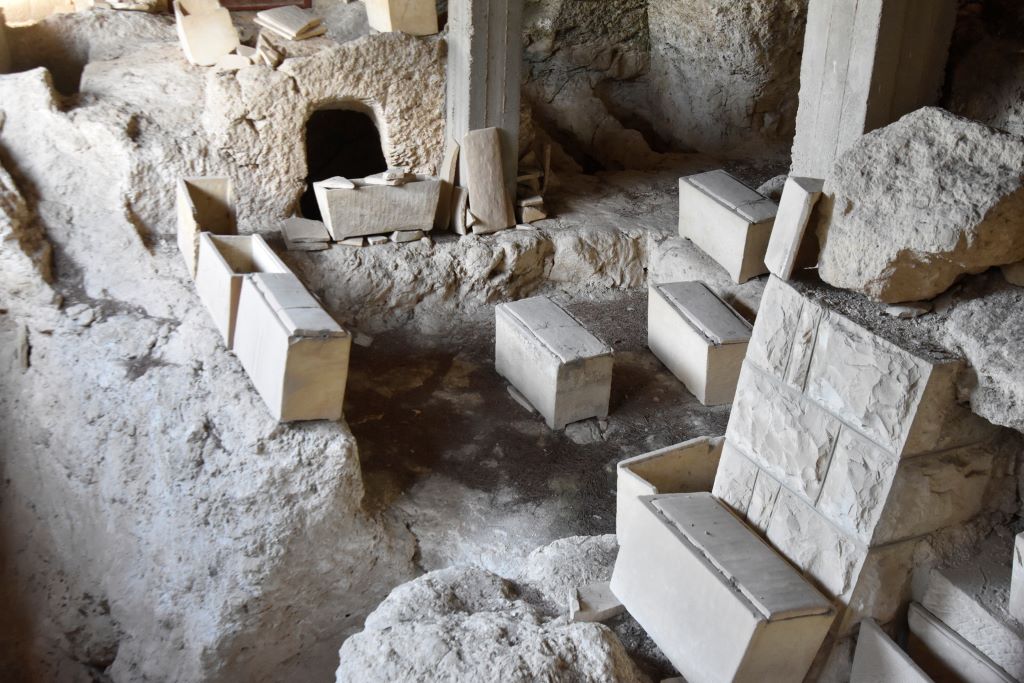
At the bottom of the hill we reached Gethsemane. We walked through an olive grove before entering a church that was built in 1924 over the rock where traditionally Jesus prayed immediately before his arrest. Gethsemane means “oil press,” linking the location to olive cultivation.
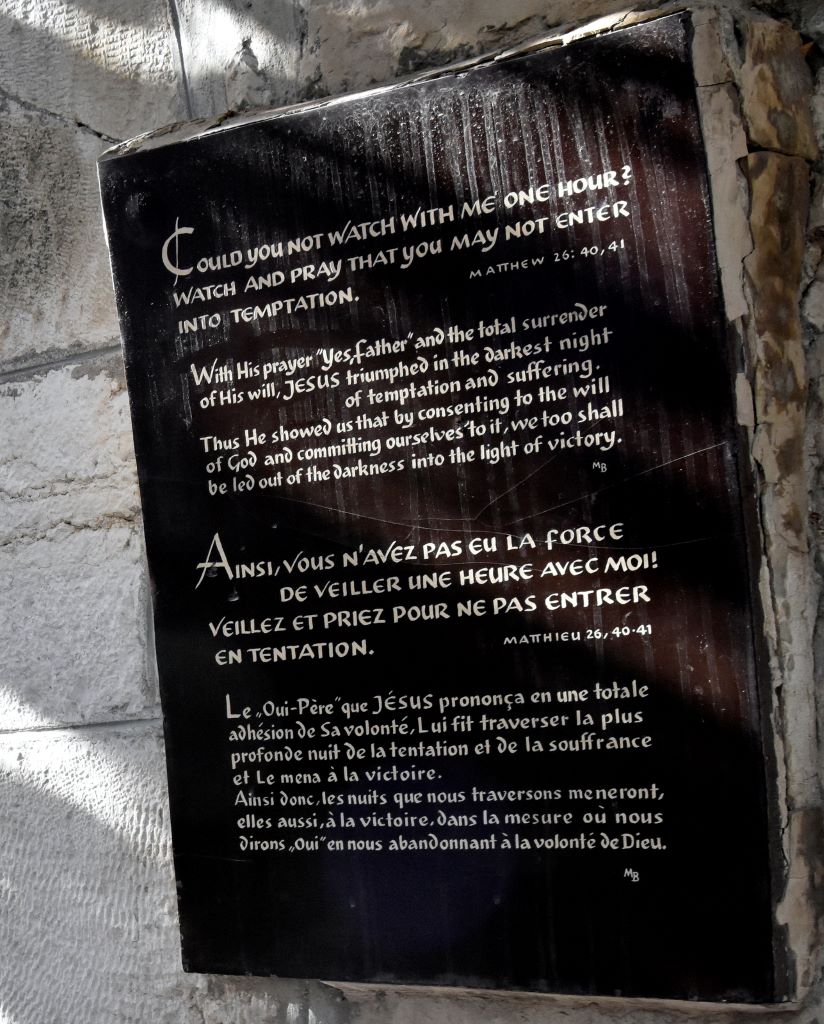

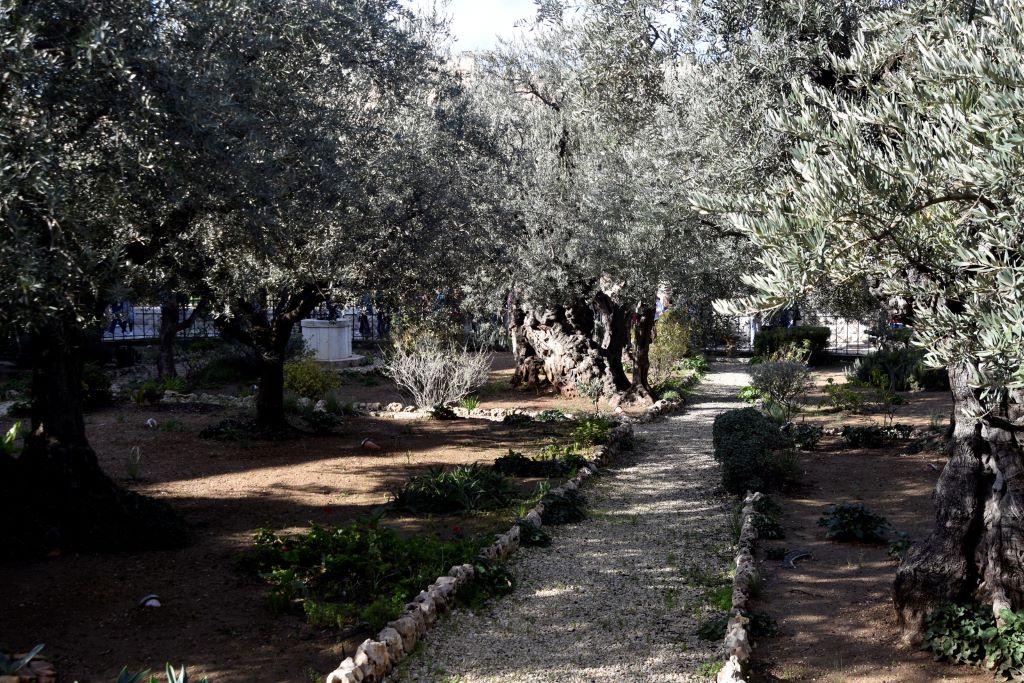
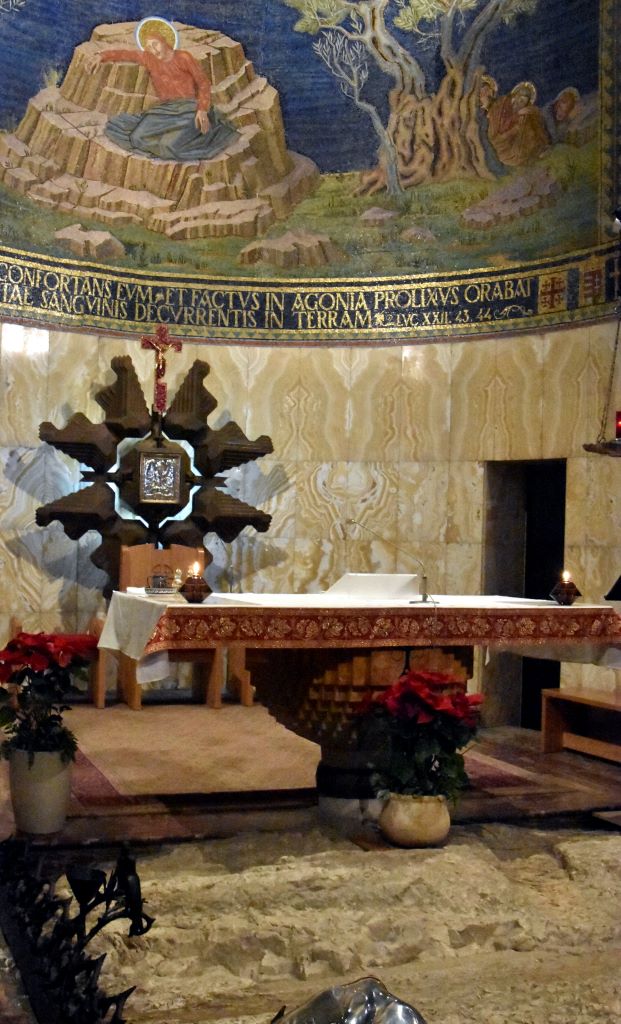
From the garden, we looked across the valley directly at the Golden Gate, as Jesus and his disciples did.

However, instead of entering Jerusalem, we took a detour to the US Embassy. Less than a year previously, Donald Trump had controversially relocated the US Embassy to Israel from Tel Aviv to Jerusalem, thereby recognizing Jerusalem as Israeli which the Palestinians contest after the 1967 war.
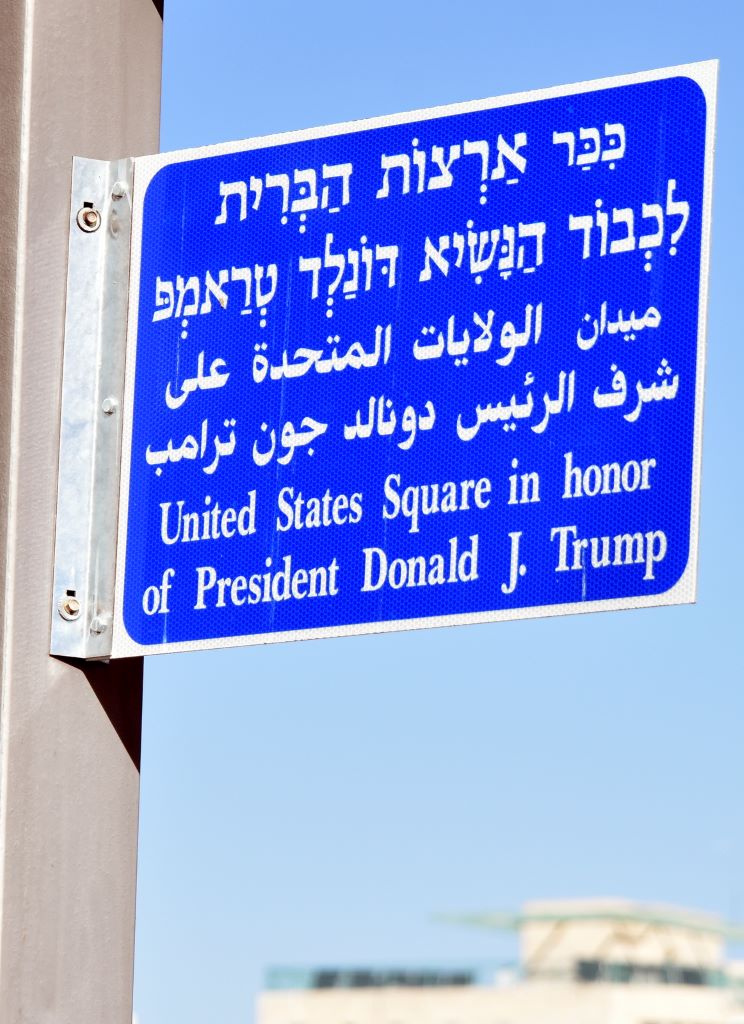

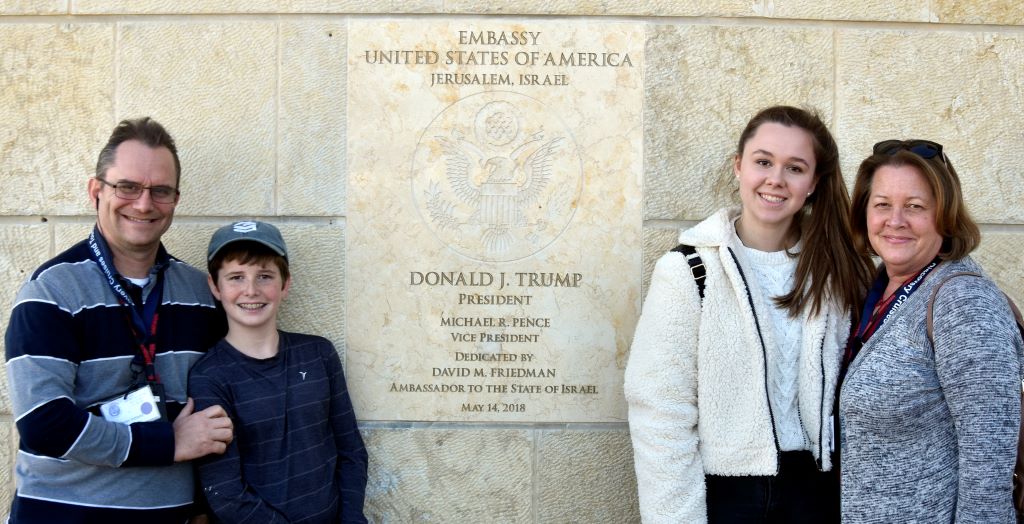
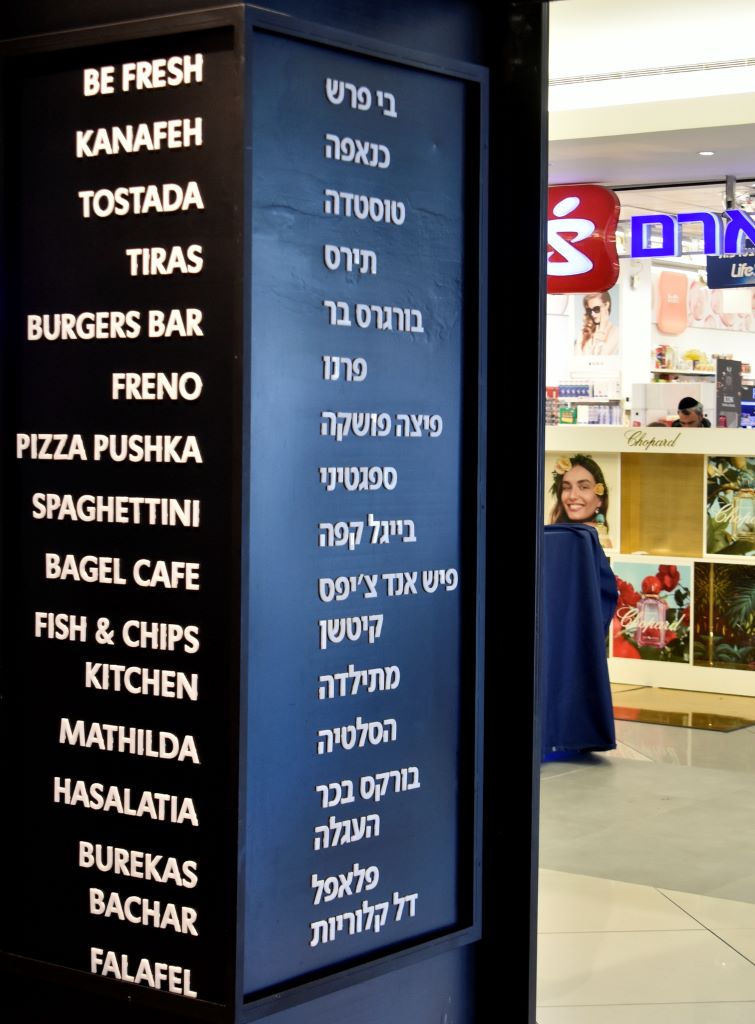
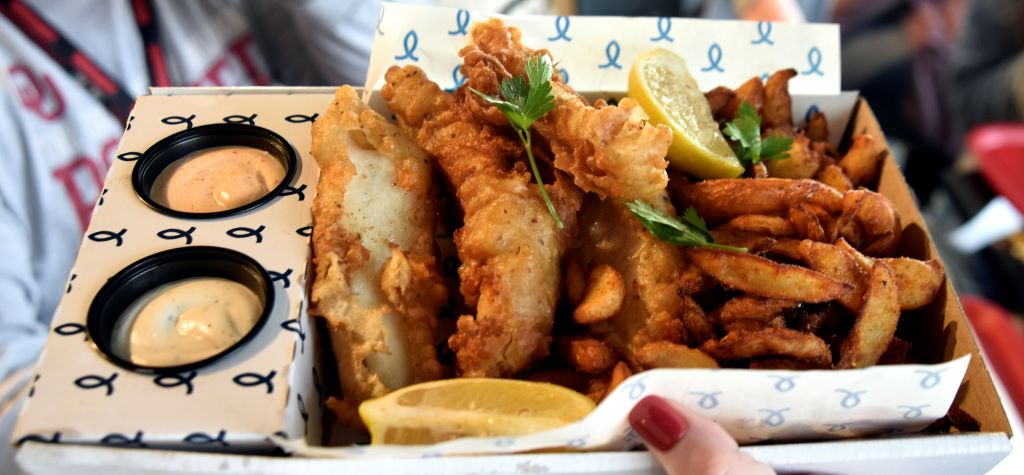
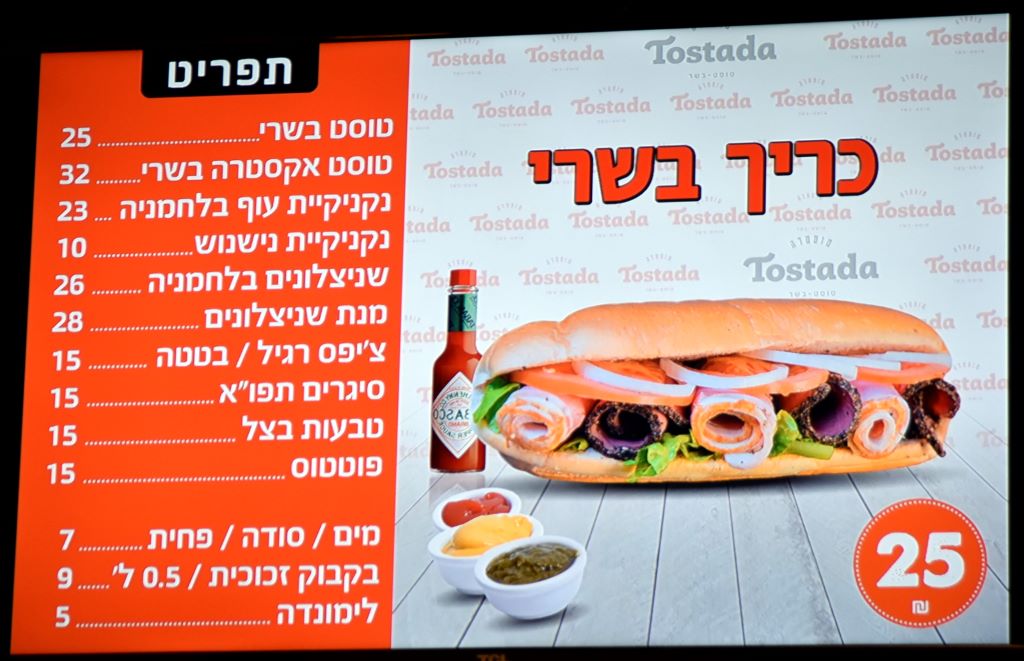
Next up was lunch at a food court in the Hadar Shopping Mall. It was a fascinating mix of western, Israeli, and Arab cultures, and we were particularly amused by a mirror-image of a Tabasco bottle in a cafe’s photo! We all had tasty dishes though.




Then we returned to enter the old city via Lions’ Gate, also known as St Stephens Gate.


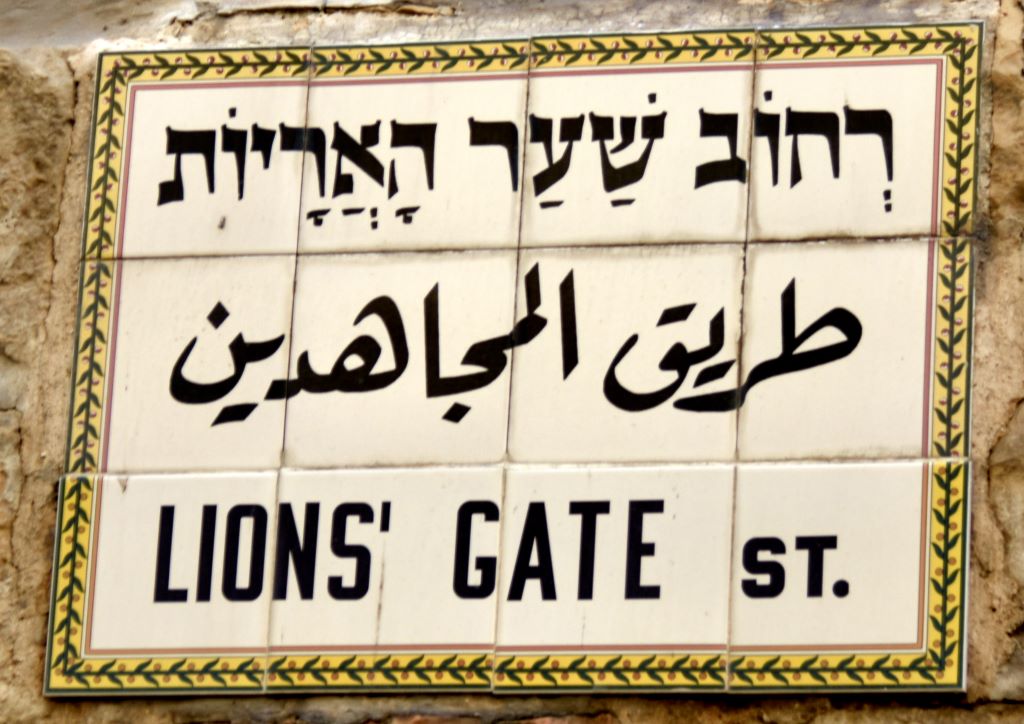
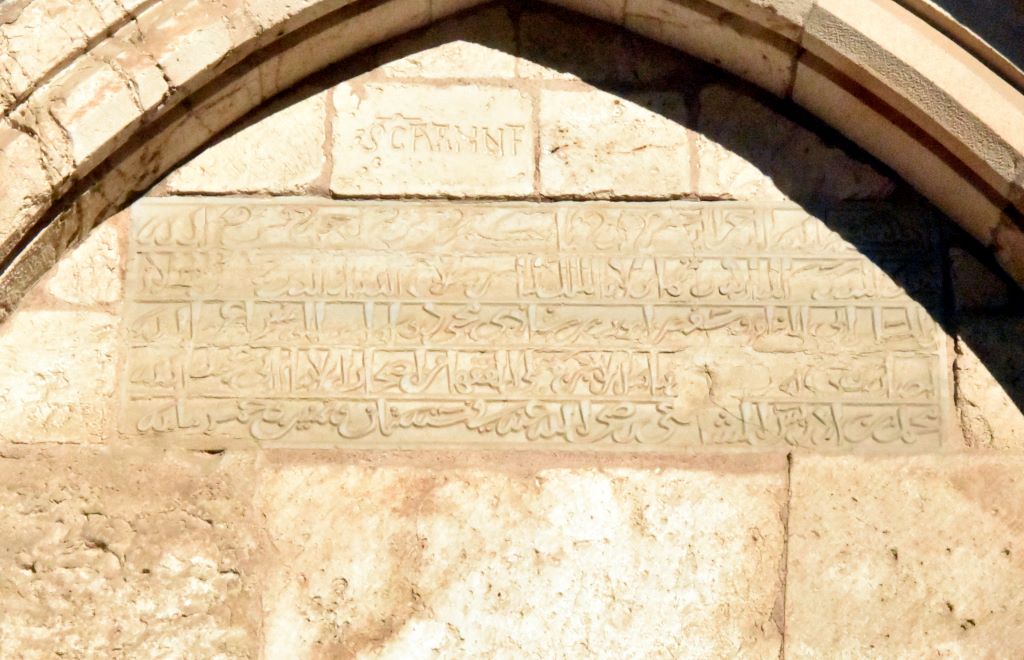
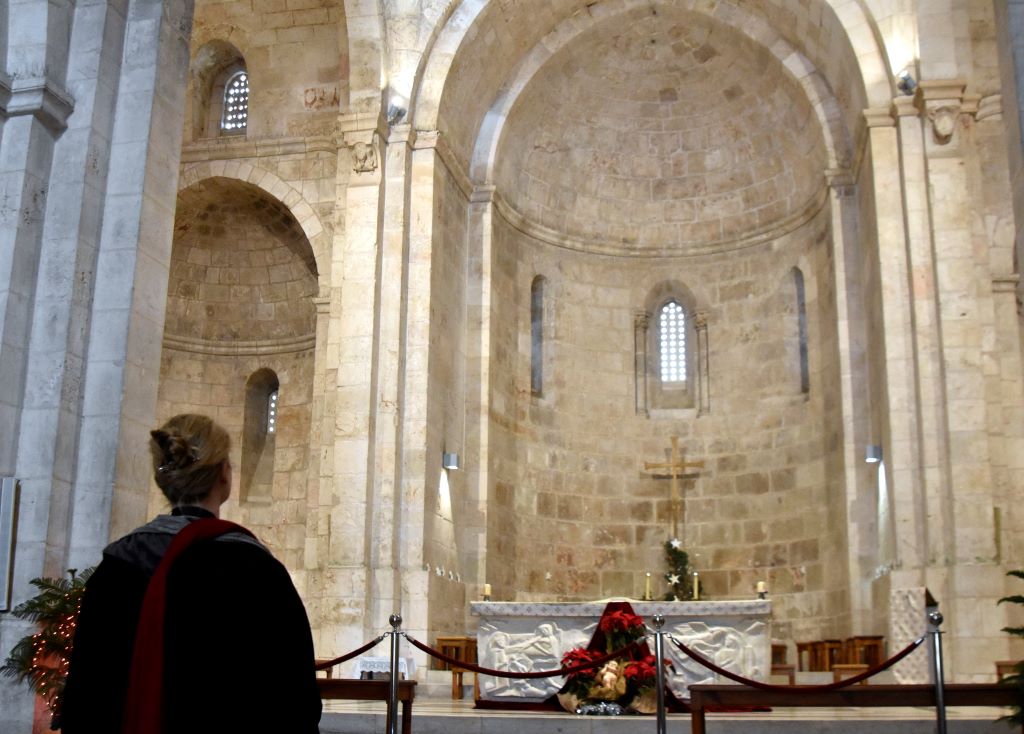
We had entered Jerusalem’s Old City. Any climax associated with such entry was blurred by the contemporary troubles between the Israelis and the Palestinians, the Jews and the Arabs, and the traditions of different Christian denominations. This gate is the beginning of the Via Dolorosa (the sorrowful way) which represents the route Jesus took to his crucifixion, but its historicity is challenged. As we walked into the city, we passed churches originally dating back to the Crusaders in the 12th Century, with compelling names such as Church of the Condemnation and Church of the Flagellation. Their claims to be the sites where Pilate condemned Jesus or where Jesus was flogged seemed unlikely, but they provided atmosphere, as did claims about pavement markings being from games played by the soldiers guarding Jesus. However, the Church of Saint Anne, close to the Lions’ Gate, was interesting for multiple reasons. It is located by the Pools of Bethesda which is where John describes Jesus healing a sick man on the Sabbath (John 5:1–17). The church was built in the twelfth century, and unlike other Christian churches in Jerusalem, it was not destroyed when the Muslims beat the Crusaders. An inscription over the entrance to the church describes it as an Islamic educational institution, and it is believed that the building’s amazing acoustics saved it from destruction. One member of our group sang a beautiful song in the church to demonstrate the acoustics. Outside the church, we also visited ruins including some water pools, though it is not possible to know what the place looked like during Jesus’s time.
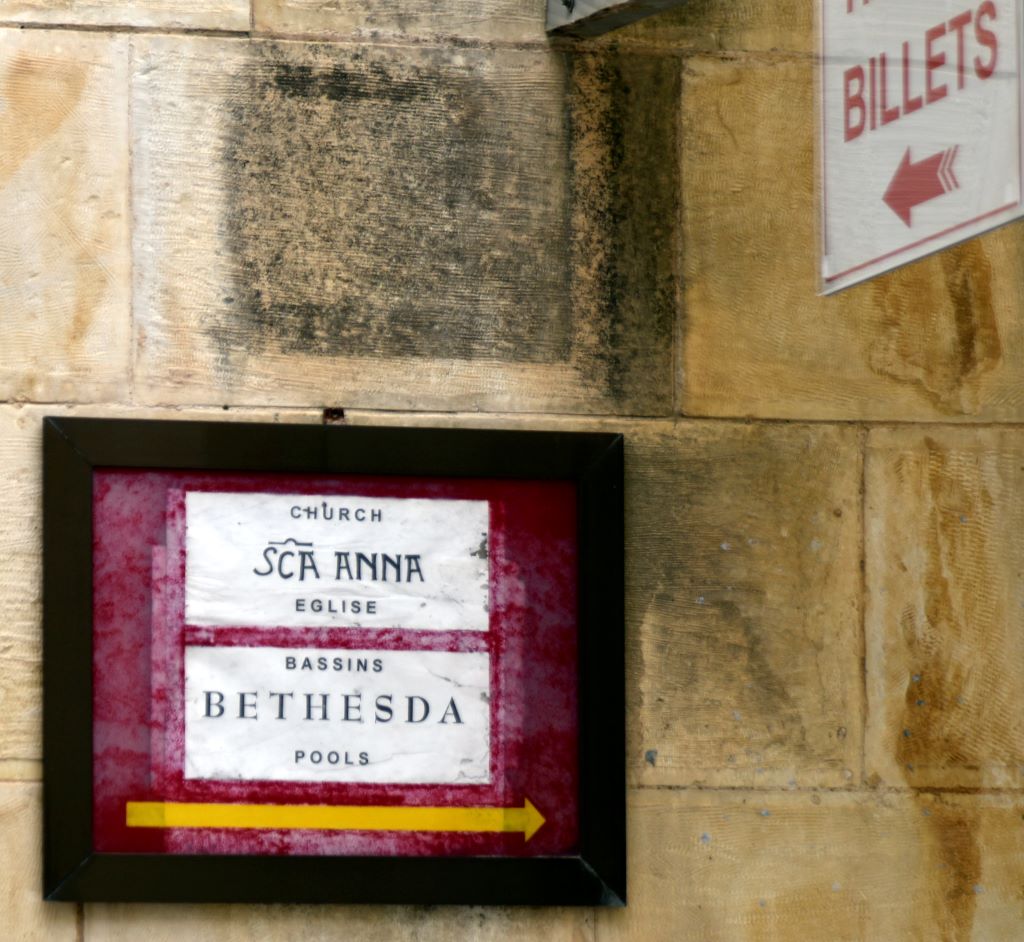
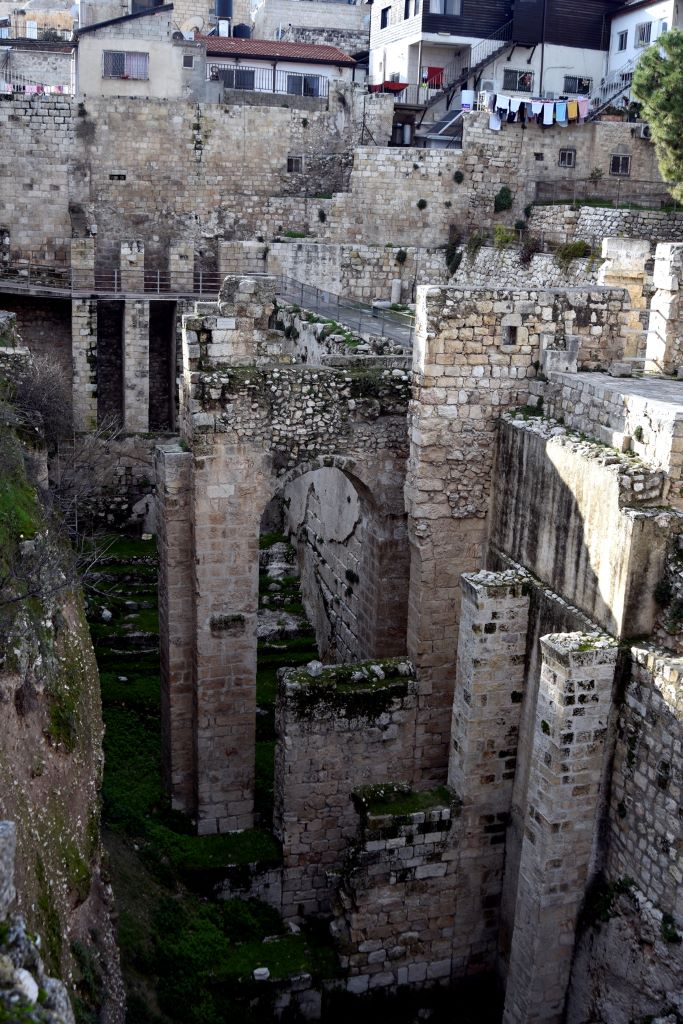

As we walked from St Anne’s to the Damascus Gate, our visual senses were bombarded by historical claims associated with Jesus. It was difficult to take it all in. I took lots of photographs but they have little meaning. There was plenty of security, and vendors selling their wares to the crowds of tourists.

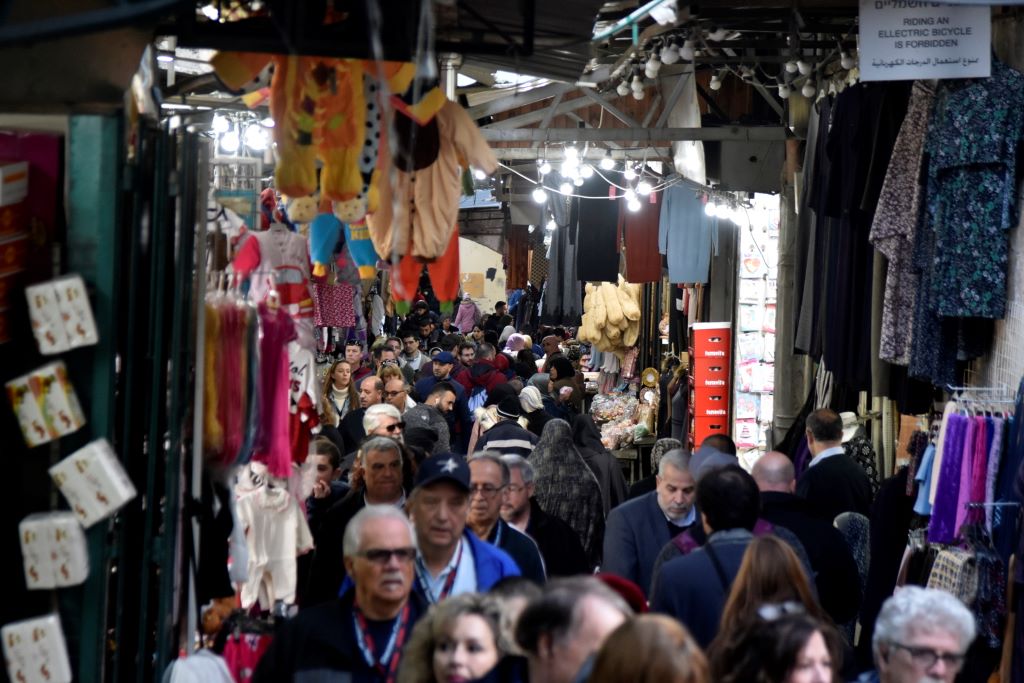


We had entered Jerusalem’s Old City, and left again. We had a bit of fun at a diamond store before having a fine dinner at our hotel to round off the evening.

Day 6: Bethlehem and Yad Yashem
Our sixth day took us to Bethlehem. It is located in the Palestinian territories and visiting is often too dangerous, but we were visiting at a time of stability so we could enter. A wall separates the Palestinian and the Israeli territories and the change was stark. Jacob told us of how, in the past, Palestinian suicide bombers would cross into Israel and blow themselves up on crowded buses. The repercussions from the Israeli authorities on the Palestinian population were severe. One could sense the tensions that were ready to erupt.


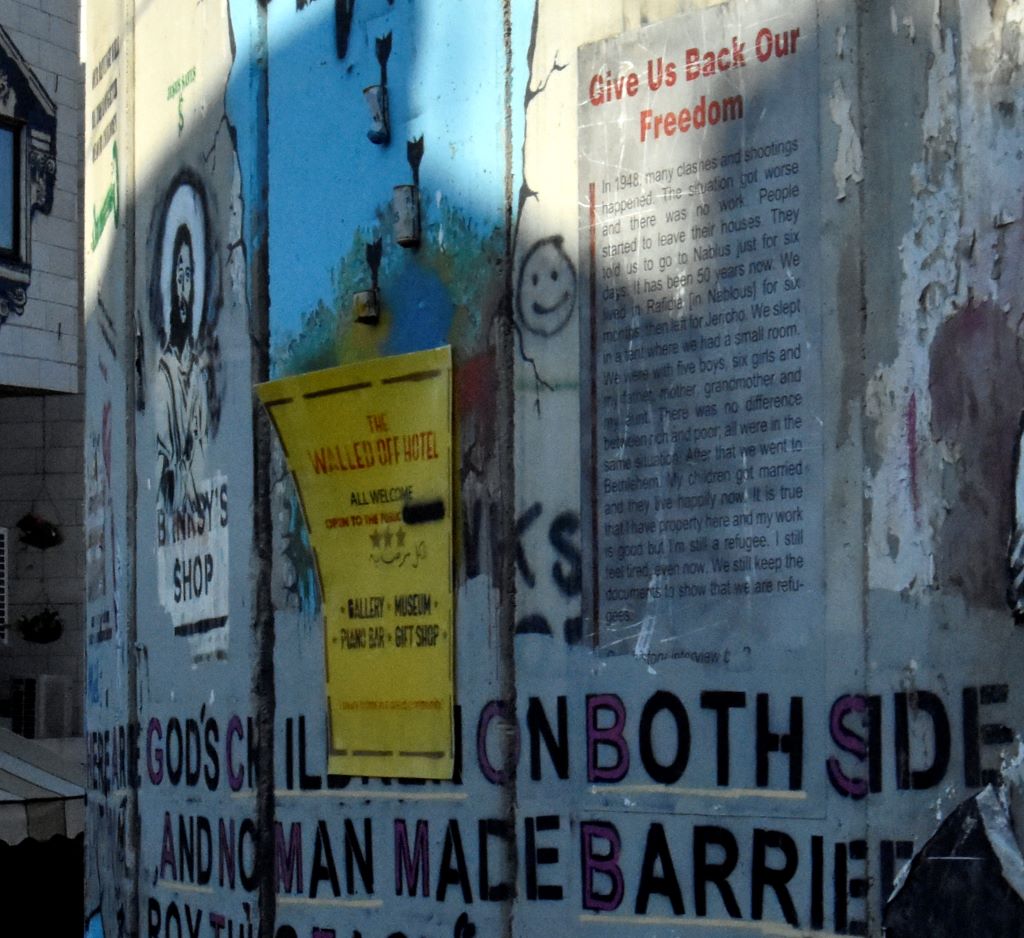
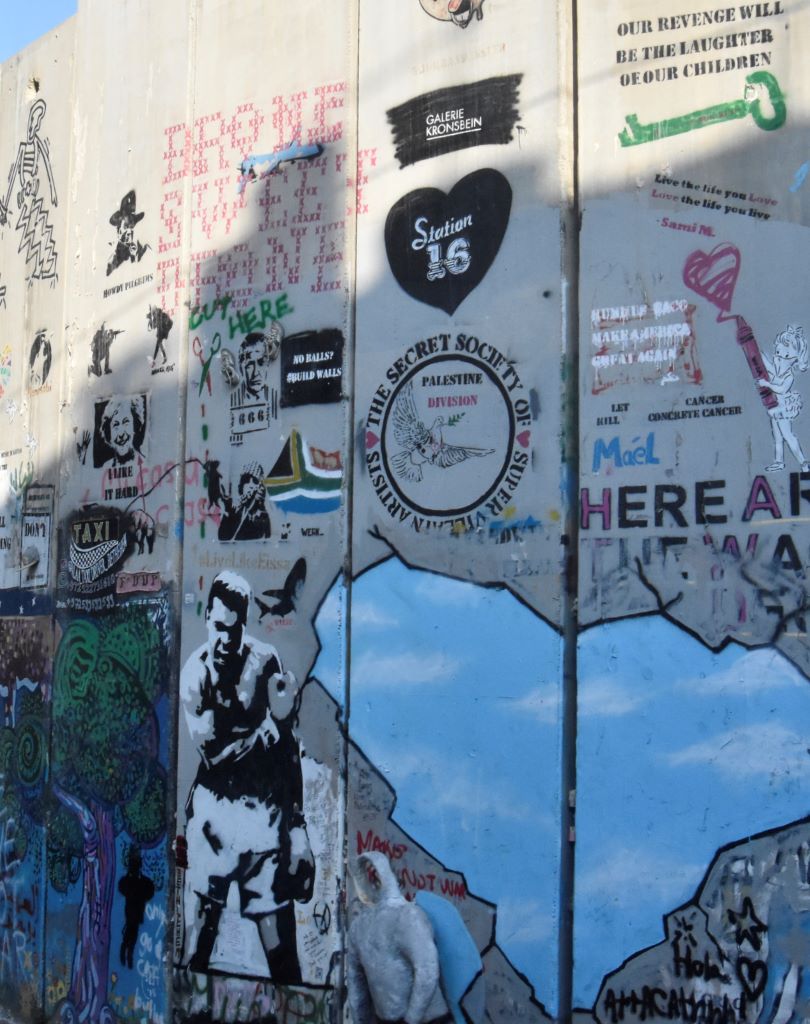


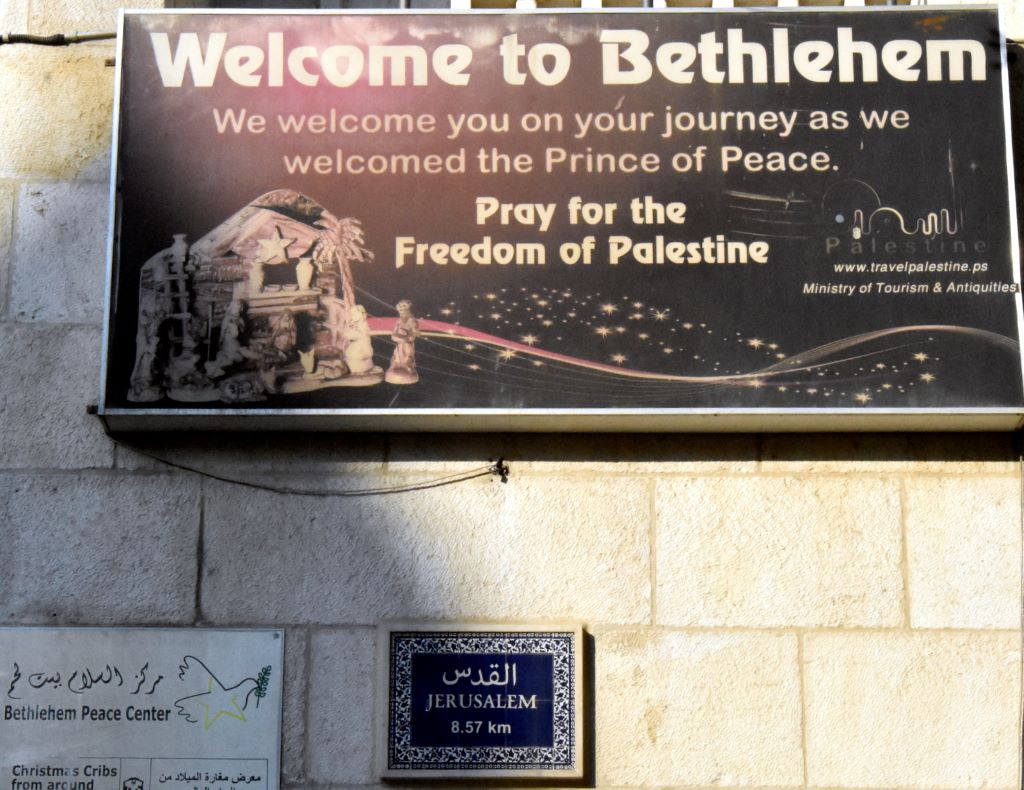


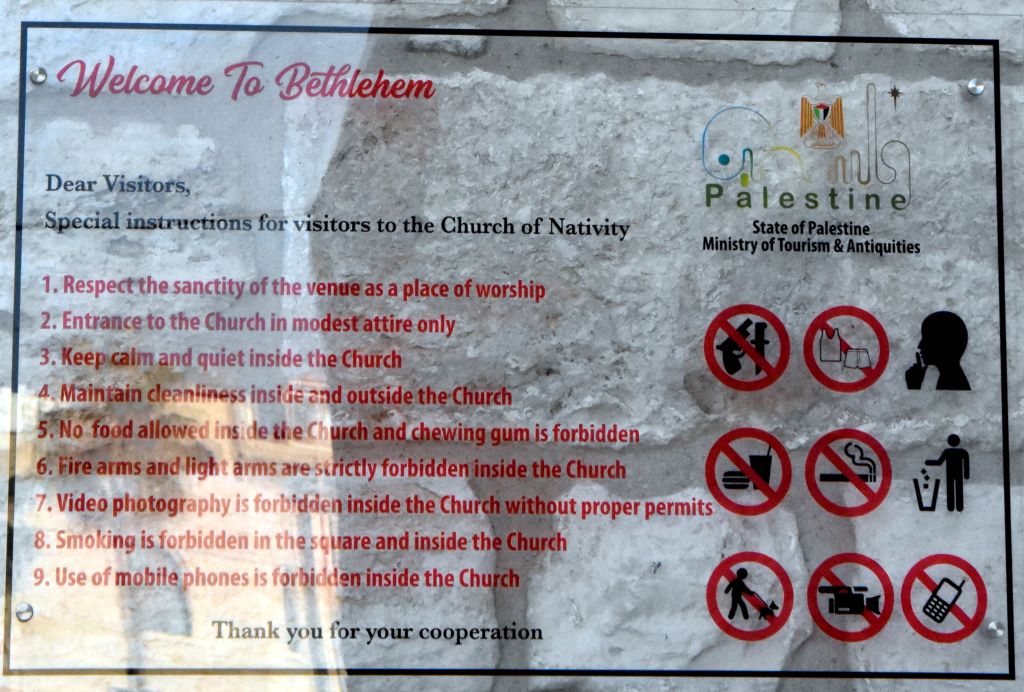
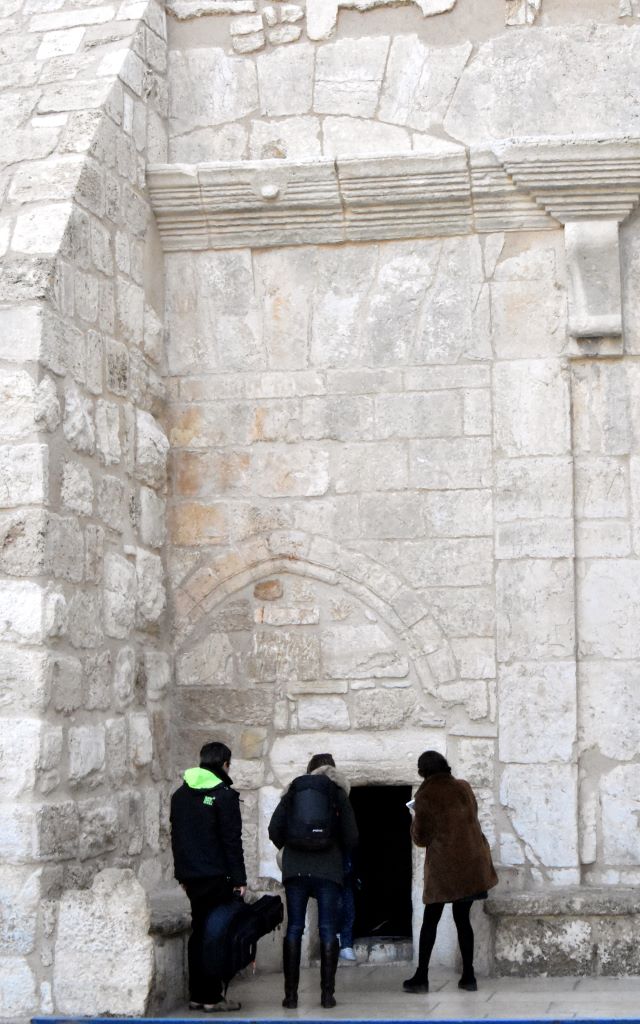
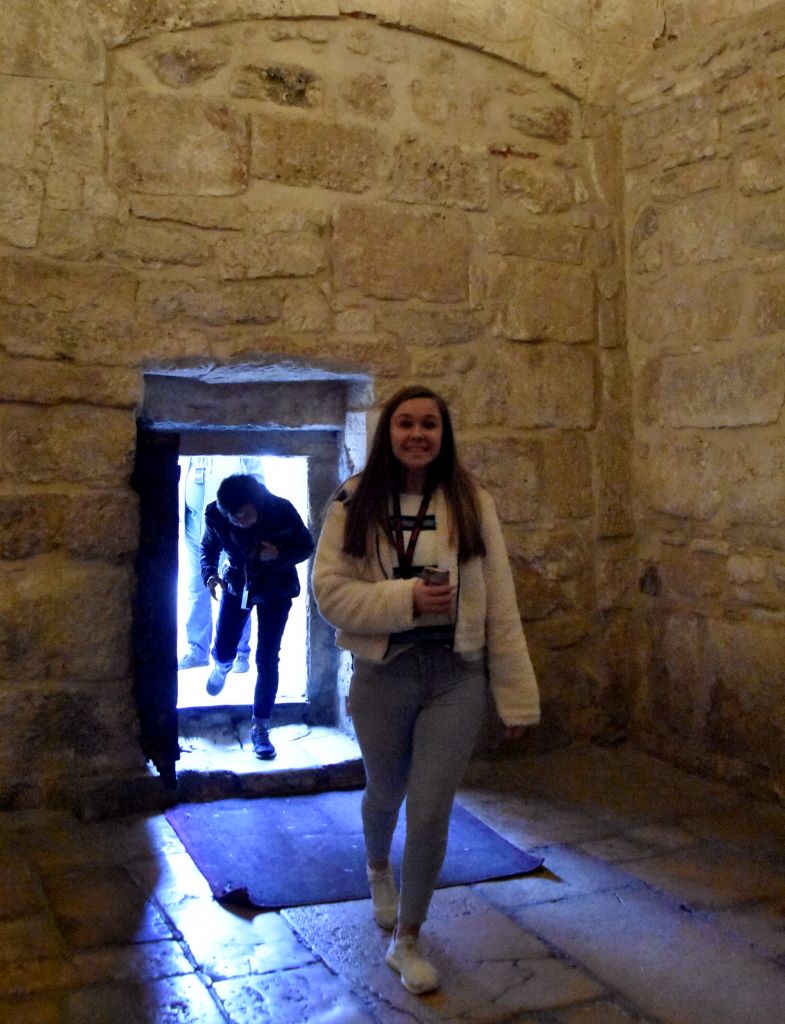
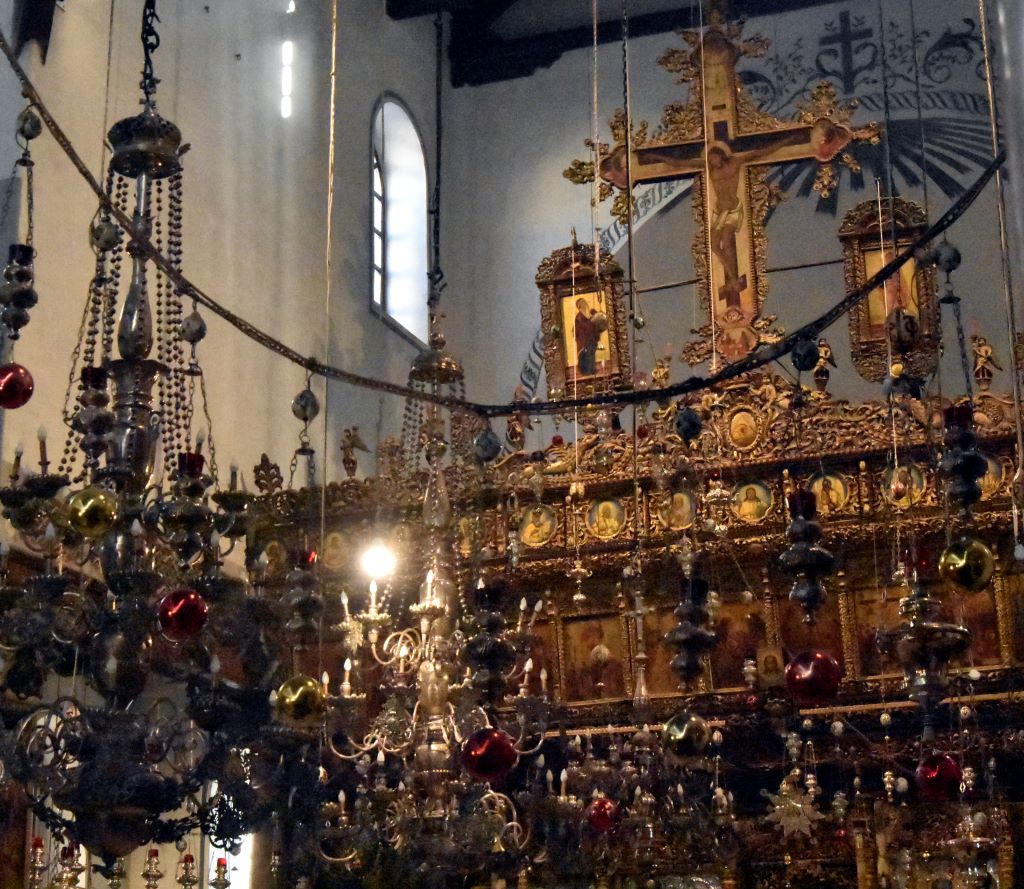
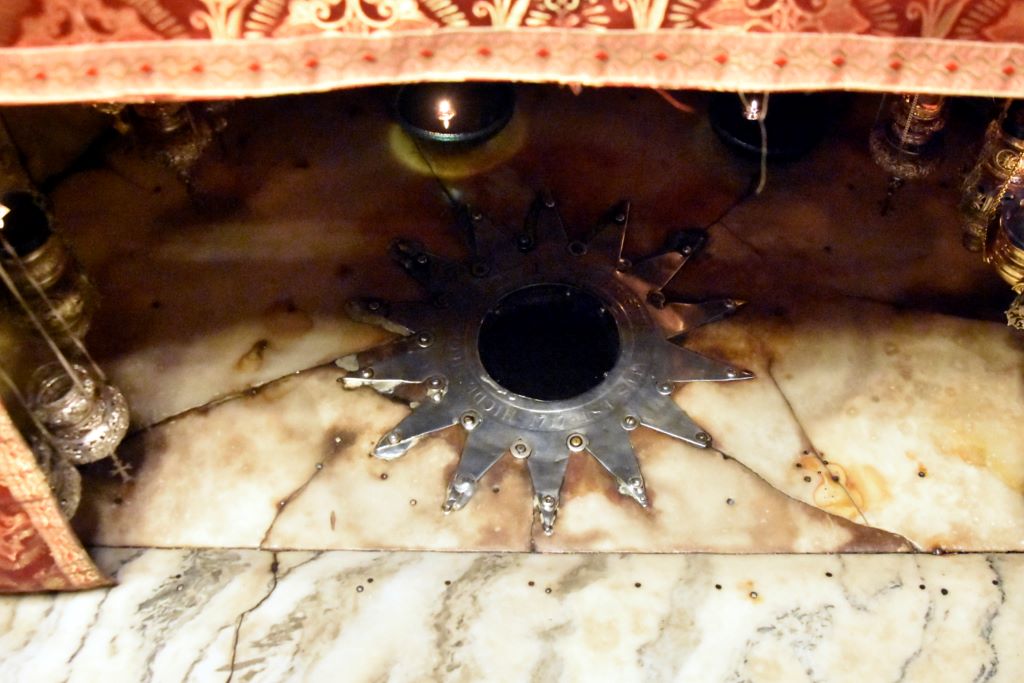
We visited the Church of the Nativity which is over the traditional site of Jesus’s birth. Our mandatory Palestinian guide explained how the entrance door had been made smaller to make it more difficult for hostile crowds to enter. The church itself was gaudy with lots of elaborate decorations. We waited to walk down to the exact spot where Jesus was traditionally born, and it just felt wrong. This wasn’t a humble stable! However, the worn steps indicated that pilgrims for centuries had made this trip.


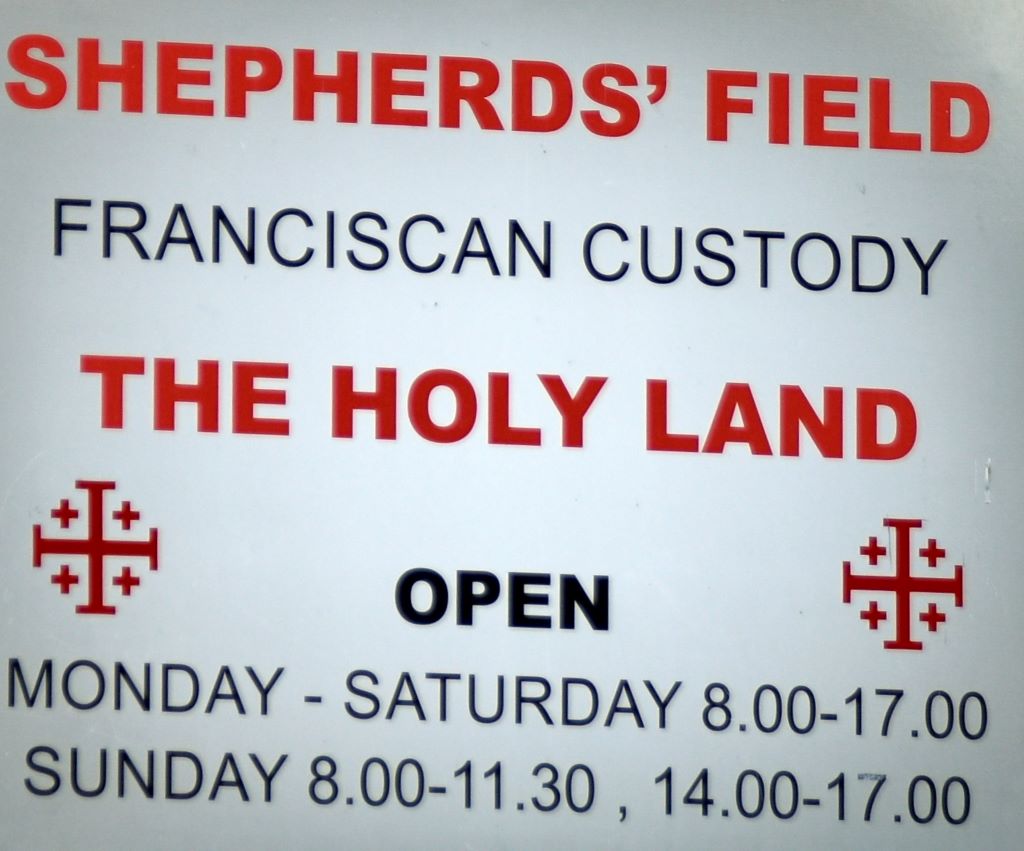
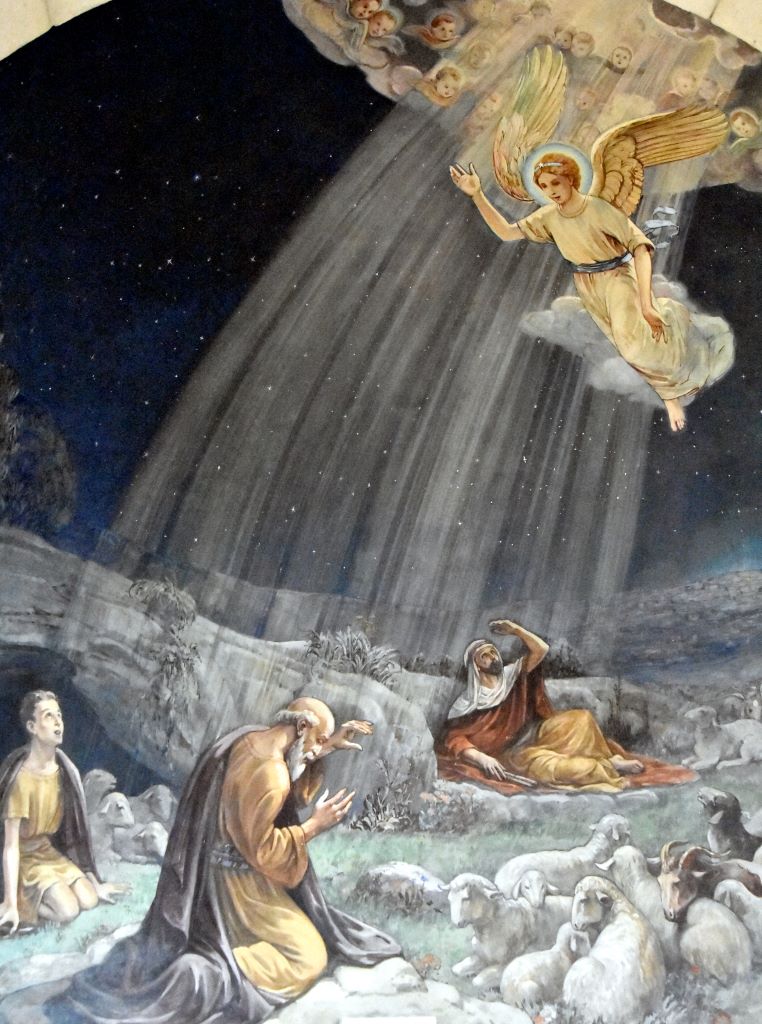
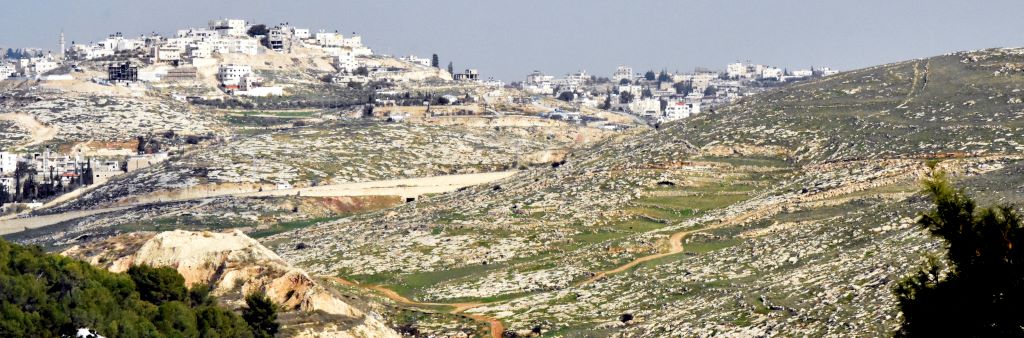
From the Church of the Nativity, we headed to some caves, that were the ones or were similar to the ones that the shepherds to whom angels announced Jesus’s birth sheltered in (Luke 2:8–20). At the site, the Chapel of the Shepherds’ Field, built in 1953, has large wall paintings depicting biblical scenes while just outside, there were plenty of businesses making the most of the link with shepherds. In the area, there remained some open pasture which was most similar to what it would have been like 2000 years ago.


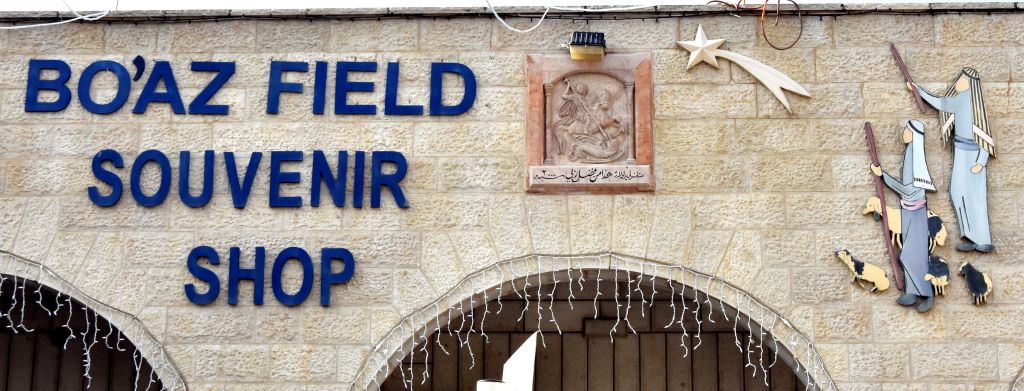
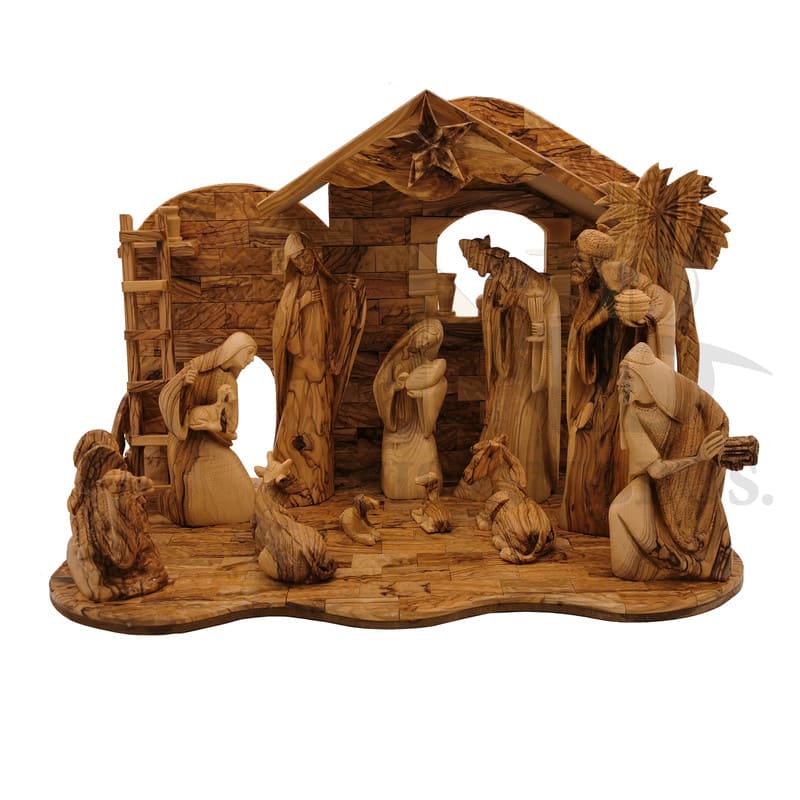
Our next stop, for lunch and souvenirs, highlighted the ethnic and religious tensions of the area. We visited the Nissan Brothers store, which is the only business in Bethlehem that supports the remaining, barely surviving, Christian community. Everything else is Muslim. We enjoyed lunch and toured their woodcarving factory (which uses local olive wood) and souvenir store. While there was some beautiful artwork, including nativity scenes, the mass-production of Jesus heads was odd!


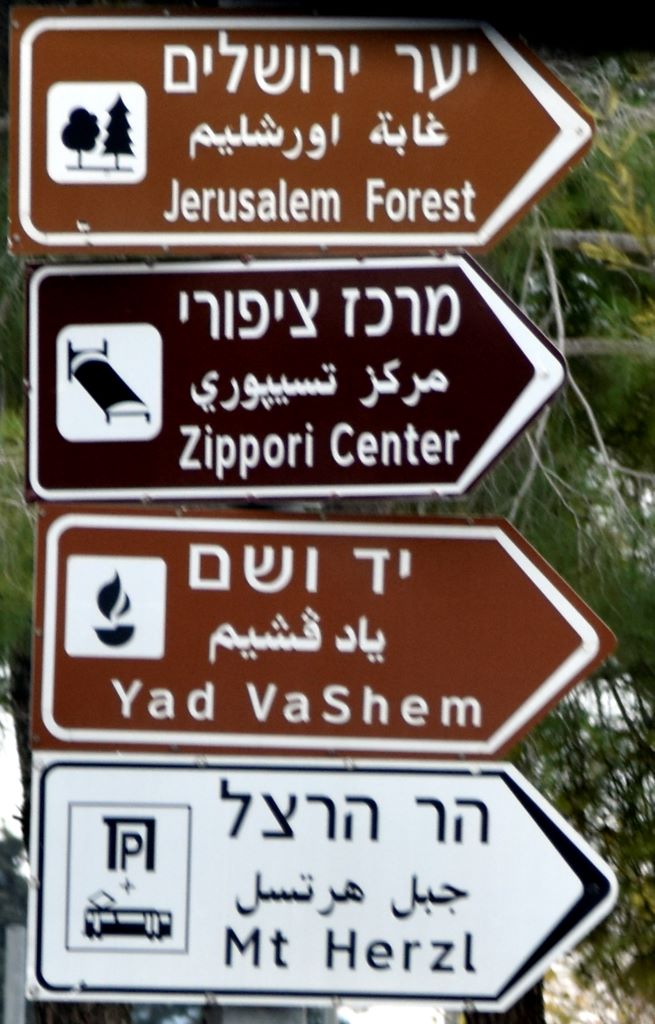
We traveled back across the well-guarded border into Israel for a complete change in pace and reflection as we headed to Yad Vashem, Israel’s official memorial to the victims of the holocaust. It is a remarkable site and it is impossible to describe how it captures the Nazi’s attempt to eliminate the Jewish race. It maintains databases of names and biographical details of the nearly 5 million people who were murdered along with stories of survivors. The name “Yad Vashem” means “a memorial and a name.” It is taken from Isaiah 56:5 in which God promises an everlasting remembrance for eunuchs that could not have children and had been rejected by the Mosaic Law (Deuteronomy 23:1). Christians view this passage as a prelude to Jesus and Christianity’s acceptance of everyone.
The memorial is vast with many large exhibits which continually trigger emotions. We spent some time at the memorial to the lost children. It included a display of columns that had been cut short, representing the lives the children did not live. Inside a dark room were many pinpoints of light representing the lost lives.


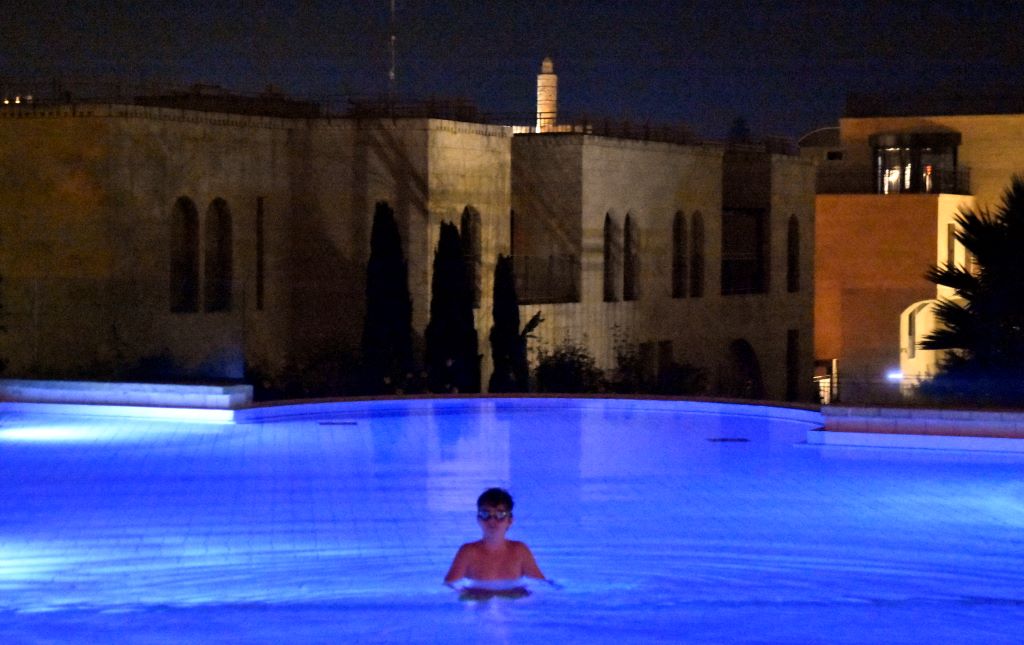
After dinner at the hotel, we wound down in the hotel pool before bed.

Day 7: The Western Wall, Southern Steps, City of David, Israel Museum, and Garden Tomb
Our seventh day was another packed day in and around Jerusalem. First, we explored the southern part of Jerusalem’s old city.
In 1948, Jordan took control of the Old City in the Arab-Israeli war. Israel took control of the whole of Jerusalem in the 1967 Six-Day War, which included hand-to-hand fighting on Temple Mount. Many countries continue to identify Israel as illegally occupying East Jerusalem along with other territories. While Israel governs the whole of Jerusalem, they must maintain the careful balance between the different ethnic and religious groups.
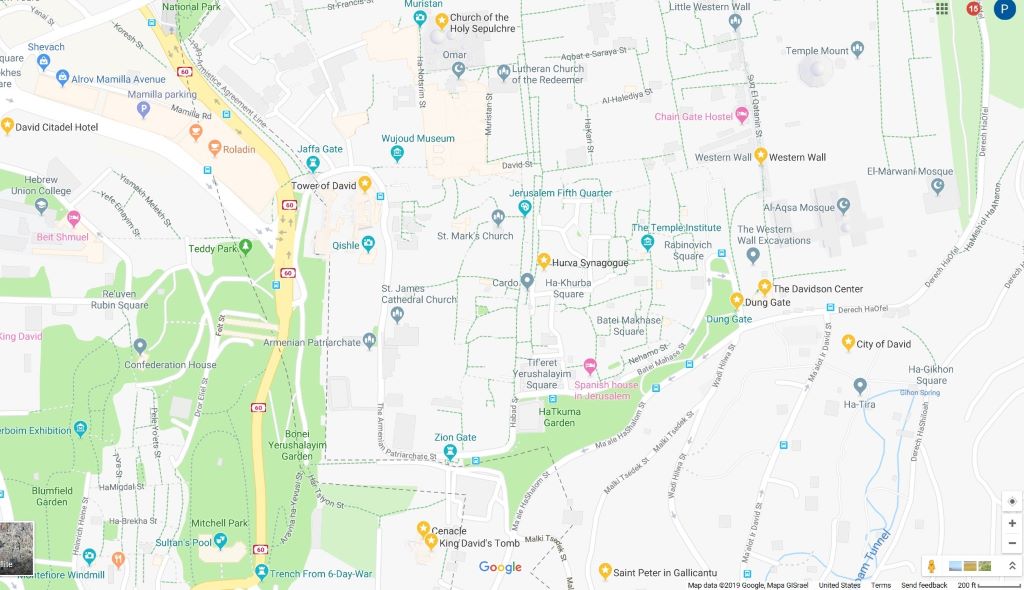
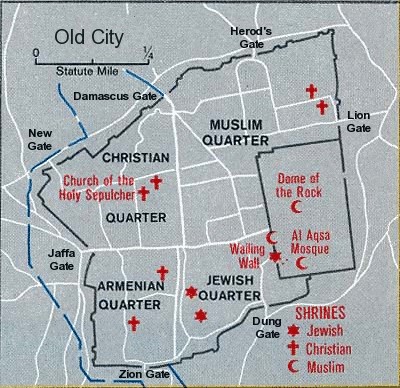
We entered the old city via the Jaffa Gate which took us into the Armenian Quarter, through which we walked to the Jewish Quarter. The Old City’s division into four uneven quarters (Muslim, Christians, Armenian, and Jewish), in addition to Temple Mount, dates from British rule in the 1840s. The quarters represent historical development rather than ethnic segregation.
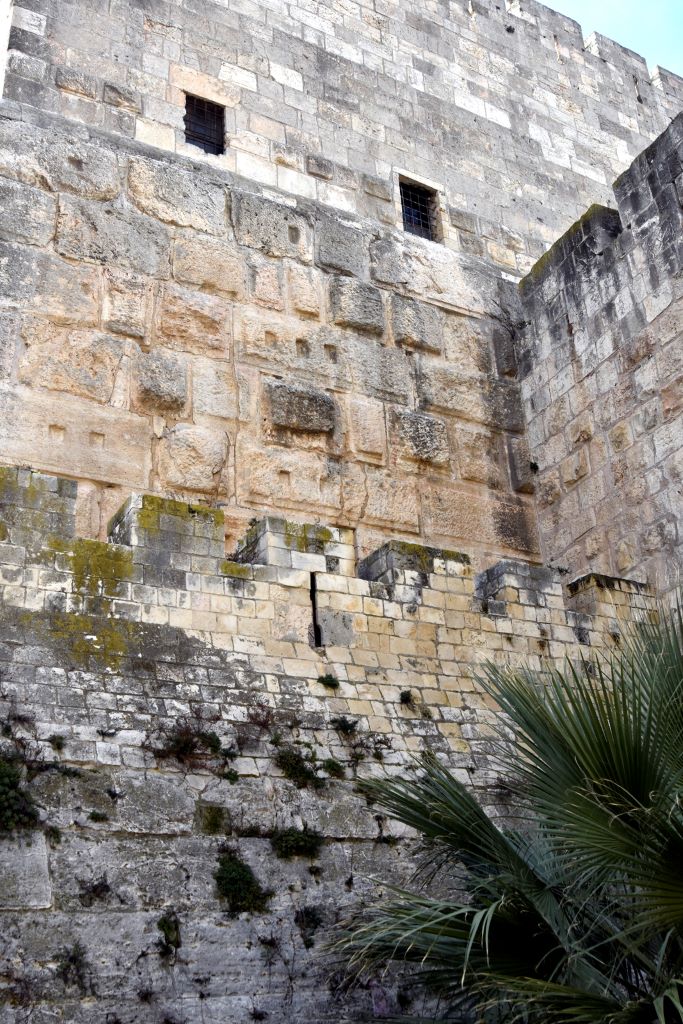
At another section of the city wall, Jacob pointed out some bullet holes from previous fighting. He had served in the Israeli army.
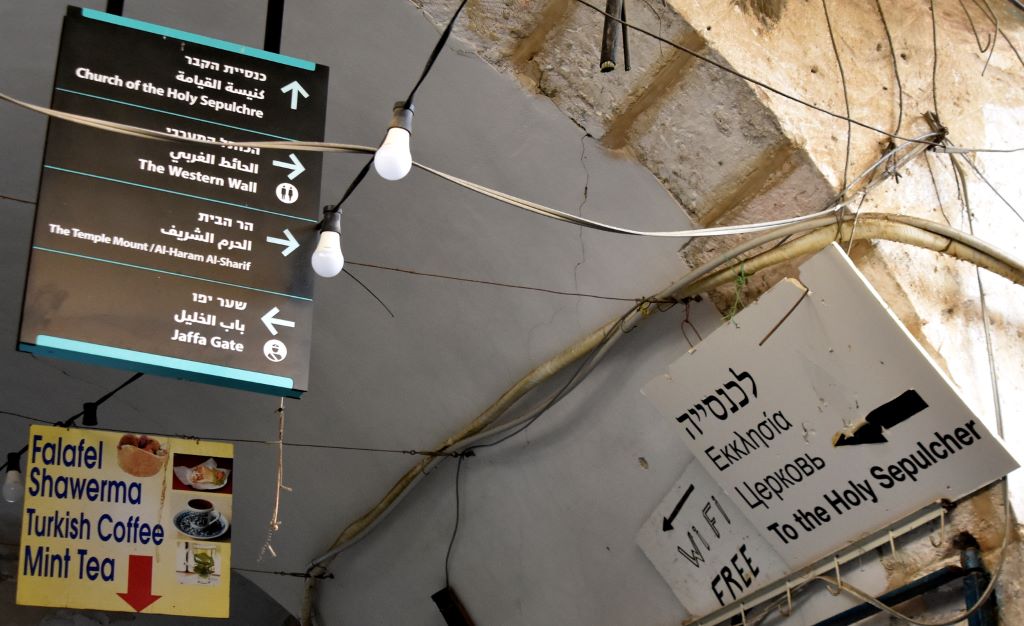
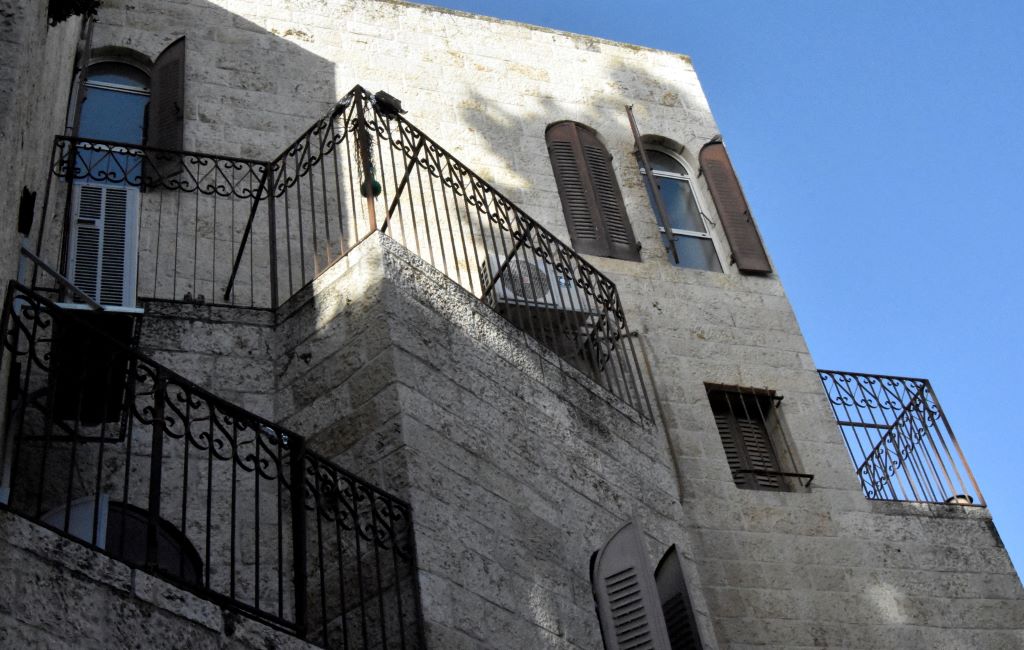
Our journey through the Armenian Quarter via the Church of the Holy Sepulcher in the Christian Quarter to the Western Wall in the Jewish Quarter was one of contrasts. Narrow alleys and a grand church; modern residential housing over ruins from multiple millennia ago.





In front of the synagogue is a golden seven-branched Temple menorah as described in Exodus 25:31–40. This is different from the nine-branched Hanukkah menorah which is lit during the Jewish holiday of Hanukkah to celebrate the rededication of the Second Temple at the beginning of the Maccabean Revolt in the 2nd Century BC during the period between the Old and New Testaments.
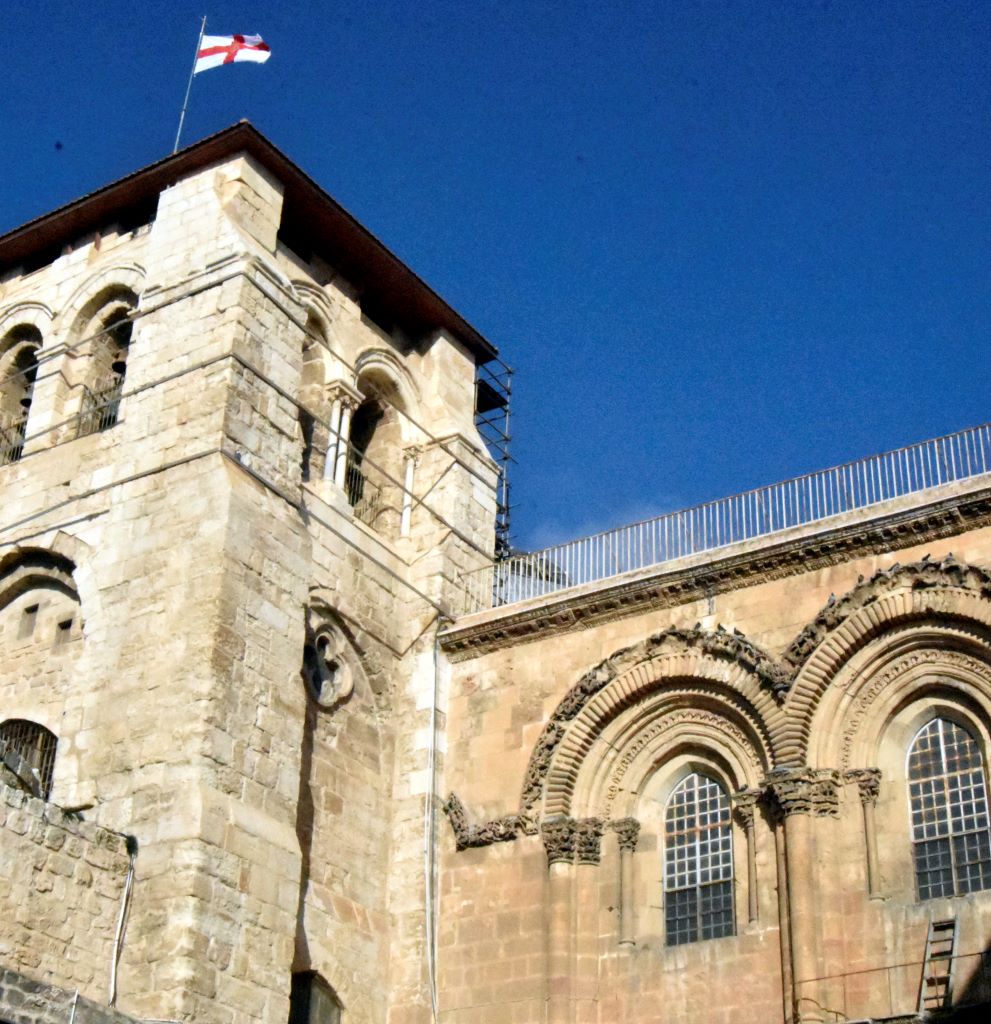
The original plan for the day did not include a trip to the Church of the Holy Sepulcher. The church claims to stand on the site of Jesus’s crucifixion and burial, but this is widely challenged. While it remains a popular site for pilgrims and is gaudily decorated in a similar way to the Church of the Nativity, it also symbolized division and “status quo” between different Christian groups. The fourth-century church is owned by six denominations (Roman Catholic, Greek Orthodox, Armenian Apostolic, Coptic, Syriac, and Ethiopian Orthodox), and an agreement dating back to 1757 maintains the “status quo” where all six have to agree to changes. Symbolic of this status quo is the “immovable ladder,” first mentioned in 1757.
Another symbol of Christian division is the need for a Muslim family, the Nusaybahs, to hold the keys to the church. This dates back to the seventh century, and family members continue to open and close the church doors each day.
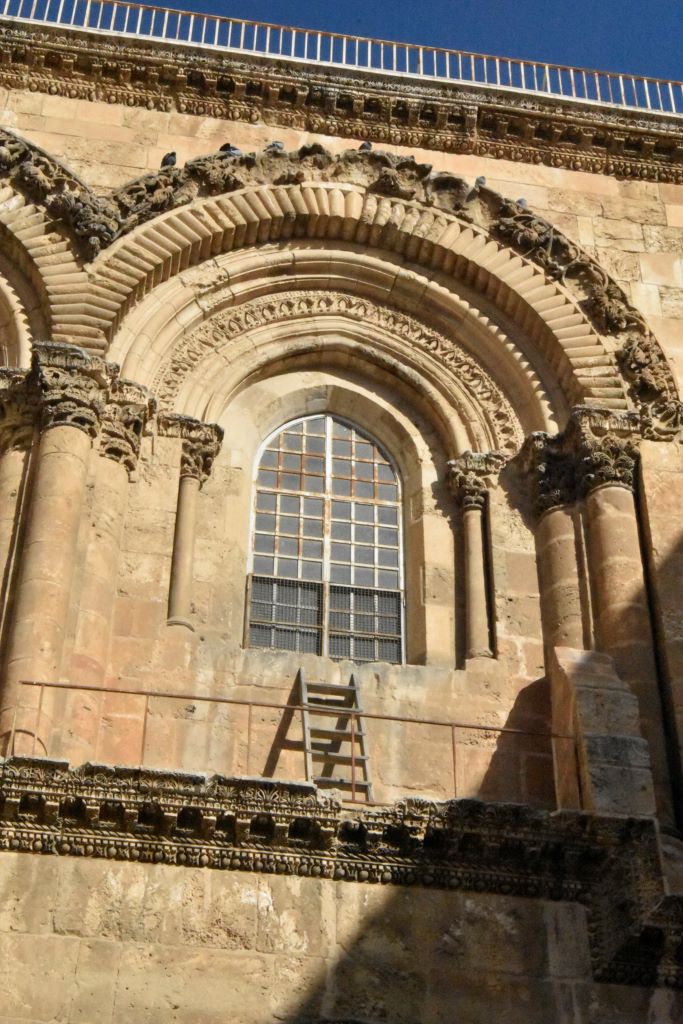
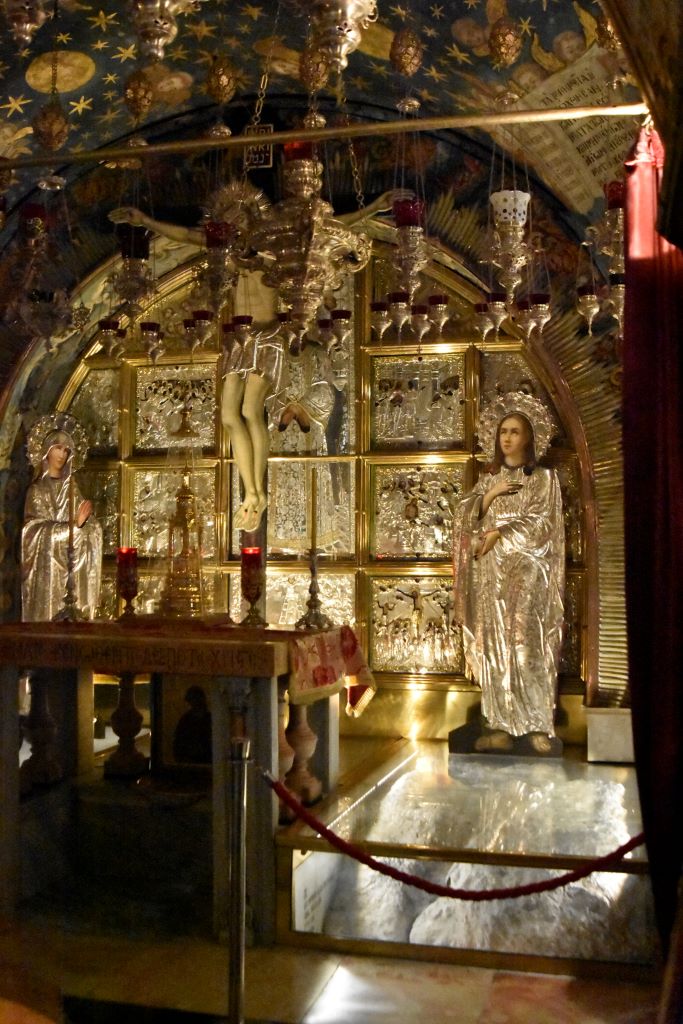
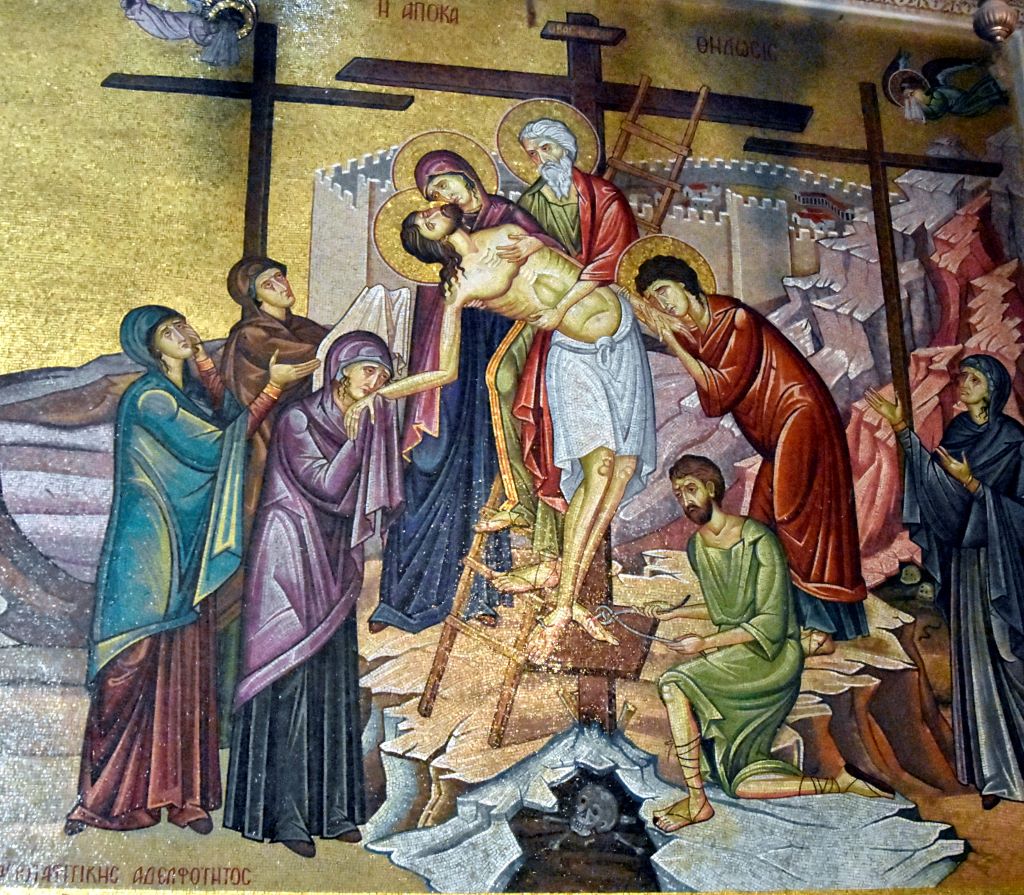

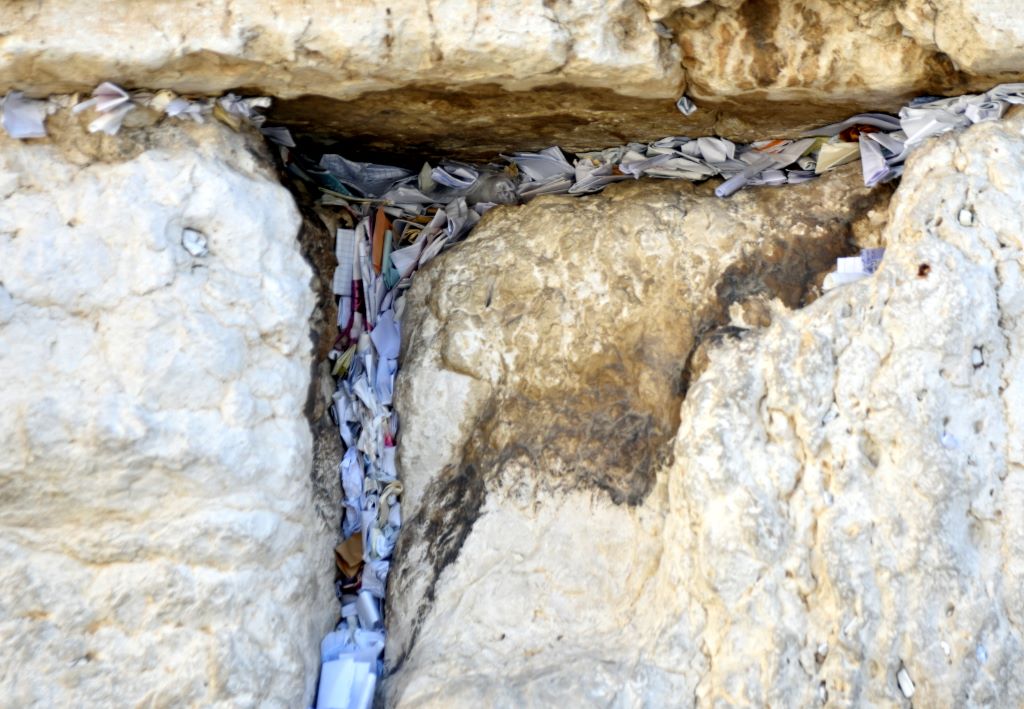
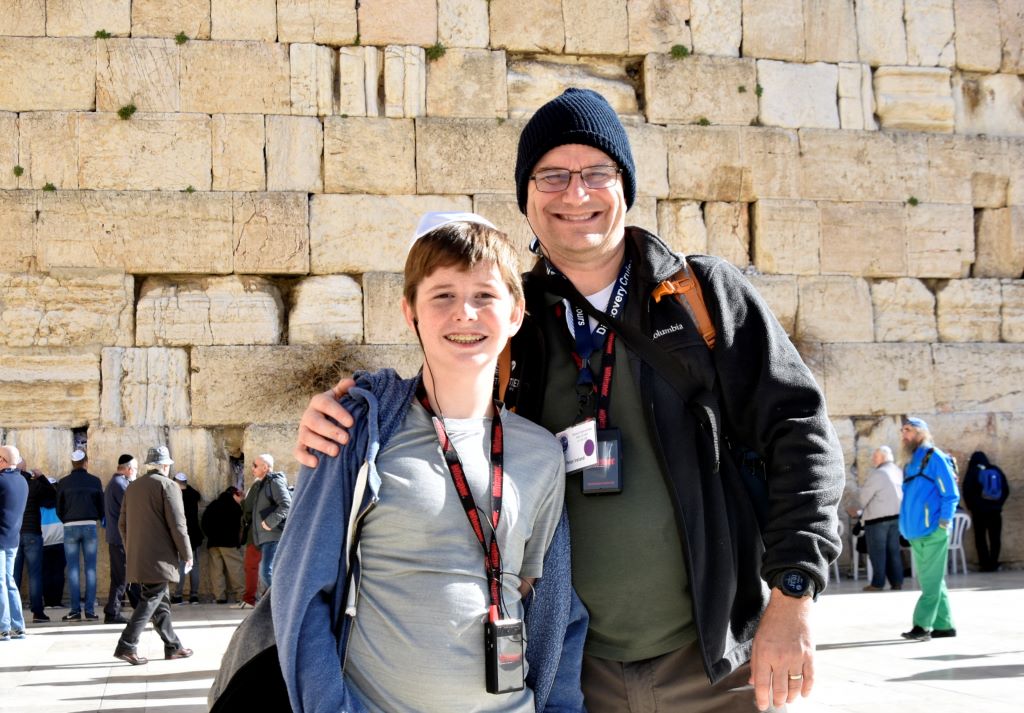
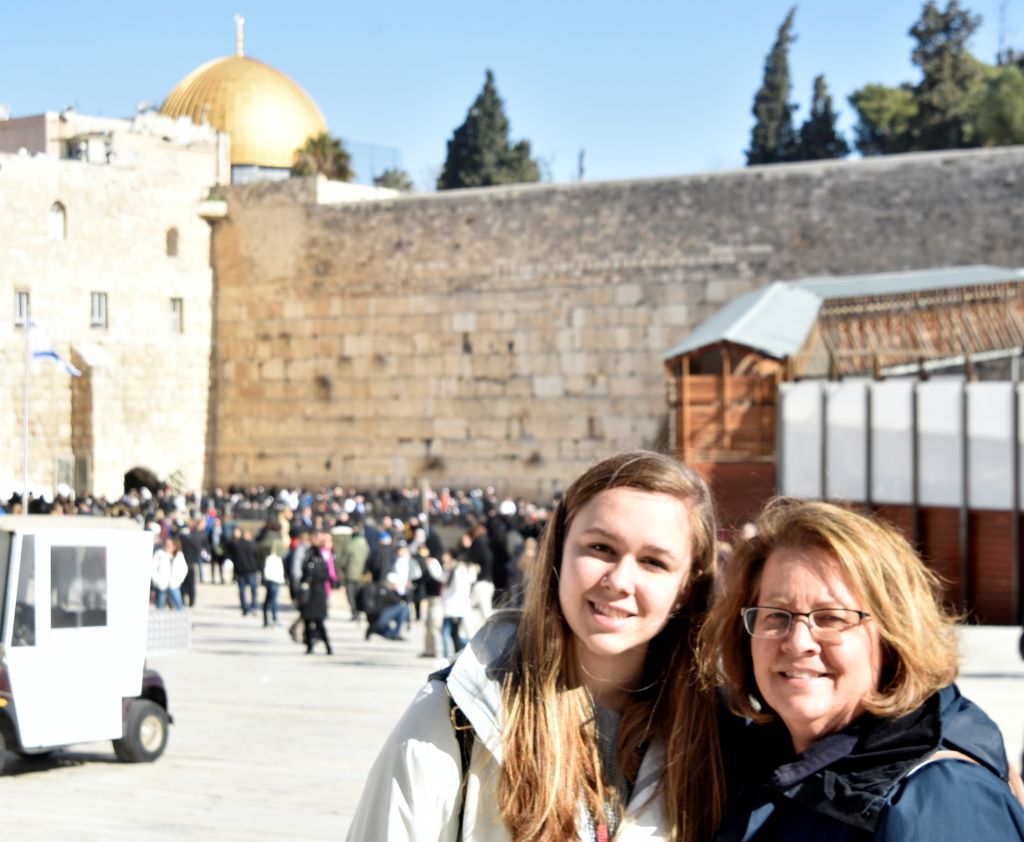
From the church, we headed to the Western Wall, also known as the Wailing Wall in reference to the practice of Jews weeping at the site. It is part of the Second Temple’s retaining wall, dating to before AD 70, and for centuries has been the closest that Jews can get to the site of their Temple as they are prevented from entering Temple Mount by Muslims. The wall is segregated into separate sections for men and women, with women having a much smaller section. Men have to wear a head covering to visit. It is a site used for prayer, with prayers written on pieces of paper and wedged into wall crevices. Twice a year, the pieces of paper, which are treated as holy texts, are removed and buried according to Jewish law. It is also used for Bar Mitzvah celebrations.
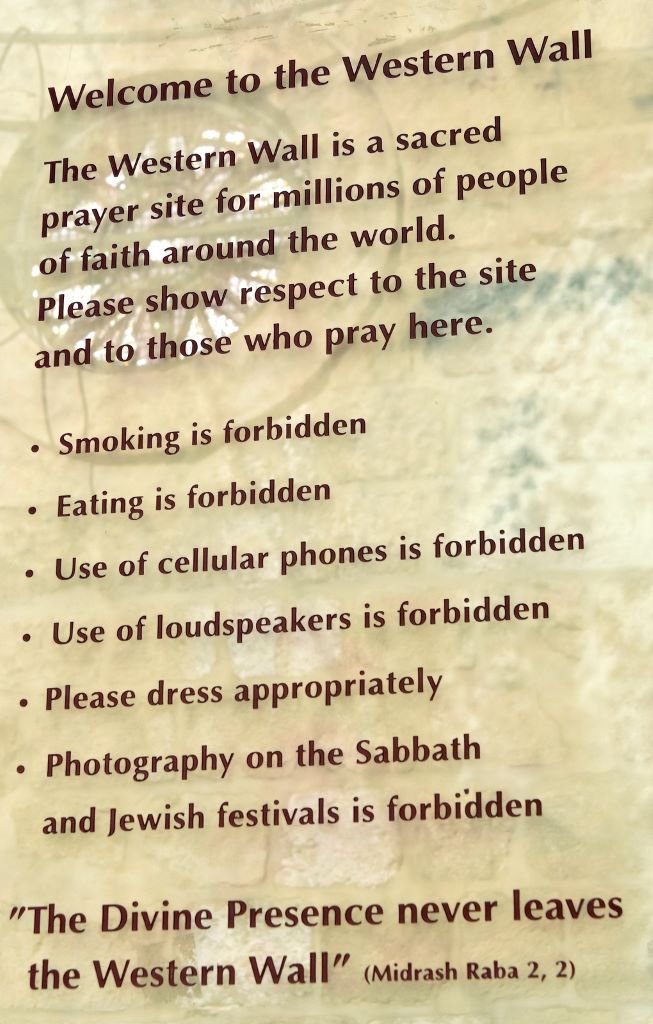


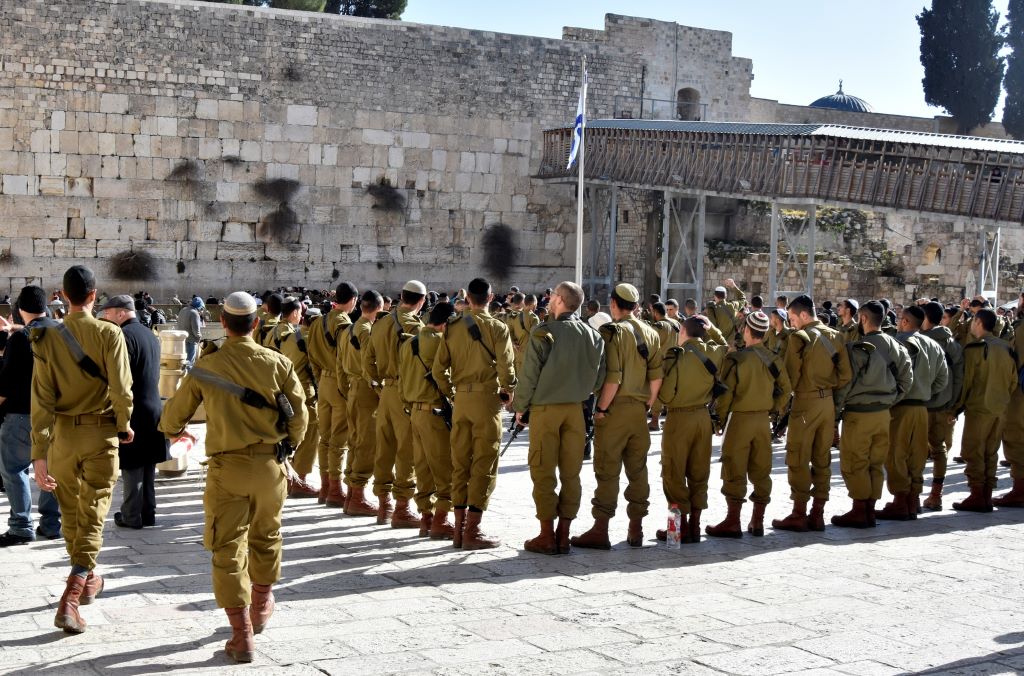
Note the bridge on the right of the picture. This is one of the entrances into Temple Mount and the Al-Aqsa mosque compound.
Next up were the Southern Steps. We passed through a small museum to the steps on the southern side of Temple Mount. During the Temple period, this was the main entrance to the Temple, and Jesus would have approached the Temple using these steps. It is believed that Levite singers would sing the Song of Ascents (Psalms 120–134) as they ascended these steps. We noted that the steps are intentionally irregular and uneven, causing those approaching the Temple to slow down and adopt a thoughtful and reflective mindset as they approached God in worship.


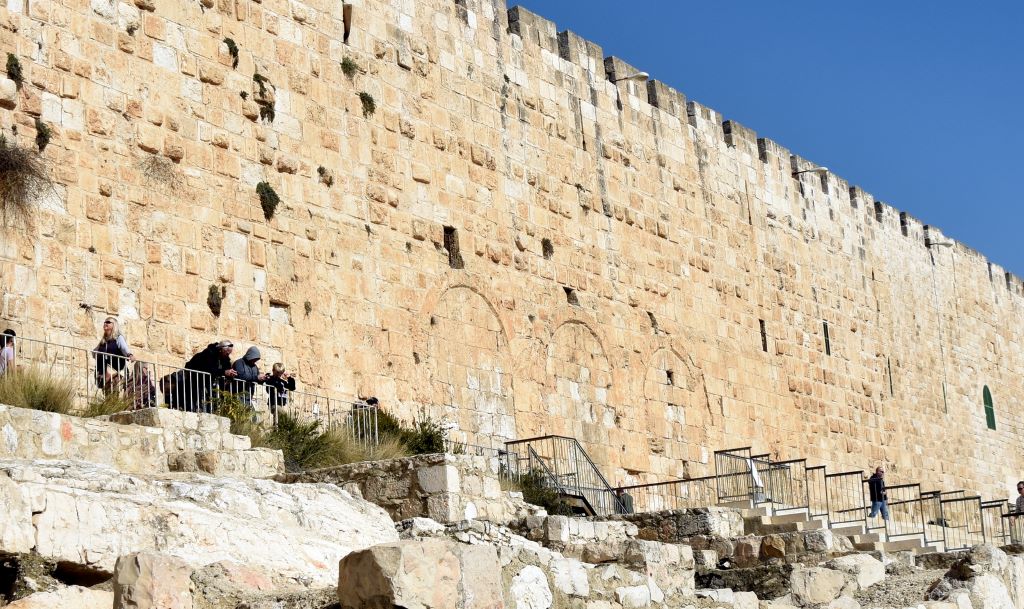
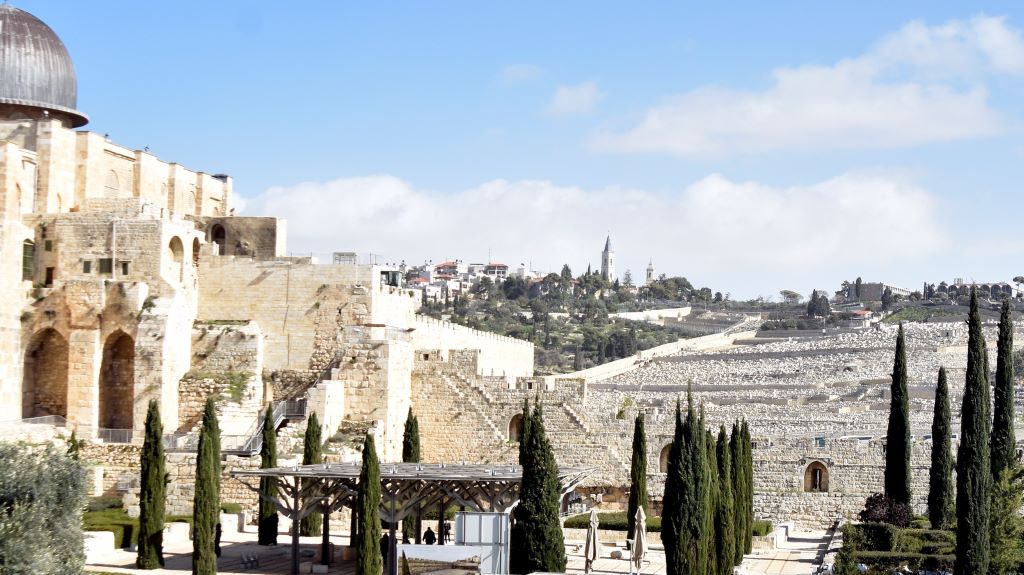
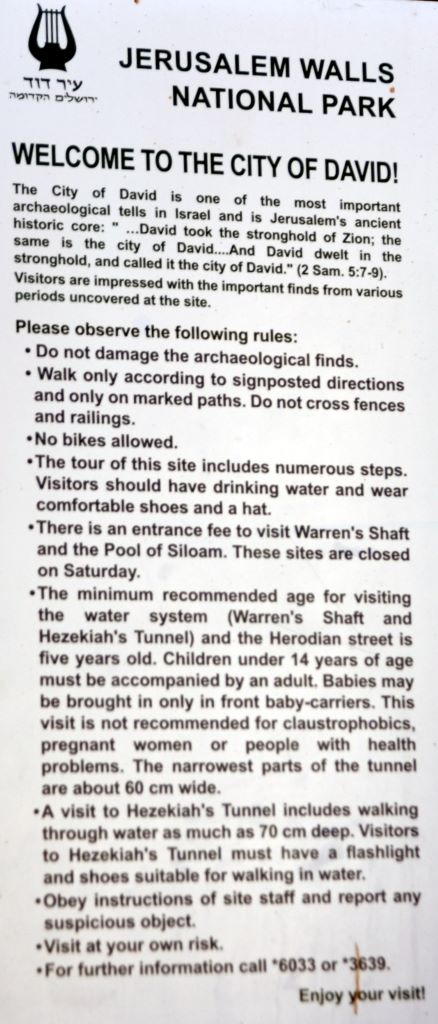
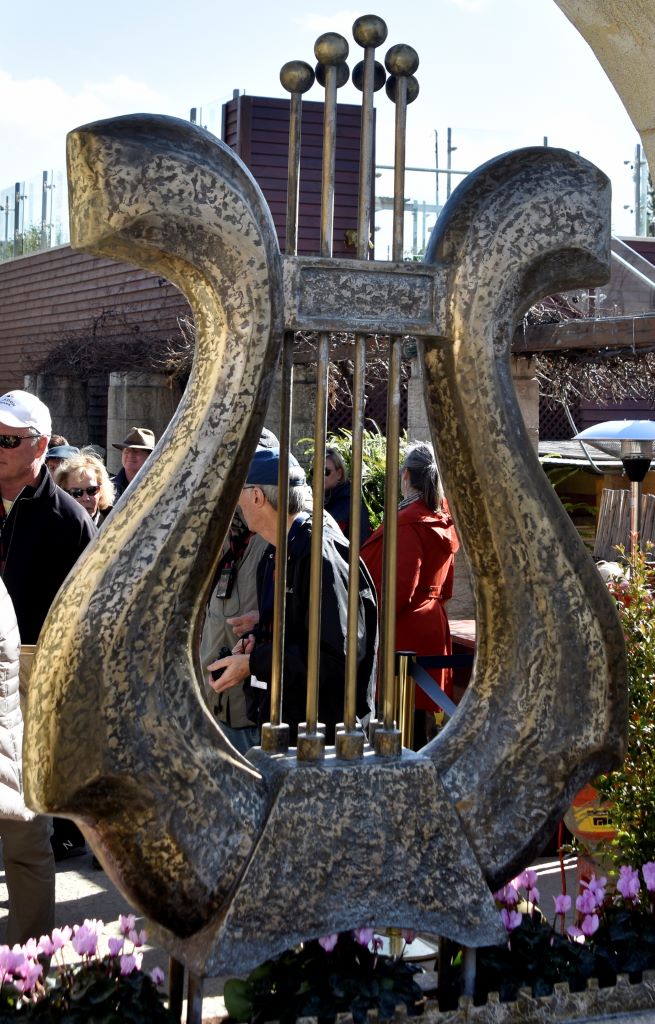
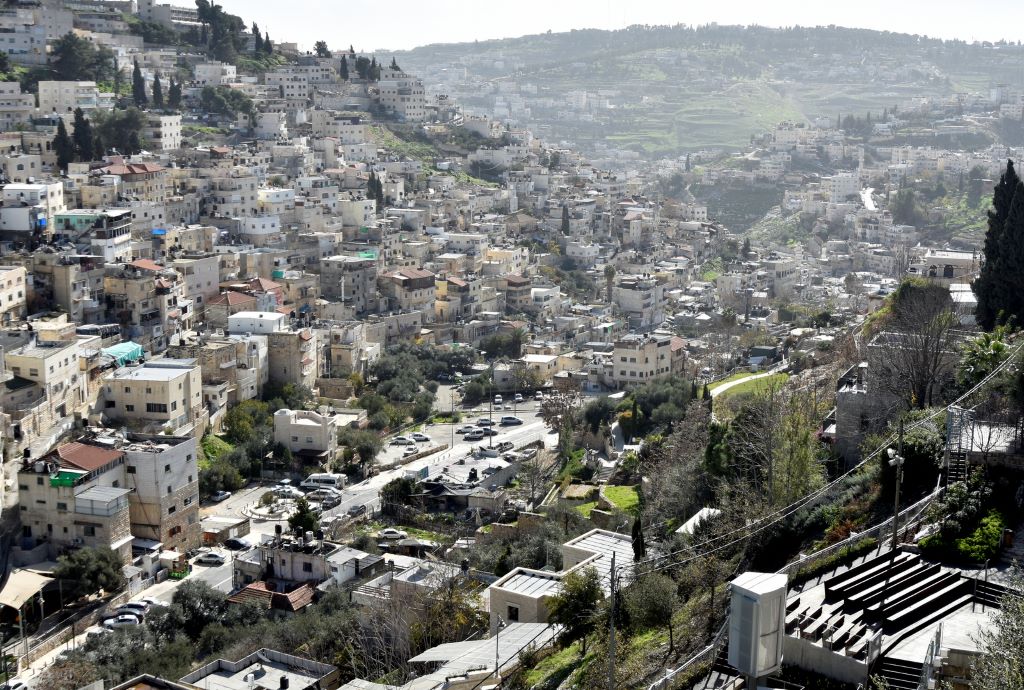
Our next stop was the City of David, located a little south of the Southern Steps. While it is an important historical site, there wasn’t much to see. The site was adorned with harp symbols representing David. The main historical artifact linked the location to David’s house. The location gave us some great views of the dense housing in Jerusalem, and allowed us to imagine David looking out from his rooftop and seeing Bethsheba bathing nearby (2 Samuel 11:2). We did not visit the Pool of Siloam or Hezekiah’s Tunnel, which would have been fun and interesting.



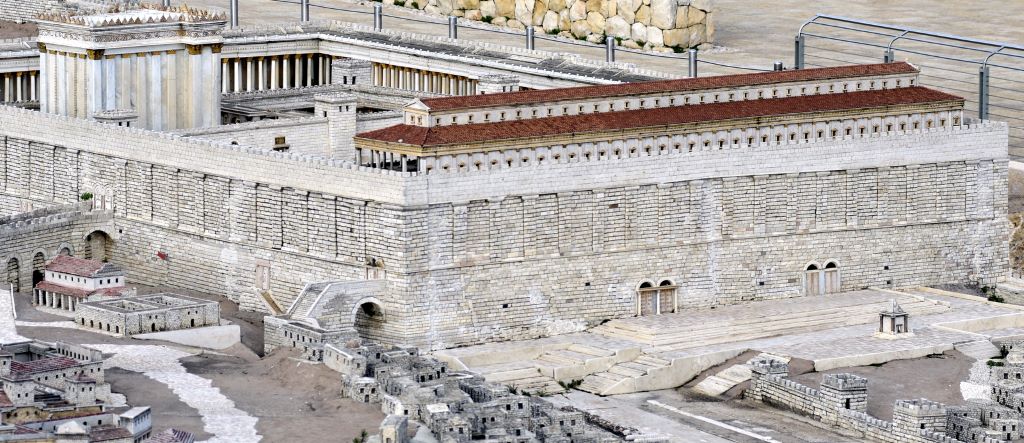
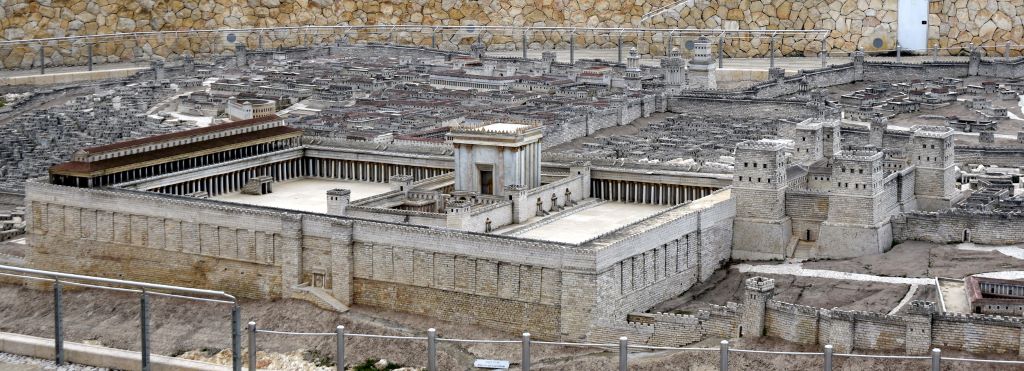
After lunch, we headed to the Israel Museum which includes a detailed scale model of Jerusalem in AD 66, before the Temple’s destruction in AD 70.


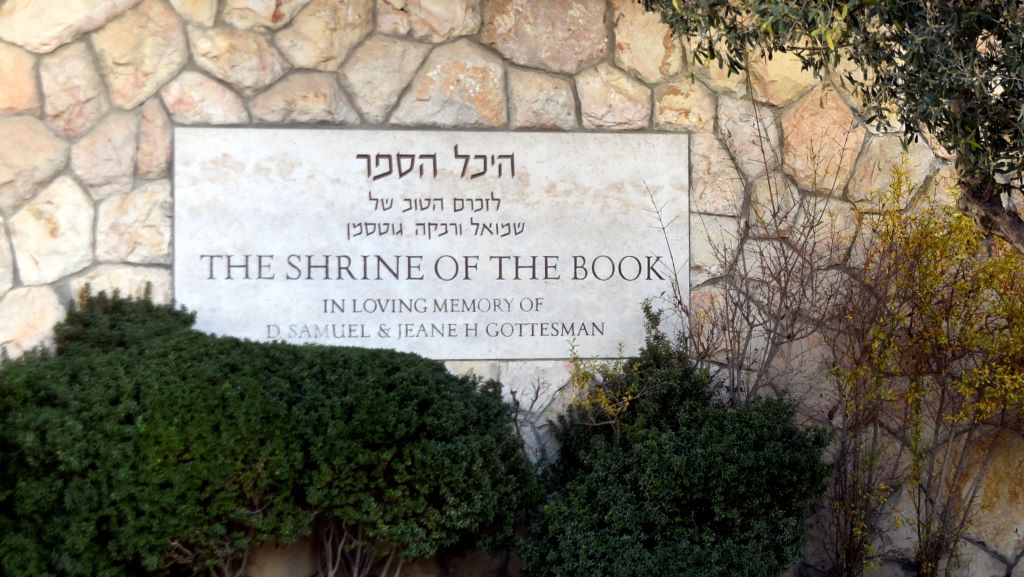
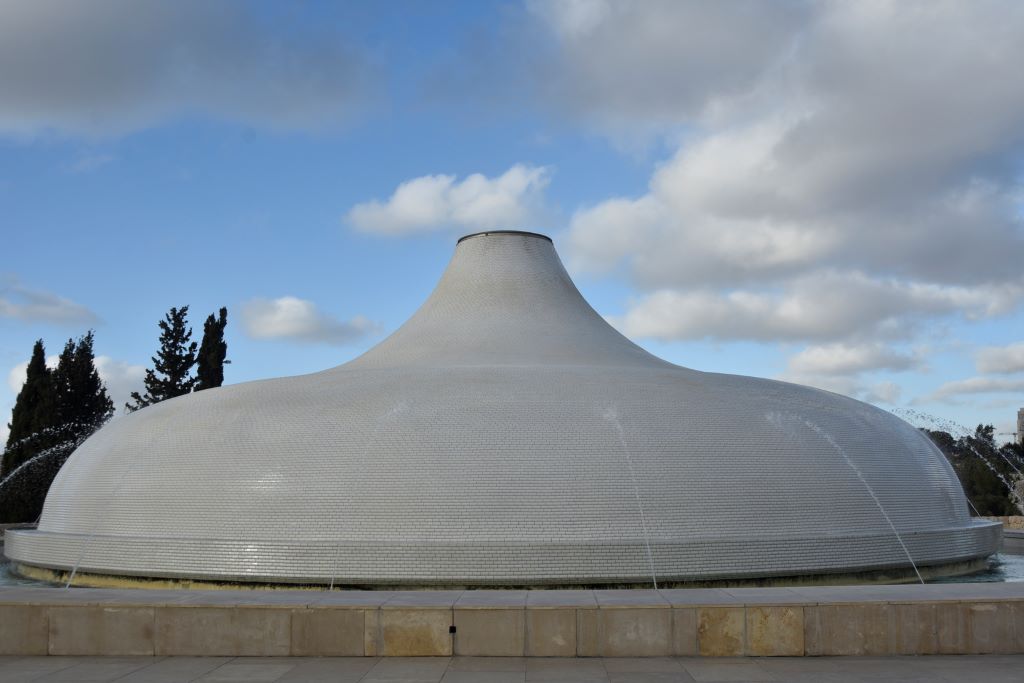
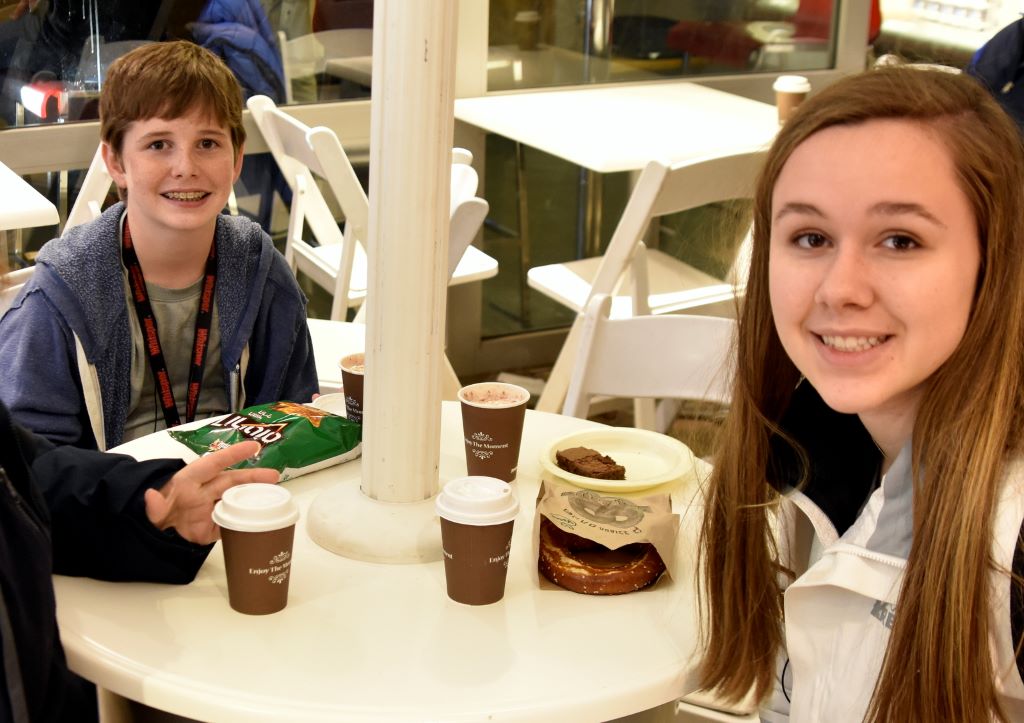
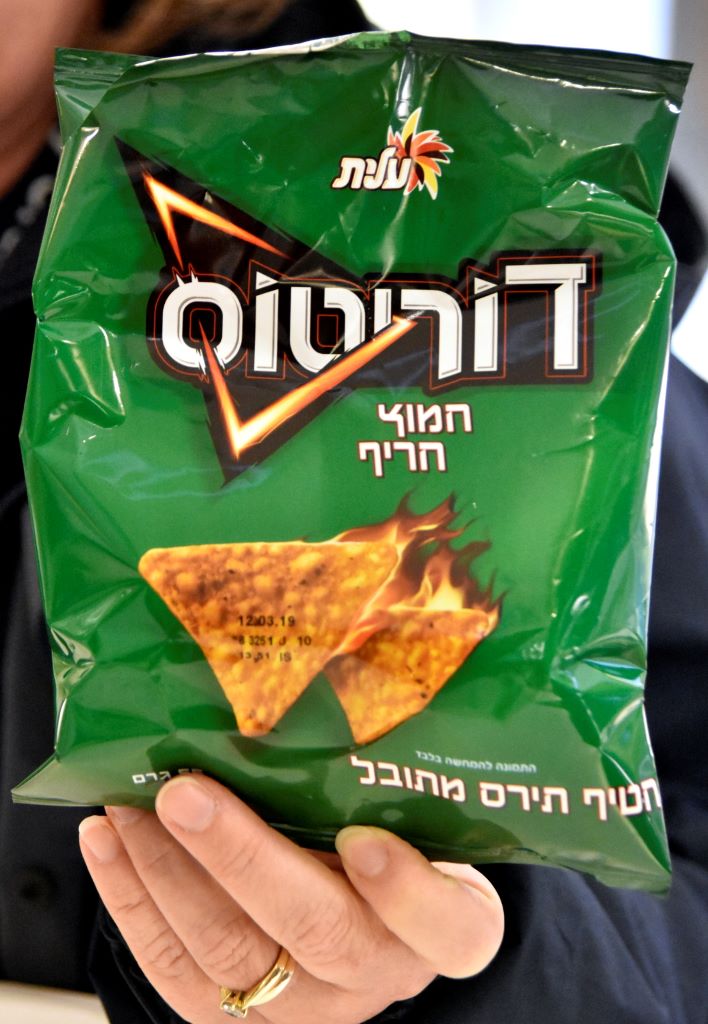
At the same site is the Shrine of the Book, but photos were not allowed. This houses the Isaiah Scroll, dating from the second century BC, the most intact of the Dead Sea Scrolls, and the Aleppo Codex, dating from the tenth century AD, the oldest existing Hebrew Bible. This highlights the historical significance of the Dead Sea Scrolls, confirming the existence of the Hebrew Bible centuries earlier than other extant manuscripts. On a lighter note, there was a good cafe with some yummy hot chocolate and Doritos!
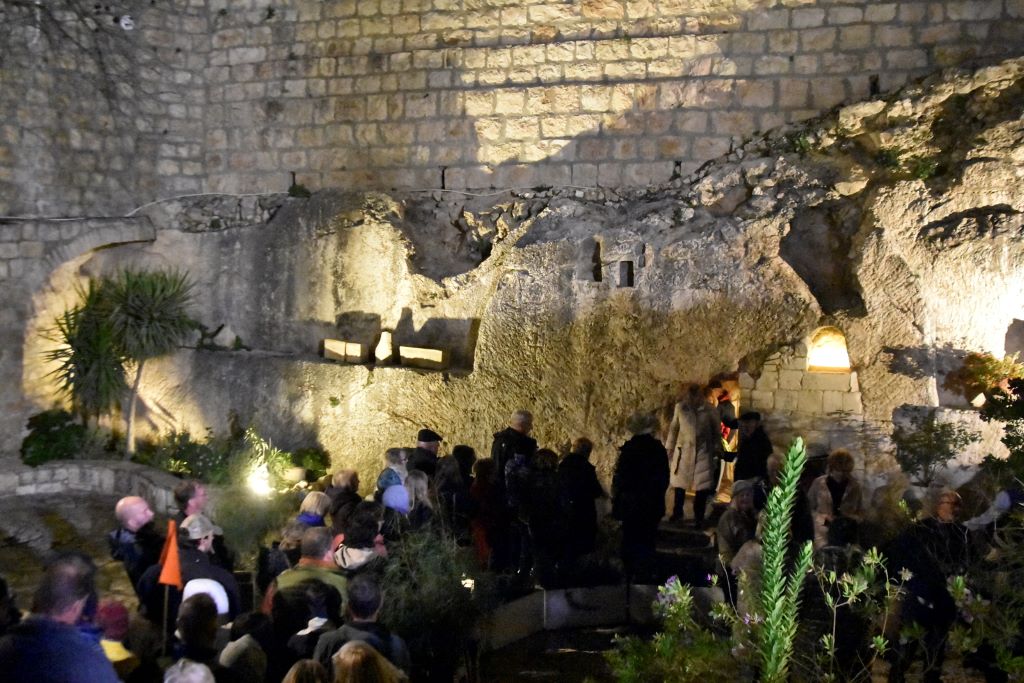
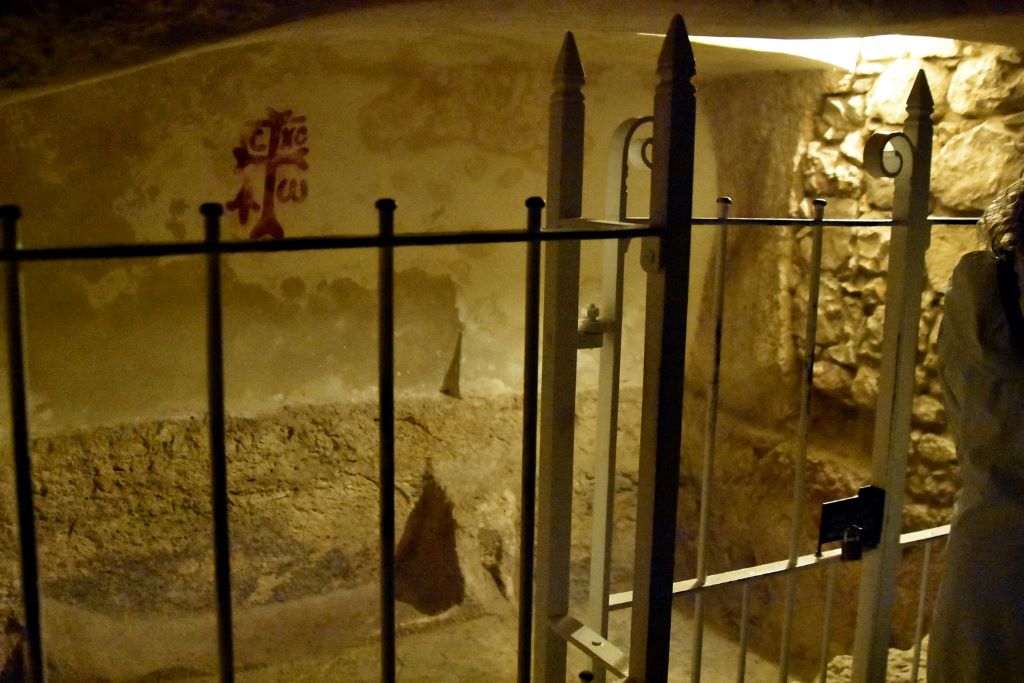
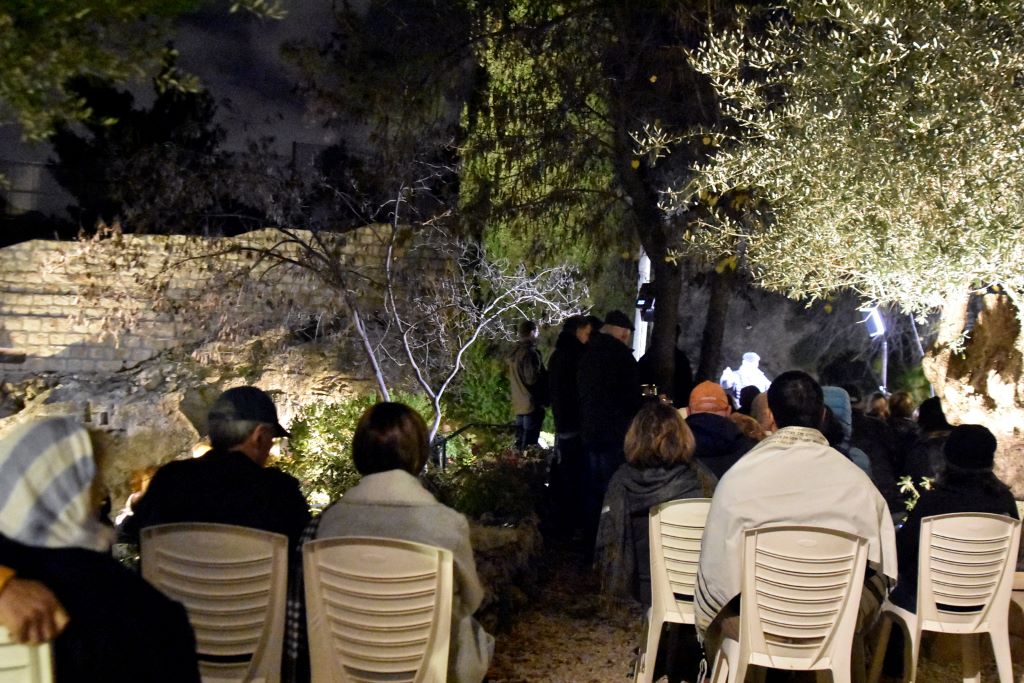
The day’s final stop was at the Garden Tomb, located a few hundred feet north of the Damascus Gate. For centuries, protestants have doubted that the site of the Church of the Holy Sepulcher was the location of Jesus’s crucifixion and burial as it would have been inside the city walls at the time. In the 19th century, an alternative location was identified just north of the Old City. There is a rocky outcrop known as Skull Hill which could have been Golgotha (Matthew 27:33). Tombs dating back to pre-biblical times have been found close by. One such tomb was found close to what would have been a garden (John 19:41). While this Garden Tomb could have been Jesus’s tomb, the site serves as a visual aid for the gospel accounts and its function as a place of Christian worship.




Day 8: Qumran, Masada, Ein Gedi, and the Dead Sea
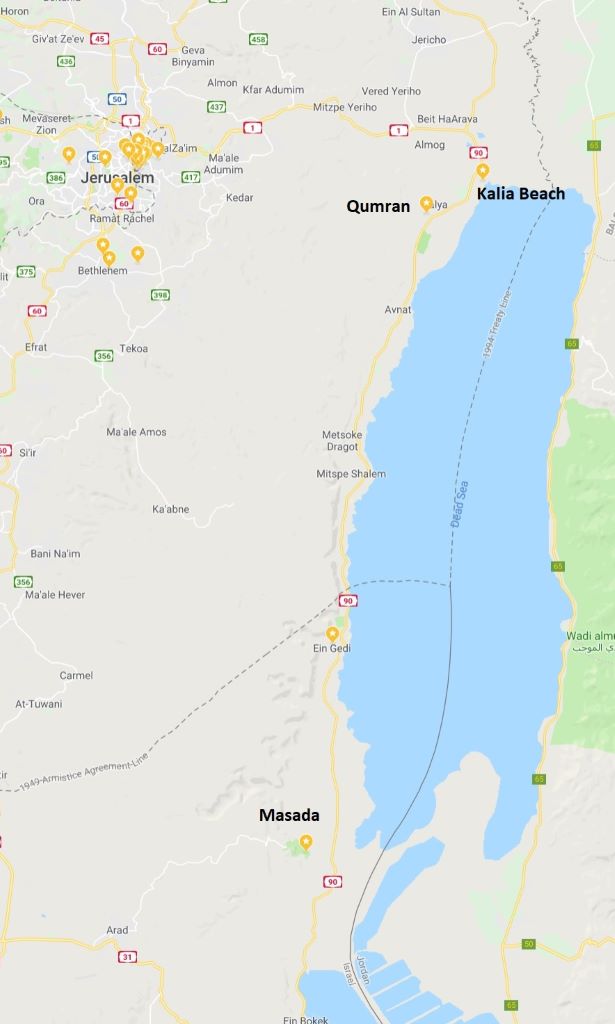
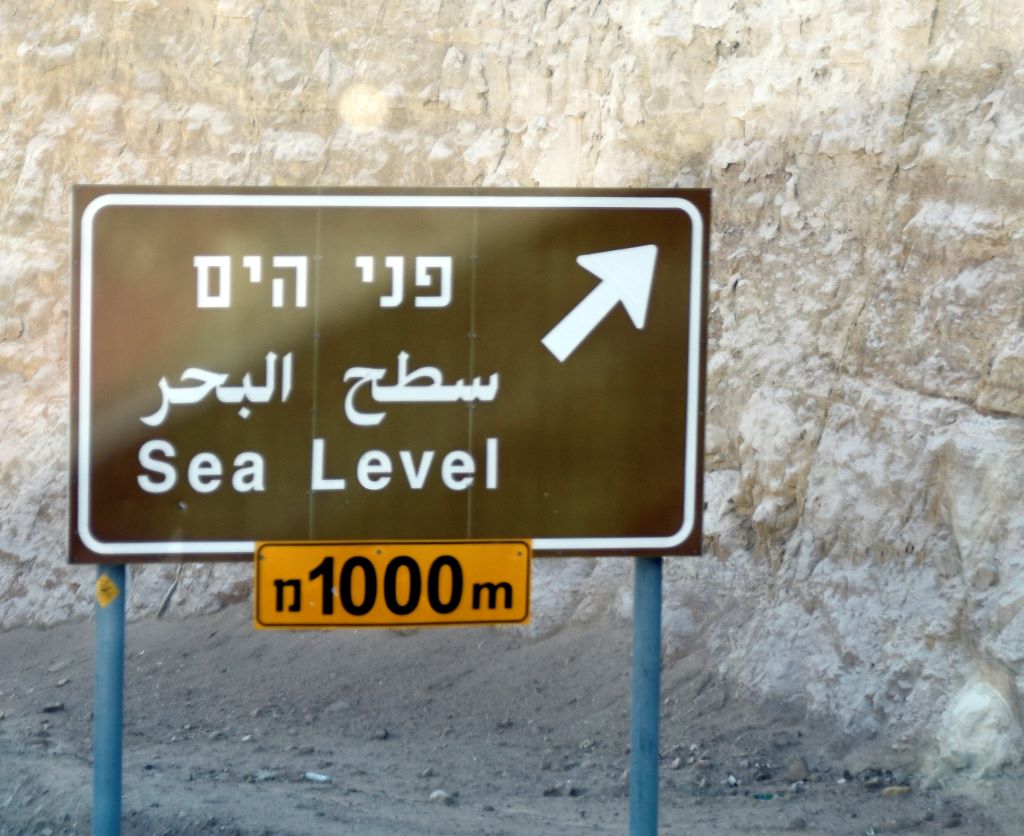
On our eighth day, we headed down from Jerusalem to the Dead Sea area. It really is “down” as Jerusalem is at 2,474 ft above sea level and the Dead Sea is 1,411 ft below sea level, and we dropped nearly 4,000 ft in about 30 minutes. As we headed east from Jerusalem, we saw signs to Jericho and the border crossing into Jordan, both of which were off limits to us due to security.


Day 8 First Stop: Qumran.

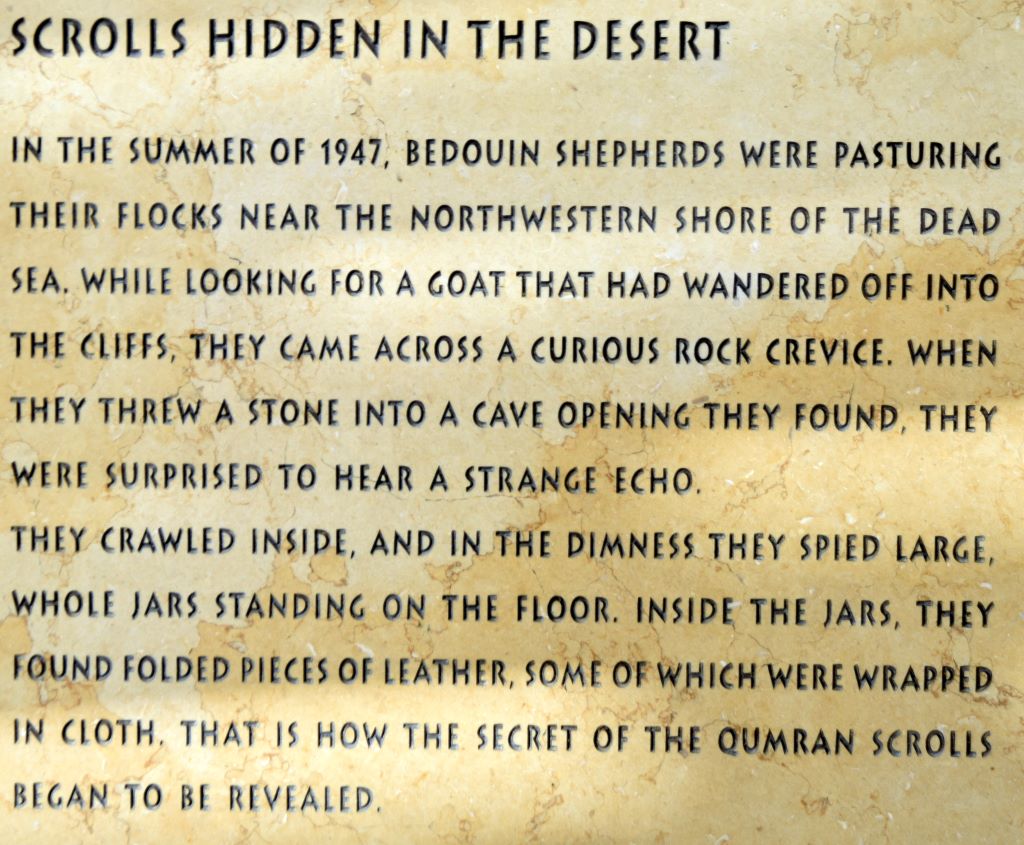
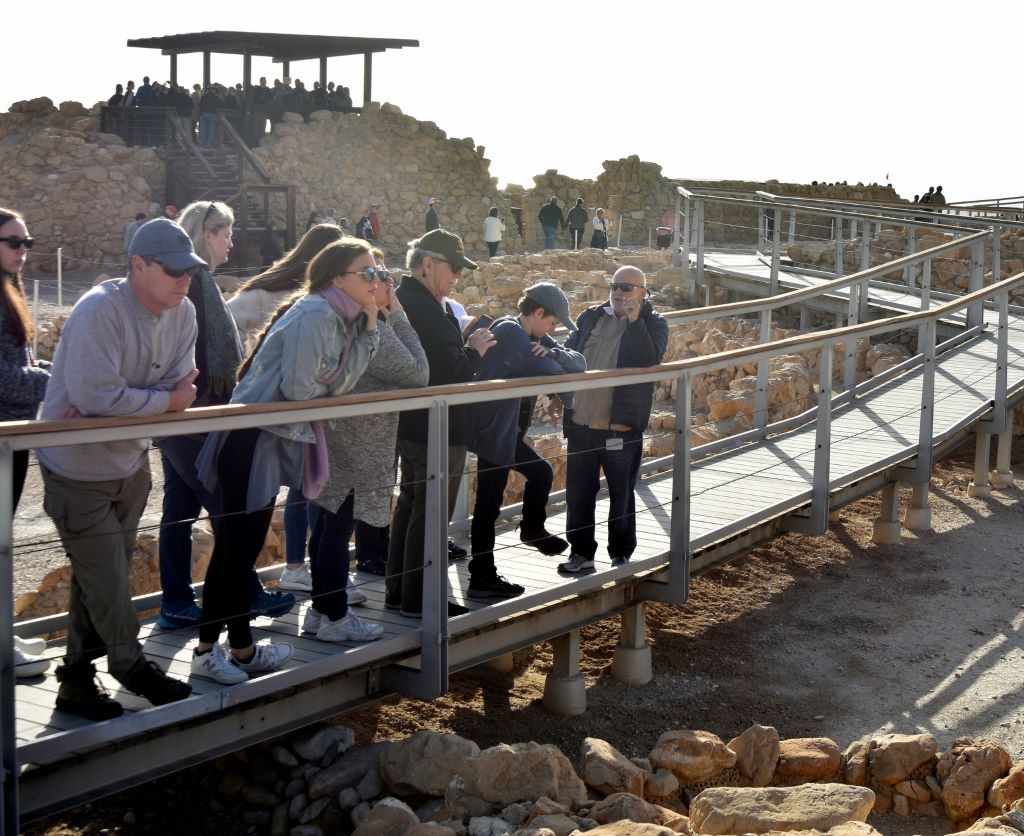
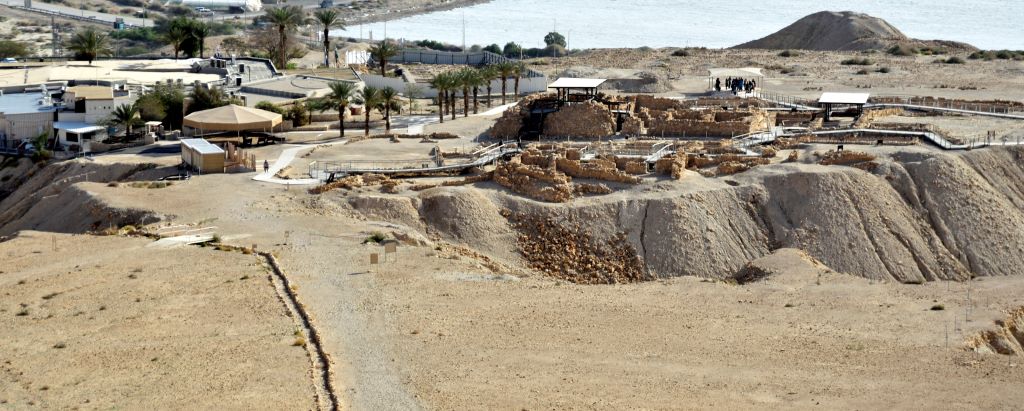
This was the site of an Essene (a Jewish sect) community during biblical times, and the Dead Sea Scrolls were discovered in the caves above the ruins of the community in 1947. About 900 scrolls have been discovered. The Qumran community was destroyed shortly before the Temple around AD 70, and it is likely that the community hid their scrolls in the caves above their community for preservation, which worked! We had fun looking around the archaeological site.


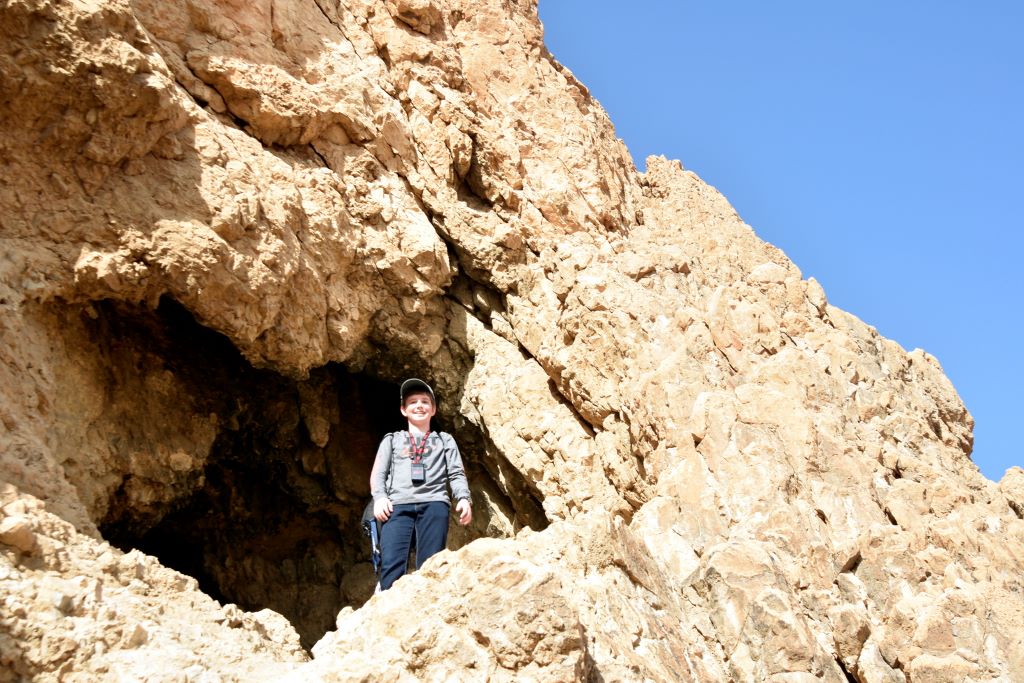
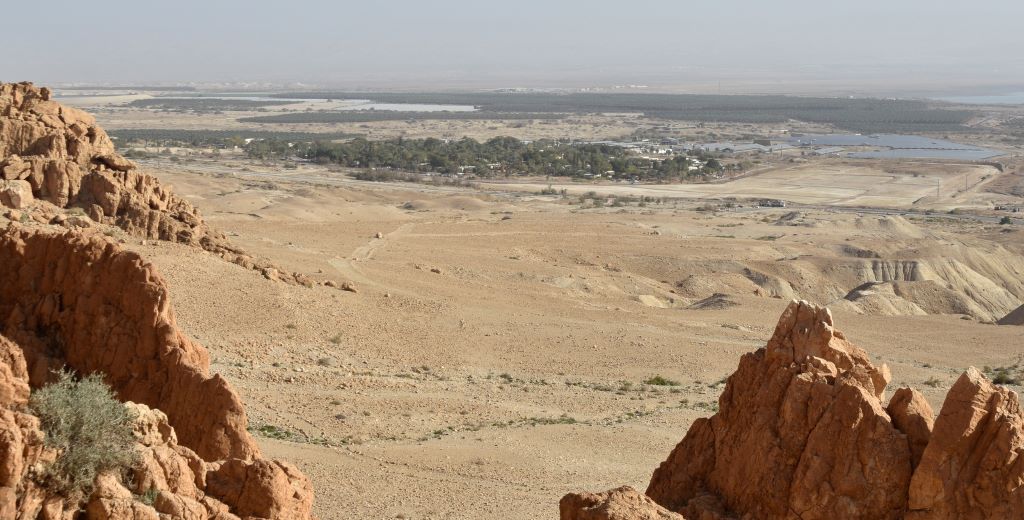
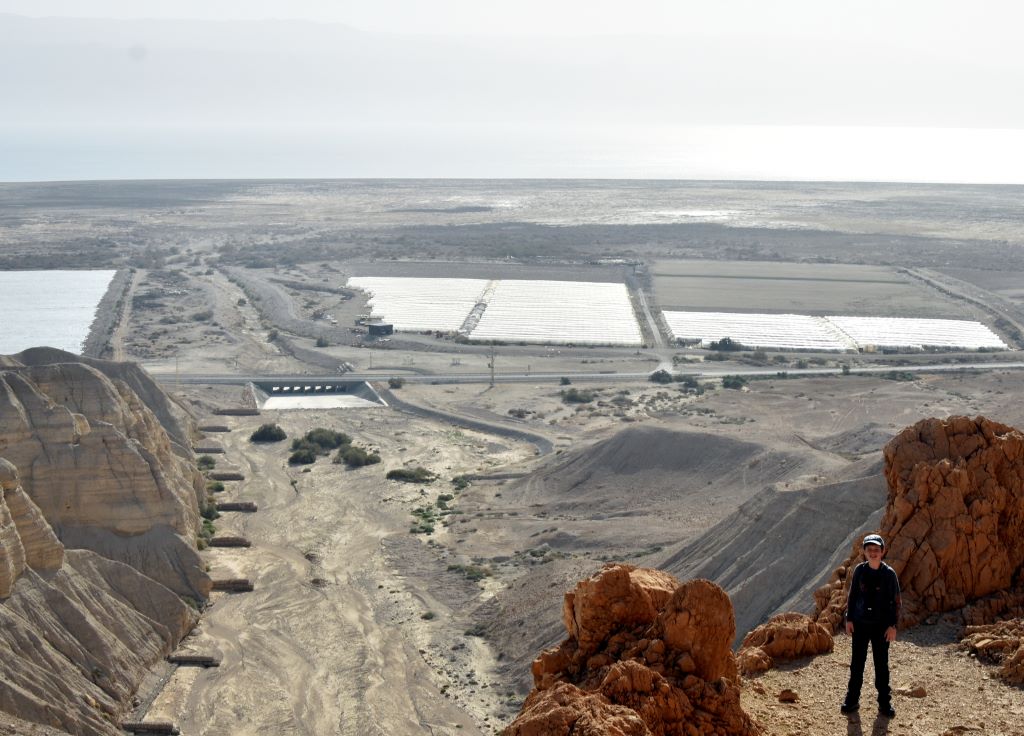
Samuel and I explored the caves above which had great views of the Qumran site and over the Jordan / Dead Sea valley.
Day 8 Second Stop: Masada.
Masada is an ancient fortification built on the top of an isolated rock plateau. Herod the Great built palaces and fortifications on the top of the plateau between 37 and 31 BC. The development included an elaborate system of channels and cisterns to capture as much rainwater as possible. The plateau is 1,300 ft high on one side and 300 ft on the other. After the Romans crushed the Jewish rebellion around the time they destroyed the Temple in Jerusalem, a group of the Zealots called the Sicarii fled to Masada and hid there. In the accounts of the Roman-Jewish historian Josephus, that he wrote in the latter quarter of the 1st century AD, 960 men, women, and children withstood the Romans during the siege of Masada in AD 72 and 73. When the Romans finally broke through with a siege ramp, they discovered that all of the Sicarii had committed suicide except for two women and five children who were found alive. Archaeological evidence does not completely align with Josephus’s account. However, the narrative of such resistance was popular in the early years of Israel’s statehood.
We took the cable car up to the plateau as we were short on time. It was a cool trip.
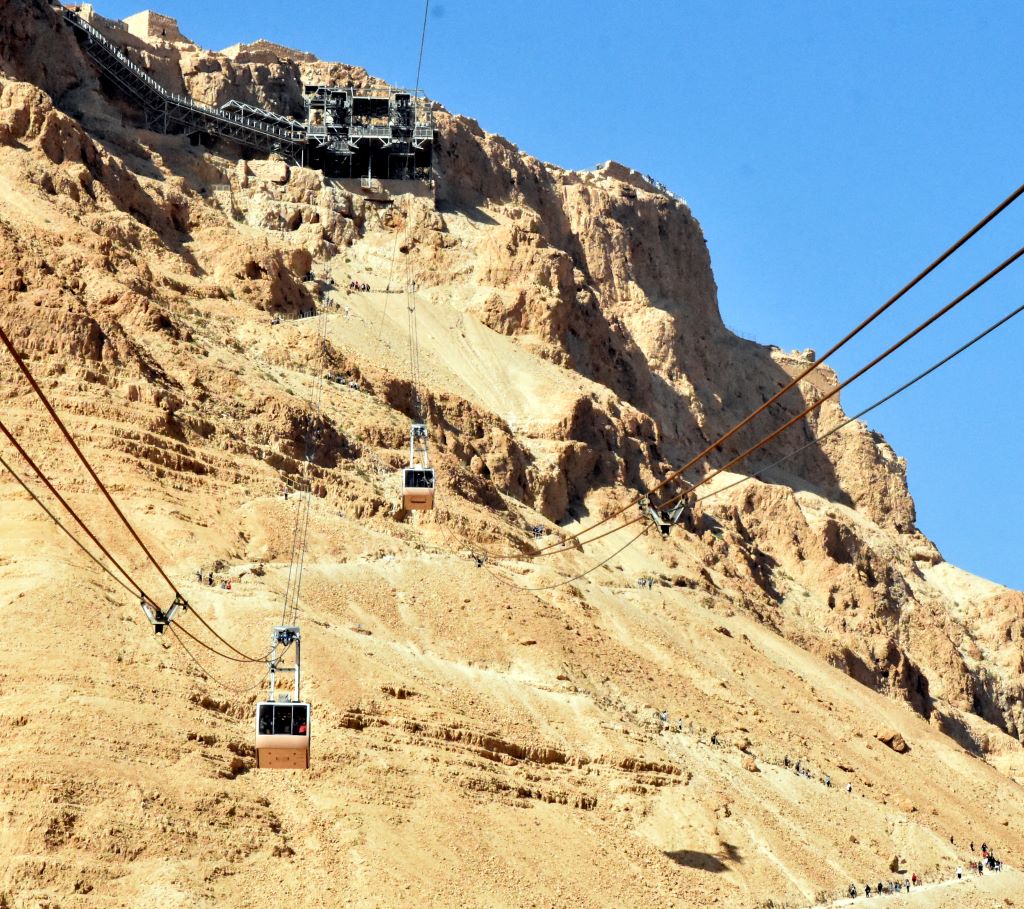

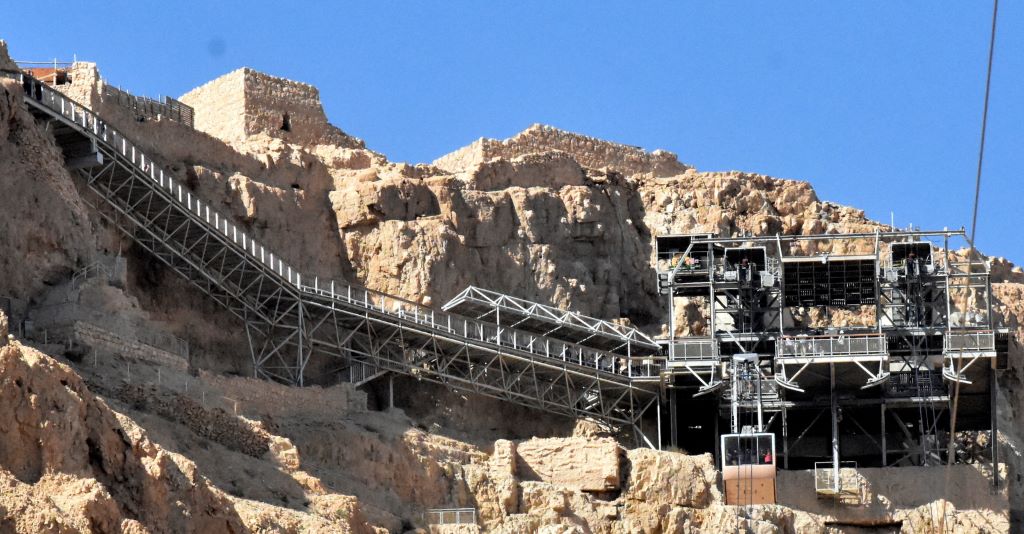
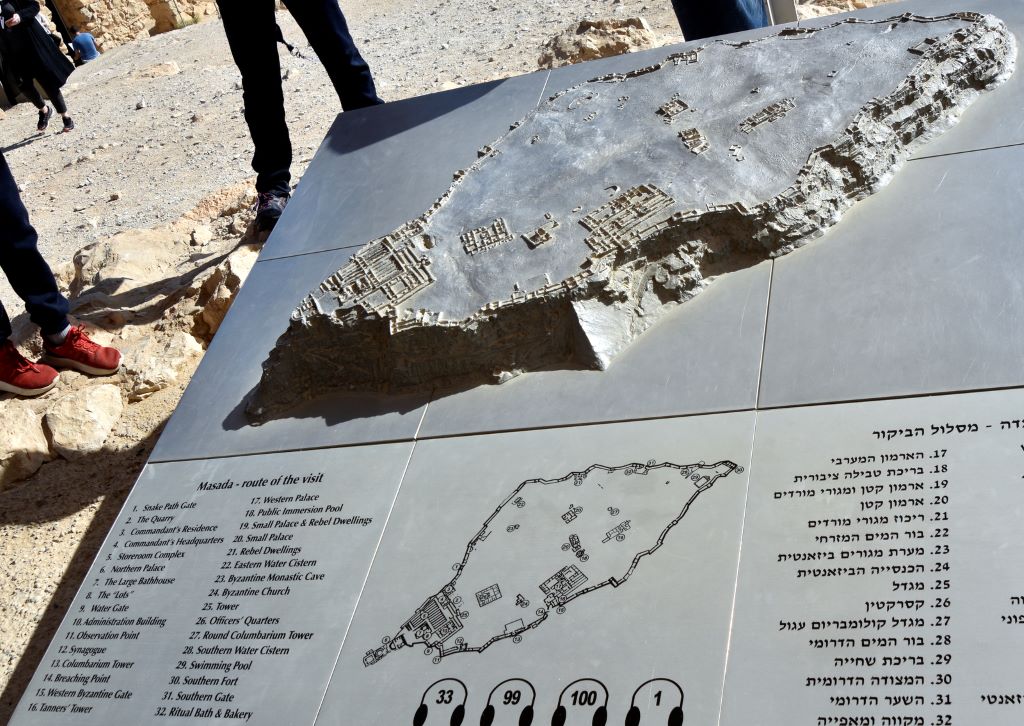
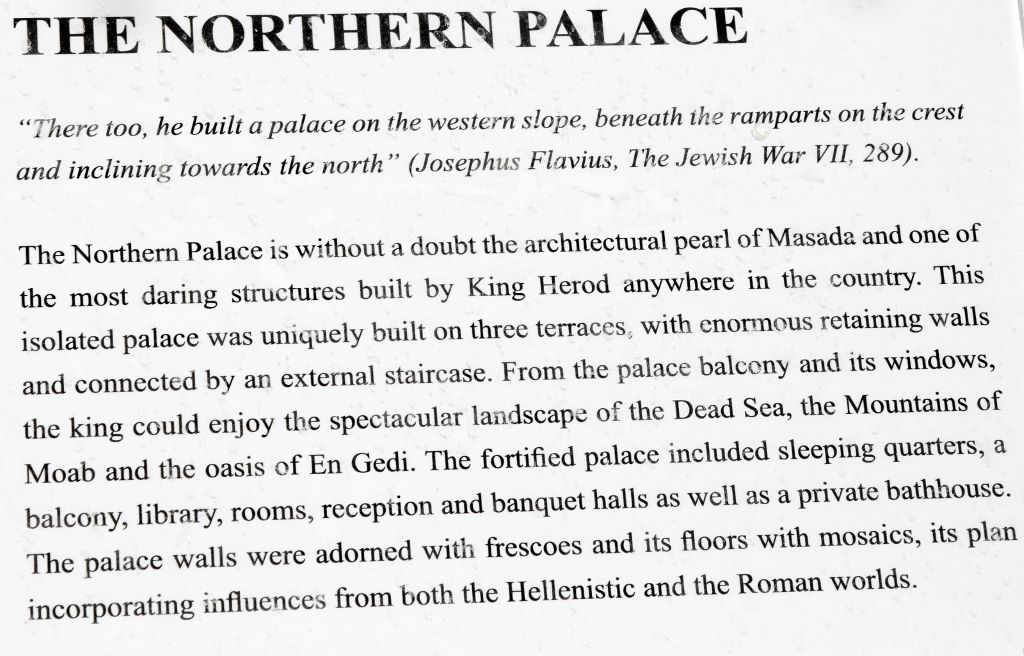
On the top, there were scale models, signs, and reconstructions.
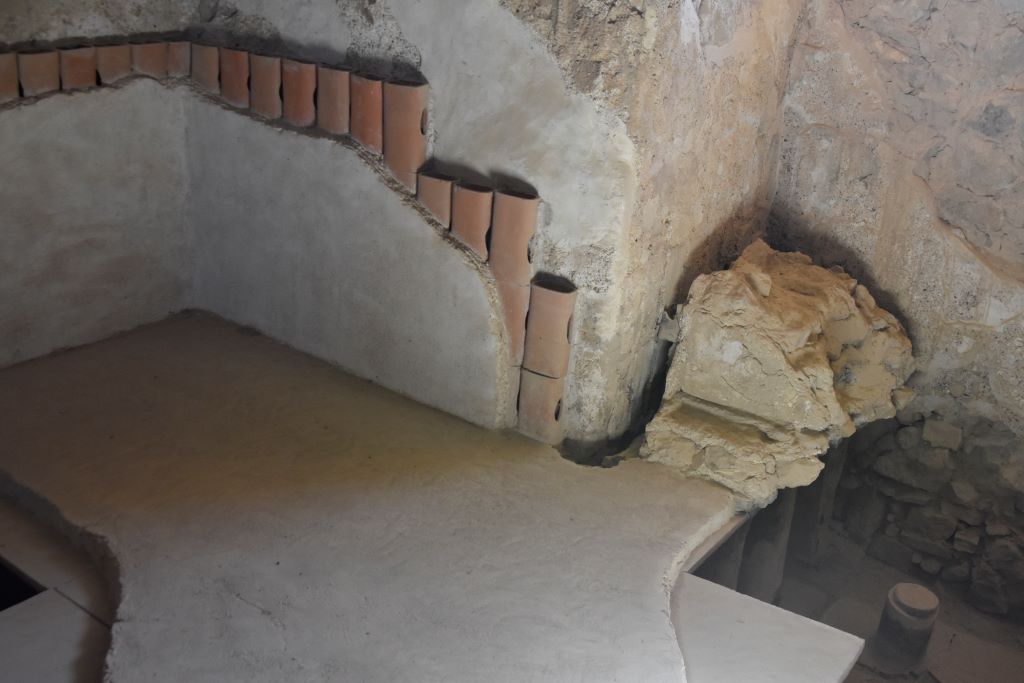

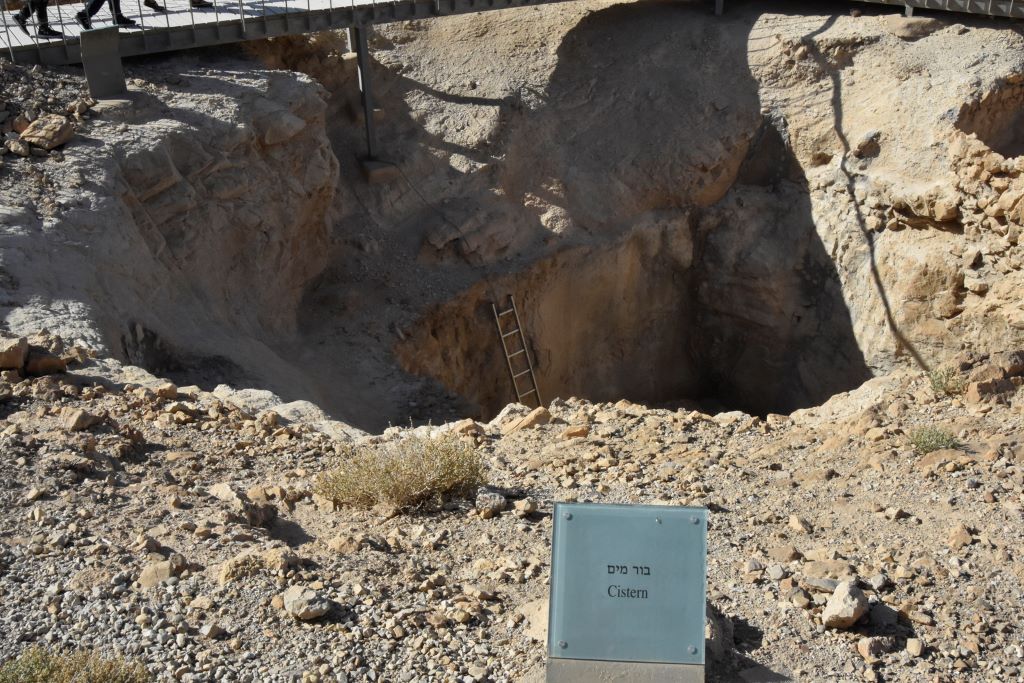
Water was a precious resource in the desert, and they had a working model that illustrated how a system of aqueducts carried any rainwater into cisterns.


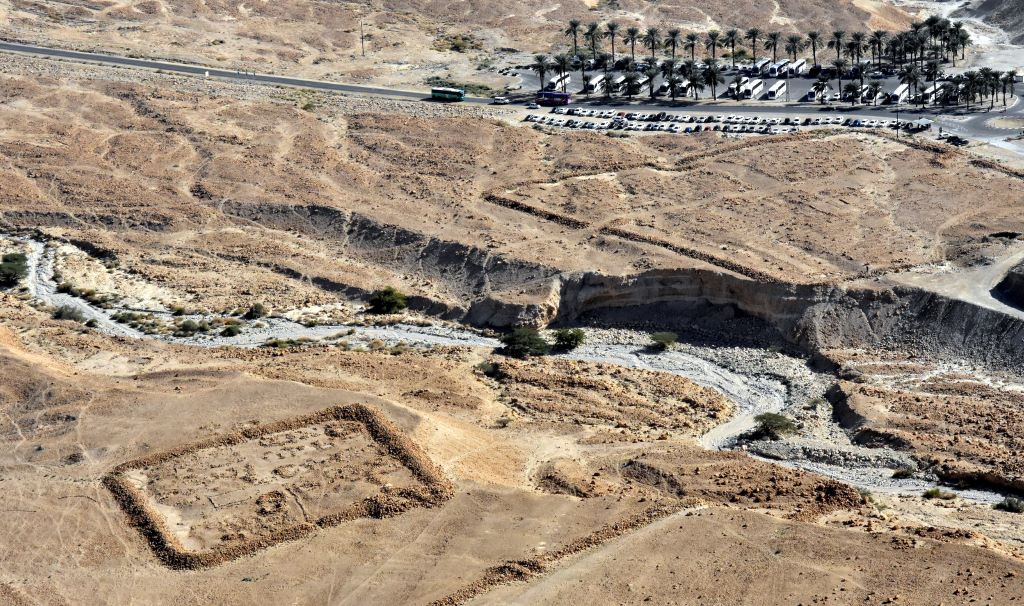
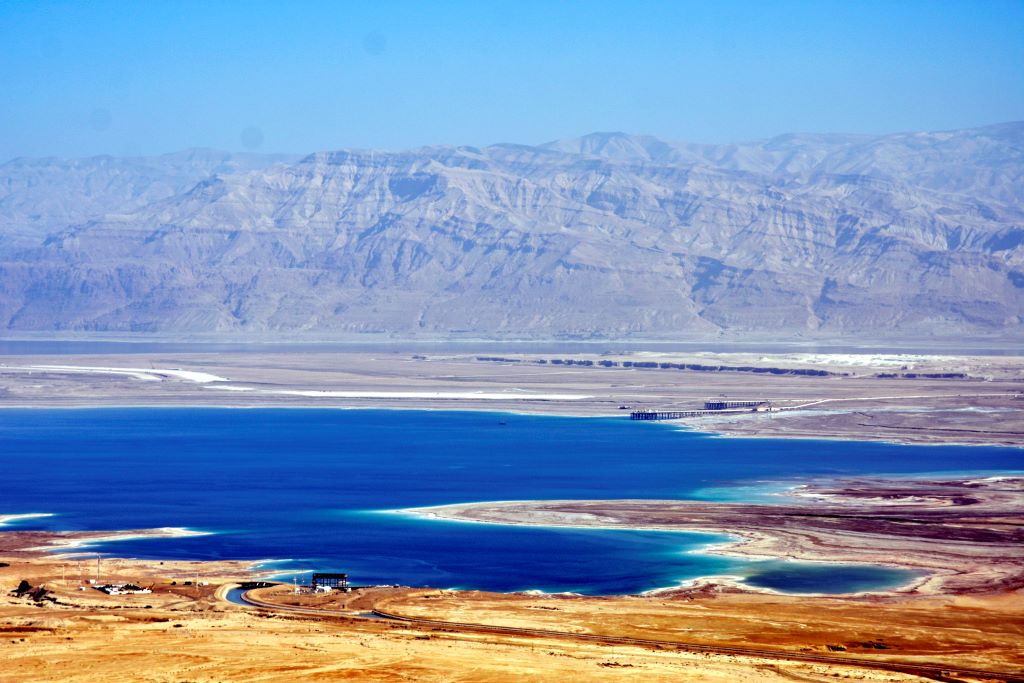
There were also great views of the outline of a Roman encampment below, the Dead Sea, and Jordanian mountains in the distance across the valley. Masada was a great place to visit and it is a popular tourist attraction in Israel.

Day 8 Third Stop: Ein Gedi. Ein Gedi is a natural spring and oasis. It is mentioned several times in the Old Testament. The most notable is in 1 Samuel 23:29 when David stays there while Saul pursues him. When Saul searched for David in the area, David secretly cut off a piece of Saul’s robe when Saul relieved himself in a cave, proving he was not out to kill Saul (1 Samuel 24:1–7). For us, it was just a pretty oasis, but it highlighted the significance of oases in the desert because of their fresh water and the vegetation they support.


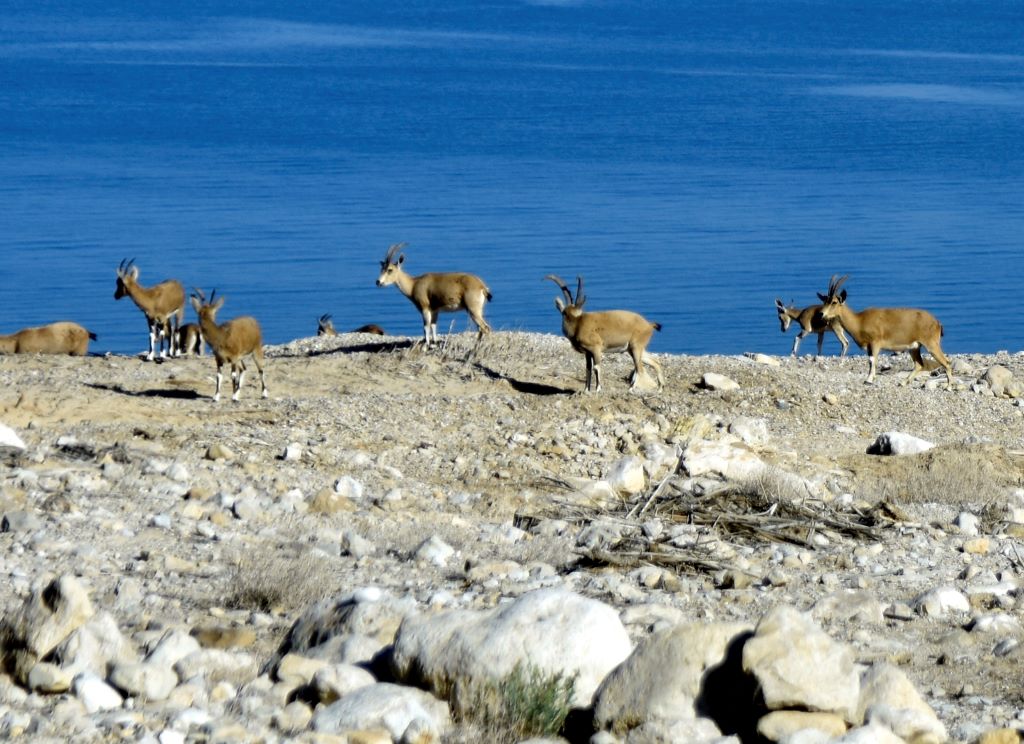
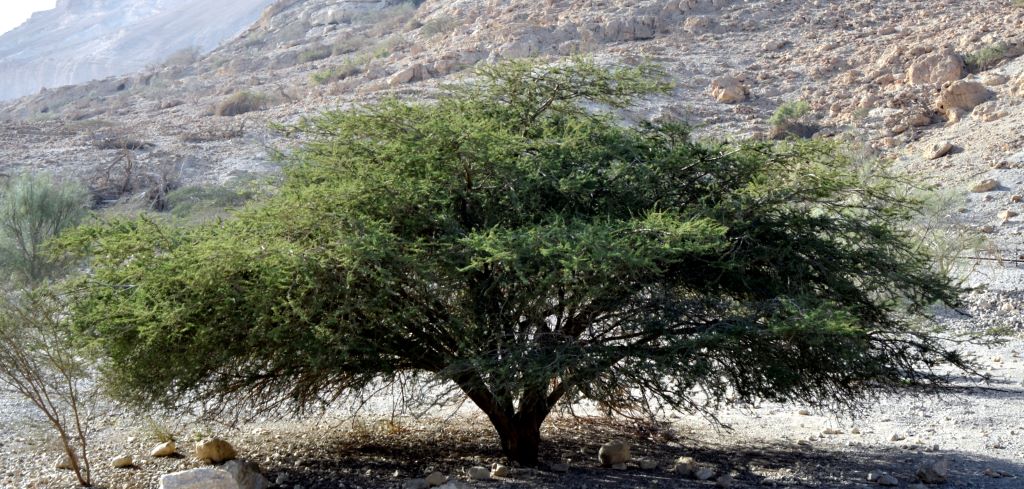
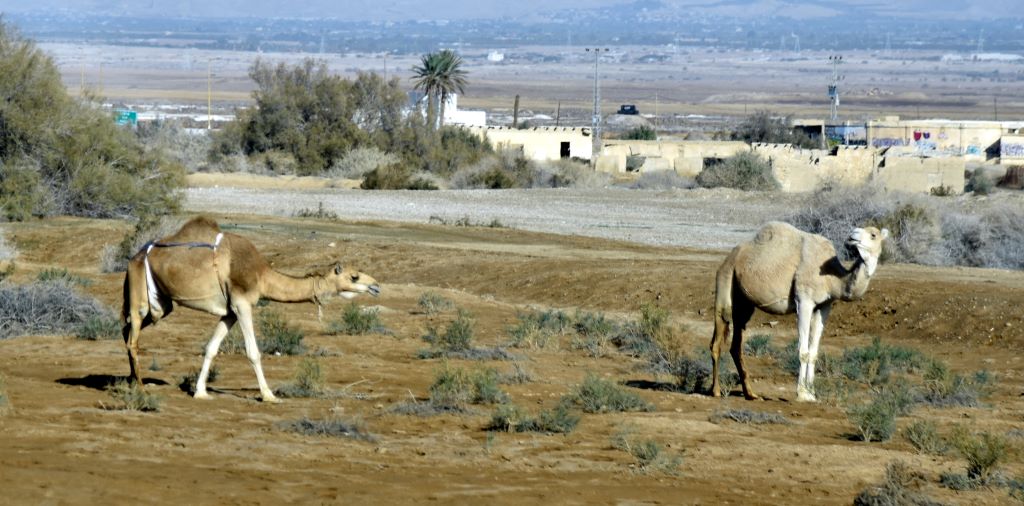
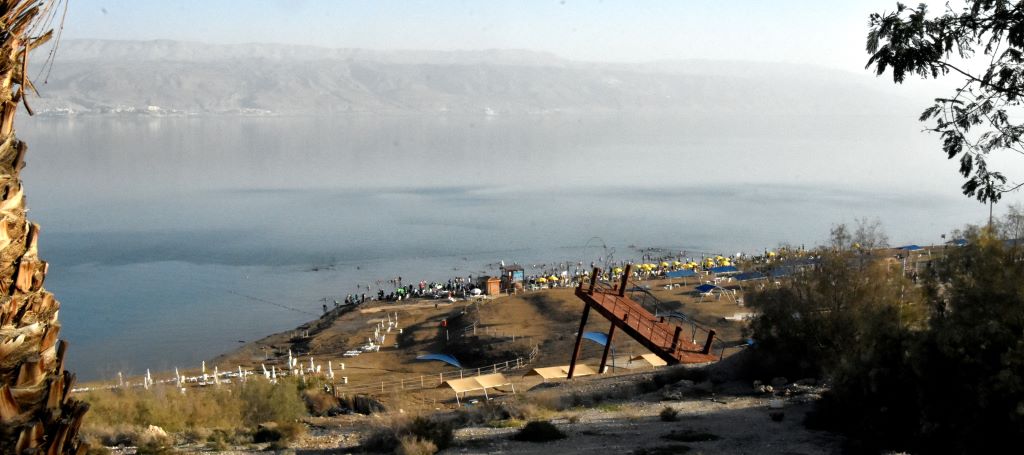
Day 8 Fourth Stop: Kalia Beach and the Dead Sea. Next stop was a beach resort on the shores of the Dead Sea. First, we enjoyed lunch in their restaurant.

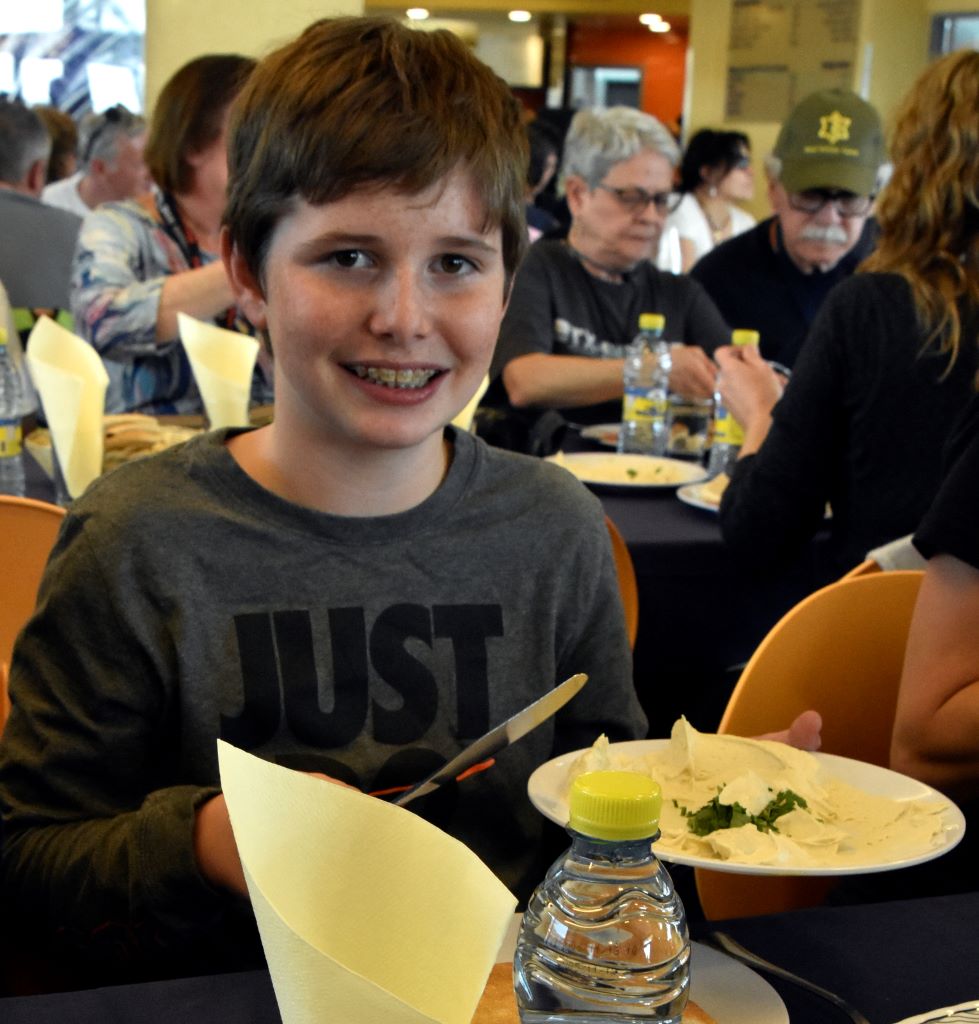


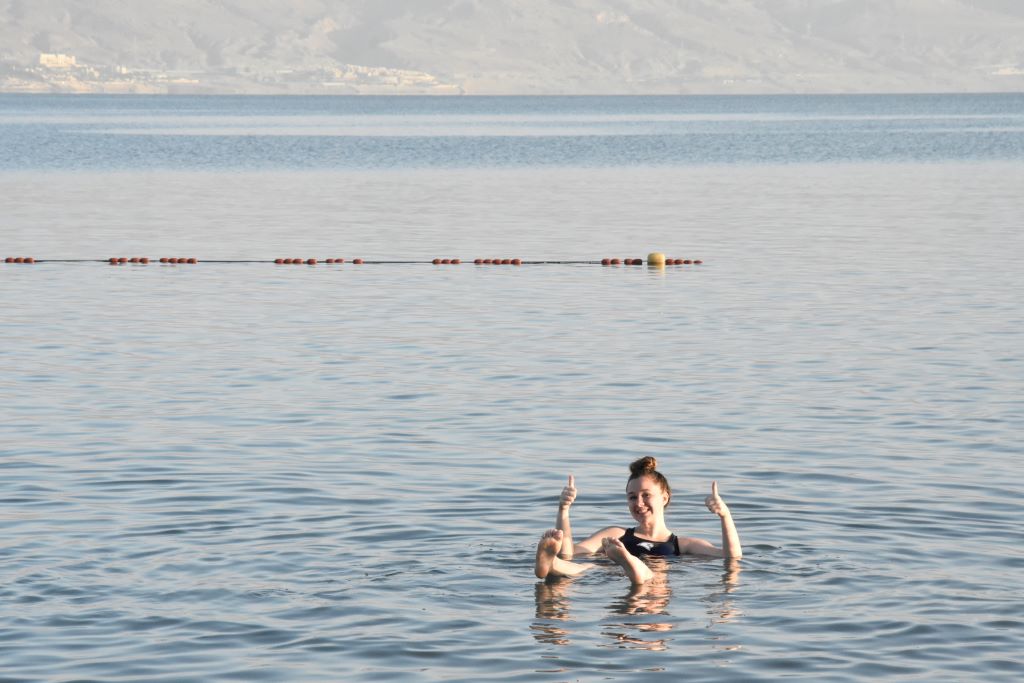
Next was a swim, but because the sea level is slowly dropping over time, it’s quite a long walk down to the water’s edge. We needed to be very careful not to slip on the clay ooze. We had a fun float, which certainly felt weird. Jordan was clearly visible across the water.


Day 9: David’s Tomb, the Upper Room of the Last Supper, Peter in Gallicantu, David and Goliath Field, King David Lightshow
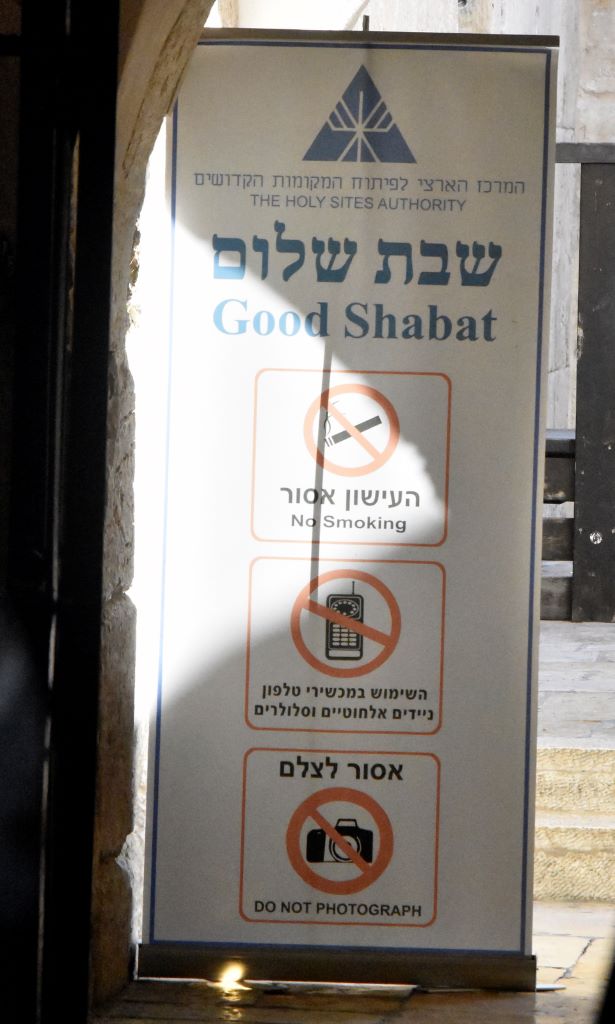
We packed as much as we could into our final day. Our First Stop was a building that is associated with King David’s tomb. As we visited on the Sabbath, we were not allowed to take photographs inside. (In our hotel, there were provisions for those observing the Sabbath. These includes hotel rooms with pre-programmed lights, and elevators that were pre-programmed to go up and down, stopping at each floor.)

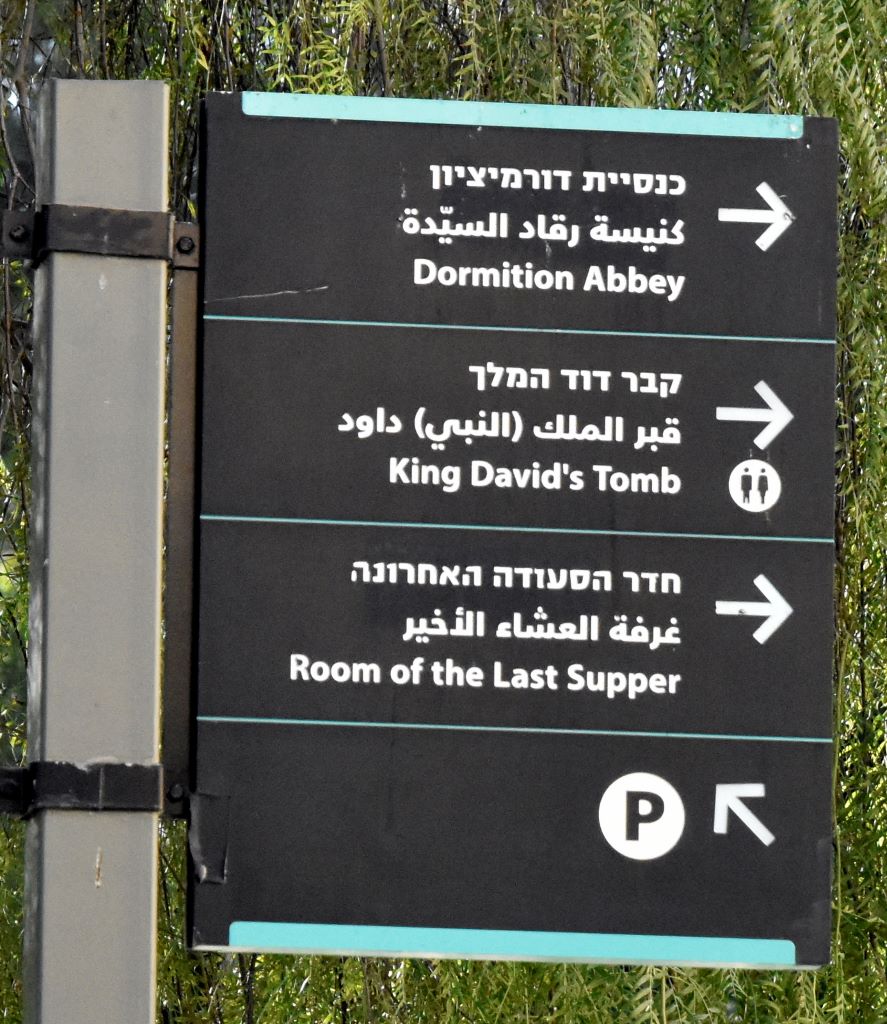
Day 9 Second Stop was a room above King David’s tomb. It is the Cenacle, or “upper room” that represents the room of the Last Supper in Mark 14:15 and Luke 22:12. It is also associated with the room that the disciples went to immediately after Jesus’s ascension in Acts 1:12–14. The room has stained glass windows with verses from the Quran in Arabic, and some interesting pelican decorations that are associated with Christian iconography.

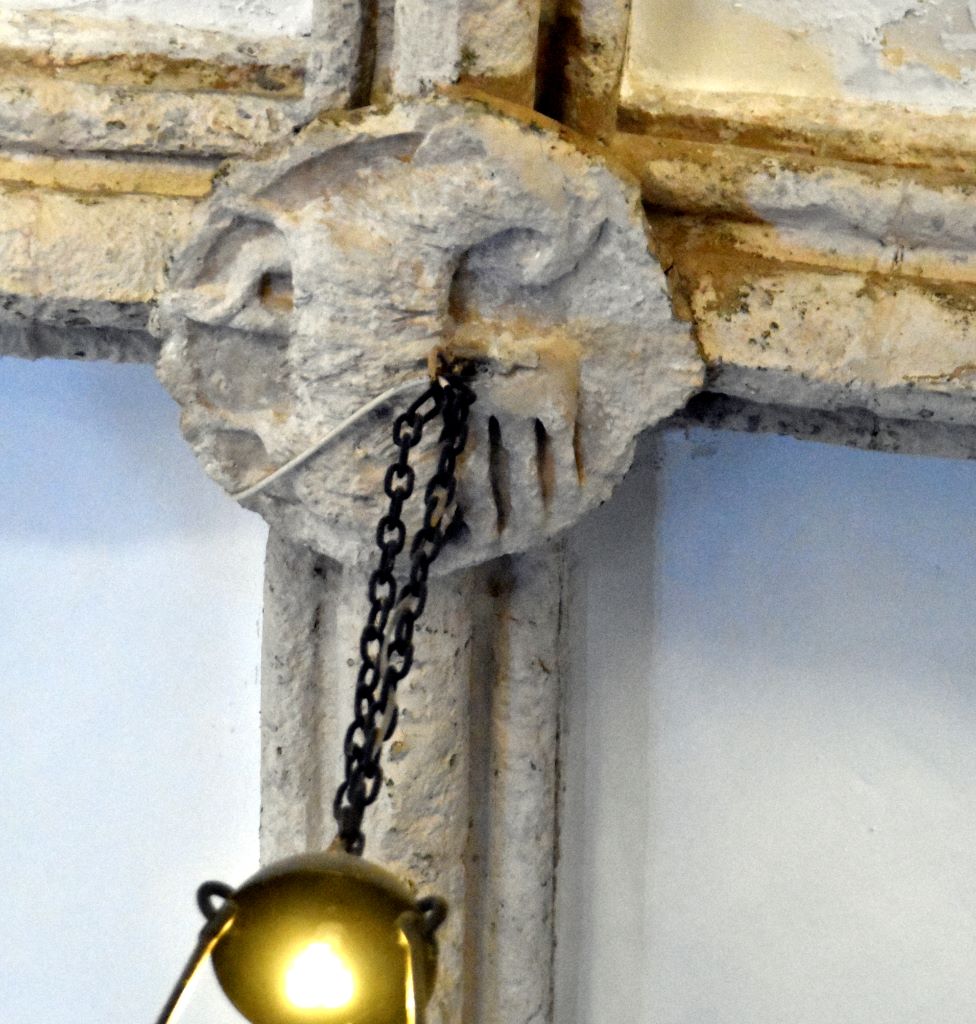

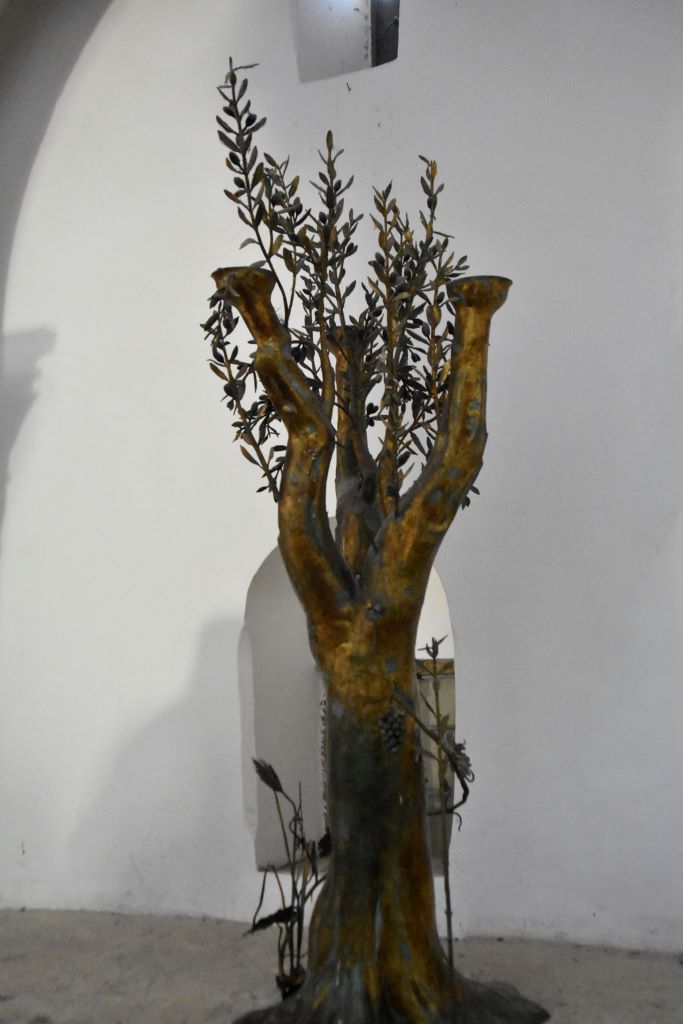
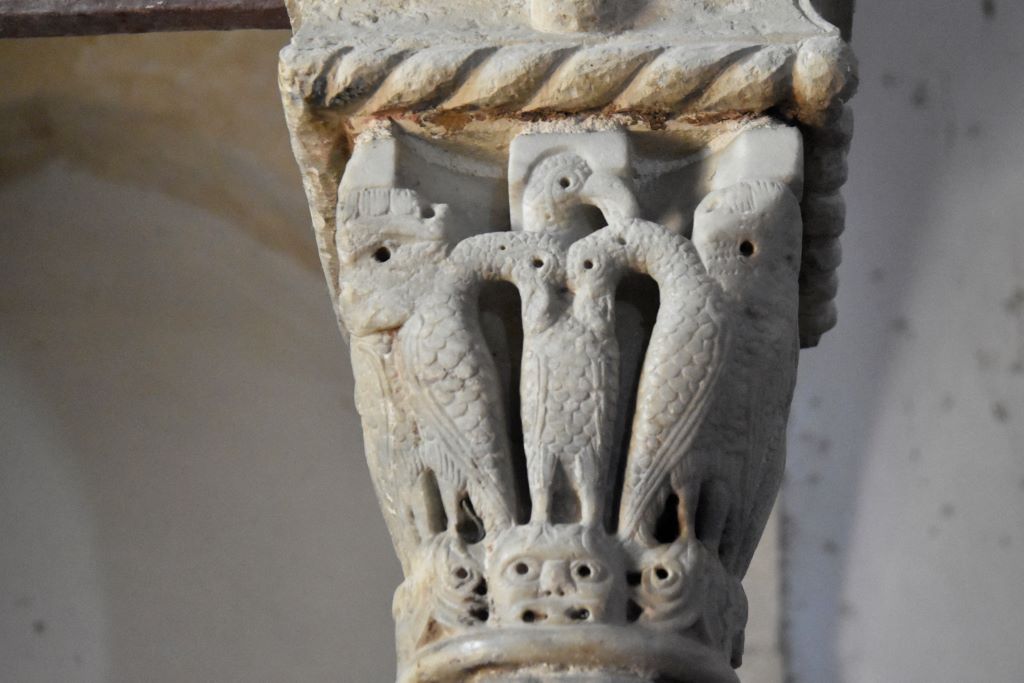
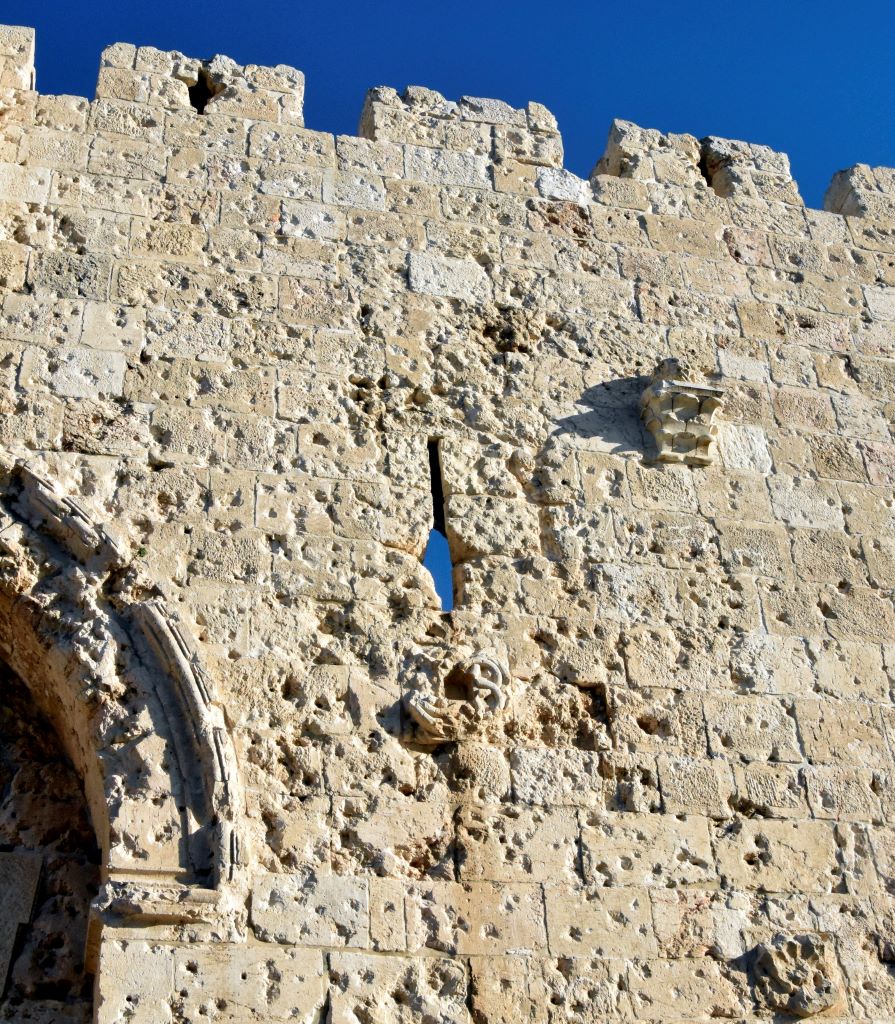
On our way to the next stop, Jacob pointed out a wall which still had bullet holes from the Six-Day War in 1967.
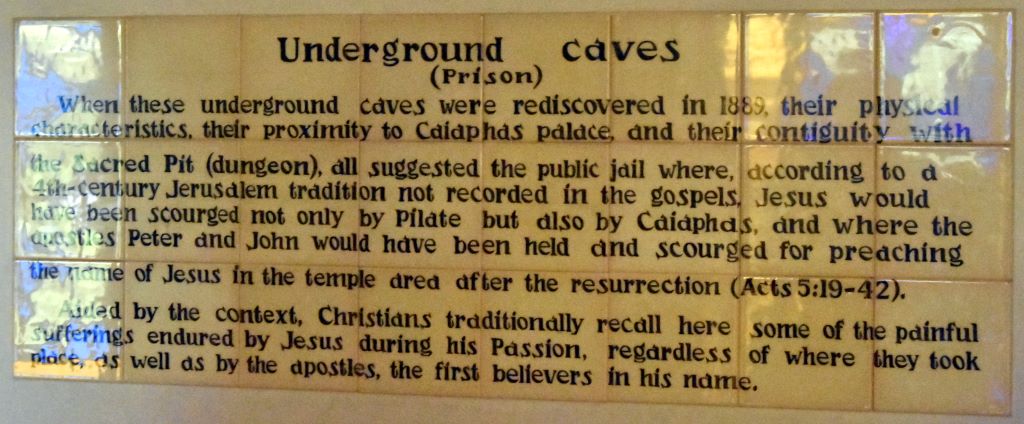
Day 9 Third Stop: Peter in Gallicantu. At the site traditionally associated with Caiaphas’s house is the Church of Saint Peter in Gallicantu, with gallicantu being a Latin word meaning “cock’s crow.” This is where Peter denied knowing Jesus three times before the cock crowed twice in Mark 14:66–72, as Jesus had predicted earlier in the same evening in Mark 14:30 and which Peter had vehemently argued could not happen. The current church dates from 1931. Below the church is a cave which could have been where Jesus was held for the night after his arrest.




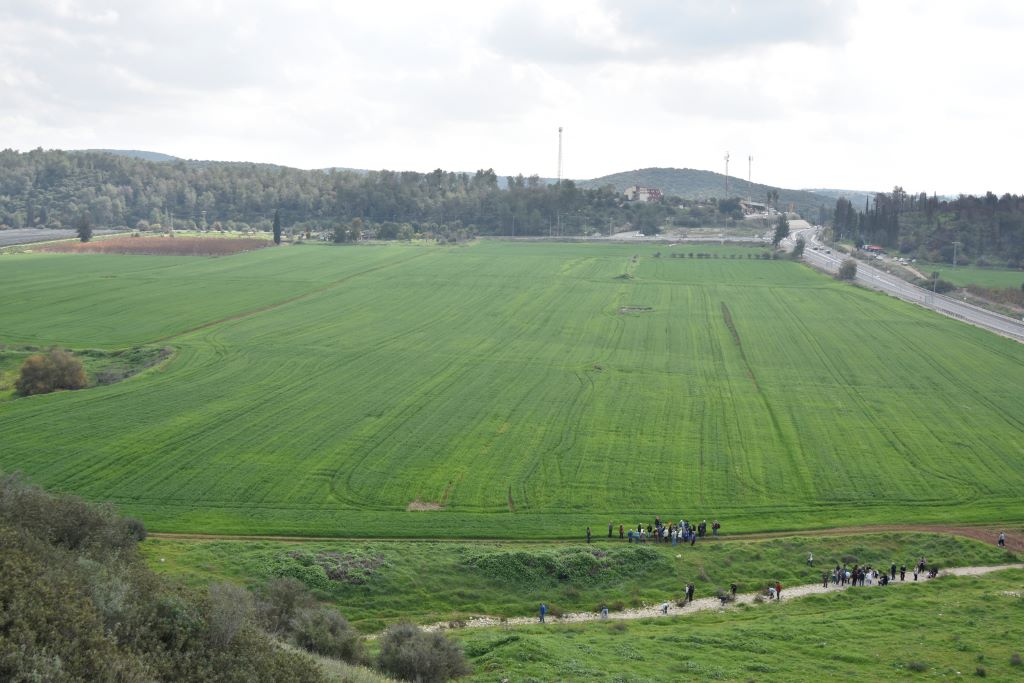
Day 9 Fourth Stop: David and Goliath Field. A short drive from Jerusalem is the Valley of Elah where David defeated Goliath in 1 Samuel 17. We could picture the two large armies facing each other across the field, and David picking up the five smooth stones from the brook that he used to knock out Goliath with his sling.

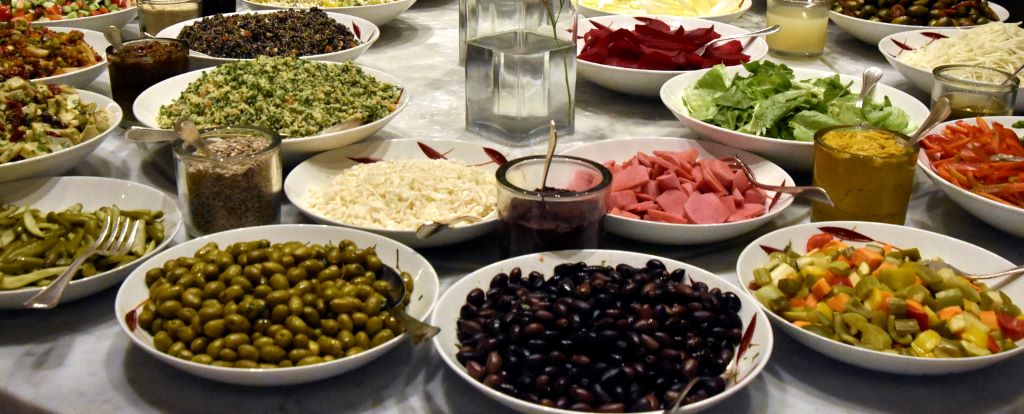
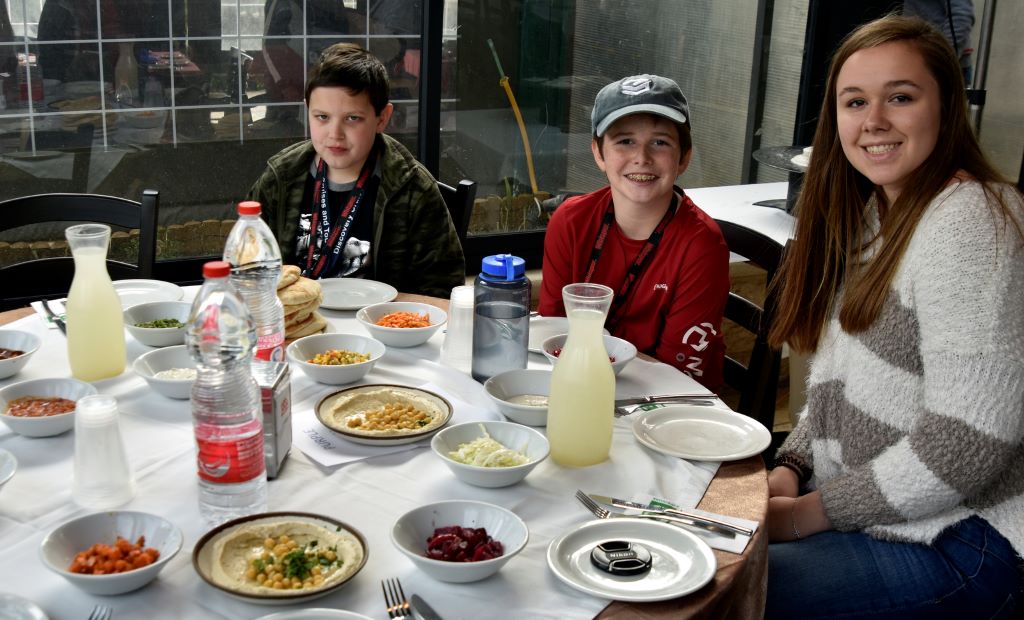
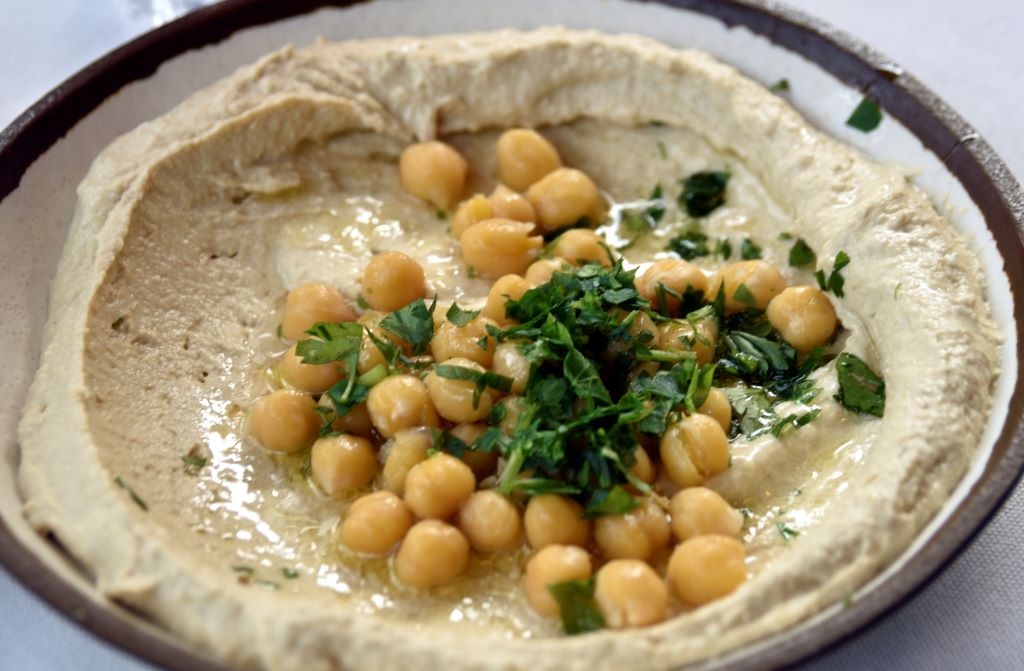
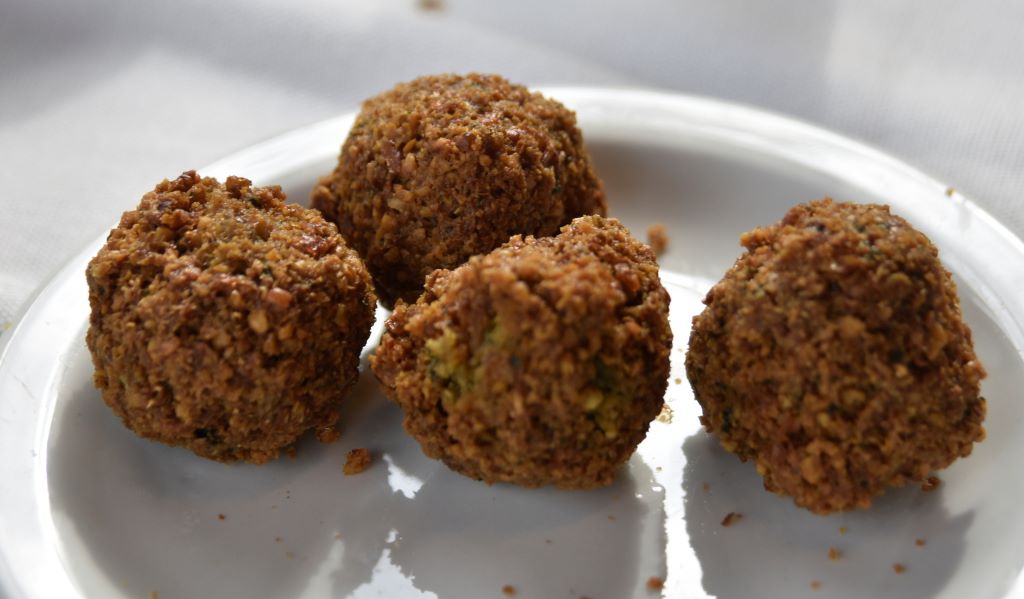
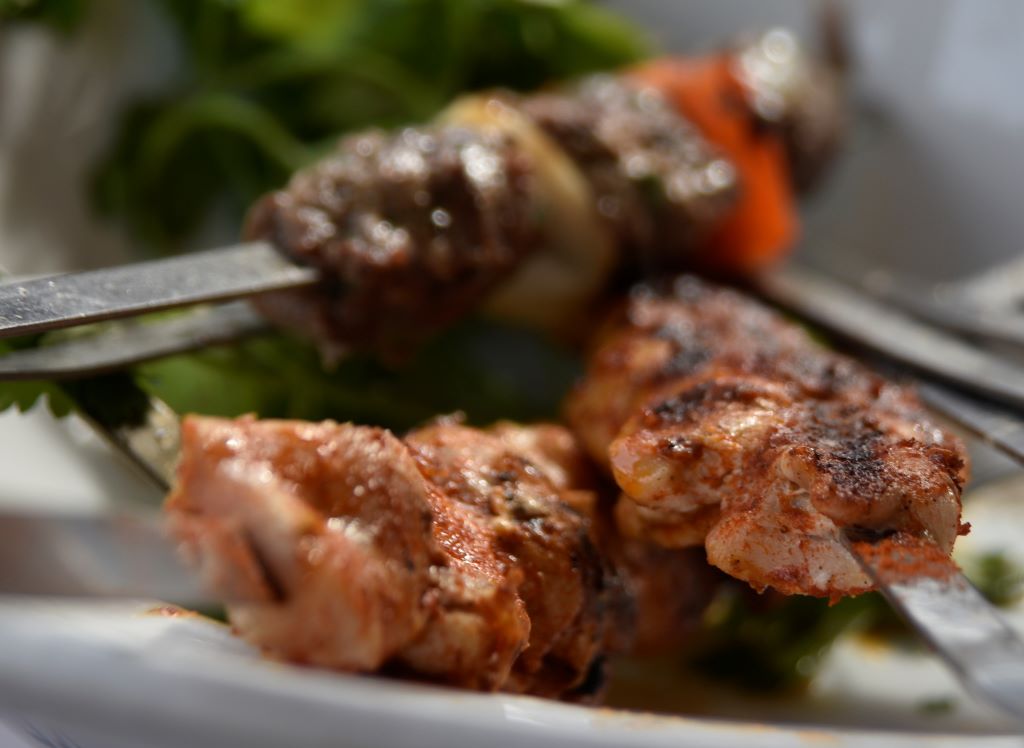
Day 9 Fifth Stop: Lunch! We enjoyed a fine traditional Middle Eastern lunch at the Naurah Restaurant.

Day 9 Sixth Stop: Friends of Zion Museum. This interactive museum recognizes the people who helped the Jews reestablish the Nation of Israel.
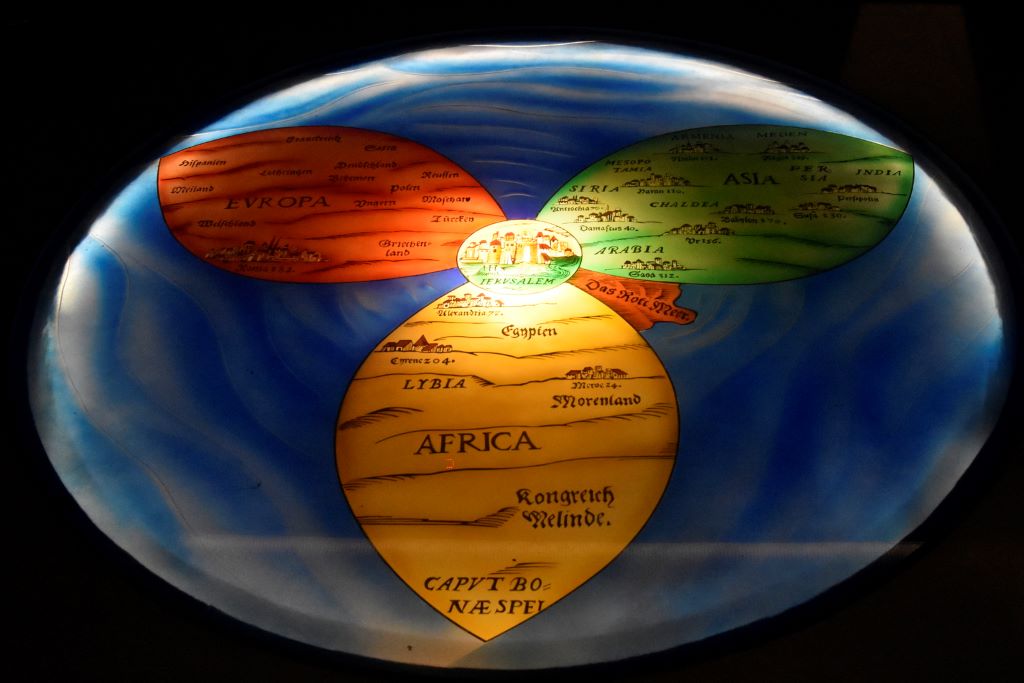

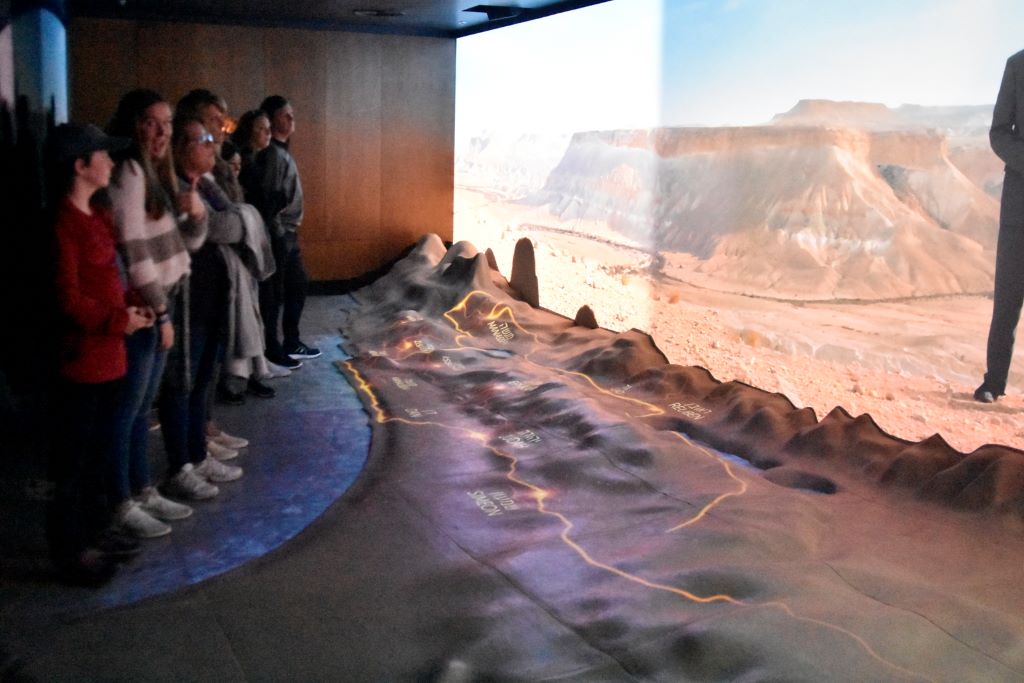


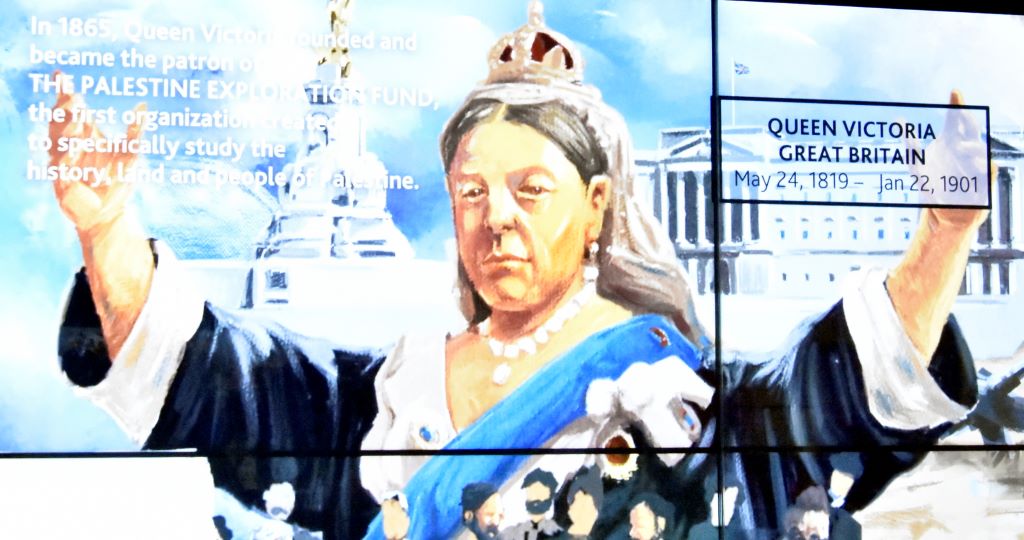
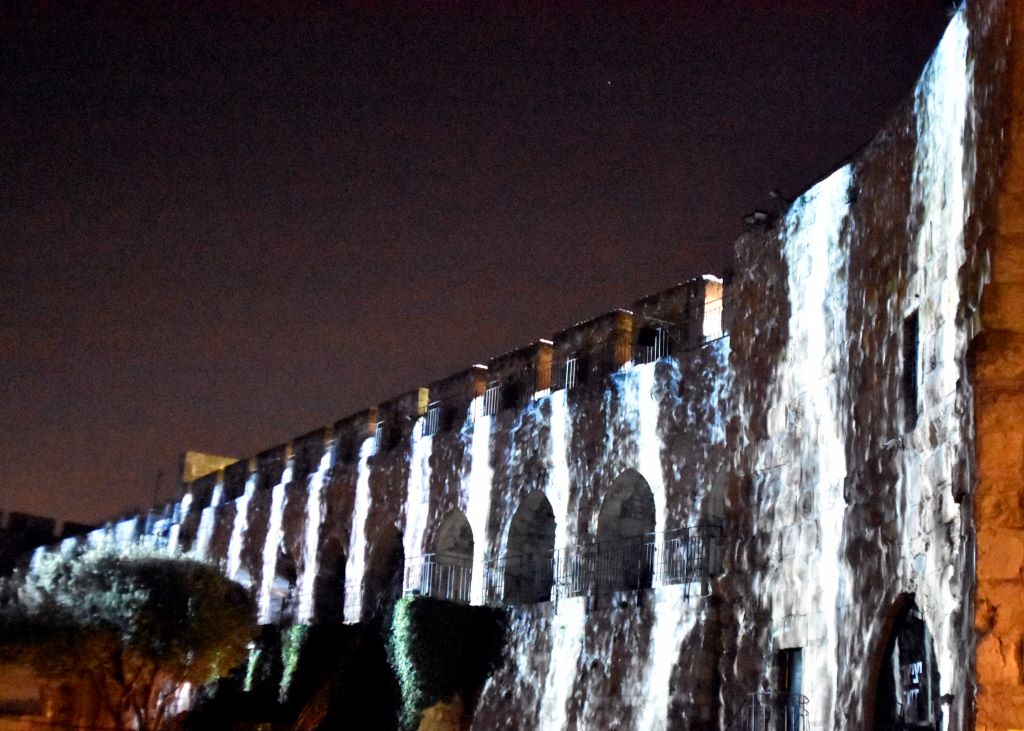
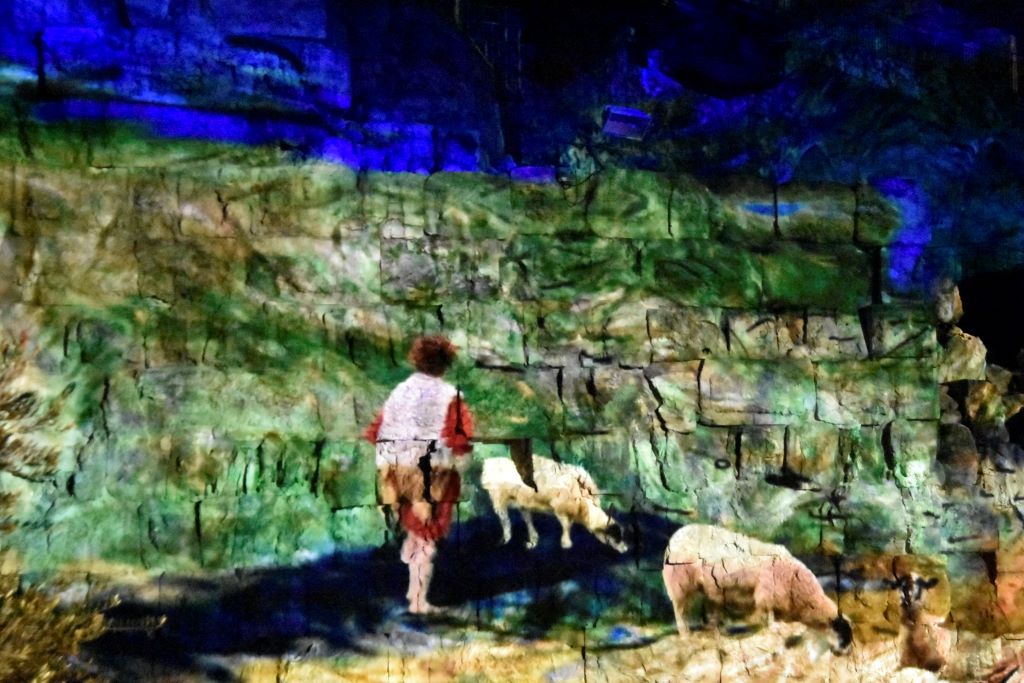
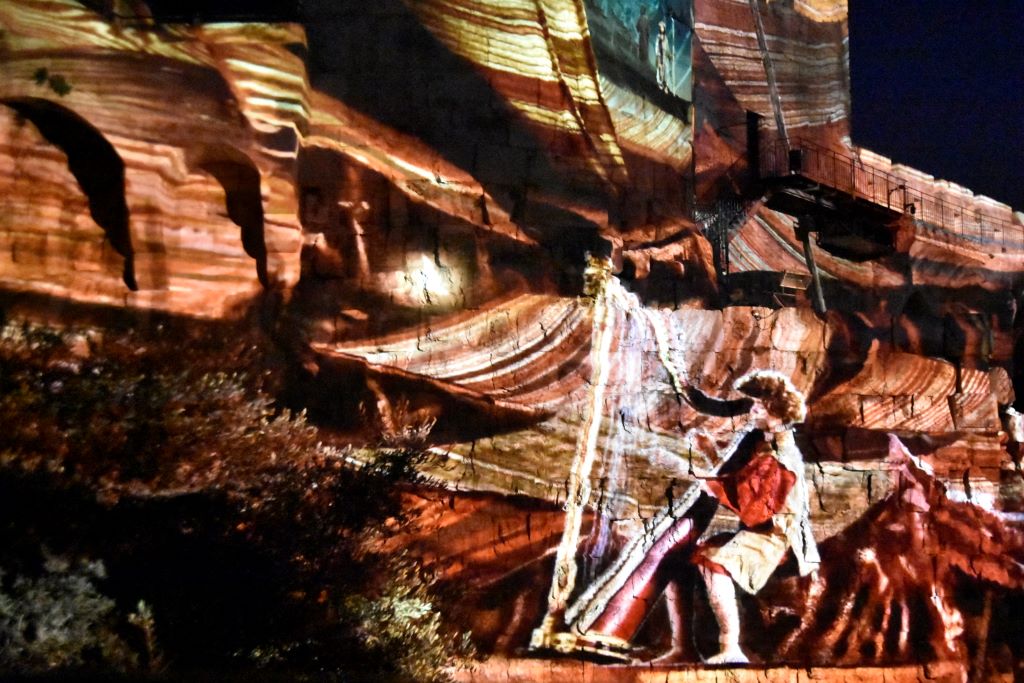
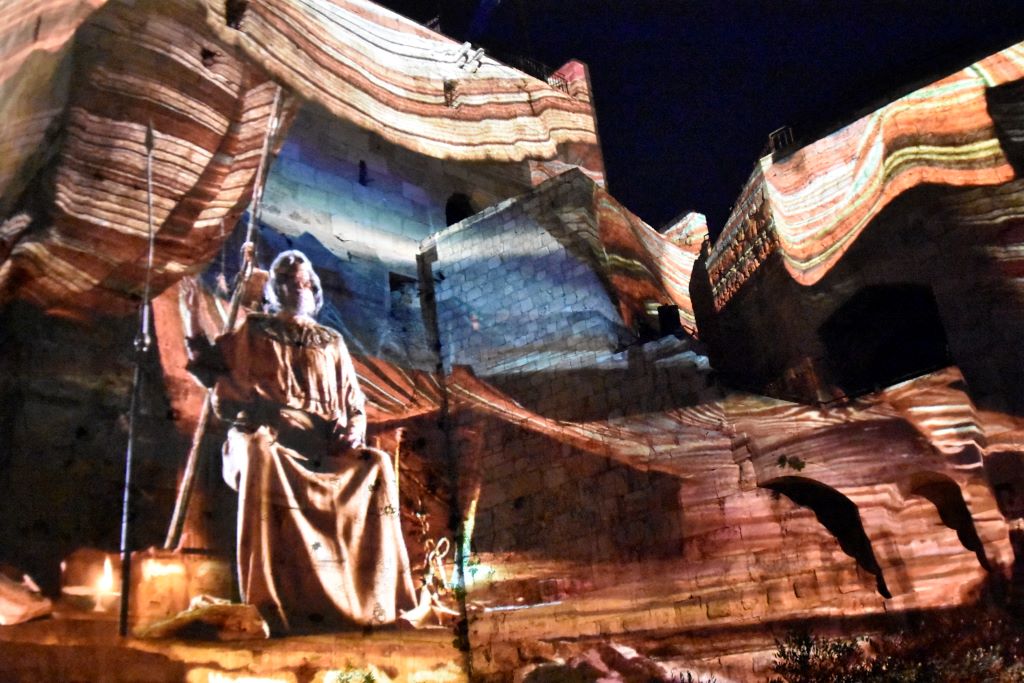
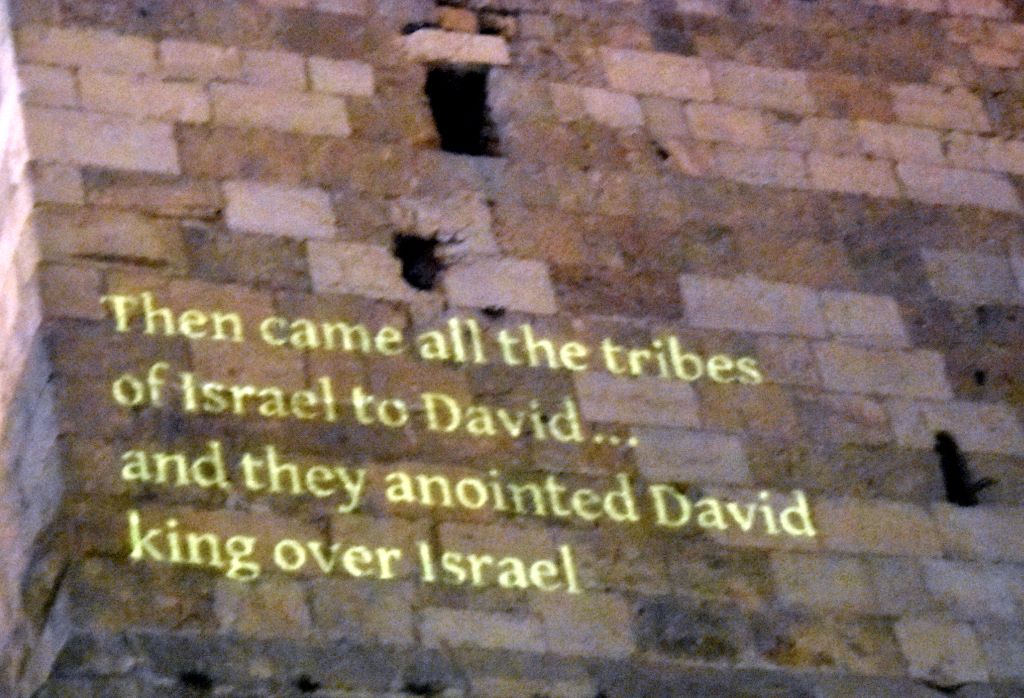
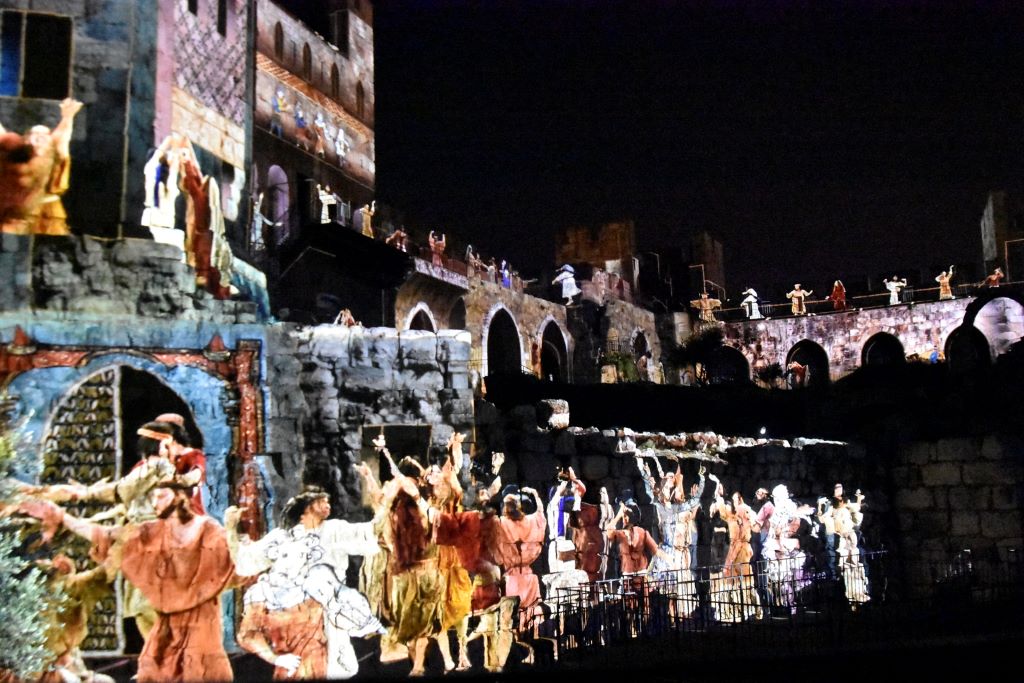
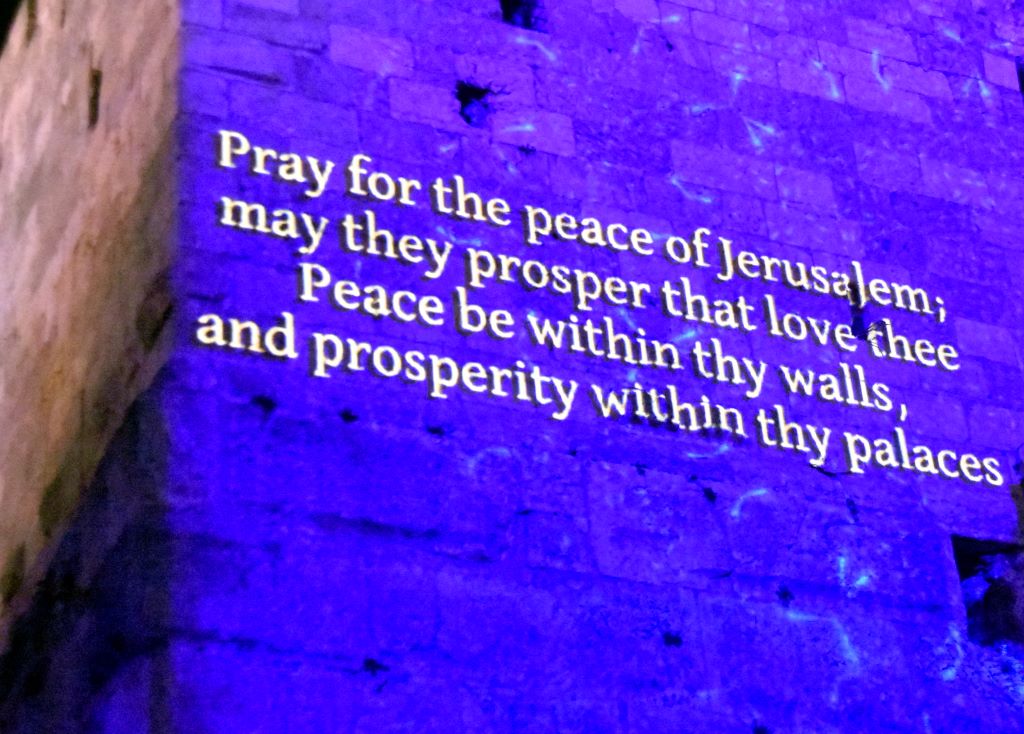
Day 9 Bonus: King David Lightshow at the Tower of David. A remarkable lightshow on the interior walls of the Tower of David on the Old City’s wall told David’s story. The lights brought the walls to life in a magnificent way.
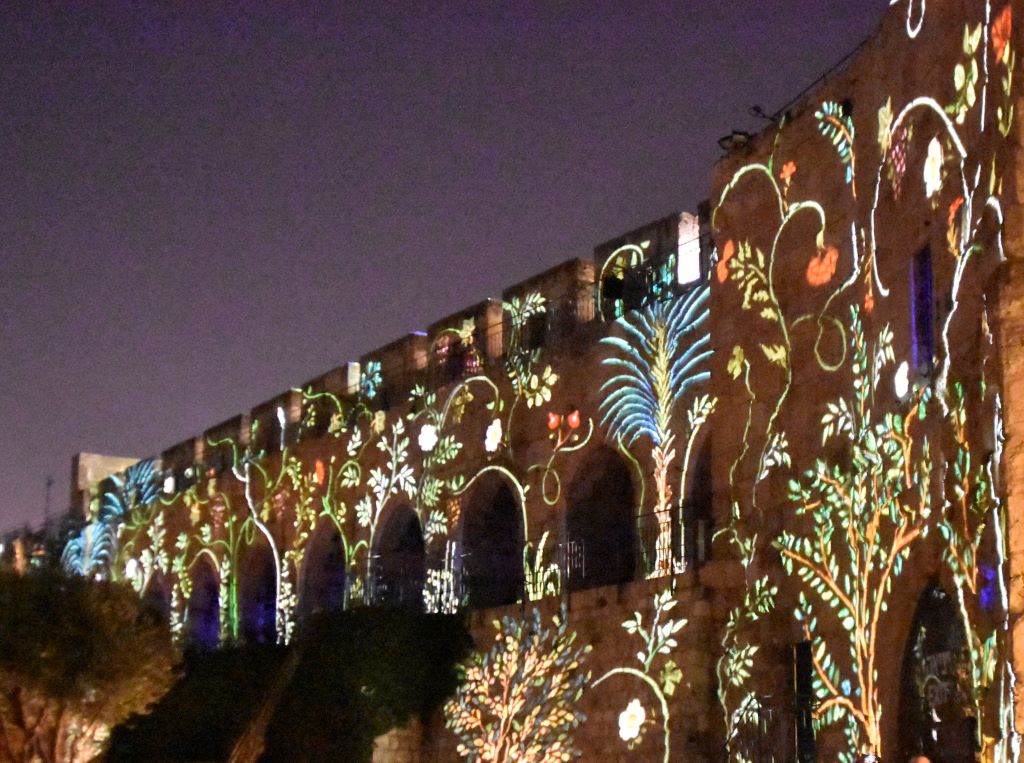




All that was left was for us to fly home the next day, and to forever reflect on this adventure.
 The Adventures of the Cajunlimeys